Loaded and Rolling: Driver pay data highlight earnings gain

Driver pay data highlight earnings gain

(Source: NTI)

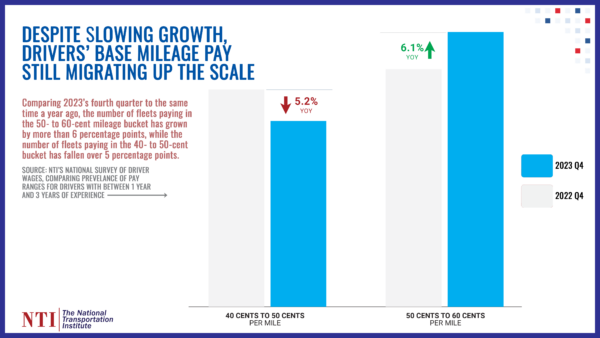
The National Transportation Institute (NTI) recently released Q4 2023 driver pay data that shows driver earnings continue to climb in spite of the freight market undergoing a correction. Drivers’ base mileage pay brackets saw a shift, with the 40-to-50-cents-per-mile pay bracket falling 5.2% year over year as fleets raised wages to attract and retain drivers. The 50-to-60-cents-per-mile bracket saw a 6.1% y/y increase.

Fleet wage growth also saw changes with cap pay. The report noted, “From 2020’s Q4 to 2022 Q4, drivers with 1 year and 3 years of experience saw the biggest per-mile wage gains. Since late 2022, however, the trend shifted. Cap earners, those with the most experience and highest base pay have seen the biggest percentage wage gains through 2023.” The report adds that new drivers to the industry with one year of experience are now earning more per mile in Q4 2023 than drivers in 2020 who had the most experience and base pay.

Amid overabundant trucking capacity evident in the current glut of drivers, the report noted that recruiting momentum in the forms of sign-on and referral bonuses saw declines. The average dollar amount for those bonuses in Q4 2023 fell the first time since Q2 2022, while referrals saw their first decline since Q3 2023. Referral bonuses fell $29, while sign-on bonuses fell $53 from Q4 2022 to Q4 2023.

ATA survey: Carriers spend $14B per year on safety

(Source: David Taube/Trucking Dive)

New data released by the American Trucking Associations shows that the trucking industry invests $14 billion annually in technology, training and other costs to improve highway safety. According to the survey, which is still accepting submissions, the $14 billion was “over 40% higher than our last survey conducted in 2015. ATA surveyed a variety of motor carriers — from fleets with just a few trucks to carriers with more than 10,000 power units on the road, running the full breadth of the industry. In total, companies responding to the survey accounted for almost 170,000 drivers and nearly 160,000 trucks.”

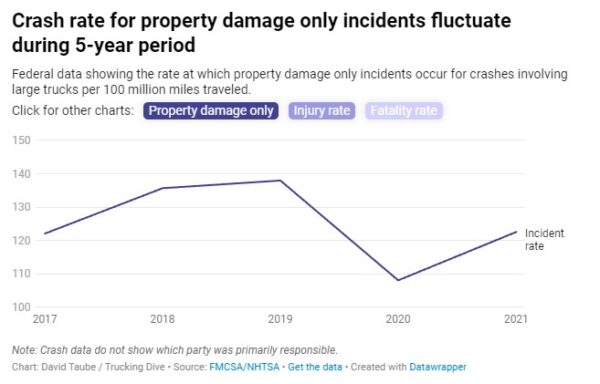
This comes as federal data looking at truck fatalities from 2017 to 2021 saw a rising trend after fatalities declined from 2019 to 2020. Reviewing the data, David Taube with Trucking Dive writes, “But truck crashes only involving property damage fared better in 2021 than incidents in 2018 and 2019. And from 2019 through 2021, the industry posted a decreasing rate of injuries in trucking crashes per 100 million miles traveled.”


The Federal Motor Carrier Safety Administration data noted that crash location and day of week were additional considerations, with 83% of fatal crashes and 87% of nonfatal crashes with large trucks occurring on weekdays. The FMCSA adds, “Fatal crashes involving large trucks often occur in rural areas and on Interstate highways. Approximately 54 percent of all fatal crashes involving large trucks occurred in rural areas, 26 percent occurred on Interstate highways, and 12 percent fell into both categories by occurring on rural Interstate highways.”

Market update: Motive December Economic Report

(Source: Motive)

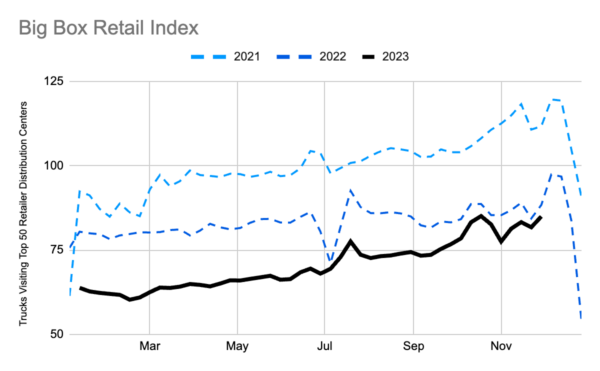
ELD provider Motive’s December economic report saw increases in retailer inventories leading up to the holiday season, while fuel prices continued to decline. Motive’s Big Box Retail Index, which measures trucking warehouse visits for the top 50 retailers in the U.S., fell 3% in November compared to the previous year.

The report notes: “The rally in visits through November is more prominent when looking at durable goods such as appliances, electronics, furniture and other ‘hard goods.’ The transportation of these items to retailer warehouses saw a 16-point increase from early October to the end of November. When comparing average activity for October and November, visits for companies focusing on durable goods were down 5.9% year-over-year, while those focused on non-durable goods fell by 10.9%.”

Carrier exits and net revocations were another topic examined. The report states, “The number of carriers exiting the trucking market jumped to 4,931 in November, a 55% increase compared to October. Simultaneously, new carrier registrations also declined, with 6,792 registrants representing a 9% drop since October and a 16% drop since the end of Q3. Both of these numbers represent the continued market contraction being compounded by typical seasonal changes.”

FreightWaves SONAR spotlight: Strong foundations for 2024

(Source: FreightWaves SONAR)

Commentary courtesy of the Daily Watch, a newsletter for SONAR subscribers

Summary: As the Federal Reserve dangles potential rate cuts on a quicker timeline than previously expected, economic sectors that are sensitive to interest rates are seeing some early relief. One such sector is the housing market, which informs truckload demand not only through the shipment of raw materials needed for homebuilding, but also through the movement of bulky durable goods needed to furnish a typical house.

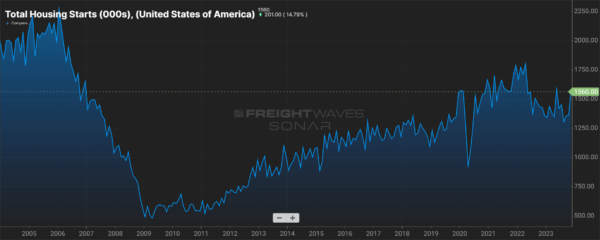
To the surprise of many analysts, housing starts surged in November, rising 14.8% month over month against an expected decline of 0.2%. Construction on new homes is now near its highest peak since May 2022, thanks almost exclusively to an 18% m/m swell in single-family housing starts. Sentiment among homebuilders, despite lingering pessimism, also gained distance in December from its prior 11-month low. Taken as a whole, this picture implies that sales of existing homes would suffer from an uptick in newly constructed homes.

Yet that sorrow was sidestepped, as existing-home sales rose 0.8% m/m in November against expectations of a 0.4% m/m decline. In short, the housing market is clawing its way back into recovery as mortgage rates have fallen from multidecade highs over the past two months. The promise of softer monetary policy led to a boost in consumer confidence, as the Conference Board’s Expectations Index — which tracks consumers’ short-term outlook for financial and labor market conditions — rose 8.2 points m/m in December to 85.6. This latest rise is critical since, historically, any reading under 80 has signaled a coming recession within the next 12 months. 

A vigorous housing market coupled with a confident consumer promises tailwinds to come for the trucking industry.

State of Freight: Strong volume, stuck OTRI and caution for shippers in ’24 (FreightWaves)

C.H. Robinson’s new CEO doubling down on lean management, large language models (FreightWaves)

Autonomous trucking 2023: Leaders emerge amid exits and entries (FreightWaves)

DECEMBER 2023 FOR-HIRE TRUCKING INDEX (ACT Research)

Environmental groups sue BNSF over grizzly bear deaths (FreightWaves)


Nikola founder sentenced to 4 years on fraud convictions (FreightWaves)

Like the content? Subscribe to the newsletter here.

Running on Ice: International developments for the cold chain

Blue Truck on a sheet of ice over a blue background and Running on Ice Logo

Your latest info on all things cold chain.

Hello, and welcome to the coolest community in freight! Here you’ll find the latest information on warehouse news, tech developments and all things reefer madness-related. I’m your controller of the thermostat, Mary O’Connell. Thanks for having me!

All thawed out 

(Photo: Jim Allen/FreightWaves)

Taking a look across the pond at some new advancements in sustainable reefer rail service, PSA Italy and PSA BDP successfully transported reefer containers from Genova’s port via rail. The new PORT+ program allows shippers to reduce carbon footprints while moving temperature-controlled goods via rail as products are taken from the Italian ports to central Europe. 

According to a news release, “The inaugural service delivered a container filled with a leading Italian multinational company’s temperature-sensitive pharmaceutical products from Basel, Switzerland, to PSA Genova Pra’ in Italy. At the terminal, the cargo was transferred to the MSC Alma containership, which was bound for Savannah, Georgia in the United States.”

Temperature checks

(Photo: Dachser)

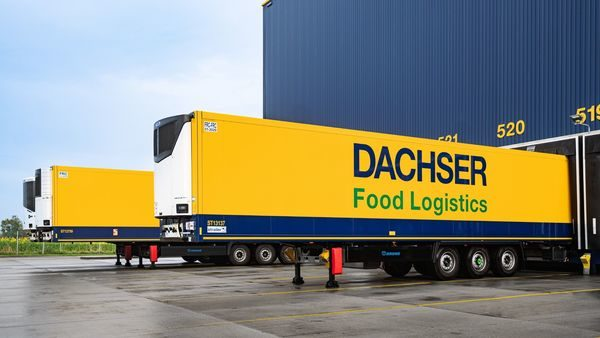
Rounding out the year internationally is DACHSER’s advancements in emission-free trailers. Dachser has four battery-electric refrigerated truck trailers that have been put into test operations. The small rollout is mostly to test out the viability of this at scale. Various parts have been installed so that the trailer can be reliably cooled electrically for a longer period of time, including a modern, highly efficient cooling unit and a lightweight battery.

The battery is charged within three to four hours directly at the loading gates. This is also where the precooling takes place. No extra charging infrastructure is required for the e-trailers. In addition to the battery, the generator axis supplies energy for cooling. It is comparable to a dynamo on a bicycle and also enables the use of kinetic energy from driving.

Tobias Ritter, department head of production and network processes for Dachser Food Logistics, was quoted in an American Journal of Transportation article as saying, “With the first four eTrailers in the DACHSER network, we now have the opportunity to put the technology through its paces in everyday operations. When transporting food, the cold chain must never be interrupted. Therefore, the refrigeration must always function reliably, the ranges must be stable and longer downtimes must also be possible, e.g. when delivering to commercial warehouses or in traffic jams. With a fully charged battery, the trailer can be cooled for around five to six hours, even without an additional external power supply or the generator axis.”

Food and drugs

(Photo: Jim Allen/FreightWaves)

Food supply chain resiliency is at the forefront of the U.S. Department of Agriculture Marketing Service as it announced a cooperative agreement with the state of Oklahoma as part of the Resilient Food Systems Infrastructure Program. They are working together to offer more than $6.3 million in competitive grant funding for projects that are designed to build resilience across the middle of the supply chain. 

Jenny Lester Moffitt, undersecretary of the USDA’s marketing and regulatory programs, was quoted as saying, “This partnership between USDA and Oklahoma is allowing critical funding to reach areas of the supply chain that need it most. The projects funded through this program will create new opportunities for the region’s small and midsize producers to thrive, expand access to nutritious food options, and increase supply chain resiliency.”

Cold chain lanes

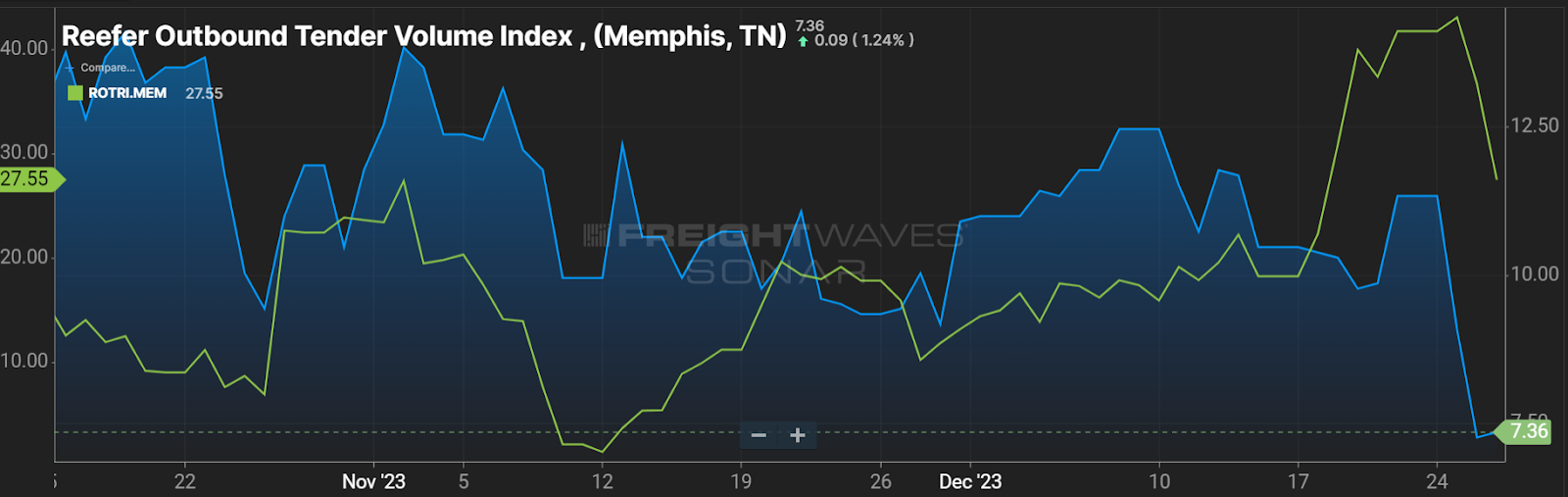
SONAR Tickers: ROTVI.MEM, ROTRI.MEM

The home of the blues has some post-Christmas blues as both reefer outbound tender volumes and reefer outbound tender rejections begin a downward fall. The sharp uptick in rejections is due to carriers leaving the market for the Christmas holiday. As capacity returns to the market following the holiday, rejections should return to a more normal rate around 12-15% instead of nearly 30%.

A resurgence should happen in reefer outbound tender volumes as well. Dropping to the lowest rate in six months indicates there should be a rebound, but not as plentiful as mid-November. Expect to see reefer outbound tender volumes return to levels that resemble that of the beginning of the year. 

Is SONAR for you? Check it out with a demo!

Shelf life

Help Us Launch Truck Driver Barbie! 

Thousands of meals spoiled after West Michigan nonprofit’s freezer breaks

HelloFresh Teams Up With Multi-Hyphenate Entertainer Keke Palmer

Google’s Trending Recipes of 2023 Reveal Importance of TikTok

Berkshire Bounty Opens North County Cold Storage at BMC

Wanna chat in the cooler? Shoot me an email with comments, questions or story ideas at moconnell@www.freightwaves.com.

See you on the internet.

Mary

If this newsletter was forwarded to you, you must be pretty chill. Join the coolest community in freight and subscribe for more at www.freightwaves.com/subscribe.

Port of NY/NJ volumes down from last year but up from 2019

November cargo volumes at the Port of New York and New Jersey were 7.5% higher than pre-COVID November 2019 but down 11% year over year and 13.2% from October. 

The East Coast seaport moved 644,439 twenty-foot equivalent units in November, the port authority said Wednesday, compared with 723,069 TEUs in November 2022. The port authority also noted that October was the port’s busiest month for 2023 as retailers were preparing for the holiday shopping season.

Year-to-date volumes for loaded containers were over 4.8 million TEUs in November, which puts the port on the path as “the nation’s second busiest for loaded containers handled year-to-date,” it said. Total year-to-date volumes were nearly 7.2 million TEUs through November, which is 4.2% higher than the same period in 2019.

Port authority conducting road and rail capital projects to boost capacity

The continued high level of loaded containers at the Port of New York and New Jersey comes as the port authority announced late last month a $220 million project to upgrade road and ramps to the main artery at Port Newark. Port Newark, a container terminal that leases land through the Port of New York and New Jersey, processes more than 1.3 million TEUs annually, and plans are in place to add 1 million TEUs more in capacity there. 

The port authority said Nov. 29 that it is beginning construction work on the $220 million Port Street Corridor Improvement project to redesign and rebuild Port Newark’s northern entrance at Port and Corbin streets. The project should be completed in 2028.

That interchange “serves as a crucial link to the New Jersey Turnpike and Interstate 78 and provides access to one of the Port Authority’s marine facilities that make up the largest and busiest cargo gateway on the East Coast,” the port authority said. “The redesign will feature a more efficient roadway configuration with a wider turning radius, allowing for safer trucking operations to and from the Port Newark complex. The improvements will additionally offer truck drivers significant time savings while they navigate the complex, enhancing efficiency and reliability across the supply chain as well as significantly reducing carbon emissions each year.”

The project was a July 2021 recipient of a $4 million grant from the U.S. Department of Transportation’s Infrastructure for Rebuilding America (INFRA) program.

Other capital improvements to Port Newark include planned upgrades to the on-dock ExpressRail system, which should streamline train movements and reduce congestion during peak hours, the port authority said. This project, which connects major container terminals at the marine complex with CSX (NASDAQ: CSX) and Norfolk Southern (NYSE: NSC) will be completed in 2027.

Both these projects are part of the port’s wider master plan to increase port capacity so that it can handle a forecast doubling or tripling of cargo volume by 2050.

Subscribe to FreightWaves’ e-newsletters and get the latest insights on freight right in your inbox.

Click here for more FreightWaves articles by Joanna Marsh.

California holds off on only allowing new zero-emission vehicles in drayage registry

Editor’s note: Statements from Harbor Trucking Association CEO Matt Schrap as well as clarification on regulatory provisions have been added to an earlier published article.

Drayage operators in California that faced a Sunday deadline barring registration of any new internal combustion engine (ICE) vehicles in the state’s drayage registry instead will be able to sign them up in the new year. 

The California Air Resources Board (CARB) said in a letter sent to Chris Shimoda, the senior vice president of government affairs at the California Trucking Association (CTA), and obtained by FreightWaves that it would temporarily withdraw its requirement that only zero-emission vehicles (ZEVs) could be signed up with the state’s drayage truck registry after New Year’s Eve. 

The letter to Shimoda was dated Wednesday. It was sent by Steven Cliff, executive officer of CARB. It suggests that CARB and the CTA have been in discussions about enforcement of the drayage registry requirement for several weeks. 

The backdrop to the discussions is the lawsuit filed by CTA against CARB for not obtaining a waiver to implement the state’s Advanced Clean Fleet (ACF) rule, of which the 100% ZEV drayage requirement was part. Soon after CTA filed its suit, CARB asked the federal Environmental Protection Agency for a waiver that would allow it to implement emission rules more stringent than federal regulations. CARB officials reportedly had not previously believed that such a waiver was needed.

But it appears the discussions over the points made in the lawsuit have led to the CARB retreat — for now — on the drayage rule.

“CARB will not take enforcement action as to the high-priority or drayage fleet reporting provisions or registration prohibitions until EPA grants a waiver applicable to those regulatory provisions or determines a waiver is not necessary,” Cliff said in the letter. 

In an advisory sent out to its members, the American Trucking Associations said a “waiver determination from EPA is not expected for months, and could take up to a year.”

“High priority fleets” is the term the state uses for trucks involved in general trucking activity, as opposed to drayage or government vehicles. High-priority fleets meet a standard of having either $50 million in gross annual revenue or consist of at least 50 trucks.

Those fleets were facing reporting requirements that were to begin Feb. 1, 2024, on several different aspects of fleet compliance with the mandates of the ACF rule. 

But it was the drayage requirement that had the most immediate operational impact. 

Another operational requirement that is now on hold, according to the CARB letter, is phasing out vehicles that have “exceeded their useful life periods.” However, no vehicles were facing mandatory retirement until February 2025. Presumably if the waiver is not obtained by CARB until then, the requirement to phase out older vehicles will remain unenforced.

The useful life period is defined by CARB as either 13 years or hitting 800,000 miles or 18 years from the year the “engine in the vehicle was first certified for use by CARB or U.S. EPA, whichever is earlier.”

Regardless of the definition, the provisions of the CARB letter means that a truck that was facing removal because of its age and mileage in 2025 may have had its life span extended, depending on when a waiver from EPA would be extended.

Cliff’s letter has several references to the temporary nature of the decision, with its end date dependent on when a decision on an EPA waiver will come down. After that issue is settled, CARB believes it has the “right to de-register non-compliant vehicles that were added to or remained in, the drayage registration system while the waiver request was pending,” Cliff wrote.  

“If fleets add non-compliant vehicles (e.g., new internal-combustion-engine vehicles) from January 1, 2024, onwards, those fleets should expect to receive a notice from CARB indicating that CARB may remove those vehicles in the event it receives the requested waiver or U.S. EPA decides no waiver is necessary,” the letter states.

The trade group with members most affected by the change is the Harbor Trucking Association, which represents the drayage community. But its CEO, Matt Schrap, expressed some  frustration over the CARB decision to move forward with the waiver request.

“It’s frustrating because you have fleets who have been acting in good faith while CARB strung them along on whether they needed a waiver, and all of a sudden they come out in the fourth quarter with this waiver request,” Schrap told FreightWaves.

The “victory” in the process is that “it keeps CARB in check because they don’t have the authority to enforce the rule.”

But Schrap noted the statements by CARB’s Cliff regarding the agency’s ability to reclassify ICE vehicles added to the system to a nonconforming status after an EPA waiver is granted.

California’s requests for waiver to go further than the Clean Air Act provides have been almost unanimously approved over the years. 

The CARB letter also suggests that CTA officials had suggested they would seek a temporary injunction that would block CARB from enforcing the rule. But Cliff said he “understands … CTA has agreed not to file a preliminary injunction motion.”

More articles by John Kingston

Registration deadline for California Clean Truck Check gets another month

Court kills CARB’s reefer truck fee but refrigeration unit rules intact

Logistics M&A slower but opportunities still there

Air cargo industry faced stress test in 2023

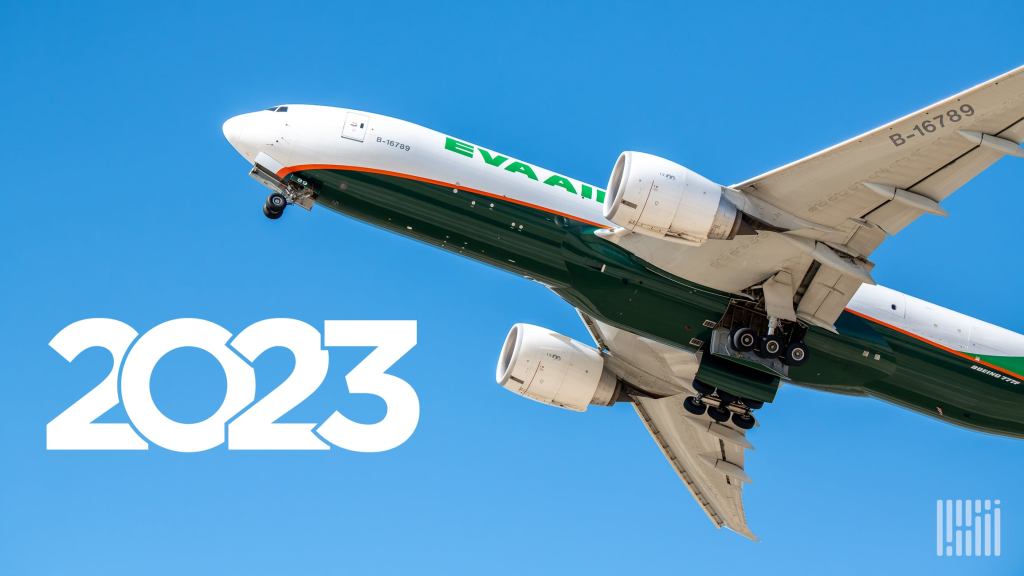
A view of a plane flying overhead with a 2023 year imposed in the frame for the year-in-review story.

The air cargo industry underwent a serious stress test in 2023 as collapsing market demand and rates dragged down revenues, forcing many all-cargo carriers to scale back operations, postpone aircraft investments and tighten budgets, before a late resurgence in volumes lifted offered hope for a better 2024.

The course correction from 2021, when airfreight business skyrocketed to record highs as businesses looked for ways to overcome broken supply chains during the pandemic, began in early 2022 and didn’t stabilize until the fall. Airfreight wasn’t a priority for retailers because they had built up too much inventory on the misguided notion that online purchases would continue to explode while the reintroduction of more passenger flights saturated the market with belly capacity. 

Many of the year’s main developments in air cargo were colored by the severe drop in profit margins, with some industry stakeholders withstanding the squeeze better than others.

Here’s a look at how the year unfolded for the air cargo sector.

Freight recession cuts deep

Air cargo was no exception to the recession that gripped the freight transportation sector for nearly 18 months. The industry entered the year on the heels of high-single and double-digit declines in monthly cargo volumes, but the gap gradually improved until hitting bottom in August. Since then, air cargo volumes have improved as the peak season proved better than expected, largely due to a surge in e-commerce orders for fast fashion and electronics produced in China.

Improved performance is partially related to very weak comparisons in late 2022, when demand plunged. 

Freight rates were down 40% to 50% for much of the year, before rallying in recent months. Rates are now 50% ahead of 2019 levels after narrowing to about 20%.

Publicly listed airlines saw cargo revenues slide between 25% and 60%, with carriers in Asia feeling the biggest reductions. Lufthansa Cargo reported it had no profit in the third quarter compared to $352 million the prior year. 

Questions remain about whether the peak-season bounce was temporary. Most experts think the market won’t really begin to recover from the prolonged downturn until the second half of 2024 because of mixed economic conditions. But geopolitical events are a wild card that could propel, or constrain, growth in the coming year. The recent diversion of container vessels around Africa to avoid the risk of missile and drone attacks could present a major opportunity for airlines and freighter operators if businesses convert some shipments to air transport to avoid delivery delays.

Plugging financial leaks

Airlines and freight forwarders responded to the dilution in revenues by taking steps to rein in costs. Many carriers canceled or postponed purchases or leases of new freighters that they planned for when the market was booming. 

Air Canada reversed course on an order for two production Boeing 777 cargo jets and Cargojet scrapped plans to convert four 777s into freighters. Air Transport Services Group has paused sending Boeing 767s to repair shops for conversion and said several customers have backed out of commitments to lease freighter aircraft. Amerijet has parked one freighter and deferred major maintenance on two more in addition to eliminating some accounting jobs and closing a small logistics business. 

Defections from three major customers contributed to the financial woes at Western Global Airlines, which declared bankruptcy last summer. The company restructured and was released from court protection early this month.

The weak market also impacted the big express carriers, which have cut back on flight activity. FedEx continued a multibillion dollar campaign to eliminate structural costs and consolidate operations for improved efficiency. The effort includes the Express business taking out $700 million in annual costs by reducing reliance on the hub-and-spoke network, consolidating routes and leaning more on contract carriers, commercial airlift and trucking. FedEx now has more pilots than it needs and is encouraging some of them to take jobs with a regional passenger airline.

FedEx (NYSE: FDX) and UPS (NYSE: UPS) are accelerating the retirement of older aircraft and have temporarily parked others until the market picks up. UPS offered buyouts to nearly 200 senior pilots to save money. 

Freight forwarders ranging from Flexport to Kuehne+Nagel, DSV and C.H. Robinson eliminated thousands of jobs in response to slower air and ocean volumes.

Fleet freeze

Aerospace companies that specialize in converting passenger planes to freighters are expected to crank out a record number of units this year, but deteriorating international freight and e-commerce volumes chilled orders for new and aftermarket aircraft. 

Many airlines and lessors are sticking with aircraft commitments to take advantage of forecast growth in e-commerce and international trade, and to modernize their fleets. But new orders have been few and far between this year — both for production freighters and cargo conversions of used passenger jets.

Most concerns about freighter oversupply focus on standard-size jets like the 737-800 and the Airbus A321. The number of conversions for small, standard-size jets exploded during the past three years to unprecedented levels.

A handful of airlines countered the trend and placed orders, or expanded their current fleets. Cathay Pacific and Turkish Airlines each ordered several copies of the new Airbus A350 freighter, which is still in the final design and certification stage. Japan Airlines relaunched its first freighter fleet in 13 years by taking three of its 767 passenger aircraft and sending them out for overhaul so they can carry large cargo containers. The first aircraft was recently delivered and will begin intra-Asia service in February for DHL Express. Spanish cargo airline Swiftair said it will lease two Airbus A321 freighters next year. Meanwhile, U.S. startup GlobalX has ambitious plans for cargo after adding its first three freighters this year. 

Changes at the top

How some companies handled those outside economic forces led to leadership changes.

Air Transport Services Group (NASDAQ: ATSG), which owns cargo airlines and ground handling companies in addition to being the world’s largest lessor of freighter aircraft, fired CEO Rich Corrado over continued capital expenditures on aircraft while the airfreight market was in a hole and disappointing performance in the company’s stock. Amerijet ousted Tim Strauss as CEO when his three-year contract ended.

Freight forwarder Flexport had a messy breakup with CEO Dave Clark, less than a year after arriving from Amazon, over the direction of the company and heavy losses. The company laid off more than a third of its workforce during the year.

Other leadership transitions were planned. Atlas Air promoted Michael Steen to CEO after John Dietrich retired and then went to FedEx to become its CFO. Atlas Air also hired Martin Drew, formerly the cargo chief at Etihad Airways, as chief strategy and transformation officer. Ajay Virmani of Cargojet announced that he will step down as CEO in January and be replaced by two top lieutenants in a co-leadership arrangement.

Paying pilots

It was a busy year for labor contracts in the airline and air cargo sectors. The threat of disruption loomed over some carriers as unions flexed their muscles to influence negotiations and new deals significantly raised operating costs. 

Pilot unions were able to take advantage of favorable economic conditions a tight labor market, high inflation, crew shortages at mainline carriers as they tried to rebuild after pandemic-driven layoffs and a training backlog for new hires to get better pay and work schedules. 

A number of major passenger airlines reached collective bargaining agreements with cockpit crews. Delta Air Lines pilots finalized a contract that includes a 34% raise over four years. In September, pilots at United Airlines approved a new contract that raised pay up to 40%. American Airlines pilots also received a big raise. And Hawaiian Airlines pilots, including those hired to fly the company’s first freighters for Amazon, reached a deal that raised pay up to 33%.

Southwest Airlines pilots struck a tentative deal this month after earlier giving union leaders leeway to call a strike. Strikes are rare in aviation, in part because of federal law that severely restricts the ability of unions or management to shut down operations for leverage. 

Miami-based cargo operator Amerijet agreed last summer to raise pilot pay at least 45% in a three-year deal with the union. The pay hike came against the backdrop of sharply lower revenues because of weak market conditions and cost cuts to make ends meet.

Last month, pilots at cargo airline Air Transport International laid the groundwork for union leaders to call a strike when legally allowed. The company is one of the main transportation providers for Amazon Air and DHL Express in the U.S.

Pilots at Western Global Airlines unionized in 2021 and were seeking their first contract when the carrier filed for bankruptcy protection in August. The company exited the bankruptcy process earlier this month after disposing the bulk of its liabilities. 

In July, pilots at FedEx Express voted to reject a proposed deal between management and union negotiators. The deal would have raised pay by 30% over five years. Pilots had authorized union leadership to initiate a strike vote before union negotiators reached agreement May 30 on a new deal. 

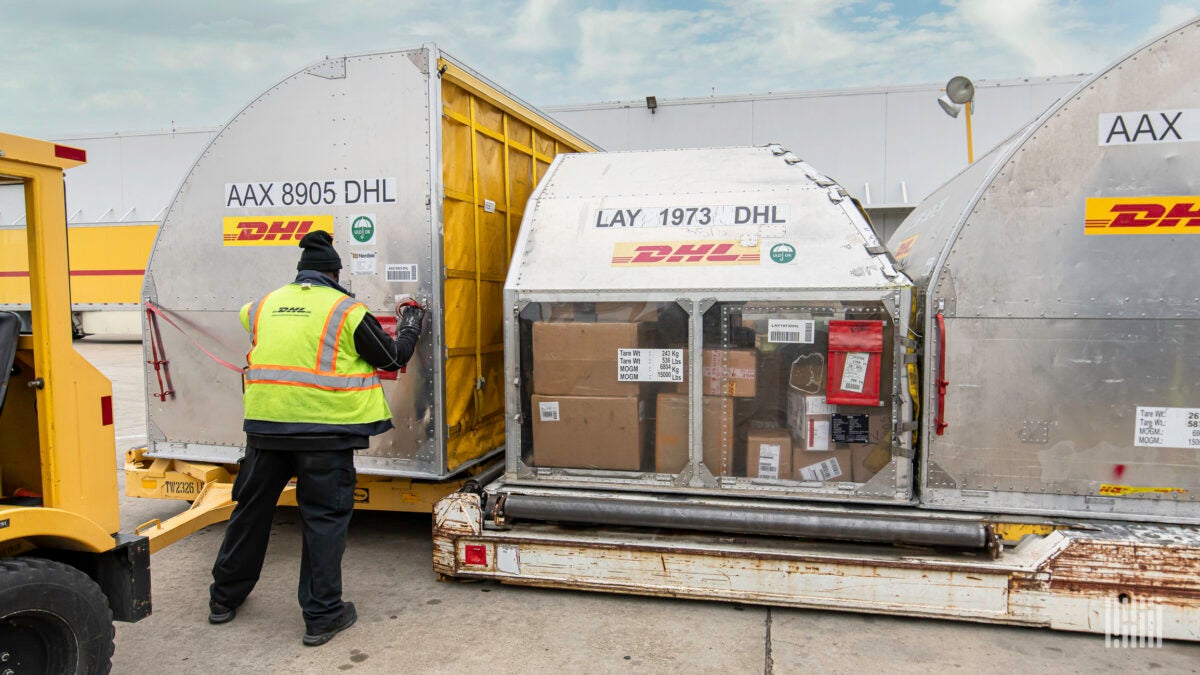
DHL ground workers in Cincinnati went on strike for 12 days in December. (Photo: Jim Allen/FreightWaves)

Pilots who voted against the FedEx deal complained about weaker job protections, back pay and alternative pension options and said pay increases were below those achieved by pilots at Delta, United and American. 

Meanwhile, 1,100 ramp workers at DHL Express’ Cincinnati air hub went on strike on Dec. 7, with the impact spreading as Teamsters members at other U.S. locations honored the picket line and refused to report for work. An agreement between the two sides was reached 12 days later.

Secondary airports

2023 saw continued interest from freight forwarders in smaller, less congested airports that are able to quickly carry out cargo transfers and lower cost. Kuehne+Nagel opened an air terminal for a chartered freighter at Birmingham Shuttlesworth Airport in Alabama, while DSV began dedicated freighter flights to Phoenix-Mesa Gateway Airport instead of the big Phoenix Sky Harbor Airport. Maersk Air Cargo is testing a route from Bournemouth Airport outside London. 

Hawaiian and Amazon

Hawaiian Airlines in October began flying cargo within Amazon’s air logistics network, an unconventional partnership that could have significant implications for both companies and competitors. It will receive more A330-300 converted freighters, provided by Amazon, in 2024 and eventually operate 10 freighters for the e-commerce giant. The partnership got more intriguing early this month when Alaska Air announced a deal to acquire Hawaiian Airlines for $1.9 billion.

Click here for more FreightWaves/American Shipper stories by Eric Kulisch.

Air cargo market: From ‘doom mongering’ to stability

Orders for freighter aircraft slow ‘to a trickle’

Daily Infographic: Preferred delivery? Free, fast and trackable


To view more FreightWaves infographics, click here

Labor, climate costs loom large for trucking in 2024

Trucks at truck stop

WASHINGTON — While election-year politics may gridlock Congress from passing meaningful truck-related legislation in 2024, the potential for a change in administrations could be a catalyst for finalizing two regulations that have major cost and operational implications for the industry.

Proposed rules to tighten standards for independent contractors and on carbon emissions from heavy trucks — both of which are undergoing final review at the White House — also fit squarely within the administration’s biggest policy priorities: labor and climate.

“We’re likely to see an already slow and increasingly paralyzed Congress slow further as both parties try to prevent the other from notching significant wins,” P. Sean Garney, co-director at Scopelitis Transportation Consulting, which specializes in trucking regulations and legislation, told FreightWaves. “Outside of a few must-pass pieces of legislation, I don’t expect much to get done unless an unexpected crisis emerges.

“Of course, the calculus for the administrative agencies tends to be a bit different. Here, the Biden administration will be looking to accelerate its agenda ahead of the election to show constituents it’s delivering on its promises.”

Randy Mullett, a transportation consultant and principal of Mullett Strategies, concurs that regulation — not legislation — will be the driving force behind trucking policy next year.

“I’m not too worried about legislation, because when Congress comes back from their holiday break they’re going to be focused on things like emergency funding for wars and federal budget extensions,” Mullett told FreightWaves. “And remember, the first presidential primary comes at the end of January.

“But the regulatory agencies are going to be smelling blood in the water, because we may have a change in administration, and if so, they’ll need to get any regulations out sooner rather than later,” Mullett said, to give final rules time to take effect before a new administration can attempt to repeal them.

One of the Biden administration’s agenda items, a new proposed rule addressing the distinction between independent contractors and employees, will “make waves when it’s delivered,” Garney said, given that analysis of the proposal shows it would likely tilt the playing field heavily toward employee status.

The policy change would place a heavier burden on trucking companies that rely on independent contractors to show that their drivers are in fact independent workers and not employees, potentially disrupting relationships that have been mutually beneficial to owner-operators and large carriers.

“Just because an owner-operator has a lease with one carrier for an extended period of time does not mean that they can only work for that carrier, or that they are dependent on that carrier for work,” according to the Owner-Operator Independent Drivers Association, in comments filed on the proposed rule. “Each individual case must be examined in its totality.”

It would also boost employment costs for carriers that choose to convert contractors to employee drivers.

Also anticipated to boost trucking costs is the Environmental Protection Agency’s new emission standards for heavy-duty trucks beginning in model year 2027 and extending to 2032. The new standards, which would rely heavily on a switch to electric vehicles, add roughly $15,000 to the cost of a new sleeper cab, according to EPA estimates.

EPA’s proposal went through a public comment period in 2023 and is scheduled for a final rule in March.

Truck parking, broker transparency prominent in 2023

Concerns over trucking costs in 2024 follow a year in which two other issues — truck parking and broker transparency — received a significant amount of attention.

Record amounts of federal funding were allocated to address a truck parking shortage that most government officials now consider to be at crisis levels.

At an event in September announcing the award of grant money for truck parking expansion in South Dakota, Transportation Secretary Pete Buttigieg recognized OOIDA and the American Trucking Associations for calling attention to the issue in a joint letter he received in 2022 from the two organizations.

“We took that very seriously — which is part of why, in the year and a half since then, we have stepped up our work on the Truck Parking Coalition, and our efforts to encourage states and other decision-makers to make better use of infrastructure dollars to expand parking,” Buttigieg said. “So, know that you will continue to have a partner in the U.S. Department of Transportation.”

Legislation that would set aside $755 million in grants specifically for truck parking is currently pending in the U.S. House and Senate.

While the lack of available truck parking has been a top five “critical issue” identified by the American Transportation Research Institute since 2015, it reached ATRI’s highest ranking this year as the No. 2 concern by the industry, behind the economy.

For small business truckers, the decision by the Federal Motor Carrier Safety Administration to delay action on broker transparency may have been their biggest frustration in 2023. Petitions were filed in May 2020 by OOIDA and the Small Business in Trucking Coalition pushing FMCSA to crack down on alleged price gouging by fraudulent brokers.

“FMCSA knows all about the fraud that’s going on, and we were told early in the year that there would be a rulemaking by June” of this year, OOIDA Vice President Lewie Pugh told FreightWaves. “Then they come out with a regulatory agenda that pushes it back to October of 2024. They’ve had our petition for more than three years, but they keep kicking this down the road while we keep getting ripped off.”

Action on safety-specific initiatives in 2024

From a safety perspective, the biggest issue affecting trucking likely will not be tied to a specific rulemaking, according to Garney. “Specifically, the industry is awaiting FMCSA’s final decision on how the CSA [Compliance, Safety, Accountability] Safety Measurement System will be improved,” he said.

“As a part of that, expected updates to FMCSA’s DataQ’s system and the Crash Preventability Determination program will have big positive impacts on motor carriers and is part of a wider strategy to improve law enforcement targeting and data quality.”

He added that FMCSA and its state partners will begin testing its Level 8 commercial vehicle inspections, which will be done electronically while vehicles are at highway speed with no direct interaction with an enforcement officer.

Such a step-up in how vehicles are inspected for safety “could dramatically change the way we interact with roadside enforcement in the future,” Garney believes.

Other safety-related rulemakings scheduled to roll out in 2024 include speed limiters for heavy trucks, automatic emergency braking and oversight of automated driving systems.

In addition, guidelines on the use of hair to test for drugs, which has been under review at the White House for much of 2023, could finally be published by the U.S. Department of Health and Human Services in 2024.

“Even if HHS finalizes it in 2024, DOT will still need to incorporate the HHS standard into the DOT drug testing rules that would allow industry to use hair as an alternative sample to urine or oral fluids, which could take another year,” Garney said.

Click for more FreightWaves articles by John Gallagher.

Logistics M&A slower but opportunities still there

NEW YORK — Even in the midst of an almost historic freight recession, in which it seems almost every part of the supply chain — truckload, warehouses, brokerages — has taken a hit in valuations, deals did get done this year. 

Two recent confirmations of that beyond the usual anecdotal evidence: One, the monthly report of Logisyn Advisors reported 43 transactions in the logistics sector in November alone (down from 46 in August and apparently less than the number of deals in November 2022) and two, a group of panelists at the recent Benesch Private Equity conference conceded the landscape for getting deals done is tough but not impossible.

The panelists spoke at the recent Benesch law firm’s Investing in the Transportation & Logistics Industry conference in New York, an annual December event that brings together the industry’s top dealmakers. The overriding message in the panel devoted specifically to M&A was that while the events of the past 18 months have often created a schism between what sellers want to receive and buyers are willing to pay, the gap can be bridged.

Ben Gordon, managing partner of Cambridge Capital, described the standoff in the market. “You have buyers saying, ‘I’m not willing to pay the 2021 multiples anymore,’” Gordon said, referring to the recent market peak. “Those multiples were on peak earnings. And meanwhile, there are a lot of sellers saying, ‘Hey, I remember how good things looked two years ago, why would I sell?’” The result is fewer deals, but not an elimination of deals. Getting a transaction done today “requires some creativity.”

For example, Gordon cited deals where if a cash transaction can’t get done, the buyer might be able to persuade the seller to take some sort of equity in the acquiring company. The stock might be valued in the deal at a level that harkens back to the top of the market, but it’s not the same as cash and it gets the deal over the finish line.

Mark Fornasiero, the managing partner at private equity investor Clarendon Capital, offered  similar advice. He recommended that investors “find something that’s bespoke to that particular opportunity.” If that approach is undertaken, “that means we think we can get good deals and invest really anytime in the cycle, depending on how open the owners are to creativity.”

The role of strategic buyers

Mikhail Kholyavenko, the president and CEO of Yusen Logistics, a provider of logistics services rather than just an investor in them, was on the panel representing “strategic investors,” those who are making acquisitions to bolster their current operations. He said despite the upheaval in valuations, his company’s approach has changed little. 

“We look at M&A as a tool,” Kholyavenko said. “That tool is supposed to help us get full capabilities.” While other strategic buyers may make acquisitions to provide scale, “we identify the areas where we need to get help and we pursue those.”

Paul Jones, managing director at Stifel, described the role of strategics by noting that “the key [as a seller] is to find the strategic buyer that wants exactly what you have, and then try to bring their managers to the table.” If that can be accomplished, synergies between the strategic buyer can combine with the knowledge of the operational managers and the financing advantages of the strategic companies — in some cases, publicly traded — can help get the deal done. 

One area that hasn’t found a way to break out of the doldrums has been sales of 3PLs. Most brokerages have seen a year-over-year drop in top-line revenue of 25%, “so it’s really hard to do a deal with the numbers that we’ve seen,” Jones said.

In 2021 and into 2022, according to Jones, the blazing hot freight market led to numerous 3PL deals that have now faded. Jones said the J.B. Hunt acquisition of the brokerage group of BNSF was the one significant deal involving brokerages this year.

“It’s just hard to do a deal when earnings are declining,” Jones said. About 75% of the companies in the logistics sector experienced “that dynamic this year, and it makes it very hard for buyers and sellers to agree on what a company is worth.”

By contrast, warehouse-related deals “have held up better than others,” Jones said.  

But Cambridge’s Gordon put himself out as somebody whose company is looking to do deals. He cited two companies in the Cambridge portfolio: BOA, which is an LTL carrier specializing in refrigerated transportation, and Everest Transportation Systems, which describes itself as a “tech-enabled freight brokerage, focused on over the road surface transportation.”

Add-ons to both those companies are being sought, Gordon said. “It’s not that we think we’d be buying a great business at a cheap price so much that we think the unit economics or combination make more sense.” 

Looking at Mexico and California

Another area of opportunity for acquisitions is Mexico, even if the company being acquired isn’t in Mexico but has a stake in cross-border trade. 

Gordon said there are companies that only want to do business in the U.S. and Canada and operating in Mexico or other countries is a challenge. “A lot of things will get screwed up,” he said. “There are a number of issues, whether regulatory or labor or taxes. There are many variables.”

But given the reshoring push and the waning of a commercial relationship with China that Gordon said dated back to Richard Nixon’s trip there in the early ’70s, ”there is more growth in other adjacent markets.” And Mexico is at the center of that for Cambridge. “We like Mexico, we believe in Mexico, we’re supporting Mexico,” he said.

Fornasiero also cited the opportunities in a land that draws a lot of disdain in the logistics industry: California. He conceded that there are plenty of companies that avoid the state at all costs, “but the flip side of that is if you’re really willing to understand how to do business there safely, you can make a lot of money.”

The California versus Mexico comparison was sketched out by Fornasiero as a trade-off. Moving into Mexico is an example of: “Hey, I want to be in this region because it’s growing the fastest or it’s the easiest to do.”

But looking at California leads to another conclusion, Fornasiero said. “Sometimes it’s the more tricky things that allow you to make some more money.”

More articles by John Kingston

Court kills CARB’s $30 reefer truck fee but refrigeration unit rules intact

Convoy autopsy continues: Panel sees capacity issues, lack of discipline

The inside story on how GlobalTranz and Worldwide Express came together

Flashback to enactment of Shipping Act of 1984

FreightWaves Classics is sponsored by Old Dominion Freight Line — Helping the World Keep Promises. Learn more here.

FreightWaves explores the archives of American Shipper’s nearly 70-year-old collection of shipping and maritime publications to showcase interesting freight stories of long ago.

In this week’s edition from the April 1984 issue, we take a step back in time to when the Shipping Act of 1984 was put into place. 

Maritime reform

Even discounting political rhetoric, clearly, the Shipping Act of 1984 will bring about major changes in the U.S. liner trades. The breadth and rate of change will not be determined solely by the Act itself; however, it will depend in large part on the implementing actions of the Federal Maritime Commission and the responses of carriers and shippers.

The major provisions of the Act, the opportunities they present, and some of the issues they raise are the focus of this article, but first, we offer a few general observations about the legislation.

That the Shipping Act of 1984 should have occurred at all is noteworthy. Measured by any current political yardstick, it is unusual, perhaps unique, legislation. Its philosophy and approach are almost diametrically at odds with the recent and more highly publicized “deregulation” statutes affecting the U.S. domestic airline, trucking, and railroad industries.

The new Shipping Act provides ocean common carriers operating in foreign commerce with more, not less antitrust immunity for their joint activities, including collective ratemaking. At the same time, it leaves in place a significant number of regulatory requirements and the regulatory agency (Federal Maritime Commission). By contrast, the domestic airline, trucking, and rail deregulation statutes greatly reduced carrier antitrust immunity (particularly for collective ratemaking), reduced sharply the number and scope of regulatory requirements, and either curtailed agency authority (Interstate Commerce Commission) or phased out the agency itself (Civil Aeronautics Board).

Precisely why Congress took this markedly different approach in the Shipping Act — and did so overwhelmingly — is a matter of political interpretation, but several considerations stand out. There was general agreement that the existing FMC regulatory system had become outmoded. The industry was and continues to be mired in the worst recession in memory. The carriers strongly pursued legislation, believing that while regulatory reform would not eliminate overcapacity or the worldwide recession, it would better equip them to cope with the dreary economic conditions. And the truly international character of ocean shipping played an important role in distinguishing it, in the eyes of the Congress, from the deregulated domestic airline, trucking, and rail industries.

Perhaps above all, the Congress passed the bill by such a clear margin because there was no out-and-out opposition to it. The Reagan Administration, through the Department of Transportation, took a unified position in support of most of the carrier-initiated reforms, thus precluding separate opposition from the Justice Department. By the time Congress reconvened in January of this year, the earlier and sporadic opposition to the bill from a consumer group and a few academics had disappeared. And, of critical importance, the users of the service, the shippers, did not oppose the legislation. Instead, they opted to support it — for a price. In particular, shippers sought and achieved new rights in negotiating with carriers and conferences and new restrictions on conference power.

The net result is that, under the new Shipping Act, ocean common carriers and conferences are given greater freedom at least initially to enter into cooperative agreements without extensive governmental preclearance or antitrust exposure. The trade-off is that carriers’ arrangements are now subject to greater commercial regulation by their shipping customers, who are provided by the Act with new legal rights. So ocean common carriers now move into an era of less government but more “marketplace regulation.”

Despite the significance of these changes, the Shipping Act of 1984, though lengthy, is not a complete rewrite of the 1916 Shipping Act, as amended (“the present law” or “present Shipping Act”). Interestingly, the basic elements of the present law are maintained. The more radical proposals were, one by one, discarded in the legislative process. Proposals to abolish the tariff system were rejected, as were suggestions to close conferences. Carrier antitrust exposure is not completely eliminated. Nor is carrier antitrust immunity phased out. The FMC remains as the regulatory agency charged with preventing carriers from engaging in practices Congress believes harmful to the foreign commerce of the United States. Thus, many of the new Act’s provisions simply restate and continue present law, while others reflect relatively minor changes.

But the Shipping Act of 1984 does contain many important new provisions, and the balance of this article will focus on the changes of broad interest.

Clear authority for intermodal conference agreements

The new legislation finally, and quite belatedly, catches up with the container revolution. In an era where container carriers offer inland routings and shippers have shown ever-increasing interest in purchasing intermodal, rather than port-to-port transportation, it is significant that the new law clearly provides that conferences may receive authority and antitrust immunity to set rates for intermodal services. The Department of Justice has disagreed with the FMC’s conclusion that, under the present Shipping Act, the FMC has authority to approve conference intermodal agreements. This difference of opinion between the two agencies has not been resolved by the courts. The new Act resolves this point in favor of intermodal authority. Combined with provisions relaxing government review of agreements, this change gives carriers a chance to compete for shippers’ intermodal cargo through the conference system. While there are no guarantees that intermodal traffic will be attracted to conference tariffs, this opportunity is critical to conferences. For it is no exaggeration to say that, without intermodal authority, it is unlikely that the conference system could survive.

The legislation also makes clear the precise nature of a conference’s intermodal rate-making authority. Under the new law, conference members may not agree on what are now called “inland divisions,” the amount that an ocean carrier pays to surface carriers to provide the ocean carrier with the inland U.S. transportation which the ocean carrier offers to shippers as part of a through movement. Ocean carriers must negotiate “inland divisions” individually with U.S. inland carriers. Ocean carriers may, however, discuss and agree upon what is now called the “inland portion” of an intermodal rate, the amount they charge to shippers for the inland service. Thus, with the new Shipping Act, it is finally clearly recognized that ocean carriers, which have been offering inland services to shippers for over twenty years, are in that business.

A new general standard eliminates a key obstacle to carrier agreements

The new Shipping Act establishes a new and more relaxed substantive standard to be applied in government review of agreements. Under the present law, the FMC may determine not to approve an agreement, even if it would comply with all other provisions of the Shipping Act, if the agency deems that the agreement is not in the “public interest.” This public interest standard, often referred to as a “general standard,” has been interpreted by the FMC and courts as giving very significant weight to the policies of the antitrust laws — policies which, to say the least, treat agreements between companies in the same industry with great skepticism.

The new general standard, section 6(g), allows the government to enjoin “substantially anticompetitive agreements,” those which are determined “likely, by a reduction in competition, to produce an unreasonable reduction in transportation service or an unreasonable increase in transportation cost.” While retaining some focus on competition, this test differs significantly from the public interest test. In particular, the legislative history behind section 6(g) makes clear that this new test removes any per se condemnation of collective activity such as might be applied under the antitrust laws. In the view of the authors of the provision, because of this shift from antitrust policies, the new standard “establishes a threshold for prompt approval of most generally accepted joint conduct in ocean shipping.” Conference Report, Shipping Act of 1984, H.R. Rep. No. 98-600, p. 32 (Feb. 22, 1984).

Thus, while the new general standard leaves some room for agreements to be disapproved, it represents a very considerable shift from past practice.

Major procedural changes in government review of carrier agreements

The new Shipping Act also makes major changes in the procedure for government review of carrier agreements. Under the present Act, the parties to an agreement may not implement it until it is approved by the FMC — and there is no time limit on FMC review of a proposed agreement. Thus, under the present system, agreements not infrequently remained before the Commission for years before a decision was reached. Carriers were discouraged from entering into agreements, sometimes believing that, by the time an agreement was approved, it could lose its commercial relevance.

The idea of the new law is that the government must act promptly and allow most agreements to be implemented promptly. And, even if the government decides to enjoin implementation of an agreement, it must reach that decision promptly, so that carriers will know where they stand and whether they should develop alternative approaches to business conditions.

Thus, the new law establishes, in section 6, that agreements do not require FMC approval before they go into effect — an agreement automatically goes into effect on the 45th day after filing unless, before that 45th day, it is either specifically enjoined or the FMC utilizes its power to extend the 45-day period by requesting additional data from the parties to the agreement. And the FMC itself no longer has authority to disapprove agreements. The power to enjoin agreements is given to the Federal courts in Washington, D.C., with the FMC having the burden of persuading the court that an agreement should be enjoined.

The novelty of this approach should not be missed. Under the new Act, the FMC, the nation’s expert agency on ocean shipping, cannot make the final decisions on carrier agreements which it deems undesirable; that task is given to a Federal judge, who may well have little knowledge of ocean shipping. The FMC does, however, have the authority to determine not to go to court, in effect approving agreements to which it does not object. That the FMC does not have the final say-so on all agreements also opens up the possibility that the agency will negotiate settlements with the proponents of an agreement before or after it files suit in court. Under present law, where the FMC is the decision-maker, negotiated settlements are virtually impossible.

One aspect of the new procedure creates a possibility for delay. As noted, section 6 provides the FMC with authority to request additional information from the proponents of an agreement. This authority was provided by Congress to allow the Commission to make a more informed decision as to whether an agreement should be challenged in court. This authority supplements authority provided in section 5(a), which allows the Commission to require that data be submitted with an agreement when it is filed. To the extent the FMC chooses to make supplemental data requests, the ability of carriers to promptly put into effect desired agreements will be delayed, as it will take time for the parties to respond to such requests (just as it will take parties time to assemble any data which the FMC may require to be filed with the agreement). 

However, the legislative history of the Shipping Act is clear that the Congress does not intend for the Commission to make excessive data requests, or make more than occasional use of this authority. How the FMC seeks to harmonize its appetite for data in support of an agreement with the Congressional objective of prompt implementation of agreements will be one of the more interesting developments under the new Act.

On the other hand, yet another major change will tend to expedite implementation of agreements. The new Act flatly denies interested third parties, including competitors, any right to force the FMC to go to court or any right to intervene in court proceedings where the FMC is challenging an agreement on the grounds that it does not meet the new general standard. This change will presumably end the single largest source of litigation under present law, namely, protests by carriers seeking to prevent (or at least delay) competing carriers from forming joint services, space charters, and similar arrangements. Under the new Act, third parties may advise the FMC of their views as to how an agreement should be treated under the new general standard, but it is solely up to the FMC to determine whether an agreement should be challenged in court.

FreightWaves Classics articles look at various aspects of the transportation industry’s history. Subscribe to our newsletter!

Have a topic you want us to cover? Email bjaekel@www.freightwaves.com.

How safe is Red Sea? Different shipping lines have different answers

a photo of military operations; ships are under attack in the Red Sea

The security situation in the Red Sea continues to drive shipping stock prices both up and down. Longer voyage distances due to detours around the Cape of Good Hope reduce effective capacity, a positive for freight rates, and thus share pricing. Conversely, if fewer ships divert, fleet capacity is preserved and stocks fall.

The bullish stock thesis going into the Christmas break was that all container lines would continue to divert vessels due to concerns over crew safety, regardless of Operation Prosperity Guardian (OPG), a U.S.-led military effort to patrol the Red Sea.

That thesis turned out to be wrong. Different container lines are now assessing the Red Sea risk differently. Some lines are planning to resume transits through the Bab-el-Mandeb Strait off Yemen.

The effect of this change is most visible in share-price gyrations of Israeli container line Zim (NYSE: ZIM), a company whose earnings are highly leveraged to spot rates.

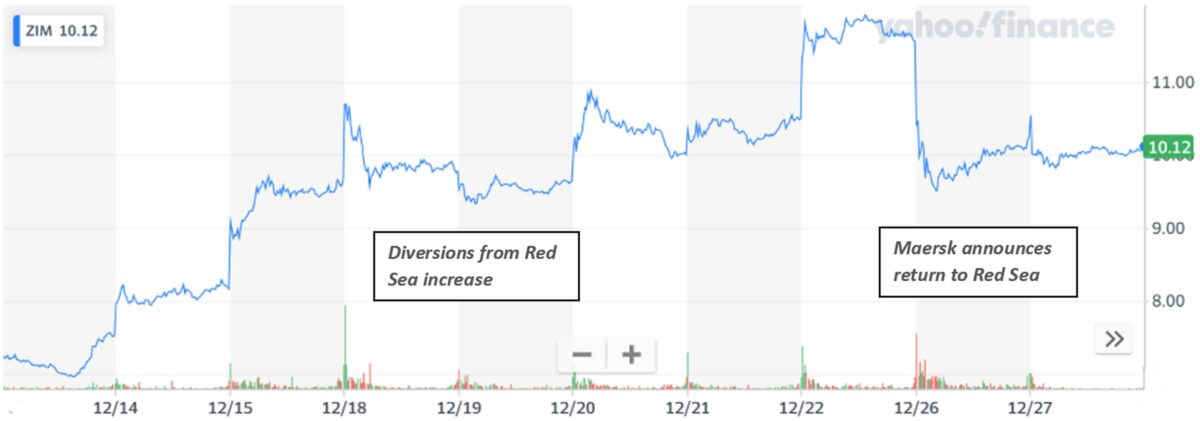
Zim’s stock price surged 60% between Dec. 13 and Friday as Red Sea diversions increased, then plunged as much as 18% in mid-day trading on Tuesday following news of fewer detours by ocean carrier Maersk. Tuesday’s trading in Zim’s stock was more than quadruple average volumes.

chart of Zim share price and effect of Red Sea diversions
Zim share price from Jan. 13 through Wednesday. (Chart: Yahoo Finance)

Other shipping equities, including both container and tanker stocks, also pulled back on Tuesday and Wednesday, presumably pricing in a less extreme view on future detours.

Maersk and CMA CGM headed back to Red Sea

Two carriers plan to resume Red Sea transits despite intensified missile and drone launches — including an attack on the container ship MSC United VIII on Tuesday that one MSC executive said was “extensive” and had the potential to be “catastrophic” — and a new agreement on bonuses and compensation for seafarers due to the “exceptional” risk they face.  

“With the OPG initiative in operation, we are preparing to allow for vessels to resume transit through the Red Sea both eastbound and westbound … as soon as operationally possible,” said Danish carrier Maersk on Sunday

French carrier CMA CGM said Tuesday, “We are currently devising plans for the gradual increase in the number of vessels transiting through the Suez Canal.”

FreightWaves asked Maersk if it had reassessed its decision to return to the Red Sea in light of Tuesday’s attack on MSC United VIII. It has not.

“We continue to prepare our vessels for passage through the Red Sea,” a Maersk spokesperson told FreightWaves on Wednesday.

However, he conceded that “the overall risk in the area is not eliminated completely,” and said “Maersk will not hesitate to re-evaluate the situation and once again initiate diversion plans if we deem it necessary for the safety of our seafarers.”

MSC and Hapag-Lloyd will continue Red Sea detours

In contrast to Maersk and CMA CGM, Germany’s Hapag-Lloyd and Switzerland’s MSC will continue to divert from the Red Sea — regardless of Operation Prosperity Guardian.

“The situation remains too dangerous to cross the Suez Canal and therefore we will maintain our diversion around the Cape of Good Hope,” said Hapag-Lloyd on Wednesday.

MSC said Tuesday that it “will continue to reroute vessels booked for Suez transits via the Cape of Good Hope.”

At least some MSC ships have continued to transit, however. The 8,200-twenty-foot-equivalent unit MSC United VIII was en route from Saudi Arabia to Pakistan when it was attacked.

Details on the incident are limited. U.S. Central Command (CENTCOM) said no commercial vessels were hit on Tuesday. MSC said that no on was injured and that “a thorough assessment of the vessel is being conducted.”

Bud Darr, executive vice president of maritime policy and government affairs at MSC, revealed in an online post on Wednesday night that the attack on the MSC United VIII “had the potential to be quite catastrophic.”

“It is unfortunate to have to admit, but this sea lane is not safe for our seafarers,“ wrote Darr. “I genuinely hope the military operators and diplomats can change that very soon, but for now, no seafarers should have to endure what ours did during this extensive attack yesterday.“

Barrage of drones and missiles from Yemen

According to CENTCOM, the destroyer U.S.S. Laboon and Hornet jets launched from the aircraft carrier U.S.S. Dwight D. Eisenhower intercepted and destroyed 12 suicide drones, three antiballistic missiles and two cruise missiles fired by Yemen’s Houthi rebels at targets in the Red Sea during a 10-hour barrage on Tuesday.

The action continued on Wednesday: UK Maritime Trade Operations (UKMTO) reported a missile sighting, an explosion, and two additional incidents.

Meanwhile, newly enacted compensation rules highlight the ongoing danger to seafarers even as more container ships plan to run the gauntlet through the Bab-el-Mandeb Strait.

The International Bargaining Forum (IBF) agreed on Friday to designate the southern Red Sea and Bab-el-Mandeb Strait as a high-risk area. Seafarers whose contracts are covered by IBF agreements will receive a bonus equal to their basic wage for the duration of the transit and double compensation in the case of death or disability.

The IBF decision also requires transiting ships to enact mandatory security arrangements equivalent to International Ship and Port Facility Security Code (ISPS) Level 3. ISPS Level 3 is reserved for an “exceptional” threat in which “a security incident is probable or imminent.”

Click for more articles by Greg Miller