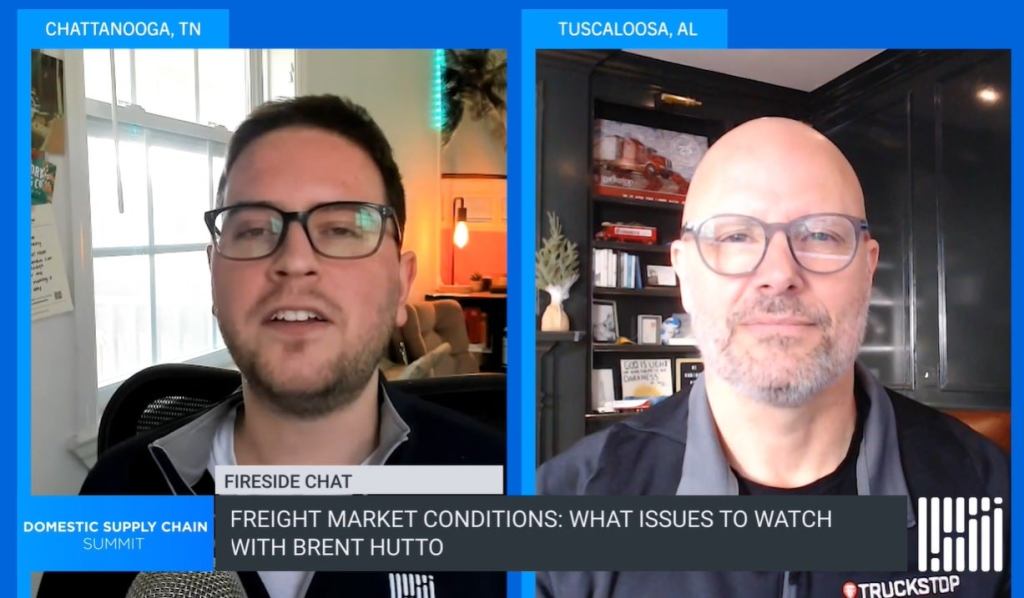
Trucking fundamentals unlikely changed in first half of 2024, Hutto says
This fireside chat recap is from FreightWaves’ Domestic Supply Chain Summit on Wednesday.
FIRESIDE CHAT TOPIC: Freight market conditions and what to keep an eye on in 2024.
DETAILS: Brent Hutto, chief relationship officer at Truckstop.com, explains the recent spot market cycle and why current conditions will likely linger through the first half of 2024.
KEY QUOTES FROM HUTTO:
On why this spot market cycle has been different:“What’s not been normal is fuel. What’s not been normal is inflation and that makes things really hard, especially on small market players. So that’s why you see a lot of the pain inside of the spot market.”
On 2024 outlook:“Kind of more of the same. Kind of just continuing to work out this giant marketplace that we had. Since it increased so much, it’s going to take a little bit longer to get out. These next six months [are] probably just more of the same.”
Why contract rates have remained elevated in comparison to spot rates: “Most shippers don’t want to take the risk of not being able to get goods to market. … [Carriers operating under contracts] have been able to maintain a really positive contract rate inside the marketplace.”
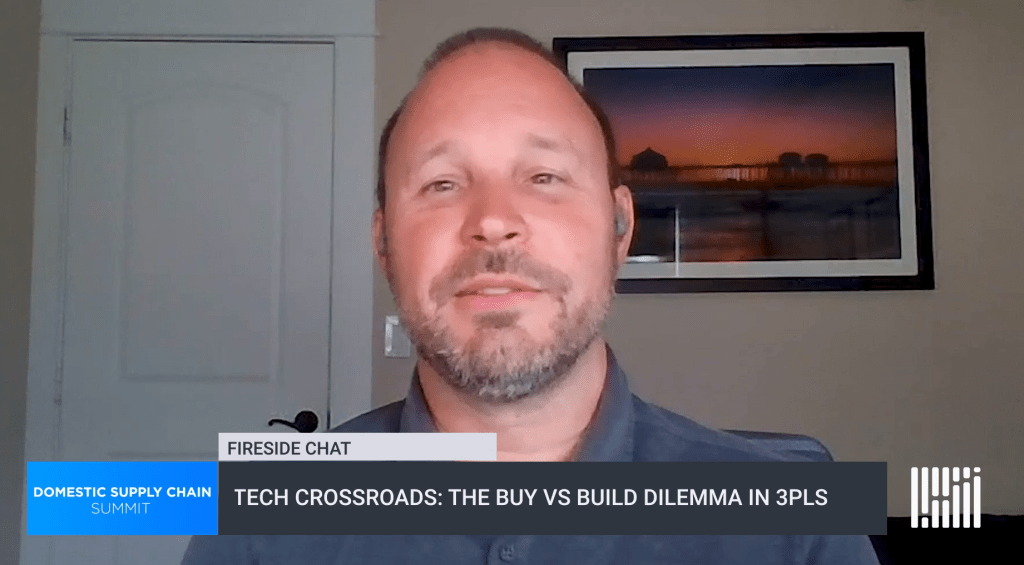
Security, customer benefits key to buy-or-build TMS dilemma
This fireside chat recap is from FreightWaves’ Domestic Supply Chain Summit on Wednesday.
FIRESIDE CHAT TOPIC: Tech crossroads: The buy-vs.-build dilemma in 3PLs
DETAILS: As 3PLs look ahead to 2024, Walter “Mitch” Mitchell, CEO of Tai Software, and FreightWaves’ Mary O’Connell break down the pros and cons of buying or building a transportation management system. Tai, headquartered in Huntington Beach, California, is a fully integrated freight broker platform for freight management and transportation.
KEY QUOTES FROM MITCHELL:
“There’s two real big factors that we’ve got to think about: One is security and number two is, are we building something that’s part of our core business? And so as a freight broker, I think it applies to a customer relationship management (CRM), as well as a TMS or even an email client.”
“When we think about build versus buy, what I think we want to be really talking about is, is there a real added value to spending that many resources and distracting my business from its core work to building something that’s a TMS that I can buy off the shelf. And that even applies to us as a technology company. We don’t build a CRM, we buy a CRM, and then we adapt it to our needs.”
“We as a software company want to focus our time and energy on building products that help our customers. And as a freight broker, I think they should do the same thing. Focus your energy on building things and building your business in areas that benefit your customer, and then allow technology to come in to help you out and then supplement it.”
2023 Shipper of Choice profile: BASF Corp.
The Shipper of Choice award, presented by FreightWaves and sponsored by TriumphPay, recognizes the manufacturers, distributors and retailers that do the best job of keeping the American economy moving by fighting driver detention, providing accessible facilities and understanding what it takes to remove inefficiencies from the supply chain.
Florham Park, New Jersey-based BASF Corp. is the North American affiliate of BASF SE, the world’s largest chemical producer.
BASF Corp. has 11 divisions grouped into six segments: chemicals, materials, industrial solutions, surface technologies, nutrition and care, and agricultural solutions.
About BASF
North American headquarters:
Florham Park, New Jersey
2022 Global sales:
€87.3 billion
2022 Global net income:
€6.9 billion
2022 North American sales:
€24.3 billion ($25.7 billion)
Shipper of Choice history:
First appearance
Why BASF Corp. is a Shipper of Choice
For a company to be successful for 158 years, as BASF has, positive shipper-carrier relationships are a necessity. And over the last several years, the company has been looking to step up its game.
“We were thrilled when we won the Shipper of Choice award, because we have been doing a lot specifically in this area, and winning was a recognition of our work,” BASF Director, Logistics Procurement for North America Michael Vogt told FreightWaves.
“As a shipper, when the market’s tight, we want carriers to want to do business with BASF and we don’t want to have to pay a premium for that to happen.”
To help make that happen, Vogt, who is responsible for roughly 400,000 loads a year, has overseen a variety of programs aimed at being more shipper friendly and more focused on truck drivers’ time while on site.
For example, at two massive manufacturing sites on the Gulf Coast — Freeport, Texas, and Geismar, Louisiana — BASF has created drop yards outside plant security. This allows drivers to pick up trailers just outside the main gates and save time by bypassing the required — and sometimes lengthy — security process to enter the site.
At BASF’s Wyandotte, Michigan, facility, the drop yard is actually inside the gate. “So for those local drivers we have a fast-pass program, where once they’ve gone through the security and safety qualification process they’re issued a contractor badge so they can then bypass security, because they now have access to the yard but in a secure way,” Vogt explained.
“We recognize that drivers make more money when they’re out driving versus sitting earning detention dollars, so we want to get them on their way and not burning up their hours of service.”
On a carrier level, BASF “score-cards” its core carriers and has regular dialogues with them to work out issues that come up and get ahead of others.
“It’s a back and forth,” Vogt said. “If there are bright spots on the card we want to give them credit, but if there are blemishes we want to talk about improvements. And it’s a two-way street, because those blemishes might be because of something falling short on our side. This gives us a chance on a management level to make changes to our operations to ensure a smooth logistics flow.”
Recognizing the receiver
Being a shipper of choice is evolving for BASF, Vogt pointed out, in that it recognizes there are three parties involved in the movement of goods: shipper, carrier and receiver.
“If a driver is giving us feedback saying, ‘Hey, every time I go to your receiver customer X we’re getting held up,’ we’ll try to address the problem directly with that particular customer through our sales team,” he said.
“We recognize that even if we’re a great shipper to work with, if the receiver is a destination that drivers don’t want to go to, that doesn’t help us. We want to make our customers be a pleasure for our carriers to do business with as well.”
About Shipper of Choice sponsor TriumphPay
TriumphPay is the transportation industry’s premier payment network, trusted by leading shippers, brokers, factors and carriers. Its innovative and highly automated fintech payment solution brings cost savings and efficiencies to antiquated transportation payment processes for network participants. Integrated financing options leverage the strength of TriumphPay’s parent bank and can provide liquidity and cash flow visibility.
TriumphPay is a division of Triumph Financial, Inc. (NASDAQ: TFIN).
Top 10 FreightWaves Classics of 2023
FreightWaves Classics is sponsored by Old Dominion Freight Line — Helping the World Keep Promises. Learn more here.
Logistics and transportation have a long, storied past with countless anecdotes that can be both gripping and informative. This year, FreightWaves Classics covered many of these stories and we plan to continue in the new year!
In case you missed some, we’ve compiled a list of the most read articles of 2023.
The deadliest bridge collapse in modern history
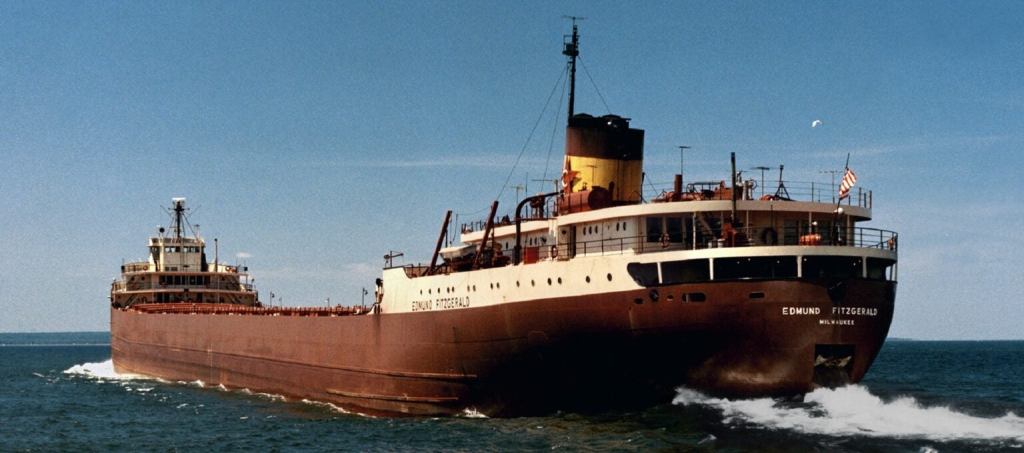
Was Gordon Lightfoot’s song about the Edmund Fitzgerald accurate? “The Wreck of the Edmund Fitzgerald” is a 6.5-minute tune about the sinking of a ship and is told with surprising historical accuracy. FreightWaves Classics took a close look at the story, the aftermath and interesting facts behind the song.
Experimental propeller in 1975 breaks midtrip, but crew notices no difference In 1975, two identical ore/bulk/oil ships underwent efficiency experiments. During one of these experiments, a new propeller concept broke midjourney, but the ship continued its duty with no changes in performance and the crew had no idea until it reached its destination.
Following the Norfolk Southern train derailment in Ohio in February, we looked back at some of the worst train disasters in history. The incidents highlight the importance of safety and infrastructure.
Famous Oscar Mayer Wienermobile stands test of time Debuting in 1936, the Oscar Mayer Wienermobile was created as a marketing device and to transport the company spokesman. The unique transportation method went on to symbolize the meat brand.
30,000 pounds of spilled bananas immortalized in song and story In 1965 a truck driver sacrificed himself to save others as his brakes failed on a steep hill while he was transporting bananas. The compelling story became the subject of a folk song by Harry Chapin almost 10 years later.
Route 66: How the Mother Road helped connect America So much of the history of the United States can be traced back to Route 66, including major growth in the trucking industry. It is a highway so famous a song was written about it. The song and the highway are still well known today, despite the road no longer being in existence.
New York’s mail once carried by underground tubes Did you know there was a system of tubes under New York City that used to carry the mail? Unique ways of shipping have popped up throughout history, each designed to create speedy and convenient ways of delivering goods and mail. One of the most interesting appeared in New York City more than a century ago.
How Australia lost a war with emus After World War I, veterans took up farming and provided food supplies and wheat to western Australia. But when emus began to threaten that supply chain, another war broke out. The emus won.
A shipment of shoes led to an ongoing dispute A story from 1976 shows a battle between a shoe manufacturer and a shipper over what the former believed was an “unreasonable rate.” The company-versus-company drama exhibits the complexity of international trade.
RXO sees ‘too much capacity’ in trucking heading into 2024
The pace of the capacity shakeout in trucking needs to increase before the industry can begin seeing healthier profits, according to one of the country’s largest freight brokers.
“We’ve seen capacity exits basically every single month in terms of net revocations since October of 2022,” said RXO Chief Strategy Officer Jared Weisfeld during a keynote discussion to kick off FreightWaves’ Domestic Supply Chain Summit on Wednesday.
“That’s encouraging, but not yet at the pace that’s required to bring that load-to-truck ratio above where it is right now, which is about 3-to-1. The long-term average is about 4-to-1. You’ll start seeing the spot market re-emerge when we start seeing that punch up above that. There’s still too much capacity in the market.”
Asked by FreightWaves carrier expert Thomas Wasson for a 2024 market prediction, Weisfeld, who is also responsible for analyzing growth opportunities and engaging with investors, said it’s difficult to predict a freight recovery in the context of an economic chart.
“Will it be a ‘V,’ a ‘U,’ an ‘L’? I think the shape of recovery, and how steep it is, will depend on the rate of carrier attrition heading into 2024, as well as impacts associated with higher interest rates, student debt repayments, and potentially higher unemployment on consumers and the related impact to aggregate demand.”
Weisfeld, an expert in technology-sector financial analysis, has been with RXO (NYSE: RXO) since the freight brokerage was spun off from LTL carrier XPO last year. He saw the company generate $1 billion in revenue in the third quarter of 2023 (compared with $1.1 billion in 3Q22), with full-truckload brokerage volume increasing 13% year-on-year in the quarter and LTL brokerage volume increasing 55%.
“When we look at our business, the one vertical that did show some deceleration on a year-on-year basis was industrial and manufacturing,” Weisfeld told Wasson, noting that the sector grew but at a lesser rate. “I think that’s consistent with the overall industrial economy, which was in contraction territory in 2023. That’s something to watch going into 2024 in terms of the health of the industrial economy.”
As a major player in freight brokerage, RXO’s customers also include major retail and ecommerce customers, many of which had elevated inventory levels at the start of 2023.
“When you think about the last three to four quarters and the largest retailers in North America, their revenue growth has outpaced the inventory dollar growth. So we’re entering 2024 with a significantly better inventory position,” Weisfeld said.
But that could change, he cautioned, depending on consumer demand. “The health of the consumer is particularly important — you can have reasonable inventory levels, but if aggregate demand lowers, those inventories can get bloated pretty quickly.”
Taking advantage of opportunities and trends
Weisfeld advised companies involved in the domestic supply chain to resist putting off investing during the current economic downturn while also using the time to build customer relationships.
“At the heart of our platform is significant technology investment that we made since day one of the business, leveraging pricing algorithms that we believe are best in class,” he said. “You have to use the soft part of the freight cycle to continue to invest and get closer to customers and servicing the freight, which is what we’ve been doing. That will allow for outperformance into 2024. By not doing that, you’re not going to be positioned for when the cycle inflects.”
A trend that Weisfeld believes will continue to gain traction is the influence of truck brokerage in the freight market.
“If you look at 3PL/brokerage penetration as a percentage of the for-hire truckload market, we estimate about a year ago it was around a low 20%,” he told Wasson, up from close to 10% a decade ago.
“If you’re a shipper and can get better access to technology, incredible service, more flexibility — we think that penetration can increase to 40-50% over the long-term, as a percentage of the $400 billion for-hire truckload market. We think RXO is going to be a winner in that trend.”
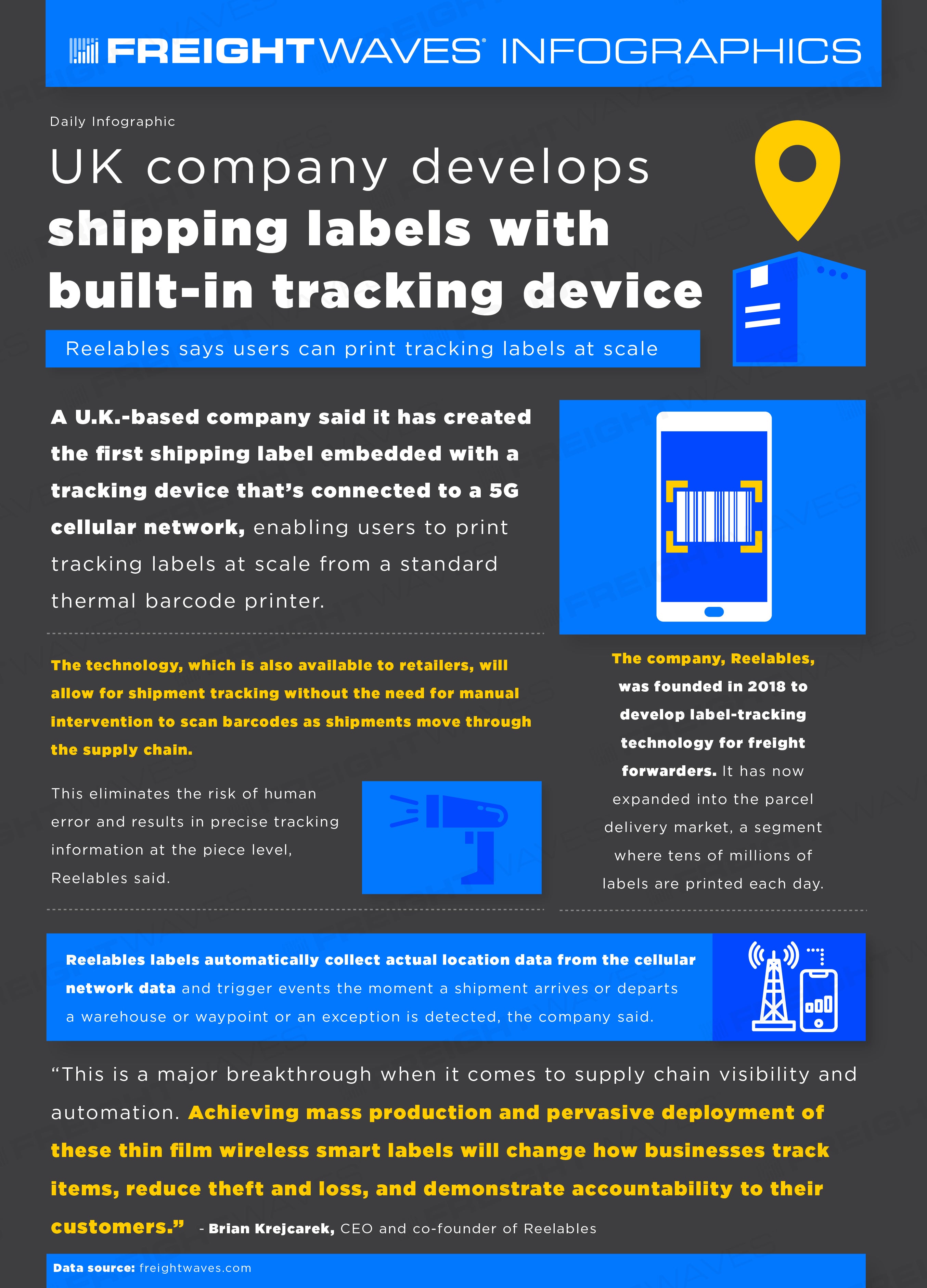
Daily Infographic: UK company develops shipping labels with built-in tracking device
To view more FreightWaves infographics, click here
The top US-Mexico business stories of 2023
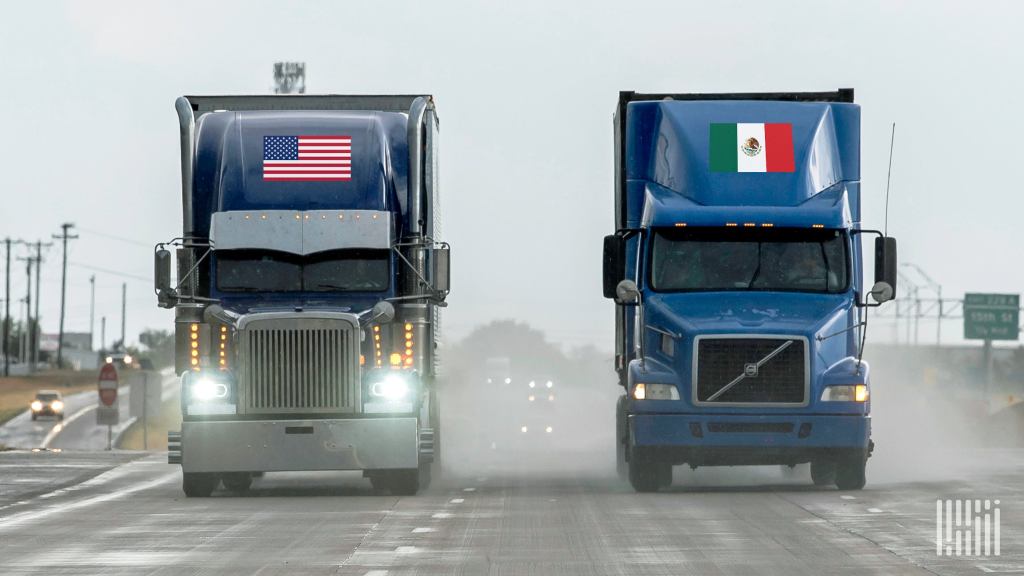
It’s been a busy year for cross-border trade, with everything from Mexico replacing China as the top U.S. trading partner to Tesla’s announcement that it would build a $5 billion electric vehicle plant in the Mexican city of Monterrey.
Other major headlines include the Mexican peso’s appreciation over the past year, nearshoring’s growth in northern and central Mexico, as well as cargo theft continuing to cause problems for commercial transporters across the country.
As 2023 comes to an end, here’s a look back at five of the biggest stories.
Mexico is biggest US trading partner in 2023
Mexico continued to solidify its place as the United States’ top trading partner in 2023, surpassing China and Canada in two-way trade.
From January through October, Mexico’s trade with the U.S. rose 2.57% year over year to $672.59 billion, according to a WorldCity analysis of the latest Census Bureau data.
Canada ranked second in trade with the U.S. through the first 10 months of the year, totaling $648 billion in two-way trade. China ranked third at $480 billion.
Mexico was the United States’ top trade partner in October, with two-way commerce totaling $72.8 billion. It’s the 10th time in the past 11 months that Mexico ranked No. 1 in total trade with the U.S. (Read two of FreightWaves’ articles here and here.)
Cars, commercial trucks and auto parts are the top commodities traded and transported between the U.S. and Mexico. Other goods that flow between the two countries include everything from oil and gasoline to computer chips, computer parts, TVs, medical devices, industrial machinery, corn, tomatoes, berries, avocados, potatoes, beef and pork.
Tesla announces $5 billion electric vehicle factory in Mexico
In March, electric automaker Tesla (NASDAQ: TSLA) announced it would build a $5 billion factory in the Mexican city of Monterrey.
The news was hailed by Mexican authorities as the one of the biggest wins for its manufacturing sector in years.
“The richest man on earth trusted Nuevo Leon, Mexico, for his new gigafactory and his next generation vehicle. The future is bright,” tweeted Samuel Garcia, governor of the Mexican state of Nuevo Leon.
Monterrey is the capital and largest city of the northeastern state, which is located about 140 miles from Laredo, Texas.
Tesla CEO Elon Musk said the plant would produce a new line of electric vehicles and would start production in 2025.
Tesla CEO Elon recently said the factory in Monterrey, Mexico, may take longer to construct than originally planned as the company faces pressure from interest rates and the global economy. (Image: Tesla)
Musk recently said the Monterrey factory may take longer to construct as the company faces pressure from interest rates and the global economy.
“I think we want to just get a sense for what the global economy is like before we go full tilt on the Mexico factory. I’m worried about the high interest rate environment that we’re in,” Musk said during the company’s third-quarter earnings call with analysts in October.
Musk recently told automotive industry veteran Sandy Munro the company’s upcoming $25,000 EV car will be put into production first at its plant in Austin, Texas, then in Mexico, once the Monterrey facility is completed.
Mexico is poised for growth through nearshoring
With shifts in global supply chains and ongoing political tensions between the U.S. and China, Mexico has benefited from nearshoring and reshoring efforts by manufacturers in recent years.
Nearshoring is the relocation of production and manufacturing operations from one country to another that is closer to the final consumer, in this case the United States.
Mexico attracted more than $106 billion in foreign direct investment (FDI) announcements during the first nine months of 2023, according to the Mexican government. More than 40% of the FDI investments ($42 billion) originated from U.S.-based companies opening facilities in Mexico.
“From January through November, the private sector made 363 investment announcements in our country, creating 226,792 new jobs, 42% of which are associated with the automotive industry,” Mexico’s Ministry of Economy posted on Facebook.
Mexico offers transportation options that are shorter and less expensive than those from Asia, a lower-cost labor force and a country causing fewer trade concerns compared to China.
While nearshoring in Mexico is starting to become a reality on a large scale, the country faces fierce competition for foreign manufacturing investments from countries such as India, Vietnam, Thailand and Malaysia. China will also continue to fiercely fight for its share of the global market.
Mexico’s peso rises in value, affecting cross-border freight rates
As Mexico begins to ride its nearshoring wave, the country’s rising peso could pose challenges for U.S.-Mexico trucking.
As of Tuesday, the peso’s value was trading at 17.30 per U.S. dollar. On July 28, the peso’s worth reached its highest value against the dollar since late 2015 when it sat at 16.63 pesos per dollar. Since then, the peso’s value has fluctuated around 17 per dollar.
A strengthening peso and tightening trucking capacity could create challenges for cross-border trade with the U.S., according to supply chain and logistics expert Matt Silver.
“The biggest impact that we’re seeing from the peso’s change is on purchasing transportation,” Silver told FreightWaves in August. “With carriers in Mexico, they do business in pesos, they pay their expenses in pesos, their employees are paid in pesos. But if the trucking company is moving cross-border shipments, there’s a very good chance that they’re getting paid in U.S. dollars.”
Silver said cross-border shippers and carriers need to keep an open line of communication regarding the peso.
“My advice is really about having an open conversation with carriers while paying attention to the market and understanding if things will normalize between the two currencies,” Silver said. “If we can get back to that 20 peso-to-dollar ratio, then you start to feel a little bit better about where things are. But if it stays where it is for a prolonged period of time, then you might have to revisit rates again.”
Cargo theft across Mexico continues to hinder cross-border trade
2023 will go down as the year with the most reported cargo theft cases across Mexico, according to authorities.
Mexico’s National Association of Vehicle Tracking and Protection Companies (ANERPV) recently reported that cargo theft registered 9.5% year-over-year growth during the first 11 months of the year.
In November, ANERPV recorded 306 cargo theft cases across the country, averaging more than 10 a day.
The threat of cargo theft in Mexico was serious enough that one of the country’s largest trucking associations — the Mexican Alliance of Carrier Organizations (AMOTAC) — threatened to go on strike in August if federal and state authorities did not implement more protective measures across roadways.
Cargo theft across Mexico is up 9.5% year-over-year from January through November, compared to the same period in 2022. (Photo: Shutterstock)
The strike was postponed after federal authorities showed a willingness to listen to AMOTAC’s concerns, which also included higher operating costs, complicated vehicle registration, excessive toll fees, extortion by authorities and more.
One of the major agreements included the country’s National Guard meeting monthly with AMOTAC officials to create enhanced safety measures on the country’s roadways to combat cargo theft. The National Guard oversees protection of Mexico’s highways.
Cross-border operators said Mexico still has a long way to go before its roadways see any declines in daily cargo theft incidents.
“Cargo theft is a big problem. The violence is a big problem,” Jorge Canavati, a principal at San Antonio-based J. Canavati & Co., recently told FreightWaves. “The insurance rates for cargo are just going up and up and up.”
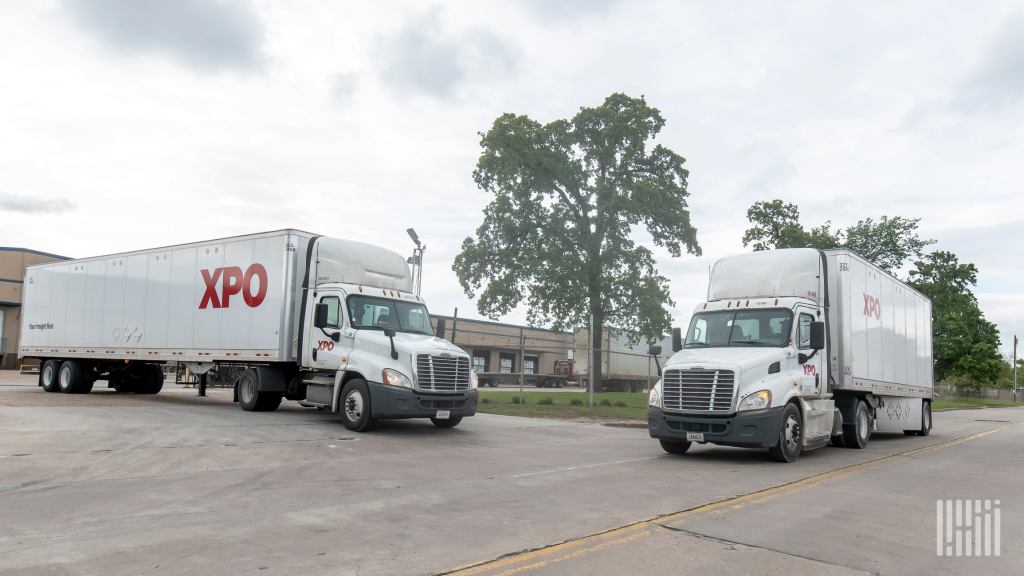
Less-than-truckload carrier XPO will look to deploy a “once-in-a-generation” acquisition of terminals in the coming months. On Tuesday, a Delaware bankruptcy court approved the $870 million sale of 28 of Yellow Corp.’s service centers to the company.
XPO’s (NYSE: XPO) acquisition agreement is one of roughly 20 deals struck at a recent auction of Yellow’s real estate. In total, the first wave of sales includes 130 terminals at a total purchase price of $1.88 billion.
“In LTL, these assets don’t come by often,” XPO CEO Mario Harik said in an interview, referencing the anticipated addition of 120 acres in Carlisle, Pennsylvania, near Interstates 81 and 76 as well as nearly 50 acres at a site on the outer loop west of Nashville, Tennessee.
The company is also taking on new terminals in other areas it has targeted for growth, like Atlanta, Columbus, Ohio, Indianapolis and Nogales, Arizona, among others.
The acquisition agreement includes roughly 3,000 new doors compared to XPO’s current count of 17,000. However, in some areas it will only be replacing an existing site with a larger location. Harik said a new site in Brooklyn, New York, will increase its door count from 30 to 75.
Additional space in some markets is expected to improve dock efficiency and cut down the number of times a door needs to be turned each night, which means a reduction in paid hours. The process will also allow XPO to reduce “pedal time,” or the distance between driver and freight, in other areas.
All told, Harik estimates the entire acquisition will net a 10% to 15% increase in door capacity across the network.
He said the additional space will allow it to continue to improve its service offering to customers and raise prices to levels commensurate with the upgrades. Last week, the carrier said it achieved a record low for damage frequency during the first two months of the fourth quarter.
“We are incredibly excited about the outcome,” Harik added. “We were able to get some large facilities, a lot of acreage … doors that will help us effectively grow in markets where we see demand growing over the next 10 years.”
XPO will phase the opening of these sites based on market demand and the readiness of the facilities, some of which need repairs and all of which need rebranding. He said the process will occur throughout 2024 and into early 2025.
Harik said the acquisition represents roughly five to 10 years of its traditional facility growth plans. However, the company still plans to add locations in other markets as demand dictates.
XPO recently announced a new bridge loan to fund the deal. It plans to issue $585 million in a private notes offering and will obtain $400 million in term loan debt. Those facilities will be used to repay the bridge and refinance other debt.
Harik said debt leverage will increase from 2.2 times trailing adjusted earnings before interest, taxes, depreciation and amortization at the end of third quarter to the low-3x range. The company expects to deleverage the balance sheet in time and hit a longer-term target of maintaining investment-grade debt ratings.
The deal is expected to be accretive to adjusted EBITDA but dilutive to adjusted earnings per share in 2024. In 2025, the deal is expected to be accretive to adjusted EPS.
Harik doesn’t believe the capacity additions will create an imbalance in the market. He said the company is already covering 99% of all zip codes and noted that most of the new terminals are going into an existing market as a relief valve or to accommodate market share wins. The efficiency gains are expected to far outweigh modest increases in depreciation or lease expenses.
XPO plans to close on the transaction before the year ends.
“This lets us run more efficiently with a better cost structure and importantly better service [while] being able to capitalize on any type of freight upswing from a demand perspective,” Harik said.
Fuel cell-powered mining trucks next up for GM Hydrotec
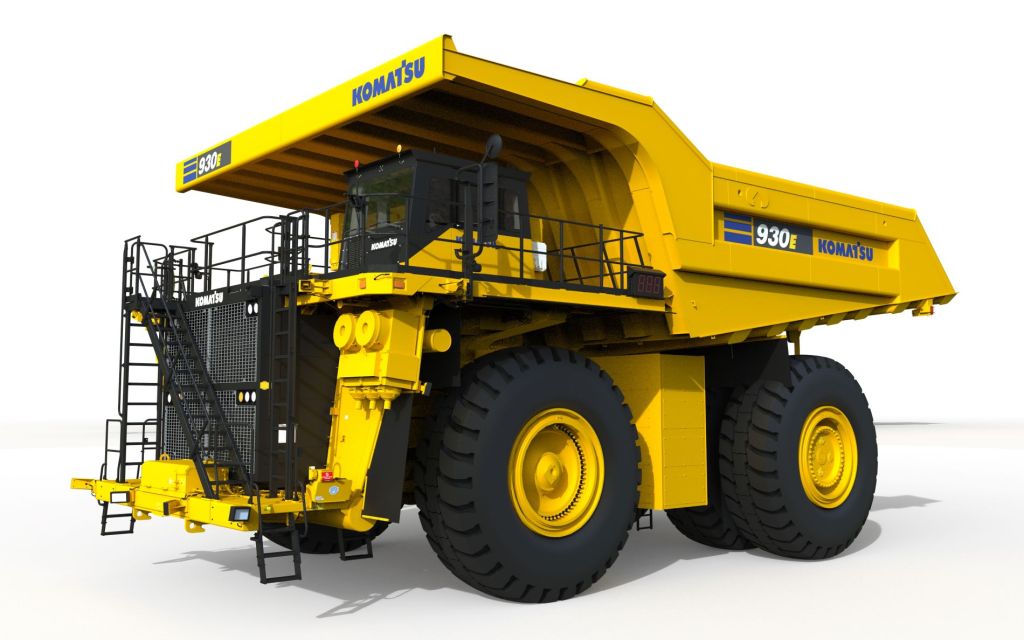
An array of fuel cell power cubes from General Motors will power Komatsu’s massive off-roading mining trucks by mid-decade — each operating with more than 2 megawatts of hydrogen power.
The use of multiple fuel cells to provide power to the massive off-highway Komatsu’s 930E electric drive mining truck is an ideal use case for fuel cells, whose only emission is water vapor. The Komatsu model is the world’s bestselling ultra-class haul truck.
GM and Komatsu will jointly design and validate the technology for debut at Komatsu’s Arizona Proving Grounds around 2026. The fuel cell Power Cubs are assembled at GM’s plant in Brownstown, Michigan.
It is GM’s second announcement of a future fuel cell production program in a week. It is also planning to power cement mixers from AutoCar with its Hydrotec fuel cells.
GM moves into production fuel cell systems
“What you are seeing that’s different is that we’re producing production systems,” Charlie Freese, executive director of GM’s Global Hydrotec business, said in a virtual news conference. “That’s part of what is different now than it was a few years ago.”
In a news release, Freese said, “Fuel cells can play an integral role in a zero-emissions future, helping to electrify heavier-duty applications, beyond passenger vehicles.”
The automaker has a joint venture with Honda Motor Co. to build fuel cells at GM’s plant in Brownstown. Honda plans to use fuel cells in its vehicle lineup. GM has not announced a GM brand vehicle program. It prefers longer-term projects like one with Liebherr-Aerospace to develop a fuel cell power-generation demonstrator system for aircraft.
Komatsu said it is exploring upfits to existing trucks with the fuel cell Power Cubes. An undetermined number of Power Cubes would make up a power array of more than 2 megawatts of power per truck. The mining trucks carry up to 320 tons of material.
The trucks typically operate at a single mine throughout their life. That simplifies the sizing and deployment of hydrogen refueling infrastructure. Komatsu and GM are considering installing electrolyzers at the mining sites.
“Mining trucks are among the largest, most-capable vehicles used in any industry, and we believe hydrogen fuel cells are best suited to deliver zero-emissions propulsion to these demanding applications,” Freese said.
GM is working with Nel Hydrogen to use Nel electrolyzers to make hydrogen from water and electricity.
“The individual lines will require a relatively large quantity of hydrogen, so they’ll need to work on that supply at the mine site with local or regional [hydrogen] suppliers,” said Dan Funcannon, vice president of Komatsu North America engineering and development.
Komatsu is working toward reducing its global emissions by 50% by 2030 and a stretch goal of achieving carbon neutrality by 2050.
“Finding new ways to power the equipment our customers need to do the vital work of mining and construction is a critical part of our commitment to supporting a more sustainable future,” Funcannon said. “We believe [GM is] best suited to help us help our customers meet their sustainability goals.”
GM targets carbon neutrality in its products and operations by 2040.
True nonrecourse factoring offers unparalleled protection for carriers
The ongoing freight recession has created a difficult operating environment for carriers and brokers alike. The sheer amount of capacity in the markets remains significantly higher than demand. At the same time, brokers are entering and exiting the market at a rapid pace.
This combination of challenges has made it difficult for carriers to create and maintain lucrative partnerships in recent years.
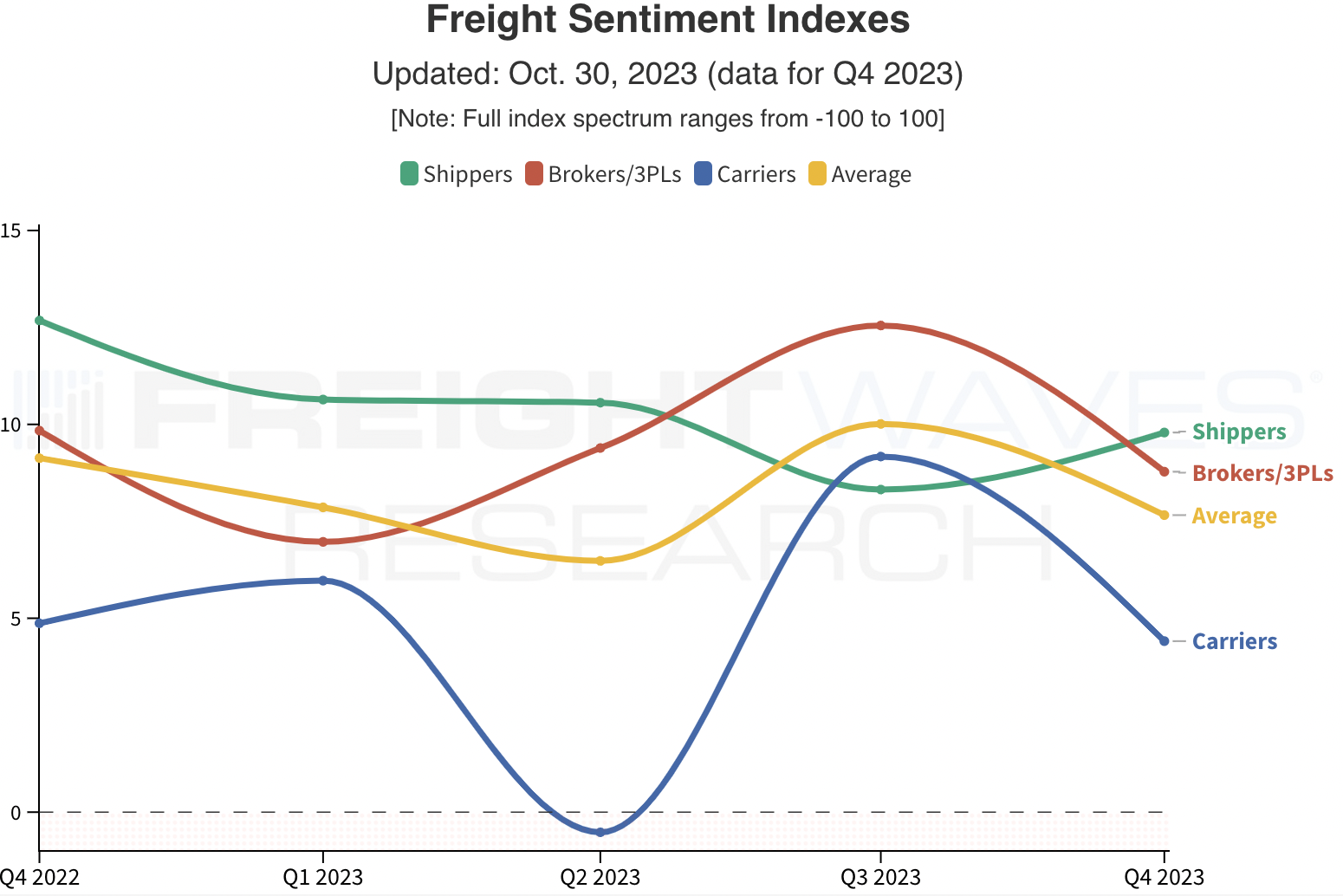
While spirits were lifted during the third quarter of 2023, brokers and carriers have seen a stark decline in optimism surrounding the status of the freight market in the fourth quarter.
“This dip encapsulates the ongoing struggles in an industry attempting to rightsize against a backdrop of excess capacity and economic uncertainty,” FreightWaves’ Joe Antoshak reported.
Earlier in the year, many carriers expected to see a significant market shift by the end of 2023. Seeing that projected rightsizing timeline pushed back into next year seems to have left the group feeling deflated.
“Brokers and 3PLs are confronting a pronounced shift in sentiment as they close out Q4 2023, with overall freight sentiment having receded to 8.78 from a Q3 high of 12.55,” Antoshak reported. “This downturn is reflective of broader constriction in the freight market, where low rates and tightened capital environments squeeze margins, testing the resilience of the brokerage sector.”
For carriers navigating this difficult market, cash flow is top of mind. Strong partnerships will be necessary to ensure carriers can keep moving — and keep getting paid — into 2024, allowing for a more measured approach for owner-operators and fleets to manage their cash flow.
“The average over-the-road carrier operating within the U.S. is running at a break-even cost. The margin for risk is low, and market volatility is at an all-time high,” according to an OTR Solutions representative. “Factoring offers the cash flow you need to keep your operation moving, but it provides even more valuable guidance and security.”
When a carrier partners with a factoring company, the factoring company offers cash flow via the buying of invoices. With this level of investment in the partnership, carriers can rest assured that factoring companies tend to have their best interest in mind.
The value of partnering with a factoring company is significant for both new and existing carriers, especially in tumultuous economic times when there is risk associated with every load.
New carriers entering the market then need to be laser focused on finding their first load. Most companies do not significantly evaluate a broker’s credit and ability to pay before accepting their first load.
At the same time, established carriers are looking for ways to diversify and expand their operations. However, while they are experienced, and can potentially lean on cash flow from their overall operation to cover potential losses, they still are taking on risks when booking a load with a new customer.
Both new and seasoned carriers are at risk of losing significant revenue in the event that the brokers tendering their loads cannot hold up their end of the deal. Is this a risk carriers can afford to take?
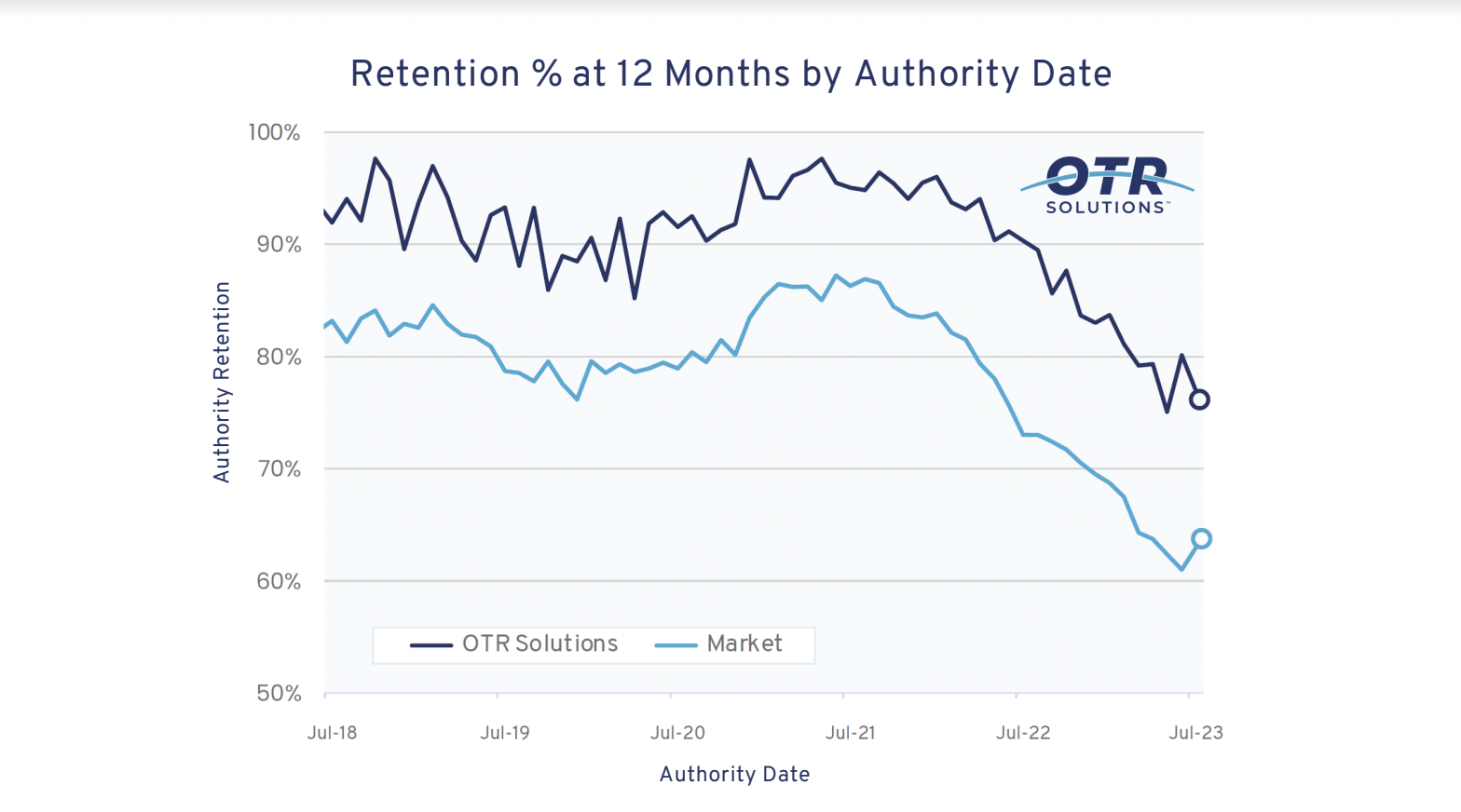
According to the graph below, about 78% of operating authorities active 12 months after obtaining authority still maintain an active operating authority when factoring with OTR Solutions. When you compare this with the roughly 64% survival rate among the remaining market, which includes operating authorities factoring with other providers and those managing payments on their own, you will find that OTR offers significant value to these operations in addition to the pure cash flow accessed via similar financing options.
This data suggests a significant survival gap between carriers that elect to partner with a factoring company — in this case, OTR — and those that do not.
OTR stands out among its competitors by offering true nonrecourse factoring. This is the only type of factoring that completely shifts the liabilities related to uncollected and uncollectible payments from the carrier to the factoring company.
“True non-recourse factoring is the only solution available to carriers and owner operators of any size that fully and completely protects your business from a loss in free cash flow when a broker or customer files for bankruptcy and slow downs in broker pay,” according to a recent OTR blog post.
With this type of factoring, carriers of all shapes and sizes can protect themselves from going under even when companies that owe them money go out of business. The likelihood that carriers have or will face this scenario in the current freight market is high. Deciding to factor now could mean the difference between surviving this holiday season — or not.