Kodiak Robotics makes autonomous pickup for military
Kodiak Robotics delivered a prototype of an autonomously equipped Ford F-150 pickup to the U.S. military, showing it can adapt its robotic driving system to a light-duty vehicle as well as a heavy-duty truck.
The F-150 upfitted with the Kodiak Driver contains both the autonomy hardware and software required to operate a military ground vehicle. The vehicle is designed to handle complex military environments, diverse operational conditions and operate in areas where GPS is sketchy.
The vehicle designed to handle off-road variables like rocks, dust, mud and water also operates with remote controls when necessary.
“Kodiak’s new autonomous vehicle shows the maturity and portability of our autonomous system,” Don Burnette, Kodiak founder and CEO, said in a news release. “We have built a comprehensive autonomous system that can be integrated into any vehicle, from a Class 8 truck, to a pickup, to a next-generation defense vehicle.”
To date, RRAI has developed most of the autonomous-driving technology used by the military in follow-the-leader applications as part of the Army’s Defense Innovation Unit goal of developing demonstrator prototype autonomous ground vehicles.
Dual-use technology
The dual-use potential of Kodiak’s autonomous technology attracted a contract valued at up to $50 million from the U.S. Department of Defense in December 2022.
The integration of the Kodiak Driver into the light-duty F-150, the nation’s bestselling pickup truck, took less than six months.
U.S. Secretary of Defense Lloyd Austin listens to a representative from drone company Skydio who attended a presentation of Kodiak Robotics’ autonomous driving system on a Ford F-150 pickup adapted for military use. (Photo: Kodiak Robotics)
The versatility of Kodiak’s modular and vehicle-agnostic autonomous system helped the speed of the project. The vehicle runs the same software as Kodiak’s autonomous long-haul trucks and features Kodiak DefensePods, an adapted version of Kodiak’s modular, swappable SensorPods.
A technician can swap out a DefensePod in the field in 10 minutes or less. No specialized training is required.
Purpose-built ground reconnaissance
Kodiak will build and deliver two off-road-capable vehicles based on the Ford F-150. Testing began at a military base in November. Once testing is complete, Kodiak plans to put its autonomous system into a purpose-built ground reconnaissance vehicle for military use.
Before testing the F-150 vehicles, Kodiak used its semi-trucks to test its autonomous system in off-road environments, which helped improve its on-road long-haul trucking technology by learning how to deal with dust, rocks and other small obstacles.
“Dual use is the key,” Burnette told FreightWaves. “Finding applications of technology that can apply to military use simultaneously with civilian and commercial use cases is the future. That’s where the efficiency is. That’s where the iteration is.”
Kodiak plans to launch driverless semi-trucks in Texas in late 2024. It has been covering more than 70,000 miles a month in driver-monitored trucks.
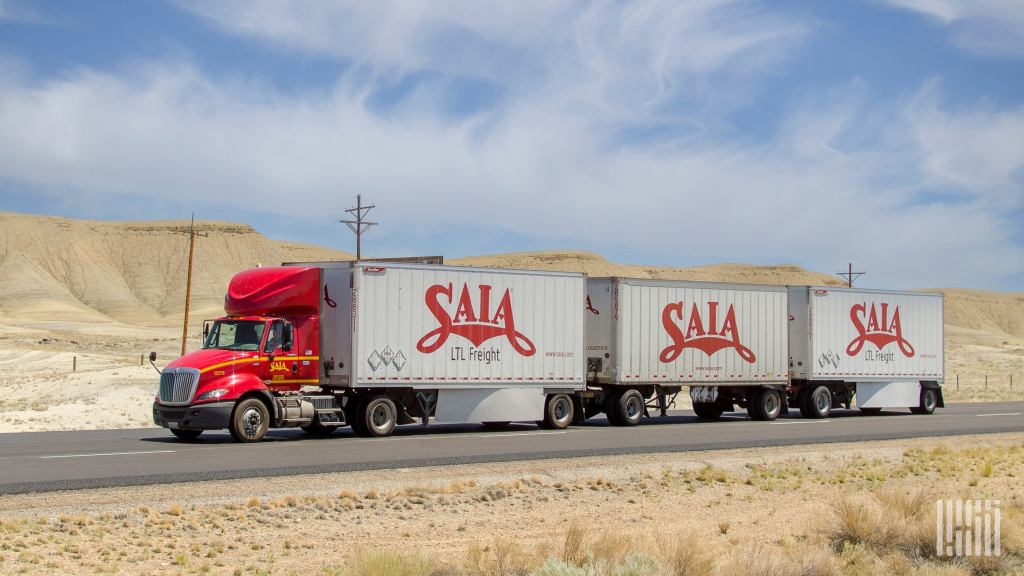
Less-than-truckload carrier Saia appears to be holding the volume influx it received following the shutdown of Yellow.
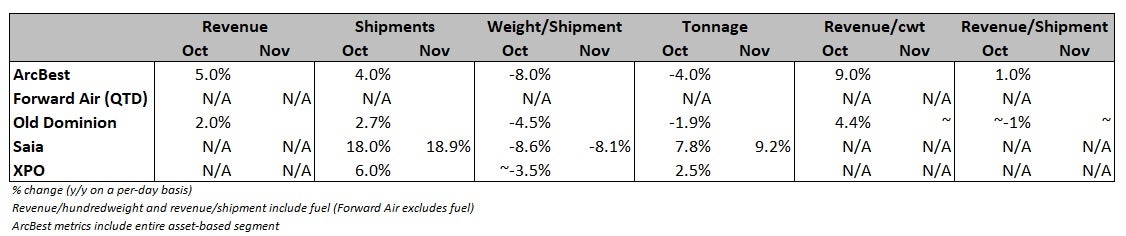
The company reported a 9.2% year-over-year (y/y) increase in tonnage per day during November, which followed a 7.8% increase in October. The acceleration was in part due to softer comparisons to last year. Saia recorded y/y tonnage declines of 3% and 7.1%, respectively, in October and November of 2022.
Saia’s (NASDAQ: SAIA) 2023 fourth-quarter tonnage increases were driven by high-teens growth in daily shipments, which were partially offset by weight per shipment declines of more than 8%.
October had some impact from a cyberattack at Estes, however, some of the carriers that saw a bump in volumes due to the event said that the freight had flowed back to Estes by the end of the month.
Saia’s current growth rates imply tonnage will be down by roughly 5% in the fourth quarter, which is a little bit better than normal seasonality.
“While the acceleration in volume is partly comp related (and we expect another acceleration in December due to even easier comps), today’s announcement does support the view that SAIA is holding on to the majority of its market share gains despite its focus on price and profitability,” Deutsche Bank (NYSE: DB) analyst Amit Mehrotra told clients in a Monday morning note.
Saia’s tonnage was down 13.2% y/y last December. Less-than-truckload demand turned negative at the end of the 2022 summer with the y/y declines accelerating to close the year.
“We also didn’t see anything surprising in weight per shipment trends from October to November vs. what we would normally expect (down 0.6% sequentially), which further supports the view that SAIA is holding on to its market share gains,” Mehrotra continued. “December volumes will also be important, given the company’s GRI [general rate increase] takes effect today (December 4).”
Yellow’s exit has prompted some carriers to implement annual GRIs ahead of schedule. Saia’s recent announcement of a 7.5% increase was 100 basis points higher than its prior GRI and the implementation came two months earlier.
Table: Company reports
Saia saw the biggest sequential increase in shipments among publicly traded carriers during the third quarter, the first reporting period following Yellow’s collapse. Saia responded by adding more than 1,000 employees to its existing head count of roughly 12,000. It has also been adding terminals and equipment in certain markets to accommodate the share wins.
During the third quarter, Saia’s tonnage per day was up 6.7% y/y as shipments increased 12.2% and weight per shipment was down 5%. The company doesn’t disclose yield metrics in its intraquarter updates but revenue per hundredweight excluding fuel surcharges was 8.4% higher y/y in the third quarter.
The broader industrial complex, which generates roughly two-thirds of the freight moved through LTL networks, remains in decline. The Manufacturing Purchasing Managers’ Index remained unchanged at 46.7 during November and below the neutral threshold of 50 for a 13th straight month. The new orders component of the index did improve 2.8 points to 48.3.
Soft demand throughout the industrial sector has been a primary headwind for LTL shipment weights.
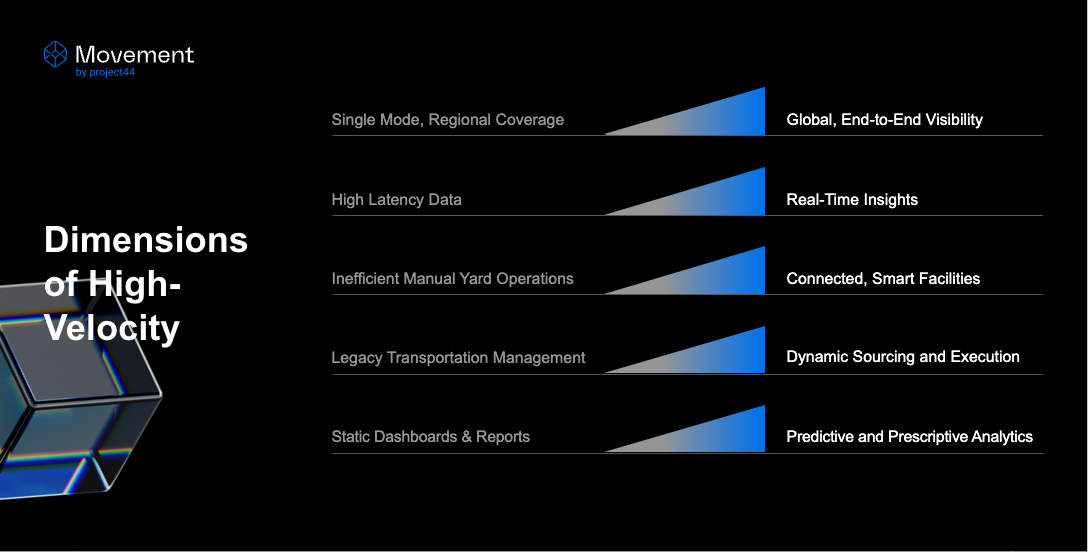
Tackling supply chain friction to achieve high-velocity supply chain operations
Companies across the supply chain have been laser-focused on improving visibility and increasing efficiency to lower costs and improve customer experience in recent years. In the process, all of these companies have come up against a familiar foe: friction.
“At a high-level, you can think of friction as the aspects of supply chain operations that slow us down, create delays and result in human error,” project44 Senior Director of Product Marketing Eric Fullerton said. “It’s all the elements that make supply chain professionals’ jobs more difficult than they need to be.”
On a day-to-day basis, friction is characterized by manual processes, inefficient workflows and high volumes of human effort. As supply chain leaders look to optimize operations and plan for the future in a down market, this friction stands in the way of transforming their supply chains from cost centers to revenue generators.
“Even more than macro-trends, the primary challenge supply chain professionals face is the clunky tools and disconnected systems they use to get their jobs done,” said Fullerton. “Many of the solutions in use today were built for a different era and to solve fundamentally different supply chain ecosystem problems. These systems are rigid and fragmented – the result is many screens and siloed activities. To solve this, teams often revert to using complex spreadsheets to bring technology together, which creates even more challenges down the line. What teams need is something that brings new value while enhancing – not discarding – the technology investments they have already made.”
While every aspect of the supply chain is affected by friction, these frustrating factors can have a particularly detrimental impact on visibility, transportation execution and facility management and last mile logistics.
Manual track and trace is one of the many ways friction is introduced into the supply chain. These activities require a significant amount of human time and energy, while simultaneously providing subpar insight into shipments.
With manual track and trace, it is virtually impossible to provide an accurate ETA. It is even more difficult to access real-time insights into a shipment’s status and location as it moves through its transportation journey.
“It gets more complex when trying to gain a clear view of your in-motion inventory,” Fullerton said. “This requires a haze of complex calculations and fuzzy math, referencing your order management system and TMS to attempt to translate shipment events into inventory and orders. Before you know it, unexpected delays and exceptions emerge, clouding your visibility further.”
Transportation Execution
Friction is also created by common challenges encountered while moving goods, namely damaged cargo and unforeseen fines. These issues can take a serious toll on a company’s bottom line while simultaneously creating delivery delays that impact customer relationships.
“Overcoming these obstacles to restock and reship requires a dynamic transportation execution system,” Fullerton said. “However, friction strikes again. Inconsistent carrier performance, time-consuming processes to identify optimal lanes and visibility gaps turn transportation into a herculean task.”
These issues often stem from a lack of actionable data. When shippers do not have access to accurate and holistics carrier performance analytics, it is impossible for them to make partnership decisions based on important critical details like on-time percentage for a given region or potential carbon impact.
Transportation execution is a sticking point for companies of all shapes and sizes, but it can be especially difficult when it involves to last mile delivery.
“As complexity rises, so do exceptions. Demanding consumers expect accurate, frequent order updates,” Fullerton said. “Fall short, and your call centers become overwhelmed, your customer service teams get swamped, and solving each request becomes a costly endeavor.”
Facility Management
No area of the supply chain is more plagued by friction than facilities. Yards and terminals are brimming with manual, error prone processes and reliance on paper for documentation, turning them into supply chain choke points.
Current processes make yards expensive to run and inefficient to operate, said Fullerton. Scheduling and managing appointments is ineffective and there is limited ability to prioritize trailers and labor organization is inefficient, resulting in high overhead costs. The inability to identify which spots are open in which docks and the manual gate in process often results in trucks sitting in gates not knowing where to go, adding 4-5 hours of unnecessary latency.”
The High-Velocity Solution
Friction in one area of the supply chain creates friction in other parts of the supply chain. Overcoming these obstacles requires a truly modern and innovative approach to supply chain management.
“I think it’s fair to say that friction will never be fully eliminated from supply chain operations,” said Fullerton. However, there are tremendous opportunities to reduce friction where possible, targeting key points across the supply chain that will have transformational impact. At a high level, that means applying AI and workflow automation to these friction points to improve efficiency. Specifically, that could mean being able to view every shipment on every mode in every region, automatically connected to orders with SKU level detail, or fully automated gate in gate out processes combined with automatically unified appointment management informed by truckload ETAs to streamline facility operations. Or a centralized way to instantly access automated, instantly bookable spot and contract rates with metrics such as tracking percentage, on time percentage, or carbon emissions. By using technology to pull out the unnecessary friction from outdated processes – that’s what will give teams the ability to act quickly with confidence. Or in other words, achieve high-velocity supply chain operations. how teams can operate at high-velocity.”
project44 has worked to create a high-velocity supply chain solution with its Movement platform, which enables shippers to redefine their supply chains through next-level visibility, machine learning and greater connection.
“Even more than being able to achieve key goals such as increasing revenue through better CX, decreasing supply chain cost, and increasing cash flow – modernizing and digitizing supply chain operations to enable teams to work with high-velocity will result in supply chain being a more attractive and compelling profession for the next generation of talent, said Fullerton. A technology-forward generation is not going to choose an industry or profession that heavily relies on paper to accomplish their daily tasks.”
Click here to learn more about turning your supply chain into a competitive advantage with project44
Jacobs leading takeover of software company as he readies next move
Brad Jacobs has chosen the vessel for his next act.
The man who put together the XPO freight conglomerate and then sold it off in pieces to leave behind the LTL-focused XPO, stand-alone 3PL RXO and contract logistics company GXO is leading a $1 billion investment in a company called SilverSun Technologies, which is publicly traded on the Nasdaq (NASDAQ: SSNT). Jacobs remains executive chairman of XPO (NYSE: XPO) and nonexecutive chairman of GXO (NYSE: GXO) and RXO (NYSE: RXO).
Jacobs is making the investment through his investment vehicle, Jacobs Private Equity (JPE). According to an announcement released Monday, JPE will invest $900 million in SilverSun and a group of other investors, which includes private equity firm Sequoia Heritage, will invest the other $100 million.
The $1 billion investment is for a software company with a market capitalization that isn’t even $20 million and its existing business will be spun off into a stand-alone operation. What remains will be a publicly traded company that, as JPE said in a news release, “will become a standalone platform for significant acquisitions in an industry to be announced soon, along with the Company’s new name.”
The spinoff is expected to be completed in two to four months.
Jacobs, in earlier statements about his next move, did say he intended to be involved in a publicly traded company as he prefers public markets to private capital.
The acquisition of SilverSun appears to have strong parallels to how Jacobs got XPO rolling in 2011. He acquired Express-1 Expedited Solutions with a $150 million investment and built that into XPO. One key difference is the activities Jacobs acquired with Express-1 were in the industry that he stayed in through XPO. What SilverSun does is not relevant to his plans.
SilverSun says on its website that it “is involved in the acquisition and build-out of technology and software companies engaged in providing best of breed management applications and professional consulting services to small and medium size businesses (SMBs) in the manufacturing, distribution and service industries.”
In its prepared statement, JPE spells out a series of steps that will result in JPE and its minority investors ultimately owning approximately 99.85% of the company. The existing shareholders of SilverSun will receive a $2.5 million cash dividend, funded by the JPE deal, and the existing operations will be spun off into a company named SilverSun Technologies Holdings. The current management at SilverSun will stay in place at the new company, its core business will continue and the deal is structured so its shareholders are in position to benefit from growth at JPE.
After the spinoff is completed, Jacobs will become CEO and chairman of the remaining company, which at that point will have no ongoing activities. And with a platform in hand, Jacobs’ next round of investments and activities can commence with the backing of a publicly traded company.
Jacobs is scheduled to address the Economic Club of New York on Dec. 11 in a midday fireside chat. There have been suggestions he will provide more details of his plans at that time.
Besides logistics, he has created other companies in equipment leasing (United Rentals), waste management (United Waste Systems) and energy brokerage (Amerex).
The air cargo unit of Maersk is conducting a two-month trial of a new route that would establish a gateway in the United Kingdom for receiving e-commerce goods from China as part of the ocean shipping company’s transformation into a one-stop shop for logistics.
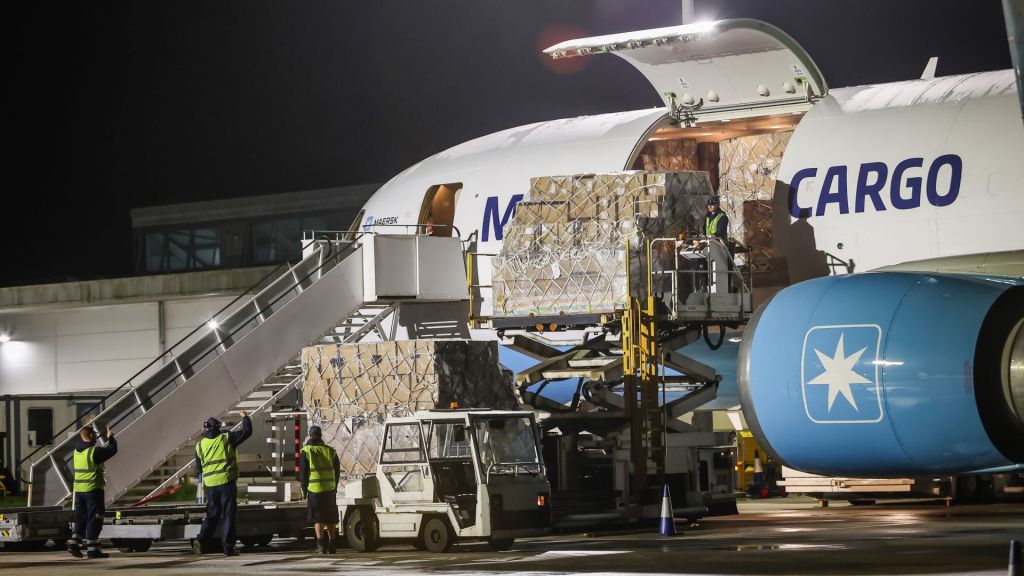
Freighter operator Maersk Air Cargo is flying once a week through the end of the year between Hangzhou, China, and Bournemouth Airport using a Boeing 767-300 medium widebody freighter to test the trade lane’s viability and suitability of an alternative airport outside London, the parties announced Tuesday.
Aircraft tracking site Flightradar24 shows Maersk Air Cargo actually began operating the flights on Oct. 30 via its hub in Billund, Denmark, with a technical stop in Navoi, Uzbekistan.
The temporary flight provides online sellers extra airlift during the peak shipping season that coincides with European holidays and could be continued in the future, according to Maersk.
Bournemouth Airport’s in-house ground service company Cargo First is in charge of loading and unloading the Maersk aircraft.
The destination adds to Maersk Air Cargo’s network connecting China, South Korea, Europe and the United States.
“We’re delighted that Maersk has chosen Bournemouth for this new route as we grow our ambition to become the U.K.’s number one entry and exit point for time critical cargo. We now have 500 metric tons of weekly import capacity operating between China and Bournemouth as more customers take advantage of our location, lack of slot constraints and ‘One Team’ integrated approach across all airport and cargo handling operations,” said Steve Gill, managing director of Bournemouth Airport.
Ocean shipping giant Maersk incorporated air cargo to its integrated logistics strategy in early 2022 by expanding the scope of an existing cargo airline, beyond being a provider of dedicated transport for UPS and Royal Mail in Europe, to carry goods for its own customers. It acquired extra aircraft and Senator International, a large air forwarding company based in Germany, to give shippers an air option, in addition to ocean, trucking, rail, warehousing and import/export services. Maersk Air Freight, the agency within Maersk Logistics that arranges shipment itineraries for businesses, utilizes the capacity of Maersk Air Cargo, charter aircraft under its control and regular commercial airlift.
Executives have set a goal of carrying about one-third of the company’s annual air tonnage within its own controlled freight network through a combination of owned and leased aircraft.
In March, Maersk introduced cargo service between Billund Airport and Hangzhou in response to increased demand and now offers six weekly flights. Maersk Air Cargo made its debut on Oct. 30, 2022, launching service between Seoul, South Korea, and Greenville-Spartanburg International Airport (GSP) in South Carolina. Since then the network has expanded to include multiple flights per week connecting Shenyang, China, and Greenville-Spartanburg, as well as Hangzhou and Maersk’s other U.S. hub at Chicago Rockford International Airport (RFD). The Shenyang and Hangzhou flights funnel through Seoul.
Maersk Air Cargo Network
Frankfurt Hahn to Greenville-Spartanburg Airport
Five flights per week
Frankfurt Hahn to Chicago Rockford Airport
Two flights per week
Billund Airport to Hangzhou International Airport
Six flights per week
Incheon Airport (Seoul) to Greenville-Spartanburg
Three flights per week
Shenyang Airport to Greenville-Spartanburg
Three flights per week
Hangzhou to Chicago Rockford Airport
Six flights per week
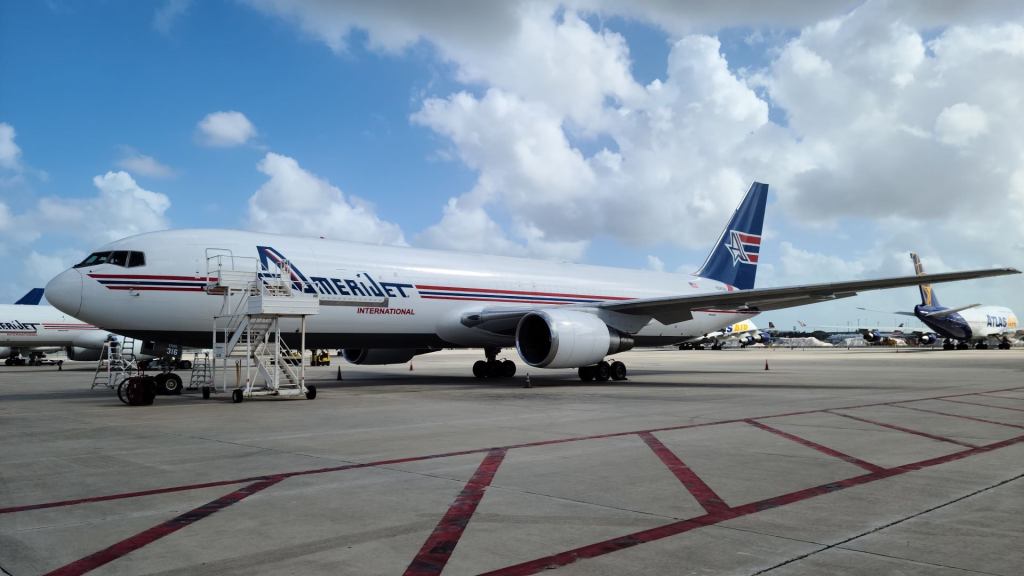
Aircraft operations on the Asia-U.S. corridor are outsourced to Miami-based Amerijet, with Maersk Air Cargo connecting Frankfurt Airport in Germany to GSP and RFD. The U.S. hubs function as transfer points for shipments between Asia and Europe.
In July, Maersk’s air forwarding unit opened a warehouse near Hartsfield-Jackson Atlanta International Airport to facilitate transfers between customers and commercial airlines. And in early October, it debuted a 130,000 square foot import/export gateway near Los Angeles International Airport that offers direct planeside recovery of containers using certified trucks and triples Maersk Air Cargo’s access to capacity on the U.S. West Coast.
Maersk has 22 Boeing 767-200 and -300 freighters in its fleet, although two have been out of service for several months, according to aircraft databases.
Bournemouth Airport and Cargo First are part of the privately held Regional and City Airports (RCA) group, which also owns the neighboring Cargo First Logistics Park at Bournemouth Airport, with over 1 million square feet of warehousing development potential.
Bournemouth two years ago began a campaign to become an alternative airfreight hub. The airport is located 90 minutes from London without the congestion of Heathrow and other major airports. It touts rapid customs clearance and transit of cargo to customer collection points at the Heathrow Cargo complex as an advantage for businesses. European Cargo, a startup carrier using partially modified Airbus A340 jets that can carry small units of freight on the main deck, launched service between China and Bournemouth earlier this year in support of a Chinese customer and now operates six flights per week.
Cologne Bonn Airport
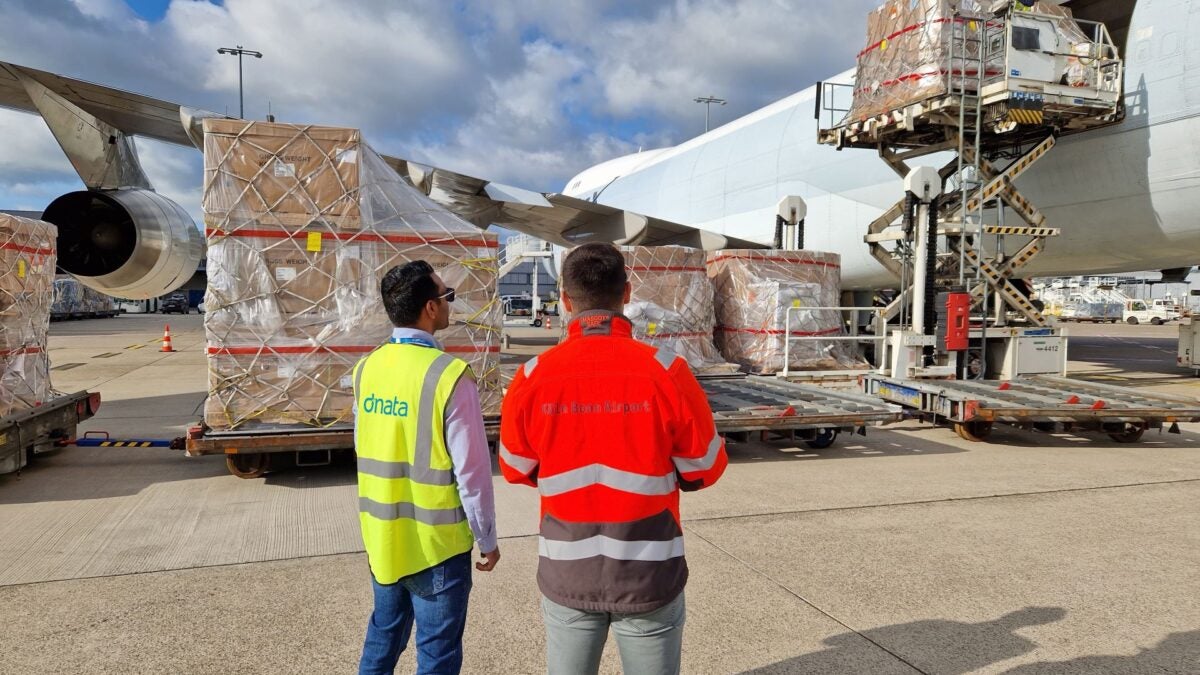
In related news, Maersk Air Freight has awarded a multiyear contract to airport services firm dnata to provide cargo handling for its charter aircraft at Cologne Bonn Airport. Dnata said its team will process 6,600 tons of cargo annually for Maersk, which organizes weekly flights between Cologne Bonn and GSP with a Boeing 747-400 freighter operated by Magma Aviation. The air logistics provider plans to increase weekly frequencies in the coming months, significantly expanding cargo capacity on the route, dnata said on Thursday.
Dnata is loading and unloading Boeing 747 freighters for Maersk Air Freight at Cologne Bonn airport. (Photo: dnata)
Dubai-based dnata, part of the Emirates Group, entered the Germany cargo market in 2022 with the acquisition of Wisskirchen Handling Services, the exclusive operator of the 129,000-square-foot Cologne Bonn Cargo Center. Dnata currently serves 20 airline customers at the airport.
MSC Air Cargo
Meanwhile, another ocean carrier with a startup cargo airline has added a third freighter to the fleet. All-cargo operator Atlas Air said this week it has taken delivery of a 777 freighter from Boeing, the third of four it will operate on behalf of Mediterranean Shipping Co. under a long-term transportation services agreement.
MSC Air Cargo, which sells the cargo space and determines routes, currently provides an around-the-world weekly service with stops in Mexico City; Indianapolis; Liege, Belgium; Seoul; and Xiamen, China. The new large freighter will enable MSC to add a route from Hong Kong to Dallas/Fort Worth. Atlas Air said Boeing is scheduled to deliver the fourth aircraft by the end of the year.
Daily Infographic: How to handle frozen car doors and locks
To view more FreightWaves infographics, click here
Amerijet feels financial pinch as cargo business deteriorates
Amerijet, racing to reverse the cargo airline’s negative cash flow after the recent exodus of CEO Tim Strauss, is parking jets, deferring major maintenance and taking other steps to contain costs, according to public fleet databases and sources with intimate knowledge of the company.
The Miami-based freighter operator is paying the price for expanding too quickly during the pandemic freight bubble. Business is now shrinking because of the downturn in global trade that has plagued the air cargo industry for 18 months and questionable management decisions, multiple sources said.
Beyond reductions in demand for general cargo, the end of assignments with the U.S. Postal Service and DHL Express have created a large revenue hole that is weighing on company finances, they said.
Newly installed CEO Joe Mozzali bluntly outlined Amerijet’s new cost measures and foreshadowed tough times ahead in a memo to employees dated Oct. 23 that FreightWaves has seen.
Soft market conditions have forced management to idle one freighter that exceeds current needs and contemplate deferring heavy scheduled maintenance, called a C-check, on two other aircraft, according to the document. The fleet reduction is taking place during the busiest time of year for airfreight, when businesses typically seek airlift to fill shelves for holiday shopping and meet end-of-year sales targets.
“The cargo sector has been faced with headwinds in both cost and demand. And it isn’t a secret that these challenges have had an impact on our business performance. We’re addressing these challenges head on in our continued work to make Amerijet a more amazing organization — enhancing our operational efficiency, adapting to changing market dynamics and ensuring our long-term sustainability and competitiveness,” Mozzali wrote. “We need to continue our focus on winning new business, improving our revenue mix, cost efficiencies, network structure and load factors.”
C-checks, which are conducted every 20 to 24 months and put an aircraft out of service for several weeks, can cost $1 million or more. Postponing that type of regular inspection happens when there is a cash-flow problem, an airplane isn’t economical to fly or the airline doesn’t have the necessary crews, aviation industry experts said.
Mozzali suggested more fleet downsizing could follow.
Amerijet’s fleet had grown to 22 aircraft early this year, not including three freighters supplied by Maersk Air Cargo for dedicated transportation service.
Up to five aircraft are currently out of action. Internal company data shows two 757s are parked with notes attached saying they are not to be used, with a third aircraft in San Antonio for a lengthy tear-down inspection. Two midsize 767s are undergoing extensive component checks in Istanbul and Mexico City.
Aircraft tracking site Flightradar24 shows one of Amerijet’s six Boeing 757 converted freighters hasn’t flown since Oct. 14 and another one has been parked since Nov. 2. The 767-300 in Istanbul has been there for two weeks so far.
Although Amerijet is saving certain costs by not operating some aircraft it still must make monthly lease payments on them, which can exceed $300,000 per unit.
A big blow to the top line is the loss of two U.S. Postal Service contracts that expire at the end of the year, said current and former employees on condition of anonymity because of concerns about retribution or losing future business opportunities. The contracts aren’t being renewed because the Postal Service two years ago began shifting 95% of mail and package volume to its redesigned ground transportation network, reducing reliance on expensive airlift.
Routes ending next month cover Philadelphia to Sacramento and Ontario, California — both flying six days a week. Amerijet will continue to fly mail on a San Juan, Puerto Rico-Newark, New Jersey-Orlando, Florida-San Juan rotation, as well as between San Juan and Ontario, California.
“They’re definitely trying to tighten the belts. Freight is down,” said one frontline worker.
Amerijet declined to make anyone available for an interview.
Another source with deep company experience said management is grappling with excess spending, including for pilots that are guaranteed 74 hours of flying pay per month under a new labor contract even though there isn’t enough work to keep them busy for that amount of time. Pilot scheduling is relatively inefficient, he said, relating that in one case, Amerijet paid a two-month hotel stay for a new first officer because he wasn’t based in Miami and management couldn’t figure out how to use him.
“To be honest with you, I don’t know how they’re surviving. They are trying to cut back costs in some places, but the cost overruns are still out the roof,” he said.
Leadership change
It’s already been a bumpy year for Amerijet, which is owned by private equity firm ZS Fund.
It closed a small freight forwarding division, laid off more than 15 back-office employees, offshored accounting functions to low-cost Trinidad and Tobago and reduced flight schedules to Aruba and Brussels since the spring.
Amerijet announced in early October that Strauss was retiring and suggested the CEO’s departure was voluntary, as his three-year contract came to an end. But the abrupt nature of his departure suggested the decision was not his, with several sources close to the company saying he was fired.
A few current and former employees blamed the company’s financial distress on Strauss’ management style and the addition of too much capacity just as the air cargo market turned sharply south.
Tim Strauss (Photo: Eric Kulisch)
Amerijet under Strauss tripled the size of its fleet. It faced lengthy delays getting Federal Aviation Administration approval to add the six B757 converted freighters to its operating certificate. Amerijet took possession of some 757s in the summer of 2021, but the first one didn’t enter revenue service until March 2022 and the entire fleet wasn’t operational until midyear. Reporting at the time indicated the delays stemmed from the FAA’s rejection of Amerijet’s updated flight manuals, changing FAA requirements and lease negotiations that dragged out longer than expected.
By the third quarter of 2022, the air cargo market was beginning to rapidly cool down from the pandemic peak by the third quarter of 2022.
A source with close ties to Amerijet said current 757 utilization “is extremely low.”
The post-pandemic recovery of passenger airline traffic, which injected large amounts of lower-deck space for cargo into the market, captured a significant chunk of Amerijet’s common carriage business out of Miami to Central America, Mexico and the Caribbean. Traditional airlines were able to offer cheaper air transport because much of the operating cost was covered by the passenger side of the business. The extra regional capacity drove down yields and Amerijet’s load factor, which is down to 50% or less on many routes for general cargo, people familiar with the company said.
FreightWaves reached out to former management and frontline employees who said Strauss was disdainful toward the existing Amerijet team and sales agencies after joining the company in the fall of 2020 from Air Canada, which was underscored by hiring executives who had experience running passenger airlines to replace veteran managers.
“His team of friends … took no time to even try to understand the clientele or the many island economies that depended on the timely delivery of cargo,” said another current worker, adding that the amount of time it takes to execute a reservation in Amerijet’s system is often longer than shipping by ocean to Caribbean destinations.
Executives Strauss hired included Eric Wilson, a former Delta Air Lines cargo executive who is now chief commercial officer; Chief Operating Officer Craig Bentley, who previously headed operations at Cape Air/Nantucket Airlines, a small passenger carrier with turboprop aircraft that also provides feeder service for an express delivery company; Chris Mazzeo, vice president of global operations, who spent a decade in cargo at Delta and also worked at the former Emery Worldwide Airlines; and Eric Anderson director of revenue management and pricing, who spent 13 years at Delta before a stint with Amazon.
“They tried to apply that [revenue management] logic from passenger airlines selling cargo in an all-cargo environment and they lost their shirt,” said an industry source familiar with the company.
Strauss has many supporters in the industry who previously praised him for implementing new IT projects, expanding Amerijet from a regional to an international carrier, and driving more operational and planning discipline so it could operate as an efficient scheduled airline rather than departing based on whether an aircraft was sufficiently full. Many legacy employees at Amerijet, including former CEO and Executive Chairman Vic Karjian, resisted efforts to change the culture and modernize.
Industry at low-water mark
Amerijet isn’t alone dealing with tighter budgets during a freight recession in which global air cargo volumes fell 8% year over year in 2022 and another 6% year to date in 2023. Amerijet is privately held, so getting a full financial picture isn’t possible. Cargo revenue at public passenger airlines and logistics companies, which serves as a proxy for financial conditions at Amerijet, was down 30% to 50% through the third quarter versus the nine-month period a year ago.
Many cargo airlines have hit the brakes on adding new or converted freighters and reduced flight activity to manage costs. Even FedEx and UPS have scaled back their air networks in response to slower parcel shipping, but large companies have the scale and balance sheets to better withstand a market dip. Western Global Airlines filed for bankruptcy due to a mix of mismanagement and weak market conditions.
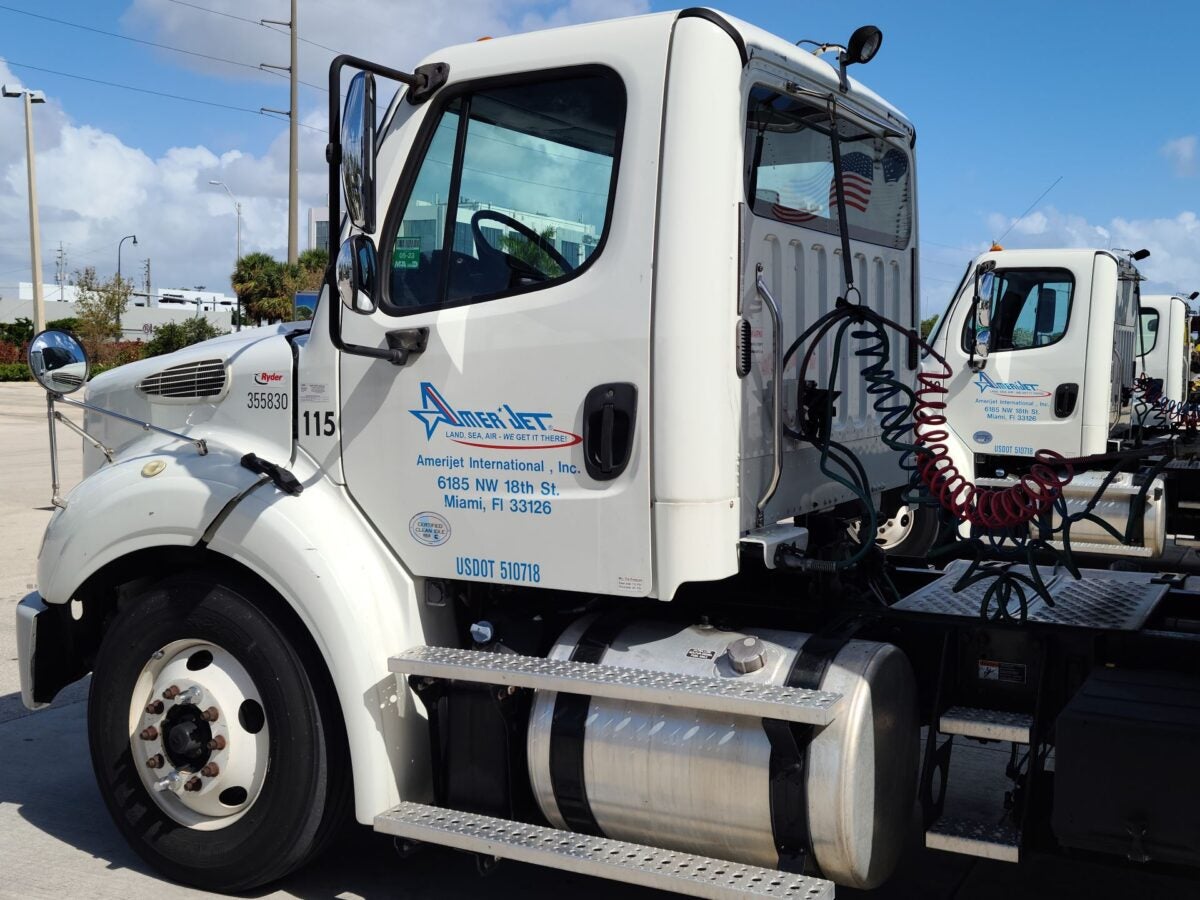
Amerijet has a fleet of trucks to help with freight pickup and delivery at its Miami International Airport terminal. (Photo: Eric Kulisch/FreightWaves)
Amerijet was also hurt when DHL canceled contracts to fly packages in its express network, according to two sources. Amerijet flies two 767 freighters for DHL, down from seven last year. DHL took back several aircraft it owned and Amerijet is using its own aircraft on the remaining service routes.
“Our contract with Amerijet remains active,” said DHL Express spokeswoman Pamela Duque, when asked about the status of the relationship.
Meanwhile, the future of Amerijet’s contract with Maersk Air Cargo is clouded by the inability to obtain Korean approval for permanent, scheduled service at Seoul’s Incheon Airport. Amerijet currently operates two routes multiple times per week between China and the U.S. via Incheon. The lack of a foreign carrier permit means Amerijet, which has accused Korean Air of interference, must apply each month for commercial access to Korea, resulting in increased legal and airport fees.
On the positive side, Mozzali’s employee letter said Amerijet provided charter flights with relief supplies following the Lahaina wildfire in Hawaii and picked up new business flying for one of the U.S. integrated parcel carriers in the Caribbean and Central America.
Alaska Airlines to fly Amazon packages after completing Hawaiian buy
Alaska Air will take over cargo transportation for e-commerce giant Amazon when it concludes a deal announced Sunday to acquire Hawaiian Airlines in a cash transaction for stock and debt worth $1.9 billion. Whether the Amazon transportation services agreement is eventually modified is unclear, but Alaska’s CEO said it could spur further investment in freighters.
“For now, nothing changes,” said Hawaiian Airlines spokesman Alex Da Silva in an email.
Hawaiian Airlines (NASDAQ: HA) in early October began flying an Airbus A330-300 converted freighter between Amazon’s air logistics superhub at Cincinnati/Northern Kentucky International Airport and its West Coast hub in San Bernardino, California. Under a contract inked late last year, Amazon (NASDAQ: AMZN) plans to lease nine more of the former passenger planes that are being overhauled to carry cargo containers and turn them over to Hawaiian to operate on its behalf in the domestic U.S. market.
The parent company of Alaska Airlines (NYSE: ALK) presumably contemplated that Amazon has warrants to take a 15% equity stake in Hawaiian Airlines after nine years conditioned on meeting a spending threshold of $1.8 billion.
Operating freighters for the first time in a partnership with Amazon is a way for Hawaiian to diversify its business.
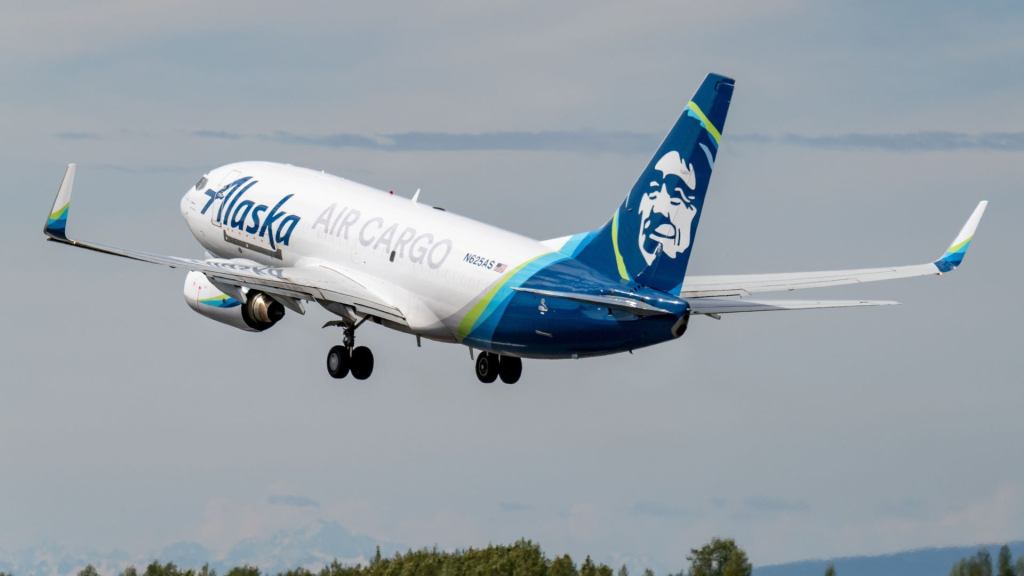
Alaska Airlines has long operated a small fleet of freighter aircraft, primarily between Alaska and the continental United States. It currently has four converted freighters — three Boeing 737-700s and one 737-800 it received last month. Boeing is scheduled to deliver a second 737-800 passenger-to-freighter aircraft early next year. But the A330, a medium widebody aircraft, is much larger than the 737 and would bring Alaska’s freighter fleet to 15 aircraft by early 2025.
“We will be closely assessing whether further dedicated freight or flying for ourselves or in an asset light model for others could make sense for the combined company over time,” said Alaska Air CEO Ben Minicucci on a conference call with analysts.
“We haven’t had a ton of conversation with Amazon,” he added. “We’re anxious to understand that more. We are the only passenger carrier in the U.S. industry that has dedicated freighter flying today, removing from three aircraft of five. I think it’s an area of potential longer term opportunity for the company. And we’ll continue to watch to see if that type of flying makes more sense if there’s more of it.”
The Amazon partnership also gives Alaska Airlines a Midwest pilot base and more opportunities for pilots to fly widebody aircraft, which offer more lucrative pay.
“Alaska has a track record of operating a good freighter network and is also an airline known for strong operational reliability. However, the executive team at Hawaiian was strong supporters of the Amazon deal. Many of those leaders may not survive the merger, so Alaska executives will need to prove their commitment to Amazon for the long run,” Derek Lossing, the founder of Cirrus Global Advisors and former Amazon Logistics executive, told FreightWaves.
Executives said on a call with investors that they expect the deal to provide $20 million in redundant savings from cargo operations associated with their respective passenger airlines, which carry cargo in the lower hold as an adjunct business, and potentially unlock further growth.
Bigger is better
The rationale for merging Alaska Airlines and Hawaiian Airlines stems from the fact that they are mid-tier carriers in a competitive U.S. airline market where scale increasingly matters. The deal would cement Alaska’s place as the fifth largest U.S. airline. Also, Hawaiian has routes to Asia that give Alaska Airlines access to its first major international presence, beyond limited flights to Mexico and Central America.
Alaska Airlines already flies to Hawaii but will offer expanded service there and count Honolulu as a major hub to tap into the lucrative vacation market there. Hawaiian customers benefit with more direct and one-stop service to more U.S. mainland destinations.
The companies said they will maintain their existing brands, with a combined fleet of 365 aircraft. The Alaska and Hawaiian networks are highly complementary, with only a 3% overlap. Alaska operates an all-Boeing narrowbody fleet while Hawaiian has a mixed fleet that includes 24 A330s and 18 Airbus A321neos.
Alaska appears to have received a good value for its money, with the deal worth less than Hawaiian’s annual revenue and a price-to-earnings ratio of four.
During the first three quarters of 2023, Alaska Airlines generated $10.4 billion in revenue compared to $2.8 billion for Hawaiian.
The transaction is expected to close in 12 to 18 months, pending approval by Hawaiian shareholders and antitrust regulators. But the Justice Department under the Biden administration has taken a hard line against industry consolidation in general, including among airlines. The Justice Department’s anti-trust lawsuit against JetBlue’s merger with Spirit Airlines is expected to wrap up in federal court this week.
The Walcott, North Dakota Post Office serves ZIP Code 58077. Photo by Jimmy Emerson, some rights reserved. Photo shared under the Creative Commons License.
Walcott Post Office
472 Main Ave
Walcott, ND 58077