




The Walcott, North Dakota Post Office serves ZIP Code 58077. Photo by Jimmy Emerson, some rights reserved. Photo shared under the Creative Commons License.
Walcott Post Office
472 Main Ave
Walcott, ND 58077
Location at Google Maps

The Walcott, North Dakota Post Office serves ZIP Code 58077. Photo by Jimmy Emerson, some rights reserved. Photo shared under the Creative Commons License.
Walcott Post Office
472 Main Ave
Walcott, ND 58077
Location at Google Maps

Borderlands is a weekly rundown of developments in the world of United States-Mexico cross-border trucking and trade. This week: The logistics boom drives an e-commerce firm’s relocation in Texas; MercuryGate acquires customs software provider International Trade Systems; New Mexico announces two logistics hubs in Santa Teresa; and a Texas city receives approval for a Foreign Trade Zone program.
Cart.com is moving its corporate headquarters back to Houston after three years in Austin, Texas, citing the Bayou City’s infrastructure, talent pool and mix of customers as reasons for returning.
The company is a provider of online commerce and logistics solutions for merchants to sell and fulfill orders around the globe. Cart.com currently has about 6,000 brands on its platform.
“The initial move to Austin in December 2021 was driven by a need at that time to hire tech talent (specifically software engineers) amid the COVID-19 direct-to-consumer commerce boom,” a company spokesman said in an email to FreightWaves. “Austin has delivered on that promise and we were able to find the high-quality tech talent we needed for where we were as a company. But we’re a different, more mature company than we were when we moved to Austin. We’re now looking for talent (including engineers) with experience across a more diverse set of industries, particularly in logistics and supply chain.”
Cart.com was founded in Houston in 2020 by Omar Tariq and Jim Jacobsen, who launched the company as an e-commerce-as-a-service platform. Cart.com offers integrated suites of software, services and infrastructure to run backend solutions, as well as marketing and fulfillment operations.
In June, Cart.com reached a valuation of $1.2 billion after a $60 million Series C round of funding. Since 2020, the company has secured more than $400 million in capital.
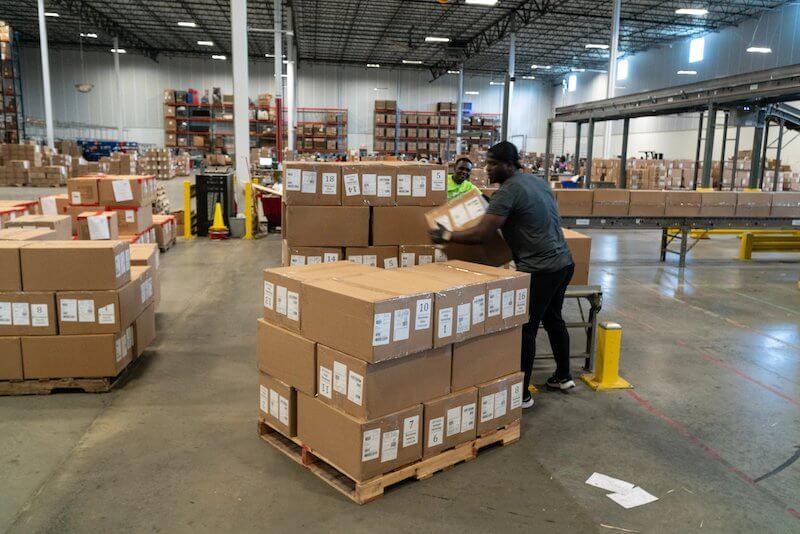
During Cart.com’s two years in Austin, it grew both its revenue and its fulfillment network footprint by 900% while expanding its customer base to support some of the country’s biggest retailers, enterprise merchants and government organizations, the company said.
“As we continue to scale, we are now looking to augment other areas of the company, including human resources, finance, accounting, and legal,” the spokesman said. “We feel the move to Houston will unlock a deeper talent pool in these areas based on its position as a hub for major business.”
With a population of 2.3 million, Houston is the largest city in Texas and the fourth largest in the U.S. The Houston metropolitan area is home to 7.3 million people and could grow to more than 8 million by 2028, according to a recent study by real estate consultant Site Selection Group.
The relocation to Houston will also facilitate improved connectivity among the company’s seven corporate offices, including locations in Poland and Mexico, and 14 distribution centers across the U.S. The Houston Airport System operates two major airports: George Bush Intercontinental Airport and William P. Hobby Airport.
“Houston’s infrastructure makes it easier for our team members (now 1,500+) to travel and for the company to bring larger groups of people together on-site at one headquarters,” the spokesman said.
Cart.com will benefit from the region’s logistics and supply chain capabilities, officials said.
“We’ve continued to move upmarket in terms of customer size and now serve a broad mix of business-to-business, business-to-consumer and direct-to-consumer customers,” the company spokesman said. “The logistics part of our business is growing particularly quickly, largely because we are more digitally sophisticated than our competitors. As part of this shift, Houston’s interconnectivity and position as a key global port is increasingly valuable to us.”
Houston is also one of the busiest port cities in the country. The 52-mile Houston Ship Channel comprises more than 200 private and eight public terminals, collectively known as Port Houston. The port is currently the fifth-ranked U.S. container port by total twenty-foot equivalent units. In September, imports and exports totaled $18.4 billion at Port Houston, according to WorldCity.
Cart.com officials said the outlook for the e-commerce market this holiday season and going forward into 2024 remains strong. The total value of merchandise sold from Black Friday and Cyber Monday was 24% higher year over year across the company’s fulfillment network.
Cart.com’s retailers beat their demand forecasts for Black Friday and Cyber Monday by 28% on average, its top five retailers beat their projections by over 330% and doubled year-over-year demand, according to data provided by the company.
“During Black Friday-Cyber Monday, clients across our network, on average, met or beat their forecasts,” the spokesman said. “Based on this, our sense is that this holiday season will continue to be strong and may beat expectations.”
MercuryGate International Inc., one of the largest dedicated transportation management solutions providers in the world, announced the acquisition of International Trade Systems (ITS), a SaaS provider of cross-border customs clearance capabilities.
With the addition of ITS, MercuryGate aims to deliver integrated solutions across the global trade management space by supporting all modes, geographies and buyer types, according to a news release.
“With the addition of ITS … we address one of industry’s most pressing needs and extend the value, intelligence and power of our purpose-built TMS platform for all modes, geographies and buyer types,” MercuryGate President and CEO Joe Juliano said in a statement. “We are excited to further expand MercuryGate offerings for freight forwarders and deliver enhanced capabilities to this customer segment.”
Terms of the acquisition were not disclosed.
Portland, Oregon-based ITS was founded in 1989 and provides customs and compliance capabilities for the international trade community. More than 200 customers and 5,000 users, including customs brokers, importers and freight forwarders, leverage ITS software.
Cary, North Carolina-based MercuryGate was founded in 2000 and has about 300 employees.
The New Mexico Economic Development Department recently announced Coast Aluminum Inc. and Monti Inc. will build manufacturing and logistics facilities in Santa Teresa.
Hayward, California-based Coast Aluminum is building a $10 million 73,500-square-foot distribution center in the Santa Teresa Binational Industrial Park. The company, which has 20 locations throughout the U.S. and Mexico, distributes aluminum materials and stainless steel, copper, brass and architectural metal products.
The Coast Aluminum facility is scheduled to open by the first quarter of 2024.
Cincinnati-based Monti Inc. also announced plans to invest $14 million at an 80,000-square-foot site in Santa Teresa. Once complete, the facility will serve as a regional hub for Monti’s manufacturing and distribution of electrical components. Officials did not provide a timeline for the facility’s opening.
Coast Aluminum and Monti join other recent expansions in the Santa Teresa area, including Franklin Mountain Packaging, Louisiana Pepper Exchange and Hota Industrial.
The Department of Commerce recently approved a Foreign Trade Zone (FTZ) program in Socorro, Texas.
The approval of Socorro’s FTZ application gives the municipality the authority to permit businesses to set up foreign trade sites within city limits. Foreign trade zones are special areas in the U.S. that benefit companies by reducing import duties and other costs with the aim of increasing domestic manufacturing and promoting economic growth.
Socorro is about 15 miles from El Paso, Texas. The city becomes the 35th FTZ in Texas and the third in El Paso County.
Click for more FreightWaves articles by Noi Mahoney.
More articles by Noi Mahoney
Canadian freight forwarder Farrow acquired by Kuehne+Nagel
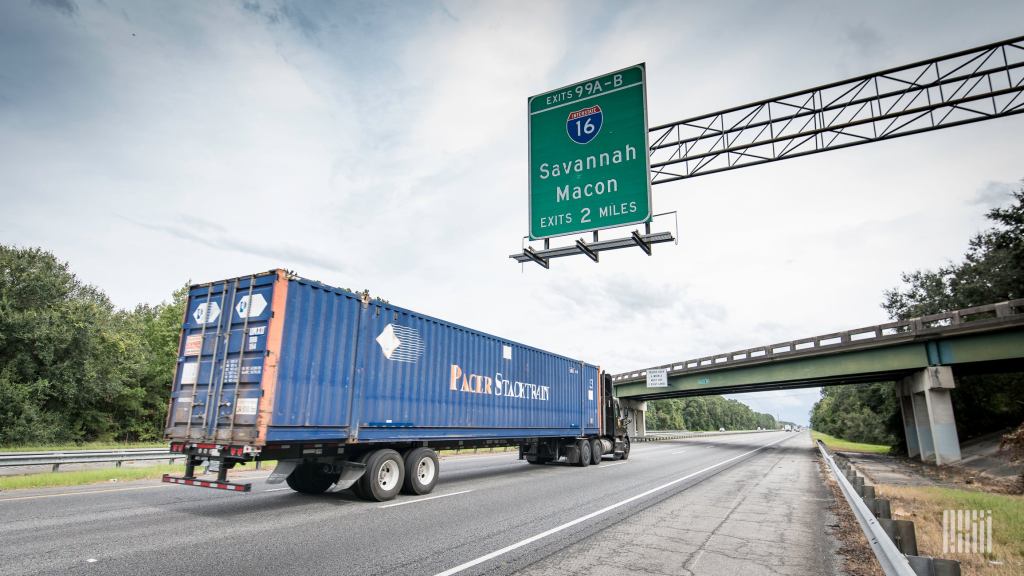
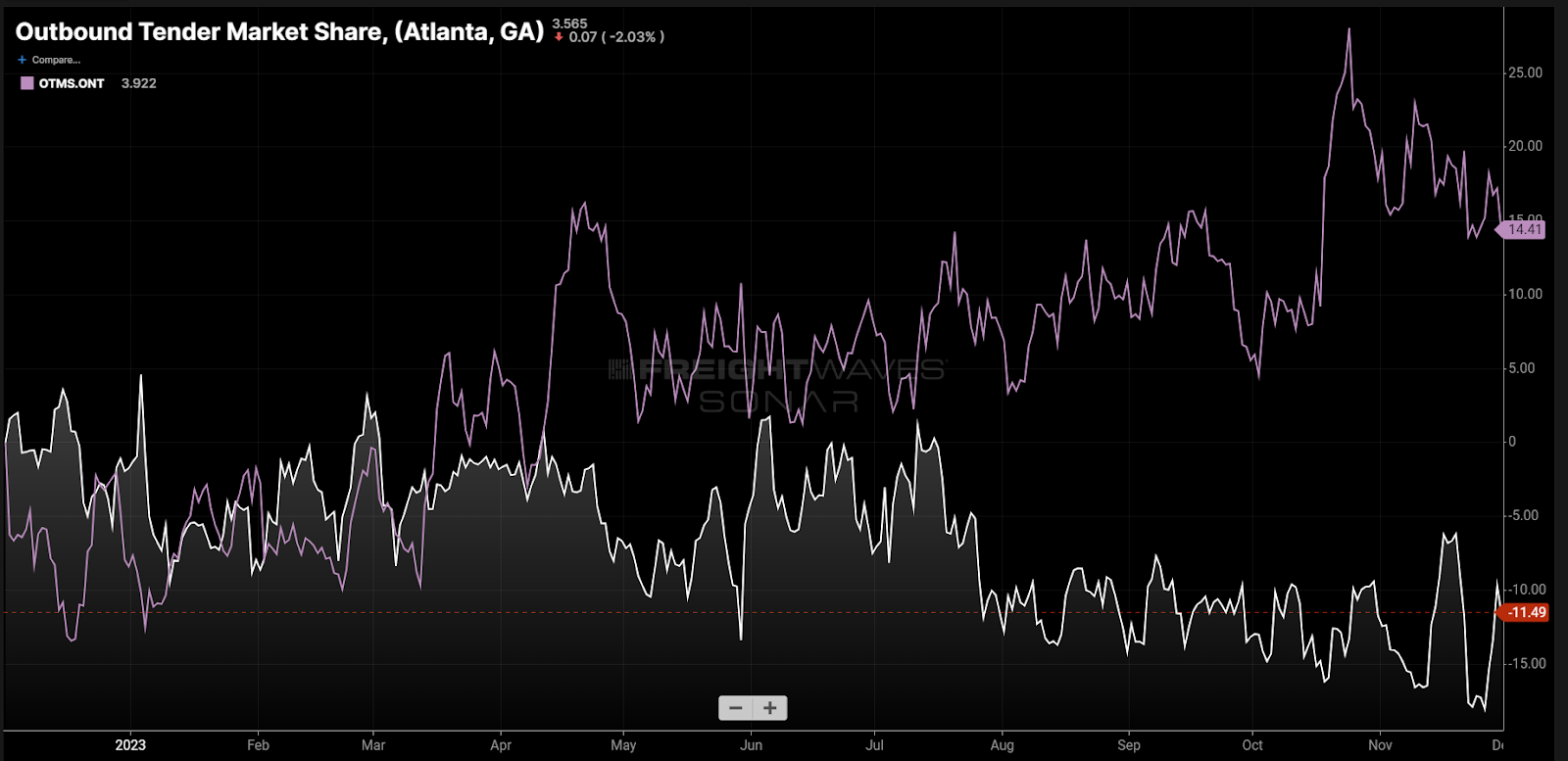
Chart of the Week: Outbound Tender Market Share – Atlanta, Ontario SONAR: OTMS.ATL, OTMS.ONT
Atlanta’s percent of total U.S. freight market volume has fallen more than 11% over the past year, according to FreightWaves tender volume data. On the other side of the country, the Ontario, California, market has recovered over 14% of its share of the outbound trucking market. Supply chain shifts and a relatively inexpensive transportation market are driving forces.
Freight takes the path of least and generally cheapest resistance. During the pandemic years of 2020-21, the West Coast port and rail infrastructure was overwhelmed, causing prices to skyrocket and service to deteriorate around the nation’s largest port complexes of Los Angeles and Long Beach.
Imports from Asia represent a large percentage of freight volume in the U.S. and most of that entered through the Southern California ports as it is the fastest and cheapest route — until the pandemic.
Importers were forced to find alternative pathways to bring their freight into the U.S. and diverted shipments into Eastern ports with more frequency. Ports like Savannah, Georgia, a feeder for Atlanta market freight demand, exploded.
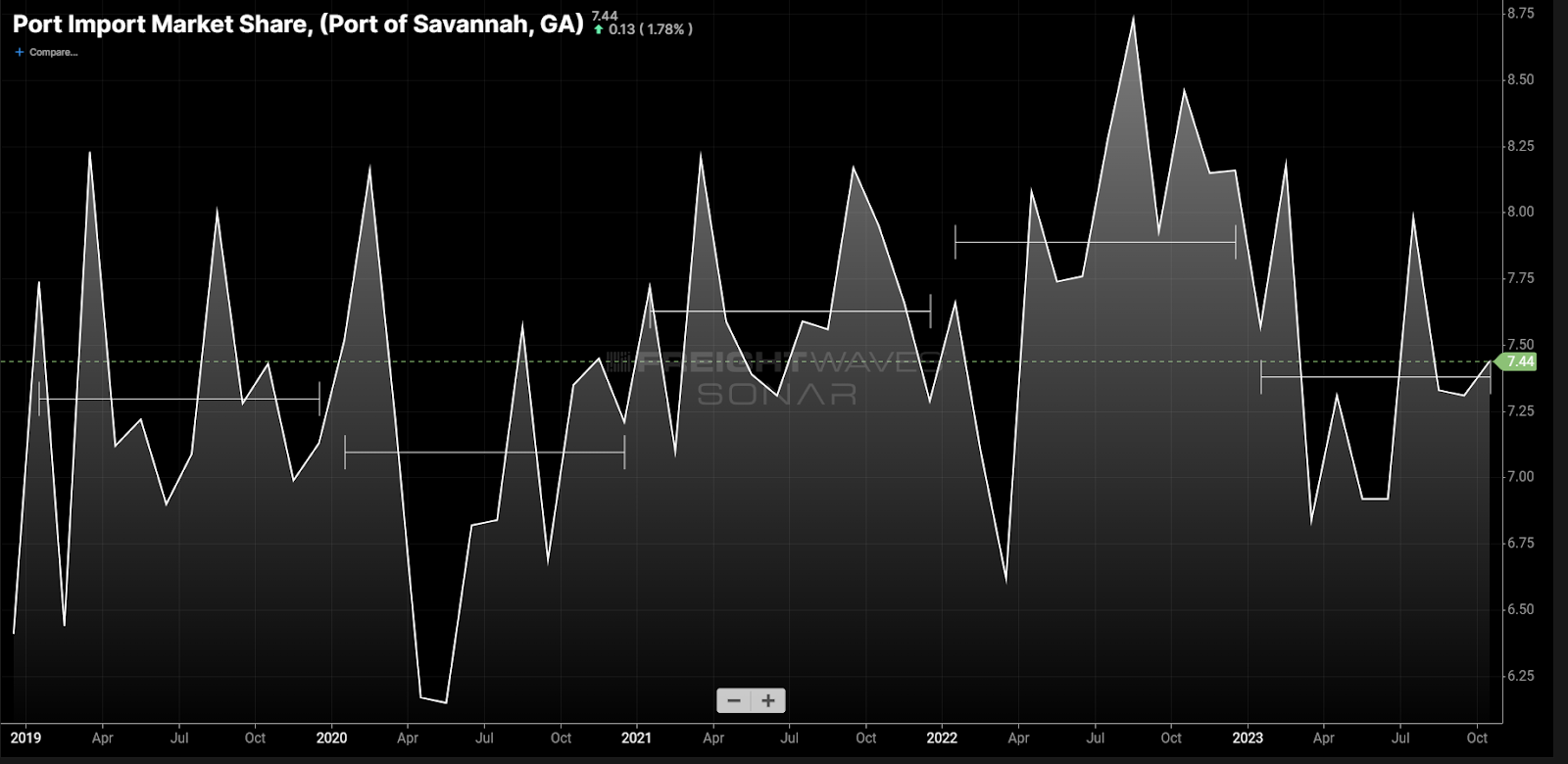
Many thought much of this volume would stick, but that has somewhat faded. Savannah currently represents approximately 7.44% of domestic maritime import shipments, down from its peak value of 7.9% in 2022 and up slightly from 2019’s 7.3%.
With drought impacting the Panama Canal’s larger Neopanamax locks this fall and the conflict in the Middle East creating problems for ships around the Suez Canal, importers are seeing more reason to resume shipping into the nation’s largest port complex in Los Angeles and Long Beach.
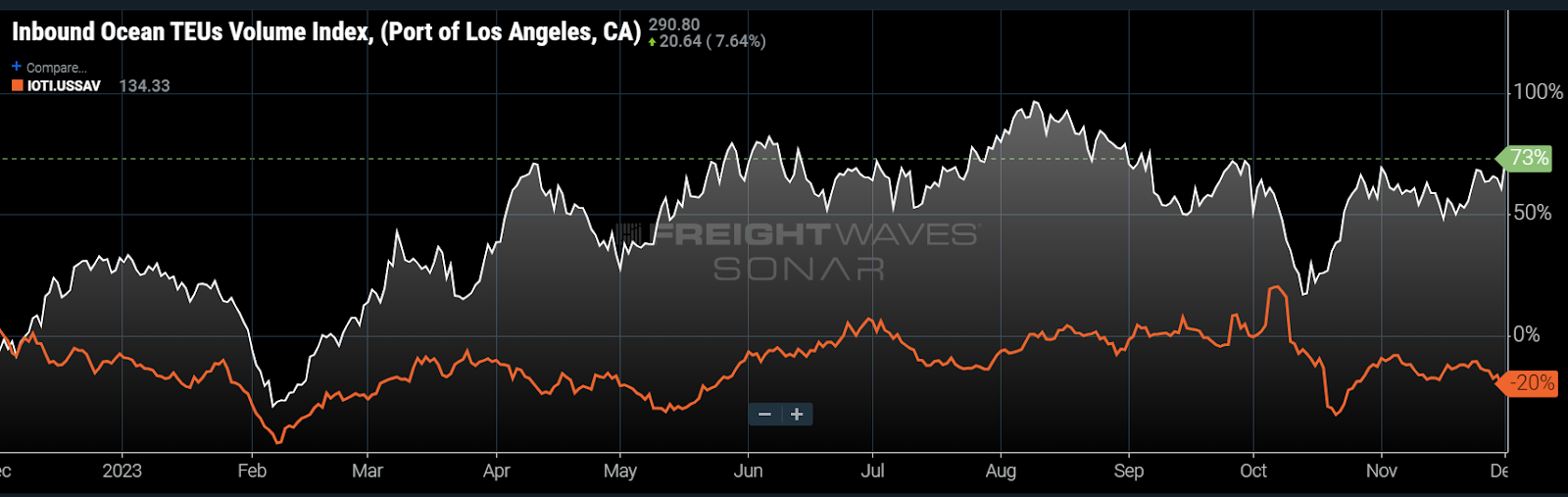
The Inbound Ocean TEUs Volume Index (IOTI), which measures bookings of twenty-foot equivalent units by departure date from the port of lading, for Savannah is down 20% annually this past week. The IOTI for the Port of Los Angeles is up 73%, a trend that has been relatively consistent since this past spring.
Other than geopolitical and environmental disruptions — both increasing themes over the past several years for supply chains — cost is an undeniable factor.
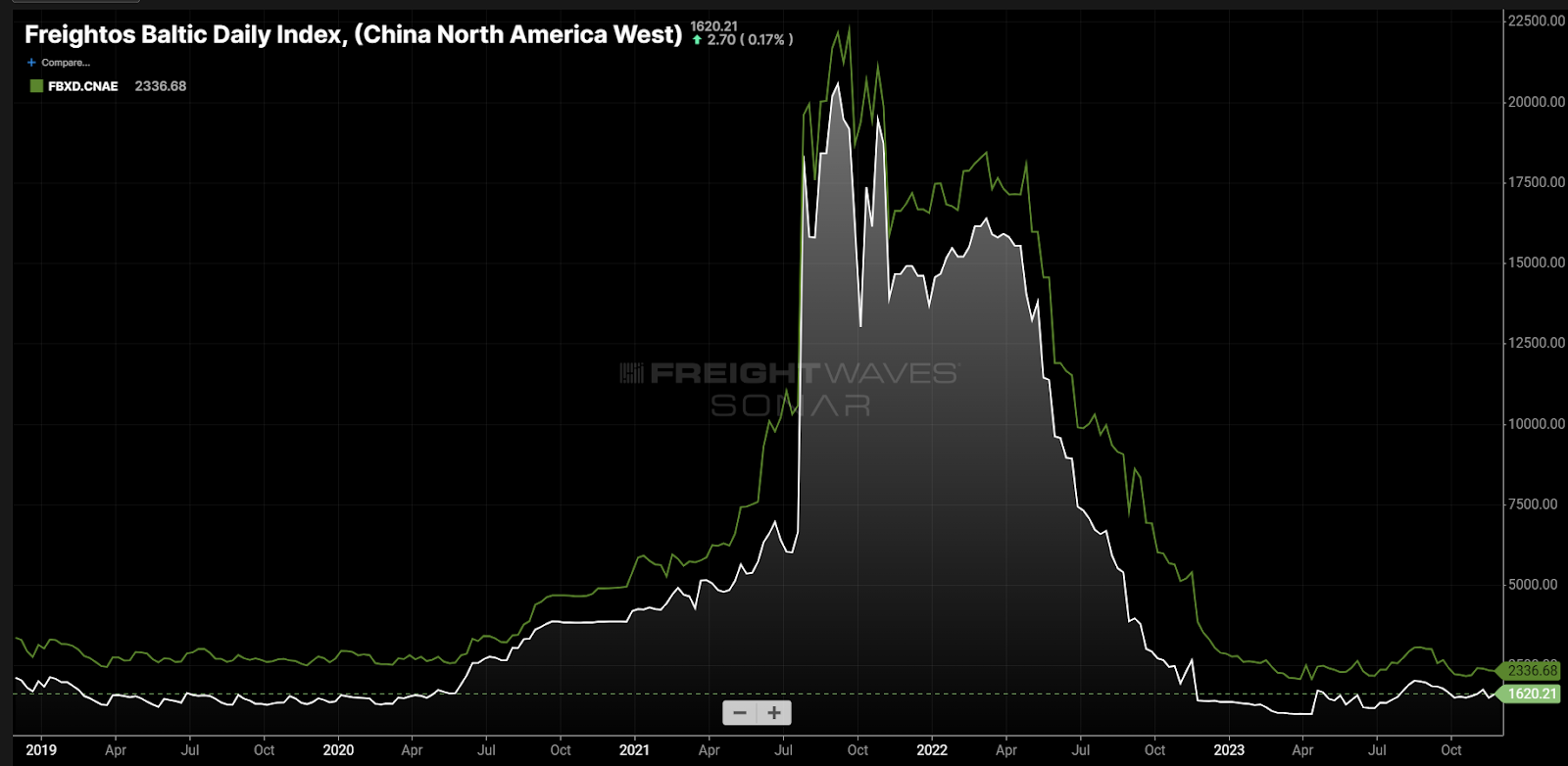
Maritime container rates spiked from China to the North American West and East coasts in 2021-22, but not proportionately at times. When the spread is smaller, it makes shipping into the Eastern ports more favorable. The cost of surface transportation is also a huge factor.
In December 2021, the average dry van truckload spot rate from Los Angeles to Philadelphia was $9,600. The cost of shipping from Savannah to Philadelphia was $2,650 — a difference of nearly $7,000.
At the same time, the cost of moving a forty-foot equivalent unit from China to Los Angeles was ~$14,600 versus ~$16,500 from China to Savannah — a difference of $2,100. If service is similar, and at this time it was more than likely better, shippers could save nearly $5,400 per shipment moving their goods into the East Coast.
The current spot rate from Los Angeles to Philadelphia is $5,300, and Savannah to Philadelphia is $1,450. The spot rate for containers from China to LA is around $1,600 and to Savannah is $2,300. This would make the savings around $3,150.
The savings is still there to an extent, but the service scenario has reversed. The total value proposition of shipping into the East has dramatically fallen and subsequently so has the surface freight volume originating in the Atlanta market.
Freight demand moving back to the West Coast could make it easier for the market to destabilize as carrier networks are typically more strained when they have to cover longer distances. This shift back to another pre-COVID shipping pattern may reemerge as another supply chain pain point when capacity finds more of an equilibrium with demand.
The FreightWaves Chart of the Week is a chart selection from SONAR that provides an interesting data point to describe the state of the freight markets. A chart is chosen from thousands of potential charts on SONAR to help participants visualize the freight market in real time. Each week a Market Expert will post a chart, along with commentary, live on the front page. After that, the Chart of the Week will be archived on FreightWaves.com for future reference.
SONAR aggregates data from hundreds of sources, presenting the data in charts and maps and providing commentary on what freight market experts want to know about the industry in real time.
The FreightWaves data science and product teams are releasing new datasets each week and enhancing the client experience.
To request a SONAR demo, click here.
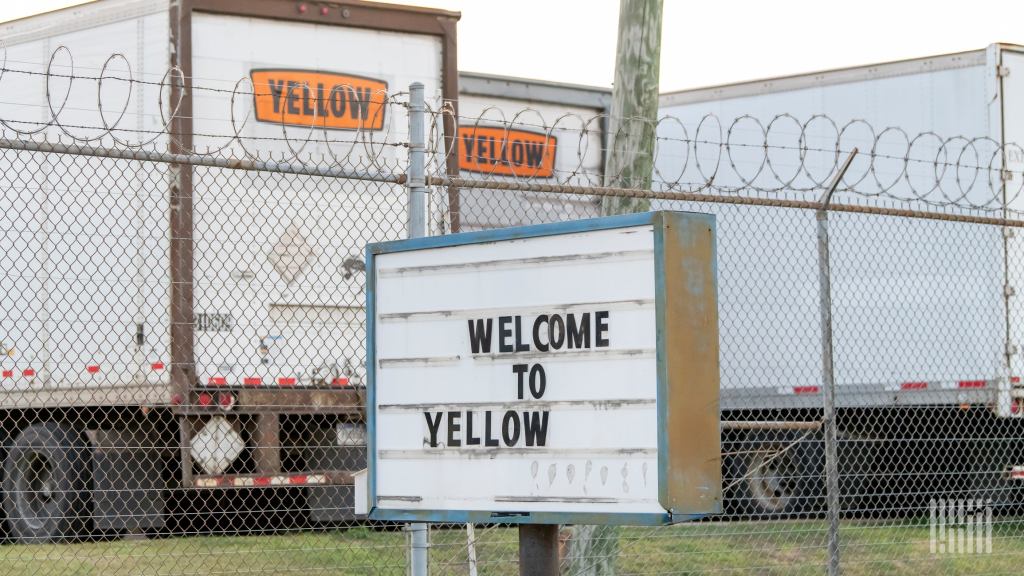
An auction for Yellow Corp.’s terminals hasn’t ended yet, a Delaware court filing revealed late Friday.
The auction for the bankrupt company’s less-than-truckload terminals began Tuesday morning, with an expectation that winning bids would be revealed Friday. The court document said it may now be Tuesday (Dec. 5) before the new owners of the service centers are made public.
Yellow operated roughly 300 terminals before it ceased operations at the end of July. Some of its property leases have already been terminated. However, parties interested in its more than 170 owned terminals were required to have their bids in by Nov. 9.
Less-than-truckload carrier Estes’ $1.525 billion stalking horse bid was named as the winning bid for the facilities in late September. That offer set the price floor for the current auction process.
What remains to be seen is the status of a going concern bid led by Jack Cooper Transport’s Executive Chair Sarah Amico.
The offer was reported to include $1.1 billion in new debt to pay off secured lenders and the hedge funds providing bankruptcy financing as well as $1.5 billion in preferred equity to satisfy claims from unsecured creditors. The linchpin for Amico’s offer, however, would require the U.S. Treasury to extend the maturity of a $700 million Covid-relief loan by two years from September 2024.
The plan received the support of nearly a dozen senators as well as the International Brotherhood of Teamsters, which represented roughly 22,000 of Yellow’s 30,000 employees. However, Treasury has been reported to be weighing its options of potentially rescuing some of those jobs against its fiduciary obligation to taxpayers, which would be made whole under the current Chapter 11 liquidation plan.
The balance on Treasury’s financing package with Yellow stands at more than $737 million, according to recent court filings.
Yellow’s roughly 12,000 tractors and 35,000 trailers were previously approved by the court for sale through auction houses.
More FreightWaves articles by Todd Maiden

WASHINGTON — Major trucking companies and brokers who book their freight are pressuring the Federal Motor Carrier Safety Administration to attach a safety rating to carriers operating without such a rating — a situation that exists for over 90% of the freight market.
The concern comes as FMCSA looks at developing a new way to verify when a motor carrier is fit to operate trucks in interstate commerce, known as a safety fitness determination (SFD). The agency issued a preliminary advance notice of proposed rulemaking (ANPRM) in August to get public feedback on whether and how to revamp its current rating methodology.
FMCSA’s own statistics red-flags the problem. Of 690,091 interstate freight carriers eligible for an FMCSA safety rating in 2021, 646,777 — roughly 94% — did not have a rating, according to the agency’s most recent annual safety data, published in December 2022.
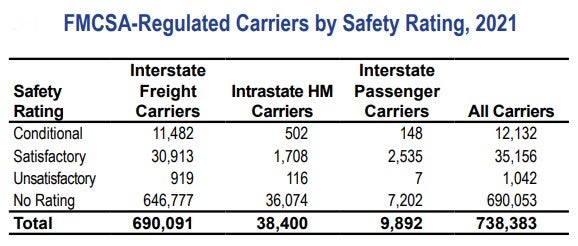
“A system that rates less than 10% of the eligible population is unacceptable,” wrote Lane Kidd, managing director of the Alliance for Driver Safety & Security, known as the Trucking Alliance, in comments responding to the proposed rulemaking. The group consists of nine of the country’s largest truckload carriers, including J.B. Hunt (NASDAQ: JBHT), Knight-Swift (NYSE: KNX) and Schneider National (NYSE: SNDR).
“These unrated carriers are treated disparately by brokers and shippers who must rely on other metrics to make important safety-based business decisions,” Kidd stated.
The Transportation Intermediaries Association, which represents truck brokers and 3PLs, agrees.
“TIA supports a speedy rulemaking because one of the most significant challenges for the third-party logistics industry is the manner in which motor carrier safety ratings are currently being used by personal injury lawyers, insurers, and the media, among others,” said TIA Vice President of Government Affairs Chris Burroughs in comments filed with the notice.
“The misuse of safety ratings, which manifests itself in nuclear verdicts, higher insurance rates, and reputational damage is especially acute in light of the fact that 90% of motor carriers are currently considered ‘unrated’.”
FMCSA’s current SFD system is based on data collected during a compliance review investigation, conducted either on-site at the motor carrier’s place of business or remotely through a review of its records using a secure portal.
After analyzing six factors — which incorporate crash involvement and hours of service violations — a carrier is assigned one of three safety ratings: satisfactory, conditional or unsatisfactory.
But because of loopholes in the system, a carrier is not prohibited from operating with a conditional rating even though a review revealed a safety breakdown. For example, a carrier with a documented noncompliance in vehicle maintenance and controlled substances testing would receive a proposed conditional rating. If the proposed rating becomes final, it still allows the carrier to continue operating.
FMCSA also admits that the current SFD process strains agency staff, reaching only a small percentage of carriers. That leaves the majority without a rating at all, setting up the potential for a huge number of unsafe trucks operating on the highways at any time.
“Because the agency has resources to issue safety ratings to only a small percentage of motor carriers each year, a safety rating does not necessarily reflect the current safety posture of a motor carrier,” the agency acknowledged in the ANPRM.
Most groups representing carriers, shippers, brokers and safety advocates agreed that the current system was broken and needed to be made simpler and more clear, but differed on how to make that happen.
Solutions ranged from using a single “unfit” category, advocated by the Commercial Vehicle Safety Alliance as well as proposed previously by FMCSA, to expanding to a five-point number system, supported by Tesla (NASDAQ: TSLA).
“The current system is confusing and not intuitive,” commented Madan Gopal, staff safety strategy engineer for the Austin, Texas-based company, which is ramping up production of its long-delayed Semi electric truck.
“Also, the meanings of ‘unsatisfactory’ and ‘conditional’ may be confused with one another. A five-point system, with 1 assigned to ‘conditional’ and 5 assigned to ‘unfit-out of service’ may be more understandable.”
In between CVSA and Tesla is a call, by TIA, to move to a simple fit/unfit rating system.
“For many years, TIA has been a strong proponent of a “red light/green light” system for the use of motor carriers as a substitute for the current, confusing and conflicting” system, Burroughs asserted.
“Not providing a safety rating of some kind for every carrier would continue the confusion and ambiguity that exists in the current [process]. This important change is not only essential to eliminating unsafe motor carriers from the road but also eliminating confusion in the marketplace as to what the existing ratings mean.”
The National Industrial Transportation League, a shipper group supporting TIA, commented, “Think how many bad actors would be put out of business if shippers and 3PLs were told not to use them (unfit). A simple binary safety rating system that distinguishes a fit or unfit carrier will help clear up a great deal of confusion.”
But several carrier groups — the National Motor Freight Traffic Association, representing LTL carriers; the National Association of Small Trucking Companies, which represents small-business carriers; and the National Private Truck Council (NPTC) — believe FMCSA should retain its three-tier system.
Among reasons cited for keeping three categories versus a binary system, NPTC asserted that eliminating “conditional” as a rating would mean carriers currently holding that status “would be compelled to suspend operations until such time as the agency could conduct another compliance review and reconsider the safety fitness rating, whenever that might be,” the group stated.
“It essentially forces the company out of its trucking operations.”

Did you know the same company has delivered the holiday tree to Rockefeller Plaza in New York City since 1982?
This year the famous Christmas tree that lights up Rockefeller Plaza is from Vestal, New York. The tree has been a tradition in the plaza since 1931. But how are the logistics of delivering such a massive tree even possible?
Find out in this week’s episode of Tracks Through Time, in which FreightWaves TV host Mary O’Connell takes a turn telling Deputy Editor Brielle Jaekel some of the history behind it all.

On today’s episode of WHAT THE TRUCK?!? Dooner is joined by Flexport’s Bill Driegert. We’ll find out where Flexport is going in trucking, how it’s using Convoy’s tech and when drum solos are appropriate.
Greenscreens.ai’s Kevin Coomes comes to the table to talk about automated billing, climbing the FreightTech25, and the differences between doing business in the U.S. and China.
Trucker/author Ben McCulley talks about his new trucking tome “Read When Safe.” McCulley tells us all about this timeless lesson told in a way only a truck driver could deliver. From the bathroom to brokers, Ben covers it all, with stories and jokes to boot.
CarrierSource’s Clara Flaherty dishes out takes on Chicago’s best pizza, reveals her latest list of double brokers and talks about marketing tools for carriers.
Plus, Cybertruck base model costs 50% more; hitting cans with tanks; if a semi was Tony Hawk and more.

Hello, and welcome to the coolest community in freight! Here you’ll find the latest information on warehouse news, tech developments and all things reefer madness-related. I’m your controller of the thermostat, Mary O’Connell. Thanks for having me!
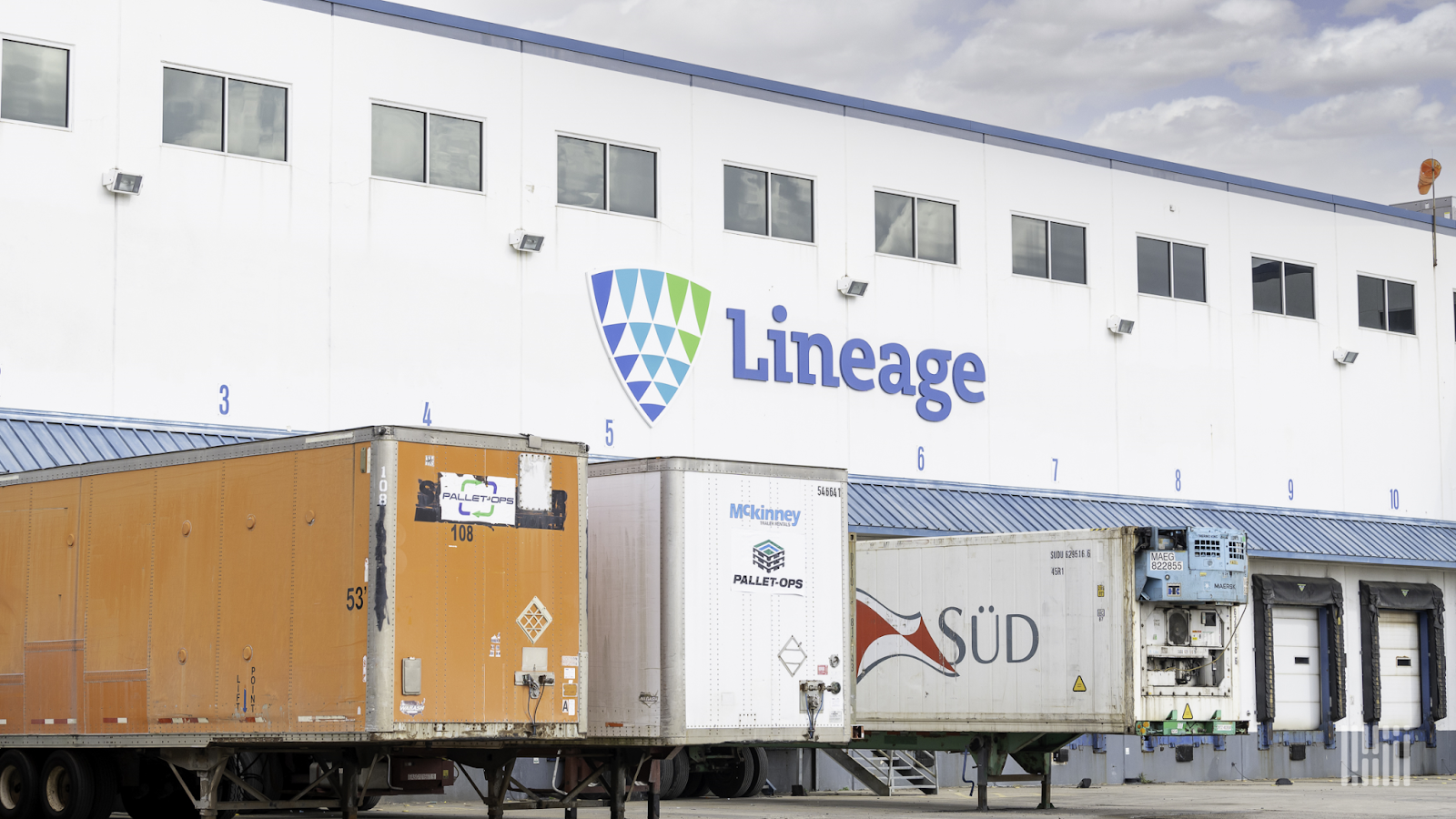
Big moves are on the horizon for Lineage Logistics as the temperature-controlled storage provider wraps up 2023. The Michigan-based company is seeing a $30 billion initial public offering for next year. For comparison, the largest public comp for Lineage is Americold Realty Trust, which carries a market cap of $8 billion. That company went public in early 2018, according to an article by FreightWaves’ Todd Maiden.
The beginning of 2024 holds strong promise of some banger IPOs. Most anticipated are Reddit, Shien, Skims and Rubrik.
The global cold storage construction market is currently estimated at $11.6 billion and is expected to reach $32.8 billion by 2030, according to the “Cold Storage Construction — Global Strategic Business Report.”
With so much anticipated growth, Lineage could be going public at the exact right time.

A U.K.-based pharmaceutical packaging company has stepped up pharma shippers’ expectations with its new range of products. These products fall in the PharmaPac range and will primarily focus on last-mile delivery challenges for the pharmaceutical industry.
The new PharmaPac line is designed to protect temperature-sensitive medications, vaccines and biological samples. Most pharma packaging can do that, but the special thing about this line of products is the amount of time the temperature can remain stable.
According to a European Pharmaceutical Manufacturer article, “PharmaPac Genesis — Hydropac’s first ‘pre-qualified system’ (PQS/Validated), comprises a polystyrene box, ice packs, a universal payload tray, and a groundbreaking thermal filter pack. This packaging solution safeguards refrigerated payloads (2-8°C) for a minimum of two days during transit.”
For me the best thing about the ice packs is that they’re recyclable.
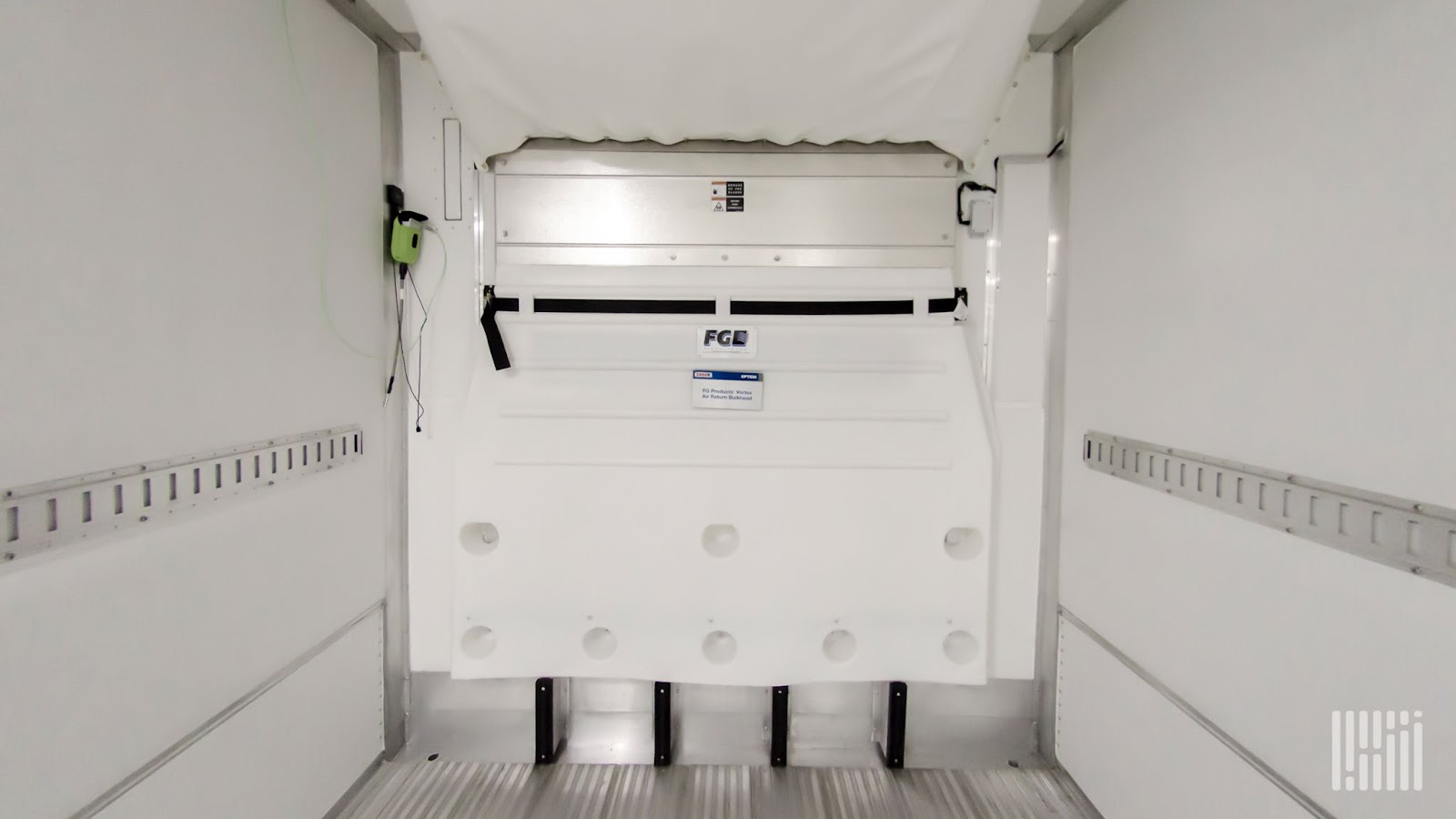
Waste in the food supply chain removes about 30% of food from the U.S.’s food supply. That is alarmingly high. If only there were something to cut that number down. Well, there might be. New research from an international team of scientists has found that raising the temperature of frozen food by 3°C, could reduce food loss and cut carbon emissions by over 19 million tons a year.
The new report, “Three Degrees of Change,” says changing frozen food temps from minus 18 C to minus 15 C can save the equivalent of carbon dioxide emissions of 3.8 million cars a year.
Toby Peters, professor of cold economy at the University of Birmingham and Heriot-Watt University, who led the research, said in the report: “Globally, 12% of food produced annually for human consumption is lost due to a lack of proper temperature management. On top of this, an increasing global population raises the demand for food, while the rapidly warming planet will reduce food production. It is of the utmost importance that we find ways to combat food loss to achieve global equitable food security. Freezing food is one such method, but we need to achieve this as energy efficiently and sustainably as possible.”
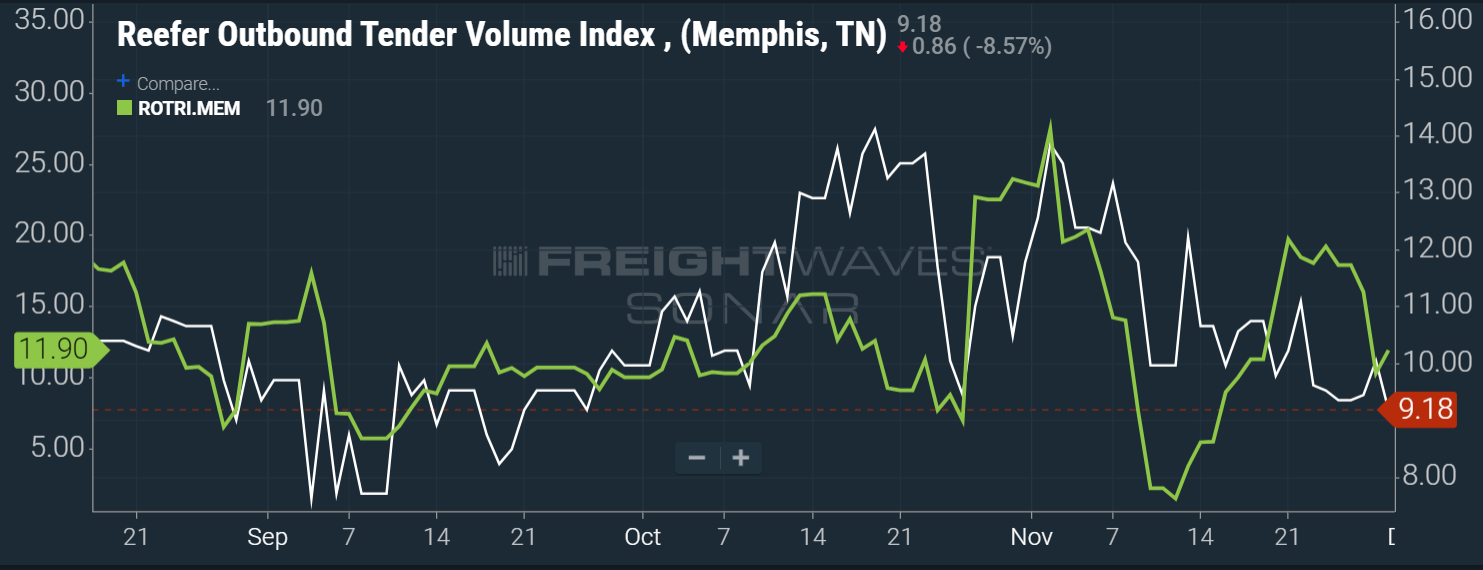
This week’s reefer market is starting to sing the blues as the Reefer Outbound Tender Rejection Index has dropped 1,715 basis points week over week. Rejections falling to 11.9% after being above 20% heading into the holiday definitely hurts spot rates in the market. There is a chance that spot rates didn’t see the volatility as carriers took off time for Thanksgiving. Capacity is going to be significantly looser next week as rejections continue to fall and reefer outbound tender volume levels haven’t taken a substantial increase.
Is SONAR for you? Check it out with a demo!
South Mill Champs strengthens its market presence with the acquisition of World Fresh Produce
Cold storage company expanding in Lebanon
The importance of gas monitoring in frozen food storage and preservation
How DiGiorno Took A Bigger Slice Of The Social Market
Wanna chat in the cooler? Shoot me an email with comments, questions or story ideas at moconnell@www.freightwaves.com.
See you on the internet.
Mary
If this newsletter was forwarded to you, you must be pretty chill. Join the coolest community in freight and subscribe for more at www.freightwaves.com/subscribe.

Load board DAT said it has shut down fake websites and is promising to take “immediate action” against any fraudsters who in the future may try to get at its customers’ information.

DAT confirmed to FreightWaves that the fake DAT sites reported in November have been shut down. That includes additional phishing sites allegedly used to acquire DAT users’ multifactor authentication codes.
“Our Network Integrity Unit works around the clock to identify and remove fraudulent actors. We have a zero tolerance policy to fraud and will take immediate action if we find anyone engaging in fraudulent behavior,” said Annabel Reeves, communications director at DAT.
DAT advises customers who suspect they have received a phishing email impersonating DAT or suspect a compromise of their DAT credentials to promptly contact the customer service department and report the incident. It also recommends sending a screenshot of the message to customer service instead of forwarding the actual phishing email to avoid further issues.
DAT users can find more information at the company’s fraud protection website.
Phishing attacks are on the rise in the logistics industry, with indications that sophisticated hackers are targeting brokers and carriers.
In mid-November, a DAT user received an email with a fake Carrier411 Freight Guard Report requesting the user respond at onedatfreight.com. DAT’s actual website address is one.dat.com. The IP address showed a company called Beget LLC out of St. Petersburg, Russia, was hosting the fake site.
The additional phishing sites were confirmed to be hosted by web application site Netlify.
The fake sites include:
Netlify support confirmed that the additional sites had been reported to its security team on Nov. 23 and Nov. 29, respectively. Both sites were suspended the same day they were reported.
Onedatfreight.com’s shutdown date is unknown.
If you have a story on load board fraud to share, please email gsharkey@www.freightwaves.com.
Load boards are broken — fixing them is critical
FMCSA seeks to improve complaint process for drivers, brokers
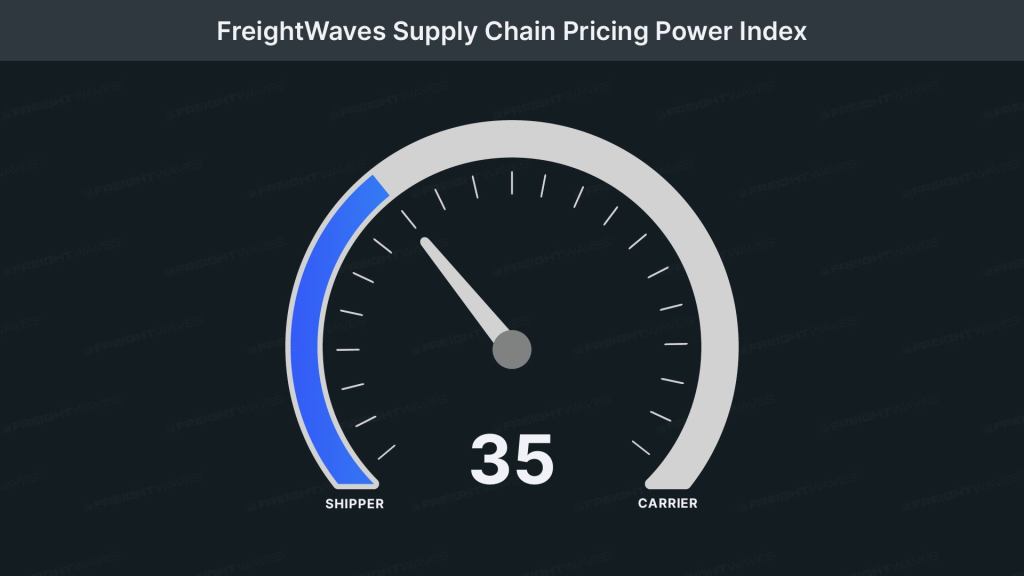
This week’s FreightWaves Supply Chain Pricing Power Index: 35 (Shippers)
Last week’s FreightWaves Supply Chain Pricing Power Index: 35 (Shippers)
Three-month FreightWaves Supply Chain Pricing Power Index Outlook: 35 (Shippers)
The FreightWaves Supply Chain Pricing Power Index uses the analytics and data in FreightWaves SONAR to analyze the market and estimate the negotiating power for rates between shippers and carriers.
This week’s Pricing Power Index is based on the following indicators:
Signals from the Outbound Tender Volume Index (OTVI) will be a bit erratic until next week, as the holiday noise from Thanksgiving is currently skewing volume levels. Since OTVI is calculated as a seven-day moving average, and since freight demand on Thanksgiving was effectively absent, the recent dip should not be alarming.
In fact, tender volumes were effortlessly outpacing 2022 levels in the run-up to the holiday and came within spitting distance of 2020 — the second-best year for freight demand on record. Yet volume trends as a whole will be largely insignificant during the remainder of the year, as December is a very soft month for demand. Instead, the direction of tender rejections and carrier rates will be the metrics to watch.
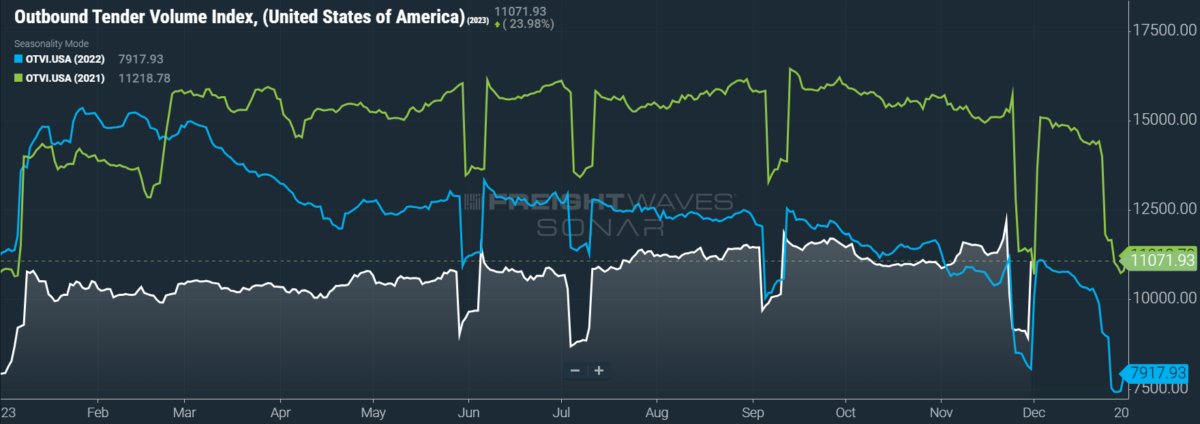
OTVI, which measures national freight demand by shippers’ requests for capacity, fell an unsurprising 1.51% on a two-week basis as holiday noise devalues comps made against last week’s data. On a year-over-year (y/y) basis, OTVI is up 9.76%, though such y/y comparisons can be colored by significant shifts in tender rejections. OTVI, which includes both accepted and rejected tenders, can be inflated by an uptick in the Outbound Tender Reject Index (OTRI).
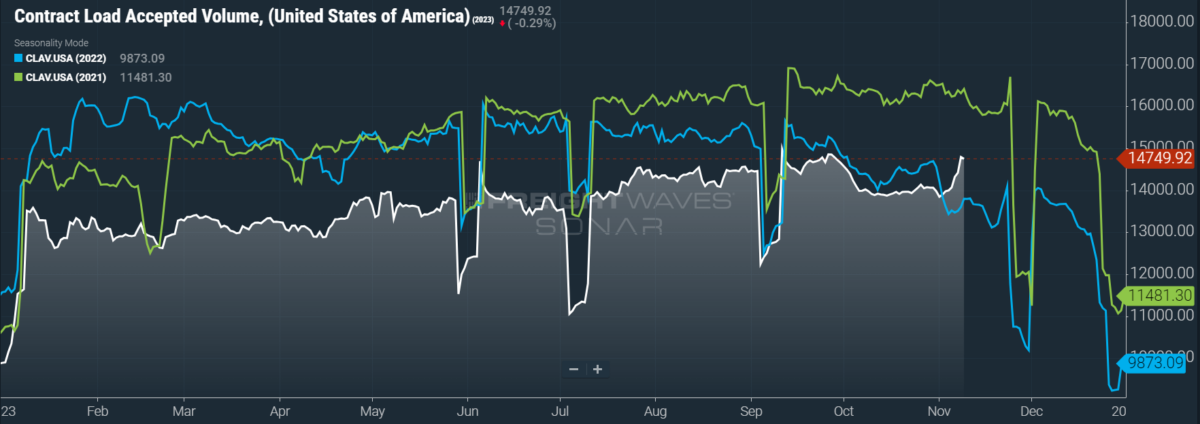
Contract Load Accepted Volume is an index that measures accepted load volumes moving under contracted agreements. In short, it is similar to OTVI but without the rejected tenders. Looking at accepted tender volumes, we see a fall of 21% on a two-week basis and a rise of 10.44% y/y. This narrowing y/y difference implies that actual freight flow is recovering from this cycle’s bottom.
Bad news came from the goods economy in October, as personal consumption on goods fell 0.2% from the month prior, while durable goods spending fell 0.5% over the same period. These drops are disappointing because of the strength seen during September, when durable goods spending rose 1.1% on a monthly basis. That said, consumers continue to save at a relatively low rate (the personal savings rate edged up to 3.8% from 3.7% previously), which supports a picture of persistent consumption.
Recent data from Bank of America reveals a confidently strong start to the holiday shopping season. Consumer spending on holiday goods was up 4% y/y on Black Friday, a comp made even more remarkable by the fact that core goods inflation was flat y/y in October. In other words, growth in real spending and thus real consumer demand is comfortably higher than it was in 2022.
Looking ahead to the Federal Reserve’s next meeting in mid-December, it appears likely that the target federal funds rate will remain unchanged and that policy is at its tightest level for this cycle. Fed Gov. Christopher Waller recently stated that “something appears to be giving, and it’s the pace of the economy.” While rate cuts are not probable until late Q2 or early Q3 of next year, December’s meeting could herald a shift in the Fed’s attitude toward interest rates: namely, that its default bias pivots from hawkishness to dovishness. Easing interest rates will certainly help the consumer, which in turn provides a tailwind to the goods economy and truckload markets.
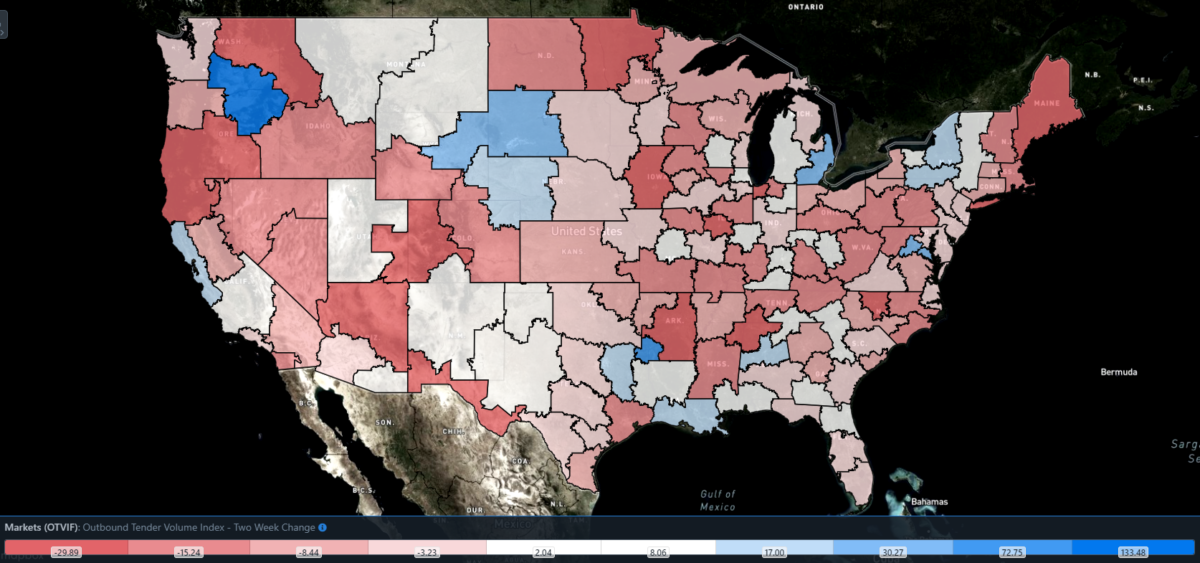
Of the 135 total markets, only 46 reported increases in tender volumes on a two-week basis, as the strongest performances were scattered across the country.
After an appreciable bump around Thanksgiving — albeit one that failed to match the highs of 2022’s spike — tender rejection rates quickly began to slide at the end of the month. OTRI very well might be headed to early November’s low of 3.29%, which was its lowest reading since early August. If last year’s trends hold, OTRI will continue to decline until mid-December, at which point it should rise from holiday tightness.
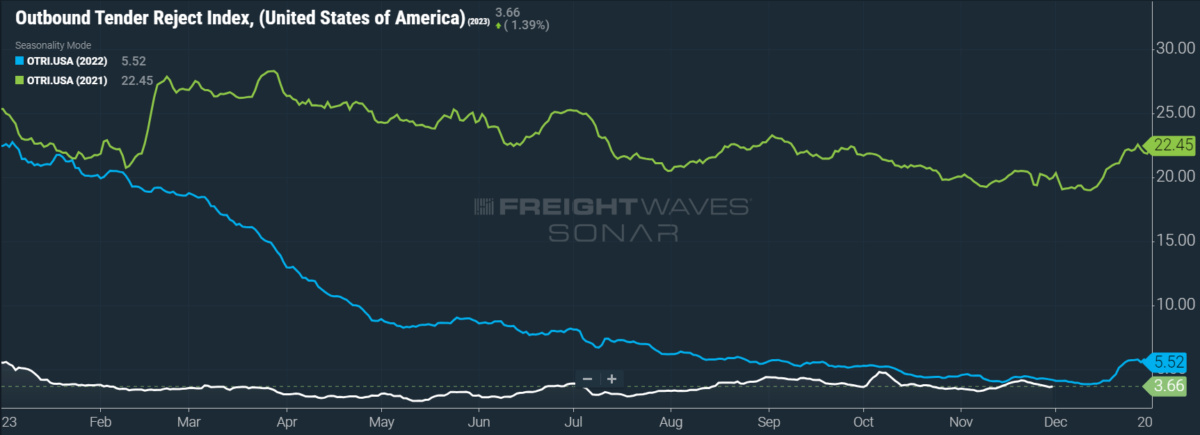
Over the past week, OTRI, which measures relative capacity in the market, fell to 3.66%, a change of 30 basis points from the week prior. OTRI is now only 44 bps below year-ago levels.
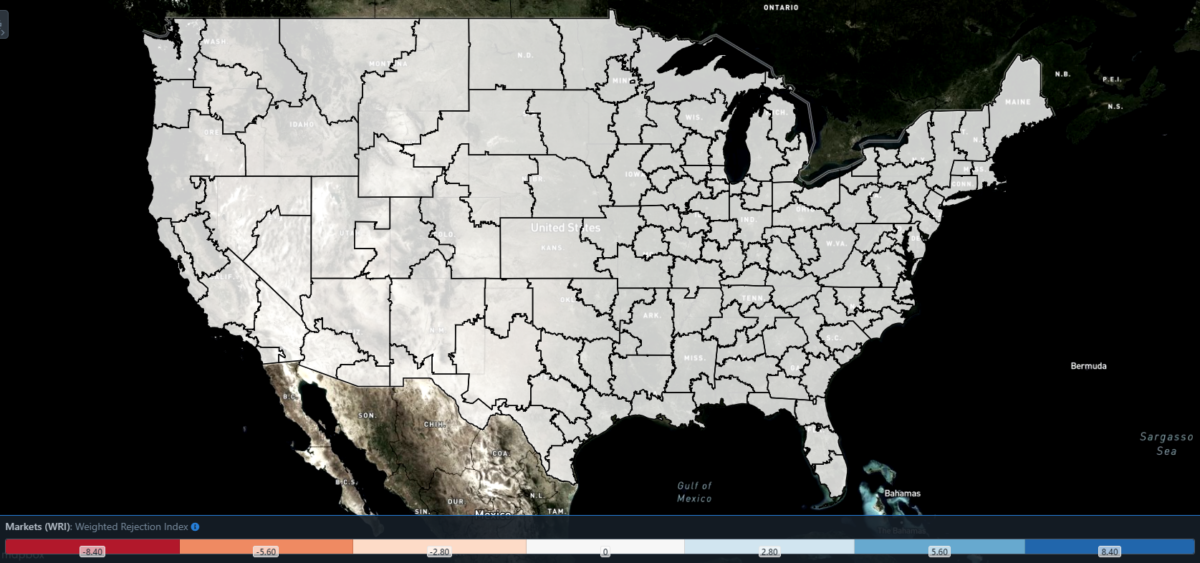
The map above shows the Weighted Rejection Index (WRI), the product of the Outbound Tender Reject Index – Weekly Change and Outbound Tender Market Share, as a way to prioritize rejection rate changes. As capacity is generally finding freight this week, no regions posted a blue market, which are usually the ones to focus on.
Of the 135 markets, 51 reported higher rejection rates over the past week, though 34 of those saw increases of only 100 or fewer bps.
Oil markets had an unusual reaction to some unusual circumstances. Last week, OPEC’s meeting was delayed over disagreements among the member states as to the size and distribution of proposed cuts to production quotas. On Thursday, it was announced that OPEC+ had not changed its production targets for Q1 2024. Instead, individual members had agreed to voluntary cuts totaling roughly 2.2 million barrels per day. Of those known, Saudi Arabia agreed to extend its current 1 million bpd cut, while Russia agreed to deepen its cut from 300,000 to 500,000 bpd.
All else being equal, news of production cuts should goose oil prices and therefore prices of distillate fuels like diesel. But the chaotic nature of OPEC’s announcements betrayed a potential disunity at the heart of the cartel, leaving oil markets with little confidence that the group could meaningfully influence prices. As such, domestic oil prices slid further from late September’s peak of $94 per barrel, currently trending at $76 per barrel. Retail diesel prices similarly gained some distance from September’s high of $4.61 per gallon, starting December at a national average of $4.25 per gallon.
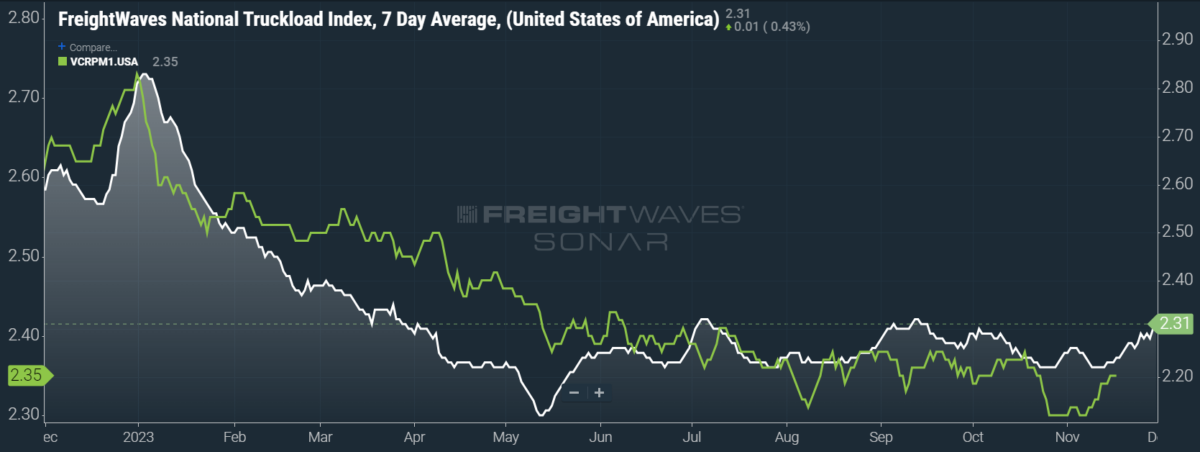
This week, the National Truckload Index (NTI) — which includes fuel surcharges and other accessorials — rose 5 cents per mile to $2.31. Falling fuel prices could not undo the gains in linehaul rates, as the linehaul variant of the NTI (NTIL) — which excludes fuel surcharges and other accessorials — rose 6 cents per mile w/w to $1.66.
Contract rates, which are reported on a two-week delay, are still shaking off a brutal dip from late October and early November. But while those losses have largely been reversed, contract rates are still trending a few cents lower than their Q3 average. Bid season will continue over the next few months, and so the ultimate floor for contract rates has yet to be found. For the time being, contract rates — which exclude fuel surcharges and other accessorials like the NTIL — are up 3 cents per mile w/w to $2.35.
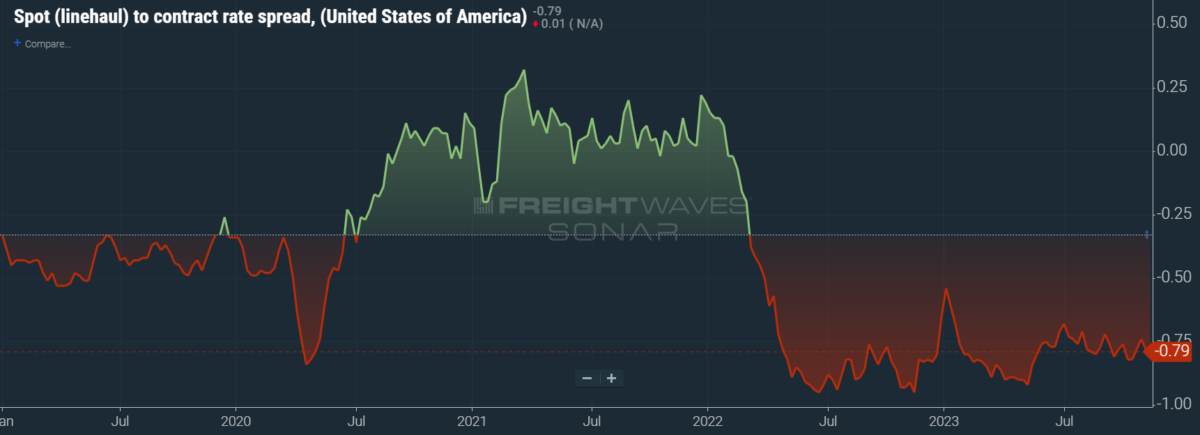
The chart above shows the spread between the NTIL and dry van contract rates, revealing the index has fallen to all-time lows in the data set, which dates to early 2019. Throughout that year, contract rates exceeded spot rates, leading to a record number of bankruptcies in the space. Once COVID-19 spread, spot rates reacted quickly, rising to record highs seemingly weekly, while contract rates slowly crept higher throughout 2021.
Despite this spread narrowing significantly early in the year, tightening by 20 cents per mile in January, it has remained wide throughout most of the year to date. As linehaul spot rates remain 79 cents below contract rates, there is plenty of room for contract rates to decline — or for spot rates to rise — in the final month of the year.
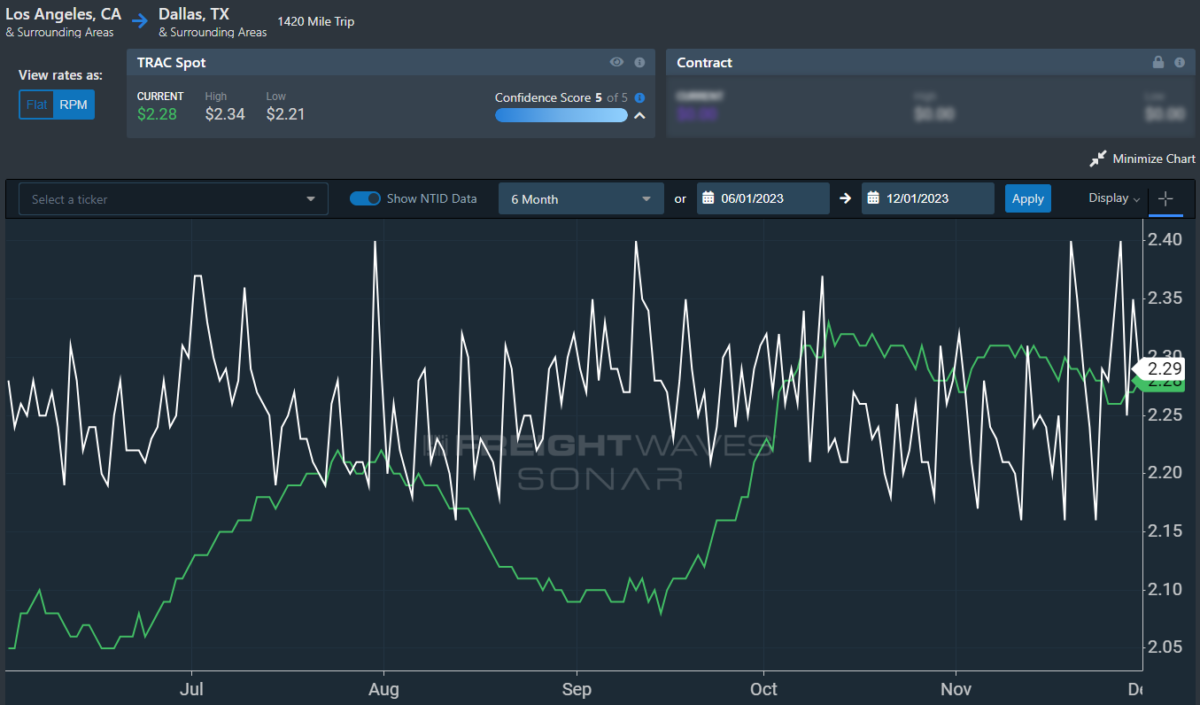
The FreightWaves Trusted Rate Assessment Consortium (TRAC) spot rate from Los Angeles to Dallas, arguably one of the densest freight lanes in the country, is still recovering from a recent dip. Over the past week, the TRAC rate remained unchanged w/w at $2.28 — lingering near its year-to-date high of $2.39. The daily NTI (NTID), which has risen to $2.29, is again outpacing rates along this lane.
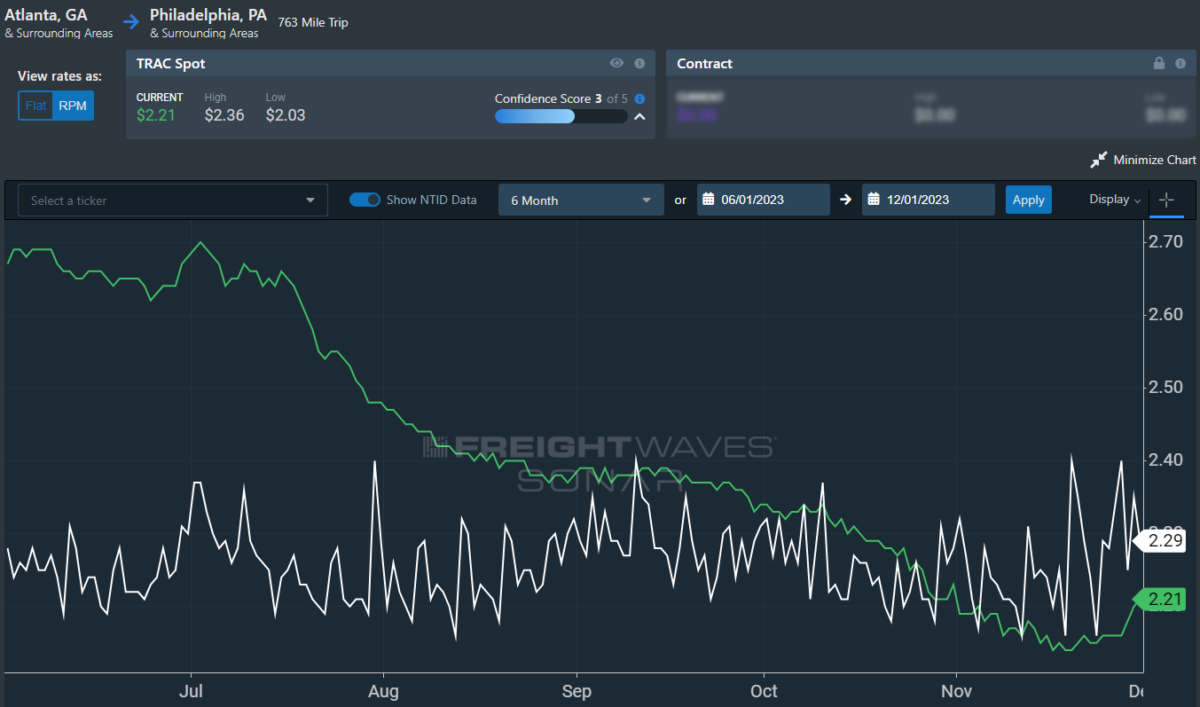
On the East Coast, especially out of Atlanta, rates saw a stark reversal of November’s losses but are still well below their Q3 average. The FreightWaves TRAC rate from Atlanta to Philadelphia shot up 6 cents per mile to $2.21. After plateauing well above the national average during the summer, rates along this lane declined sharply at the end of July, lacking any positive momentum until recently.
For more information on FreightWaves’ research, please contact Michael Rudolph at mrudolph@www.freightwaves.com or Tony Mulvey at tmulvey@www.freightwaves.com.