Loaded and Rolling: ATRI predatory towing data

ATRI predatory towing data

(Source: ATRI)

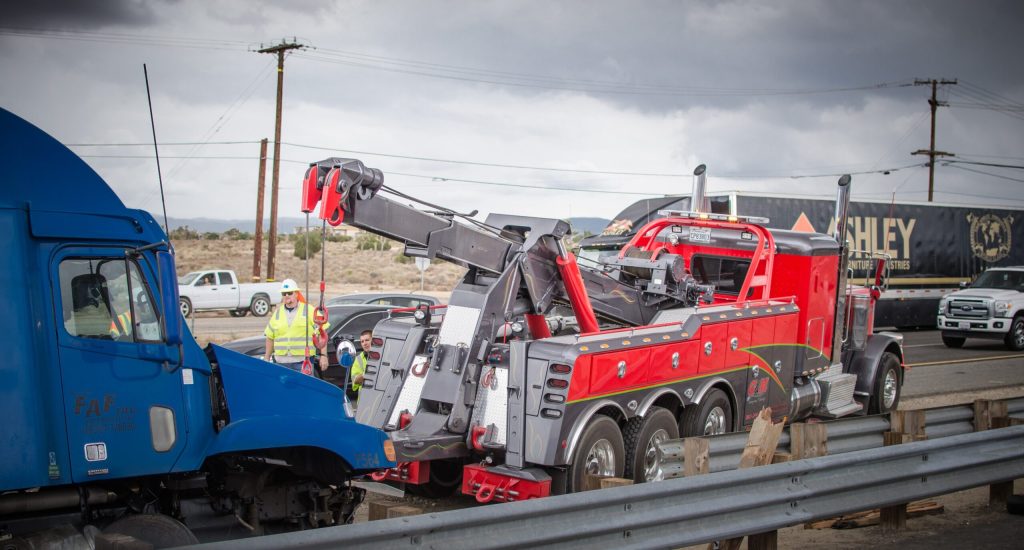
On Wednesday the American Transportation Research Institute (ATRI) released a report that examined causes and impacts of predatory heavy-duty towing. The report defined predatory towing in which “a T&R [towing and recovery] company egregiously overcharges, illegally seizes assets, damages assets by use of improper equipment, or illegitimately withholds release of a truck, trailer, and/or cargo.” When a trucking company is overcharged, it can happen in two ways, through either excessive costs or unnecessary additional equipment.

One of the impacts the report notes is these costs are passed on to insurance companies, which then pass on the charges as higher premiums. If the invoice exceeds the limits of an insurance policy, those extra costs are then absorbed by the motor carrier or driver, who must pay the difference out of pocket. Adding to the complexity, a patchwork of local and state towing regulations hampers efforts for carriers evaluating an invoice. Even after service is invoiced, there are inconsistent and nonstandardized invoice practices to cause further headaches for carrier accounting teams.

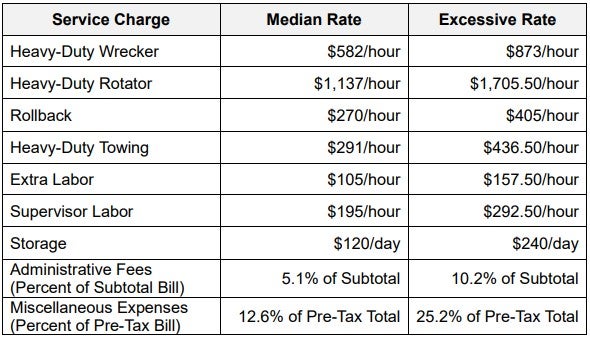
The report notes that the most common form of predatory towing is in the form of excess rates, according to 82.7% of the motor carriers surveyed. Unwarranted extra charges were a close second at 81.8% of those surveyed. An example of extra charges can be the hourly rate charged by a heavy-duty rotator versus a heavy-duty wrecker. The report adds, “Due to asset availability, rotators are sometimes used as wreckers, without the use of their rotating arm, and are thus billed at a wrecker rate.”

Price declines for used Class 8 trucks stabilizing?
(Source: FreightWaves SONAR)

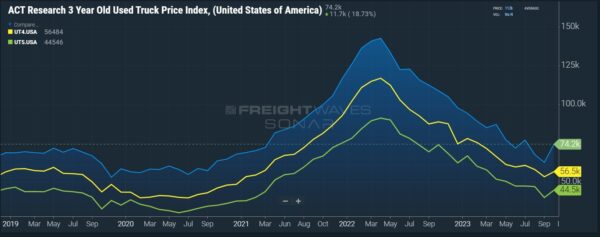
Prices for used Class 8 trucks are beginning to see signs of stabilization but are still in flux, according to October data released recently by ACT Research. ACT reports that the used Class 8 average retail sale price came in at $62,900 in October, a decline of 1% month over month and down 25% year over year. A big question the report examines is whether pricing declines will continue or improve. The report predicts continued lower prices through the end of 2023 but expects m/m growth toward the end of 2024.

Steve Tam, vice president at ACT Research, said: “The answer to that question seems to be in flux. There are still too many trucks chasing too little freight. Until the economy can strike a balance between those two factors, downward pressure on pricing will continue to exist. Once the excess capacity is absorbed, the freight rate environment and trucker profits will correct, restarting the cycle that is the commercial vehicle industry.”


FreightWaves’ Alan Adler wrote that according to J.D. Power, “In October, the average sleeper tractor sold at retail was 71 months old, had 437,227 miles and sold for $67,441. A month earlier, the average sleeper was four months older, had 20,547, or 4.9%, more miles and sold for $4,240, or 5.9%, less.” Power notes that depreciation for 2023 is averaging 4.4% m/m with new model years showing values below the strong pre-pandemic period of 2018 and 20% lower when adjusted for inflation.

Market update: Trucking conditions improve in September
(Source: FTR Transportation Intelligence)

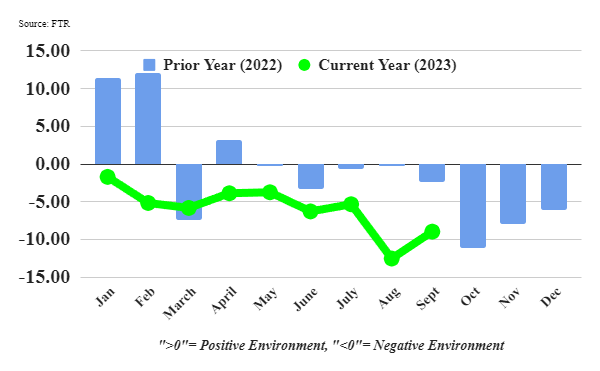
FTR Transportation Intelligence’s recently released Trucking Conditions Index (TCI) for September saw some improvement but tough market conditions remain. The TCI improved from minus 12.54 in August to minus 8.97 in September due to improving fuel prices and slightly higher freight demand. The index covers five major conditions in the U.S. full-truckload market, including freight volumes, rates, fleet capacity, fuel pricing and financing. A TCI reading above zero shows an adequate environment with a reading of 10 or above showing volumes, prices and margins are in a good range for carriers.

Avery Vice, vice president of trucking, noted in the report: “The TCI was less negative in September principally because fuel costs did not rise as much as they did in August, but trucking companies saw no real improvement in freight market conditions. Although carriers today are seeing some temporary relief due to the recent drop in diesel prices, freight rates look to improve only gradually over the next year. The trucking industry continues to struggle with more capacity than is ideal given sluggish freight volume. Many operations apparently are hanging on or maintaining driver levels in hopes of a near-term rebound, but that approach amounts to an increasingly high stakes game of chicken.”

FreightWaves SONAR spotlight: Spot market rates reheat post-Thanksgiving
(Source: FreightWaves SONAR)

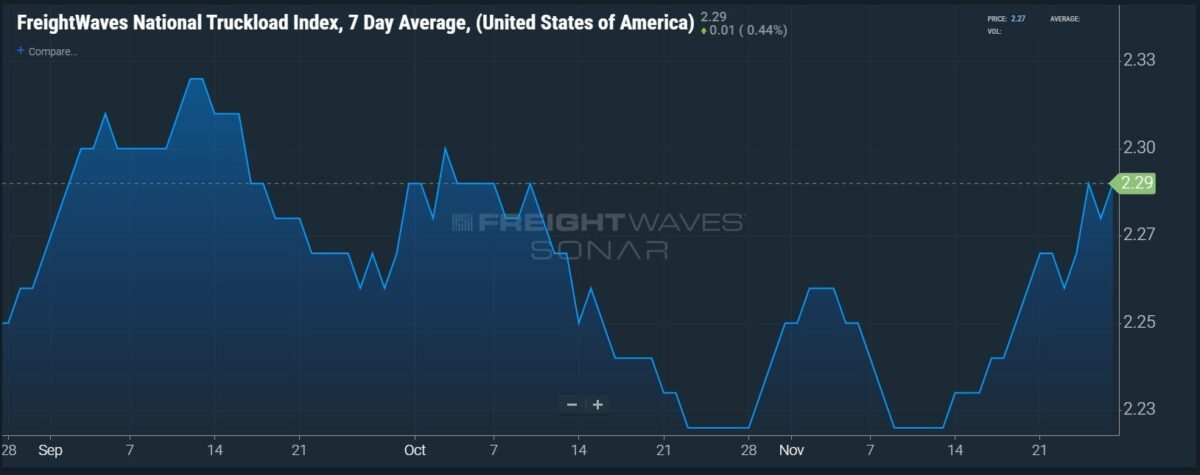
Summary: All-in spot rates rose sharply in the past week and are at levels not seen since Oct. 10, according to the FreightWaves National Truckload Index 7-Day Average (NTI). NTI spot rates rose 3 cents per mile week over week from $2.26 on Nov. 20 to $2.29 per mile. Over the past month, spot rates rose 7 cents per mile from $2.22 all-in on Oct. 28 to $2.29 per mile. Truckload capacity leaving the market for the Thanksgiving holiday contributed to the rise, as fewer drivers competing on the spot market will cause a jump in rates.

Spot market linehaul rates with a projected fuel surcharge saw a similar jump from $1.60 per mile on Nov. 20 to $1.63 per mile, according to the FreightWaves National Truckload Index (Linehaul Only) or NTIL. Looking ahead, the NTI Forecast 28-Day outlook (NTIF28) projects all-in spot rates to rise 23 cents per mile from $2.29 to $2.52 by Dec. 26.

Spot market rate increases follow a seasonal pattern in which rates climb leading up to Thanksgiving, peak past Christmas and then begin a decline in the new year. This primarily is driven by truckload capacity changes in which drivers from fleets of all sizes take additional time off to spend with family just as truckload volumes climb for holiday replenishment orders. For truckload carriers, projecting and adjusting to changing working tractor percentages will remain a challenge, as customers expect higher service and tender compliance levels right as fewer assets are available to dispatch.

Michigan trucking fraudster sentenced to 17 years for $40M Ponzi scheme (FreightWaves)

How to not just survive, but thrive, through the bottom of the freight markets (Overdrive)

Renewed migrant surge forces closure of Texas border bridge (FreightWaves)

‘An absolute privilege’: Werner drivers recount driving Capitol Christmas Tree (The Trucker)

Biden administration announces massive logistics plan (FreightWaves)


FMCSA administrator: Compensation, lack of parking among root causes of truck crashes (Land Line)
Like the content? Subscribe to the newsletter here.

Canada Cartage moving into US through GTI Group acquisition

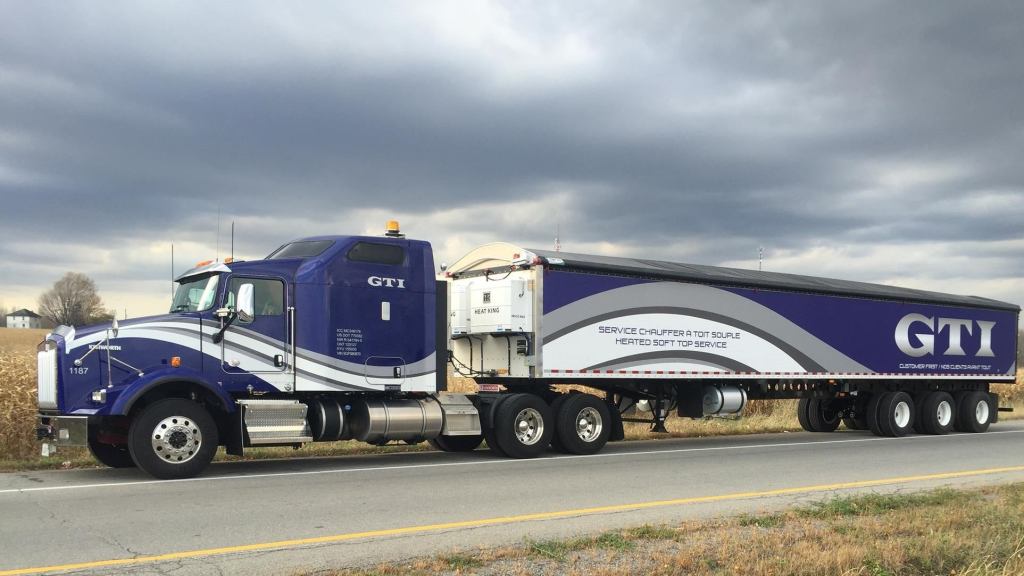
Canada Cartage is expanding into the U.S. with the strategic acquisition of The GTI Group, a Montreal-based freight conglomerate.

The move gives Canada Cartage offices in Houston, Des Moines, Iowa, and Franklin, Tennessee, and could potentially boost its revenue to $1 billion annually, according to a news release.

Based in the Toronto area, Canada Cartage is one of the largest transportation and logistics operators in Canada. The company has about 4,000 tractors and trailers, 4,000 employees and a network of 33 terminals, fulfillment centers and cross-docks across Canada.

“We have been looking for an opportunity to enter the U.S. market for several years, but have been waiting for the right acquisition to do so,” Canada Cartage President and CEO Jeff Lindsay said in a statement. “The management team at GTI have built a service offering and platform that prioritizes the customer the same way we do at Canada Cartage, and we are confident this is the right team for us to partner with to build and expand our North American presence.”

The GTI Group, founded in 1992, offers clients end-to-end freight management solutions, brokerage services, expedited freight services, specialty solutions for oversize/overweight industrial freight and drayage services throughout Canada and the U.S. The GTI Group subsidiaries include Precision Specialized, Jetco, Nomade Transport and Foxconn Logistics.  

“We see tremendous opportunities with this transaction for our people, our customers and the future growth of our business,” Richard Lafreniere, president and CEO of The GTI Group, said in a statement.

Terms of the acquisition were not disclosed. The deal is expected to close by the end of the year. GTI will continue to operate under its existing brand and management structure.

In 2022, Canada Cartage was acquired by Abu Dhabi-based Mubadala Capital, a United Arab Emirates state-owned investment fund.

Click for more FreightWaves articles by Noi Mahoney.

More articles by Noi Mahoney

Renewed migrant surge forces closure of Texas border bridge

Eternity Group Mexico unveils tools for shippers to monitor carbon footprints

Mexico orders railroads to prioritize passenger service over freight operations

White Paper: Q4 2023 Shipper Rate Report

The Shipper Rate Report—presented in partnership with U.S. Bank and BlueGrace Logistics—is a quarterly publication using freight payment data from U.S. Bank in conjunction with FreightWaves SONAR data sets to create the most in-depth rate and demand outlook for shippers. The insights within this paper are curated by the market experts at FreightWaves and backed by the proprietary data and analytics housed in FreightWaves’ SONAR platform.

Featured insights for Q4 2023 include:

  • Insights from the latest U.S. Bank Freight Payment Index
  • U.S. consumer spending trends
  • Update on rates, volumes and capacity for Q4
  • Shipper insights and forecast for the remainder of the year

Complete the form below to download your complimentary copy.

OnTrac to hike 2024 published rates by 6.2%

Super-regional parcel delivery carrier OnTrac will raise its 2024 tariff rates by a blended average of 6.2%, with shorter-haul traffic being charged less than longer hauls.

Rates on parcels moving 600 miles or less will increase, on average, by 5.9%. For shipments moving 600 miles or more, a 6.4% rate increase will apply. The new rates take effect Jan. 1.

As it has in the past, Chandler, Arizona-based OnTrac will significantly discount the published rates in its contracts with enterprise customers. It handles almost exclusively business-to-consumer traffic.

The current OnTrac is the product of an integration between the original OnTrac, which serves eight Western states as far east as Colorado, including all of California, and LaserShip, which blankets much of the East Coast and mid-Atlantic and extends as far west as Arkansas. The current company provides coast-to-coast deliveries to 31 states and the District of Columbia.

The integrated entity added Texas to its network earlier this year. It plans to expand next into the Chicagoland market, although there is no publicly announced timetable for the move.

In addition, OnTrac said that it will adjust its diesel fuel surcharge levels on a weekly basis instead of monthly. The move brings the carrier in line with the policies of national carriers FedEx Corp. (NYSE: FDX) and UPS Inc. (NYSE: UPS). Surcharges are set, and adjusted, based on the weekly nationwide on-highway diesel price set by the Department of Energy’s Energy Information Administration (EIA). The adjustments occur with a one-week lag from changes in the EIA prices.

Echo Global Logistics is redefining partial truckload shipping

As the North American trucking industry navigates a challenging phase, marked by the excess of capacity that ballooned during the COVID-19 pandemic, Echo Global Logistics is taking forward-thinking strides in the realm of partial truckload shipping.

It’s well understood that the industry is grappling with stubbornly low freight rates. This situation, while beneficial for shippers, poses a significant challenge for carriers. When the market does turn, there’s a possibility it will overcorrect, and shippers will need to seek out cost-saving options to help them stay on budget.

That’s where Echo’s EchoShip platform comes in.

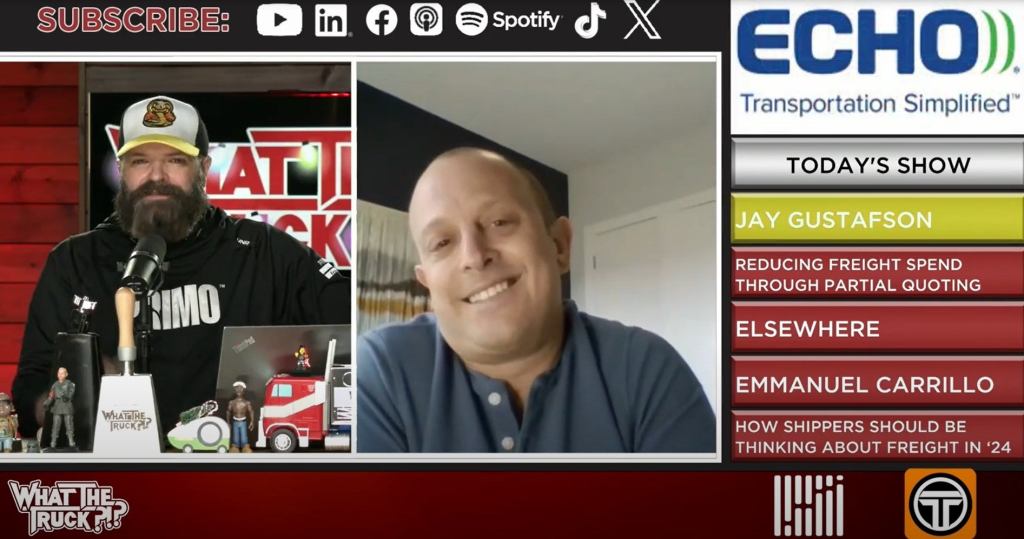
Jay Gustafson, Echo’s EVP of brokerage operations, in a conversation with Timothy Dooner on What the Truck?!?, highlighted the significance of this strategic move. Echo’s approach to leveraging a blend of traditional less-than-truckload services and a vast network of truckload providers offers unparalleled flexibility and pricing options to its clients.

“The results and the feedback from the shippers have been really positive,” Gustafson said. “It’s helped them reduce time within their own teams’ operations. [Now] they’re able to get this pricing and tender a shipment directly to Echo much quicker than they were able to through email or phone calls in the past.”

This strategic pivot is not merely about adapting to current market conditions; it’s about leading the way in reshaping the future of freight transportation. Echo is positioning itself not just as a provider of innovative logistics solutions but as a guiding force.

Echo’s pioneering role in partial truckload shipping

The difference between LTL and partial truckload shipping is often one of size. LTL loads tend to be between one and six pallets, weighing up to 10,000 pounds. Partial truckload shipping is typically used for loads between 10,000 and 30,000 pounds.

Echo’s journey in the partial truckload sector, spanning over a decade, has been characterized by a unique approach to sourcing and procuring capacity. It diverges from the industry norm of relying solely on traditional LTL pricing and capacity.

Instead, Echo utilizes a blend of these legacy providers along with its extensive network of 55,000 truckload providers. This hybrid model offers high flexibility, catering to a wide range of shipment sizes and requirements.

RELATED: White Paper: Mixed Signals – Industry Expectations for 2024

The digitization of this mode through EchoShip has been a game-changer. It represents a significant leap from the manual processes that previously dominated the sector. By harnessing hundreds of thousands of data points, Echo has transformed partial truckload shipping into a more efficient, accessible and cost-effective option for shippers.

This digitization has also enhanced operational efficiency for Echo’s clientele. This holistic approach to catering to various transportation needs has made EchoShip an invaluable tool in the logistics arsenal of many shippers.

Echo’s strategy focuses on creating a seamless and integrated experience for shippers and carriers. The company’s vision for the future includes expanding its network.

Impact and advantages for shippers and carriers

For shippers, the transition to partial truckload on EchoShip has resulted in a substantial improvement in service quality. EchoShip’s digital interface allows shippers to access competitive pricing for partial truckload shipments quickly, a task that previously involved time-consuming email exchanges and phone calls.

One of the standout features of EchoShip is its comprehensive coverage of domestic over-the-road transportation types. This integration has made EchoShip a preferred platform for many shippers, who now find it easier to manage all their modal needs through a single interface. Such convenience and efficiency have allowed them to focus on other critical aspects of their businesses.

For carriers, Echo’s expanding network offers a unique opportunity to engage with a diverse range of shipments. As Gustafson points out, Echo is continually looking to grow its network, inviting truckload carriers to explore this niche market. This invitation aligns with Echo’s vision for the future, where expanding modal capabilities and embracing digital solutions will be key drivers of success in the logistics industry.

“If there are truckload carriers that work with Echo that want to get involved in this unique niche, please reach out to us and we’ll get you connected with the right tools to find this freight,” Gustafson said.

Daily Infographic: Top-funded online Food delivery companies


To view more FreightWaves infographics, click here

Let’s get a truck driver on the OpenAI board

truck driver

You heard me! It’s time for a truck driver — or anyone in the trades — to help direct how artificial intelligence is implemented. There’s no better place to do that than as a board member of OpenAI, the most important organization in the AI world and, probably, the world period. 

AI famously has the potential to change or destroy everything about human existence. To tackle this massive responsibility, OpenAI was founded in 2015 to be a nonprofit. In 2019, it restructured to also have a for-profit arm that accepts investors. The nonprofit board of directors essentially controls that for-profit organization, and they have no equity in the company. And, investors into OpenAI are capped at 100 times their initial investment.

These safeguards existed so OpenAI could ensure “artificial general intelligence benefits all of humanity,” rather than a select group of profiteers. However, as some writers have dourly recorded in the past week, it appears that OpenAI is turning away from this lofty goal.

The recent leadership fracas revealed this shake-up. OpenAI’s board fired CEO Sam Altman on Nov. 17. Reportedly, the board believed Altman’s thirst for expanding AI put the organization’s safety mission at risk. Altman was rehired five days later. Now, OpenAI has wiped the academics from its board (who supported firing Altman) and replaced them with corporate bigwigs (who clearly want Altman around).

Are you enjoying this article and want more like it in your inbox? Subscribe to MODES, the newsletter beloved by trucking insiders and outsiders.

I am delighted to see the former Treasury secretary and the former co-CEO of Salesforce have found places on the OpenAI board. But, amid this reorganization, let’s not forget to add people whose livelihoods are most at risk of vanishing in the case of an AI revolution.

Autonomous truck driving, even in its early stages, will massively change the jobs of 2.2 million people. Depriving all truck drivers of their livelihood — or gutting the job to the point of undesirability, as is more likely in the short term — would decimate the financial stability of a huge chunk of the American populace.

There’s no question this technology is coming. The question is how exactly it will be deployed. For that reason, I’d suggest — with a hefty dose of bias, as someone who reported on the trucking industry for the past six years — it’s time for a truck driver to join the OpenAI board.

Truck drivers are already the petri dish for how we all work

It may seem like the concerns of a truck driver wouldn’t be applicable to the larger labor economy. But, in some cases, truck drivers are the petri dish for the future of work. What truck drivers are experiencing today often becomes the norm for all workers in the decades to follow.

One pertinent example is the digital monitoring of workers. These topics have only just become relevant for office workers, particularly those who work remotely, but surveillance of this variety has been common or federally mandated for drivers for years. Like remote workers, truck drivers have a manager who isn’t right over their shoulder; other tools have developed in the boss’s absence.

“[T]ruckers may be canaries in the coal mine: investigating digital surveillance and rule enforcement in this industry can give us important clues about how these dynamics may function in other contexts, both within and outside the workplace,” Cornell assistant professor Karen Levy wrote in her recent book on trucking surveillance, “Data Driven.”

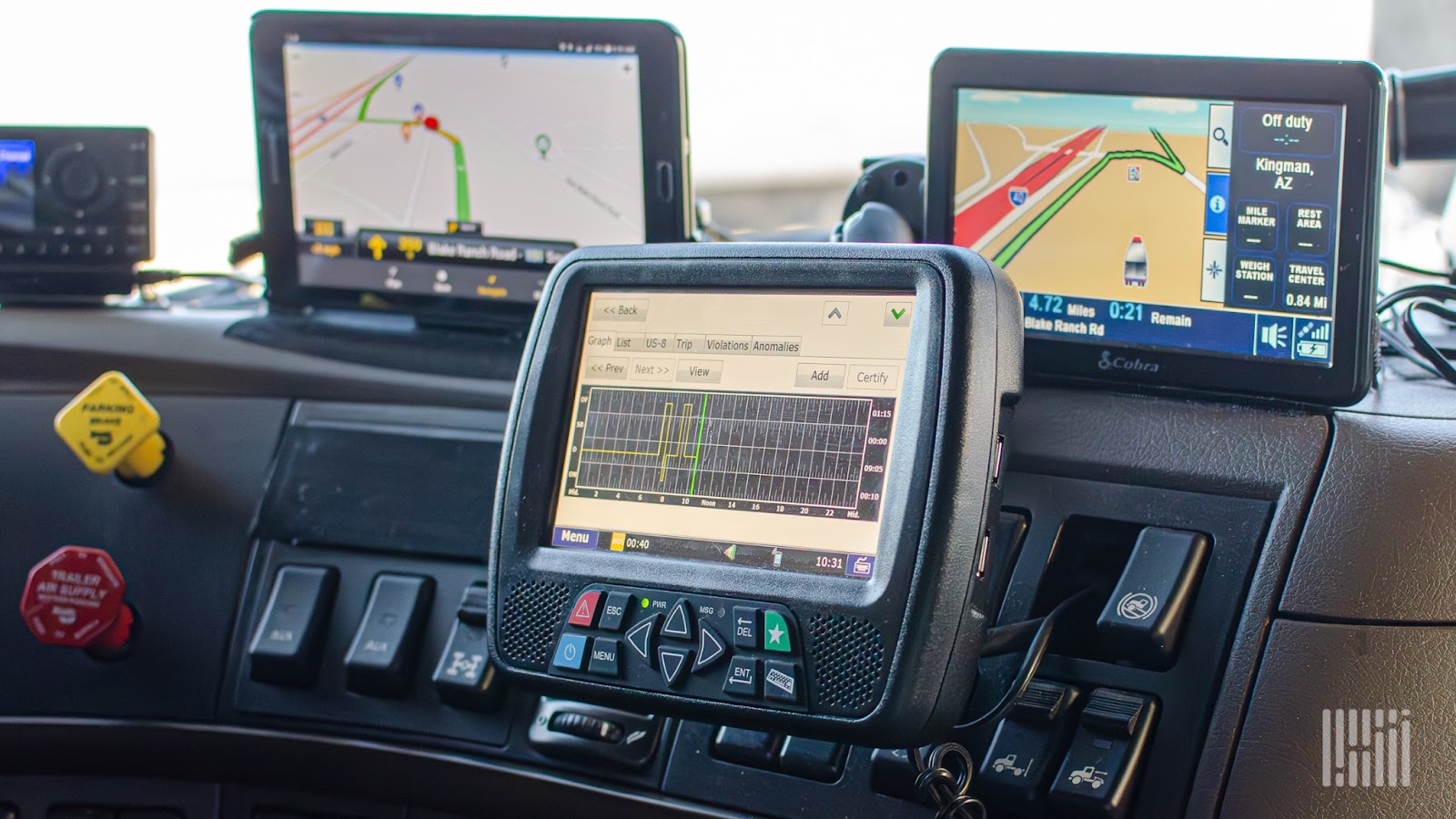
A slew of monitors and tracking systems are common in most big rigs. (Photo: Jim Allen/FreightWaves)

Since the early 2010s, it’s been common for a big rig to feature cameras facing into and out of the cab, tablets that alert drivers who brake too hard, and a unit that collects thousands of data points a minute for back offices to analyze.

In 2018, the federal government began mandated ELDs in the cabs of all trucks. This law was designed to enforce hours-of-service laws on truck drivers and prevent fatigue-caused crashes. A federal study estimated that the ELD rule would prevent 1,844 crashes and 26 deaths annually.

However, government data has not proved out any safety gains as a result of the mandate. That’s arguably because the ELD mandate was more of a band-aid than a solution. The reason truck drivers are fatigued likely has to do with the structure of their day. Truckers are typically paid per mile, so they’re incentivized to drive as many miles as they can. Constraining the number of hours that they can do this has led to more reckless driving, as one 2019 study showed.

“Technology often fails as a solution because the problems it’s intended to solve aren’t, at their core, technology problems — they’re social, economic, and cultural problems, and they require solutions in the same register,” Levy wrote. “Trying to address these problems via technology often means insufficiently accounting for the world as it is.”

Through this early exposure to government-mandated tracking, the trucking industry has learned that technology alone cannot be the tool to fix issues in an industry. It has to be matched with larger, more systemic changes. This is a perspective that would be useful for the OpenAI board.

We’re not doing away with drivers anytime soon, but the job will be slowly degraded

The trucking industry deserves representation on the OpenAI board, too, because of the monumental change autonomous driving would bring to the industry. (For starters, there’s an estimated annual savings of $300 billion in labor costs.)

After OpenAI accepted a $1 billion investment from Microsoft in 2019, outsiders were concerned that the organization would stray from its mission to safely develop artificial intelligence. (Shutterstock)

Of course, not all 2.2 million truck driver jobs are going away anytime soon, nor would they vanish all at once. Fully driverless semi-trucks are certainly decades away.

Before that, we will see the proliferation of partially automated trucks. These vehicles will speed, brake and steer on their own, though a driver’s hands would be required on the wheel at all times.

A recent study led by Stephen V. Burks of the University of Minnesota Morris suggests even this minor incursion of autonomous technology would likely push drivers out of the industry. According to that analysis, increasing autonomous driving technology would drive down pay and drive up “dispatch intensity.” More newbies would enter the industry. It’s unclear if the potential safety gains from partially automated trucks would offset the loss of safe, experienced drivers.

In a further-off future, truck driving will be a mix of city driving and highway driving. Mostly autonomous trucks would steer freight in highway settings, then have the truck driver take over in the more unpredictable city driving. 

As Levy wrote, this would threaten truck drivers’ pay, even if the driver is still firmly in the cabin. Truck drivers are, as noted, paid per mile. It’s unclear why or whether firms would pay them during long stretches of highway if a robot is already doing the job. Of course, that’s the majority of miles a long-haul driver runs anyway.

People enjoy doing things 

There’s something harder to capture in data or studies that would change with trucking as the art of driving is worn away. Truck drivers enjoy driving on long stretches of empty highway, in the same way that I enjoy writing. Technologists might think of driving as a hassle and seek ways to get rid of it, but, to a trucker, such an aim is sacrilege.

“Though driving is technically a privilege granted by the state, it is assumed and understood by most to be a God-given right,” truck driver Gord Magill recently wrote for Compact magazine. “Learning to drive, for decades one of the signal marks of adulthood, is slowly being taken away or forgotten. There are costs to this loss.”

Programmer James Somers put it another way. In a recent New Yorker article, he considered legendary Go player Lee Sedol, who retired early after a computer program famously trounced Lee in a series of Go matches. Somers, like the truck driver Magill, also senses that his own craft is vanishing.

“Perhaps what pushed Lee Sedol to retire from the game of Go was the sense that the game had been forever cheapened,” Somers wrote. “When I got into programming, it was because computers felt like a form of magic … . Then, one day, it became possible to achieve many of the same ends without the thinking and without the knowledge. Looked at in a certain light, this can make quite a lot of one’s working life seem like a waste of time.”

Let’s hear from normal people

AI will likely change everything about our world. A healthy chunk of the population would probably prefer that this not happen. And, in trucking, we can find millions of people who deserve some sort of voice in how this technology unfolds.

People like OpenAI board members Larry Summers, the former Treasury secretary, and Bret Taylor, the former co-CEO of Salesforce, are not going to be slammed by AI. Neither will former Secretary of State Condoleezza Rice, who was reportedly considered for the board. Unlike the rest of us, they do not need a biweekly paycheck to put food on the table or a roof over their heads. 

Instead, elevating the voices of people whose lives could be significantly gutted by AI is crucial. Truck drivers, who may be the first mass defenestration of the AI era, are a critical population to include.

What do you think about OpenAI and trucking? Email rpremack@www.freightwaves.com with your thoughts. Don’t forget to subscribe to MODES.

No reservation at Panama Canal? Prepare for a long wait

photo of Panama Canal

Panama Canal disruptions are worsening. Wait times for vessels without reservations have surged this month.

In response to drought conditions, the Panama Canal Authority (ACP) cut the number of daily reservation slots from 32 at the beginning of November to 24 currently. Slots will drop to 22 on Friday, then to 18 by Feb. 1.

If enough ships don’t divert from the Panama Canal to offset the drop in reservation slots, the number of ships without reservations rises — as does wait time.

The average wait time for ships without a reservation for Atlantic-to-Pacific (southbound) transits was 2.1 days at the beginning of November. As of Wednesday, it was over five times that — 11.4 days — according to ACP data.

The maximum wait on for southbound transits hit 22.8 days on Sunday, triple the maximum wait at the beginning of the month.

a chart of Panama Canal wait times
(Chart: FreightWaves based on ACP data)

Pacific-to-Atlantic (northbound) transits also show a sharp rise in wait time in November for ships without reservations, coinciding with cuts to reservation slots.

Average wait time was nine days on Wednesday, more than triple the average at the beginning of the month. The maximum wait time was 24.9 days on Wednesday, more than quadruple what it was in early November.

a chart of Panama Canal wait times
(Chart: FreightWaves based on ACP data)

“It’s the worst we have seen in terms of waiting time — ever,” said Randi Navdal Bekkelund, CFO of Avance Gas (Oslo: AGAS), during a presentation on Thursday.

Panamaxes waiting the longest

The ships suffering the longest wait times are those transiting the older Panamax locks, which the ACP categorizes as “regulars,” ships with a beam (maximum width) of less than 91 feet, and “supers,” those with a beam of 91 to 107 feet.

As of Wednesday, no Neopanamax ships (with beams over 107 feet) in the queue had been waiting more than 11 days to transit the larger, newer locks. In contrast, at the Panamax locks, 10 supers had been waiting 13-25 days and three regulars for 14-15 days.  

In response to rising wait times, the ACP just began offering a special daily auction slot for Panamax locks transits to supers and regulars without reservations that have been waiting 10 days or more. The first slot in the special auction was for a transit on Monday.

Average wait time for Neopanamaxes also up

Data on average (versus maximum) wait times shows that Neopanamaxes without reservations are likewise facing longer waits this month — this is not a problem specific to the smaller Panamax locks.

On the southbound route — commonly used by ships transporting bulk commodity cargoes from the U.S. to Asia and the west coast of South America — average wait time for Neopanamaxes without reservations was higher than for Panamaxes during the first half of November and on par with the average for all ship sizes on Tuesday.

Average wait time for southbound Neopanamaxes with no reservation is triple what it was at the beginning of November.

a chart of Panama Canal wait times
(Chart: FreightWaves based on ACP data)

On the northbound route — frequently used by laden container ships headed to U.S. ports and empty bulkers and tankers planning to reload in the U.S. — average wait time for Neopanamaxes without reservations was in line with Panamax wait time for most of this month.

Average Neopanamax wait time has now fallen well below Panamax levels in the northbound lane. However, this has only been during the past four days.

(Chart: FreightWaves based on ACP data)

Impact on bulk commodity shipping

Ship-position data from MarineTraffic showed 33 dry bulk carriers at anchorage off entrances to the canal on Wednesday (18 on the Pacific side, 15 on the Atlantic side).

The queue of product tankers was heavily weighted to the Pacific side: 16 versus three on the Atlantic side. In addition, there were a dozen liquefied petroleum gas (LPG) tankers waiting, six at either entrance. There was only one liquefied natural gas (LNG) carrier waiting to transit.

The commodity ship backlog would be larger, except that many LNG carriers, as well as high-capacity LPG tankers known as very large gas carriers (VLGCs), have already given up on Panama.

“For those who want to go from the Atlantic Basin to the Pacific Basin [with LNG ships], they are going around the Cape of Good Hope as Plan A. I’d go so far as to say that’s the norm now,” said Richard Tyrrell, CEO of LNG carrier owner Cool Co. (NYSE: CLCO), during a conference call Tuesday.

VLGCs are now commonly avoiding Panama on their return trip to the U.S. from Asia. “The number of VLGCs taking longer routes to the U.S. from Asia has skyrocketed,” said Oystein Kalleklev, CEO of Avance Gas, during a conference call Tuesday.

“Today, there are about 50 VLGCs taking a route via the Cape of Good Hope to the U.S. This summer, the number was 10,” said Kalleklev.

Impact on container shipping

Ship-position data also shows a growing number of container ships in Panama Canal queues: 21 on Wednesday, around double the number at anchorage this summer. (This also includes container ships waiting to berth at Panamanian terminals, not to transit the canal.)

Neopanamax container ships that serve U.S. East and Gulf Coast ports secure transit reservations for their scheduled liner services. However, the reduction in daily Neopanamax reservation slots to just five per day as of Jan. 1 will likely force some carriers to seek alternate routes.

French carrier CMA CGM confirmed on Nov. 21 that the canal situation is already “taking a severe toll on operations.” MSC, the world’s largest ocean carrier, said Monday that the Panama Canal situation is having “a direct impact” its operational costs.

Industry analytics provider Linerlytica warned on Monday: “The Panama Canal transit restrictions have started to impact container ships for the first time, with a rising number of ships facing delays that are set to worsen over the next two months.”

Click for more articles by Greg Miller 

Indiana tops predatory truck-towing list

Truck being towed from accident scene

New data compiled by the American Transportation Research Institute underscores the severity of predatory towing fees charged in the aftermath of large truck crashes and offers recommendations to address the problem.

ATRI’s survey of motor carrier-reported towing incidents and analysis of variations in the frequency of predatory incidents occurring in 2021 revealed that — relative to motor carriers’ mileage — Indiana had the most disproportionately high share of predatory towing incidents, followed by New Jersey.

States with most reported predatory incidents relative to mileage. Source: ATRI

“The top ten states are located in all parts of the U.S., confirming that there is no regional pattern to predatory towing incidents,” according to the study, which ATRI released on Wednesday.

The study found that excessive rates and unwarranted additional service charges were the two most common forms of predatory towing, experienced by 82.7% and 81.8% of surveyed motor carriers, respectively.

In addition, ATRI’s analysis of truck crash-related towing records found that 29.8% of invoices were found to include either excessive rates or excessive additional charges. Roughly half of these cases had excessive rates for equipment, labor or storage, and the other half had excessive miscellaneous or administrative charges.

“Claims involving predatory towing are definitely on the rise,” according to Adam Brand and Shahan Kapitanyan, who were interviewed by ATRI as part of the study for their legal expertise on the issue.

“We are receiving assignments throughout the United States involving grossly inflated tow, recovery and remediation invoices. Reasons for these increases include training provided to T&R [towing and recovery] companies aimed at increasing the amounts they can bill insurers, communication between T&R companies who have successfully recovered payment on inflated invoices, and a general understanding by the public that inflating a T&R claim or invoice is acceptable.”

Rate summary for various truck-towing services. Source: ATRI

The study points out that a “patchwork of municipal, county, and state regulations” currently governing towing are often insufficient to prevent predatory activities against truckers.

“Of the states that have more robust statewide regulations of the T&R industry, regulatory authority can fall under the jurisdiction of a variety of agencies, including state police or departments of public safety, departments of transportation, consumer affairs, or utility commissions,” the study notes. “The wide range of jurisdictions that regulate the T&R industry can make it difficult for interstate motor carriers to know what protections are at their disposal.”

The study includes a compendium of state towing regulations along with recommendations on improving regulatory coverage areas to close loopholes.

For example, state regulations should support allowing motor carriers to choose their preferred towing and recover company whenever possible, the study recommends, and regulatory language “should explicitly define crash site conditions in which this choice is applicable.”

Lewie Pugh, executive vice president of the Owner-Operator Independent Drivers Association, which contributed data for the study, said the issue centers around “non-consensual” tows, which usually occur when towing companies are called not by the truck driver involved in the accident but by the highway patrol concerned with clearing accidents as quickly as possible.

“We don’t have a problem with that, the problem we do have is that some towing companies will take advantage of truckers when someone else calls for the service, because in many cases there are no state laws or agencies that oversee that type of situation,” Pugh told FreightWaves.

“If there’s no regulation like in most states to address unscrupulous towing companies, it’s an open checkbook. I’ve seen itemized bills where they’ve charged $1,000 for using their radios on a tow. We’ve seen bills go well into six figures.

“It’s a huge problem in the industry that kind of flies under the radar.” 

Click for more FreightWaves articles by John Gallagher.

How persistent fraud led to a pitched battle over workers’ compensation

FreightWaves Classics is sponsored by Old Dominion Freight Line — Helping the World Keep Promises. Learn more here.

FreightWaves explores the archives of American Shipper’s nearly 70-year-old collection of shipping and maritime publications to showcase interesting freight stories of long ago.

In this week’s edition from the August 1981 issue, a heated debate over growing cases of fraud in workers’ compensation almost led to a revision in the act.

Workmen’s comp fraud

Longshore and shipyard union members have an uphill battle on their hands trying to sell Congress on the idea of leaving the 1972 Longshoremen’s and Harbor Workers’ Compensation Act intact.

Workmen’s compensation claims shot up enormously after the act was revised in 1972 to permit workers and their unions to choose the doctors who would determine whether or not they were disabled and the degree of injury. Enough cases of outright fraud have been uncovered to convince management that the system lends itself to corruption and must be controlled.

Senate hearings conducted during June indicated a substantial number of Congressmen agree.

The unions will soon be faced with a Senate floor battle over tough, new sweeping reform legislation which tightens up claims procedures, puts a cap on disability benefits, provides for mandatory rehabilitation, and removes shoreside employees from coverage.

Drawn up by Labor subcommittee Chairman Don Nickles (R-Okla.) and Sen. Sam Nunn (D-Ga.), whose Senate hearings in early spring divulged a long litany of abuses all along the East and Gulf coast waterfronts, the bill has put the unions, along with a handful of liberal Senators, in an almost impossible position of overcoming formidable opposition from a number of conservatives in the Senate and industry groups, including the National Association of Stevedores, the Shipbuilders Council of America, the U.S. insurance industry, major U.S. ports, and the powerful National Association of Manufacturers.

Stafford & Weicker are the key

Labor representatives testifying against the legislation before the subcommittee in mid-June later admitted that they have an uphill fight on their hands, but some feel they might be successful in having the bill killed when it reaches the full Committee on Labor and Human Resources. The International Longshoremen’s and Warehousemen’s Unions’ Washington representative Mike Lewis feels opponents of the legislation have a chance in getting GOP Senators Robert T. Stafford of Vermont and Lowell Weicker of Connecticut to vote against the legislation when it comes before the full Committee. This, according to the labor strategy, would defeat the legislation in Committee, assuming most of the Democrats go along with the unions.

Sometimes strange things happen in Washington, but it’s hard to see how the unions will prevail, in view of last spring’s hearings conducted by Sen. Nunn which divulged a widespread pattern of corruption on the waterfront and testimony before the Labor subcommittee showing skyrocketing and often fraudulent claims under the Compensation Act.

Nickles sides with management

Testifying before the Labor subcommittee, a parade of witnesses supporting the legislation received a sympathetic ear from Chairman Nickles, who in an opening statement read a stinging indictment of the current Longshoremen’s and Harbor Workers’ Compensation Act. Referring to the 1972 amendments to the statute which were rushed through Congress at that time, Nickles said the act has turned into “a free ticket to rip off the consumer and taxpayer … so much so that in the five years after the changes were made, reported injuries jumped 185%.”

System called ‘a national disgrace’

Continuing, the GOP lawmaker said the law has “become a national disgrace,” adding that “there are many cases that describe the absurdity of the system, which would sound like horror stories to the average working man or woman, but are commonplace on our nation’s waterfronts.”

“At a time when common sense seems to be finding its way back into government, now is the time to revamp the Act in line with commonsense policy,” Nickles said.

Houston firm example cited

To back up the subcommittee chairman, cited as a “commonplace” example was a case involving an employee of Shippers Stevedoring Company in Houston, Texas, who injured his right forearm on the job in May of last year. It so happened, according to Nickles, that the longshoreman, because of his $33,000 yearly salary, automatically received about $426 per week in tax-free compensation, totaling over $18,500 for nearly one year’s time. In addition, Nickles said, the worker’s doctor said he would have a 25% impairment during the next 61 weeks, so the stevedoring firm was forced to pay an additional $26,000 during that time. In total, the Houston firm paid out nearly $45,000 tax-free dollars to the dockworker.

On top of this, according to Nickles, the longshoreman in question is still receiving $26,000 due to his 25% impairment while working on another job which is paying him about $25,000. “The two total far more than the salary he made before his injury,” Nickles said.

Corruption

Sen. Nunn and Sen. Orrin Hatch (R-Utah), Chairman of the full Committee on Labor and Human Resources, also attacked the current system in no uncertain terms. Skyrocketing costs of insurance and workmen’s claims in the Port of New York-New Jersey area “were the direct result of a flourishing fraudulent claims racket operated by members of organized crime,” Nunn said. “The threat of corruption continues to hang over large segments of the shipping industry. Congressional action must be taken to attempt to restore some semblance of free enterprise to the waterfront.”

Sen. Hatch lauded Sen. Nunn for making a “major contribution” as a result of his hearings in laying the groundwork for the compensation reform bill. “He [Nunn] has helped to document the way in which the Longshore Act has become a tool for extortion,” Hatch said. “And I am confident that the reform bill, with the support of Senators from both sides of the aisle, will put this program beyond the grasp of organized crime.”

High Costs At Port of N.Y. Hatch, as well as industry witnesses, presented figures showing that premiums for longshore coverage in the port of New York account for $87 out of every $100 per payroll. Also, another key charge which cropped up over and over again was that the high compensation costs are driving U.S. East and Gulf coast cargo to Canadian ports. It was contended that if the current situation continues, a lot of West coast cargo will soon be routed out of Mexico.

Nickles introduced figures from the final report of the Interagency Task Force on Workplace Safety and Health showing compensation costs as a percentage of longshore payroll registering 50% as opposed to the national average of 1.5%.

Choice of doctor

The bill under consideration will do away with free choice of claimants’ doctors. In effect, the new legislation will turn back to 1972, when claimants were required to use physicians approved by the Labor Department and employers. Nunn said that under the current setup there is often a tie-in between doctors and attorneys, resulting in false diagnosis. “The situation right now is ripe with fraud,” Nunn said. “The premiums go up; then after the payoffs, they go down.”

The Braswell Shipyards case

Braswell Shipyards Inc., headquartered at Charleston, S.C., was forced to close down a ship repair and overhaul operation in Brooklyn in 1976 due to excessive insurance premiums and substantial settlement costs, according to the firm’s vice president in charge of operations James Braswell. Braswell said he was unable to provide details involving the situation in Brooklyn since “all company records, including medical and personnel records were stolen” just before the firm closed the facility.

In Boston, claims were also excessive between March 1977 and March 1980, aggregating some 1,000 in number and $1.8 million in dollars. These high costs also contributed to the closing of the Boston facility, Braswell said. “What is particularly crippling to a company of Braswell’s size is the fact that while the paid-out claims in this period ran in the vicinity of $1.8 million, the premiums paid were in the vicinity of $3 million,” he said.

On top of this, Braswell contended that when the company went to the Department of Labor or the unions for help, it was treated in a “hostile” manner.

NAM/Port testimony

National Association of Manufacturers and New Orleans Steamship Association spokesmen Daniel W. Vannoy and R.A. (Red) Osborn Jr. appeared jointly to support the legislation and charged that the current system permitting an unlimited choice of physicians “has led to the practice of shopping for doctors who have consistently been shown to be less than fair and impartial.”

Here are more articles from the archives of American Shipper.

FreightWaves Classics articles look at various aspects of the transportation industry’s history. Click here to subscribe to our newsletter!

Have a topic you want us to cover? Email bjaekel@www.freightwaves.com.