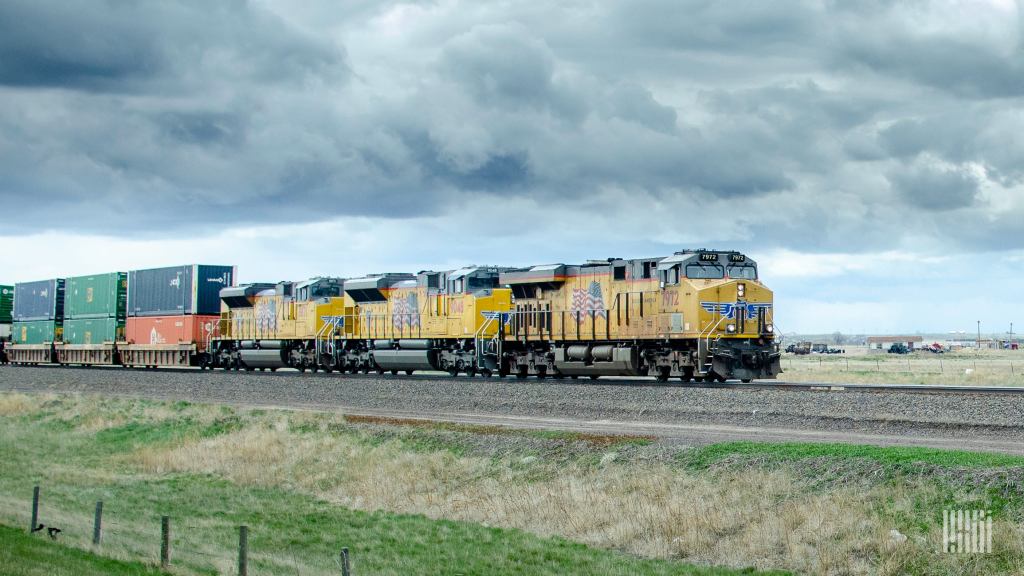
Union Pacific to operate international intermodal terminal in Phoenix

Union Pacific is beefing up its intermodal offerings through two new options: an international intermodal terminal in Phoenix that will serve the U.S. Southwest and the addition of more inland market destinations for its on-dock rail service at Port Houston.

New international intermodal terminal slated in Phoenix

UP (NYSE: UNP) expects to open in the first quarter of 2024 a new international intermodal terminal in Phoenix, which the railway says will provide a rail option for those seeking a connection between the ports in the Los Angeles Basin and the U.S. Southwest. 

Although the terminal, which will be owned and operated by UP, will be located at the company’s rail yard in downtown Phoenix, it will have capacity to grow as customer demand grows. The facility will be serving international intermodal shipments when it opens, but service could grow to include domestic containers, according to UP’s website.

“We are excited to offer regional shippers and receivers in Arizona a fast, sustainable rail option to move product into and out of Southern California that is cost competitive and removes trucks from our nation’s congested highways, with an ability to expand offerings and grow in the future,” Kenny Rocker, UP executive vice president of marketing and sales, said in a Wednesday news release. 

The facility will also have drayage support from Duncan & Son Lines, a family-owned logistics firm in Buckeye, Arizona. The firm has experience providing international container drayage from the ports of Long Beach and Los Angeles, UP said.

“Duncan and Son Lines is proud to be working with Union Pacific on this innovative rail solution, which will give our customers another service option to reduce truck emissions,” David Duncan, vice president of operations at Duncan & Son Lines, said.

According to FreightWaves market expert Mike Baudendistel, one thing that makes Phoenix attractive as an intermodal location is that it is an unattractive destination for long-haul truckers since it is often hard to get reloaded. This is shown via a negative headhaul score, which indicates there is more demand for inbound than outbound loads. Phoenix as a backhaul market could also be relevant if UP expands this service to include domestic intermodal. (FreightWaves SONAR) To learn more about FreightWaves SONAR, click here.

UP’s plans come as its competitor BNSF (NYSE: BRK-B) sought to acquire over 3,000 acres in Phoenix in 2022 as a long-term investment. 

“This land is adjacent to the BNSF rail line [in Phoenix’s West Valley] and BNSF determined it could be a good long-term investment,” the company said in a May 2022 email to FreightWaves. “BNSF looks forward to working with state and local governments in Arizona, as well as customers, to determine how best to develop the land into an economic engine in the West Valley.”

UP to add more inland market destinations for its on-dock rail service at Port Houston

Union Pacific also said Wednesday that it plans to expand its on-dock rail service at Port Houston by adding access to four more inland markets.

Starting Friday, customers will have access to on-dock rail service at the Barbours Cut Container Terminal to four more UP intermodal facilities: Chicago Global 4; Kansas City, Missouri; Memphis/Marion, Arkansas; and Port Laredo, Texas. The rail service will be available for those seeking to transport imports, exports and empty containers.

According to UP’s website, on-dock rail allows containers to be placed onto flatcars from the ships, thus eliminating the need for a dray carrier to transfer a container to a separate facility.

In May, UP said it was expanding intermodal service at Port Houston by offering on-dock rail at Barbours Cut for containers bound to five U.S. markets: Denver, Salt Lake City, El Paso, Texas, and Los Angeles and Oakland, California.

UP said it was offering the service expansion in cooperation with Port Houston, ocean carriers and beneficial cargo owners. 

(Image: Union Pacific)

BNSF had also announced in May that it planned to provide an expanded intermodal offering between the Barbours Cut Container Terminal and BNSF’s intermodal facility at Alliance, Texas, for those seeking access to the Dallas-Fort Worth and Denver markets.

All these service expansions come as Port Houston has indicated that it plans to invest $520 million in capital improvements at Barbours Cut Terminal through 2032, UP said.

Import shipments at Port Houston have grown considerably in recent years, according to this SONAR chart, necessitating on-dock intermodal services to additional locations. (FreightWaves SONAR)

Subscribe to FreightWaves’ e-newsletters and get the latest insights on freight right in your inbox.

Click here for more FreightWaves articles by Joanna Marsh.

Bidenomics and the freight recession – WTT

On today’s episode of WHAT THE TRUCK?!? Dooner is joined by FreightWaves’ Rachel Premack to talk about the role Biden played in the current freight market. The President recently tweeted that his policies have caused a 25-year low in rates. 

The National Motor Freight Traffic Association has recently appointed Lesley Veldstra Killingsworth as its first-ever female chairwoman of the board of directors. We’ll find out how she achieved the honor and what lessons she has for other female leaders and leaders to be in logistics. 

Stride Motivation’s Nick Klingensmith talks about self-sabotage and mental health issues in brokerage sales. He’ll share his stories about his four-time battle with cancer, becoming a bestselling author and advice for reps feeling down during the holidays. 

FreightWaves’ Justin Martin divulges the secrets behind Operation Santa; discusses Amazon’s rise to dominance in freight; are truckers cheaters; protecting Christmas trees from cats and more. 

Plus, DC Christmas tree goes down; high speed house chases; high speed forklift chases; the perfect stocking stuffer and more.

Watch on YouTube

Visit our sponsor

Subscribe to the WTT newsletter

Apple Podcasts

Spotify

More FreightWaves Podcasts

Will FOMO and YOLO lead to No Mo’?

Get updates on supply chain challenges and developments within the Consumer Packaged Goods (CPG) and retail industries. Sign up here, we’d love to have you.

Retail data paints mixed picture on consumer health

Economic bulls point not only to the still-strong job market but also the latest retail sales data, which show increases from last year. Mastercard SpendingPulse reports that Black Friday sales increased 2.5% from a year earlier, broken down to a 1% increase in-store and an impressive 8% growth in e-commerce. Adobe Analytics saw total sales a little stronger, up 7.5% year over year (y/y). Those numbers aren’t adjusted for inflation, but it doesn’t appear that there was much inflation, and perhaps there was some deflation, in the holiday-related discretionary categories. So, while not tremendous, mid-single-digit growth in holiday retail sales suggests that consumers remain confident enough to continue to spend.

The counterpoint is that retail sales growth, which appears solid on the surface, is the result of consumers putting more purchases on unpaid credit cards, which are getting closer to being maxed out, while also utilizing buy-now, pay-later plans. Credit card balances increased 1.6% in October month over month versus a seasonally normal 0.7% increase. That resulted in over $1 trillion in total credit card balances, ahead of the typical seasonal peak, which would normally call for the year’s largest credit card statement to reach consumers in January. Bulls counter that, adjusted for inflation, current credit card balances are still below pre-pandemic levels despite the recent increase.

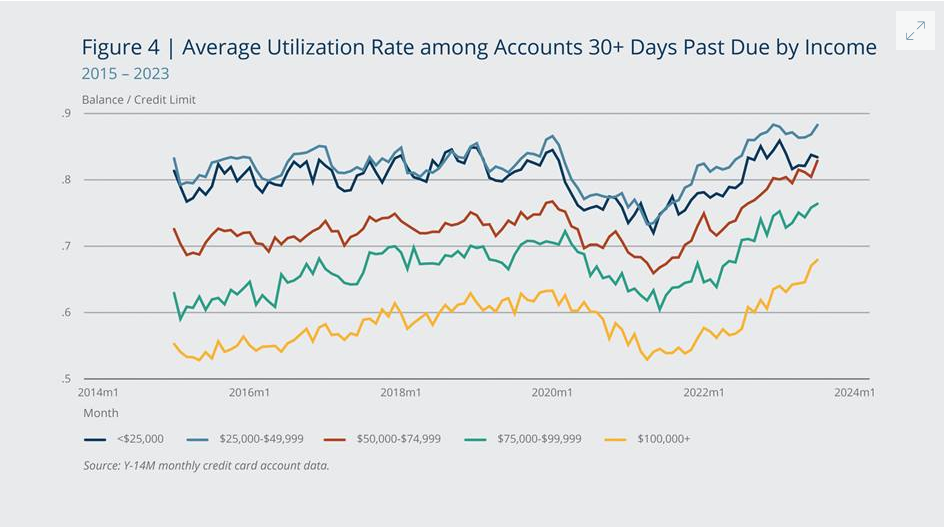
(Chart: Federal Reserve Bank of Boston)

But, perhaps more telling than the absolute credit card balances are the credit utilization rates among consumers whose credit card balances are 30 or more days past due — those are higher than pre-pandemic levels in nearly all income categories. Borrowers with statements 30 days or more past due, and with incomes below $75,000, are utilizing more than 80% of their available credit. Most workers in that group received significant raises the past few years, but some of the largest employers, such as some of the biggest retailers, have recently reported being overstaffed and/or having moderate expectations for labor cost inflation. In short, many consumers don’t have a lot of cushion and a recession would likely result in a large number of consumers defaulting on loans. One anecdote that I found interesting is that some student loan borrowers have apparently picked up side jobs to offset the return of the several-hundred-dollar monthly bill rather than cut back on spending — that seems consistent with retailers’ reports of having plenty of available workers.

I’m not the only one who sees a disconnect between consumer spending and consumer health. I saw this CNBC article, which gave it a name that was new to me – “Doom Spending,” which seems to be a natural extension of doom scrolling just with shopping to go along with the jealousy and despair that social media typically induces.

Inventory levels appear balanced overall as retailers focus on high-velocity items

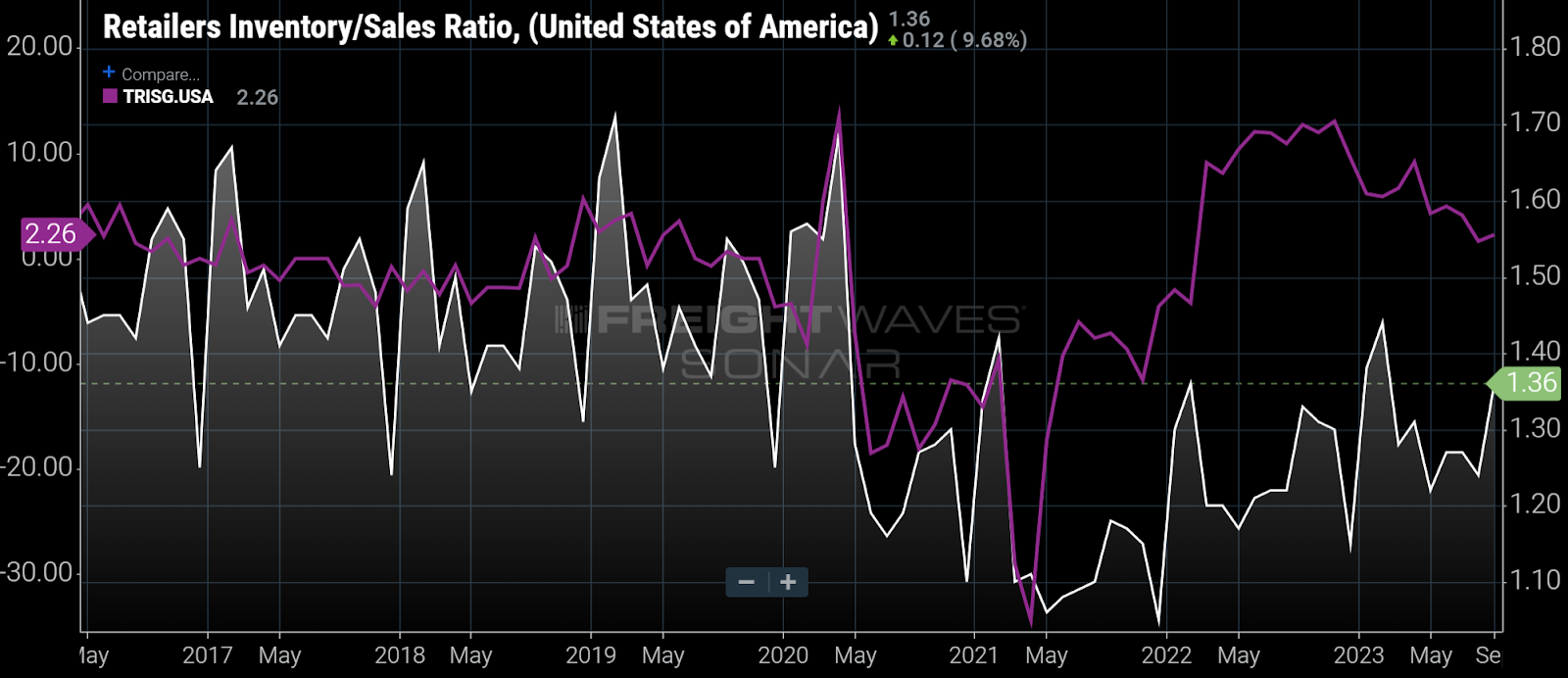
SONAR: TRIS. USA, TRISG.USA

The National Retail Federation says inventories are in balance with no apparent stockouts or overstocks as highlighted in Mark Solomon’s article.

The SONAR chart above shows the seasonally adjusted retail inventory-to-sales ratio at 1.36 at the end of September (updated Nov. 15), up 2.3% y/y, which is roughly in line with what Mastercard SpendPulse just reported for Black Friday sales growth. In the months leading up to the pandemic, that ratio ranged from 1.4 to 1.7, which suggests that overall inventories are lean and we may see a surge in expedited freight demand as the holiday shopping season progresses. Higher interest rates increase the cost of carrying inventory, but one could argue that e-commerce and same-day delivery schedules, and retailers’ push to fulfill “the perfect order,” result in a higher new normal for inventory levels as more goods are stored closer to consumers’ homes.

Most publicly traded retailers reported lower inventory levels at the end of the third quarter, as compared to the year-ago level. One example is Target, which reported inventory levels down 14% y/y and down 19% y/y in discretionary categories. Several retailers highlighted a significant shift in their mix of inventory toward higher-velocity items that move best during the holidays. For example, Best Buy’s inventories are lower overall, but it has more video game consoles in stock. Inventory levels also remain elevated for some categories, such as furniture, where sales continue to decline by double digits y/y, hampered by slow existing home sales. All considered, we may see an uptick in expedited shipments in December, but inventories are more mixed than the macro data point suggests.

To subscribe to The Stockout, FreightWaves’ CPG and retail newsletter, click here. Check out this week’s episode below.

What you need to know about the California intrastate ELD mandate

Professional interstate drivers have been required for the past several years to use ELDs to keep track of their hours of service. Since the implementation of the mandate, many states have also adopted ELD use for intrastate drivers. California is next, adopting ELD use for drivers at the turn of the year.

The California Highway Patrol has issued a final rule requiring ELD use by intrastate drivers on and after Jan. 1, 2024. The rule requires the use of devices that meet the requirements in Part 395, Subpart B of the Federal Motor Carrier Safety Regulations (FMCSRs) by drivers who currently use paper records of duty status to record their hours of service.

Since this ruling specifically affects California’s intrastate drivers, it is essential for fleets to understand the Federal Motor Carrier Safety Administration’s definition of “intrastate.” According to Jill Schultz, J. J. Keller & Associates Inc. senior editor for transport safety, this understanding is necessary to ensure compliance, prevent violations and avoid service disruptions.

“The big deal for fleets is understanding the differences when it comes to interstate and intrastate commerce,” Schultz said. “If a motor carrier doesn’t correctly identify its operations, the motor carrier and its drivers may be in violation of the regulations, which can lead to fines and penalties.” 

Intrastate commerce includes drivers and vehicles that remain exclusively within a state. Travel does not include crossing state lines, travel over the border into and/or from Canada or Mexico, or transporting cargo or passengers originating in or destined for another state or country.

For California fleets subject to the ELD requirements, training should also be top of mind. The new rule requires that drivers be trained in the proper operation of ELDs. These training requirements — coupled with installation time and the innate learning curve associated with new technologies — make it crucial for carriers to start the compliance process early.

“If you haven’t started the process to comply with the California ELD mandate, you need to start today,” Schultz advised. She recommends fleets look for ELD providers that can help an organization through the transition with dedicated services for hardware installation, back-office setup, driver and employee training, policy updates, and the like.

Fleets shopping for ELD providers should ensure the ELD is on the FMCSA’s list of registered ELDs before purchasing devices in order to avoid unexpected compliance issues.

While getting a new tool up and running can be frustrating, ELDs provide a wealth of benefits. Fleets that use ELDs can leverage data to stay competitive in challenging economic times, as they can help improve driver productivity and trip planning, eliminate fuel waste, and run a safer operation.

Some of the benefits motor carriers can expect from ELDs include:

  • Integrated mapping to locate vehicles, track dwell time, establish geofences and plan trips efficiently.
  • Ability to monitor fuel use.
  • Tracking risky driving behaviors like speeding, hard braking and tailgating.
  • Optional automated International Fuel Tax Agreement and International Registration Plan reporting.
  • Visibility to drivers’ available hours.
  • Electronic driver vehicle inspection reports.

These additional benefits are a game-changer for fleets experiencing an economic squeeze. They make ELDs an attractive — and intelligent — option for motor carriers. 

“ELD use is a best practice for any driver as it provides a framework for reducing fatigue and mitigating risk,” said Schultz. “ELDs support a company’s commitment to stated policies and procedures to prevent fatigued driving.”  

As the year winds down, interstate and intrastate carriers alike would be wise to take a moment to review all safety requirements, ensuring understanding and compliance across the board. This process should include making sure all drivers are trained on safety regulations as well.

Find out more by downloading J. J. Keller’s Interstate VS Intrastate: Understanding Compliance Requirements white paper. 

Canadian freight forwarder Farrow acquired by Kuehne+Nagel

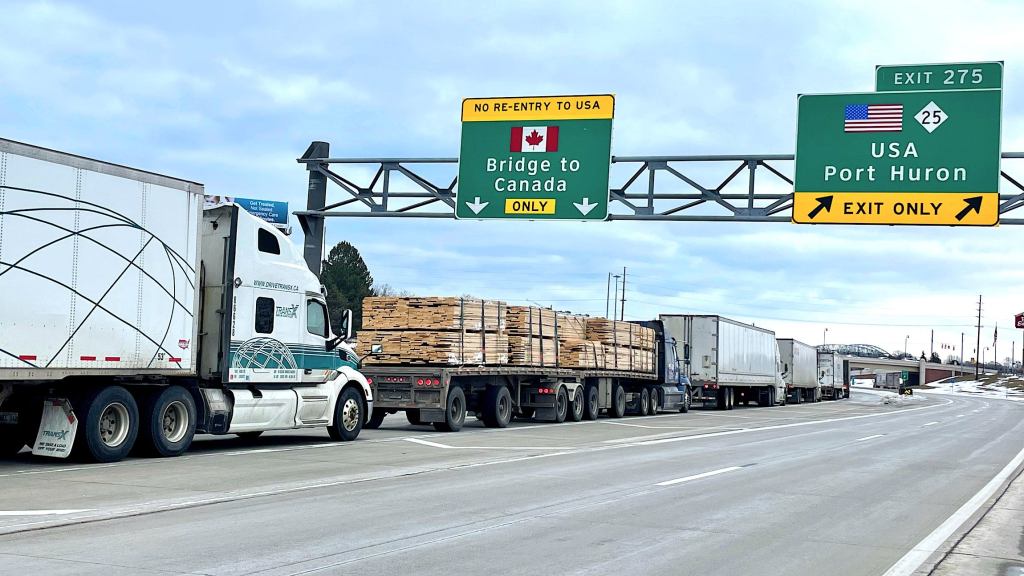
Kuehne+Nagel, the world’s largest 3PL, announced Tuesday it has acquired Farrow, a 112-year-old, family-owned customs broker based in Windsor, Ontario.

The acquisition immediately boosts Kuehne+Nagel’s profitability and expands the company’s customs offerings at the Canadian and Mexican borders, according to a news release.

“With Farrow, we acquire a leading, diversified customs brokerage and logistics company that brings with it a proven track record of success, a growth-oriented mindset, and significant business scalability,” Hansjorg Rodi, responsible for road logistics at Kuehne+Nagel International AG, said in a statement. 

Farrow was founded in 1911 by Russell Farrow, who saw an opportunity on the Detroit River to create a barge service for transporting goods between Windsor and Detroit. Today, Farrow is Canada’s largest independently owned customs agency, with 830 employees in 41 locations across the U.S. and Canada. Last year, the firm managed over 1.5 million customs entries.

“We are excited to take our successful long-time, family-owned business to the next level,” Chairman Rick Farrow said in a statement. “This allows us to combine our extensive expertise in customs brokerage with the capabilities and global reach of Kuehne+Nagel, allowing us to provide extraordinary supply chain solutions for our customers, as well as creating new opportunities for career growth for our colleagues.”

The price of the acquisition was not disclosed. Completion of the transaction is expected during the first quarter of 2024. Upon closing, Farrow will become a fully owned subsidiary of Kuehne+Nagel.

Headquartered in Switzerland, Kuehne+Nagel has over 80,000 employees at 1,300 locations in 100 countries. The company has 400,000 customers worldwide and is one of the top air and sea logistics providers by gross tonnage and revenue. Kuehne+Nagel also provides solutions in road and contract logistics.

Click for more FreightWaves articles by Noi Mahoney.

More articles by Noi Mahoney

Eternity Group Mexico unveils tools for shippers to monitor carbon footprints

Mexico orders railroads to prioritize passenger service over freight operations

Protesting Polish truck drivers say EU policy is driving down pay

A weekslong protest by Polish truck drivers and farmers escalated this week.

These workers began blocking Medyka, a key border crossing between Ukraine and Poland, on Monday, Reuters reported. This is the fourth crossing that Polish truck drivers are blocking since they began their protest on Nov. 6. 

The chief complaint of these Polish workers is that Ukrainian carriers are now able to more freely access the European Union freight market. 

Before Russia’s invasion of Ukraine in February 2022, Ukrainian fleets had to purchase permits to operate in the EU. The EU waived that requirement starting last year to bring economic relief to Ukraine, as Brussels, Belgium-based Euronews reported.

Now, Polish drivers say Ukrainian carriers are undercutting them and making it impossible to compete, according to Notes from Poland and the Kyiv Independent. Ukrainian carriers have lower operating costs, in part because they do not have to comply with EU climate regulations. 

Another complaint of these drivers comes from the long lines at these border crossings. Reuters and Notes from Poland both reported that Ukraine requires Polish drivers to join an electronic queuing system to leave Ukraine, while Ukrainian drivers are allowed to wait at home for their turn to exit the country. 

Ukrainian officials slammed these protests. Volodymyr Balin, vice president of the Association of International Car Carriers of Ukraine, told the Kyiv Independent that he’s “categorically against the fact that we are undermining local businesses in Poland.”

Humanitarian aid may be caught in protest

As of Monday, the wait to cross through Medyka stood at 91 hours, Reuters reported. 

It’s a long wait, but it’s not unusual since the war started. According to a FreightWaves email interview with a spokesman for the International Road Transport Union (IRU), a Geneva-based world transport organization, wait times at the Polish-Ukrainian border have been unusually long.

“[C]ustoms clearance is also taking significantly more time than prior to the war due to additional inspections to ensure compliance with economic and trade sanctions,” the spokesperson wrote in an email.

These protests also appeared to entangle some humanitarian aid heading to Ukraine.

“The protest is only targeting ordinary transports, not humanitarian aid,” the spokesperson wrote in an email. “However, some trucks with humanitarian aid are inevitably getting caught in jams and are therefore also impacted.”

Sebastian Stodolak, vice president of a Warsaw-based think tank, told the Kyiv Indepedent that he doubts Polish leaders will monitor this situation closely — despite the disruption it may cause people in Ukraine and Poland.

“Polish politicians are too busy creating a new government to focus on this issue particularly closely. Important decisions will probably be made in December,” Stodolak said.

‘No intention of giving up’

A protest by Polish truckers has the potential to reverberate through the entire EU. According to the IRU, Polish carriers haul a whopping one-fifth of the EU’s total road freight volume.

However, drivers say the outgoing Polish government and the incoming leadership, which appears to be a coalition of pro-EU groups, aren’t concerned with their problems. 

“There are no constructive talks, nobody wants to meet with us,” Jacek Sokol of the Committee to Protect Transporters and Transport Employers, referring to the government, told Reuters. 

Poland’s infrastructure ministry told Reuters it’s asked Ukraine to allow empty trucks to be excluded from the electronic queuing system at certain crossings. The ministry also asked an EU commissioner “to establish a joint committee to [analyze] the effects of lifting the requirement to have permits in the bloc’s transport market,” Reuters reported.

Tomasz Borkowski, who leads a Polish union called the Committee to Protect Transporters and Transport Employers, told Reuters he would like the “burdensome” protest to end, but that aims around wait times and border crossing requirements would first need to be met. 

“We have no intention of giving up and we will stand until we get our terms,” Borkowski said.

This story is developing. Email rpremack@www.freightwaves.com with your thoughts. 

Michigan trucking fraudster sentenced to 17 years for $40M Ponzi scheme

A previously convicted fraudster was sentenced to 212 months in federal prison for his role in multiple fraud schemes, including bilking investors out of $40 million in a truck investment venture.

Franklin Ray, 52, of Canton, Michigan, was sentenced Monday in the U.S. District Court for the Southern District of New York after pleading guilty in March to four counts of wire fraud, including one count of wire fraud while he was released on bail.

Once released from prison, Ray will serve five years of supervised release and has been ordered to forfeit more than $42 million and several assets, including a 1968 Chevy Camaro. 

U.S. District Judge Analisa Torres has also ordered him to pay restitution, though the amount has not yet been determined. 

“In the span of less than two years, Franklin Ray engaged in four separate fraudulent schemes, including a $40 million Ponzi scheme that victimized hundreds of people and schemes that stole funds intended for those in need during the COVID-19 pandemic,” Damian Williams, U.S. attorney for the Southern District of New York, said in a statement.

What happened?

Over a 10-month period — June 2021 until April 2022 — Ray admitted he defrauded 275 investors in CSA Business Solutions LLC, headquartered in Imlay City, Michigan, telling them he had 4,704 trucks and 4,909 drivers when he only had two trucks and four drivers. He purportedly told investors that he used the $40 million to purchase over 2,000 trucks. However, that wasn’t the case.

Prosecutors claim Ray also set up a separate bank account and collected another $1.9 million from investors after his arrest in March 2022.

According to court documents, Ray induced individuals to enter into contracts with CSA Business Solutions by stating that for every $20,000 contributed by an investor, the company “would procure and operate a truck for the investor in the course of its purported trucking business.”

Investors were told the money was going toward trucks for a large, multinational e-commerce company, but Ray later told investors they could switch from the e-commerce company to have the trucks work for a multinational shipping company “if they were willing to forgo one expected payment.”

In exchange for the $20,000 investment, Ray told investors they would receive 77% of the net income derived by that truck over a seven-year period. Investigators say the truck reports sent to investors were fabricated and that the company never operated more than a few trucks.

In an exclusive interview with the FMCSA after Ray’s indictment in April 2022, agency officials speaking on condition of anonymity told FreightWaves that while CSA Business Solutions indicated on its initial Motor Carrier Identification Report Form (MCS-150) in November 2021 that it had two trucks, it ramped up its data drastically in April to show the company had 4,707 power units and 4,909 drivers. The addition of thousands of trucks and drivers came more than a month after Ray’s arrest but before the grand jury’s seven-count indictment in mid-April.

FMCSA said the drastic uptick in the purported trucking company’s number of trucks and drivers wouldn’t necessarily raise a red flag since the company was a new entrant and wasn’t due for a new-entrant audit until it hit the 12-month mark. 

“FMCSA might not have any information about the indictment and the fact that they changed their number, as they can change their numbers at any time, wouldn’t raise a red flag,” one of the FMCSA officials said on a Zoom call with FreightWaves.

Typically, a safety event triggers a closer look at a carrier when it’s a new entrant, FMCSA said.

PPP, EIDL schemes

Ray also pleaded guilty to fraudulently obtaining nearly $2 million in funds meant to help struggling small businesses stay afloat during the pandemic through the U.S. Small Business Administration’s Paycheck Protection Program (PPP) and Economic Injury Disaster Loan Program (EIDL). 

Prosecutors said Ray submitted false information and forged documents to the SBA and commercial lenders and claimed that these businesses engaged in significant trucking business when they had minimal revenues and trucking activity. Ray also committed aggravated identity theft with respect to one of the SBA loan fraud schemes, according to the statement.

He also pleaded guilty to fraudulently inducing a Manhattan-based real estate holding company to pay a $175,000 deposit to cover startup costs for a joint venture between CSA Business Solutions and the unnamed holding company, which was why Ray was indicted on fraud charges in New York instead of Michigan.

Ray was convicted of wire fraud and bank fraud in 2008 in the U.S. District Court for the Eastern District of Michigan and released from prison in 2010. Ray, who owned Marlin Transport and MNR Productions, was ordered to pay more than $1.3 million in restitution to his victims. 

“Today’s sentence shows that engaging in fraudulent conduct will have severe consequences,” Williams said.

Do you have a news tip or story to share? Send me an email or message me @cage_writer on X, formerly known as Twitter. Your name will not be used without your permission.

Fraudster ran trucking Ponzi scheme that bilked $40M from investors, feds say
CEO fails to pay employees, carriers after Elite Transit collapse

White Paper: Bypassing the Bottleneck: Solutions for Avoiding Freight Congestion at the U.S.-Mexico Border

Unlock the Power of Streamlined Inbound Cargo Supply Chains!

In an era of booming cross-border trade, navigating the complexities of U.S.-Mexico freight movement is more crucial than ever. This comprehensive white paper, “Bypassing the Bottleneck,” offers invaluable insights and practical solutions for shippers facing the challenges of freight congestion along the U.S.-Mexico border.

Key Highlights:

  • Deep Dive into U.S.-Mexico Trade Dynamics: Understand the intricacies of the U.S.-Mexico trade relationship, intensified by the USMCA, and how it impacts freight movement.
  • Innovative Solutions to Avoid Congestion: Explore nontraditional strategies like LTL Pool Distribution, Transloading at Border Towns, and Ocean Shipping to bypass bottlenecks.
  • Nearshoring Trends and Their Impact: Gain insights into the growing nearshoring trend and how it shapes freight flow between the U.S. and Mexico.
  • Cost-Effective Alternatives: Discover how alternative freight movement methods can offer cost savings and increased efficiency.

2023 Shipper of Choice profile: S&C Electric Co.

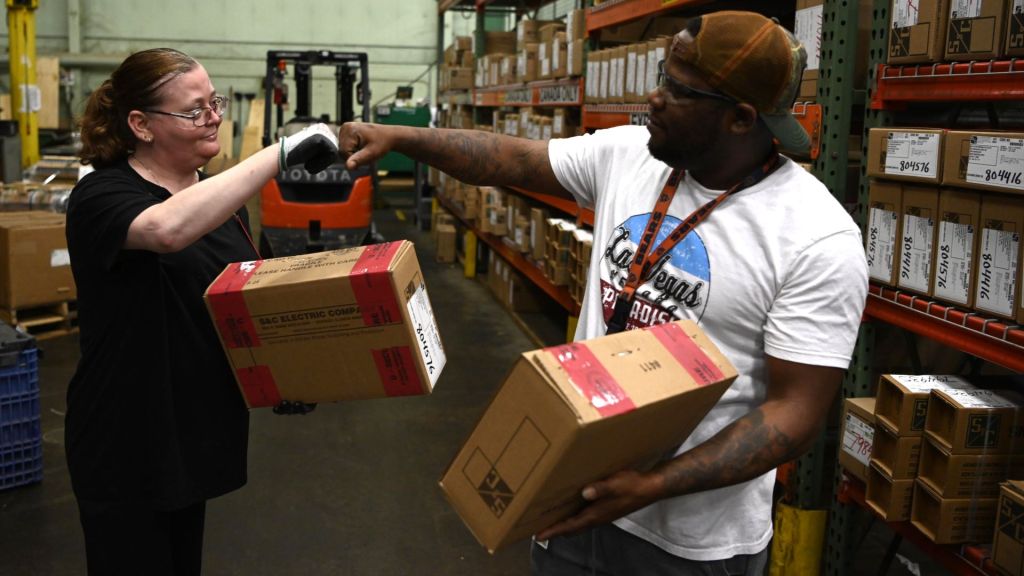
A white woman and a black man bump fists holding a package in in a storage room of a factory.

S&C Electric Co. is one of 25 companies that met the criteria for the 2023 Shipper of Choice awards, presented by FreightWaves and sponsored by TriumphPay. The awards recognize manufacturers, retailers and distributors that nurture carrier relationships by removing impediments to efficient operations.

S&C, based in Chicago, is a global provider of equipment and services for electric power systems.

Why S&C Electric Co. made the cut

S&C manufactures components for the electric grid such as panels and cases. Certain work is outsourced to suppliers to stamp, build or paint a product. Vendors send back finished products or subcomponents.

S&C is building a 275,000-square-foot manufacturing facility in Palatine, Illinois, about 25 miles from its 47-acre headquarters and manufacturing campus in Rogers Park. The company employs 3,500 team members globally and more than 2,000 in Chicago, making it one of the largest manufactures in the city.

About S&C

U.S. headquartersChicago, Illinois
Shipper of ChoiceFirst appearance
Employees3,500

What sets S&C apart from most shippers is the ability to manage inbound and outbound freight, and have it ready for motor carriers at the designated pickup time, which eliminates wasted hours for drivers, says Arthur Mroz, vice president at CXI Trucking.

The local drayage carrier consolidates freight at its terminal from more than 40 S&C vendors in the Chicago-Milwaukee corridor into 200 trailers per month for onward delivery to S&C or one of its customers. All the work is done with very little manual communication because S&C is diligent about uploading all shipment information into CXI’s system.

“We got all these other customers that have to communicate with us on a daily basis and make 20 phone calls to make things right. And we’re only getting a quarter of the volume from them. We’re getting such high volume on this customer. And it just works,” said Mroz.

And S&C always has a drop trailer ready to go so when the CXI driver pulls in with a load, he or she can quickly hook and go with the outbound shipment. That eliminates the need for multiple trips back and forth with empty trailers.

“We’re doing up to two to three trailers in this fashion per night. That could be a daylong process with some of our other customers to receive in and to ship out the product. We’re able to do that in a short period of time because of how well they’re able to work with us,” Mroz added.

“They’ve got their system so down pat, they don’t even have to speak to us,” he said.

About Shipper of Choice sponsor TriumphPay

TriumphPay is the transportation industry’s premier payment network trusted by leading shippers, brokers, factors and carriers. Its innovative and highly automated fintech payment solution brings cost savings and efficiencies to antiquated transportation payment processes for network participants. Integrated financing options leverage the strength of TriumphPay’s parent bank and can provide liquidity and cash flow visibility.

TriumphPay is a division of Triumph Financial Inc. (NASDAQ: TFIN).

Why shippers should work with smaller carriers in 2024

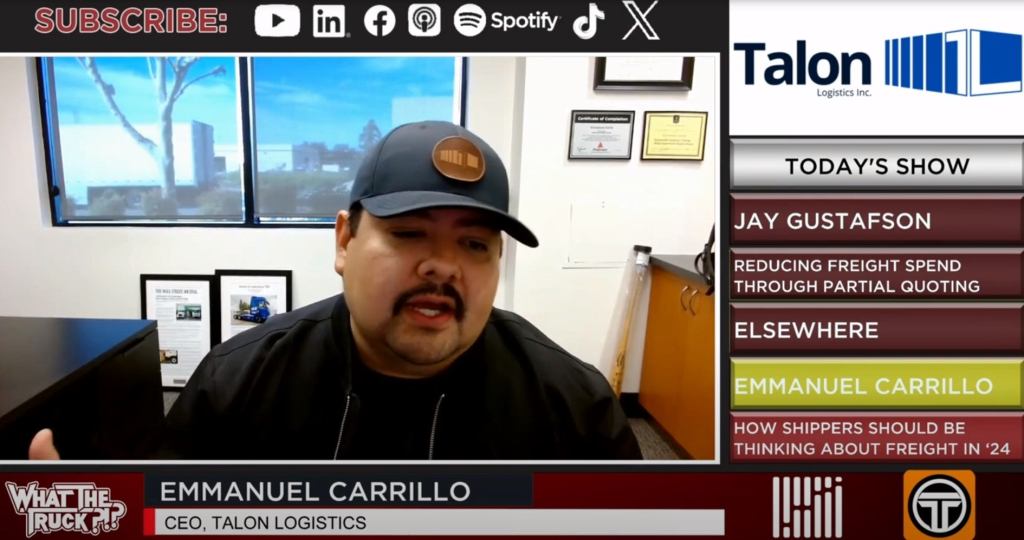
What separates a good carrier from a great one when costs are the same? According to Emmanuel Carrillo, the answer has a lot to do with cutting-edge technology that fosters clear communication and transparency.

As CEO of California-based Talon Logistics, it’s a message Carrillo lives by. It’s also at the core of Talon’s strategy as the company moves toward 2024. This year has been brutal for carriers of all sizes, but particularly for smaller ones that don’t have the scale of enterprise fleets. 

So Carrillo’s team has positioned Talon, which specializes in drayage, OTR and intermodal transportation, as a home for shippers looking to simplify relationships with carrier representatives while also diversifying load distributions across modes.

He spoke with Dooner on What the Truck?!? about these strategies and a just-published Talon-FreightWaves white paper called “How Shippers Should Be Thinking About Freight in 2024.”

From dispatcher to CEO: Lessons in equality and transparency

Carrillo started in freight as a night dispatcher, a role far removed from the executive suite. His path to becoming the CEO of Talon Logistics is a narrative of ambition, adaptability and humility. 

Central to Carrillo’s leadership philosophy is a steadfast commitment to across-the-board respect, regardless of role. 

“You treat everyone as equals,” he said. “I tell everyone in our organization, ‘Be kind, be transparent. Put your head down and do your best.’”

His story is more than a personal triumph; it’s a road map for others in the logistics industry. Carrillo’s experience exemplifies how adhering to core values can pave the way for success.

Carrillo also highlighted the significance of clear communication in sustaining robust logistics partnerships. This focus is crucial for maintaining efficient and reliable business interactions, the latter of which shippers reported as being the most important aspect to consider when choosing a shipping method.

The white paper recommends that shippers consider moving to a logistics provider that operates with a single point of contact strategy. This idea can streamline logistics operations and is essential in strengthening carrier relationships.

Diversification will be key in 2024

With 2024 expected by many to see a swing in pricing power back in carriers’ favor, Carrillo emphasized the need for shippers to diversify their logistics networks. 

This aligns with the white paper’s findings, which reveal a heavy reliance on over-the-road trucking, used by 87% of survey participants. Carrillo warns against overdependence on one method and advocates for exploring efficient and sustainable options like intermodal shipping.

Carrillo expects to see a market uptick by Q2 or Q3 of the next year but cautioned that it wouldn’t feel anything like the COVID-era boom. In fact, he said, a return to pre-COVID normalcy might not happen until as late as 2026. This perspective adds depth to the white paper’s conclusion that emphasizes a gradual shift toward sustainable practices and investments in technology.

FreightTech and environmental considerations

The white paper and Carrillo both highlighted the increasing focus on technology and environmental considerations in logistics. 

“For smaller carriers, we need to innovate creatively,” Carrillo said, pointing to the need for proactive strategies in an increasingly competitive market.

Shippers might not currently place much weight on how sustainable their carrier partners are, but that’s likely to be a more important factor in years to come.

It’s not an easy (or always feasible) decision for smaller carriers to invest in their businesses during down markets. But as the freight cycle shows again and again, the companies most likely to survive a recession are those that planned for it when the market was still hot.

More likely than not, the companies that most excel when the market turns next will be the ones planning for it now.