Early 20th century mail delivery took unusual forms

FreightWaves Classics is sponsored by Old Dominion Freight Line — Helping the World Keep Promises. Learn more here.

In almost 250 years of service, the U.S. Postal Service has tried out scores of vehicles and methods of delivery. Some of the most unusual ones were experiments and inventions of the late 1800s through the mid-1900s.

In digging through the archives of the Smithsonian’s National Postal Museum, we found interesting photos of these inventions.

Check out some of the unusual ways the United States delivered mail back in the day.

vintage photo delivering mail UPSPS 1885
In 1885, letter carriers in cities used handcarts to collect and deliver mail. (Photo: National Postal Museum)
Post office streetcar USPS 1900
In 1900, the Railway Post Office streetcar was used to transport both passengers and mail. This one in particular traveled between Charlestown and Post Office Square in Boston. (Photo: National Postal Museum)
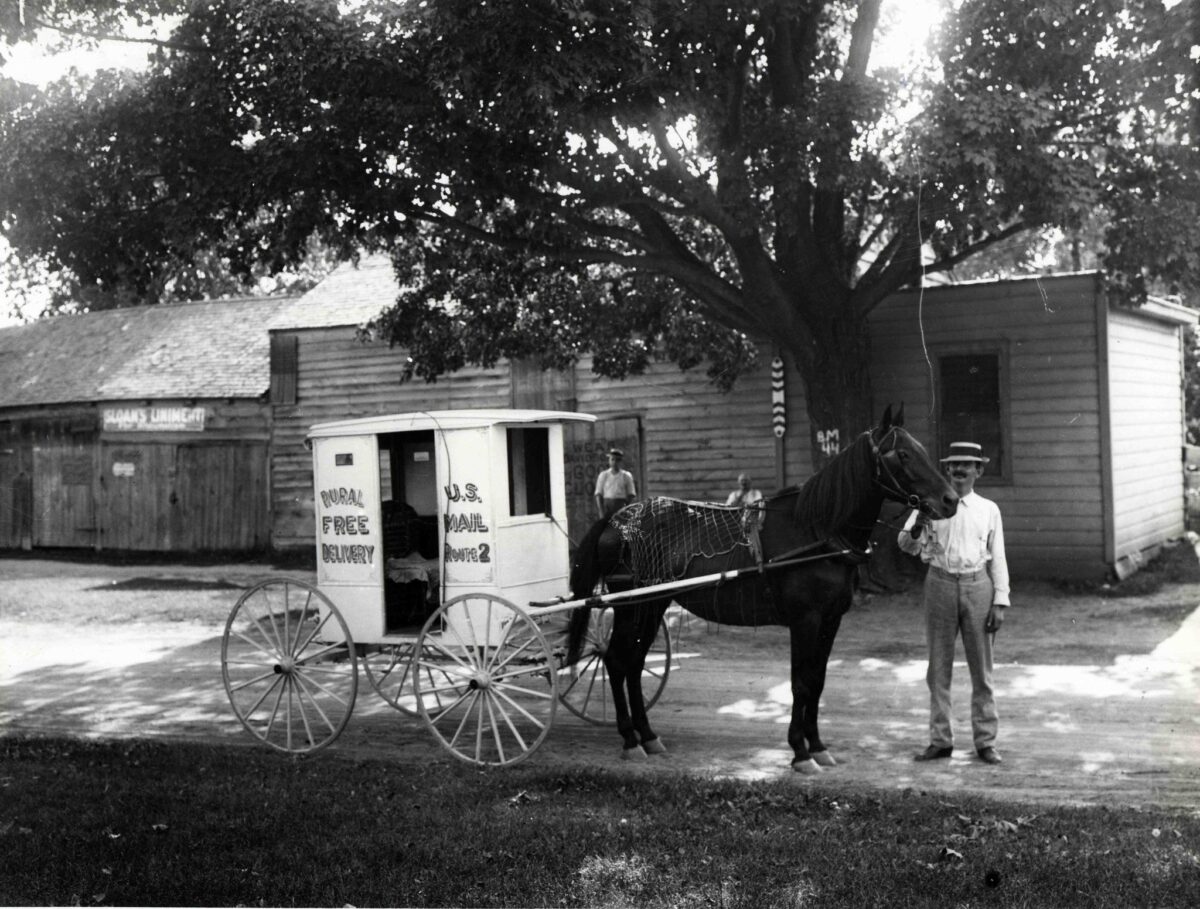
horse and carriage delivers mail in 1905 USPS
Rural Free Delivery was a program that helped deliver mail directly to rural areas. Carriers like this one, photographed in 1905, used horse-drawn wagons. (Photo: National Postal Museum)
horse and carriage delivers mail in 1905 USPS
Another Rural Free Delivery carrier is featured here in 1905, with his two-wheeled mail cart and patrons. (Photo: National Postal Museum)
historic car 1906 mail truck delivery
In urban areas, sometimes letter carriers traveled with contracted drivers. This photo, taken in 1906, featured a U.S. Mail truck with a letter carrier from the Postal Service retrieving mail. The driver was not considered a post office employee. (Photo: National Postal Museum)
J.N. Teal ferry that delivered mail on Columbia River in Oregon 1911
Even boats were used to transport mail in the early 20th century. This is the J.N. Teal, whose route ran the Columbia River in Oregon in 1911. (Photo: National Postal Museum)
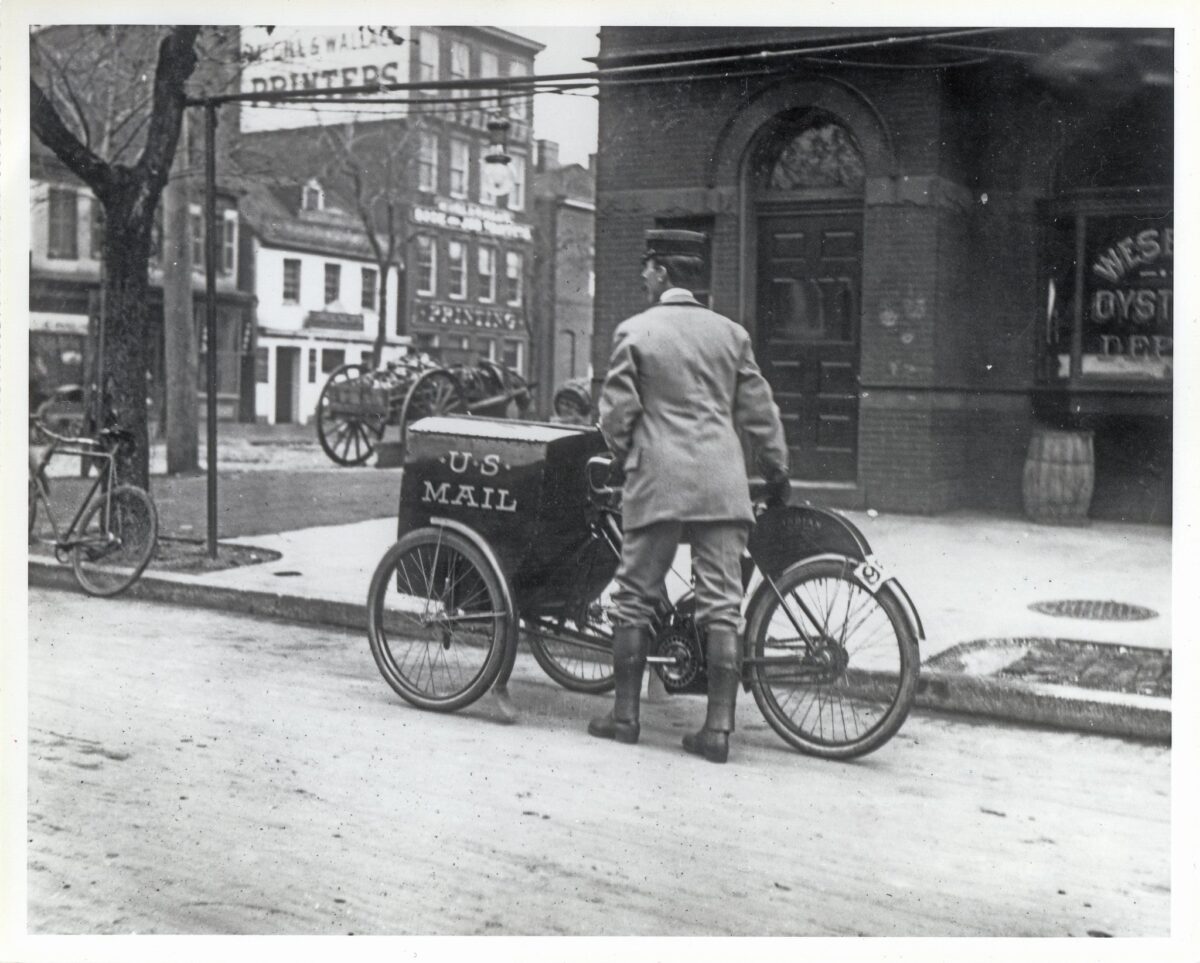
Three wheeled 1912 Indian motorcycle vintage delivering mail postal service
Three-wheeled Indian motorcycles also showed up around this time in the Postal Service on an experimental basis only in Washington. This photo is on the corner of Pennsylvania Avenue and 12th street in 1912. (Photo: National Postal Museum)
Horse and wagons deliver mail in Knoxville, Tennessee in 1913 vintage
Parcel Post Service also used wagons. Here is a group of carriers with Knoxville, Tennessee, Postmaster Cary F. Spence in 1913. (Photo: National Postal Museum)
dog sled delivering mail in Alaska in 1913 vintage
Dog sleds often delivered mail in norther parts of the United States and Alaska throughout wintery conditions. This is an unidentified man with his dog team resting during transport between Susitna and Seward, Alaska in 1913 (Photo: National Postal Museum)
Early airplanes delivered mail in 1918 vintage USPS
Lt. Torrey Webb grabs a bag of letters from New York Postmaster Thomas G. Patten to deliver through airmail in 1918. (Photo: National Postal Museum)

Learn more about the dangerous job of delivering mail by air in the early 20th century. 

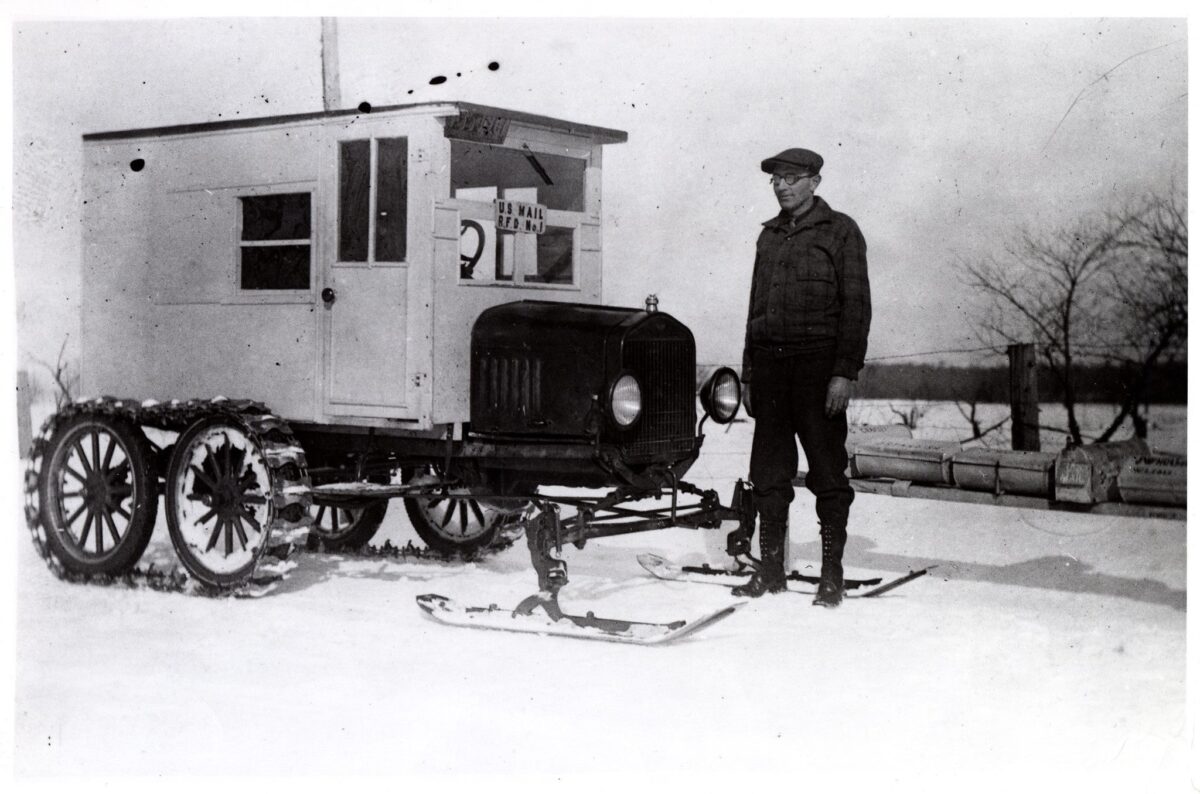
Snow custom Model T 1926 mail delivery vintage
This unique vehicle was improvised by the carrier himself, Lloyd Mortice, for easier travel in snowy conditions in New England. He fitted a Model T with tracks on the rear drive shaft so he could drop wheels or skis in front in 1926. (Photo: National Postal Museum)
bus mail delivery vintage Virginia 1941
In 1941, the first Highway Post Office bus was inaugurated in Strasburg, Virginia, thanks to a decline in bus passengers due to the growing popularity of trains. This was the first bus used for postal transport and traveled between Washington and Harrisonburg, Virginia. (Photo: National Postal Museum)
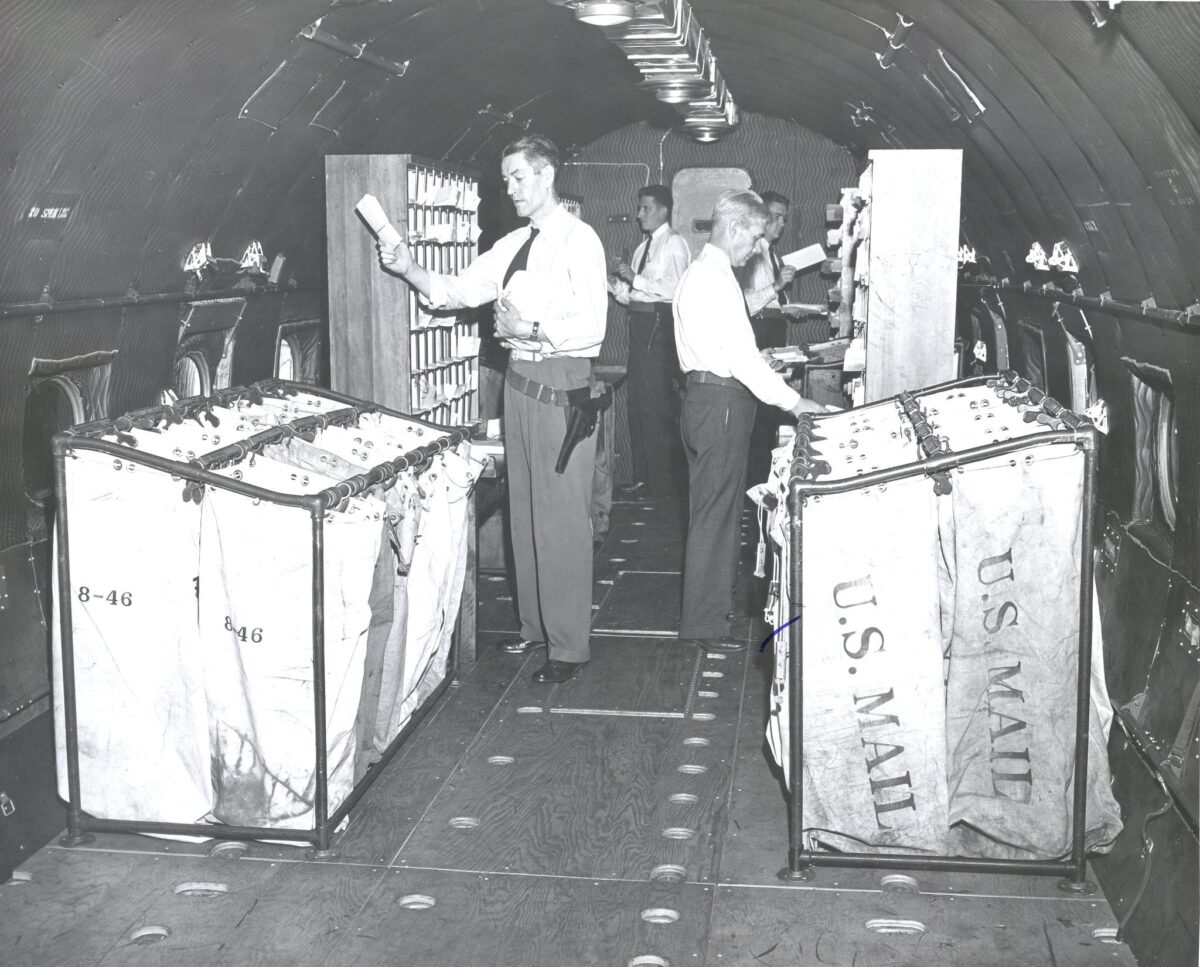
air plane mail cargo vintage 1946
The experimental Trans World Airlines Skymaster was an aircraft that allowed for onboard mail sorting and routing in 1946. The idea was based on operations used by the Railway Post Office, but standing on a plane to work proved much more difficult than on a train and the program did not come to fruition. (Photo: National Postal Museum)
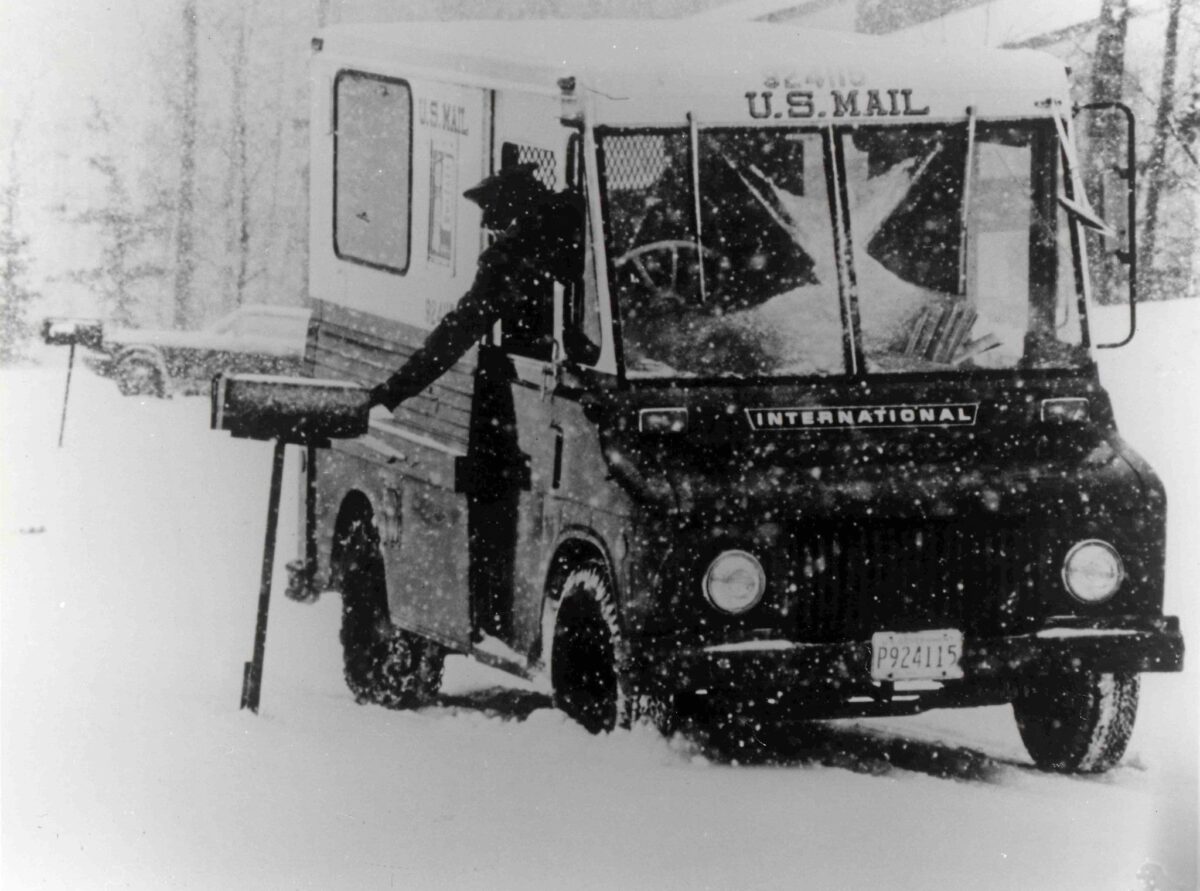
mail truck delivery in 1954 vintage snowstorm
Looking closer to today’s Postal Service delivery trucks, this letter carrier delivers mail in a snowstorm in 1954. The van was painted with the blue and white color scheme we know today, with a middle red stripe separating the colors. (Photo: National Postal Museum)
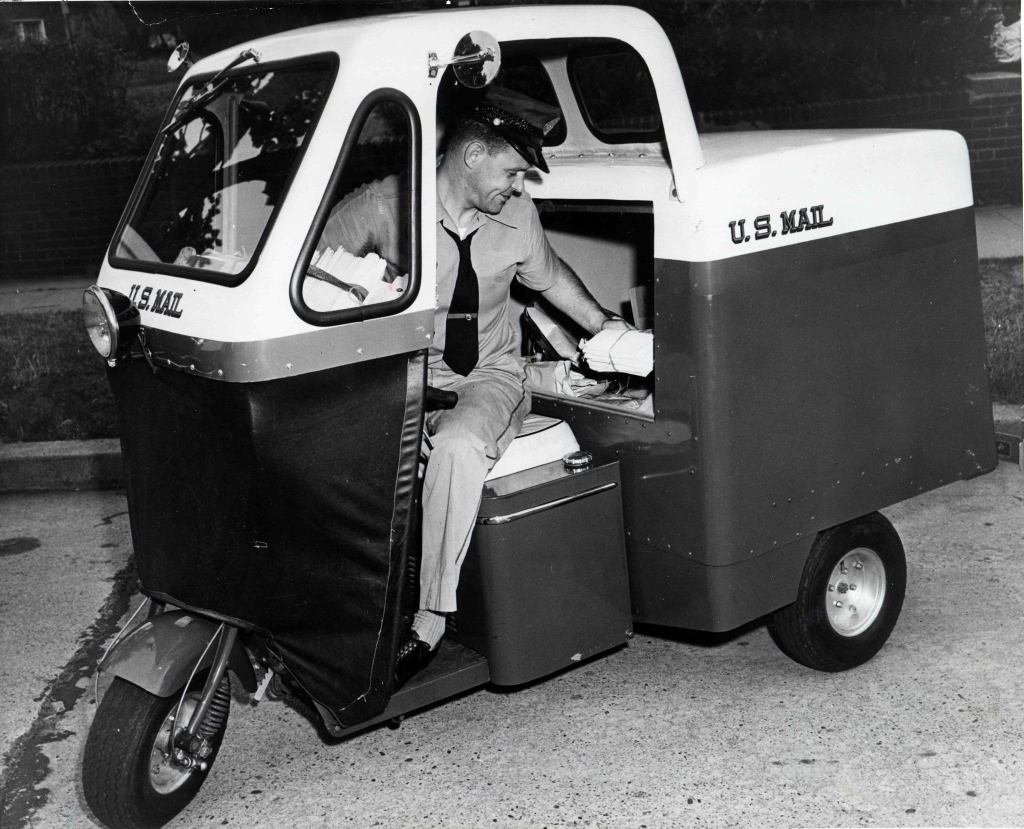
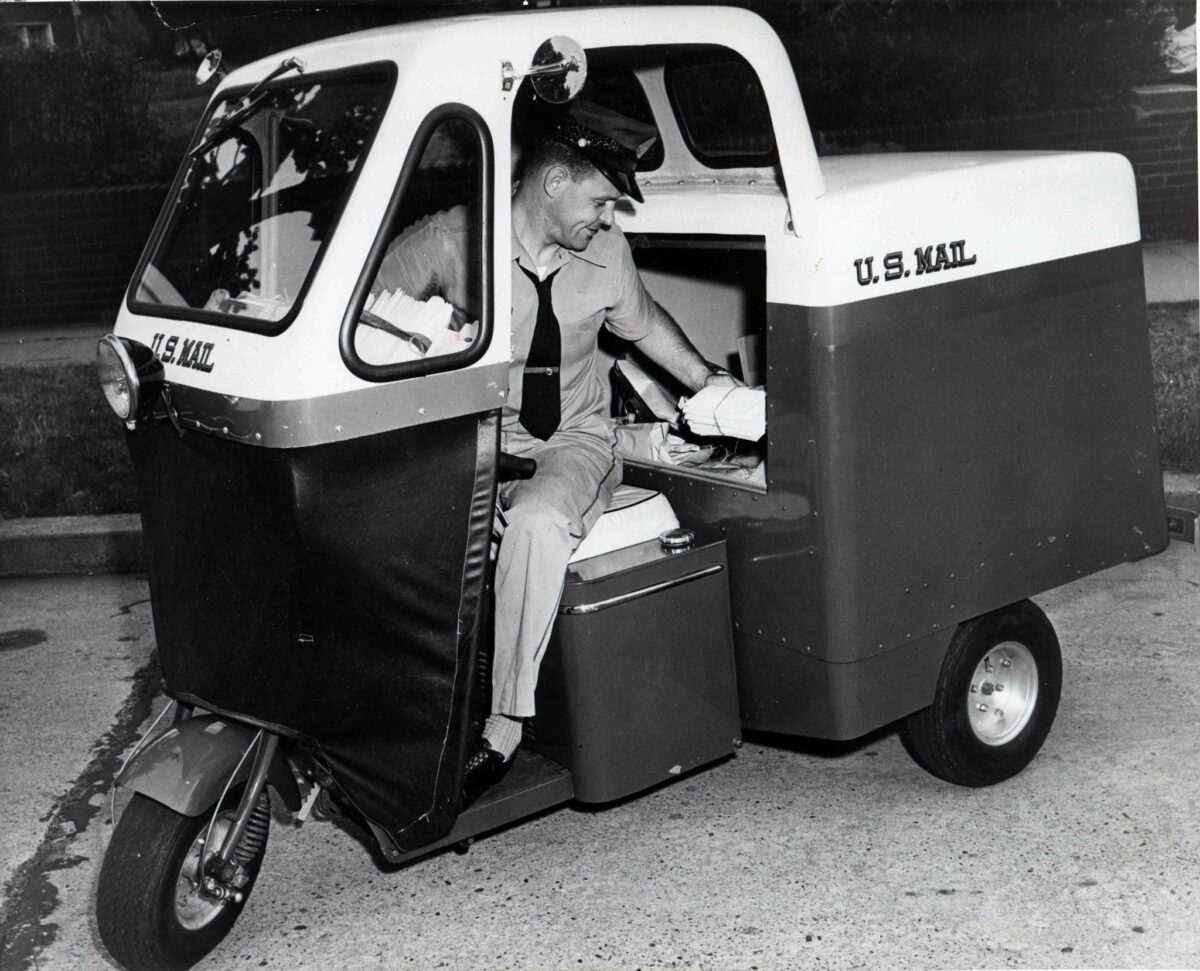
Mailster three wheel vehicle delivering mail in 1955 vintage
The unique-looking “mailster” was used to deliver mail during a boom in letter sending after World War II in 1955. However, conditions needed to be ideal to operate with even terrain, and the vehicle often tipped over when turning at more than 25 mph or even in strong wind. (Photo: National Postal Museum)

FreightWaves Classics articles look at various aspects of the transportation industry’s history. Click here to subscribe to our newsletter!

Have a topic you want us to cover? Email bjaekel@www.freightwaves.com.

DOT finalizes rule requiring states to track vehicle CO2

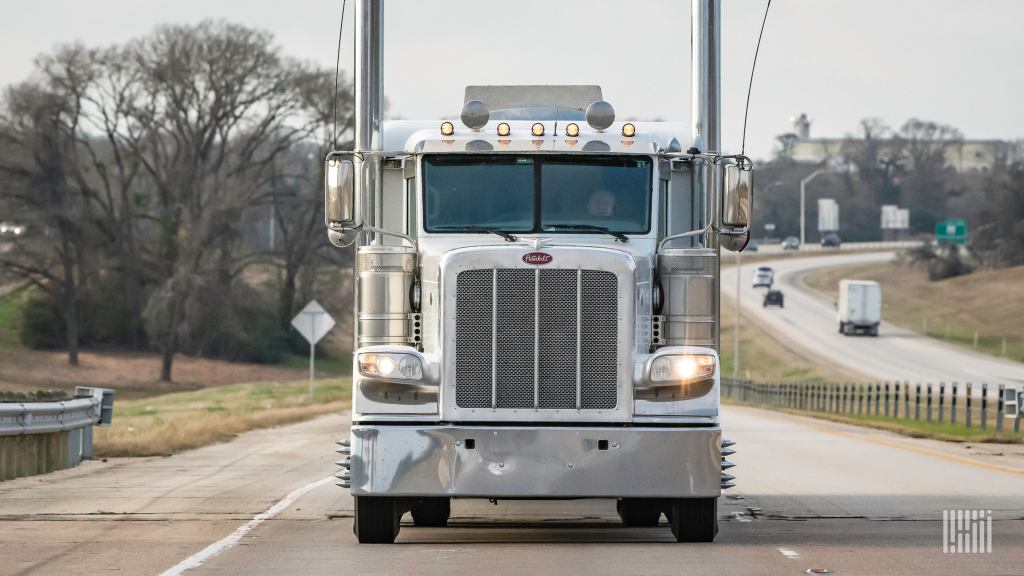
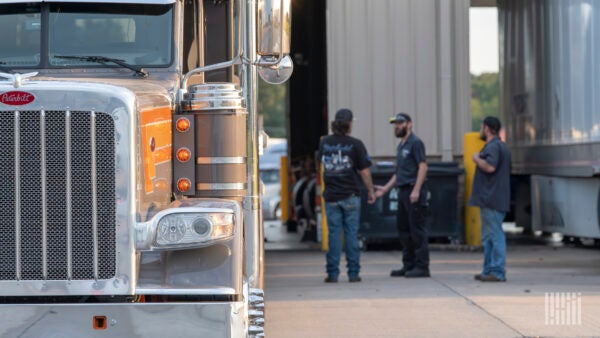
Truck on the highway

WASHINGTON — The Biden administration has finalized a rule requiring each state to track and monitor greenhouse gas emissions from vehicles despite opposition from some states and road and bridge builders.

The new rule, which generated close to 40,000 comments after it was formally proposed in a notice of proposed rulemaking (NPRM) last year, requires each state’s department of transportation to establish declining carbon dioxide targets — using fuel sales, fuel efficiency and vehicles-miles-traveled data — and report on their progress.

The Federal Highway Administration (FHWA), which issued the rule, established 2022 as the reference year by which targets will be measured.

The rule does not mandate how low targets must be in each state. Instead, according to the rule, each state may set targets “that are appropriate for their communities and that work for their respective climate change and other policy priorities, as long as the targets aim to reduce emissions over time.” It also does not impose penalties on a state for failing to meet its GHG targets.

The rule supports the Biden administration’s goal of cutting carbon pollution in half by 2030, and net-zero emissions by 2050.

“Every state has its own unique climate challenges, and every state ought to have the data, funding, and flexibility it needs to meet those challenges head on,” commented U.S. Transportation Secretary Pete Buttigieg, unveiling the final rule on Wednesday.

“This new performance measure will provide states with a clear and consistent framework to track carbon pollution and the flexibility to set their own climate targets — which we will also help them meet with more than $27 billion in federal funding through President Biden’s Investing in America agenda.”

Support for the rule varies among states.

“Some of our members are very supportive of the language and/or the intent of the NPRM and they encourage FHWA to move forward with finalizing the NPRM as proposed,” the American Association of State Highway and Transportation Officials, which represents state DOTs, stated in comments on the NPRM last year.

“That being said, some of our members are opposed to the NPRM for many different and specific reasons — beyond the broad intent to address climate change — and recommend FHWA to not implement the NPRM, or at the least make substantial changes.”

One of the states opposing the rule, Texas, contended that meeting the Biden administration’s overall carbon-cutting goals cannot be achieved using the FHWA’s method for tracking carbon emissions.

“Annually, trucks carry 1.5 billion tons of freight worth $1.2 trillion to, from, and within Texas … . [A]nother 195 million tons worth $664 billion passed through Texas,” the state’s DOT commented. “For a state like Texas with a growing population, it is not plausible to remove the equivalent of 59.3% of current highway trips, plus the additional future trips from increased population and increased goods movement through 2030.”

David Bauer, president of the American Road & Transportation Builders Association (ARTBA), which represents transportation construction suppliers and contractors, asserted in comments filed last year that imposing a GHG measurement tool for transportation is beyond FHWA’s authority.

Commenting on the final rule, Bauer noted that a GHG reporting mandate also was not intended as part of the Bipartisan Infrastructure Law.

“The Bipartisan Infrastructure Law would not have been bipartisan had it included requirements on states for mitigating the impacts of global climate change,” Bauer said.

Click for more FreightWaves articles by John Gallagher.

How truckers handle Thanksgiving; shippers’ holiday handbook; trucking turnover – WTT

On today’s episode of WHAT THE TRUCK?!? Truck Parking Club’s Evan Shelley joins Dooner to co-host the show. They’ll talk about parking solutions for drivers during the holidays and the logistics of Thanksgiving.

C3 Solutions’ Greg Braun breaks down the shipper handbook to managing expectations this holiday season.

Trucker Chris Thomas talks about how drivers handle Thanksgiving; what he’s seeing out on the road; staying accident free; meeting other drivers on social media and remaining positive. 

FreightWaves’ Alan Adler has the scoop on more drama over at Nikola; Hyliion’s big workforce cut; and the latest on Hyzon.

FreightWaves’ Rachel Premack looks into why trucking embraces alarming turnover rates

Watch on YouTube

Visit our sponsor

Subscribe to the WTT newsletter

Apple Podcasts

Spotify

More FreightWaves Podcasts

Loaded and Rolling: Trucking turnover and retention debate rages on

Trucking turnover and retention debate rages on

(Photo: Jim Allen/FreightWaves)

FreightWaves’ Rachel Premack wrote an article on Wednesday outlining her experience attending a truck driver training conference in Corpus Christi, Texas, by the National Association of Publicly-Funded Truck Driving Schools (NAPFTDS). Premack sought to get more information on a fundamental disagreement in trucking that involves driver turnover and whether there is an ongoing driver shortage. Lobbying groups like the American Trucking Associations estimate there is an industrywide shortage of 78,000 drivers. On the other side of the debate, researchers and the U.S. Bureau of Labor Statistics argue a high turnover rate and broken labor market are to blame. 

While at the conference, the debate centered around multiple potential solutions, including more funding for driver training schools; retention programs for existing drivers; adjusting driver pay scales; and changing the trucking business model to include hybrid relay networks. Compared to semi-random point-to-point over-the-road networks, hybrid relay networks resemble a less-than-truckload network with drivers centered around terminals relaying loads between nodes while local drivers handle first- and last-mile assignments. Cost and profitability are challenges, as these networks require higher freight volumes to cover the additional drivers compared to OTR. 

At the end of the day, relationships between drivers and office staff appear to be a low-cost common-sense approach while business leaders debate the finer details. Brent Lauber with Kelly Anderson Group told Premack, “Contact that driver and say, ‘Hey, so-and-so will meet you at the front door Thursday morning.’ When they come in, buy that driver a cup of coffee or have coffee there with them. Sit down with them and get to know the driver, get to know their family, get to know what they like and then take them around to the different departments … to make them feel welcome.”

Cargo theft risk rise on the Thanksgiving freight menu

(Source: CargoNet)

With the arrival of Thanksgiving, CargoNet, a cargo theft recording firm, is cautioning those in the industry of the rising trend in cargo thefts. CargoNet’s data highlighted that since October 2022, the average number of reports of cargo theft filed per week rose 64% to 51 per week using data from January 2012 through October 2022. Looking at data from Oct. 1 through Nov. 11, the number increased to 66 reports per week, up 113% from the previous decade. 

Regarding the types of thefts to watch out for, the Commercial Carrier Journal said, “The biggest active threat is that of strategic cargo theft, in which thieves seek to obtain a load by either impersonating a legitimate carrier, using an authority they have registered or otherwise have access to, or deceiving a motor carrier into giving them credentials to vital accounts.”

One area to watch for is the prevalence of fraud activity perpetrated by non-state actors, especially in regions heavily exposed to cross border movement. Karl Fillouer, vice president of sales at Circle Logistics, told FreightWaves in October, “We are seeing a very sophisticated approach to fraudulent activity that’s probably being managed overseas or in some country other than the U.S. This includes not only spoofing and tracking software, but also setting up fake domains for small and large carriers.”

Market update: Pent-up demand propels October Class 8 orders

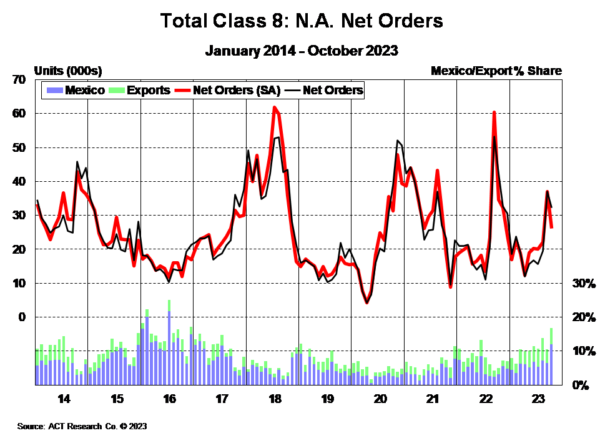
(Source: ACT Research)

ACT Research recently released October net Class 8 orders data that showed lingering pent-up demand in spite of comps down compared to the previous year. Class 8 orders fell 24% year over year (y/y) in October coming in at 32,287 units, but breaking down the data by segments yielded some surprises. The report noted the vocational straight truck market saw a 24% y/y increase while exports were up 91% y/y. Of those exports, orders going to Mexico rose 187%. The North American market fared worse, with orders down 34% y/y and U.S.-only tractor orders down 47% compared to October 2022. 

Private fleet additions and replenishment compared to for-hire fleets remain a development worth watching. Kenny Vieth, ACT president and senior analyst, said, “For carriers, the long bottom in freight rates continues, with spot rates little changed since April. A big driver of rate weakness has been lagged private fleet capacity additions. As for-hire fleets tend to be the first buyers in line, private fleets have been the drivers of Class 8 market strength in 2023, adding equipment at the bottom of the cycle and prolonging the rate pain.”


Another data provider, FTR Transportation Intelligence, echoes the sentiment that demand remains stable in spite of freight market weaknesses. FleetOwner reported Eric Starks, chairman at FTR, said, “Build slots continue to be filled at a healthy rate. The overall picture for truck demand is steady. Despite freight weakness, fleets continue to be willing to order new equipment, affirming our expectations of replacement demand during 2024.”

FreightWaves SONAR spotlight: Spot rate forecast cleared for takeoff

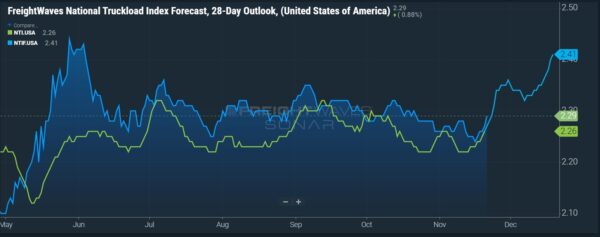
(Source: FreightWaves SONAR)

Summary: Spot rates are forecast to sharply rise in the weeks through Thanksgiving and leading up to Christmas, according to the FreightWaves National Truckload Index Forecast, 28-Day Outlook (NTIF28). The current NTI spot rate is $2.26 per mile all-in but is expected to rise 15 cents per mile, or 6.64%, to $2.41 by Dec. 19. This comes as current NTI spot market rates rose 4 cents per mile in the past week from $2.22 on Nov. 13 to $2.26 per mile.

Spot rate seasonality appears to be a factor, with spot rates increasing through December before gradually declining in January when truckload capacity normalizes and drivers return to work in force, driving spot rates back down. Holiday disruptions from Thanksgiving through New Year’s can be attributed to drivers taking additional home time, which creates localized capacity deficits in both spot and contract markets. Fleets continue to prioritize improving working tractor percentages while juggling driver home time needs and contracted freight obligations.

The week of Thanksgiving will also see a rise in outbound tender volumes as shippers front-load last-minute shipments before their facilities close for the holiday. Outbound tender volume rates remain elevated month over month from 10,993.74 points on Oct. 21 to 11,476.43 points, an increase of 482.69 points or 4.4%.

The logistics of turkey day (FreightWaves)

Another decline in average diesel pump prices; OPEC+ meeting looms (FreightWaves)

U.S. District Court hears AB5 arguments (Land Line)

Trailer Order Season Continues to Show Strong Bookings Despite Lingering Freight Recession (ACT Research)

Brokers, carriers may be targets of fake DAT site (FreightWaves)


LMI showing transportation market flip is coming (FreightWaves)

Like the content? Subscribe to the newsletter here.

How FIU is preparing the next generation of logistics leaders

In an era in which global supply chains are becoming increasingly complex, Florida International University is addressing the growing need for skilled logistics leaders. 

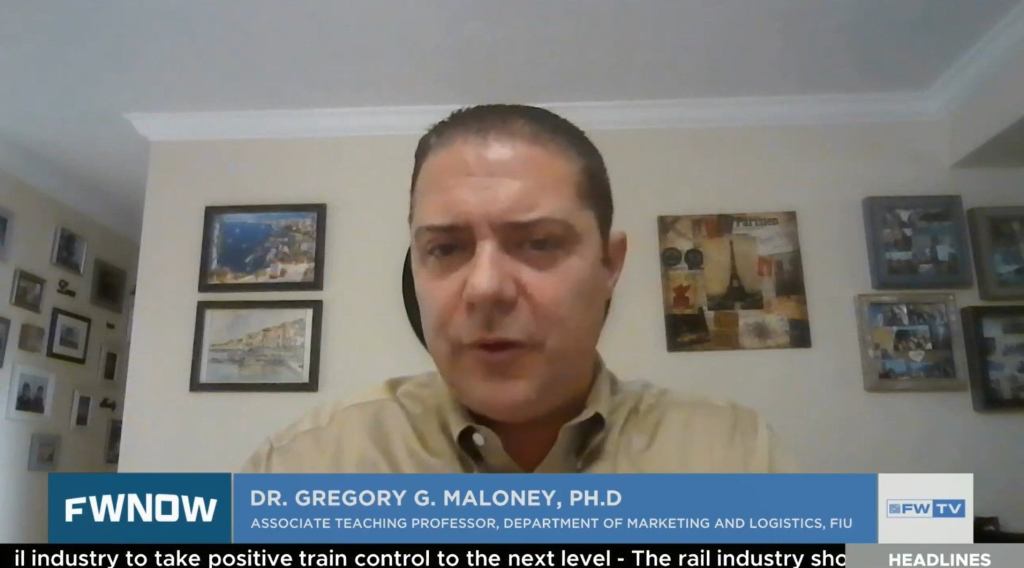
Dr. Gregory Maloney, the director of FIU’s master’s program in logistics and supply chain management, shared insights on the vital role of education in this field during an interview on FW Now on Nov. 14.

Dr. Maloney stressed the importance of a comprehensive educational approach at FIU, which equips logistics professionals not only with in-depth knowledge of supply chain management but also with crucial business skills. This big-picture approach is so important in an industry as reshaped by technological innovation, e-commerce growth and changing global trade patterns as freight is.

FIU’s programs are specifically tailored to meet the challenges of today’s industry. They’re preparing graduates to be versatile professionals capable of leading and innovating in the global economy.

“I’ve spent a lot of time in this industry interacting with people, and it still amazes me how many times I hear somebody say, ‘Well, you know, I kind of just fell into this industry,’” Dr. Maloney said. “Part of the reason for that is that we, as educational institutions, historically haven’t done the best job as far as creating the right degrees for that next level of manager and director in these spaces.”

Beyond logistics: A business-oriented approach

Offered in both online and hybrid formats, FIU’s programs blend business acumen with logistics expertise. They’re taught out of the university’s business college, ensuring students grasp vital business concepts like management, negotiation and strategic decision-making.

“Within this industry, there’s a lot of really smart people, there’s a lot of people good at technical issues and problem-solving, but not necessarily a tremendous amount of business background,” Dr. Maloney said.

So the curriculum responds to industry demands for professionals who can combine the two. The aim is to produce graduates who are well-rounded and capable of handling managerial and executive roles in larger business segments. This shift in logistics education aligns with the industry’s need for leaders who can manage complex supply chain networks effectively.

FIU is setting new standards in logistics education, fostering a generation of professionals proficient in both technical logistics and business management. This comprehensive approach makes FIU’s graduates highly valuable in a competitive, rapidly evolving industry.

Adapting to a changing workforce

Dr. Maloney also highlighted the concerns of the current generation entering the workforce. He noted their apprehensions about the economy and their quest for job security and meaningful careers. The economic situation, particularly in South Florida where home ownership affordability has become dire, is prompting students to seek stable, growth-oriented careers.

“Students are a little worried about the economy right now,” Dr. Maloney said. “They’re talking about, ‘Well, you know, how do I get that great job and achieve that American dream?’”

Additionally, the shift toward hybrid work environments post-COVID is influencing student expectations. While perhaps not seeking fully remote roles, students appreciate the flexibility offered by hybrid models, combining in-office interaction with remote work. This balance is becoming increasingly important in their career plans.

Dr. Maloney’s insights point to a crucial need in the logistics industry. It needs to adapt to a changing workforce. 

FIU’s approach, balancing technical expertise with business acumen, aligns with the aspirations and needs of the new generation. It’s teaching the leaders of tomorrow’s supply chains.

Forward Air, Omni pointing fingers over EBITDA forecasts

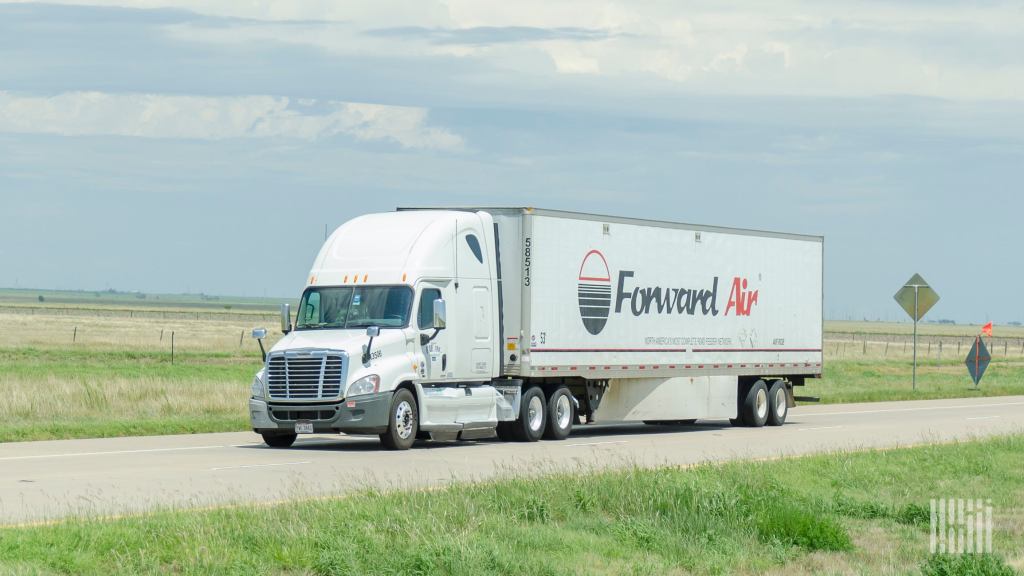
A white tractor pulling a white Forward Air trailer on a highway

The fate of a merger between Forward Air and Omni Logistics will likely come down to a court’s interpretation of whether Omni performed as required on its pre-closing obligations. Omni’s response to Forward’s counterclaim in the Delaware Court of Chancery on Monday shed more light on the dispute between the two parties.

Forward (NASDAQ: FWRD) has alleged that Omni failed to provide timely disclosure of financial updates and that its 2023 projections are below levels previously reaffirmed with lenders and deal arrangers. Forward has asked the court to let it out of the deal, citing a breach of the merger agreement. Omni disputes those claims and has called on the court to force Forward to the altar.

Omni said Forward’s assertion that it has breached pre-closing requirements is “a baseless pretext to back out of a transaction it no longer wishes to pursue but is legally obligated to close,” the filing read.

It said Forward wants out of the deal because of the pressure it is getting from shareholders, which have said the merger is too costly, adds too much debt and shifts control out of existing shareholder hands and into the hands of Omni’s stakeholders, among other things.

Omni’s 2023 EBITDA projections scrutinized

Omni said Forward is misrepresenting “a variety of performance and cost-save scenarios” as evidence that its 2023 projections are lower than what it confirmed in due diligence meetings.

Forward told lenders on Oct. 2, the day it closed on a $725 million notes issuance as part of the deal’s financing, that Omni would generate $167 million in adjusted earnings before interest, taxes, depreciation and amortization during 2023. However, it said a day later Omni’s CEO J.J. Schickel showed Forward Air CEO Tom Schmitt a slide that displayed a 2023 EBITDA forecast of just $111.2 million.

Forward said the projection was not presented as a “what if” or “no growth” scenario and it believes the number to be the company’s actual forecast. Forward said its analysis of Omni’s results showed just $73 million in adjusted EBITDA through the third quarter, presenting a large gap that would have to be bridged in the fourth quarter to achieve the full-year forecast.

The company said Omni repeatedly failed to provide its actual results as it wanted “direction” from Forward on interpreting “various assumptions.” Omni has said it needed assistance from Forward on the proper way to divide the expected EBITDA synergies the merger would produce. Forward claims the reason for the delay is that Omni’s prior “projections had been misleading.”

Forward said Omni restated numbers on Nov. 1 after filing its complaint in court. It said Omni lowered its full-year adjusted EBITDA forecast to $160 million and revised actual results for the first three quarters to total $115 million (from $73 million) “in an attempt to make this much higher projection appear more plausible.”

In the filing, Omni denied the allegations and said it “never misrepresented anything to the lenders.” It said it stands by its prior EBITDA projections and that its current 2023 forecast remains $160 million, which is “only modestly off the projection of $167 million that Forward provided the lenders in August.” It said that Forward also “has missed its own projections for 2023.”

“Forward’s attempt to transform its deliberate misreading of the ‘what if’ slide into a breach of the Merger Agreement only underscores that it has no basis to avoid its obligations,” the filing said.

Delays, lower projections result in ‘inadequate’ deal financing, Forward says

Forward claims Omni withheld requested financial information, which caused it to pull its full-year 2024 targets that were shared with lenders.

“Forward Air — without knowing the full and accurate extent of Omni’s outlook on its performance — negotiated a loan structure and loan terms that now appear to be inadequate for the transaction, as well as incompatible with the overall debt, leverage and risk profiles of the combined company.”

Forward said it will now have to “draw more heavily” on its revolving credit facility, which was only expected to backstop the deal. It said tapping the credit line could limit its ability to invest in and fund its other areas of operation. Forward said it would incur more debt at a higher cost if it revised the capital structure of the transaction. It also said it now faces a potential credit downgrade.

“Had Forward Air received Omni’s information when it was due, Forward Air would have realized that it needed additional financing in order to afford the transaction on the terms of the Merger Agreement,” the filing said. “That is, had Forward Air known that Omni’s adjusted EBITDA for FY 2023 was actually much closer to $111.2 million (which Omni now claims was never a projection), rather than the $167 million Omni repeatedly affirmed, Forward Air would have realized it would have difficulty paying for the transaction with the financing package it had negotiated.”

Omni said “these claims are meritless.”

The court is expected to hold a Jan. 19 hearing on the dispute.

More FreightWaves articles by Todd Maiden

Postal Service contractor to cut 450 jobs, close 2 facilities in California

Amid an ongoing financial dispute with the U.S. Postal Service, Matheson Flight Extenders (MFE), a mail processing, transportation and logistics contractor, plans to lay off more than 450 employees by Dec. 15 and close its mail sorting facilities in California.

Since mid-September, Sacramento, California-based MFE has filed three Worker Adjustment and Retraining Notification (WARN) Act notices with the California Employment Development Department (EDD) of the permanent layoffs of 72 employees, including truck drivers and material handlers, at its facility in San Leandro by Dec. 15. MFE is also closing two Surface Transfer Centers, which will result in job cuts of 124 workers by Dec. 5 in Sacramento. Another 257 workers were slated to be permanently laid off at its Long Beach facility by Nov. 13, although there was a possibility the timeline could be extended, according to the WARN letter.

As of publication, MFE did not respond to FreightWaves’ request seeking comment about whether the 257 workers in Long Beach had been let go.

Under the WARN Act, employers with more than 100 employees at a location must give authorities a 60-day advance notice of a planned closure and job layoffs.

MFE and Matheson Postal Services are wholly owned subsidiaries of Matheson Trucking. The family-owned entities, founded by Robert and Carole Matheson in 1962, filed for Chapter 11 bankruptcy in May 2022. MFE has been providing services to the Postal Service since December 1998. 

The filing listed both its assets and liabilities as between $10 million and $50 million. 

In August, MFE also announced it was eliminating nearly 1,000 jobs and closing its sorting facilities in Chicopee, Massachusetts, Atlanta and Brandywine, Maryland. 

Major sticking points between MFE and the Postal Service were over the two Surface Transfer Centers in Atlanta and Brandywine that were closed in late October. When MFE took over as the contractor for the mail sorting centers in November 2021, the contractor claimed the high-speed sorting equipment was not operational, around one-third of the loading docks weren’t functioning and the former operator’s staff had not been fully trained and few were retained with MFE after the transfer, according to court documents. 

As the Postal Service was facing its holiday peak mail delivery season, court filings state that it began immediately directing normal peak volumes of mail to the facilities that MFE had just taken over but weren’t fully functional. The Maryland facility experienced a 4-mile-long train of tractor-trailers waiting to unload mail at the facility due to an alleged planning flaw by the Postal Service, MFE claimed in court documents.

“USPS demanded that MFE take immediate steps to address these problems and ensure timely delivery of mail. Among other things, at USPS’s direction, MFE incurred significant costs to repair the facilities to make them fully operational,” according to court filings. 

As a result of ongoing issues, MFE negotiated a $15 million payment advance from the Postal Service to address problems, including the need for temporary labor to sort the mail by hand since the mail sorting equipment wasn’t operational. According to the deal reached between MFE and the Postal Service, MFE was to start repaying $300,000 per month starting in July 2022 with a balloon payment at the end of the three-and-a-half-year agreement. 

MFE claims it incurred nearly $24 million in reimbursable costs from the Postal Service associated with the Atlanta and Maryland mail sorting facilities but that it “balked” about reimbursing MFE for the “ramp up” costs to make the mail sites operational. 

While mediation has been ongoing between the parties since May, MFE claimed in a September court filing that over the previous 90 days the Postal Service “continued to either terminate or transfer to competitors several of MFE and MPS contracts.”

Court filings state that in mid-August MFE received notice from the Postal Service that its “$20-plus million claim could not be completed without further documentation and no decision on the claim could be expected before March 2024.”

Do you have a news tip or story to share? Send me an email or message me @cage_writer on X, formerly known as Twitter. Your name will not be used without your permission.

CEO fails to pay employees, carriers after Elite Transit collapse
Montana-based brokerage, trucking affiliate file for bankruptcy liquidation
‘Fraud, theft and abuse’ force Texas freight brokerage to shut down
Family-owned California trucking company ceasing operations after 95 years

Mississippi River isn’t rising but barge rates aren’t getting any higher

Water levels on the Mississippi remain low after a brief surge earlier this month, but rates for moving grain by barge on the river continue to defy any upward push.

The National Weather Service reported Wednesday that levels on the Mississippi River at Memphis, Tennessee, stood at minus 9 feet. Levels are expressed relative to a baseline. A reading of minus 11.52 feet last month was the lowest since recordkeeping began. The latest data from the National Weather Service does show improvement at Memphis over the next several days.

That negative 9 foot measurement recorded Tuesday was down from negative 7.63 feet on Nov. 15 and down significantly from negative 4.81 feet on Nov. 6.

Although this year’s water levels are on par with those of 2022, another year when drought impacted flows, barge rates are well below last year and have been in a relatively narrow range in recent weeks. 

According to the U.S. Department of Agriculture’s weekly Grain Transportation Report, the grain transport cost indicator for barge movements on the Mississippi was 275 for the week ending Nov. 15, the most recent figure available. The indicator is a percentage of the 2000 base year so 275 would be 275% of the base year.

A year ago, that indicator was 670. A month ago, it was 326 in the week ended Oct. 18 and was 366 a week before that. And for the week ended Oct. 19, 2022, it was a whopping 1,077.

There is other data that reflects that the barge industry is finding ways to move grain on the Mississippi and its tributaries without racking up enormous costs, many of which also are at low levels. 

For example, the USDA data said in the week ended Nov. 11, barged grain movements were 722,661 tons. That was an 8% increase from the prior week and 22% more than a year ago.

One potential reason for the ability of barge rates so far to defy the river’s reduced capacity is less grain is being exported. In the grain report published Nov. 9, the USDA quoted numbers on export sales that showed reductions in exports of wheat, corn and soybeans compared to last year, as much as 13%. If the grain doesn’t need to make it all the way down to New Orleans for export and instead remains in the U.S. for storage or processing, that could be putting less pressure on barge rates.

In its Oct. 19 Grain Transportation Report, the USDA noted the weak export market and the potential impact it was having on barge rates. 

“Up from earlier in the year, barge rates are still below average — likely reflecting low corn and soybean export sales to China,” the report said. “Despite low water levels in the Panama Canal, resulting in limited daily transits, ocean freight rates from the U.S. Gulf to Japan remain below average.” 

Mike Steenhoek, executive director of the Soy Transportation Coalition, has become one of the go-to voices on Mississippi River transport conditions. Earlier this month, when the river was rising, he sent an email blast noting that “due to the improved conditions, barge companies have increased the amount of freight (soybeans in our case) they are loading per barge.

“Channel width has also improved, allowing more barges to be attached together to form one unit,” he wrote. “That being said, we continue to see restrictions of approximately 15-25% due to the continued low water conditions.”

In a follow-up email, Steenhoek said this week there has been little change since that report.  “Barge companies continue to light load their barges and reduce tow sizes,” he said. “This obviously remains a concern for agriculture.”

American Commercial Barge Lines (ACBL), one of the biggest barge operators on the Mississippi, publishes regular updates on river shipping conditions. According to those reports, despite the continued low water levels, by some metrics shipping has improved.

For example, in its daily river conditions report for Oct. 19, ACBL reported that loading drafts northbound and southbound between Cairo, Illinois — where the Ohio River joins the Mississippi — and Vicksburg, Mississippi, were cut 28% and were reduced 24% between Vicksburg and the Gulf of Mexico. 

But in an update published Tuesday, the reduction was 24% northbound and 16% southbound between Cairo and the Gulf. ACBL said that results in a reduction of 400 to 600 tons per barge. 

Tow size limitations between the dates of those two reports increased slightly during that time, with some six-wide barges permitted. The limitation a month earlier was five-wide barges and that limitation does remain in effect for some shipments, ACBL said.   

More articles by John Kingston

STB’s Oberman rips into Union Pacific CEO Vena

Estes execs recap hack experience in unusual video presentation 

3PLs get fresh legal win in fight to block liability in truck accidents

STB extends deadline for additional feedback on proposed reciprocal switching rule

The Surface Transportation Board is extending the deadline for industry stakeholders to reply to feedback that the board received on its proposed rule for reciprocal switching.

Industry stakeholders can now take until Dec. 20 to respond to comments given by other stakeholders on the board’s notice for proposed rulemaking on reciprocal switching, which STB describes as a potential remedy to address poor rail service. STB extended the deadline by 14 days; the original deadline was Dec. 6. Meetings that stakeholders can conduct with the board will also be extended through Nov. 30. 
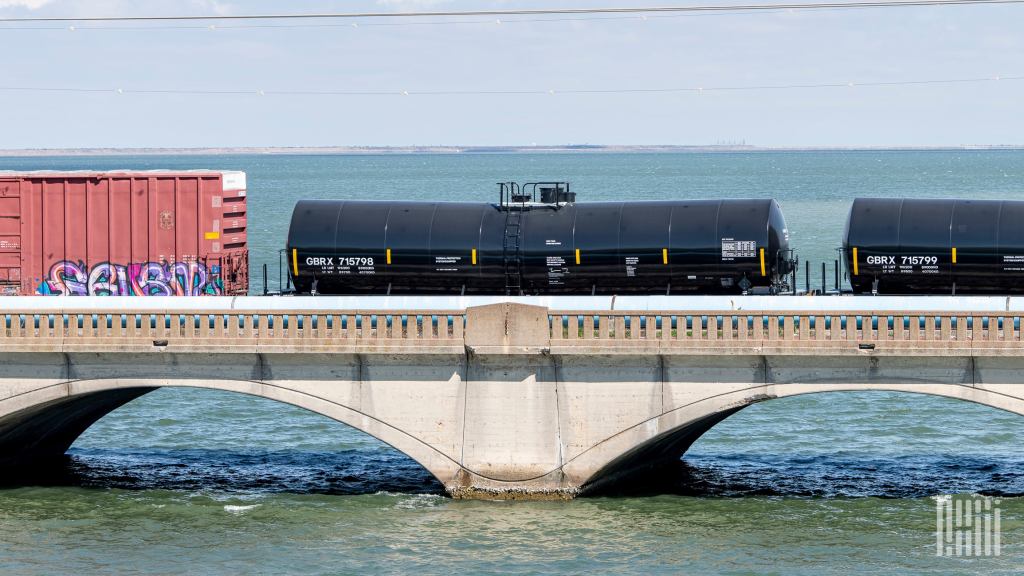
A group of rail shippers had approached the board last Thursday — with support from the Class I railroads — and asked for extending the reply deadline in light of all the comments that STB received on its proposal for reciprocal switching.
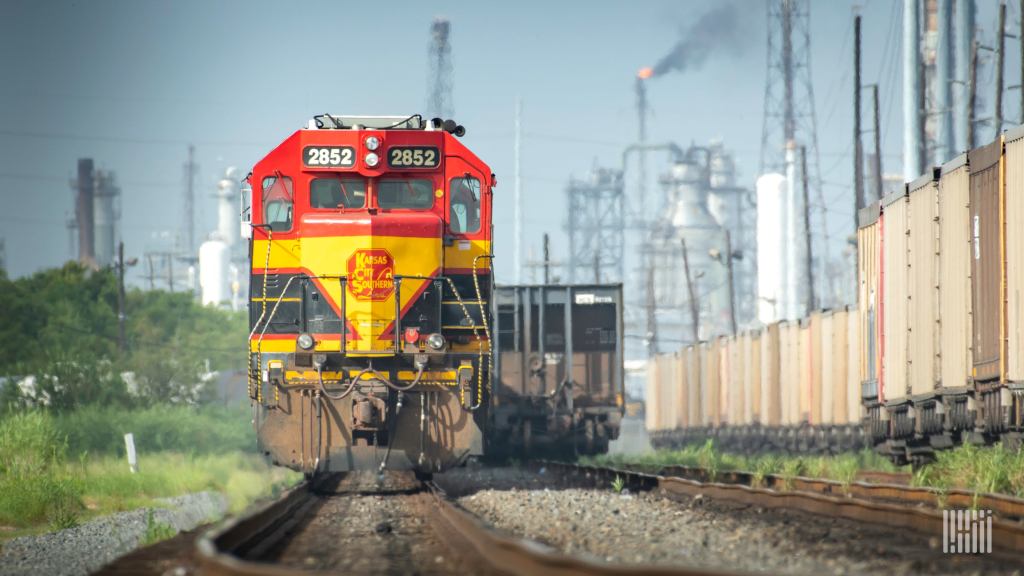
“The volume of comments submitted by the Railroads and other stakeholders is substantial. Stakeholders have submitted thousands of pages of documents in the opening round of comments that must be reviewed and considered by all interested parties, including the Board,” said attorneys representing the American Chemistry Council, The Fertilizer Institute and the National Industrial Transportation League (NITL). “A sufficient amount of time to respond to these opening comments is necessary to develop a record that will allow the Board to make a sound, informed decision.”

Reciprocal switching is a process that would grant a shipper with access to the network of another Class I railroad at an interchange, with the idea that the shipment would continue on the network of the competing Class I railroad because of lackluster service on the originating Class I railroad. 

The board first heard the calls to allow reciprocal switching in the U.S. more than a decade ago when the NITL brought the issue before the board in July 2012. 

Subscribe to FreightWaves’ e-newsletters and get the latest insights on freight right in your inbox.

Click here for more FreightWaves articles by Joanna Marsh.

Mexico orders railroads to prioritize passenger train services over freight operations

Mexico’s government issued a federal mandate this week forcing private railway companies operating in the country to offer passenger service over their normal daily freight runs.

Published in the Mexican government’s official gazette, Monday’s decree gives the country’s two main private concessionary rail operators — Canadian Pacific Kansas City (CPKC) and Ferromex — until Jan. 15 to present proposals for offering the passenger service themselves. If the two rail operators decline, the government will put Mexico’s army or navy in charge of lines designated for passenger services.

Mexico’s freight railway system is owned by the federal government and operated by CPKC and Ferromex under concessions from authorities.

“We made this decision because train travel will be more economical, comfortable and less polluting, since the tracks can be electrified,” Mexican President Andres Manuel Lopez Obrador said during a news conference Monday. “It is safer public transportation and the mobility of the population from the main cities of Mexico to the northern border will increase.”

The decree orders the use of more than 10,000 private rail lines in Mexico that primarily carry freight to establish four short intercity passenger routes, along with three long passenger routes from central Mexico to Mexican cities along the U.S.-Mexico border.

The longer routes include passenger service from Mexico City to the border cities of Nuevo Laredo and Nogales, along with passenger service from Aguascalientes to the border city of Ciudad Juarez.

Officials for Calgary, Canada-based CPKC (NYSE: CP) in a news release said it is “reviewing the draft decree … regarding potential passenger rail service on certain existing freight rail corridors.”

In May, CPKC reached an agreement with the Mexican government to carry out a study around passenger trains from Mexico City to destinations across the country.

“As required by our concession, CPKC de Mexico will work closely with the Mexican federal government to evaluate passenger service on that corridor,” CPKC said in a statement. “The draft decree emphasizes that the public freight rail service will be respected and as such, we do not expect an adverse impact on our concession. CPKC has extensive experience hosting passenger rail services in multiple locations across its network in the U.S and Canada while efficiently managing freight service.”

Mexico City-based Ferromex has not issued a public statement regarding the federal decree.

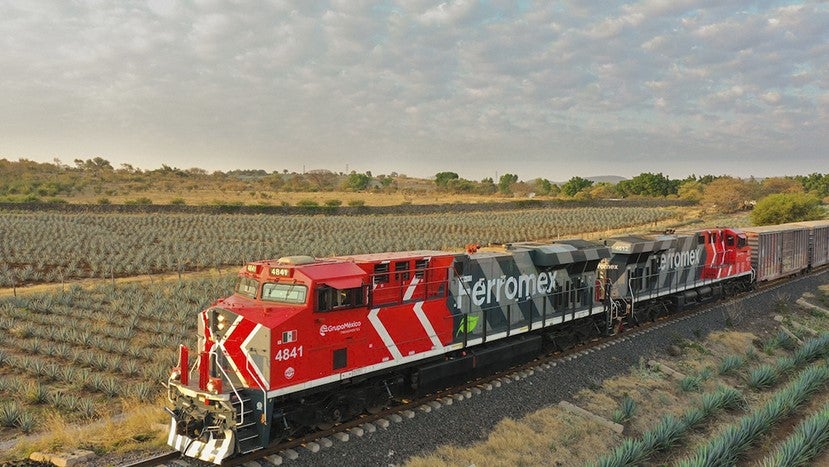
Automotive freight has been one of the biggest drivers of cross-border rail shipments between the U.S. and Mexico in recent years. Pictured is a train owned by Mexico City-based Ferromex. (Photo: Ferromex)

Business analysts said it remains unclear what impact the federal decree could have on freight operations across Mexico.

“The bottom line is we trust that [CPKC] management is better positioned to handle these dynamics than anyone, but it’s difficult to assess the impact to valuation from these headlines and potential outcomes given how important Mexico is to the overall growth story,” Deutsche Bank (NYSE: DB) equity research analyst Amit Mehrotra told clients on Tuesday.

In 2021, roughly 1.1 million carloads of freight were hauled by railways in Mexico, a 7% increase over 2020, according to a recent report from Statista.

According to the International Trade Administration (ITA), Mexico has made improvements to its rail infrastructure in recent years. The ITA is an agency in the Department of Commerce that promotes U.S. exports of nonagricultural goods and services. 

The current top three product sectors using rail service in Mexico by volume are industrial (47%), agricultural (26%) and mineral (10%).

“The rail cargo improvements coincide with the expansion of Mexico’s foreign trade,” ITA said. “One big driver of trade growth is the automotive industry (currently trains move seven out of 10 cars produced in the country, while a decade ago it was only three out of 10). Expansion of the oil and gas sector is a major emerging driver. Rail is already the main means of transporting fuels, cereals, minerals and metals.”

Click for more FreightWaves articles by Noi Mahoney.

More articles by Noi Mahoney

ITS Logistics making big moves in Lone Star State

Houston may restrict cargo truck movements inside city limits

10 Roads Express lays off 66 workers in Texas