’Tis the season for no peak season, how truck sails work and the puppy king – WTT

On today’s episode of WHAT THE TRUCK?!? Dooner is talking about a holiday season with no peak season. We’ll find out why transportation leaders expect a weak Q4 and what they’re saying about it this week. 

Did you hear there was a puppy playpen at F3 and someone paid all the adoption fees? Sean Laidacker from Loyalty Logistics is here to talk about why he liberated the puppies, what’s good at Loyalty Logistics and how to make the perfect Thanksgiving mocktail.

Trauxit’s Joe Stevens and Kevin O’Brien talk about how they’re paying carriers 7.5% more on average. We’ll find out how the Trauxit platform is empowering both shippers and carriers.

GLCS’ Nate Johnson shares strategies on navigating contentious carrier and broker relationships. 

Truck Sails’ Gayle Campbell-Andrus and Paul Andrus teach us how truck sails work, what they do, how they increase mileage and what the science is behind them.

Plus, gift card scams, how not to tow a trailer, holiday gift ideas, Vegas F1 issues and more. 

Watch on YouTube

Visit our sponsor

Subscribe to the WTT newsletter

Apple Podcasts

Spotify

More FreightWaves Podcasts

STB’s Oberman rips into Union Pacific CEO Vena

NEW YORK — Martin Oberman, chairman of the Surface Transportation Board, had several complimentary statements in his address Thursday to the RailTrends conference about progress in the nation’s rail sector. He called out several Class I CEOs by name for praise.

One who didn’t receive compliments was Union Pacific CEO Jim Vena, who assumed the role in August. 

In contrast to his RailTrends address last year, when his criticisms were more broad and not as company specific, Oberman — who announced at the end of his speech that he was leaving the STB — began his remarks with what could be viewed as praise. 

For example, he talked about “a number of positive developments across the network,” led by the acquisition of Kansas City Southern by Canadian Pacific to form Canadian Pacific Kansas City (NYSE: CP), a single system linking Mexico, the U.S. and Canada. That move, Oberman said, was likely to have led to other joint ventures in the industry, including the recent upgrade of intermodal service between BNSF and J.B. Hunt (NASDAQ: JBHT) and an agreement earlier this year among CPKC, CSX (NYSE: CSX) and short line conglomerate Genesee & Wyoming to create a direct interchange in Alabama that is targeted at improving service between Mexico and the U.S.  

But after praising by name such CEOs as Keith Creel of CPKC and the management of BNSF, Oberman turned his attention to Union Pacific (NYSE: UNP) and Vena. His primary criticism is that even as other companies have disavowed furloughs and layoffs as a regularly invoked tool, UP has gone a different way. Oberman said UP has had furloughs as recently as this week.

“In sharp contrast with the other railroads, his first few moves leave me concerned and bewildered,” Oberman said. The furloughs will “necessitate reducing previously budgeted maintenance during the last six weeks of this year by tens of millions of dollars.”

And if that cut in maintenance was in the budget for 2023, Oberman said, “presumably the budget makers determined that maintenance needed to be done.”

UP President Beth Whited pushed back against Oberman on Friday, the second day of the annual sold-out RailTrends conference in New York.  RailTrends is organized by independent Wall Street analyst Tony Hatch and Progressive Railroading.

Departing from her prepared remarks, she made reference to Oberman’s statements as having given the audience “the mistaken impression that there’s deferred maintenance happening at the end of the day.” She did not mention Oberman by name.

Whited said the normal maintenance program at UP is that track, tie and bridge replacement work starts in the calendar year in the southern part of the country and makes its way north. When it is completed, “we allow these workers to take the rest of the year off and then come back to work in January,” she said. “As we speak, there are thousands of workers doing inspections to keep the system safe.”

During a question-and-answer session, Whited said UP did furlough slightly less than 100 mechanical employees earlier in the fall, but all were offered opportunities elsewhere in the company. “A number of them took us up and said, ‘Yes, I’d like to work in another location,’” she said. “So the net furlough was not that many.”

UP is “actively hiring” in several locations, Whited said. Hiring is particularly difficult in areas with significant needs but where the population base isn’t high; North Platte, Nebraska, site of a giant rail yard, was cited as an example.

Oberman in his address returned to a familiar theme: Railroads, in this case UP, are too focused on shareholder returns to adequately service their networks.

He cited an email sent by the company to its workforce about the latest round of layoffs that said the cuts were as a result of “budget controls in today’s business environment.”

“In other words, the most natural explanation for these furloughs and reduction is to make the financials look better,” Oberman said.

“What’s troubling is that I fully expect that Wall Street analysts will know that these adjustments to the financial statements don’t reflect real improvement in performance,” Oberman said. “They’re just accounting maneuvers aimed at supporting the UP stock price.” 

That stock price has hardly been a high flier; in the last 52 weeks, it’s up about 3.3%. But that’s better than Norfolk Southern (down about 16.6%) and CSX (barely more than flat for the year).

Oberman said the furloughs are coming after UP has been the only Class I railroad to have service embargoes in the last year, a situation that led to Midwest congressional representatives asking the STB to take steps to ease the squeeze. 

Among the focus of Oberman’s praise was NS CEO Alan Shaw. Oberman said that on a recent earnings call, Shaw was “met with significant pushback from a number of analysts over a difficult financial picture this year, to a large extent caused by a unique event,” a reference to the East Palestine, Ohio, derailment in early February. 

During his presentation at RailTrends, Oberman referred to the “cult of the OR.”

According to a transcript of that earnings call, Shaw made the following statement that likely would have aligned with what Oberman was talking about: “Look, we’re committed to industry-competitive margins. We said that from the get-go. We’ve also said that returns follow the investment. We’re investing over the long term and we’re not going to chase short-term [operating ratio] targets.” 

Before Whited took to the stage at RailTrends on Friday, UP released a statement pushing back on Oberman’s comments, without identifying him by name. 

“Accusations that Union Pacific does not invest in its infrastructure and maintenance are untrue,” the statement said. “This year alone, the railroad will spend $3.7 billion on capital investment, of which a significant portion is allotted for maintenance.”

As to the furloughs, the UP statement said those moves are “part of the capital planning process.”

Oberman touched on some of the same themes as he did in 2022: spending too much money on distributing profits to investors and too little on infrastructure. He said in the last 14 years, railroads “have extracted $253 billion — that’s over a quarter of a trillion in profits — out of their businesses and sent them back to their shareholders in buybacks or dividends.” 

During that time, the Class I railroads spent only $40 billion on what he called “expansion capital,” which is not normal maintenance but would “add to the railroads’ capacity to operate faster and more reliably.”

UP’s current quarterly dividend is $1.30 per share. It was raised to that level from $1.13 at the end of May 2022. It has held at the $1.30 level for six consecutive quarters. That is a relatively long stretch compared to the historic UP dividend history, recently surpassed only by a seven-quarter stretch during the heart of the pandemic. 

At a yield of about 2.35%, it is about 20 basis points less than the payout at NS (NYSE: NSC) but more than 100 bps higher than CSX.

More articles by John Kingston

Estes execs recap hack experience in unusual video presentation 

3PLs get fresh legal win in fight to block liability in truck accidents

Tough freight market hits Echo’s debt ratings, down a notch at S&P

Running on Ice: Finishing the year cold 

Blue Truck on a sheet of ice over a blue background and Running on Ice Logo

Hello, and welcome to the coolest community in freight! Here you’ll find the latest information on warehouse news, tech developments and all things reefer madness-related. I’m your controller of the thermostat, Mary O’Connell. Thanks for having me!

All thawed out 

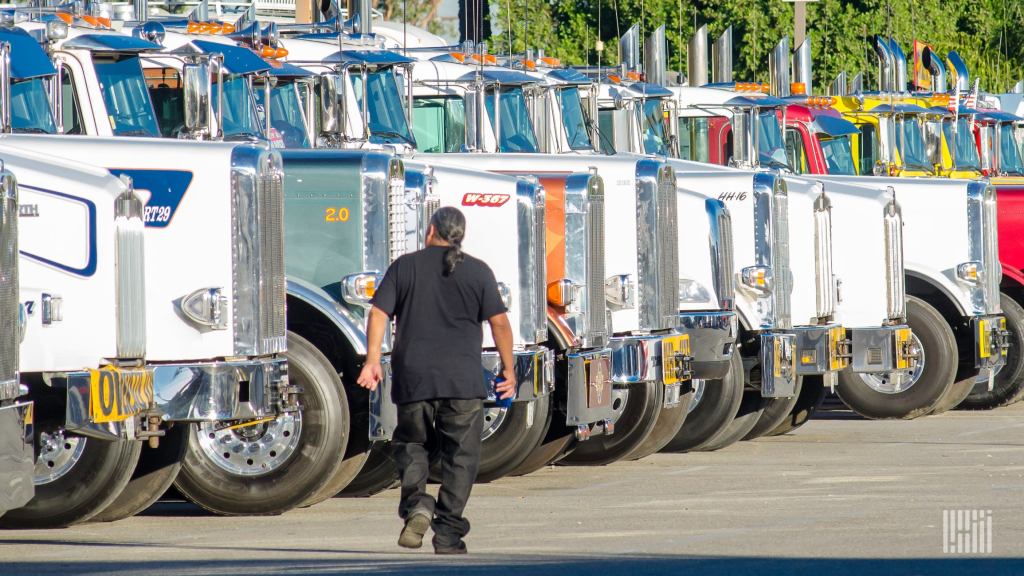
(Photo: Jim Allen/FreightWaves)

It may be a muted season for dry van loads, but the same cannot be said for new cold storage facilities. Since there are quite a few across the country celebrating breaking ground or completion, a roundup is in order. 

Breaking ground in Kansas City, Missouri, is Vertical Cold Storage. The new facility will be in south KC and will be more than 300,000 square feet and have about 50,000 pallet positions. The facility will also offer blast freezing and have four rooms that are convertible to minus 20 degrees Fahrenheit. The best part about the location is that it’s within 30 miles of BNSF, Union Pacific and Norfolk Southern terminals, meaning rail service to anywhere in the U.S. is an option. 

In the works is a new fulfillment center in Phillipsburg, New Jersey, for Flexport. The new facility will offer Flexport’s full suite of omnichannel services, including e-commerce fulfillment. Anticipated to be 1.1 million square feet, the new facility will give Flexport access to about 26% of the U.S. population and major transportation hubs in New Jersey and New York. While the company did have mass layoffs earlier this year, this new facility is part of its return to profitability plan. 

Grand opening time has come for Lineage as it opens a new Houston facility. The new warehouse is approximately 315,000 square feet and is the sixth location for Lineage in the greater Houston area. This facility is near the Jacintoport Terminal at Port Houston and is coincidentally named Houston ColdPort in the Lineage network. Houston ColdPort offers integrated and streamlined transportation and drayage operations to customers. 

Food and drugs

(Photo: Micron Biomedical)

Facing a fear of needles is about to be a thing of the past, at least in regard to vaccines. Micron Biomedical has received $23.6 million from the Bill & Melinda Gates Foundation to mass produce the first needle-free vaccine. This new technology could be revolutionary to the child vaccine industry. 

How it works is that there are dissolvable microneedles attached to a patch-like device. Basically the same way that a diabetic might apply a new blood-glucose monitor, someone could receive a vaccine. 

Current trials are happening in Gambia with the measles and rubella vaccine. If this new technology can be scaled up, it changes everything about the vaccine game. The patch technology reduces the need for cold chain distribution and doesn’t require a trained medical professional to administer the vaccine. 

Quoted in a Reuters article, James Goodson, senior scientist in the immunization division at the U.S. Centers for Disease Control and Prevention, said the technology “could help overcome some of the most substantial barriers to eradicating measles and rubella globally.”

Cold chain lanes

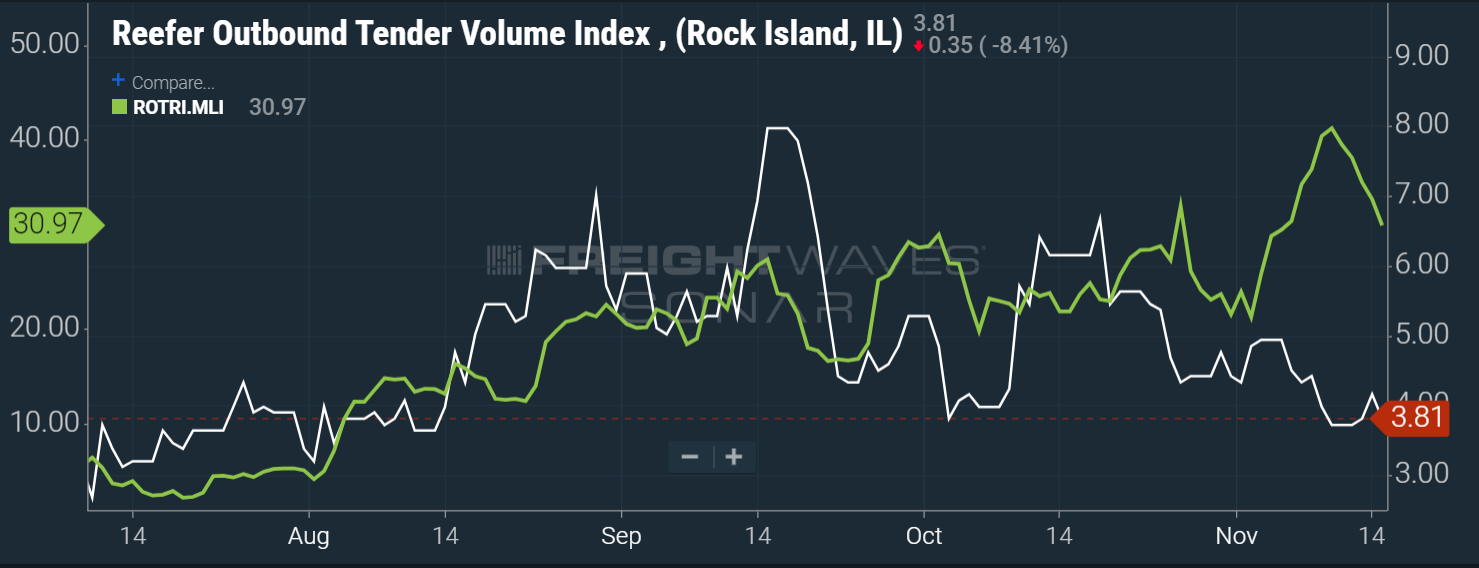
SONAR Ticker: ROTVI.MLI, ROTRI.MLI

This week’s SONAR market is Rock Island, Illinois, which, if you’re like me and unsure where that is, it’s the Quad Cities, where Illinois and Iowa meet. Outbound tender rejection rates in Rock Island are almost 3.5 times the national average for reefer outbound tender rejections, which is 9.4%. Rejection rates in the 30s signal that there are extremely inflated spot rates in the area. Rock Island isn’t a large market for reefer volumes, but what is there is going for top dollar. Carriers with any excess capacity should look at sending trucks to the Quad Cities, whereas brokers and shippers watch for low routing guide compliance and higher than usual rates. 

Is SONAR for you? Check it out with a demo!

Shelf life

Handyman Hints: The obstacle of what to do with your cold-storage room

UPS unveils integrated supply chain platform

Bite-Sized frozen meals 

Why rugged devices are the stone-cold solution for cold chain management

Pure Prairie Poultry launches new retail brand

Wanna chat in the cooler? Shoot me an email with comments, questions or story ideas at moconnell@www.freightwaves.com.

See you on the internet.

Mary

If this newsletter was forwarded to you, you must be pretty chill. Join the coolest community in freight and subscribe for more at www.freightwaves.com/subscribe.

CEO fails to pay employees, carriers after Elite Transit collapse

In retrospect, the signs were there that Elite Transit Solutions was in dire financial trouble. However, former employees say that when they raised concerns to CEO Michael D. Johnson about carriers not being paid or suddenly being blocked from posting freight on one of the country’s largest load boards, the entrepreneur “always had an answer for everything.”

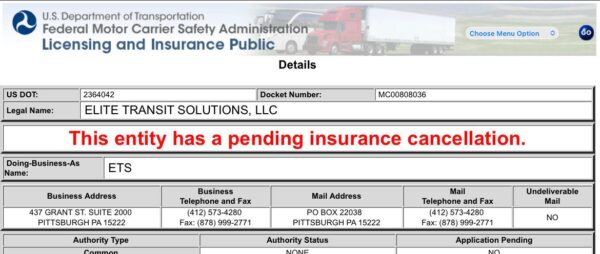
While Elite Transit Solutions, headquartered in Pittsburgh, hasn’t officially ceased operations, the company’s latest surety bond insurance through Allegheny Casualty Company is slated to be canceled on Nov. 22. It’s previous policy through Southwest Marine and General Insurance Company was canceled on Nov. 2. In order to operate a freight brokerage in the U.S., the Federal Motor Carrier Safety Administration requires brokers and freight forwarders to maintain a $75,000 surety bond. According to the FMCSA’s SAFER website, it doesn’t show that Elite Transit has obtained a new surety bond policy to continue operating.

An Elite Transit spokesperson wrote in an email to FreightWaves that “there are still employees” working at the freight brokerage. After initially firing the majority of Elite Transit’s remaining workforce via Microsoft Teams on Nov. 3, which ex-employees stated was around 65 employees, Johnson kept on around 10-12 employees. However, most of them have since been laid off. Elite Transit disputes the number of employees who were fired via Teams but failed to provide a different number.

As of publication Friday, Johnson sent out an email to former employees who haven’t received their final paychecks for two weeks’ work and accrued time off, which were due Nov. 10. Johnson’s email, obtained by FreightWaves, said, “At this moment, it is looking like we can get the payroll released in the next couple of weeks. The main variable upcoming is Thanksgiving and Black Friday.”

While Johnson, who founded the logistics company in 2013, initially agreed to speak with FreightWaves about the ongoing financial situation at Elite Transit Solutions, he later declined multiple requests for comment about the company’s operating status. Kushal Dave, who serves as general counsel for Elite Transit, has also declined numerous requests for an interview about what led to the freight brokerage’s precarious financial situation.

Those who stayed on an extra week to help Johnson, as they were reportedly told there was a promising deal in the works but that he couldn’t disclose more details because he was waiting for the papers to be signed, are owed three weeks’ pay after the deal apparently fell through. Elite Transit disagreed with the ex-employees statements that a potential deal fell through but declined to provide additional details about Elite Transit’s next steps.

“We knew things were bad but he strung us all along with the belief that he was signing these contracts, that he was selling a portion of the company to a private-equity firm, which we were told was going to inject the funds into the business so everybody’s jobs will be saved,” said one ex-employee, who spoke to FreightWaves on the condition of anonymity for fear of retaliation.  

One source familiar with the situation alleges Johnson couldn’t come up with the funds needed to make the final payroll and is now dodging ex-employees’ questions about when or if they will be paid.

FreightWaves obtained a copy of the Microsoft Teams video call on Nov. 3 in which Johnson fired an unspecified number of staff members but didn’t allow them to submit questions using the chat function and muted their microphones so they weren’t able to ask questions.

After stating that employees who worked in Elite Transit Solutions’ satellite offices in Charlotte, North Carolina, Chicago and Phoenix needed to return their company-owned equipment by Nov. 8, he offered his support and volunteered to reach out to his “rather large network” for ex-employees needing jobs.

“It’s a very tough situation, a very tough time in the industry and in the economy as well,” Johnson said on the video call. “If you need a letter of recommendation or support in obtaining new employment, I want to be personally here to help you. Please feel free to reach out to me directly. If you don’t have my cellphone number, please feel free to message me on LinkedIn.”

Further pouring salt in the open wounds of the employees Johnson had just fired, he closed out the video call by stating, “I hope you guys have a great weekend. I’ll talk to you soon.”

One ex-Elite employee told FreightWaves, “Just do the right thing. Is it that hard to do the right thing in 2023? It really shouldn’t be that difficult — just pay us.” 

On Tuesday, one ex-Elite Transit employee asked if the fired workers could expect paychecks soon.

“Like many others who need these final paychecks to buy Christmas presents for their families, Michael Johnson fed me and others a line of BS. … ‘I got great news but the papers aren’t signed yet. Blah, blah, blah.’”

Ex-employees describe ‘crisis mode’ in final months

A common theme among ex-employees at Elite Transit’s four offices was that the freight brokerage was in crisis mode during the final months of operation. Some former employees claim Elite Transit’s financial problems started back in 2021.

“We received calls from potential customers wanting to do business with us but we had to turn them away and were told to call them back in 60 days because our finances were in such terrible shape we couldn’t service any new accounts,” a former employee, who didn’t want to be named for fear of retaliation, told FreightWaves.

The death knell for Elite Transit was when former brokers allege DAT Freight & Analytics, one of the trucking industry’s largest load boards in North America, blocked the company’s ability to post freight on its load board because so many carriers had filed complaints about the company’s failure to pay them.

An Elite Transit representative denied claims by ex-employees that DAT blocked Elite Solutions from being able to post freight on the Oregon-based company’s load board.

While a DAT spokesperson said the company doesn’t comment on specific customers, it said in a statement to FreightWaves that it does “take the responsibility of providing DAT business services to our customers who rely on us to run their business very seriously and require strict adherence to our network governance policies.”

DAT continues “to make substantial investments in our Network Integrity Unit, which sets compliance policy and responds to every customer concern, as well as deploying our AI-powered technology to help keep bad actors off our network,” the statement said.

Prior to the layoffs, former Elite Transit employees said the majority of the inbound calls were from countless carriers owed thousands of dollars for loads they delivered but were never paid. 

Former employees claim they were instructed to transfer the calls to the billing department. They claim few people answered the phones or responded to emails from carriers requesting payment.

“We were cut off by almost every factoring company you can think of,” the ex-Elite Transit employee told FreightWaves. “It got so bad that the factoring companies were taking money back from the carriers because the contract was between the factoring company and the carrier, not with Elite. We heard from carriers that were forced to close their trucking companies, including one that had to sell his business and his home because we hadn’t paid him. We received an email from the wife of a carrier owner whose husband attempted suicide and blamed Elite for not paying him.”

One trucking company owner with eight trucks is owed for loads his small trucking company hauled in May and June. While Irhad Kapidzija, owner of Aquida Trans LLC of Manchester, New Hampshire, had an agreement with Elite Transit to be paid within a 45-day time frame, it didn’t happen. 

“We initiated numerous communications with Elite Transit Solutions to request updates on the outstanding payments,” Kapidzija wrote in an email to FreightWaves. “However, our inquiries were met with a lack of transparency and misleading statements as they were unwilling to provide concrete payment dates.”

Kapidzija alleges he then tried to file on Elite Transit’s bond, but his company’s efforts were unsuccessful. 

“They [surety bond company] were instructing us to contact Elite Transit for payment resolution. Our response to this directive was to reiterate that our pursuit of payment from Elite Transit was met with repeated failures and it was the responsibility of the surety bond provider to ensure payment to carriers in the event of non-payment by the broker. However, their response was disheartening, as they asserted that according to the policy listed on their claim form, they would only consider payment in the case of Elite Transit’s insolvency or a legal judgment and advised us to be patient,” Kapidzija said.

The Aquida Trans owner said he reached out to Elite Transit Solutions one more time via email on Sept. 23 and was advised there were no updates regarding the payment status. 

A former Elite Transit employee said when irate carriers called or emailed about when they could expect to be paid, they were to tell the carriers that their “payment was in the queue,” when in fact no payments to trucking companies were being processed.  Carriers still owed money claim they received “payment is in the queue” emails from Elite Transit.

“What drew me to want to work for Elite Transit was a slogan that Michael [Johnson] used all of the time. … ‘F—k ordinary, be legendary,’” one former employee told FreightWaves. “Oh, he’s going to be legendary by the time this is all over but in a different way.”

Read related article here: Pennsylvania brokerage lays off nearly 65 employees, sources say

Do you have a news tip or story to share? Send me an email or message me @cage_writer on X, formerly known as Twitter. Your name will not be used without your permission.

FreightWaves’ Grace Sharkey contributed to this report.

Montana-based brokerage, trucking affiliate file for bankruptcy liquidation
‘Fraud, theft and abuse’ force Texas freight brokerage to shut down
Family-owned California trucking company ceasing operations after 95 years
40-year-old Montana trucking company, freight brokerage shutters operations

Torc tackles beyond-the-truck autonomous issues

How will the “personas” of dispatchers, maintenance technicians and roadside assistance change as autonomous trucks arrive? Torc Robotics is working with major fleets to find out.

Torc differs from its major competitors in preparing to launch fully integrated autonomous Freightliner Cascadias into commerce.

The independent subsidiary of Daimler Truck moves deliberately. Aurora Innovation and Kodiak Robotics target late 2024 for their first commercial routes with driverless trucks. Torc is looking at 2027.

“I have a lot of respect for the other folks in the industry,” Andrew Culhane, Torc chief strategy officer, told me in an interview this week at Torc’s testing center in Albuquerque, New Mexico. “Most of us have been in self-driving together for 15-plus years. Everybody has a different definition of what commercialization really means to them.”

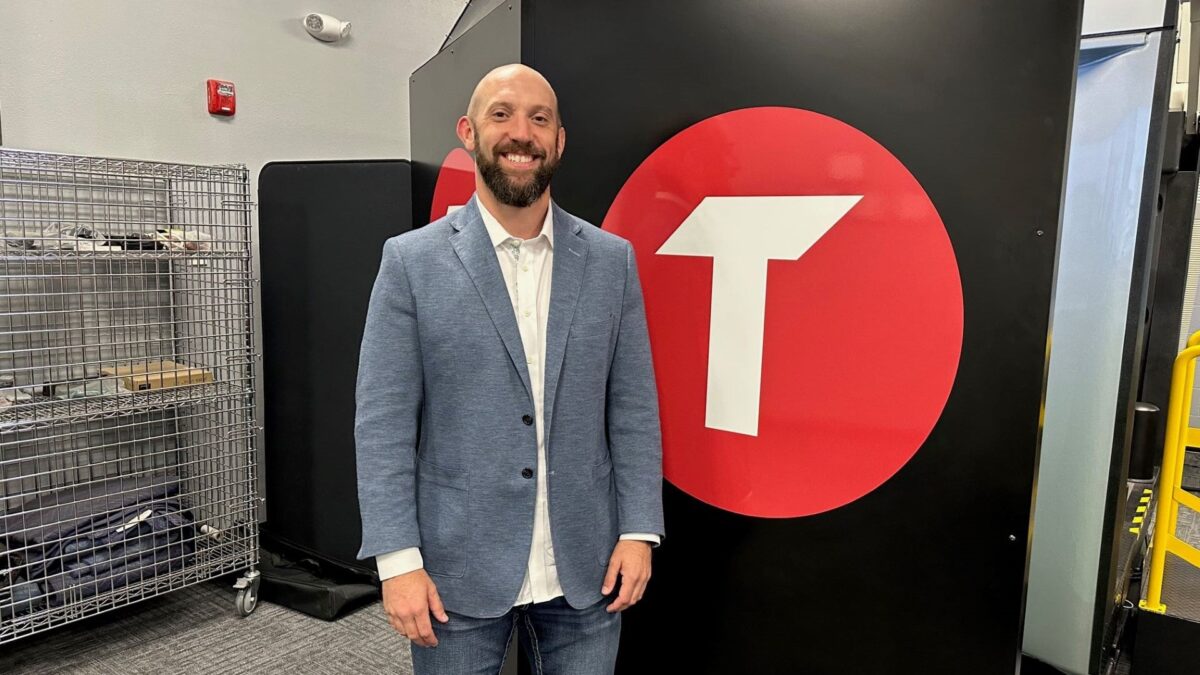
Andrew Culhane, Torc Robotics chief strategy officer and an original “Torcer.” (Photo: Alan Adler/FreightWaves)

Culhane is an original “Torc’r,” a nickname accorded employees of the company then-graduate student Michael Fleming co-founded at Virginia Tech University in 2005. Fleming stepped down as CEO after 17 years in August 2022 but remains on the Torc board.

The Blacksburg, Virginia-based company became part of Daimler in 2019 when the truck maker acquired a majority stake for an undisclosed amount. The transition from a technology and product emphasis to creating a business began when Daimler installed Peter Vaughan Schmidt as CEO.

‘What is it actually going to take?’

“We go pick up a trailer. We move it from A to B. Sure, we’ve done something, but that’s not true commercialization,” Culhane said. “Over the last 12 months, it’s less of a conversation about the truck itself. Now [it’s] OK, ‘What is it actually going to take to run these assets?’

“There’s plenty of people who can move freight for you,” Culhane said. “It’s a question of ‘Can we enable the fleet to run autonomous trucks?’”

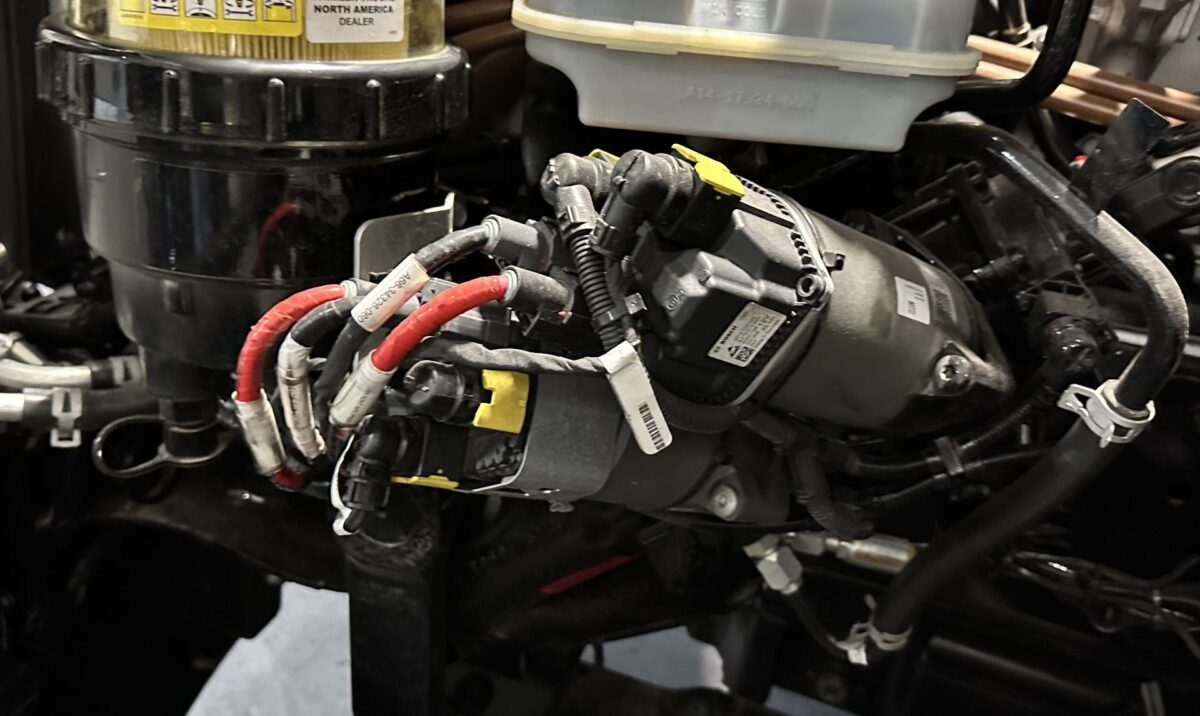
The arrival from Portland, Oregon, of the first fully redundant Cascadia chassis at Torc’s testing center in a former car dealership in Albuquerque addresses part of the question. Seamless duplication of braking, steering, low-voltage power and other key components stand in where a human might take over in case of a failure.

Redundant steering is just one of the duplicate systems needed on a driverless truck. (Photo: Alan Adler/FreightWaves)

‘10 different big chunks of things’

Culhane focuses on the “10 different big chunks of things” that have to be ironed out before Torc can scale a commercially profitable business. 

“How do we move customers from left to right to where they can say, ‘Yeah, I can own that asset, I can run it, I can maintain it, I know how to dispatch it. It plugs into my TMS [transportation management system]. If you don’t answer all of those questions, it’s not commercial-ready. It’s the next great demo or it’s a neat pilot.”

The traditional jobs surrounding freight operations will change. What new skills must a dispatcher acquire? What would roadside assistance look like? Who would supervise driverless trucks to keep them running as intended?

Helping customers take advantage of autonomy

“I think we’ve hit that tipping point of, ‘OK, the serious players are going to get there.’ Now they want to know how they’re going to take advantage of it.”

Torc is in the enviable position of having access to Daimler’s market-leading Freightliner customer base. Two of those customers, Schneider and C.R. England, run 1,000-mile safety driver-monitored test runs from Phoenix to Oklahoma City.

Big fleets that Daimler dominates are just part of Torc’s business plan.

“When we talk about scale, there’s scale with them,” Culhane said. “But the industry is much bigger than them.”

Truck Tech episode No. 41 features Joanna Buttler, Daimler Truck head of autonomous technology; Peter Vaughan Schmidt, CEO Of Torc Robotics; and Andrew Culhane, Torc chief strategy officer.

Three years of questions

It will take the next three years for Torc to influence and adopt the policies, procedures and standard operating efficiencies for autonomous trucks. How do you couple and decouple an autonomous truck? How do you inspect them?

“Putting those pieces together is where we think our part of the equation is,” Culhane said. “And then partners can step in and fill in more.”

Torc’s model is strictly hub-to-hub autonomy. But rather than build out its own transfer points, the company wants to leverage customer facilities. Schneider and C.R. England both have facilities at either end of the Phoenix-to-Oklahoma City test route.

More carriers will stand up facilities when Torc starts moving freight 430 miles without drivers from the U.S.-Mexico border city of Laredo, Texas, to Dallas in 2027.

“We don’t want to think of this as the Atlanta airport-size thing that everybody has to run through,” Culhane said. “We want to distribute that out. Take Dallas-Fort Worth. To truly access that market without owning 500 acres of real estate, you would need 10 locations around Dallas just to make the drayage legs work.”


Electric truck cola wars

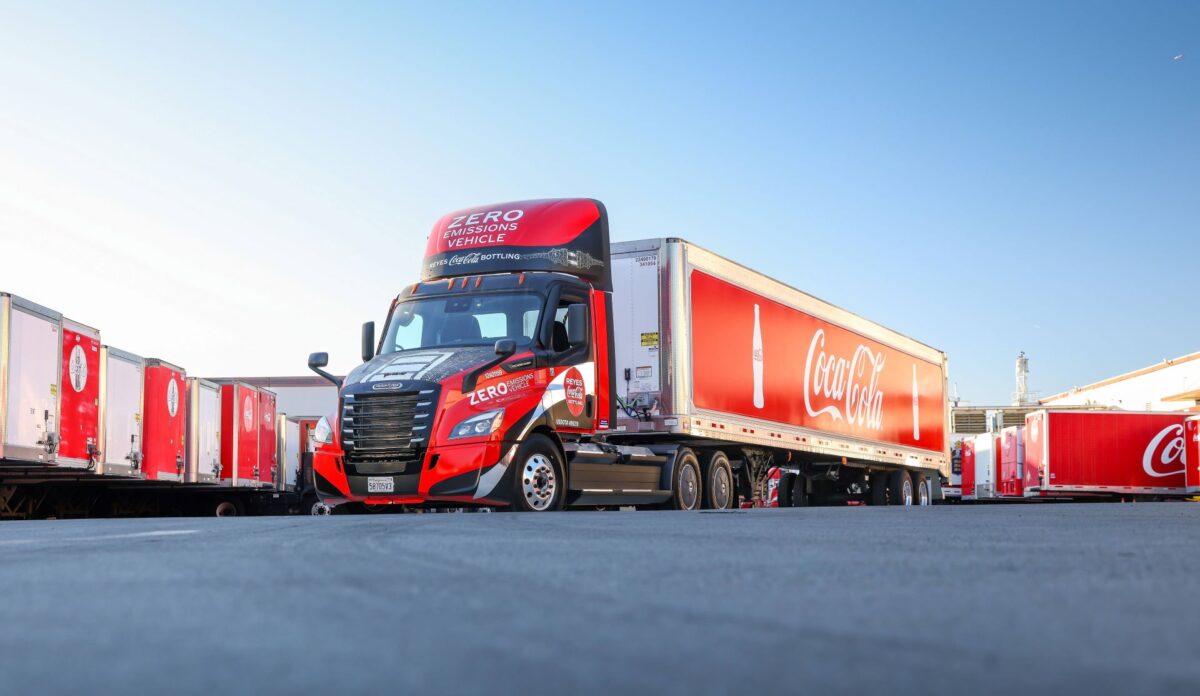
Daimler Truck North America delivered 20 Freightliner Class 8 eCascadia day cab tractors to Reyes Coca-Cola Bottling, a West Coast and Midwest bottler and distributor of Coca-Cola brands. 

The beverage industry is a burgeoning market for battery-electric vehicles. The Tesla Semi hauls Pepsico products in California. The Volvo VNR Electric moves Coke products in Canada. And BYD and Nikola teamed up on beer runs for Anheuser-Busch before a Super Bowl in Los Angeles in February 2022.

The eCascadias rely on 20 Detroit eFill commercial charging stations installed at its Downey, California, facility. Reyes is also using Detroit Charger Management System, software that lets the company see where its electric trucks are and manage them to reduce operational costs.

Food distribution giant Sysco Corp. signed a letter of intent in May 2022 to purchase up to 800 eCascadia tractors through 2026.

Daimler Truck North America delivered 20 Class 8 eCascadia tractors to Reyes Coca-Cola Bottling along with software and consulting services. (Photo: Daimler Truck North America)

Range e-trailer puts up big mpg savings numbers in testing

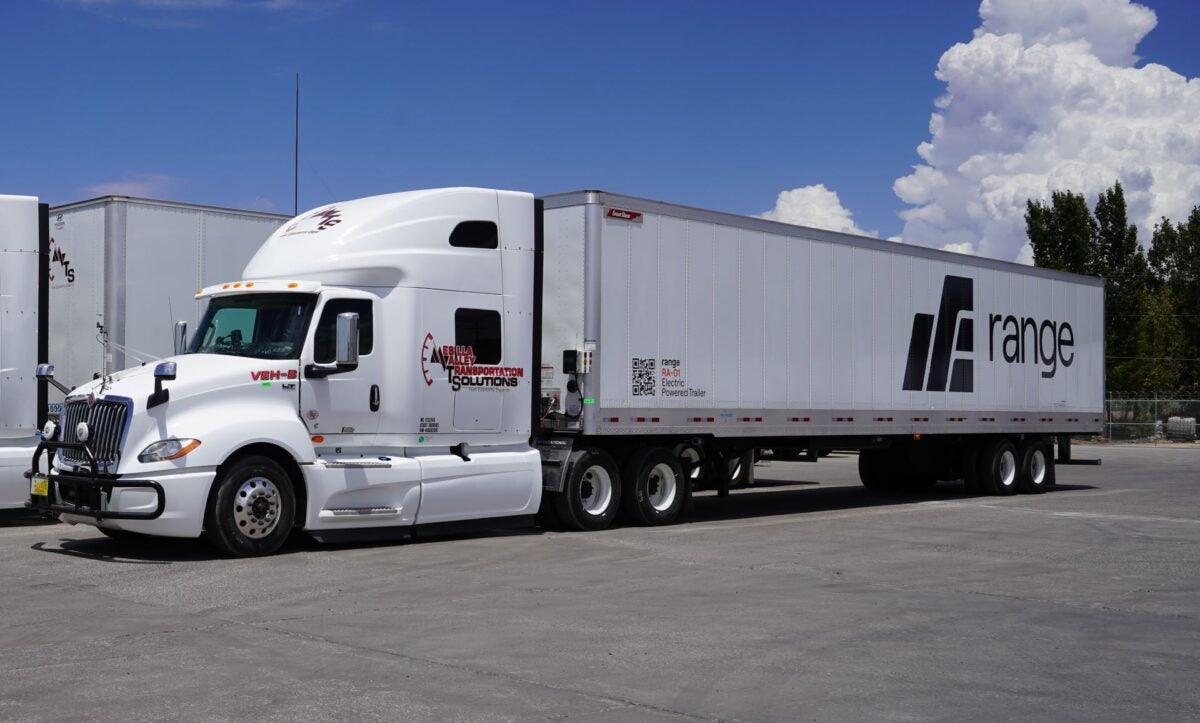
Electric-powered trailer startup Range Energy reports that preliminary third-party real-world testing results showed its technology enables up to 36.9% fuel efficiency gains — 3.25 mpg — for semi trucks.

The testing occurred on a 25.5-mile urban/highway loop with a top speed of 60 mph and a gross vehicle weight of approximately 59,000 pounds. Stop-and-go and steady speed scenarios accounted for variables such as wind, climate, load, duty cycle and driving behavior.

“Achieving 36.9 percent efficiency improvements proves to the trucking industry how important and overlooked trailers are to enhancing efficiency and lowering emissions for our industry,” said Ali Javidan, Range Energy CEO and founder.

“Range is the first electrification platform to actually prove this level of efficiency benefit, and we anticipate these numbers will only improve as we begin testing with production-quality parts versus prototype components,” Javidan said.

Range Energy reported 36.9% fuel efficiency improvement in testing its electronic trailer. (Photo: Range Energy)

Briefly noted …

Networked charging solutions provider ChargePoint replaced its CEO and CFO in a top-of-the-house shakeup. 

European trucking OEM Iveco and autonomous trucking developer Plus will launch a driver-supervised pilot in Germany in the first half of 2024 with the continent’s largest retail chain and DSV, a leading transport and logistics provider.

California Truck Centers will sell and service the Class 4-5 zero-emissions Rizon cabover trucks — engineered by Daimler Truck — at six of its eight California locations.

Orange EV has produced its 1,000th pure-electric terminal truck. It has amassed more than 11.8 million miles and 4 million hours of operation over eight years.

4 Gen Logistics is launching construction for the first phase of a plan to install 60 350-kilowatt chargers at its Port of Long Beach, California, facility.  

The Eaton Cummins Automated Transmission Technologies joint venture is making its Endurant XD automated manual transmission available in select Kenworth truck models in Mexico and Latin America.


That’s it for this week. Thanks for reading. We value your feedback. Please write aadler@www.freightwaves.com with comments and story suggestions. Click here to get Truck Tech via email on Fridays. And catch the latest in major events and hear from the top players on Truck Tech at 3 p.m. Wednesdays on the FreightWaves YouTube channel.

Class I railroad executives outline plans to bolster rail service

The ongoing theme of improving rail service as a means to capture market share away from trucking again appeared in comments from Class I railroad executives speaking at recent investor conferences.

To frame the discussion around rail service, CSX executives started by looking at what factors and conditions led market share away from rail to truck.

The railroads need to demonstrate that the service they provide is consistently reliable, according to CSX President and CEO Joe Hinrichs. who pointed to situations in which the railroads historically hauled greater volumes of motor vehicle components such as frames and sheet metal but because of inconsistencies in rail service, those volumes shifted away from rail and to other transportation modes.

Providing excellent service should be “the foundation of any discussion around growth,” Hinrichs said at Baird’s investor conference on Nov. 8. “We have industry-leading service levels, but we know there’s a lot more we can do. We’re not anywhere satisfied with where we are. We know we can get better.” 

CSX CFO Sean Pelkey, speaking at Stephens’ investor conference on Tuesday, echoed Hinrichs’ remarks.

“I’ve been to several customer locations over the years. And every time I go, I’m really frustrated because I look at the number of truck bases they’ve got and all the outbound product getting loaded up into the trucks and the empty rail cars are sitting right next to them,” Pelkey said. 

“But you just see the amount of opportunity that’s there. Most of the plants that are rail served, in many cases, are also truck served. So in some cases, those plants that might be running 50-50 rail and truck, can they very quickly shift to 60-40 rail? Absolutely. If we’re running well for 30 days, those kinds of shifts occur. And you know what, if we’re not running well for 30 days, they’re going to shift right back to truck very quickly,” Pelkey continued. 

Other Class I railroad executives also identified the need to improve rail service.

Customers “frankly need to see rail service [reach] targeted levels through an economic cycle,” said NS President and CEO Alan Shaw at the Stephens conference Wednesday. “There are a lot of customers right now who would want to ship more with us today if we could present the capacity to them. … I know there’s a lot more out there as we continue to demonstrate our ability to deliver good service in an economic cycle.” 

Union Pacific CEO Jim Vena noted that providing excellent service can mean different things to different customers. What parcel companies might define as excellent service may differ from what bulk customers may want. Some customers might want UP’s trip compliance to be in the high 90s, while other customers might place a premium on how fast UP can turn rail cars, Vena said Tuesday at the Stephens conference.

“I know that we can grow this business. If you go around our network, there are so many things that we can do to leverage it. We have to understand that not only can we win when we’re competitive against other railroads — if we’re the best and we have the best margin … but we can grow with our customers and we can leverage our network that we have and the kind of products that we move and in Mexico,” Vena said.

How the railroads plan to bolster rail service

To improve rail service, Hinrichs said one way is to focus on the outlying factors.

“It’s not just did your car load or did your intermodal train get there on time, but also were we there when you need us to load empties,” Hinrichs said. “We need to reduce the standard deviation of outliers. If we get there 90% of the time but the other 10% [is] five days late, that’s a huge problem, right? It’s not just on the averages. We’ve got to narrow the standard deviation of our performance.”

Moving data onto the cloud can also be a way to enable more efficient real-time decisions and help CSX (NASDAQ: CSX) improve its trip plan compliance in the next 24 to 72 hours, Pelkey said. 

“There’s more meat that needs to be put on the bone in terms of the way that we share that with investors and that will come in time. But our investment in technology has gone up a little bit,” said Pelkey, who pointed out those investments help bolster rail safety through autonomous track inspection and predictive technology to ensure locomotive health.

According to Vena, one key advantage that UP (NYSE: UNP) has over its peers is speed. The railway can run up to 70 miles per hour on certain stretches of its network, including from Omaha, Nebraska, westward. Another advantage is UP’s access to six gateways at the U.S.-Mexico border, as well as its 26% ownership of the FXE Railroad in Mexico. 

UP needs to optimize its accessibility to West Coast ports 一 and not just focus on the ports of Long Beach and Los Angeles, but also partner with others in Portland, Oregon, Seattle and Oakland, California, Vena said.

As Vena alluded to during UP’s third-quarter 2023 earnings call in October, the railroad is also seeking to streamline decision-making within the company by enabling those closer to day-to-day operations to make operating decisions. The company recently said it targeted layoffs of 5% of its 5,600 managerial employees as a way to reduce the bureaucracy in UP’s decision-making process.

“We had nine layers to go from myself down to the people … doing the work in the operating department. There’s no way that you need that many people,” Vena said, adding that those laid off were offered positions elsewhere in the company, including some unionized roles as locomotive engineers and conductors. 

Vena described decision-making at a level closer to day-to-day operations as a way of shifting the company culture. “You frame exactly what the authority is. You let people have that authority. You let them make it at the right level. The young man who today works at El Paso has a way better idea of what the impacts are. And if he understands [that] the goal is to provide the service we sold to the customer … as efficient[ly] as possible, when he’s … seeing what traffic has come to the border for the day, he has a way better idea to be able to say, ‘How do I use those crews in a better manner?’”

That effort to change company culture, coupled with day-to-day operational goals such as running longer trains and sweating assets, also helps UP maintain productivity during times of economic downturn, according to Eric Gehringer, UP executive vice president of operations.

When UP is sweating its assets, “you’re really trying to figure out with every day and every decision that’s made, how do you do that better today than you did yesterday?” Gehringer said at the Stephens conference.

Class I rail executives look ahead

Executives were hesitant to speculate when macroeconomic conditions might improve in 2024. 

Geopolitical instability globally is another factor that could weigh on the railroads’ marketing prospects, according to Shaw. But the e-commerce peak, which occurs after Thanksgiving, should provide NS (NYSE: NSC) with a boost. 

Nonetheless, despite next year’s uncertainties, “we have the capacity to handle more business and we’re attracting more business,” Shaw said, noting that in the last six to seven weeks, NS is seeing volumes at levels not seen in 18 months amid improving network fluidity. 

Vena said UP aims to outpace growth in the industrial economy. 

“We need to be excellent at service so that our customers and other customers that look at the railroad industry say, ‘We want to be on the railroad.’ That’s where our growth is going to be and the business is out there. … So where would I be happy? I think I’d be happy that we grew faster than what the industrial economy gives us. And that’s a goal to start off with. That would not be my long-term goal, but let’s get there first.”

As for a longer-term view of where UP plans to position itself in the next three to five years, the railway is considering hosting an investor day sometime in the back half of 2024, according to CFO Jennifer Hamann, who noted that will depend on where the economy shakes out. 

Meanwhile, CSX and NS executives pointed to future industrial development opportunities in growing population areas such as the U.S. Southeast.

This dynamic of industrial development “is as exciting as it’s been in my nearly 20-year career at CSX. I don’t think we’ve seen this much activity in those two decades,” Pelkey said.

Potential opportunities in 2025 and 2026 for CSX could come from automotive production plants in the Southeast, such as the Rivian plant outside Atlanta, the Ford plant outside of Memphis, Tennessee, and the Hyundai plant in Georgia, according to Hinrichs, who said hauling aggregates because of construction activities is another potential opportunity for CSX.

Shaw also noted manufacturing growth in the Southeast as well as the Midwest. For instance, the electrical vehicle market is worth $70 billion in North America, with $30 billion of that occurring near NS’ network.

“I’m really confident that we’re going to have a lot of strength in our merchandise franchise going forward because of onshoring,” Shaw said. 

Recently announced partnerships among the railroads, such as NS’ partnerships with Canadian railway CN and Florida East Coast Railway, could also help to grow rail volumes, according to Shaw. 

“We have to think of ourselves as competing in this supply chain ecosystem. And if all we’re doing is throwing costs over the fence at a customer or a short line partner, that end-to-end solution probably isn’t going to be effective, and it’s probably not going to win versus truck. We’ve got to partner with them to make that interface much more efficient. And that’s ultimately how we’ll win,” Shaw said. 

Subscribe to FreightWaves’ e-newsletters and get the latest insights on freight right in your inbox.

Click here for more FreightWaves articles by Joanna Marsh.

Amazon Freight Partner’s remarkable rise in global trucking industry

In a short span of time, Amazon Freight Partner (AFP) has evolved from a modest venture into a global logistics powerhouse. Starting with just 13 partners less than four years ago, its operations now span seven countries, partnering with more than 300 small business owners.

This impressive growth trajectory was a key topic in a fireside chat at the F3: Future of Freight Festival, where Kristin LeBlanc, head of marketing and acquisition at AFP, joined Thomas Wasson, FreightWaves’ enterprise trucking carrier expert, on Nov. 8 in Chattanooga, Tennessee.

Since publicly launching in 2021, AFP has seen significant expansion, growing from a modest network with about 100 drivers employed by small business owners to a formidable one employing more than 7,000 within its network. Its scale now mirrors that of a major national trucking carrier.

Central to AFP’s strategy is empowering entrepreneurs in trucking. By providing essential resources like trucks, maintenance services and training, AFP enables these partners to focus on key aspects, such as hiring drivers and managing operations.

The model not only fuels Amazon’s growth but also empowers local businesses with necessary tools for success.

AFP’s use of technology, particularly Amazon Relay, is vital in its operations. The platform simplifies logistics for carriers by integrating various routing and location data, streamlining the transportation process and enhancing safety and operational efficiency. This system, combined with feedback from partners and drivers, allows AFP to continually adapt and enhance its services.

Empowering entrepreneurs: The AFP growth story

The roots of AFP trace back to 2012. Amazon knew that it would need to diversify its logistics operations beyond package handling if it wanted to take the next step in customer satisfaction. This strategic shift laid the groundwork for AFP’s expansive approach in the freight industry.

The model has revolutionized small business engagement in trucking. By providing essential resources, AFP removed barriers to entry for small business owners to get started in trucking and enabled entrepreneurs to concentrate on their core business activities, leveraging their local community knowledge to enhance service efficiency and customer satisfaction.

“We always look at the customer and work backwards from that,” LeBlanc said. “Customers want high quality, they want low cost, they want fast service.”

AFP’s role intensified with the pandemic’s onset. The surge in online sales during this period marked a significant acceleration in AFP’s growth, reflecting the need for reliable and efficient freight solutions.

AFP’s success mirrors the broader trend in the freight industry, where adaptability, community focus and strong support networks lead to sustainable growth. The program’s commitment to empowering local entrepreneurs and embracing technological innovation has positioned AFP as a trailblazer in the industry.

Innovation and social responsibility

AFP continues to prioritize innovation and social responsibility in its expansion. Amazon Relay plays a crucial role in this progression. The platform enhances safety and operational efficiency for partners by simplifying logistics and integrating essential data.

Safety is likewise a cornerstone of AFP’s mission, highlighted by a $200 million investment in safety technology across Amazon’s transportation network.

In line with Amazon’s sustainability goals, AFP is actively working to help reduce emissions in Amazon’s transportation network by testing alternative fuels. This aligns with the Climate Pledge, which aims to reach net-zero carbon emissions by 2040.

Diversity, equity, inclusion and belonging (DEI&B) are integral to AFP’s culture. The program boasts a diverse partner base, with significant representation of women and Black entrepreneurs. This diversity fosters a more inclusive environment and attracts a broader range of entrepreneurs and drivers.

“About 30% of our Amazon Freight Partner businesses are owned by women, and 46% are Black-owned,” LeBlanc said. “Women make up 12% [of AFP drivers], which is compared to 7% CDL in the industry. We have more than double the Black drivers at 30%, compared to only 12% in the industry.”

AFP’s accelerator program exemplifies its effort to reduce barriers in the industry. This initiative offers a comprehensive course for those new to trucking, preparing them to launch their businesses and partner with Amazon.

AFP will continue to focus on new growth avenues. The future of AFP holds promises of further advancements and contributions to the freight industry, steadfast in its commitment to technology, safety, sustainability and inclusivity.

Given Amazon’s decades-old track record of successful disruptions, it’s hard to bet against it.

The ups and downs of logistics in 2023

By Bart De Muynck

The views expressed here are solely those of the author and do not necessarily represent the views of FreightWaves or its affiliates.

As we come closer to the end of 2023, it makes me reflect on the past 12 months. And although the initial reaction might be that there has been a lot of negative news and events in the logistics industry such as strikes, bankruptcies, security incidents, weather events, etc., there are also many positive things that occurred in the last year.

As we all got together as an industry at FreightWaves’ most recent F3 event, it was obvious that the logistics industry, now more than ever, is an incredibly connected network of companies and individuals who are extremely passionate about this industry and will work countless hours to move this industry forward. Although freight rates are at a low, logistics companies are working tirelessly to continue building revenue and creating new ways to be more efficient so that they can reduce their operational costs while at the same time looking for new business models. 

Private equity and VC money might not be as easily accessible, but there are plenty of opportunities where these companies will continue to invest in new technology. as witnessed by a continuously increasing number of startups. These FreightTech startup founders are equally passionate and motivated to create new or improved solutions to improve the efficiency of the industry and to create capabilities we have not seen before. This has become abundantly clear when talking to both investors and founders of bootstrapped startups. 

We’ve also witnessed an increasing number of people entering the logistics industry as we are no longer the black sheep of the supply chain. Logistics has truly become one of the most interesting, fun, whilst complex, but also continuously changing supply chain areas. This attracts both new talent to the industry from some of the premier colleges, as well as experienced talent that is crossing over into our industry. The main characteristics of a logistics professional must include passion, a love for people and perseverance. 

Education plays a critical role in making the industry stronger. Logistics companies invest more into the education of their employees. College programs focus more on supply chain and logistics, which are continuously growing in importance as a field of expertise. By creating purpose in our organizations and providing education to our people, we will be able to continue to attract the talent, which has become scarcer. The economy will improve, interest rates and inflation will lower, but the availability of a workforce will not. So it has to be a key focus area of any organization in logistics so that you have the right resources to continue on the path to success. While AI, ML, RPA, autonomous systems and other technologies might drive efficiencies, PEOPLE are still at the core of our industry.

While 2024 does not look like it will be any less challenging than 2023, I’m convinced that we will become even stronger, more committed, more connected and more efficient in the way we execute our businesses. This will set us up so that when the economy comes back, hopefully in 2025, we’ll be on a road to success. 

So what does the future hold? We will see new technologies emerge, market dynamics shift and businesses adapt to changing consumer expectations and global challenges. Successful companies in the logistics sector will be those that remain agile, innovative and responsive to these dynamic trends and developments.

I truly believe that great opportunities and great successes are in the future of the logistics industry. As we look back in a decade to the stories of the hardships of 2023 and 2024, we will realize that it was a pivotal time that catapulted us into the success and the future of the entire logistics industry.

Look for more articles from me every Friday on FreightWaves.com.

Bart

About the author

Bart De Muynck is an industry thought leader with over 30 years of supply chain and logistics experience. He has worked for major international companies, including EY, GE Capital, Penske Logistics and PepsiCo, as well as several tech companies. He also spent eight years as a vice president of research at Gartner and, most recently, served as chief industry officer at project44. He is a member of the Forbes Technology Council and CSCMP’s Executive Inner Circle.

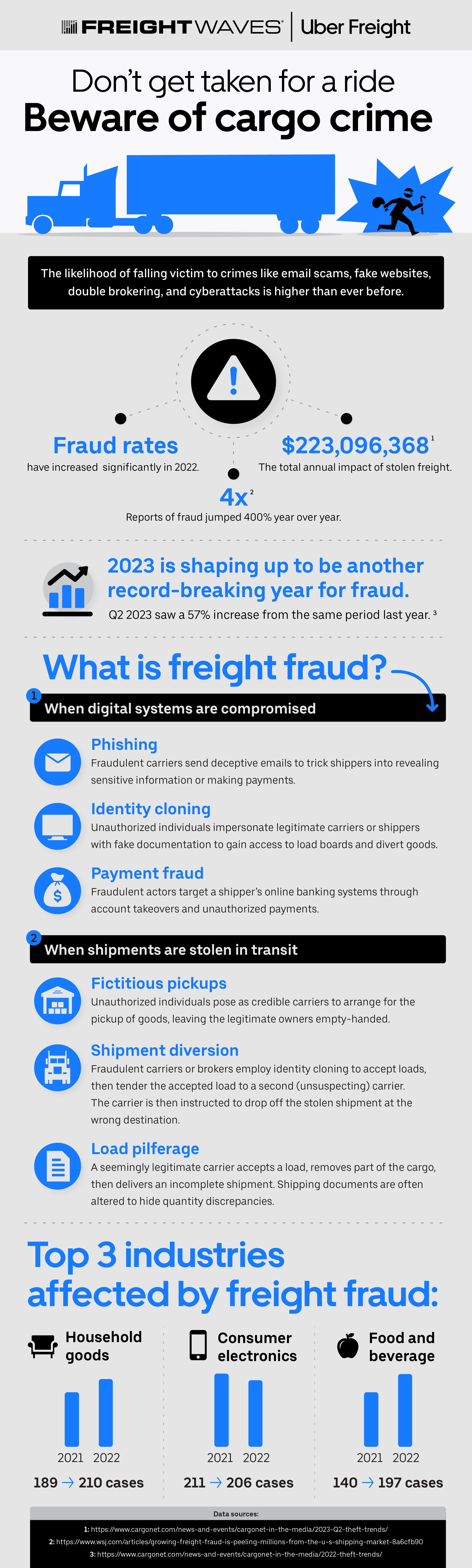
Daily Infographic: Don’t get taken for a ride! Beware of cargo crime.


To learn more CLICK HERE

Houston may restrict cargo truck movements inside city limits

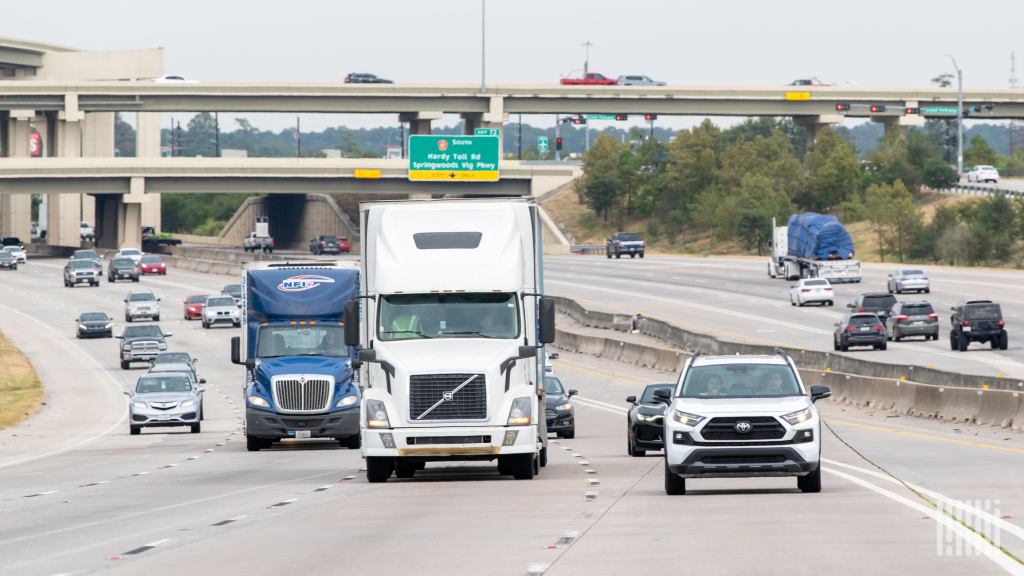
Houston could soon become the largest U.S. city to enact a broad truck route plan to limit where tractor-trailers can travel as they move through town.

City officials have proposed a regulation that would limit commercial trucks to main roads, banning them on many smaller streets.

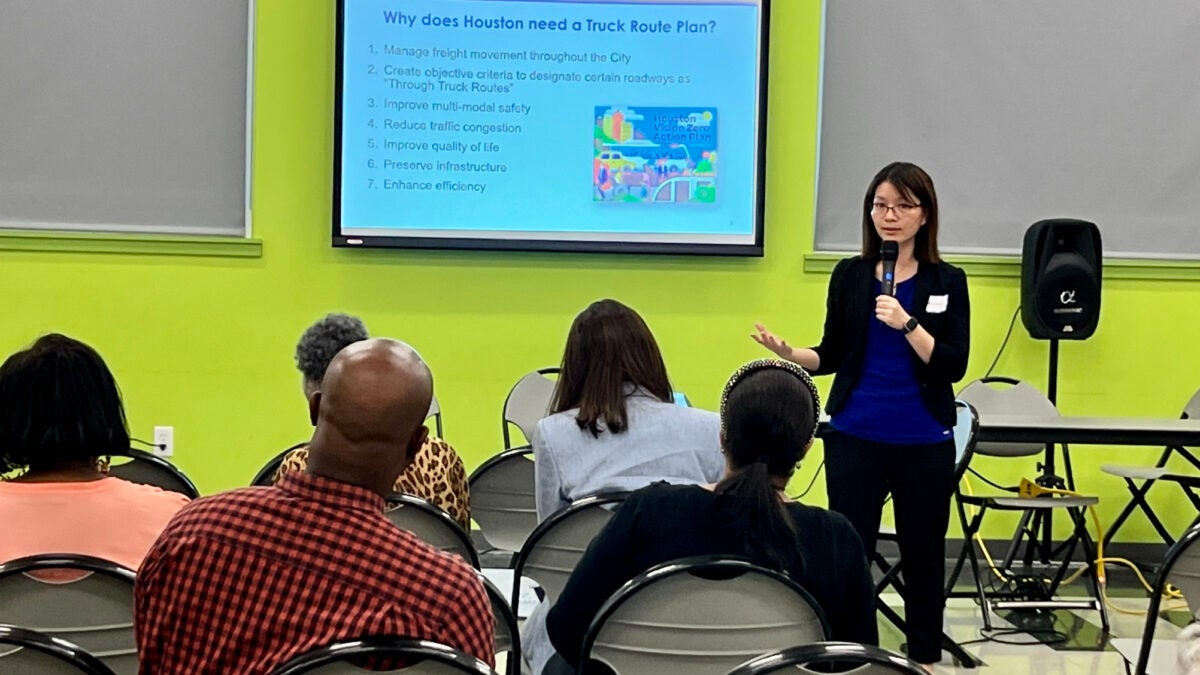
The aim of the measure is to improve roadway safety and the quality of life in Houston, according to Muxian Fang, a planner manager for the city of Houston’s Planning & Development Department.

“The Citywide Truck Route Plan (TRP) is an action item of the Vision Zero action plan to eliminate fatalities and serious injuries on our roadways,” Fang said in an email to FreightWaves. “We have received many complaints from our residents about how the cut through truck traffic has created traffic safety hazards, roadway damages, and [reduced] quality of life in their neighborhoods.”

Vision Zero is an initiative from the Federal Highway Administration adopted by cities across the country to eliminate all traffic fatalities and severe injuries, while increasing safety on roadways.

Houston’s TRP proposes dedicating a limited set of roads as truck routes for any commercial vehicle having a gross weight of more than 26,000 pounds, including the load carried. The routes would be designated into three categories:

  • Through truck routes: primary routes for commercial vehicles traveling within and through the city, including interstates, state highways, toll roads, critical urban freight corridors and roadways that are functional and suitable for truck traffic.
  • Local truck routes: major thoroughfares that provide direct access to local origins and destinations and can serve as alternate truck routes in case of through truck route closure for construction or emergencies.
  • No-through-truck streets: road segments where through truck traffic is prohibited, which can only be used to access local origins and destinations.

The designation process to finalize truck routes is currently underway. The department will conduct a pilot test in the Settegast neighborhood in northeast Houston next spring before the truck plan is finalized.

Muxian Fang, a planner manager for the city of Houston’s Planning & Development Department, holds a public meeting in May with residents to discuss the proposed Citywide Truck Route Plan. (Photo: city of Houston)

If the plan moves forward, carriers violating it and traveling on no-through-truck streets could be fined up to $500.

Fang said Houston’s Planning & Development Department initiated a series of public engagement activities to involve all stakeholders in the TRP effort.

“We have been coordinating with the Texas Department of Transportation, Houston-Galveston Area Council, Port of Houston Authority, Harris County, [and] Houston Movers Association to develop the Citywide Truck Route Plan,” Fang said. “All of our stakeholders support this effort.”

John Esparza, CEO of the Texas Trucking Association, said that while he appreciates that Houston officials are approaching the issue of truck traffic through a planning process, he has concerns about a broad plan that doesn’t take into account the daily operations of local trucking companies.

“We maintain if there are particular problems with local schools or neighborhoods – let’s address those,” Esparza told FreightWaves. “In a city that’s not zoned, I can only hope that they’re taking into account every trucking company, that is, where the companies are located and their proximity to residential areas.”

The city does not have zoning laws, but development is governed by ordinance codes that address how property can be subdivided, according to the city’s website.

“Since Houston is not zoned, we’re talking about a trucking community of companies that can be right near residential areas, so how does the city determine what is a truck trying to egress and ingress out of their operations, and get to where they need to go and deliver the freight,” Esparza said. “I do hope that they’re listening to the companies in Houston, as they raise those specific concerns, over restrictions on where trucking companies can get in and out of their operations and where they deliver. Anytime you see these restrictions being proposed, it ultimately is going to come down to affecting the way that that motor carrier operates.”

Houston one of the fastest-growing US port cities

With a population of 2.3 million, Houston is the largest city in Texas and the fourth-largest in the U.S. The greater Houston metropolitan area is home to 7.3 million people and could grow to more than 8 million by 2028, according to a recent study by real estate consultant Site Selection Group.

Houston is also one of the busiest port cities in the country. The 52-mile Houston Ship Channel comprises more than 200 private and eight public terminals, collectively known as Port Houston.

The port and ship channel helps create about 1.5 million jobs throughout the state and generates about $439 billion in statewide economic impact annually, according to a study by Port Houston.

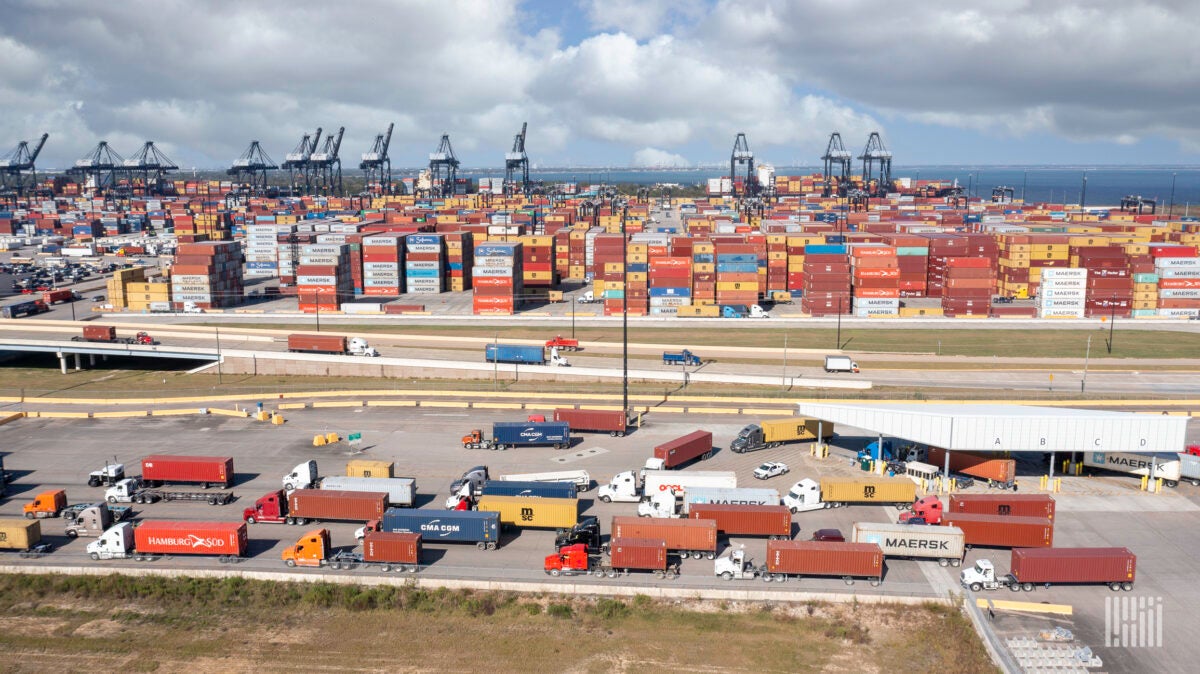
Port Houston is one of the busiest seaports in the U.S. and helps to generate about 1.5 million jobs throughout the state of Texas, according to a recent study. (Photo: Jim Allen/FreightWaves)

Port Houston ranked as the fifth-largest U.S. container port by total twenty-foot equivalent units in 2022, at 3.9 million TEUs. Total tonnage last year was up 22% year over year (y/y) compared to 2021, reaching 55 million short tons, a new record, according to the port.

Over the past several years, supply chain diversification across the U.S. has helped Port Houston increase its market share of container traffic, as well as imports and exports of products such as steel and resins.

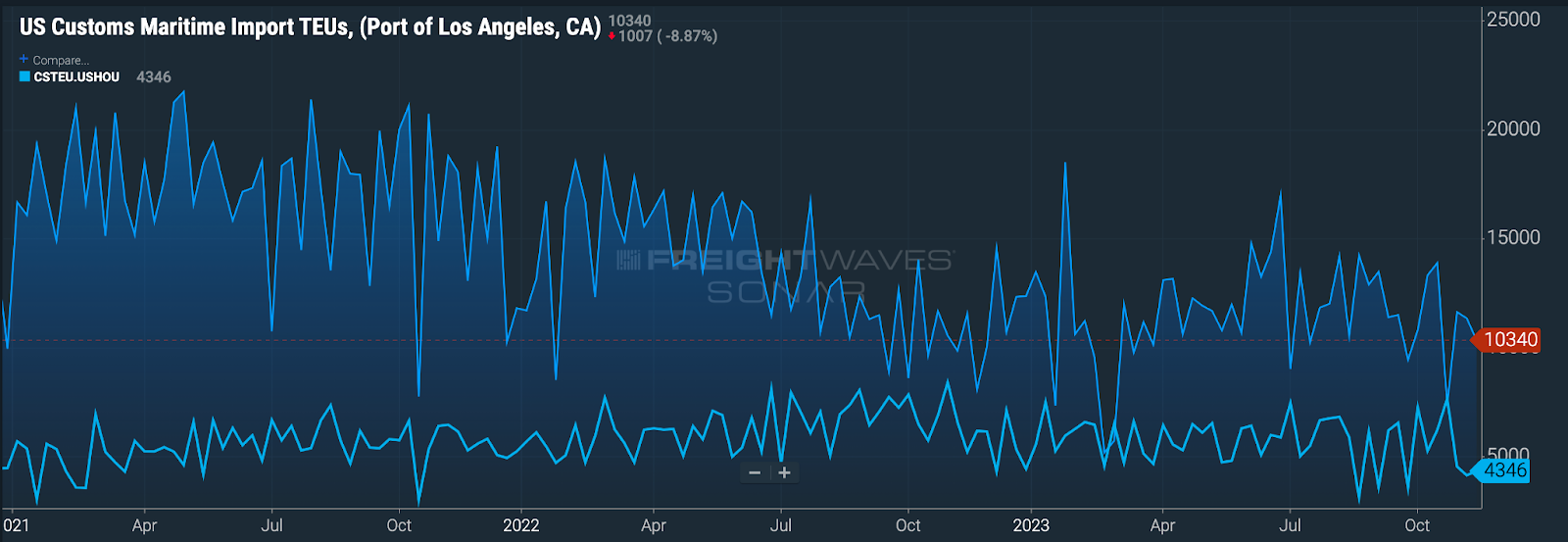
Chart: FreightWaves SONAR — U.S. customs maritime import TEUs for Houston (CSTEU.USHOU) and Los Angeles (CSTEU.USLAX). 

Customs data from FreightWaves’ SONAR platform shows that Port Houston’s inbound container volumes have increased steadily since 2019 but rose and declined sharply in September and October, falling 8% y/y in September to 325,588 TEUs. While freight traffic has remained steady for most of the year, it is down compared to the record results of 2022, Roger Guenther, the port’s executive director, said at a recent commission meeting.

Trucking company has concerns about route plan

Jefferson Walker, operations manager at Houston-based carrier J.H. Walker Trucking, expressed disappointment and concern about the proposed truck route plan.

“We as a carrier are frustrated by the idea of restricting our ability to move and operate around the city of Houston,” Walker told FreightWaves. “We do not feel it is necessary as it will only be used as a way to ticket us and impede our ability to operate and do business around the city.”

J.H. Walker Trucking has operated in Houston as an expedited oilfield transportation provider for over 30 years. The carrier utilizes everything from pickup trucks to cargo vans to 48-foot flatbed tractor-trailers to transport goods.

Walker said his company operates over 200 trucks, delivering 700 to 800 average loads per day. He worries how the plan could affect business.

“They presented their plan to us as a way to reduce both noise pollution and wear and tear on city streets for its residents by setting dedicated lanes aside for our trucks to use,” Walker said. “The problem is, we operate deliveries around the city in everything from the size of a small sedan all the way up to a large tractor hauling 100,000-plus pounds.”

Walker said Houston’s size and lack of zoning also create logistical challenges for any trucking company.

“Houston is a city that has sprawled in every direction to cover 640 square miles and with no zoning, we have customers in every part of the city,” Walker said. “The reality is, we are not choosing to take city streets just to add mileage to our trucks or because we believe them to be faster or more efficient. Streets are often much slower and more dangerous to maneuver in a large truck. The only reason that we are using the streets is because we are en route to or from a shipper/consignee for a load.”

Walker also said it’s unfair to restrict the movement of commercial vehicles throughout the city when trucking companies have to pay taxes that go toward road infrastructure.

“Our roads and infrastructure are primarily funded with revenue from the fuel tax, and a typical five-axle truck pays $4,454 in annual diesel and heavy vehicle use taxes alone, which is almost 50 times more than what an average car pays,” Walker said. “We are more than happy to pay this usage tax as a consumer because we are paying to maintain and improve the streets that we rely on to operate. However, when you still collect this money but then no longer allow us to use these roads, we feel we are now being unfairly taxed.”

Click for more FreightWaves articles by Noi Mahoney.

More articles by Noi Mahoney

10 Roads Express lays off 66 workers in Texas

Mexico remains top US trade partner, Laredo No. 1 gateway

FreightWise acquires TMS provider Kuebix from Trimble