




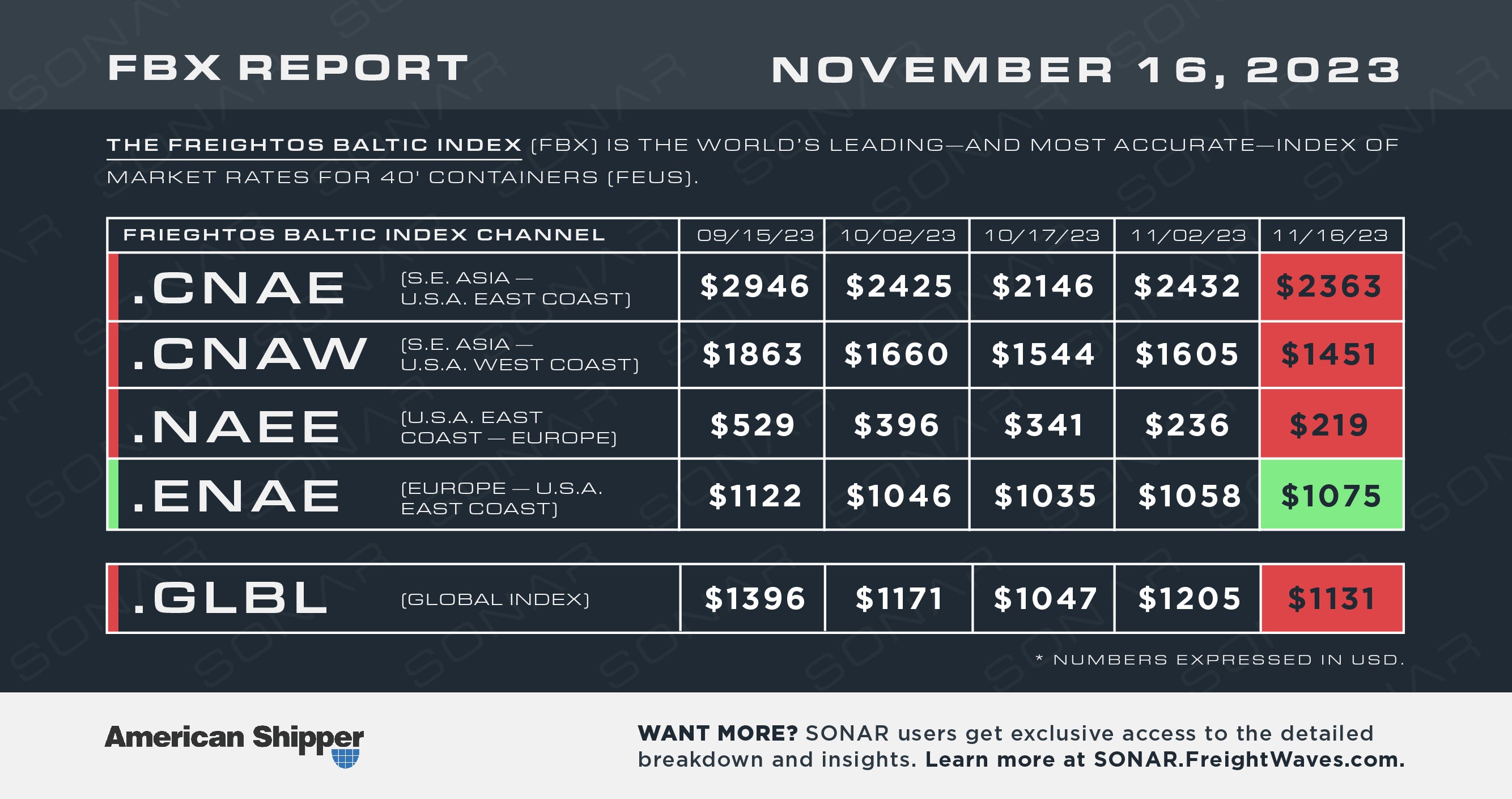
FBX Report: November 16, 2023



Freight brokerage has historically been characterized by costly overhead and littered with inefficiencies. This environment has led to suppressed carrier revenue and oversized shipper expenses. TRAUXIT has set out to change that.
“Our primary mission is to increase owner-operator pay by 7.5% average, while reducing shipping costs by the same,” TRAUXIT Chief Strategy Officer Kevin O’Brien said. “We’re building a shorter bridge between shippers and carriers and streamlining the process via the TRAUXIT app. We’re bringing freight brokerage to the 21st century.”
The TRAUXIT app is designed to help carriers – particularly owner-operators – bring in more revenue while simultaneously cutting down on some of the most common freight finding frustrations, including ghost loads and complicated pricing structures.
When owner-operators download the app, they will gain access to real-time loads with upfront pricing – without any costly gimmicks or strings attached.
TRAUXIT’s dedication to drivers goes beyond just getting their trucks loaded once, however. The company works to reduce deadhead by providing alternative load and delivery location options, further driving up revenue possibilities.
Once a load is delivered, TRAUXIT continues to support drivers with paperless bills of lading and proof of delivery solutions. Owner-operators can then access their money quickly via the TRAUXIT CASH app.
“TRAUXIT CASH offers secure and speedy financial transactions, with payments processed within two hours, setting a new industry standard,” according to the company’s website. “Integrated into the TRAUXIT ecosystem, this platform enhances efficiency, cash flow management and trust among stakeholders, reflecting TRAUXIT’s commitment to revolutionizing the freight industry.”
TRAUXIT, Chief Executive Officer Joe Stevens said, “Taking our far reaching support for drivers a step further, the company has launched TRAUXIT Shop, an e-commerce platform stocked with affordable, high-quality drivers essentials – from compression socks to truck organizers.”
The TRAUXIT app will feature a reward program that allows drivers to earn currency that can be used on the site, allowing them to stock-up on the things they need (and want) without spending their hard-earned cash.
The TRAUXIT app was not only created to help carriers make more money; it is also designed to help shippers reduce costs.
Some of the same things that ramp up driver earnings –– like providing alternative delivery location options and reducing idle time –– also benefit shippers by keeping their own operations running smoothly.
With the TRAUXIT app, shippers can also link loads to create a route, making it easy to make sure all the freight is moved in the most efficient ways possible.
Beyond operational gains, the TRAUXIT app also helps shippers unlock sustainability wins. The app accomplishes this in a couple of different ways, by reducing unnecessary paper usage and driving down fuel consumption via optimized routing options.
These combined benefits can help shippers drive down their carbon footprints. At a time when consumers are more aware of the climate crisis – and motivated by saving the planet – than ever before, the benefits of this cannot be overstated.
Ultimately, TRAUXIT is on a mission to modernize the trucking industry by introducing a technological offering that creates a win-win situation for carriers and shippers alike.
“We’re trying to pay more to those who move the world: drivers,” O’Brien said. “We’re in app registration mode, so that we can cover the contiguous U.S. when we push the go button on the app. Help us help the owner-operator make more of their hard-earned money, while helping shippers reduce their costs.”

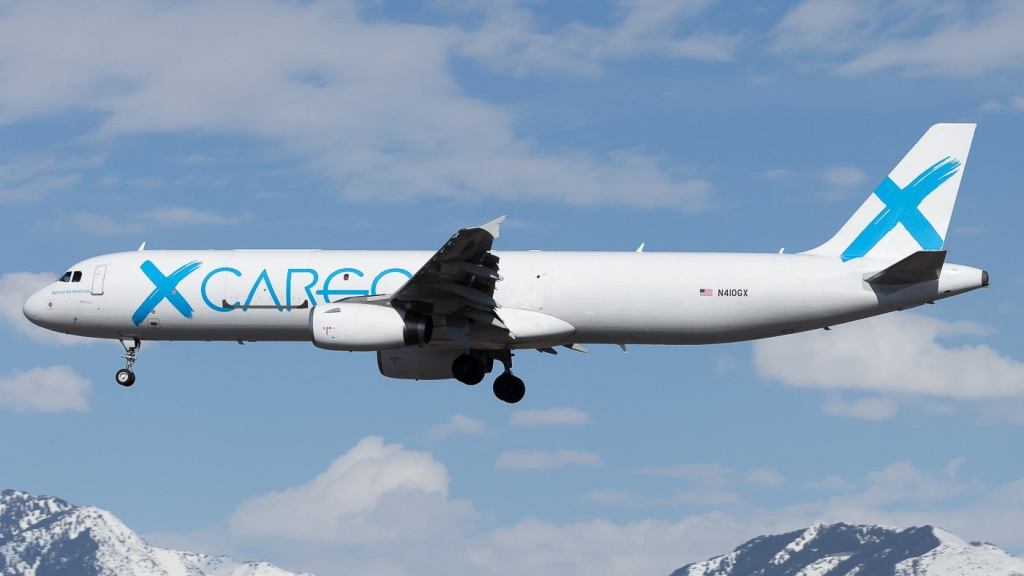
MIAMI — Startup Global Crossing Airlines is scheduled to take delivery of two additional narrowbody freighters in December, on its way to a planned fleet of 15 cargo jets by 2026 — a notable contrast to other cargo operators that are putting the brakes on expansion amid a prolonged shipping downturn.
The Miami-based carrier, which also provides passenger charter service, received its cargo operating license earlier this year from the Federal Aviation Administration and now operates three Airbus A321 converted freighters in the U.S. and Caribbean region. Two more used aircraft, now in the final stages of the conversion process, are expected to arrive at headquarters next month, management said on last week’s third-quarter earnings call.
Global Crossing Airlines (OTCQB: JETMF) has leases ranging from seven to 10 years from multiple lessors, including Air Transport Services Group (ATSG), for six A321 converted freighters, according to the latest filing, and has tentative agreements for four more aircraft. The company expects to receive five additional converted aircraft next year, with a stretch goal of 15 freighters by the end of 2025.
The continued fleet expansion is occurring in a freight market that has seen global volumes tumble about 12% since the pandemic peak at the end of 2021, with rates about 30% lower than in 2022. Volumes are also down 8% to 9% year to date versus 2019, according to market intelligence firms Xeneta and WorldACD. More carriers are now shelving plans for extra capacity to preserve cash as revenues shrink.
ATSG last week said it wouldn’t proceed with conversions for six Boeing 767-300 aircraft already in its possession. Canada’s Cargojet said it is trying to sell four Boeing 757-200 aircraft it recently had converted and has scrapped plans to convert four large 777 aircraft. Other airlines are backing out of handshake lease agreements, or postponing them. Air Canada canceled an order for two factory-built freighters from Boeing. FedEx and UPS are parking some aircraft and accelerating retirement for older models.
GlobalX, as the company is also known, entered revenue service two years ago with A320-family passenger jets and now has 10 aircraft providing charter flights for cruise lines, casinos, college sports teams, government agencies, tour operators and resort destinations, as well as supplemental capacity for other airlines, including Wizz Air and TUI in Europe. Its planes have flown stagehands and entourages for Bad Bunny, Foo Fighters, Lady Gaga and Harry Styles concert tours. During its first week of operation, GlobalX in 2021 sent two planes to Afghanistan on behalf of the Department of Defense to evacuate U.S. personnel and other designated refugees.
Global Crossing got its start by signing a merger agreement with Canada Jetlines, which tried unsuccessfully to launch an ultra-low-cost carrier in Canada. The deal essentially was a reverse takeover by founder and CEO Ed Wegel, a veteran aviation executive and serial entrepreneur who previously relaunched Eastern Air Lines, and other investors who took 60% of the shares, changed the name to Global Crossing and moved the legal jurisdiction to Delaware at the end of 2020. GlobalX shareholders own a quarter of Canada Jetlines, which was spun off in 2021 and now is in operation with three passenger jets.
Its vice chairman is T. Allen McArtor, a former senior vice president at FedEx and administrator of the Federal Aviation Administration under President Ronald Reagan.
The emerging company took advantage of the airline sector’s crash during COVID to structure very advantageous leases for mid-life aircraft at about half the going rate under normal market conditions.
GlobalX reported negative earnings, excluding non-core items, of $1.7 million in the third quarter, a $4.4 million improvement from the second quarter. For the nine months ended Sept. 30, the hybrid carrier lost $13.2 million, $3 million more than the same period in 2022, before stripping out accounting measures. With aircraft rent removed from the equation, earnings were $7.6 million.
The rapidly expanding fleet enabled the company to achieve record revenue of $42.6 million, up 38% from the year-prior period.
In its first full year of operation, Global Crossing generated $100 million in revenue and lost $15.8 million.
Starting an airline is expensive. But executives stress they have laid the foundation for sustained profitability by scaling up the fleet and supporting infrastructure, including obtaining operating licenses and aircraft certifications in various jurisdictions. They pointed to revenue growth outpacing costs for every expense line except maintenance as evidence of financial discipline and how continuing investments are making the airline more efficient. And the growth in flight hours is faster than growth in maintenance costs, an indicator of improved efficiency.
During the quarter, the airline issued $35 million in bonds to repay current debt and provide capital for ongoing fleet expansion. It previously raised $28 million. Shareholders have been critical of the new financing terms of 15% interest, with a board seat and warrants for Axar Capital Management, but analysts viewed the deal as necessary to maintain the company’s growth strategy and more favorable than equity financing.
GlobalX also reached an agreement with an airport developer for the financing and construction of a $25 million maintenance facility at Fort Lauderdale-Hollywood International Airport. The facility, which is expected to open for occupancy in the second quarter of 2025, can hold three A320 variants or one A330-size aircraft.
Management said having its own maintenance capability will save money and drive efficiency because the airline will be able to control its schedule. Buying hangar time to change an engine or do an overnight inspection at Miami International Airport (MIA) costs about $30,000 for an eight-hour period. By the time the facility in Fort Lauderdale is ready, GlobalX will have 30 aircraft and many will be due for intensive maintenance checks.
The company has also invested in its own ground handling and fuel trucks to avoid having to rely on third parties that prioritized large customers and weren’t reliable. GlobalX was experiencing two-to-three-hour delays because other fuelers at MIA prioritize serving American Airlines.
The leadership team says it is managing for long-term growth over quick earnings.
“If we wanted to create a $150 million revenue company, we would be profitable today,” said Chief Financial Officer Ryan Goepel during the earnings briefing. But we’re building a $400- to $500 million-revenue company. And the only way you can do that is investing in people, processes and systems.”
Goepel, in other presentations, has said the company’s goal is to have a $2 billion market cap in the next three to five years.
Airlines that don’t grow, go bankrupt, added Wegel. “So we have no interest in operating a small airline because we will not survive.” Airlines with a larger base of aircraft and customers can better withstand external shocks.
GlobalX, for example, has doubled its pilot head count to 125 in the past year and fully expensed nearly $6 million to hire and train pilots during the quarter. New pilots are on the payroll for 90 days before they start revenue flights. Other building-block investments include flight dispatch technology and document management software to allow paperless functions.
The company offers three types of cargo service: on-demand, when a company urgently needs a shipment transported; all-in contracts, in which a single customer charters the entire plane for multiple flights; and long-term transportation service, in which the customer is charged a minimum number of flight hours and is responsible for finding cargo and paying fuel, ground handling and other fees.
The 2023 projected revenue ($150 million) share is 83% passenger business and 17% cargo, with cargo taking a larger slice in the future.
Management stresses that its cost-plus business model is much less risky than that of a fixed-cost scheduled carrier, which must operate whether the plane is full or not. Every flight makes money, the company is paid in advance, fuel costs are passed through to customers, and unit economics continue to improve as block hours (flight and taxi time) increase.
Mid-2025 guidance is for cargo aircraft to generate $300,000 to $500,000 per month in earnings before non-operating expenses such as interest and taxes are counted.
Wegel scoffed at the notion that the air cargo market was currently too challenging for a new entrant to attract business, saying demand has simply reverted to the mean from the overheated days of the pandemic when anyone with a plane could make money.
“We’re not seeing any lack of demand on the narrowbody freighter side. We are extremely busy flying for a whole host of different customers in the automotive markets, in the retail,” he said.
In February, GlobalX began twice-weekly dedicated cargo flights to Havana for CubaMax, a travel and shipping agency based in South Florida. Other customers include the U.S. Postal Service, the West Indies Cricket team and Ascent Global Logistics, a GlobalX investor that owns USA Jets and specializes in moving auto parts from Mexico and Texas to U.S. assembly plants.
An HBO film studio earlier this year chartered GlobalX to move props and cameras for a shoot in Barbados and then back to New York two weeks later, Wegel said during a June interview at the company’s Miami airport headquarters.

GlobalX freighters have made four circuitous trips to Israel, including two on Saturday, with more than 100 tons of medical and first-responder gear in the aftermath of the Hamas terrorist attack on Oct. 7. It is one of the few U.S. carriers flying to Tel Aviv under war conditions.
On the earnings call, Wegel said staffing and supply chain issues at overhaul organizations that do the conversion work have delayed freighter deliveries, which are taking 10 to 11 months to complete instead of six to seven. Modifications include adding a large cargo door in the forward fuselage area and a reinforced barrier wall in the upper deck to protect the crew cabin from shifting cargo. Seats and other features designed specifically for passengers must also be removed.
Part of the problem, he said, is that the two conversion specialists for the freighter — 321 Precision Conversions and Airbus affiliate Elbe Flugzeugwerke GmbH — are still figuring out how to streamline the production process and which parts to preorder. Production time is eventually expected to get faster.
A source at one of the rebuild specialists said A321 aircraft for multiple customers have been held up by overhauls of landing gear because vendors have had trouble getting parts.
Global Crossing is the only operator of the A321 converted freighter in North America, and executives are very confident the aircraft, which hit the market less than three years ago, is a rising star. They insist it outperforms the Boeing 737-800, which entered the market about six years ago and has about 13% less volume.
“Whenever we sit down with a potential client who is flying with a 737 or a 757 and we show them the operating performance of our airplane versus their airplane, we win that discussion every time,” said Wegel. He pointed to Lufthansa Cargo, Japan Airlines and Qantas as examples of large airlines that have also settled on the A321 for regional express routes.
The A321 beats the 757 with 18 more cubic feet of containerized payload capacity and burns about 19% less fuel, which translates to 300 fewer gallons on a long trip, according to the company. It has room for 14 upper-deck containers, one fewer than on the 757, and 10 smaller containers in the lower hold. But the 757 and 737-800 fuselages are too narrow for the LD3 containers and can only take loose cargo in the lower deck.
A321 proponents view the aircraft as the natural replacement for the aging Boeing 757 converted freighter, in large measure because containerized storage of high-volume, small packages is more efficient than manual exchanges of individual parcels to and from the lower hold.
For reasons having to do with schedule frequency, infrastructure, cost and ground handling, not all airlines utilize containers in the A321 belly.
Mike White, a consultant who for decades held cargo leadership positions at trade associations and airlines, said in an interview that the A321 is a good fit for North America, Central America and the northern tier of South America because of its range and cargo capacity.
Global X is waiting for final approval from authorities in Colombia for an air operator’s certificate that would enable it to establish a cargo airline in that country and serve the intra-Latin America market. It would be one of the first A321 freighter operators in Latin America. Planes assigned to Colombia will be interchangeable for use under U.S. authority. Having an airline subsidiary in Colombia will also help with recruiting pilots, who would also apply for green cards so they can work in the U.S. and reduce the need for U.S.-based pilots, Wegel has previously said.
The airline is already hiring to get ready for test flights in the coming weeks to prove the airline’s capability to safely operate, the CEO recently said on LinkedIn.
He has even talked about setting up a subsidiary in Europe.
The startup carrier plans to up-gauge to Airbus A330 cargo jets, but it will be early 2026, at the soonest, before the larger aircraft can be added to the fleet because production slots at conversion centers are filled up, Wegel told FreightWaves. In the meantime, the company is working towards flying its first A330 passenger aircraft by next summer. Learning how to operate the aircraft will help when it’s time to bring on freighters, he added.
Wegel acknowledged the company is undercapitalized but not unusually so for the airline sector, and said strategic support from key shareholders, fundraising and cash from operations make it possible to meet its target growth strategy.
The over-the-counter stock sits at 65 cents per share. The company plans to uplist to a major exchange in the future. More than 30% of outstanding shares are owned by insiders.
Click here for more FreightWaves stories by Eric Kulisch.
Cargojet to sell off new B757 freighters, pause 767 conversions
It’s been a hectic two weeks. The Future of Freight Festival was last week, the federal government is cracking down on broker fraud, and the Teamsters union is still unionizing new trucking companies (when its president isn’t busy getting into potential fistfights with a certain Oklahoma lawmaker …).
On Nov. 9, lawmakers in both the House and Senate introduced legislation that would remove the clause in the Fair Labor Standards Act of 1938 that exempts motor carriers from providing overtime pay.
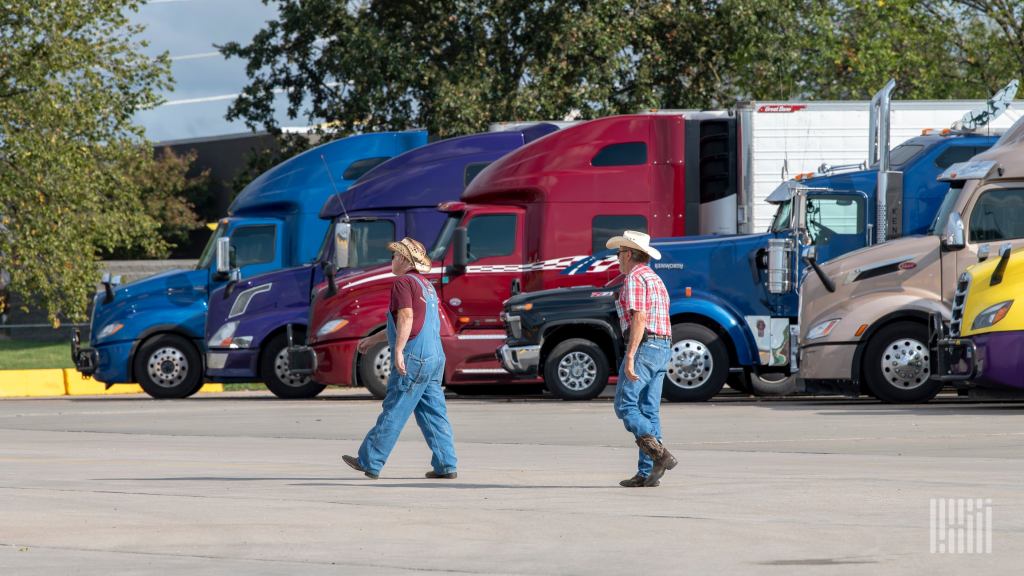
It would be a boon for truck drivers who work at trucking companies, but it’s unclear how it would affect the approximately 300,000 drivers who own and operate their own trucks. As you could expect, the lobbyist group that represents trucking employers has slammed this potential law.
Lots of truck drivers sent email with their thoughts on this bill, and even more left a comment on my article from last week. So, I thought I’d turn over this edition of MODES to the drivers who emailed us with their thoughts on the Guaranteeing Overtime for Truckers Act. Some comments were lightly edited for clarity.
Enjoy!
Back in the day when I ran reefer, there would be loads where I would sit for two or three days for the loads to finish and get loaded. I wasn’t getting paid because that employer paid mileage and no layover pay, so that was all free in terms of pay.
Pretty much any freight you’re hauling can take a while to get loaded or unloaded. The detention time doesn’t kick in for two hours usually and doesn’t pay much. Just think if I was working a job that wasn’t driving and did 2 hours of free labor.
Honestly, I think they should just pay hourly. There is a lot of free [labor] these employers get — fueling, pre and post trip inspection, breakdowns, and so on. These companies can afford to pay drivers better; they just don’t want to. It’s all about greed.
The price of everything is going up and it’s going up because of greed, not inflation. Wages nowadays are not paired with company profits like it should be where it used to be. “Oh, we’re doing good, let’s share the wealth with the people that make our company run — either with bonuses or pay increases.”
No, that goes to only the executive level now, which is a shame. I could tell you half the executives wouldn’t know what to say if you asked what a specific employee in certain positions do everyday at their company.
Here is what nobody is talking about when it comes to truck drivers and overtime.
Over-the-road drivers are paid by the mile and pay CAN be adequate provided carriers take every factor of the job and time requirements into account and compensate drivers appropriately.
The OT issue really plays to the local drivers who are paid hourly.
As a local driver, based in Massachusetts, but employed by a Pennsylvania-based carrier, not only do I not qualify for OT after 40, I don’t qualify for paid sick time in accordance with MA state law because drivers and other DOT-regulated positions are exempt.
Changing the federal law that exempts drivers, driver helpers and mechanics involved in interstate transport from OT after 40 hours would allow those employees to make a sustainable living and reduce turnover in those fields.
There is an enormous difference between over the road and local work. Current laws take advantage of a class of employees who are under a huge burden of education and liability.

Commercial vehicle drivers are held to a much higher standard, have much more driver training and bear the weight of the huge responsibility that comes with piloting an 80,000 pound vehicle among the increasingly distracted drivers who are more and more ignorant to the rules of the road.
The lack of OT and paid sick time, in the local or LTL industry, is a direct contributor to high turn over.
No one talks about that aspect of the topic … why?
Give me another industry, not counting the military, where the “employee” is expected to operate under such conditions for so little respect and so little pay.
Charge the shipper and receivers for waiting and detention time. That will fix delays. I’m at a company now — no overtime pay. Now I’m injured. I’m tired of cheap old trucks shifting clutch. My back is shot.
Absolutely, there are a lot of unpaid scenarios. I make $20.50 an hour to drive 80,000 pounds. My daughter makes $17 an hour doing steakhouse carryout. Yes, I’m pissed.
The industry is broken. We need protection. I don’t care if the goods are gonna cost more. Just fix this manipulation.
I’m a Canadian truck driver. The same BS goes on here too.
Although the company I work for pays overtime after 10 hrs, the only reason is we are a specialized carrier/heavy haul.
I have pulled dry vans. The money was brutal, when you take into account the days away from home, not having access to a proper washroom or shower free of charge, not being able to eat properly. It most definitely takes a special person. I have great respect for these men and women who do it.
A lot of drivers are working 55-plus hours a week for straight time pay. In a lot of cases, they are probably only being paid for 40 hours of that. And they wonder why there is a problem in the trucking industry.
Email rpremack@www.freightwaves.com with your thoughts. Subscribe to MODES for weekly trucking insights.
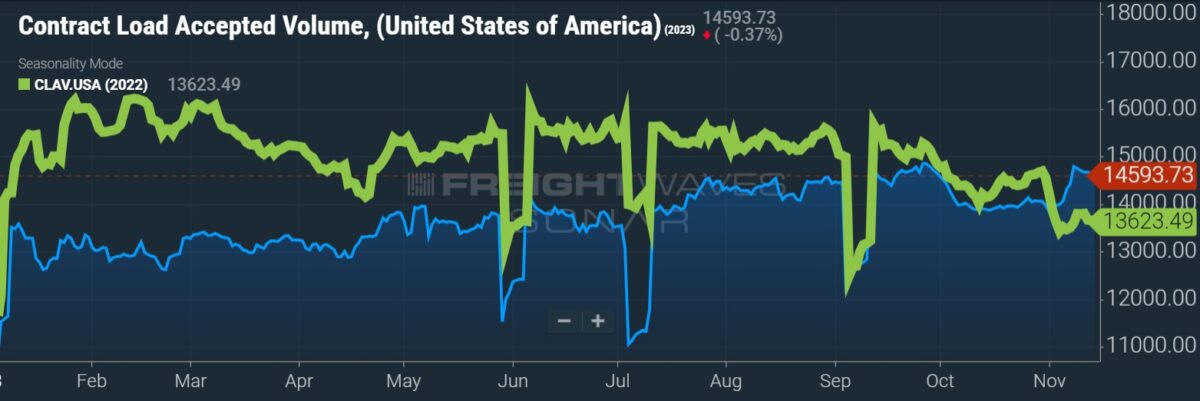
Truckload carriers and 3PLs have seen little change in demand halfway through the fourth quarter, and some are pointing deeper into 2024 before the market corrects.
The comments came from heads of some of the largest publicly traded TL providers at Stephens 25th Annual Investment Conference in Nashville, Tennessee, on Tuesday. The sentiment aligns with a Tuesday report from freight payments platform Cass Information Systems (NASDAQ: CASS), which said October produced a cycle low for shipments.
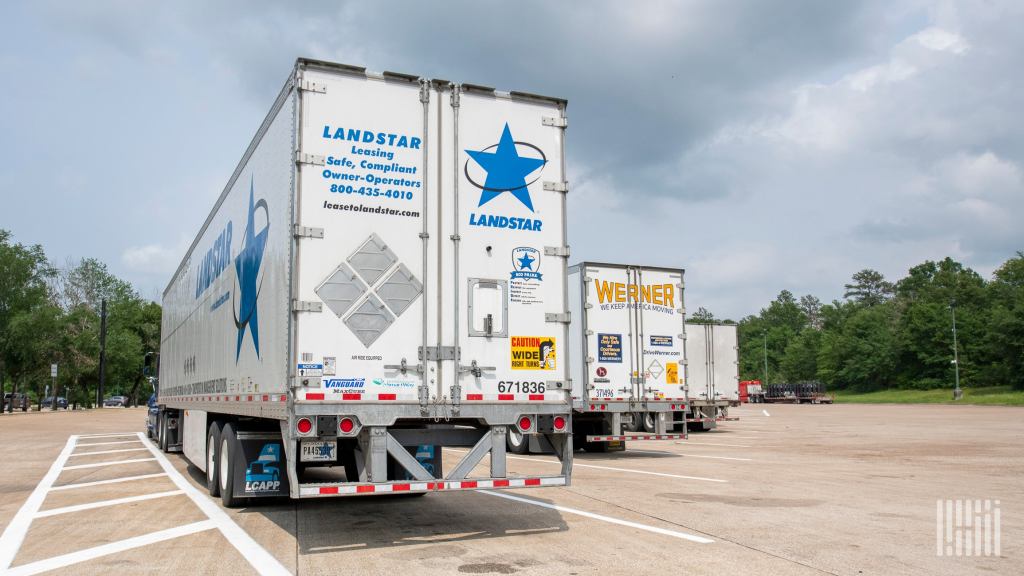
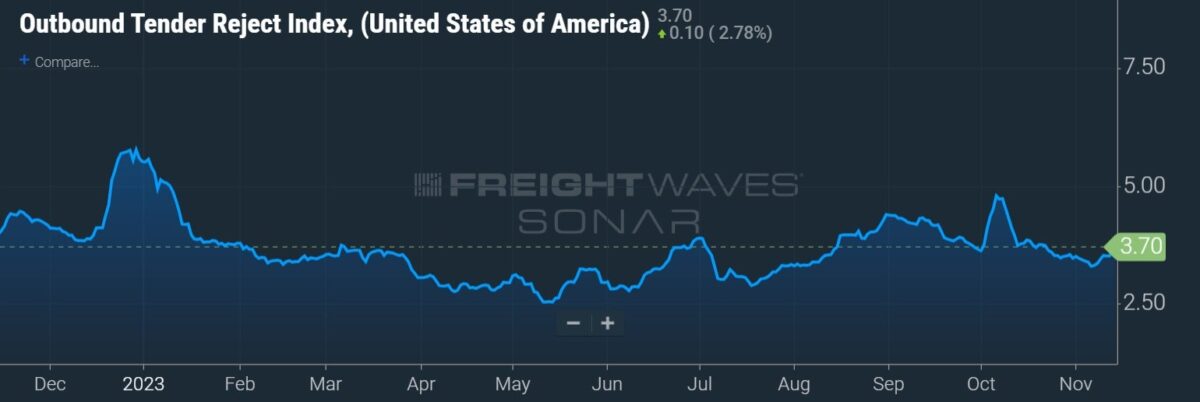
Freight broker Landstar System (NASDAQ: LSTR) said the market is a little softer than it was at the end of October when it reported third-quarter earnings and provided fourth-quarter guidance. The company said it doesn’t expect a peak season this year.
“There’s no excitement out there — whether it’s the parcel carriers, the shippers — or anybody who thinks this thing is going turn anytime soon,” said Jim Gattoni, Landstar president and CEO.
He said sequential seasonal patterns have been lower than normal in every month of 2023. He reiterated the company’s fourth-quarter outlook but now expects results to shake out closer to the middle or the lower end of the range.
He doesn’t see spot rates stepping materially higher until next year and said that it usually takes better demand versus capacity attrition to move the market. Turnover among Landstar’s business capacity owners, a proxy for truck capacity, is 39% this year, which is in line with the 36% rate recorded during the 2019 downturn.
“We’re continuing to pull down,” Gattoni said about spot rates. “But I think by the time we get into 2024, maybe midsummer, we’ll start seeing regular seasonal patterns again.”
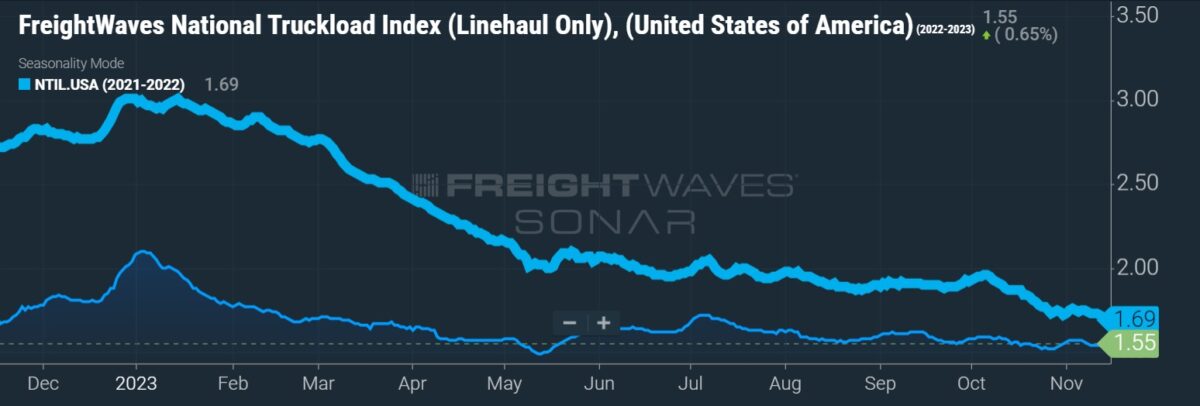
Management from TL carrier Werner Enterprises (NASDAQ: WERN) noted a “fairly muted” peak season. It said volumes have been steady to slightly better than last year’s peak but pricing has been weaker, resulting in lower revenue year over year (y/y).
The company has seen “no surprises to the negative” since its Nov. 1 earnings report. However, it noted the next four weeks are very important to the fourth-quarter result. Werner didn’t provide a pricing outlook for next year but said that its contract rates have already fully reset lower and an elevated cost structure means “there isn’t much to give” even as inflation moderates.
Werner’s fourth-quarter outlook calls for revenue per total mile in its one-way segment to be flat to slightly down from the third quarter but off 7% to 9% y/y. Revenue per truck per week in its dedicated unit is expected to finish 2023 flat to up 3% y/y. Werner said it will continue to focus on cost control but didn’t provide a time frame for an eventual turnaround.
“History has indicated that it won’t take much of a blip in demand along with the ongoing decrease in supply … . The ‘when’ is hard to say,” said Craig Callahan, Werner’s chief commercial officer.
Multimodal provider J.B. Hunt Transport Services (NASDAQ: JBHT) provided a more upbeat tone, at least for its intermodal segment.
The company has been seeing record intermodal volumes in its network in recent weeks, noting the unit is normally the one that first sees a turn when exiting a recession.
“We knew we were taking share,” said Shelley Simpson, J.B. Hunt president, when discussing the positive inflection that had just started to occur when it reported third-quarter results a month ago. “I don’t think we understood the magnitude of the share that we were taking.”
She said she was pleased with intermodal peak season but didn’t provide any direction on intermodal pricing. J.B. Hunt’s recent intermodal bid season concluded in the third quarter, and Simpson said “we’ll live with that pricing” during the fourth and first quarters. She believes it will take some time for the recent volume surge to push rates higher.
“We know what the inflation is and we’re not satisfied with our margins,” Simpson said. “Now we’re down to the timing of when can we get appropriate returns and appropriate price from our customers.”
Demand in the company’s truckload segments has been more reflective of a freight recession. However, its dedicated unit is seeing a slowdown in the number of accounts saying they need fewer trucks.
Most of its customers have worked through excess inventories, but they remain uncertain about future demand.
“Our customers don’t see a significant downturn,” Simpson said. “I think they feel OK about 2024. I think our customers are in a more neutral to slightly positive position.”
Schneider National (NYSE: SNDR) has also seen positive intermodal trends recently but categorized the broader freight market as “unseasonably tepid.”
“We did see a little bit of bounce as it relates to intermodal volumes, particularly in the month of October,” said Mark Rourke, president and CEO. “We need to see some staying power there before we claim any real victories.”
More FreightWaves articles by Todd Maiden
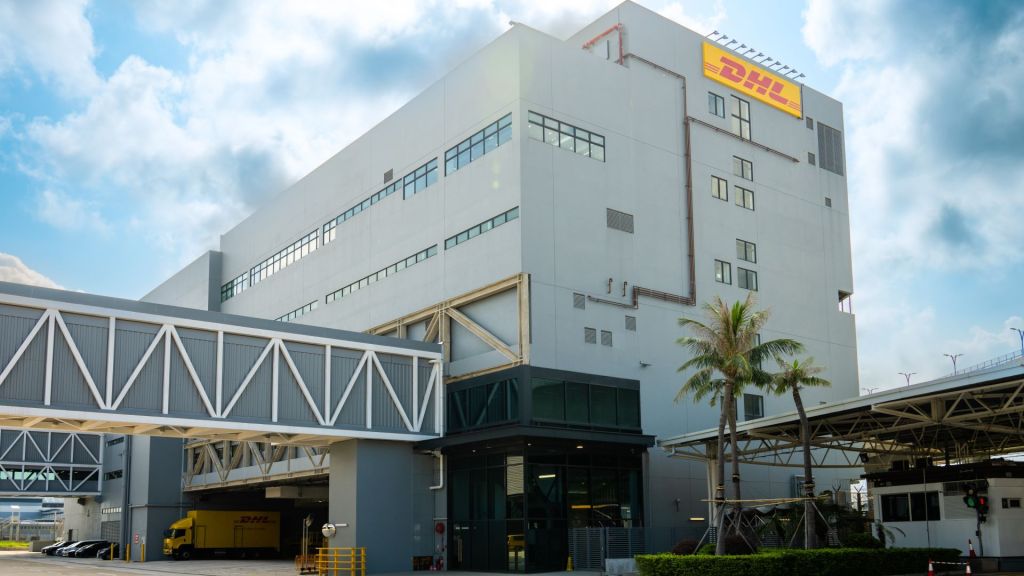
DHL Express announced it has completed the $409 million third-phase expansion of its central Asia hub in Hong Kong, improving parcel connectivity with the rest of the world and intra-Asia trade.
The new building represents a 50% increase in the hub’s size to 533,000 square feet and increases peak shipment handling capacity by nearly 70%. It is equipped with automated material handling equipment that enables DHL to sort 125,000 pieces per hour. Special X-ray scanners double inspection speed for prohibited or hazardous items. DHL said it expects the annual throughput to exceed 1.1 million tons when operating at full capacity — six times the shipment volume compared to when the terminal first opened in 2004.
Hong Kong is one of three global air hubs in the DHL parcel network, alongside Leipzig, Germany, and Cincinnati. The facility at Hong Kong International Airport handles nearly 20% of DHL Express’ shipment volume and more than 200 dedicated freighter flights per week.
The new building is designed to be carbon neutral, with more than 3,400 solar panels to generate power, battery storage, LED lighting, electric forklifts and a high-efficiency air conditioning system.
“While global trade is normalizing following a pandemic boom, our investments today will improve our global and regional network, putting us in an excellent place when global trade recovers,” said DHL Express CEO John Pearson in a news release Tuesday. DHL Express is part of German logistics giant DHL Group.
Volumes between Asia and other regions in the first three quarters of the year were up 30% versus the same period in 2019, according to the company.
DHL also has regional air hubs in Shanghai, Singapore and Bangkok.
Air Hong Kong, a subsidiary of Cathay Pacific, is one of DHL’s major airlift providers in Asia. It is replacing Airbus A300-600s with larger A330s, as previously reported.
DHL last year opened a regional hub at Atlanta’s Hartsfield-Jackson International Airport.
Click here for more FreightWaves/American Shipper stories by Eric Kulisch.
RECOMMENDED READING:
DHL relocates A300 freighters to Europe for better sustainment

The U.S. Postal Service said Wednesday that it has proposed general rate increases for 2024 of between 5.4% and 5.9% for three popular shipping services.
Rates for the Postal Service’s Ground Advantage service, which offers two-to-five-day deliveries based on distance, would increase by 5.4%. Rates for the agency’s Priority Mail two-to-three-day delivery service would increase by 5.7%. Prices of its Priority Mail Express one-to-two-day delivery service would rise by 5.9%.
The increases will take effect Jan. 21, pending approval by the Postal Regulatory Commission, an independent agency that regulates postal pricing.
Prices for USPS Connect Local, which offers small businesses same-day and next-day deliveries in local and regional markets, will remain unchanged, the Postal Service said.
The proposed general rate increases are in contrast to steep discounts that the Postal Service plans to offer high-volume commercial customers shipping lightweight parcels within a 600-mile length of haul.
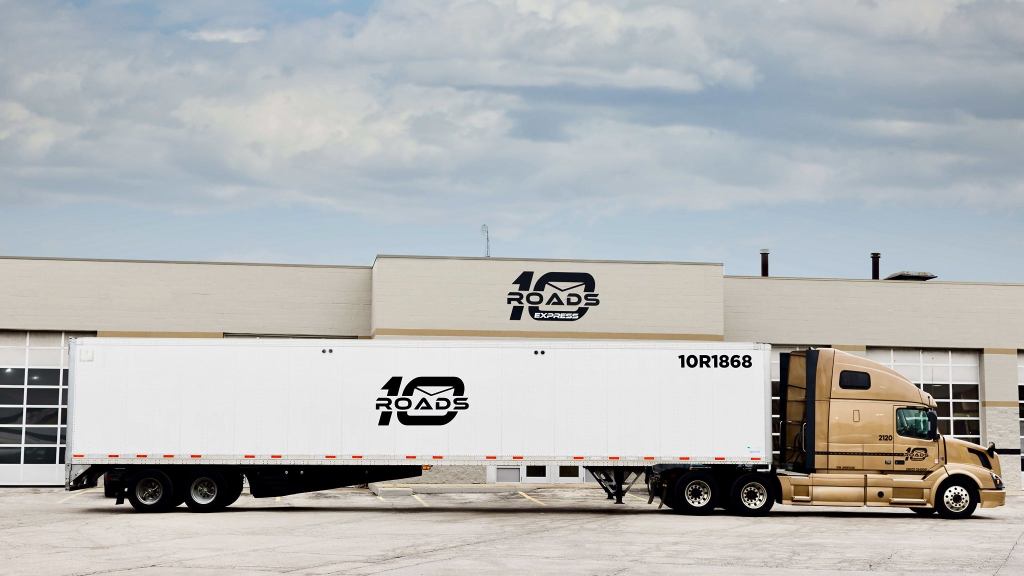
Trucking company 10 Roads Express has laid off 66 workers at its facility in Fort Worth, Texas, citing the cancellation of postal contracts.
The layoffs, which occurred Oct. 16, affected 55 truck drivers, four dispatchers and seven mechanics, according to a recent filing with the Texas Workforce Commission.
“The company gave affected employees as much notice as is practicable due to the unforeseen cancellation and non-renewal of various postal contracts,” officials for 10 Roads Express said in a statement.
Carter Lake, Iowa-based 10 Roads Express employs over 3,300 truck drivers and owns more than 4,400 trucks, according to the Federal Motor Carrier Safety Administration.
10 Roads Express was the second-largest contractor with the Postal Service in the 2022 fiscal year, according to a list of top Postal Service vendors from Culhane Meadows, a law firm that specializes in government contracting work. In 2022 alone, the Postal Service awarded more than $700.4 million in contracts to 10 Roads Express.
FreightWaves has reported that under Postmaster General Louis DeJoy, the Postal Service has diverted some of its over-the-road freight spending from its longtime trucking partners into the freight brokerage market.
Last week, drivers at three 10 Roads Express terminals in Iowa and Nebraska voted to join the Teamsters, the union announced. Since the beginning of 2022, drivers at eight 10 Roads Express locations have unionized with the American Postal Workers Union.
Click for more FreightWaves articles by Noi Mahoney.
More articles by Noi Mahoney
Mexico remains top US trade partner, Laredo No. 1 gateway
FreightWise acquires TMS provider Kuebix from Trimble
5 takeaways from XPO’s Brad Jacobs at Future of Freight Festival

On today’s episode of WHAT THE TRUCK?!? Rachel Premack joins Dooner to co-host the show. They’ll talk about the GOT Act and if it’s good for trucking; a shake-up at FourKites; freight meme wars; and how not to drive a truck simulator.
DeGroot Logistics’ Adam DeGroot just got back from Chattanooga. We’ll find out what deals he was making at F3, why DeGroot acquired Dock411 and what they’re learning about the state of shipper facilities.
ZuumApp’s Mustafa Azizi talks about hang gliding over Chattanooga at F3, how to cook a mystery box and what innovation means for a TMS.
SRS Distribution Inc.’s Ben Richey takes us into world of roofing materials and building supplies. We’ll find out how a distribution network works for this type of freight.
FreightWaves’ Justin Martin joins us with a Tesla Semi review, driver overtime pay, what not to do during a Level 1 inspection, how soon is too soon to put up Christmas lights and tips for memelords looking to win the $100K Freight Creator Contest.
