Forward Air’s new long-term targets don’t include Omni

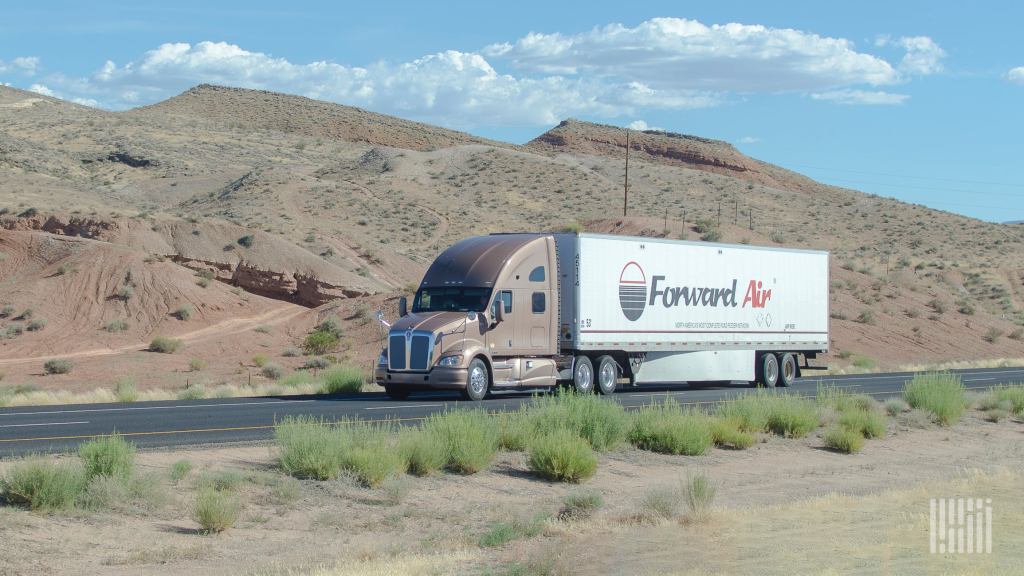
An unidentified tractor pulling a Forward Air trailer in the desert

Forward Air announced new financial targets Tuesday and reiterated plans to primarily focus on the premium less-than-truckload market going forward. However, its new forecasts didn’t include freight forwarder Omni Logistics, which it made a bid to merge with in August.

Forward (NASDAQ: FWRD) is forecasting consolidated annual revenue of $2.5 billion by 2026 compared to just under $2 billion last year and implied guidance of $1.67 billion for 2023. That represents nearly a 15% compound annual growth rate over the three-year period from this year’s depressed level. Of that, 80% is expected to be generated by its LTL segment compared to an estimate for a 57% contribution this year.

Management has identified $15 billion in premium LTL opportunities, which include freight associated with events and trade shows as well as the transportation of high-priced medical equipment, both of which are areas of expertise for the expedited service provider. The company will now sell its services directly to shippers in addition to its legacy business, which markets service through freight forwarders.

The new forecast calls for LTL to see a sub-80% operating ratio, which compares favorably to the 85% OR the unit is operating at now.

Forward (NASDAQ: FWRD) also reiterated plans for a strategic review of its noncore business segments. Those plans could include divesting the units if they are found to not be fully supportive of its LTL operations.

Forward’s foray into direct selling was advanced in August when it announced it would merge with freight forwarder Omni in a $3.2 billion transaction. However, the deal quickly received backlash from shareholders and some customers.

Shareholders were able to temporarily block the transaction in a Tennessee court, saying their rights were violated when they weren’t given a vote on the deal. However, that restraining order was recently dissolved, allowing Forward to proceed with the closing. That’s when Forward said it may not close on the transaction, alleging Omni hadn’t performed certain pre-closing requirements.

“At this point, we do not feel there’s an obligation to close,” said Forward Chairman, President and CEO Tom Schmitt on Tuesday at Stephens 25th Annual Investment Conference in Nashville, Tennessee.

“We, over the last several weeks, feel very strongly that in the process of going through the transaction … as we went to credit rating agencies, as we went to the debt markets, that there was a breach by Omni in terms of providing information to us late or incomplete and we were put in a situation where we represented facts perhaps differently than we would have done if we had that information,” Schmitt explained.  

Omni, however, maintains it has complied with all pre-closing obligations.

Omni filed a lawsuit at the end of October asking a Delaware court to force Forward to carry through with the planned merger between the two companies. It said Forward is trying to exit the deal after receiving pushback from shareholders that have publicly criticized the price tag and the amount of debt Forward will take on to fund it.

Shares of FWRD gapped more than 40% lower in the days that followed the deal announcement.

Omni said in the court filing that Forward has misrepresented an exchange of information between the parties as a breach of the merger agreement.

Omni claims it provided Forward with fourth-quarter projections as requested, but that Forward failed to provide any guidance on how to divide expected deal synergies the merger would produce. It said Forward is using a “what if” scenario against it, claiming the forecasts are “substantially lower than what Omni had reaffirmed at due diligence meetings.”

On Friday, Forward filed a counterclaim against Omni and asked a Delaware court to let it out of the deal.

The transaction faces challenges on two fronts. Shareholders are still attempting to block the deal in a Tennessee court and a Jan. 19 court date has been set in Delaware regarding the dispute with Omni.

No update was provided Tuesday regarding deal-related expenses Forward is incurring.

A previous court filing showed Forward was paying net interest expense of $100,694 per day as it closed on a $725 million notes issuance in early October. It was also paying $70,313 daily to retain lender commitments for a $1.125 billion term loan facility. However, the ticking fees to retain those lenders were set to increase to $309,586 per day after Nov. 23.   

Schmitt said even with the “anxiety” the proposed transaction has caused, its domestic forwarders are shipping more freight with it today than they were prior to the announcement. He also said Omni has become Forward’s largest LTL customer over the last several months and remains so today.

“We are going after the high-value LTL market with or without Omni,” Schmitt said, adding that he expects Forward to have a commercial relationship with Omni regardless of the outcome.

Shares of FWRD were up 4.4% on Tuesday at 2:15 p.m. EST compared to the S&P 500, which was up 1.8%.

More FreightWaves articles by Todd Maiden

October shipments hit cycle low, Cass says

A white tractor hauling a green ocean container

Freight shipments fell to a cycle low in October, according to data compiled in the Cass Freight Index.

A Tuesday report showed October shipments on Cass Information Systems’ platform were off 9.5% year over year (y/y) and 2.8% lower (seasonally adjusted) than in September. The sequential decline erased two months of gains. The data set has exposure to the auto industry and was likely impacted by recent work stoppages.

“The 2023 peak season is off to a muted start, but we think overall freight volumes are better than those in the for-hire sector measured by Cass data, as private fleet insourcing persists,” ACT Research’s Tim Denoyer said.

He said normal seasonal trends during November would produce a 9% y/y decline in shipments for the month.

October 2023
y/y

2-year

m/m

m/m (SA)
Shipments-9.5%-6.8%-4.7%-2.8%
Expenditures-23.3%-14.8%-2.2%-2.4%
TL Linehaul Index-8.3%-6.5%-0.6%NM
Table: Cass Information Systems. SA (seasonally adjusted)

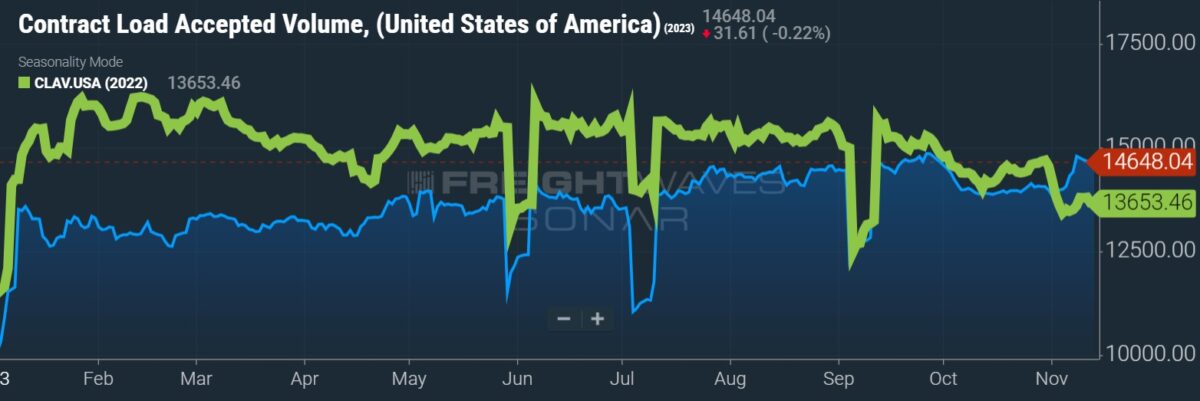
Chart: (SONAR: CLAV.USA) The Contract Load Accepted Volume Index measures accepted load volumes moving under contractual agreements. It excludes all rejected tenders. CLAV.USA has inflected positively y/y. To learn more about FreightWaves SONAR, click here.

Freight expenditures captured by the company fell 23.3% y/y and were down 2.4% seasonally adjusted from September. Netting the shipments decline from the expenditures decline implies actual rates were up 0.5% from the prior month but down 15.2% y/y.

This was the fifth straight month the expenditures subindex, which includes fuel surcharges, recorded a 20%-plus y/y decline. The data set is expected to decline 18% y/y in 2023, following two years of outsize gains.

The expenditures subindex is also forecast to decline 14% in the first half of 2024 compared to an expected decline of 11% a month ago.

“With spot rates stabilizing, sequential declines are likely to slow from here, but the freight market is likely to deliver more savings to shippers this holiday season,” Denoyer said.

Chart: (SONAR: NTIL.USA). The National Truckload Index (linehaul only – NTIL) is based on an average of booked spot dry van loads from 250,000 lanes. The NTIL is a seven-day moving average of linehaul spot rates excluding fuel. Spot rates are still 9% lower y/y.

Cass’ truckload linehaul index, which excludes fuel and accessorials, also reached a cycle low during the month. The data set declined 8.3% y/y. However, this was the slowest y/y rate of decline recorded by the subindex since February and it was down just 0.6% from September.

“We continue to expect modest y/y growth in consumer spending this holiday season, driven by the acceleration in real disposable incomes and the ongoing strong labor market,” Denoyer said.

However, he noted that the broader economy is stronger than the for-hire market.

“Although private fleet capacity expansion continues to pull freight from the for-hire market, we think equipment purchasing patterns are changing, which should propel the cycle forward in 2024, even if the broad economy slows,” Denoyer said.

Data used in the Cass indexes is derived from freight bills paid by Cass (NASDAQ: CASS), a provider of payment management solutions. Cass processes $44 billion in freight payables annually on behalf of customers.

More FreightWaves articles by Todd Maiden

FreightWaves announces $100K meme contest

Welcome to the WHAT THE TRUCK?!? Newsletter presented by Trauxit. In this issue, freight meme wars; what imports say about holiday retail; and skipping the line in Panama.

The meme wars have begun

Dooner

Battle lines Just hours after FreightWaves’ F3 ended, a rival journalist tweeted, “Most people in logistics and freight and trade are nice people, but serious people, and meme-ing your way into the industry’s consciousness only goes so far with them.” 

The problem with that line of logic is that we’d just spent three days with over 1,000 of those serious people in logistics, and we learned something: A depressed market requires a healthy dose of humor. Maybe it’s the gallows swinging or just the stress and tedium of the job, but memers went over big at F3.

In fact, when I think of the best modern marketers in this space, I don’t look to people who actually call themselves marketers. I look at the work of FreightCaviar, LostFR8, Boris Panov and of course what we do on WTT.

In fact, we had so much success inviting content creators out to F3, we’ve made it a core part of our mission moving forward.

X

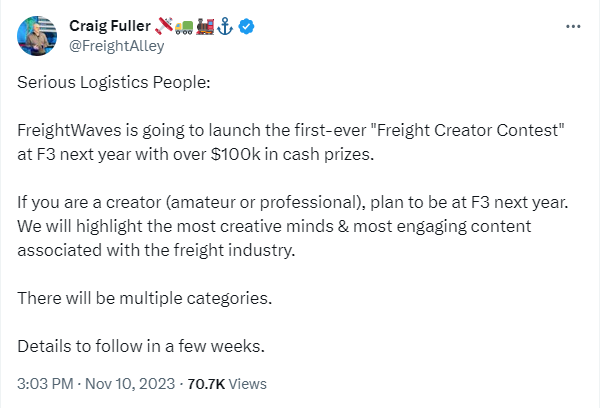
$100K memes — Every group needs a common enemy or idea to attack in order to galvanize the troops. Nobody understands that better than my boss, Craig Fuller. Instead of standing in front of the meme revolution, he has put a bounty out for creators to grab.

He tweeted, “FreightWaves is going to launch the first-ever ‘Freight Creator Contest’ at F3 next year with over $100K in cash prices.”

X

Meme a little meme — While more details about the contest will be released soon, I’m happy to announce that I’ll be hosting the event. I can’t wait to see the creative energy that this contest produces and in turn, I hope it helps me to elevate my game.

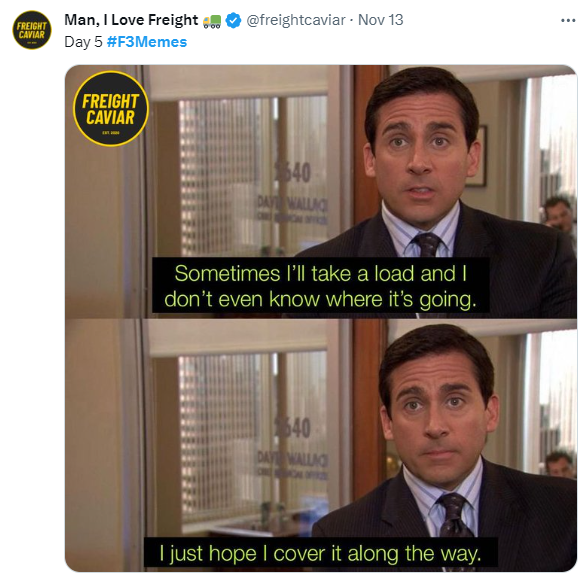
For now, all you need to do is be on X and use the #F3Memes hashtag to participate. The submissions are already coming in hot. Here are a few of my early favorites.


X

X

X

X

X


X

What imports say about the holiday retail season

X

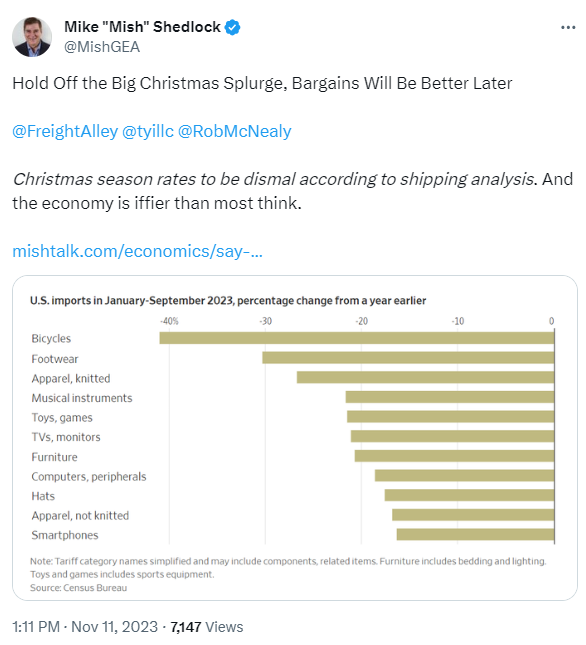
Signs aren’t great — Lower seasonal hiring, consumers feeling crushed by retail inflation and general import trends are pointing to a muted holiday season. Not only that, but experts are telling consumers to wait out holiday deals. “This holiday will be late breaking and heavily deal reliant,” Chris Cocks, chief executive at Hasbro, told The Wall Street Journal.

On the import side, multiple categories are down over 20% this year, including bicycles, footwear, toys, TVs and furniture.

The National Retail Federation says pandemic-led growth has all but eroded. Mishtalk reports, “It expects November-December spending, not including inflation, to rise 3% to 4%. By contrast, sales rose 5.4% in 2022, 12.7% in 2021 and 9.1% in 2020.”

Line jumping at the Panama Canal

X

Slipping the bouncer a century note — It doesn’t matter if you’re in Vegas for F1 or stuck in line at the Panama Canal: Cash buys access and positioning. With over a hundred ships currently stuck in line to cross the canal and wait times growing daily due to the drought, the affluent and impatient carrier can cut in line.

But it’s going to cost you. Fortune reports, “Japan’s Eneos Group paid $3.975 million in an auction Wednesday to secure the crossing, bidding documents show.” The normal fee to transit that vessel would be around $400,000.

WTT Wednesday

Is GOT Act good for drivers?; getting the 411 on docks On Wednesday’s episode of WHAT THE TRUCK?!?, FreightWaves’ Rachel Premack joins Dooner to co-host the show. They’ll talk about the GOT Act and if it’s good for trucking; freight meme wars; and how not to drive a truck simulator.

DeGroot Logistics’ Adam DeGroot just got back from Chattanooga. We’ll find out what deals he was making at F3, why DeGroot acquired Dock411 and what they’re learning about the state of shipper facilities.

ZuumApp’s Mustafa Azizi talks about hang gliding over Chattanooga at F3, how to cook a mystery box and what innovation means for a TMS.

SRS Distribution Inc.’s Ben Richey takes us into world of roofing materials and building supplies. We’ll find out how a distribution network works for this type of freight.

FreightWaves’ Justin Martin joins us with a Tesla Semi review, driver overtime pay, what not to do during a Level 1 inspection, how soon is too soon to put up Christmas lights and tips for memelords looking to win the $100K Freight Creator Contest.

Plus, latest news and trends.

Catch new shows live at noon ET Mondays, Wednesdays and Fridays on FreightWaves LinkedIn, Facebook, X or YouTube or on demand by looking up WHAT THE TRUCK?!? on your favorite podcast player.

Now on demand

F3 recap; Trucker For Troops; hero dogs; holiday fulfillment

F3 Day 2: What FreightTech VCs are investing in; freight fraud; automation

Tweet @ Dooner

Subscribe to the newsletter

Subscribe to the show

Apple Podcasts

Spotify

YouTube

TikTok

Twitter

Or simply look up WHAT THE TRUCK?!? on your favorite podcast player. 

All FreightWaves podcasts can also be found on one feed by looking up FreightCasts wherever you get your podcasts. 

Don’t be a stranger,

Dooner

Workhorse reports Q3 loss, may sell drone business

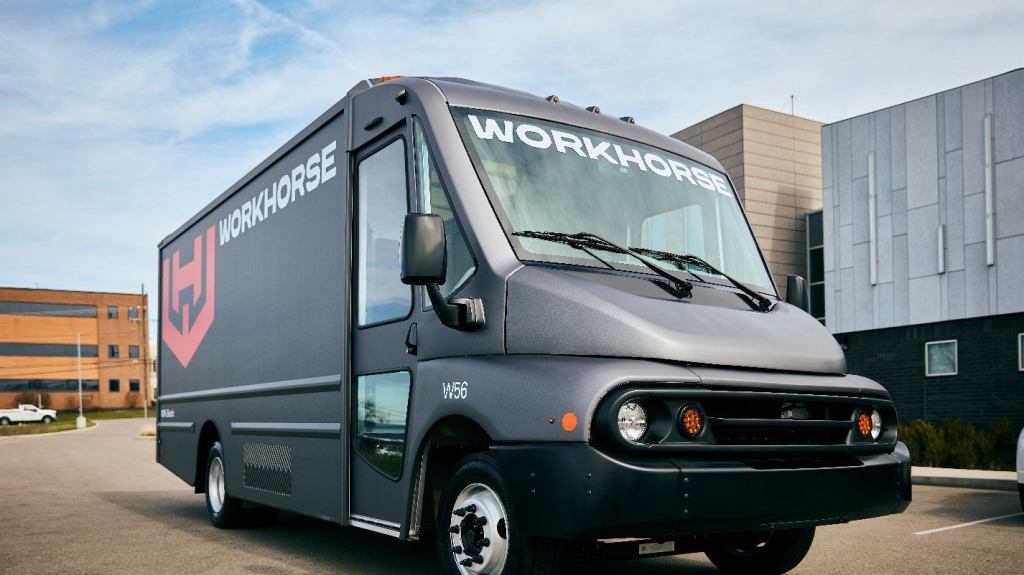
Workhorse Group reported lower-than-expected revenue and another loss in the third quarter, this time blamed on California excluding its electric trucks from an incentive program.

The Cincinnati-based company also may sell its drone business as it struggles to conserve cash it needs to scale the core medium-duty electric truck operation.

The lack of vouchers — valued at $40,000 each — from the Hybrid and Zero-Emission Truck and Bus Voucher Program (HVIP) led potential customers to avoid placing orders for Workhorse’s Class 4-6 W4C cab chassis, and W750 and W56 step vans. The California Air Resources Board (CARB) last Wednesday cleared the way for Workhorse’s participation in HVIP.

“CARB established a first-of-its-kind program for intermediate vehicle manufacturers with Workhorse. As a result, we now have our own voucher pool here at Workhorse, a huge enabler for commercial EV sales,” Workhorse CEO Rick Dauch said on the company’s earnings call with analysts. “Without those incentives, you aren’t really going to sell too many trucks.”

Revamped product lineup

Betting on the future has long been Workhorse’s way of operating. With a pending notice of going concern, a stock price unchanged at 40 cents on Tuesday and minimal cash, its future is anything but assured. Amid these challenges, Dauch has led a 22-month revamping of products to assure automotive-grade quality. 

Step vans typically stay in fleets for 15-20 years. The introduction of electromobility raises durability questions despite promises of less maintenance and total cost of ownership far exceeding internal combustion engines.

Fleets hesitate on electric truck orders

“We are seeing some wariness on the part of the fleets. Are these EV trucks really going to be capable of handling the duty cycles and the payloads and the ranges that they require on a day-to-day basis?” Dauch asked.

A California Trucking Association challenge to the January 2024 implementation of the Advanced Clean Fleets rule also is causing some fleets to hold back on ordering the more expensive electric trucks until they must. The CTA challenge should be heard in the next 30-60 days, Dauch said.

“My experience growing up in the auto industry for almost 50 years now, I’ve seen CARB lose battles. But I’ve never seen CARB lose the long war,” Dauch said.

Drone business may be on the block

Workhorse is conducting a strategic review of its drone business, originally envisioned as a truck-mounted application. Production of the HorseFly drone began in Mason, Ohio, during Q3. Efforts for Federal Aviation Administration certifications continue.

“Now [it] is prudent to ensure we are unlocking the most value for Workhorse shareholders, while best positioning our Aero business to capture and fund future growth opportunities,” Dauch said.

Workhorse spends about $700,000 a month on the drone business, CFO Bob Ginnan said. That money could be applied to the truck business.

By the numbers

Workhorse recorded $3 million in Q3 sales, mostly from the reversal of a $2.4 million sales allowance for W4CC vehicles. That compared with $1.5 million in the same period last year.

Selling fewer vehicles reduced the cost of sales to $6.6 million compared to $9.5 million a year ago. Getting rid of C-Series vehicles the company recalled and bought back from customers reduced inventory reserves by $2.9 million.

The net loss for the third quarter of 2023 was $30.6 million compared to a net loss of $35.4 million a year ago.

Workhorse had about $38.9 million in cash at the end of Q3, down from about $62 million at the end of Q2. Inventory clearing reduced its quarter-over-quarter cash burn. The company is in advanced discussion to raise money for scaling. Workhorse burns through about $20 million a quarter.

Shareholders approved an increase in the authorized share count to 450 million shares from 200 million on Sept. 1. That allows the company to use new shares to back capital increases, but the low stock price makes that harder.

Editor’s note: Updates with closing stock price and further financial details.

California Trucking Association sues to block Advanced Clean Fleets rule

Workhorse shareholders back management’s new stock gambit

Workhorse avoids SEC enforcement, scraps C1000 electric delivery van

Click for more FreightWaves articles by Alan Adler.

Postal Service posts massive net loss in FY ’23

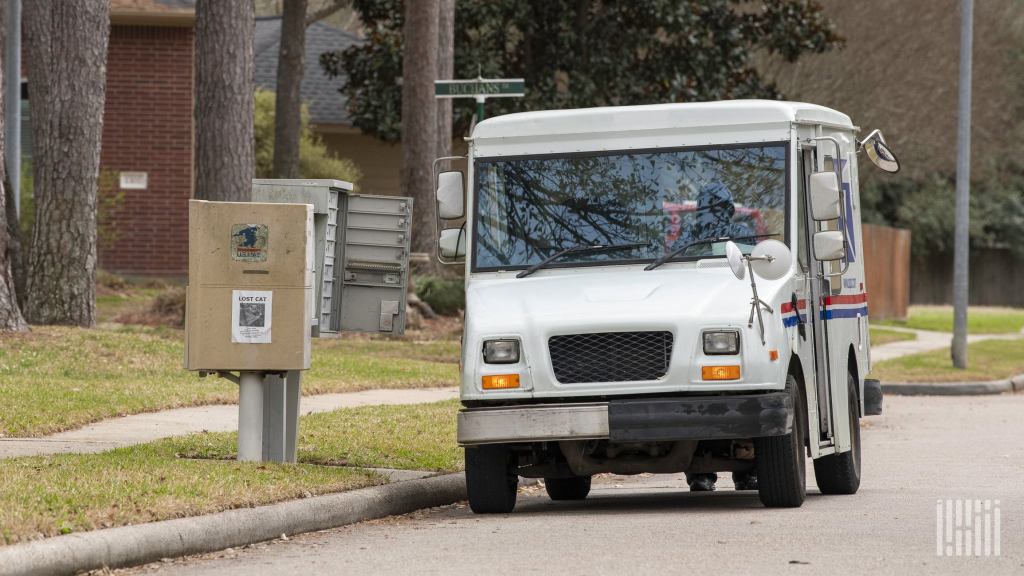
The U.S. Postal Service posted a $6.5 billion net loss for its 2023 fiscal year, which ended Sept. 30, a much sharper decline than the $4.5 billion loss the agency forecast a year ago.

Operating revenue declined $321 million to $78.2 billion, as a $300 million year-on-year increase in shipping and revenue was offset by a nearly $900 million drop in marketing mail revenue. First-class mail revenue increased by $515 million due to two increases in first-class postage rates during the fiscal year.

Shipping and package volumes declined to 7.05 billion from 7.23 billion in fiscal 2022 as the Postal Service dealt with a general slowdown in e-commerce activity. The bloodletting occurred in first-class and marketing mail, its two largest volume generators. First-class mail volumes fell by nearly 3 billion pieces, while marketing mail volume dropped by about 7.3 billion pieces.

Both segments continue to be hit hard by digital conversion. In the case of first-class mail, the two price increases may have hastened the conversion to digital alternatives.

Total volumes fell by 11.3 billion pieces year over year, the Postal Service said.

Much of the net loss can be attributed to a $5.8 billion year-on-year increase in operating expenses.

The fiscal 2023 performance stood in stark contrast to the $56 billion in net income reported in fiscal year 2022. The fiscal 2022 gain was due primarily to the one-time, noncash impact of the Postal Service Reform Act signed in April of that year. The law provided the Postal Service with about $107 million in assistance to help it shed prior liability for pre-funding retiree health benefits and for exempting it from future payments.

At that time, the Postal Service had hoped that its 10-year Delivering for America reorganization plan launched in March 2021 would result in the agency achieving a break-even financial position in fiscal year 2023. Rapidly rising inflation, slowing volumes and the cost of revamping huge portions of its network kept the Postal Service from reaching that goal.

In a statement, Postmaster General Louis DeJoy said that the Postal Service is in the “early stages” of its transformation, and that it is addressing near-term “financial headwinds” caused by inflation. In an effort to cut costs, the Postal Service is shifting package deliveries from airfreight to less expensive ground transportation.

In a related development, the Postal Service plans in the next few days to reduce prices on short-haul shipping and package services to high-volume, commercial shippers. The discounts, which would be off of July rates, would mostly apply to shipments moving less than 600 miles and weighing between 1 and 6 pounds. Virtually all of the discounts in those weight and distance ranges are in double-digit amounts.

The discounts apply to Priority Mail, a two-to-three-day delivery product, Ground Advantage, a recently launched two-to-five-day delivery product, and Priority Mail Cubic, a product for smaller packages that sets prices based on the pieces’ dimensions rather than weight. The discounts are designed to support parcels moving over truck-friendly lengths-of-haul.

The Postal Service competes for shipping volume through various online shipping platforms that provide the user with discounted shipping costs that are not available everywhere. In competition with UPS Inc. (NYSE: UPS), for example, the least expensive service typically wins the shipping label battle. 

“This year has continued the shift in leverage to the shipper due to overbuilt carrier capacity.  This idle capacity is the ammunition for discounting in these faceless transactions,” said Gordon Glazer, who heads the postal practice at consultancy Shipware LLC. “The advantage of these programs is simplicity, no need for a specific carrier contract, no minimum volume requirements either. On the downside there is no opportunity to build your own carrier relationship.”

ATI cargo pilots give union power to call a strike

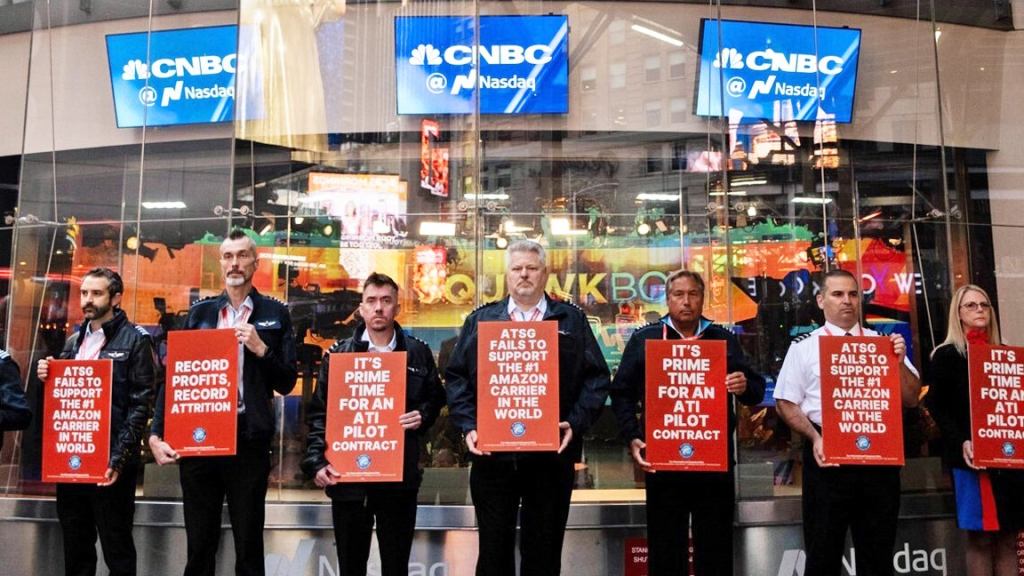
Pilots with red signs picketing outside the Nasdaq stock exchange.

Pilots at Air Transport International, a cargo airline owned by Air Transport Services Group that provides airlift to Amazon and DHL Express, have authorized union leaders to call a strike over stalled labor talks once such action becomes permissible under federal law.

The Air Line Pilots Association (ALPA) said Tuesday that 99.7% of union members voted in favor of strike authorization, with nearly all of Air Transport International’s (ATI) 540 pilots participating. 

Management and the union have been negotiating a new contract for 3.5 years and the talks are now being mediated by the U.S. government. 

A strike authorization is a signal to the company that the pilots are serious and ready to walk off the job, especially when it has overwhelming support. 

No labor action against the ATI is imminent. The company hauls packages for Amazon, provides supplemental airlift to UPS and supports U.S. military missions, in addition to offering charter service to logistics companies and other customers. 

Under federal rules designed to prevent work interruptions in critical interstate commerce, workers are prohibited from striking and companies from locking out workers until a lengthy series of bargaining steps, including federal mediation, are completed.

The federal mediator has the power to hold the parties in mediation indefinitely. Federal mediation has been underway since late March.

If no progress is made, the National Mediation Board (NMB) at some point may release the union to a 30-day cooling-off period, during which negotiations can still take place but no strike or lockout can occur.

If the NMB determines the parties have reached an impasse, it can propose that the remaining issues be sent to a special panel for binding arbitration. Arbitration in the airline industry is rare because both sides must agree to it. 

The law allows the president to create an emergency board to investigate a labor dispute and issue a report within 30 days if the parties reject binding arbitration. That is followed by another 30-day period to consider the board’s recommendations and reach an agreement. If no agreement is reached at the end of the cooling-off period, the parties may take action, such as a strike or lockout. 

Pilots are seeking a contract that improves pay, retirement and work rules. U.S. passenger airlines American, Delta, United and Hawaiian have agreed to new contracts that raise pilot pay as much as 35% to 40% over four years.

“Today, ATI pilots sent a clear, unified message to management that we are willing to go the distance to secure a new contract,” said Capt. Mike Sterling, chair of the ATI ALPA Master Executive Council. “Now is the time for ATI to deliver a new contract that reflects the value we bring to the airline as highly skilled professionals. Our goal is to reach an agreement, not to strike. The ball is in management’s court, and it’s time for them to get serious at the bargaining table and invest in our pilots.” 

ALPA claims 220 pilots, more than a third of the pilot base, have defected to other carriers for better work conditions so far this year. A quarter of the pilots left last year. In late September, it said ATI was unable to fill captain vacancies for the third consecutive month. Many passenger airlines are offering large signing bonuses to lure pilots from other employers. The attrition rate at ATI is far higher than at other airlines, according to ALPA.

“At the end of the day, you’ve got to have a contract that works for both sides. So if you’ve got the union side asking for FedEx or UPS wages or industry-leading, and that’s not in the cards from what we get from our customers, then that’s just not something we can agree to,” said Joe Hete, CEO of Air Transport Services Group (NASDAQ: ATSG), during last week’s earnings briefing. “So the key is finding a happy middle ground between their demands and our needs to keep things on the rails.”

Management said last summer that it doesn’t expect to reach a labor deal in 2023.

Hete was reinstated last week as CEO after ATSG’s board fired Rich Corrado because the company’s stock has underperformed the market and airline sectors for a long period of time. The company has taken lower revenues and profits this year, as has the rest of the industry, because demand has contracted from the heyday of the pandemic. 

Shareholders appear unable to benchmark ATSG against peers because it is not a pure cargo airline. The company is the largest lessor of freighter aircraft in the world and operates two cargo airlines that predominantly operate under long-term, fixed-price contracts for e-commerce and express delivery companies that require daily scheduled service. Other business units carry out aircraft maintenance, freighter conversions and airport logistical services.

ATSG reported third-quarter revenues increased 1% to $523 million year over year. Adjusted earnings before interest, taxes, depreciation and amortization were $137 million, 16% below the third quarter of 2022.

ATSG last year generated a record $2 billion in revenue and adjusted profits before accounting measures of $641 million, an 18% increase from 2021. The pilots made their demands before the industry realized the extent of the market downturn.

A new pilot contract is expected to increase costs at a time when the company’s income stream is declining. But attrition is also costly because ATI has to hire new pilots and train them for several months, during which time they are not flying aircraft that generate revenue. 

Click here for more FreightWaves stories by Eric Kulisch.

RECOMMENDED READING:

Cargo airlines throttle back on aircraft leases, ATSG says

Malaysian cargo airline Raya leases ATSG’s 1st Airbus freighters

3PLs get fresh legal win in fight to block liability in truck accidents

(Editor’s note: the original article has been supplemented with information about a request for Supreme Court certioari filed by the attorneys for Ying Ye in a case that deals with the question of broker liability).

A brokerage has once again been found not to be liable for a fatal accident, adding to a conflicting body of law that the legal industry hopes may eventually make its way to the Supreme Court.

And to add a twist to the case involving UPS (NYSE: UPS) subsidiary Coyote Logistics, the load in question was double brokered, and Coyote didn’t hire the carrier involved in the October 2020 wreck on Interstate 81 in Lackawanna County, Pennsylvania. Not only that, the decision by Judge Karoline Mehalchick in the U.S. District Court for the Middle District of Pennsylvania notes that Coyote didn’t even know about the accident until two weeks after it occurred.

The specific action taken by Mehalchick last week was to rule favorably on a request by Coyote for summary judgment to dismiss the plaintiffs’ charges against it in the case brought by the estates of the two people killed in the accident, Raven Lee and Anderson Bastone. The lawsuit against other defendants, including the two carriers involved in the double brokering, will continue.

The Lee/Bastone case adds to a body of decisions that mostly have favored the conclusion that the Federal Aviation Administration Authorization Act (F4A) precludes brokers from being held liable for injuries or death caused by a carrier they hired to deliver a load. But it isn’t unanimous; the Miller vs. C.H. Robinson case, which last year was denied review at the Supreme Court, held the giant 3PL liable for injuries suffered in an accident that involved a carrier hired by Robinson (NASDAQ: CHRW).

As Mehalchick wrote, “neither the Supreme Court nor the Third Circuit have addressed this specific issue of whether such claims against brokers are preempted by the FAAAA.” She added: “Federal district courts are sharply divided on how to apply these guiding principles.”

When the Supreme Court punted on reviewing Miller vs. Robinson, it left the 3PL legal industry looking for a trip back to the Supreme Court for another attempt to have the high court resolve the conflicting views of broker liability. A conflict in the Circuit Court decisions since then is what lawyers had hoped for, and the Ying Ye v. GlobalTranz Enterprises case, in which an appellate court found GlobalTranz not liable in a fatal accident, gave them one part of it. It is possible that the Coyote Logistics case now adds a second federal court decision that stands, with Ye, in opposition to the findings of Miller vs. Robinson.

Ironically, just a few days before the Coyote decision was handed down, attorneys for Ying Ye did file a request for certiorari with the Supreme Court. That now appears to be the best path for a SCOTUS review. Cases such as the Coyote case would need to first go through an appellate process before a request could for certiorari could be made. The Ye decision already was one that came out of the appellate division for the Seventh Circuit, which would mean the Supreme Court is next.

(Another could be the case involving Landstar and “a guy named James,” which didn’t involve death or injury but found that Landstar (NASDAQ: LSTR) did not have liability in the stolen cargo case.)

Todd Rubenstein of the law firm of Taylor Nelson, which has been involved in several other cases involving brokers and F4A preemption, said in an email that the court in the Coyote case “rightfully concluded that plaintiffs’ allegations strike at the heart of Coyote doing what Coyote does … being a freight broker. In other words, plaintiffs didn’t allege that Coyote failed to exercise reasonable care required by any other member of the general public, but rather, that Coyote was negligent in its actions specifically as a broker, as the one who arranged for the transportation of the freight.”

In the Coyote case, Michael Lee, representing the estates of the two people killed in the accident, sued Golf Transportation, which Coyote had booked to move the load of soup. The defendants in the suit also included JP Logistics, O’Connor Trucking, and food distributor UNFI and its subsidiary UNFI Transport. UNFI was the consignee that hired Coyote to move its load. JP Logistics owned the trailer that was being hauled by driver Greg Lesdowski on the night of the wreck. (JP Logistics also sought summary judgment to have itself removed from the case; that was denied.)

The judge’s decision extensively reproduces the terms of the contract between Coyote and Golf. One section of that contract prohibits Golf from double brokering the load.

But it happened anyway. The load was picked up by a driver named Victor Bordo, and as the judge writes in the recap of the brokerage path, “neither Golf nor (a Golf employee named Mark Myslek) know who Victor Bordo is.” Golf also said it didn’t know what carrier picked up the load.

But it was O’Connor Trucking that ultimately was supposed to deliver the cargo after a cross-country journey between Oregon and New York. Golf, according to the judge, did not know how it got delivered between those two points.

The recap of the case is a bit unclear on how the cargo picked up by Bordo eventually was transported in a truck driven by Lesdowski. He was behind the wheel when it collided with a car carrying the two people who died, with the driver— according to a separate document —found to have been under the influence of marijuana. (A recap of the crash in the original complaint portays an incident in which both the truck and the car were changing lanes in proximity to each other, and the car eventually ended up under the truck.)

The heart of the federalism argument about F4A is that any state regulation that could impact a “price, route or service” of trucking — that term taken directly from the 1994 law — is preempted by F4A unless it falls under what is known as the “safety exemption.” That part of F4A holds that state regulations regarding safety and liability are not necessarily precluded by the federal law.

Citing an earlier case known informally as Bedoya, Mehalchick said the plaintiffs’ claims were preempted by F4A “because imposing Pennsylvania’s common-law negligence liability upon Coyote would directly target and significantly impact the broker’s services.”

The focus on Coyote’s brokerage activities is “based entirely upon Coyote’s decision to select Golf as the motor carrier to transport the … load,” the judge wrote. “Plaintiffs’ claims have a significant impact on Coyote’s service with respect to the transportation of property because the claims seek to enforce a duty of care related to how Coyote, the broker, arranges for a motor carrier to transport shipments.”

Doing that would “require Coyote to perform additional services, such as hiring, retaining and supervising a qualified driver,” the court wrote. That would have “substantial financial consequence” for Coyote, and that would “hinder the objectives of the FAAAA.”

The court also rejected the claim by the plaintiffs that the safety exemption under F4A could be the basis for finding Coyote liable.

“A broker, by definition, may not provide motor vehicle transportation for compensation; only a motor carrier may perform that task,” Mehalchick wrote.

Given that the safety exemption involves motor vehicles, Coyote’s role in the supply chain means it has “no direct connection to motor vehicles,” shooting down the plaintiffs’ safety exemption claim.

More articles by John Kingston

Reliance’s Albrecht sees capacity disappearing from market at rapid pace

Uber Freight records tiny levels of improvement in Q3

Haslam family sues Berkshire over valuing of final chunk of Pilot

Teamsters unionizes some truck drivers at large US Postal Service fleet

New terminals at a major contractor of the U.S. Postal Service voted to unionize with the Teamsters union, according to a Thursday press release from the Teamsters.

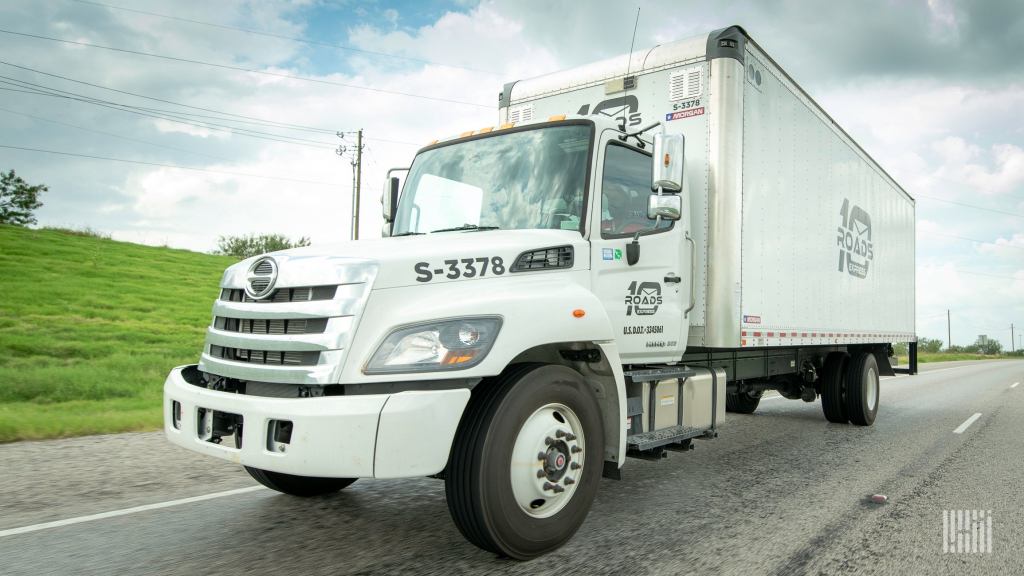
10 Roads Express, the trucking company, employs more than 4,400 truck drivers, according to SAFER Web. Thirty-six drivers at 10 Roads Express voted to join the Teamsters last week, according to the union; the drivers are based in Carter Lake and Council Bluffs, Iowa, as well as Omaha, Nebraska.

More than 30 truck drivers at 10 Roads Express, all based in Kansas, voted to join the Teamsters in June, according to the union.

A Teamsters spokesperson said the union represents some 300 employees at 10 Roads Express. Around 200 of them joined the union in the past two years.

10 Roads Express did not respond to a FreightWaves request for comment. Reached by the CCJ, 10 Roads Express declined to comment on the Teamsters’ organizing efforts in the fleet or why drivers decided to unionize. 

10 Roads Express was the second-largest contractor with the Postal Service in the 2022 fiscal year, according to a list of top Postal Service vendors from Culhane Meadows, a law firm that specializes in government contracting work. That year, the Postal Service awarded more than $700.4 million to 10 Roads Express.

Under Postmaster General Louis DeJoy, the Postal Service has diverted some of its over-the-road freight spending from its longtime trucking partners into the freight brokerage market, as FreightWaves reported in 2022. That pivot is expected to save the Postal Service cash, but it’s expected to squeeze carriers that have worked with the quasi-governmental agency for decades.

Large carriers like 10 Roads Express may be protected during this transition, as longtime parcel expert Satish Jindel told FreightWaves last year.

Meanwhile, trucking companies have seen drivers increasingly unionize this year amid a nationwide push for more labor organizing. Several dozen employees at a subsidiary of Werner, an Omaha-based trucking company, voted to unionize in August and September. Werner employs some 10,200 truck drivers.

Drivers at the Richmond, Virginia, terminal of Napa Transportation, a trucking company that employs nearly 400 drivers, voted to join the Teamsters in June.

Email rpremack@www.freightwaves.com with your thoughts. Subscribe to MODES for weekly trucking insights.

Check Call: November steals

people gathered around a desk of computers. Check Call news and analysis for 3pls and brokers
(Gif: Tenor)

It’s Q4 and cargo theft is on the rise. It’s a down market and end of the year, and cargo thefts typically rise this time of year. However, this year CargoNet saw a 59% increase year over year in thefts and pilferage in the U.S. and Canada during the third quarter. The top way goods were ending up in the wrong hands was through “shipment misdirection,” in which thieves were using stolen identities from truckers and freight brokers to get freight from the intended receiver. 

FreightWaves’ Mark Solomon’s article says, “Cargo theft, especially strategic thefts, is expected to continue at ‘unprecedented levels’ through year’s end, CargoNet said. … Throughout the year, strategic cargo theft rings have accelerated their efforts during holiday periods, and the upcoming holidays will be no different.”

Top targets are loads containing copper, brass, aluminum, licensed sports apparel and personal care and beauty products. It cannot be stated enough that driver safety is the No. 1 thing. Work with carrier partners to make sure drivers are practicing safe habits. No load is worth a driver’s life. And especially now closing out the year, it’s crucial to validate carriers’ insurance as it’s not a matter of if something happens, it’s a matter of when. 

(Image: ImgFlip)

Those who dabble in international freight or container shipping, I’ve got some bad news: The Panama Canal is still limiting the number of ships able to pass daily. There doesn’t seem to be an end in sight for when the canal will lift the restriction. The pain of the canal has been felt in the various sectors for a while, but the new industry that is feeling the effects is the grain market

The U.S. primarily exports grain via container ship. The main route from the U.S. Gulf travels through the Panama Canal to Asia. Due to the drought, exporters have had to look to alternative routes such as the Suez Canal. Ships now are leaving the U.S. Gulf Coast, traveling across the Atlantic Ocean, going through the Suez Canal in Egypt, through the Red Sea to come out in the Indian Ocean and then sail up to China. Since it is an arguably longer route, it adds about 10 days onto the journey and many more miles. 

For those shipping commodities via dry container, this situation is far from resolved as Panama still has restrictions and the escalation of conflicts near the Suez Canal could create additional problems with the Suez option. Here’s hoping Panama gets a lot of rain in the near future to bring some normalcy back to container shipping. 

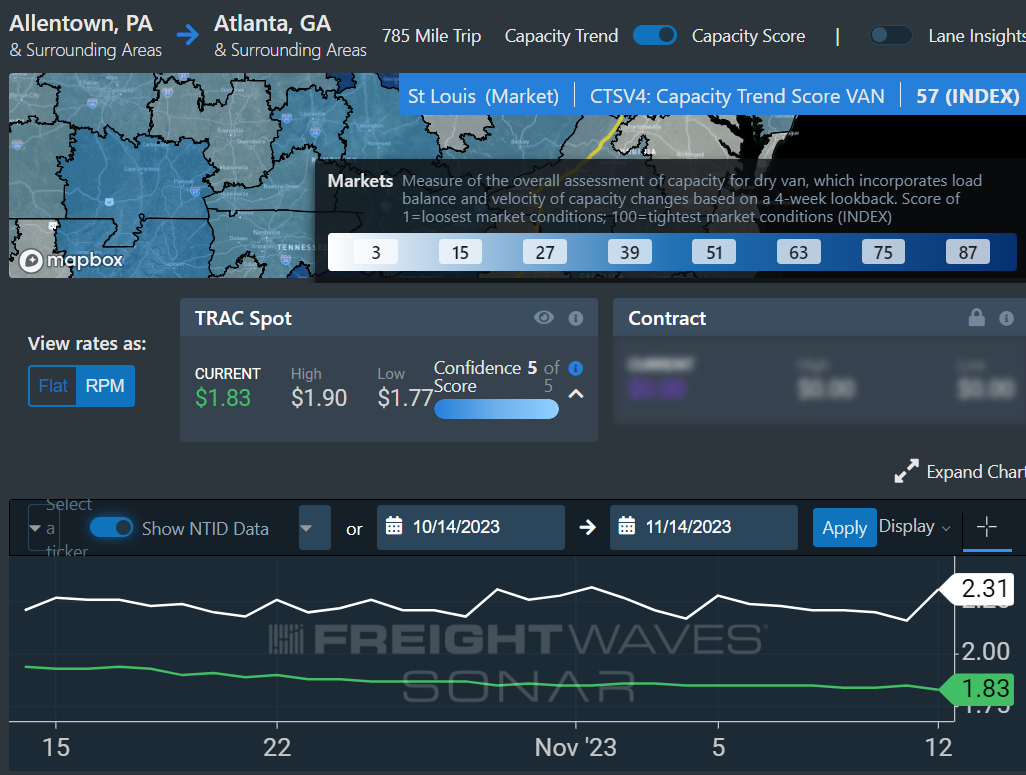
Trac Tuesday. This week’s TRAC lane of the week is from one top freight market to another, from Allentown, Pennsylvania, to Atlanta. The 785-mile trip comes in 48 cents cheaper than the National Truckload Index. Outbound tender volumes in Atlanta have risen 7.28% week over week. The same can’t be said for Allentown, as outbound tender rejections have dropped 3.14%. As a result of both markets rising and falling at close rates, that has pretty much brought spot rates to a standstill. The one good thing is that a carrier heading into either of these markets should have little issues getting out of the market. 

(Gif:GetYarn)

Who’s with whom? The U.S. government is with the truck drivers. That’s a sentence I never thought I’d type. However, two Democratic senators and a bipartisan team of two House representatives are pushing for a bill that would give truck drivers the right to overtime pay. Currently drivers aren’t subject to overtime pay as they are exempt from the 1938 law guaranteeing overtime pay to workers who work more than 40 hours a week. 

The bill has been proposed and it still has to go through committee review before potentially going for a vote in the House and the Senate. The industry is mixed about it. The Owner-Operator Independent Drivers Association, Teamsters union, Truck Safety Coalition and the Institute for Safer Trucking support the bill while the American Trucking Associations is against it on the grounds that it would throw the supply chain into chaos and increase impacts for inflation. 

FreightWaves’ Rachel Premack’s article says, “Studies suggest that increasing pay for truck drivers reduces crash count. Reducing uncompensated work, like the hours that drivers often spend unpaid waiting at warehouses to get loaded or unloaded, also is a boon for safety and overall supply chain efficiency, studies suggest.”

The more you know

Fillogic closes $13M Series A, grabs third spot on FreightTech 25

Daily Infographic: US holiday spending to climb 3%-4% over 2022, NRF predicts

Diminished inventories may boost holiday expediting

Lawyers will square off on California trucking’s latest AB5 exemption request 

Trucks and teen motorists a dangerous mix, NTSB panelists say

See you on the internet.

MaryJoin the community in freight and subscribe for more at www.freightwaves.com/subscribe.

New logistics terminal opens along Texas Gulf Coast

Project freight forwarder deugro announced it has opened a 96,775-square-foot operations and logistics terminal in Baytown, Texas, about 26 miles east of Houston.

The facility offers access to the nearby Houston Ship Channel, as well as commercial ports in Houston and Galveston, according to Jeff Smith, deugro USA’s global head of supply chain logistics.

“Adjacent to Port Houston, deugro is starting a new chapter of growth and prosperity — providing seamless logistics solutions, climate-controlled warehousing, and customized packing and crating in the operational environment of a true project freight forwarder,” Smith said in a news release

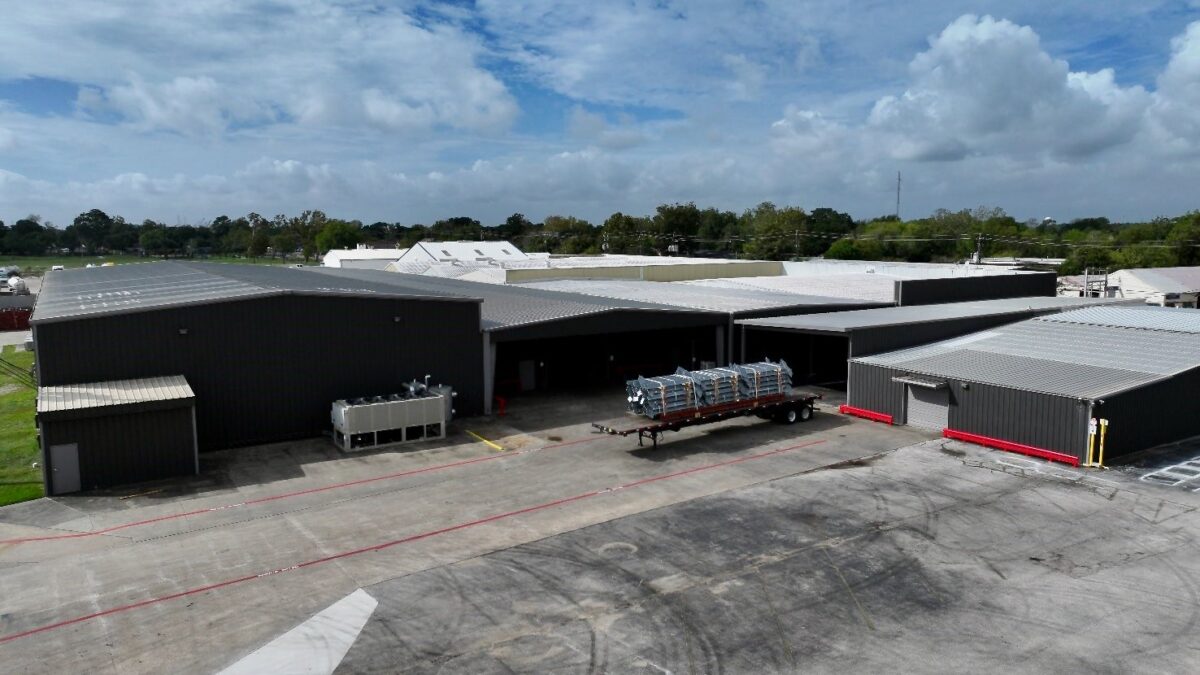
duegro’s Baytown logistics facility offers shippers out-of-the box solutions for storing industrial and oilfield services equipment. (Photo: deugro)

The terminal offers a range of long-term and short-term storage solutions — from palletized storage to bulk storage — designed to accommodate various needs, including out-of-the box solutions for storing industrial and oilfield services equipment, the company said. Full packing services are also available on site, including customized export crating, casing, container packing and unpacking, and cross-docking. 

The facility is equipped with two all-weather container loading docks; an oversized door for cargo access; 14 grade level overhead doors; and a 7-acre outdoor secure hardstand area featuring six dock high truck wells.

Founded in 1924, the deugro organization is a specialized forwarder in the capital project and heavy-lift field. The Switzerland-based company has a network of more than 70 offices in over 40 countries, with about 3,000 global employees.

Port Houston’s monthly container flows slipped in September to 325,588 twenty-foot equivalent units, a year-over-year (y/y) decrease of 8% compared to the same period last year. 

Container volumes from January through September at Port Houston totaled 2.8 million TEUs, a 4% y/y decrease compared to the same period in 2022.

Click for more FreightWaves articles by Noi Mahoney.

More articles by Noi Mahoney

Mexico remains top US trade partner, Laredo No. 1 gateway

FreightWise acquires TMS provider Kuebix from Trimble

5 takeaways from XPO’s Brad Jacobs at Future of Freight Festival