Daseke seeing ‘flight to safety’ as competitors exit

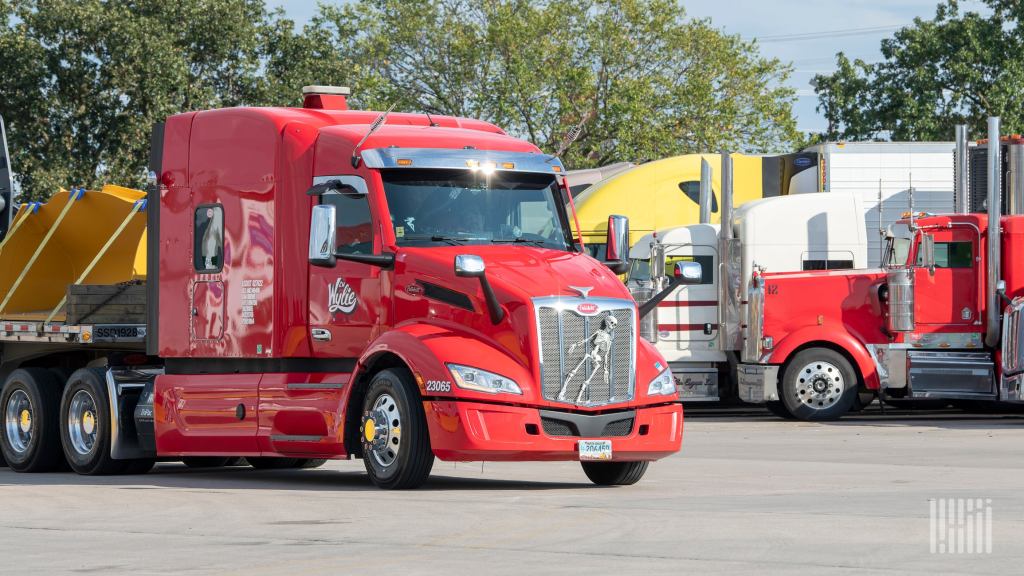
Daseke company E.W. Wylie tractor pulling a loaded flatbed at a truckstop

Flatbed truckload carrier Daseke cut its 2023 outlook on Thursday but said it was hopeful rates would improve as the market becomes more balanced next year.

Third-quarter adjusted earnings per share of 12 cents were in line with the consensus estimate but 22 cents lower year over year (y/y). The result excluded 10 cents in items like acquisition and restructuring costs. However, higher interest expense due to rising interest rates and an increase in preferred dividend payments presented a 10-cent headwind.

Consolidated revenue of $402 million was 13% lower y/y but only $5 million lower than in the second quarter. Brokerage revenue across the platform fell by 26%.

Daseke cut its full-year 2023 adjusted earnings before interest, taxes, depreciation and amortization forecast to $185 million to $190 million, down 9% using the midpoints of the current and prior ranges.

Looking to next year, CEO Jonathan Shepko told analysts on a Thursday call that he expects contract rates to be flat in the first half, potentially improving in the back half as supply and demand come into balance. He said brokers and asset-light providers that have been offering lower rates are now struggling to cover loads and some are exiting the market.

“We’re starting to see a flight to safety,” Shepko said.

Daseke’s (NASDAQ: DSKE) specialized TL segment reported an 11% y/y revenue decline. Revenue from freight operations was off 9% as average tractors in service increased 4% but revenue per tractor was down 12%. Revenue per mile declined 9% y/y to $3.31.

Freight and brokerage loads combined were off 7% y/y. Favorable demand trends in verticals like agriculture, mining, automotive and aerospace were noted. However, weaker demand for high-security cargo and freight tied to the construction markets led to the decline.

The specialized segment’s 92.1% adjusted operating ratio was 470 basis points worse y/y and 170 bps worse than the second quarter.

Table: Daseke’s key performance indicators

The company’s general flatbed unit reported a 16% y/y decline in revenue to $164 million. Freight revenue was down just 6% but brokerage revenue fell 42%. Revenue per tractor in the quarter was down 6% as revenue per mile fell 9% to $2.36.

The flatbed segment posted a 95.3% adjusted OR, 340 bps worse y/y but only 20 bps worse than the second-quarter result.

Consolidated adjusted EBITDA was $50 million, a 23% y/y reduction. The company said fuel expense was a $5 million drag as surcharges didn’t keep pace in the quarter, and lower gains on equipment sales were a $2 million headwind.

“Through this market pressure test, we are optimizing the efficiency of our organization, and are open to trading size for profitability and resiliency in support of our goal to drive long-term value for our current and potential shareholders,” said Shepko.

The company reduced combined spend on salaries, wages and benefits and purchased transportation by 330 bps y/y as a percentage of revenue. The comp and benefits line was higher y/y (as a percentage of revenue), but Daseke has been transitioning more freight to company equipment and drivers where margins are better.

Sixty-two percent of the company’s combined fleet was operated by company assets and drivers in the period compared to 57% a year ago.

Daseke increased its net capital expenditures budget to a range of $155 million to $160 million, a 13% increase at the midpoint. The company said the OEMs will now be able to deliver all of the equipment it planned on purchasing when the year began. It also pointed to lower gains on equipment sales as a reason for the capex increase.

Daseke expects to be cash flow-positive next year “regardless of the market environment.”

The company reported liquidity of $189 million and total debt of $658 million, a $5 million increase from the second quarter due to increased equipment spending. Gross debt leverage increased from 3.1 times a quarter ago to 3.3 times at the end of the third quarter. Net cash from operations was $34 million in the quarter, the highest level recorded this year.

Shares of DSKE were down 1.3% at 1:05 p.m. EST Thursday compared to the S&P 500, which was off 0.3%.

More FreightWaves articles by Todd Maiden

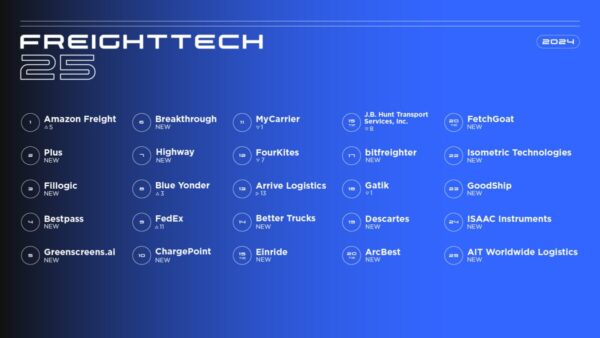
Loaded and Rolling: FreightTech 25 announced

FreightTech 25 announced

(Source: FreightWaves)

On Thursday FreightWaves presented the FreightTech 25 awards, which were chosen independently by a panel of CEOs, industry leaders, academics and investors who scored the companies. Chattanooga, Tennessee-based accounting and auditing firm HHM administered the vote. The awards recognize the most innovative and disruptive companies in the freight technology sector. 

Of the companies that were named to the FreightTech 25, 17 were newcomers, while some previous mainstays fell off the list entirely. Amazon Freight (No. 1), FourKites (No. 12) and J.B. Hunt (No. 15) are the only companies that have appeared on every FreightTech 25 list.

Regarding the large influx of newcomers, FreightWaves founder and CEO Craig Fuller said, “This was the most disrupted list I’ve ever seen. If you think about the venture cycle from 2015 to 2022 in freight for that first stage, we’re largely past that. What’s interesting about this list is how different it is than past years. A lot of new names — and a lot of names that have been on the list for many years did not make the list this year.”

Driver overtime pay bipartisan bill introduced

(Photo: Jim Allen/FreightWaves)

A bipartisan bill introduced Thursday in both the House and Senate seeks to eliminate a clause omitting truck drivers from overtime pay from the 1938 Fair Labor Standards Act. This comes after the Biden administration recommended to Congress the addition of drivers for overtime pay according to a document from February 2022. A previous attempt for legislation was introduced by a Democratic lawmaker back in April 2022 but lacked the support to move forward.

Regarding the benefits of extra driver pay, FreightWaves’ Rachel Premack wrote, “Studies suggest that increasing pay for truck drivers reduces crash count. Reducing uncompensated work, like the hours that drivers often spend unpaid waiting at warehouses to get loaded or unloaded, also is a boon for safety and overall supply chain efficiency, studies suggest.

Proponents of the legislation include the Owner-Operator Independent Drivers Association, Teamsters union, Truck Safety Coalition, and the Institute for Safer Trucking, which issued statements in support of the bill. Opponents include the American Trucking Associations, which argued the law would bring about “supply chain chaos and the inflationary consequences for consumers.” 


ATA CEO Chris Spear said in a statement on Thursday, “It would reduce drivers’ paychecks and decimate trucking jobs by upending the pay models that for 85 years have provided family-sustaining wages while growing the U.S. supply chain.”

Market update: Peak season volumes pick up

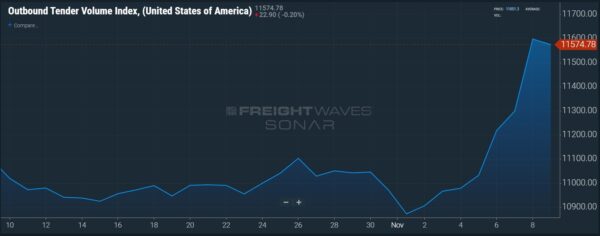
(Source: FreightWaves SONAR)

Peak season freight volumes appear to be picking up. Outbound tender volumes nationwide rose 668.41 points, or 6.13%, in the past week from 10,906.37 points on Nov. 2 to 11,574.78 points. Breaking down the volume index by equipment type, dry van tender volumes increased 318.97 points, or 4.03%, from 7,907.72 points on Nov. 2 to 8,226.69 points. Reefer volumes also saw an increase in the past week, going from 1,434.19 points on Nov. 2 to 1,497.58 points, an increase of 63.39 points, or 4.42%. 

While outbound tender volumes saw a notable movement, outbound tender rejection rates nationwide remain muted as abundant truckload capacity soaks up the extra truckload demand. Outbound tender rejection rates nationwide remained mostly flat, falling only 2 basis points from 3.46% on Nov. 2 to 3.44%. Dry van outbound tender rejection rates continue to underperform the nationwide average at 2.93% while reefer and flatbed continue to see more favorable conditions for carriers at 8.83% and 9.37%, respectively. 

As the trucking peak season continues, shippers continue to enjoy record outbound tender compliance levels and favorable spot rates for last-minute ad hoc shipments. For carriers, there remains the relentless challenge of finding freight volumes while attempting to limit the impact of falling rates.

FreightWaves SONAR spotlight: Carrier exodus continues amid trucking peak season

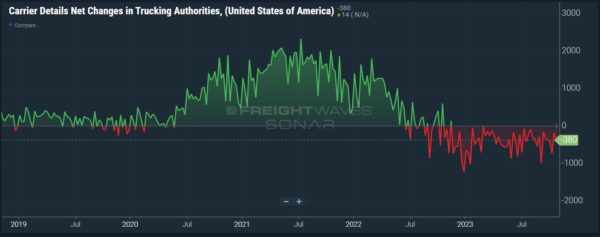
(Chart: FreightWaves SONAR)

Summary: The ongoing exodus of carriers leaving the market continues as trucking’s traditional peak season fails to impress from excess truckload capacity. From Oct. 27 through last Friday, there was a net loss of 380 unique carrier operating authorities, according to the Carrier Details Net Changes in Trucking Authorities (CDNCA) data set. For the weeks ending in October, there was a net loss of 1,720 carriers that exited the market as higher costs paired with lower rates continue to erode their operating margins.

While carriers continue to leave the market, outbound tender volumes nationwide increased 1.56% or 172.45 points in the past week from 11,046.42 on Oct. 30 to 11,218.87 points. This is the highest level recorded by OTVI since Oct. 4. Rising contracted volumes did not cause an increase in nationwide outbound tender rejection rates, with OTRI falling 25 basis points week over week from 3.54% on Oct. 30 to 3.29%.

Carriers with access to contracted freight volumes are in a better position to weather the capacity-driven trucking winter compared to newer entrants that operate exclusively on the spot market. Larger truckload carriers exclusively exposed to contracted volumes should continue to expect pressure on rates as shippers enjoy record tender compliance and push for higher service levels. Failure to maintain both could result in a carrier losing incumbent status and falling down the routing guide.

Class 8 catch-up largely over as replacement iron drives orders (FreightWaves)

Where does FreightTech go from here? (FreightWaves)

Trucks and teen motorists a dangerous mix, NTSB panelists say (FreightWaves)

Finance expert points to cautionary signals for US freight demand (FreightWaves)

5 takeaways from XPO’s Brad Jacobs at Future of Freight Festival (FreightWaves)


Montana-based brokerage, trucking affiliate file for bankruptcy liquidation (FreightWaves)

F3 Day 2: What FreightTech VCs are investing in; freight fraud; automation – WTT

On today’s episode of WHAT THE TRUCK?!? Dooner is coming to you live from day 2 at FreightWaves’ Future of Freight Festival.

He’s joined by special guests Dan Curtis, EVP, Chief Operating Officer at TriumphPay; John Baird, Enterprise AI Solutions Expert at Hyperscience; Joe Petosa, Partner at Sope Creek; Michael Beelar, VP, Digital Supply Networks & Logistics and Michael Unruh, Business Development Manager at Endava; Prasad Gollapalli, Founder of Trucker Tools

Watch on YouTube

Visit our sponsor

Subscribe to the WTT newsletter

Apple Podcasts

Spotify

More FreightWaves Podcasts

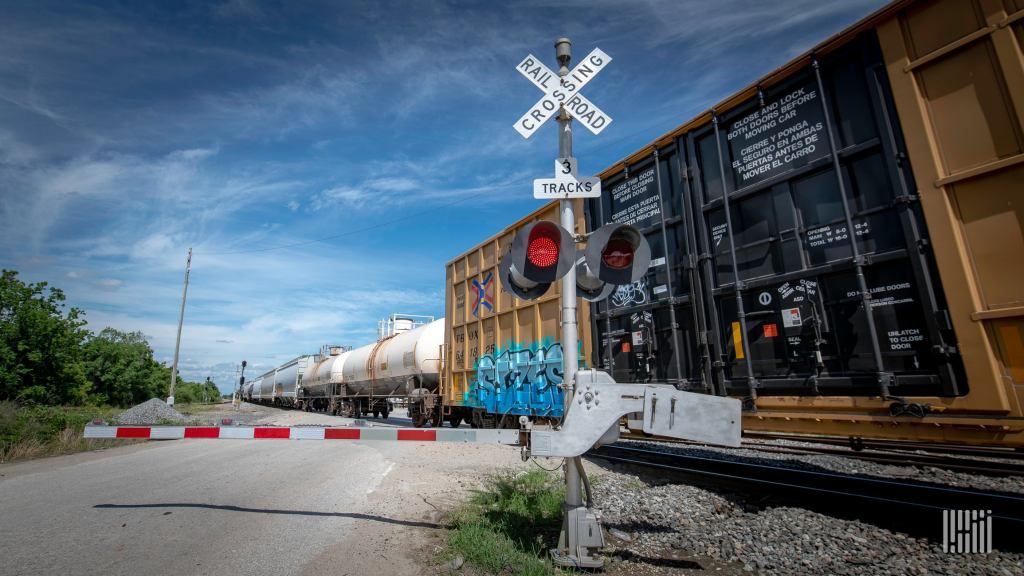
NTSB urges rail industry to take positive train control to the next level

The rail industry should do more to leverage the safety benefits of positive train control (PTC), says the National Transportation Safety Board (NTSB) in a recent report about how to incorporate new technologies into existing PTC initiatives.

PTC is a safety technology that the U.S. government mandated the Class I railroads and some passenger railroads implement as a means to prevent train collisions and derailments caused by speeding. The technology uses GPS-based systems to track the distance between trains.

Although the implementation of PTC is “a safety win,” according to NTSB Chair Jennifer Homendy, the death rate from accidents involving the railroads has not yet reached zero, “which means there’s more we can and must do to strengthen safety.”

In NTSB’s report, made available last week, the federal agency found areas where the railroads and the Federal Railroad Administration can maximize PTC technology by developing new technology that can enhance existing PTC capabilities.

This includes developing technologies that can reliably identify and locate the end of a train and relay that information to other trains to prevent collisions during restricted speed operations; deploying technologies that prevent end-of-track collisions in terminals or mitigate their severity; and using PTC technology to improve communication and enforcement of working limits because of workers’ ability to access PTC technology through devices such as tablet computers. NTSB defines working limits as “defined segments of track upon which trains may move only as authorized by a roadway worker with control over that segment.” 

NTSB said it recommends that FRA complete and publish the results of current research into new PTC technology, as well as develop a plan to implement promising technologies. FRA should also compel the railroads to “to adopt engineering controls that automatically return PTC to the active mode following switching operations and … adopt engineering controls that eliminate the risk of miscommunication between dispatchers and roadway workers in charge regarding established working limits and PTC protection.”

Another NTSB recommendation is for the industry to work toward eliminating exemptions to PTC installation at passenger terminals since PTC technologies will have been developed to prevent or mitigate end-of-track collisions at terminals.

“This report outlines concrete steps to save lives because part of our mission is to ensure regulators continually raise the bar on safety, and that includes evaluating the lifesaving potential of new and emerging technologies,” Homendy said in a release about the report.

FRA said it is reviewing NTSB’s report.

Subscribe to FreightWaves’ e-newsletters and get the latest insights on freight right in your inbox.

Click here for more FreightWaves articles by Joanna Marsh.

Trucks and teen motorists a dangerous mix, NTSB panelists say

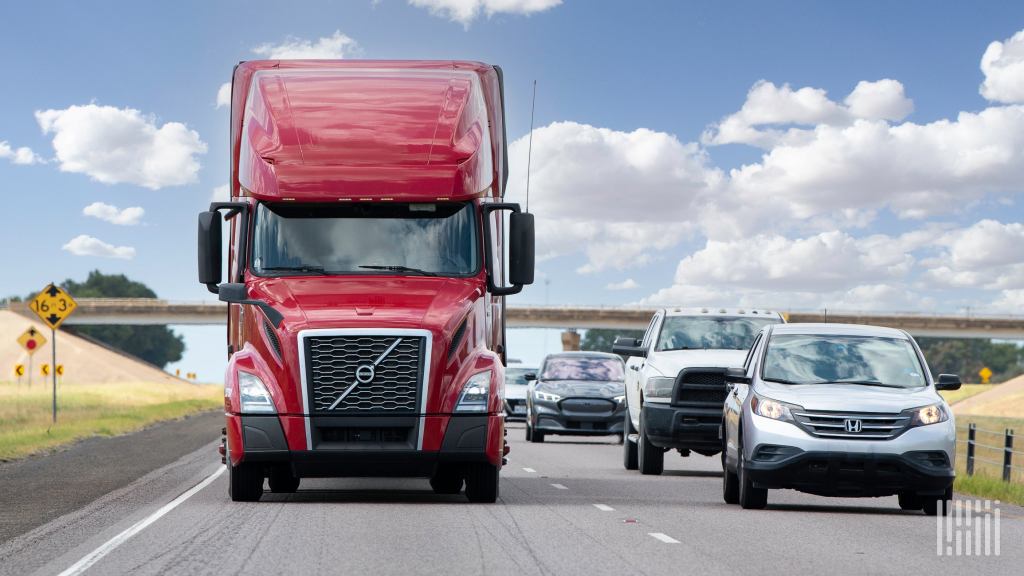
Cars and trucks on the highway

Rising costs related to inexperienced drivers and distracted driving are behind a new effort to educate the public — particularly teen drivers — about sharing the road with truckers.

“Car drivers — light vehicles — cause about 75% of the crashes between themselves and large vehicles,” said National Transportation Safety Board (NTSB) board member Bruce Landsberg, speaking Wednesday on an NTSB-sponsored webinar, Sharing the Roads with Commercial Vehicles.

The costs of these crashes to crash-victim employers — including trucking companies — have “risen dramatically over the last several years,” Landsberg pointed out, amounting to $72 billion just in 2019. That figure includes costs related to medical care, liability, property damage and lost productivity.

“Many professional drivers learn about this as a condition of employment. But it’s time to reach everyone — the fleet drivers, those making sales calls, delivering pizza, ridesharing and ordinary commuters as well.”

“Many professional drivers learn about this as a condition of employment. But it’s time to reach everyone — the fleet drivers, those making sales calls, delivering pizza, ridesharing and ordinary commuters as well.”

According to fellow panelist Dan Mayhew, senior research scientist at the Traffic Injury Research Foundation, teen and novice drivers are a significant contributor to the problem, including crashes involving light vehicles and heavy trucks.

“Teen driver crashes are both a road safety issue and a public health concern,” Mayhew said. It’s a road safety issue because teens have an elevated crash risk. Those ages 16 to 19 are nearly three times more likely than drivers 20 and over to be in a fatal crash.

“From a public health perspective there’s a real concern because motor vehicle crashes are the leading cause of death for teenagers and have been for some time.”

People ages 15-19 represent only 7% of the U.S. population but account for about 11%, or $10 billion, of the total costs of motor vehicle injuries, he said.

While crashes involving distracted driving are on the rise among all road users, there are other contributing factors to teen driver crashes, Mayhew said, including experience and age.

“Teens become easily overloaded because they’re just learning” driving skills, he said. He noted that teens are also less likely than experienced drivers to identify and respond to hazards, while tending to misjudge risk and overestimate their driving abilities.

Regarding age, “when you’re 16 to 19 years old, you’re more likely to be influenced by peers in the vehicle and you’re more susceptible to engaging in risky behaviors.”

To better understand how novice drivers interact with trucks, the Virginia Tech Transportation Institute (VTTI) in Blacksburg conducted a study that found that only half of the states in the U.S. require new drivers to learn about sharing the road with commercial motor vehicles.

“All the [driving] instructors that we’ve talked to really emphasize a need for more materials about sharing the roads with trucks,” said VTTI Senior Research Associate Matthew Camden, speaking on the panel. “There are a lot of programs out there, but there’s never going to be enough.”

A VTTI program that began in 2015 revealed that young drivers retained more information from participating in immersive experiences, Camden said, such as “getting out of the classroom and getting their hands on a truck, and experiencing for themselves where the blind spots are on a tractor trailer, and why stopping distances for heavy trucks are much further that required by a car. When our students get in the seat of a truck, things just start to click for them.”

On average, students are able to answer 25% more questions after a trucking “immersion” experience than after a classroom session alone, he said.

Panelists from the Federal Motor Carrier Safety Administration and the American Trucking Associations — both of which have ongoing “share the road” campaigns — highlighted the need to elevate awareness at the high school level, where many teens receive driving instruction.

“Importantly, we like to work with other stakeholder groups to learn how truck drivers can share the road better with all these other groups, because it’s a two-way street,” said Kevin Grove, ATA’s safety and technology policy director, during the discussion.

“The more we can all understand everyone’s perspective on the roadway, the safer the roads will be.”

Click for more FreightWaves articles by John Gallagher.

Finance expert points to cautionary signals for US freight demand

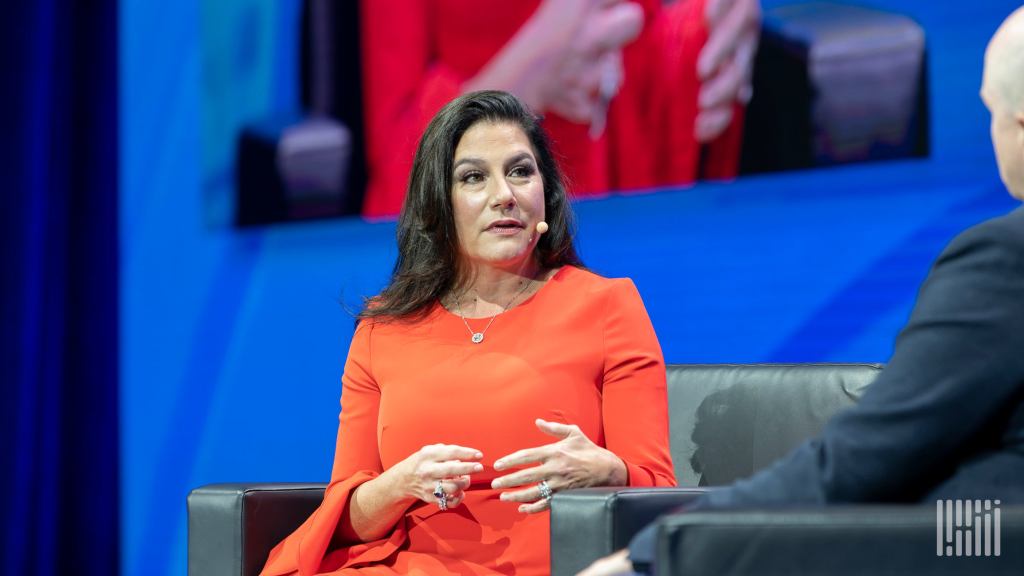
Woman with brown hair and red dress in a chair discussing issues on stage against a blue background.

It’s actually possible for the freight economy, which has been stuck in recession for 18 months, to get worse even though the economy produced robust 4.9% growth in the third quarter, according to Danielle DiMartino Booth.

The QI Research CEO said the firehose of federal stimulus that has lasted three years is finally coming to an end, which will reduce purchasing power for millions of consumers. Her comments came Thursday during the second annual F3: Future of Freight Festival in Chattanooga, Tennessee.

Most people were familiar with pandemic relief from the CARES Act, the Paycheck Protection Program, extra child care credits, and moratoriums on student loan payments and rental evictions that collectively injected $1.2 trillion into the economy. Less known is the employee retention credit, which only started to peter out last quarter. In July alone, it pumped $30 billion to businesses.

The employee retention credit is a refundable tax credit designed to encourage employers to keep workers on their payroll that was extended when President Joe Biden took office. The credit is 50% of up to $10,000 in wages paid by an employer whose business is fully or partially suspended because of COVID-19 or whose gross receipts decline by more than 50%.  

DiMartino said it was a boon for many small businesses that were able to monetize the value of their enterprise for the first time. Owners had more cash to spend, which supported housing sales and other purchases.

The program even expanded to include startup companies that grew out of the pandemic, which turned into an invitation for massive fraud, she said. Many people acted as middle marketers finding businesses that were unaware of the credit, getting them to file and taking a percentage fee in return.

Meanwhile, the consumer is not as healthy as many news reports suggest, according to DiMartino Booth.

“What we’re seeing in household finance is absolutely frightening. The credit card delinquencies, the auto delinquencies. I see the defaults, people scrambling to take equity out of their homes and monetize all of that housing bubble. We have surpassed the historic highs that we’ve seen in consumer delinquencies,” she said.

RECOMMENDED READING:

As economy motors along, trucking prepares to downshift

A founder’s journey: ‘You have to bootstrap, figure out how to make money’

Andrew Leto believes that a panoramic freight procurement platform is the missing piece of technology in almost every shipper’s supply chain tech stack.

Leto is the CEO of Emerge, a freight procurement platform backed by a marketplace of more than 45,000 carriers to help shippers expand their network. Prior to founding Emerge, Leto founded GlobalTranz in 2003, where he noticed outdated methods for shippers and carriers to connect in the freight market.

“Every freight event, everything you see on the road, starts with some kind of shipper doing an  RFP, request-for-pricing event with their carriers and brokers,” Leto said Wednesday at FreightWaves’ F3: Future of Freight Festival in Chattanooga, Tennessee.

“Most shippers lock out carriers from these RFP events. I realized that the average shipper only brings in about 40 carriers to their RFP event, and that’s a major problem. If you’re a carrier with 100 trucks, there’s a 99% chance that you’re not connected to any particular shipper. I think that’s a big problem, and I think it reared its head in the last three years when capacity got tight, and shippers didn’t have capacity.”

Interviewed by FreightWaves CEO and founder Craig Fuller in a fireside chat, Leto talked about being a founder of multiple companies and how he reinvented freight procurement. Leto also offered insights into the volatile freight markets and strategies to compete in a tough business environment.

After Leto founded GlobalTranz, the company quickly became one of the top truckload and less-than-truckload brokers in the U.S. He also founded 10-4 Systems, a truckload and visibility platform sold to Trimble in 2016. Since being formed in 2017, Scottsdale, Arizona-based Emerge has seen rapid growth and innovation, Leto said.

“There’s 3,400 carriers in our system that have 20 trucks or more, and we have 400 shippers using us now, all the big carriers,” Leto said. “I felt like giving away this free [procurement] platform, and then how we monetize it at Emerge is we open a door for carriers outside the shippers’ network to connect with them, and the shipper can connect with new carriers.”

Leto said the majority of freight brokerages still have a business model that relies heavily on making profit margins from carrier sales representatives calling trucking companies every morning to book trucks for shippers.

“Everyone thought the carrier sales rep model would be gone by now, but about 98% of loads are still booked by a carrier sales rep for the $100 billion brokerages in the industry,” Leto said. “It’s a person, it’s not digital; it hasn’t been digitized at all.”

Profit margins at brokerages have fallen from around 15% to 20% to below 10%, Leto said.

“As a big broker, it’s getting worse and worse every year, but we always knew that was going to happen,” Leto said. “Your biggest cost is that person that’s calling and booking the truck, that person is about 5% of that 12% margin. If you still have that, in five, six years, where you’re relying on a carrier sales model, and your margins are only 9%, your admin costs are about the other 3%, how do you survive as a company?”

Leto also discussed digital freight brokerage Convoy Inc.’s failure. Convoy announced in an Oct. 19 letter to employees that it was shutting down operations due to the “massive freight recession.”

“Convoy and digital freight brokerages realized that you need so much scale, you need … probably about 5,000 loads a day, 4,000 loads a day to have a carrier audience,” Leto said. “The only companies that have carrier audiences that size are maybe the top three or four brokers. The only way to digitize freight is to have enough scale in your marketplace, meaning enough loads, that you don’t need a carrier sales rep to be calling all these trucks in the morning. Otherwise, you need to still keep that, and they never got to scale.”

Fuller asked Leto what advice he would give to others who aspire to build a business.

“It was much easier three years ago, but the digital brokerages took all the investment money,” Leto said. “Right now, investors are kind of shy about this industry. There’s still so many ways that you could start a business in this industry and do something big. It’s just harder than it’s ever been because there’s no money, you have to bootstrap, figure out how to make money without burning money. It’s back to what it was 10 years ago to make a profit.”

Click for more FreightWaves articles by Noi Mahoney.

More articles by Noi Mahoney

5 takeaways from XPO’s Brad Jacobs at Future of Freight Festival

Convoy’s collapse, legacy tied to ushering tech into volatile freight markets

Trimble’s transportation revenue jumps 35% in Q3

FreightWise acquires TMS provider Kuebix from Trimble

Nashville,Tennessee-based FreightWise has acquired transportation management system software provider Kuebix from Trimble Inc.

The acquisition was announced Thursday and comes just over a year after Trimble announced it was shutting down Kuebix as the company pivoted to another platform.

FreightWise CEO Chris Cochran said as soon as he heard the news that Trimble was sunsetting Kuebix, he was interested in buying the TMS provider, which once had one of the largest connected shipping communities in North America on its cloud-based platform.

“What attracted me to it is that it’s a great brand and a great application that actually stood up to a wide range of shippers,” Cochran told FreightWaves. “They have an extremely good presence in the small and midsize (SMB) shipper business market, and they also have an emerging presence in the large shipper market.”

FreightWise CEO Chris Cochran

FreightWise is a logistics technology company founded in 2014 by Cochran and Alex Rustioni. The platform aims to help businesses streamline freight processes and save money by combining their carrier volume and relationships to reduce freight costs.

FreightWise’s focus includes parcel, less-than-truckload, truckload and international freight modes.

The acquisition of Kuebix is a strategic step for FreightWise as it looks to serve a wider spectrum of customers with diverse service models. Cochran said Kuebix’s presence in the market and its growing large shipper customer base is part of what made the acquisition a good fit.

“[Kuebix’s clients] are a little bit of a different client profile than what FreightWise typically has and manages within our portfolio,” Cochran said. “We were attracted to Kuebix because not only is it a great application, with their customers, it actually allows us to have more products and a wider range to offer to the marketplace.”

Kuebix was founded in 2008 by Dan Clark in Maynard, Massachusetts. Supply chain technology provider Trimble (NASDAQ: TRMB) acquired Kuebix for $200 million in 2020, with the aim of connecting its carrier clients to Kuebix’s network of more than 21,000 shipping companies.

In September 2022, Trimble said it would close Kuebix by the end of 2025 as it pivots to Engage Lane, a recently launched transportation procurement platform.

Trimble announced in February that FreightWise was one of five companies selected as preferred launch partners to help its Kuebix customers transition to a new TMS provider. Other TMS providers selected included Shipwell, MyCarrier, PCS Software and 3GTMS.

“They wanted to offer a handful of companies that they have done a little bit of due diligence on as a glide path, an easy path to move off of Kuebix,” Cochran said. “We were on that list as a core SMB TMS, through due diligence that their team did with our team. We’d already had a relationship before that, but those conversations led to the acquisition.”

The integration of Kuebix into FreightWise is slated to begin immediately, and the transfer of Kuebix operations and customers will be seamless and not impact daily operations, Cochran said. 

Kuebix will retain its name under FreightWise.

While the number of shippers in the Kuebix network has declined from two years ago, the TMS is still providing solutions to a robust customer base on its platform and has room for more innovation and growth, Cochran said.

“There’s still over 1,000 shippers active on the application. If you combine that with the customers that FreightWise has on our own TMS, which is mostly a managed service TMS, it makes us one of the top TMS platforms in the country,” Cochran said. “We’re really excited for the acquisition.”

Cochran would not disclose how much FreightWise paid for Kuebix but said it was less than Trimble paid for the company.

Click for more FreightWaves articles by Noi Mahoney.

More articles by Noi Mahoney

5 takeaways from XPO’s Brad Jacobs at Future of Freight Festival

Convoy’s collapse, legacy tied to ushering tech into volatile freight markets

Trimble’s transportation revenue jumps 35% in Q3

Striking UAW will vote again on rejected Mack Trucks offer

Mack MD Electric nameplate

Striking United Auto Workers at Mack Trucks will vote again next week on the company’s last, best and final offer of a master contract, essentially unchanged from the deal workers rejected.

Mack told the union that the 20% compound wage increases offered over five years was its final offer in a new master agreement. The sides agreed on new terms specific to four local agreements during the latest round of negotiations.

About 3,900 workers in Pennsylvania, Florida and Maryland rejected that offer by 73% in voting on Oct. 8. Workers will vote for a second time on Nov. 15 and 16 depending on location.

Mack’s main assembly plant near Allentown, Pennsylvania, has been idle since the walkout began Oct. 9. Workers at five other Volvo Group facilities, including an engine plant in Hagerstown, Maryland, also are on strike. Mack is part of Volvo Group North America.

Strike has minimal impact on Volvo Trucks operations

Unlike a UAW strike at Mack four years ago, production continued largely unaffected at the Volvo Trucks North America (VTNA) plant in Dublin, Virginia. VTNA took one day of strike-related downtime on Oct. 30.

A separate six-year master agreement reached in 2021 following a five-week UAW strike governs the VTNA New River Valley complex..

“The tentative agreement employees will vote on includes the strong wage and benefit package the company offered at the master contract level and tentatively agreed to by the parties on Oct. 1, as well as a number of revised terms negotiated with the UAW on local agreements impacting LVO [Lehigh Valley Operations], Hagerstown, Baltimore and Jacksonville,” Mack said in a statement Wednesday.

About 45% of the total workforce is in progression, meaning they started at a lower wage and would grow into the top rate across five years, down from six years in the last contract. For that group of workers across all sites, the average wage increase over five years would be 55%, with an immediate wage increase of than 20%, Volvo Group spokesman John Mies said in an email Thursday.

General wage increases for production workers in various steps of the progression at Mack Trucks’ Lehigh Valley Operations plant in Pennsylvania under the company’s last, final and best offer to the United Auto Workers, who have been on strike for a month. (Source: Mack Trucks/Volvo Group North America)

Workers at Mack’s medium-duty truck plant in Roanoke, Virginia, are not represented by a union.

Mack says Oct. 1 offer is last, best and final

In a statement on its website, the UAW called for the revote after the company said the Oct. 1 agreement was its last, best and final offer. That deal was endorsed by local and international UAW leadership as a “record contract” for the heavy truck industry.

Mack has taken a hard line since the tentative agreement was rejected. It called new economic demands by the UAW unreasonable and said the union was turning its back on months of negotiations that led to the deal.

Tentative UAW deals with the Detroit Three automakers may have helped bring the Mack-UAW talks to a head. Autoworkers will get a compound 25% increase over 4 ½ years, signing bonuses and other gains.

At a Nov. 2 rally, union leaders at Mack said their demand for restoration of annual cost of living adjustments (COLA) mirrored those included in the automaker agreements. 

The UAW gave up COLA in 2009 during the Great Recession to help General Motors, Ford and Chrysler, then part of Fiat, survive. The 2009 COLA formula is part of the master agreements being voted on by the UAW’s 146,000 autoworkers.

It is unclear how Mack will proceed if the UAW rejects the master agreement a second time. UAW-represented workers at VTNA turned down three tentative agreements in 2021 before the company imposed the terms of its last offer.

Editor’s note: Updates with addition details of Mack Trucks’ contract offer up for revote by UAW-represented workers on Nov. 15-16.

Analysis: How costly is Mack Trucks’ stridency with striking UAW?

Mack Trucks fires back at striking UAW’s new demands

Mack Trucks and striking UAW resume talks Thursday

Click for more FreightWaves articles by Alan Adler.

Panama Canal crisis forces US farm exports to detour through Suez

a photo of grain loading; canal restrictions are changing trade flows

As a record-setting drought throttles transits through the Panama Canal, most of the focus has been on higher-capacity ships: the container vessels, liquefied natural gas carriers and liquefied petroleum gas carriers that use the larger Neopanamax locks.

But there’s another shipping segment that’s seeing major fallout: the dry bulk vessels carrying U.S. grain that use the smaller Panamax locks.

Trade patterns have already seen a major shift, with the majority of these dry bulk vessels now opting for the longer route via the Suez Canal.  

Bulker execs confirm new route

“Particularly for grain cargoes out of the U.S. Gulf to China and Asia, [the Panama Canal route] is the typical trade historically,” said Gary Vogel, CEO of Eagle Bulk (NYSE: EGLE), during a conference call last Friday. “We’re now routing our ships through the Suez, which adds about 10 days and is slightly more expensive in terms of canal dues.”

Peter Allen, CFO of Genco Shipping & Trading (NYSE: GNK), said during a conference call Thursday, “We are getting some help from the Panama Canal situation. Instead of going through the Panama Canal, ships are going through the Suez, which is extending ton-miles.” (Ton-miles is shipping demand measured in volume multiplied by distance.)

“It’s definitely meaningful,” said Vogel, who also noted that ballasting (sailing empty) to the U.S. Gulf from the Pacific side of South America is “a non-starter right now.” This has led to fewer vessels available to load American grain exports, pushing up freight rates.

“We have seen this just in the past week. We fixed one of our ships out of the U.S. Gulf at a rate of $32,000 per day for a trip to the Far East routed via the Suez.”

To put that in perspective, Clarksons Securities put average global spot rates for the ship sizes used by Eagle Bulk — Ultramaxes and Suezmaxes, with capacity of 45,000-65,000 deadweight tons (DWT) — at $12,400 per day last week, less than half the number cited by Vogel.

Suez now much more important to US agriculture

U.S. grain cargoes are carried aboard vessels of the Panamax size or smaller, with capacity of 90,000 DWT or less, as a result of terminal constraints in both the U.S. and Asia.

Ship-position data from MarineTraffic shows that the majority of dry bulk vessels loaded with U.S. cargoes in that size category are now taking the Suez route and avoiding the Panama Canal. (The data also includes bulkers carrying coal and other cargoes).

map showing shift to Suez Canal
Positions of bulkers with capacity of 90,000 DWT or less fully laden with U.S. cargo as of Wednesday. (Map: MarineTraffic)

According to U.S. Department of Agriculture (USDA) data on loading inspections, 67% of year-to-date soybean, corn and wheat exports have loaded in the Atlantic Basin, with 56% loading in the U.S. Gulf.

The heightened importance of the Suez Canal to U.S. agriculture in the wake of Panama Canal restrictions raises another concern: The Suez Canal itself faces risks on the geopolitical front. The Suez Canal has been shut due to military action involving Israel twice before, in 1956 and in 1967-1975.

Polys Hajiouannou, CEO of Safe Bulkers (NYSE: SB), said during a conference call Wednesday: “There is a concern with the conflict. We don’t know how Egypt will react if there is an escalation, and if Egypt will take some steps to reduce the number of commercial ships passing through the Suez Canal. This is a question for the months to come.”

Any restrictions to Suez Canal transits due to an escalation of the Israel-Hamas war would lead to even more rerouting of U.S. agribulk exports, and even longer voyages via the Cape of Good Hope.

Lower US exports temper Panama Canal fallout

The Panama Canal water-level crisis would be having a greater effect on U.S. farm exports if outbound volumes were higher.

Canal restrictions are coinciding with a period of reduced American exports, due to both lower crop production and low water levels in the Mississippi River.

USDA data on inspections of agribulk export cargoes shows year-to-date volumes through early November down 22% versus the same period in 2022 and 27% versus the same period in 2021.

(Chart body by USDA; headline and legend by FreightWaves)

Inspections of wheat exports collapsed in the week ending Nov. 2 to just 71,608 metric tons, the lowest reading in 20 years, which Bloomberg attributed to drought conditions drying up the Mississippi.

The focus ahead will turn to soybeans. U.S agribulk exports seasonally spike in November to January, driven by soybean cargoes.

(Chart body by USDA; headline and legend by FreightWaves)

Here too, Panama Canal fallout is expected to be alleviated by reduced volumes.

The USDA recently lowered its forecast for U.S. soybean exports in the 2023-2024 marketing year (starting Sept. 1) to 47.8 million tons, down 12% from 2022-2023 and 18% from 2021-2022.

“U.S. soybean exports, which usually dominate the fourth quarter, will remain weak this year due to a lower harvest,” said shipping consultancy Drewry in a report published Tuesday. As a result, Drewry predicted that the upside in dry bulk freight rates due to diversions through the Suez “will be capped.”

Click for more articles by Greg Miller