MyFBAPrep, OneRail rank among Top 25 on Deloitte’s Technology Fast 500

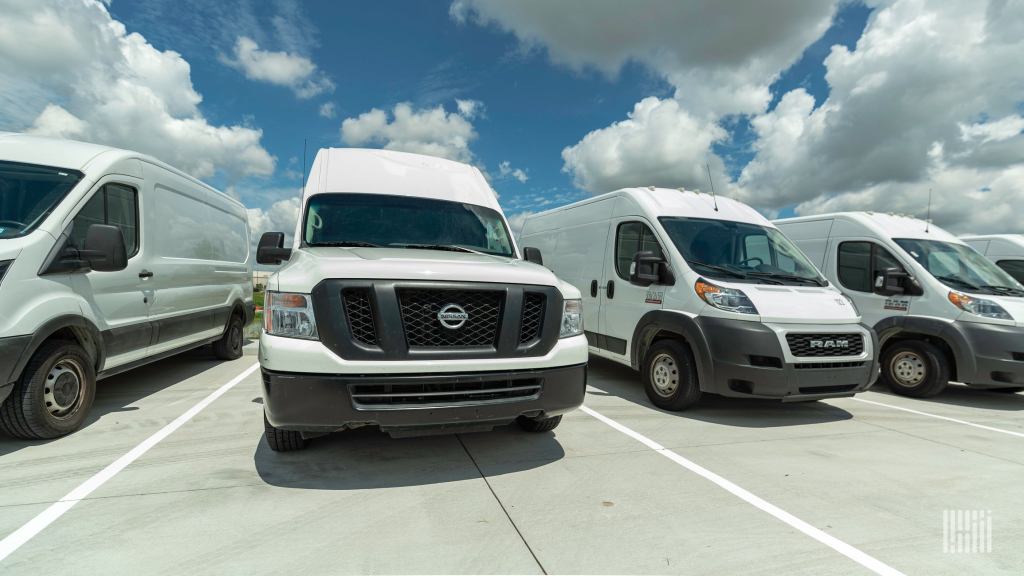
Row of vans sitting in a parking lot

More than a dozen logistics firms have been named among North America’s fastest-growing companies. 

Deloitte’s Technology Fast 500 list, which was announced Wednesday, is a ranking of the fastest-growing technology, media, telecommunications, life sciences, fintech and energy tech companies in North America.

Two of the logistics companies that made the list are represented in the Top 25: MyFBAPrep and OneRail.

MyFBAPrep, a Coral Springs, Florida-based eCommerce warehouse logistics network, ranked No. 20.

OneRail, an Orlando, Florida-based last-mile delivery provider, ranked No. 24.

Chattanooga, Tennessee-based FreightWaves also made the Deloitte list, its third time in as many years.

Read more: FreightWaves again named one of fastest-growing companies in North America

Winners are selected based on fiscal-year revenue growth percentage during the period from 2019 to 2022, according to Deloitte. The 2023 Technology Fast 500 companies achieved revenue growth ranging from 201% to 222,189% during the time frame from 2019 to 2022, with an average growth rate of 1,934% and a median rate of 497%. FreightWaves’ growth rate as calculated by Deloitte was 231% during that period.

To be eligible for Technology Fast 500 recognition, companies must own proprietary intellectual property or technology that is sold to customers in products that contribute to a majority of the company’s operating revenues. Companies must have base-year operating revenues of at least $50,000 and current-year operating revenues of at least $5 million. Additionally, companies must be in business for a minimum of four years and be headquartered within North America.

Here’s a look at logistics companies on Deloitte’s Technology Fast 500 list:

NameRankPrimary industry% Growth
MyFBAPrep20Software and services8,792%
OneRail24Software and services7,409%
Xos51Energy and sustainability technology3,071%
Fluid Truck63Software and services2,405%
GoBolt74Software and services2,116%
Samsara144Software and services997%
Vention223Software and services636%
Flexe236Software and services612%
Loadsmart270Software and services499%
Emerge302Software and services438%
Arrive Logistics369Software and services343%
Takeoff Technologies394Software and services320%
Platform Science397Software and services315%
Overhaul407Software and services301%
FreightWaves494Software and services231%
Motive508Software and services225%
Shipfusion537Software and services205%
Source: Deloitte’s Technology Fast 500 list

View the full list here.

DHL cuts full-year guidance as second-half recovery doesn’t materialize

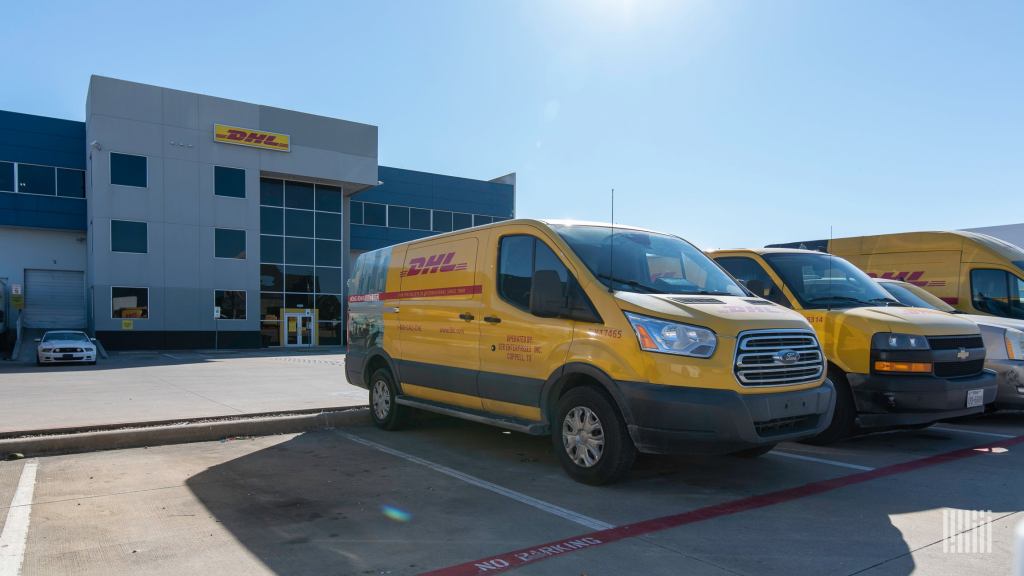
German transport and logistics giant DHL Group (DHL.DE) said Wednesday it reduced its 2023 earnings forecast in response to a hoped-for second-half global economic recovery that never materialized.

The Bonn-based company said it now expects full-year earnings before interest and taxes to range between $6.6 billion and $7.05 billion. Revenue for the third quarter, which DHL reported Wednesday, fell to $20.7 billion, down sharply from $25.6 billion in the year-earlier quarter. Operating profit in the quarter fell to $1.49 billion from $2.13 billion. 

DHL executives said the year-over-year (y/y) declines were expected amid an environment of slowing demand, higher fuel prices and unfavorable currency fluctuations.

The company has said that its results would hinge on the best-case macro scenario — a recovery that would have started around midyear and continued through the balance of 2023-“no longer applies.” A second-half recovery has “so far failed to materialize” against a backdrop of tighter global monetary policy and the impact of geopolitical crises on overall demand, said DHL CEO Tobias Meyer in a statement.

At this point, DHL is expecting either a macro recovery to kick in at the end of 2023 or no recovery at all until at least 2024. The company will not achieve its best-case forecast of $7.5 billion in 2023 EBIT, it said.

The company’s two largest units, DHL Express, its time-definite air express service, and DHL Global Forwarding, its air and ocean freight forwarding business, reported significant y/y declines as demand and rates fell. At DHL Express, revenue fell 18.2% to $6.19 billion, while EBIT dropped 34.1% to $712 million. At DHL Global Forwarding, revenue fell 44% to $4.7 billion and EBIT dropped more than 46% to $326.6 million.

DHL Supply Chain, the world’s largest contract logistics provider, was the lone bright spot in the quarter. Revenue rose 1.8% to $4.48 billion, while EBIT increased 10.5% to $258 million. Top-line growth came from new business and contract extensions, with e-commerce business a standout, the company said.

DHL eCommerce, the company’s last-mile B2C business, reported a 0.8% drop in revenue to $1.58 billion. Revenue would have risen 3.2% were it not for a $63 million currency hit, DHL said. EBIT dropped 36.8% due to higher costs associated with network expansion.

For 2025, DHL forecast EBIT of between $7.4 billion and $8.5 billion. The company did not address 2024 forecasts in its statement.

F3 Day 1: TMS is dead; cargo theft scams; autonomous trucks; TaaS – WTT

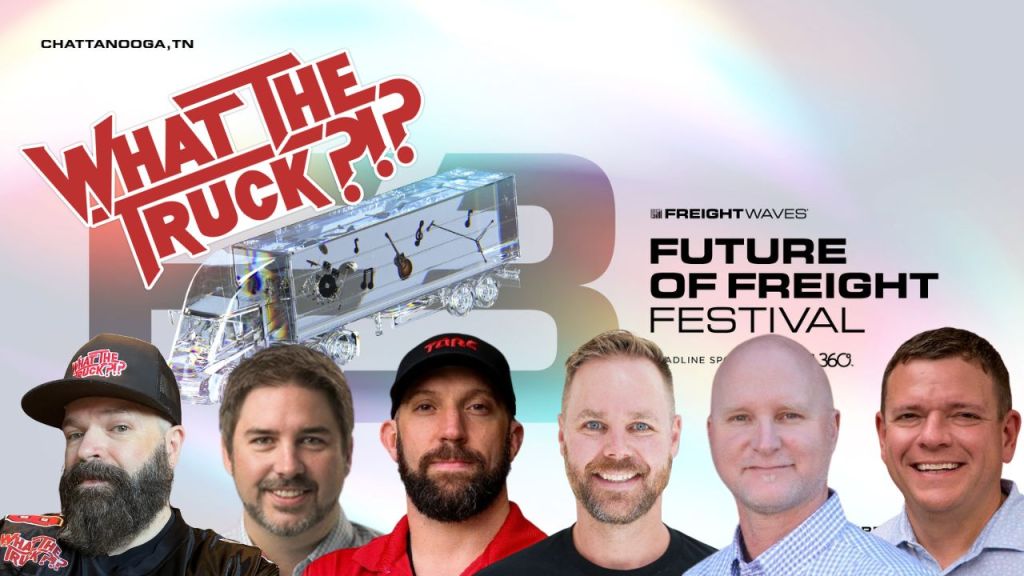
On today’s episode of WHAT THE TRUCK?!? Dooner is live from day 1 at The Future of Freight Festival and we’re bringing the gong show to Chattanooga.

He’s joined by special guests Matt Zimmer, President at Zengistics; Andrew Culhane, Chief Strategy Officer at Torc; Justin Bailie, Co-Founder at Rose Rocket; Chad Eichelberger, President and Ronald Ramsey, Chief Commercial Officer at Reliance Partners.

Watch on YouTube

Visit our sponsor

Subscribe to the WTT newsletter

Apple Podcasts

Spotify

More FreightWaves Podcasts

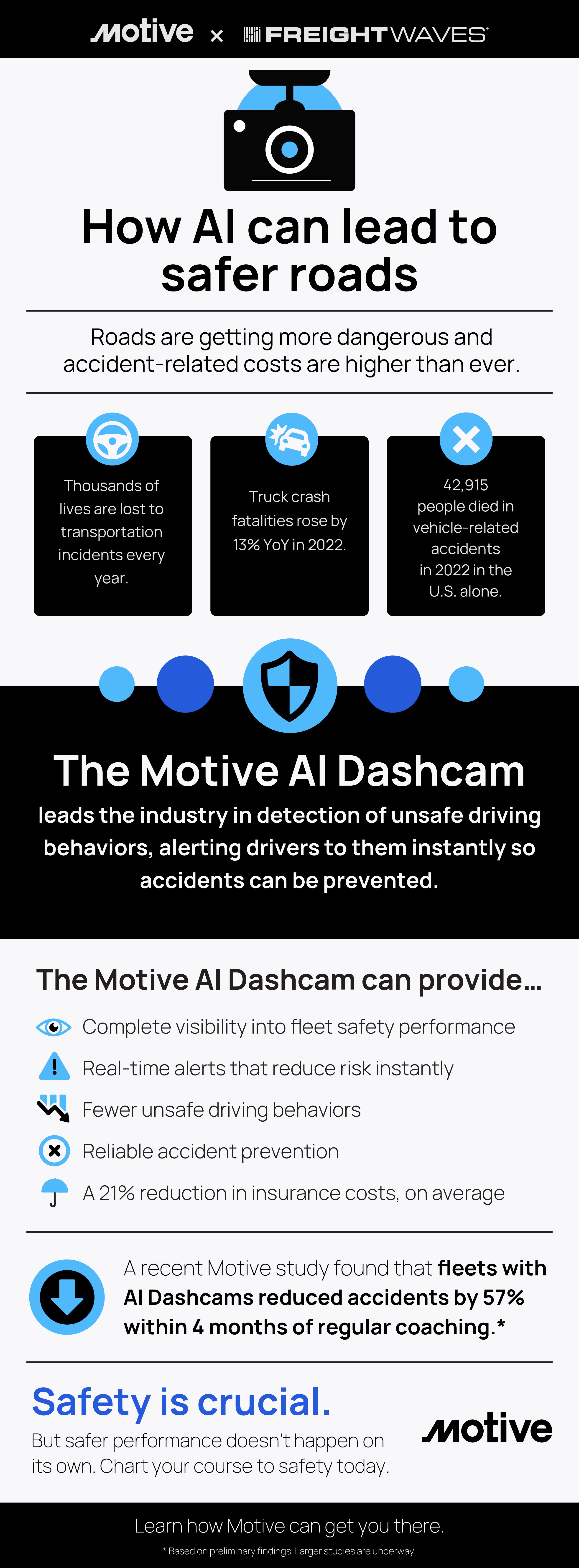
Daily Infographic: How AI can lead to safer roads


To learn more CLICK HERE

Logistics warehouse automation to continue apace despite construction slowdown

After two years of off-the-charts expansion, the U.S. logistics warehouse market began slowing in 2022. It declined more precipitously in 2023 as higher costs of capital and waning end-user demand took their toll. Investments in warehouse automation have followed a similar path, with contracting order levels and more prolonged sales cycles through 2023 and into 2024.

“Given the inflationary environment and resulting high interest rates (which aren’t due to come down anytime soon), we expect a relatively sluggish 2024 with limited order intake growth,” said Reuben Scriven, research director at Interact Analysis, a U.K.-based industrial research firm, referring to the global warehouse automation market in a report.

However, no one expects the warehouse construction downcycle to last very long due to continued e-commerce demand and retailers’ desire to hold more buffer stock in order to avoid supply chain disruptions. The multiyear outlook for automation is also bullish as companies look to ramp up efficiencies while offsetting what is expected to be a shortage of human labor in the facilities.

Warehouse automation investments will continue apace regardless of the macro environment, said Brewster Smith, head of supply chain solutions, occupier services/Americas for Colliers, a global real estate services firm (NASDAQ: CIGI). “If a company can materially reduce its operating expenses and/or increase the number of orders they can process in a given work day, a client will move forward with the investment” no matter the state of the broader economy, he said.

Colliers helps clients determine what type of automation works best for their operating models, Smith said. The firm then sources the appropriate vendor through an RFP bid process, he said.

According to a global survey published earlier this year by materials handling trade group MHI and consultancy Deloitte, 74% of supply chain leaders are increasing their supply chain technology and innovation investments. About 90% said they plan to spend over $1 million, an increase of 24% over last year. About 36% plan to spend over $10 million, up 19%. These investments include solutions for improved supply chain resiliency, transparency and sustainability as well solutions for the ongoing workforce shortage. The report did not highlight automation investments in particular.

Knowing the value of automation is one thing. Embedding it in facilities that are decades old is another. For example, most legacy U.S. warehouses are 30 feet high, which generally makes them unsuitable for the installation of a conventional Automated Storage and Retrieval System (ASRS) that needs to be 40 feet or higher, according to Smith.

In addition, the floors that support ASRS must be completely level, ruling out facilities where concrete may have been poured 30 years ago, Smith said. Neil Shelton, chief strategy officer of contract logistics giant GXO Logistics Inc. (NYSE: GXO), said it’s critical for a facility’s concrete slab to be able to absorb the additional weight of new equipment. However, certain automation like collaborative robots — machines that work alongside humans in the warehouse — are not heavy enough to damage existing slabs.

One of the biggest challenges for warehouse users and specialists like GXO that have invested heavily in automated facilities is sorting through the myriad technologies and vendors hawking them, said Shelton. “There are hundreds of suppliers, and there are so many technologies out there to incorporate,” he said. GXO has estimated that a third of its revenue comes from large-scale automation projects, compared with less than 10% across the rest of the industry.

Understanding how to prep a legacy facility before retrofitting for automation is often overlooked by first-time automation users in their rush to quickly embed technology into the building, said Jamie Dorland, construction executive at Caddell Construction, a Montgomery, Alabama-based general contracting and construction management firm that has retrofitted 15 major warehouses in the past six years. Users and their robotics vendors are often unaware of the changes that can potentially disrupt a facility’s normal work and product flow, he said. Caddell is contracted out to the tenant and not the technology vendor, though it works more closely with the technology side than it has in the past.

The four core infrastructure modifications involve electrical, compressed air, concrete and fire protection systems, according to Dorland. Of those, necessary electrical shutdowns cause the most user anxiety because they threaten to reduce productivity, he said. In addition, many legacy warehouses lack the spare capacity to accommodate more robust systems. As a result, new utilities need to be brought in and established, he said. 

The integration of the new systems requires a temporary operational shutdown, Dorland said. As a result, each step must be carefully coordinated with existing operations to ensure that they can maintain regular operations and schedule shifts accordingly, he said.

Smith of Colliers said it’s critical that occupiers verify that their existing power supply is sufficient to accept the planned automation solution. “Occupiers may have to redesign their [warehouse] rack layout to accommodate a new solution, but this should not be a barrier to entry. Automation typically offers a demonstrable step-change in productivity so a rack redesign would be well worth the effort.”

Questions about ROI would arise if a brand-new facility should be required, which would generally be the case if an ASRS were being installed, Smith said. “We are seeing a lot of clients adopting partial automation solutions like collaborative robots without having to move from one building to another,” he said.

FreightWaves again named one of fastest-growing companies in North America

For a third year in a row, FreightWaves has been named to Deloitte’s Technology Fast 500 list, a ranking of the fastest-growing technology, media, telecommunications, life sciences, fintech and energy tech companies in North America.

FreightWaves ranked No. 494 on the list, now in its 29th year. 

Winners are selected based on fiscal-year revenue growth percentage during the period from 2019 to 2022, according to Deloitte. The 2023 Technology Fast 500 companies achieved revenue growth ranging from 201% to 222,189% during the time frame from 2019 to 2022, with an average growth rate of 1,934% and a median rate of 497%. FreightWaves’ growth rate as calculated by Deloitte was 231% during that period.

“We are honored to be selected to Deloitte’s Tech 500 in a challenging environment for the supply chain industry,” said FreightWaves CEO and founder Craig Fuller. “It is a testament to our focus on sustainable growth and increasing demand for high-frequency supply chain market intelligence.”

FreightWaves was one of only nine companies in Tennessee, where the company is headquartered in Chattanooga, to make the list this year. The company was also named to the list in 2022 and 2021.

To be eligible for Technology Fast 500 recognition, companies must own proprietary intellectual property or technology that is sold to customers in products that contribute to a majority of the company’s operating revenues. Companies must have base-year operating revenues of at least $50,000 and current-year operating revenues of at least $5 million. Additionally, companies must be in business for a minimum of four years and be headquartered within North America.

To view the full list, click here.

Convoy’s collapse, legacy tied to ushering tech into volatile freight markets

CHATTANOOGA, Tenn. — Despite one of the most unprecedented downfalls in transportation and logistics history, Convoy Inc.’s ultimate legacy is that it shook up the freight industry by bringing technology innovation and investments into the space.

Seattle-based startup digital freight broker Convoy announced it was shutting down operations due to the “massive freight recession” in an Oct. 19 letter to employees.

“I would argue that many people in this room would not be afraid if it hadn’t been for what Convoy triggered, which was investment-class venture capital pouring into the space,” FreightWaves CEO and founder Craig Fuller said during the F3: Future of Freight Festival on Tuesday. “What’s interesting about it is it’s not just the venture capital-backed companies, but it’s the way that the incumbents were forced to respond, that a J.B. Hunt … was certainly a company that built arguably the most successful digital platform and it was in large part a response to some of the competitive interest that the startups were getting.”

FreightWaves second annual F3: Future of Freight Festival brings together experts, entrepreneurs, industry leaders, educators and more to discuss the key factors impacting freight markets and the latest trends pushing the industry forward. The event in Chattanooga, Tennessee, continues through Thursday.

Fuller was part of a fireside chat discussing Convoy’s legacy and impact on the freight industry. He was joined onstage by FreightWaves’ JP Hampstead and Liz Ward, head of Zebox America.

Convoy was founded in 2015 by Amazon veterans Dan Lewis and Grant Goodale. The company went from a valuation of approximately $3.8 billion in the first quarter of 2022 to being out of business in a little more than 18 months. 

“I would say [Convoy’s legacy] is really positive,” said Ward, who worked as the digital freight brokerage’s director of business development from 2016 to 2018. “I think they were very pioneering in so many ways for this entire space. They built great technology, they upgraded the conversation. We wouldn’t be talking about half the stuff we are talking about now. They made it interesting, they gave us all sorts of businesses spun out of different concepts of Convoy.”

Ward said what attracted her to joining Convoy in 2016 was the company’s cutting-edge approach to the freight market.

“At the time I was working for trucking and Dan Lewis called me. … He said, ‘I’m building the best trucking company in the world, come join me,’” Ward said. “I remember sitting down with Dan. I said, ‘What makes you so different from every other broker out there?’ He said, ‘My engineers.’ I think that was a really good pivotal point in trucking, thinking through the engineering aspect of the business and automation and how powerful that can be to the industry at large.”

Hampstead, who conducts research on multimodal freight markets for FreightWaves, said Convoy brought new levels of cutting-edge technology and talented minds to the freight industry.

“One of the legacies is bringing a certain level of professionalism in town and tech talent into the industry, especially if it’s a brokerage, and showing transportation providers how to lead with technology products,” Hampstead said.

Convoy’s ultimate demise may have lain in focusing too much on technology while overlooking its longtime business model and how it could react to a volatile market, the panelists said.

“The industry has said that one of the big sorts of complaints or issues they had with Convoy’s business model … was the fact that in the earliest days of the business, it was essentially buying market share. Did you see that, where they were undercutting the other providers in the market?” Fuller asked Ward. 

Ward responded that she was focused on business development and account management growth during her time at Convoy. 

“We were really dialing into that, like, ‘we will be your ultimate backup option, whenever your primary secondary carrier fails, we’re there,’” Ward said. “We would take on a lot of freight that probably wasn’t the best freight to take on. There was a reason why it was being rejected by all sorts of carriers. That was one way that we were able to kind of grow our wallet, grow our share with these customers. It was good and bad. It was good for early on, but where we maybe went wrong was trying to be rectified with more than contract rates to spot.”

Hampstead said while Convoy is gone, the freight industry might not have seen the last of the pioneers behind the company.

“I hope that Convoy veterans go on to found more companies,” Hampstead said. “I hope that there’s a second wave, maybe a Convoy mafia. Normally, those follow successful exits, but we’ll see what happens.”

Click for more FreightWaves articles by Noi Mahoney.

More articles by Noi Mahoney

Trimble’s transportation revenue jumps 35% in Q3

US mulls terminating tomato trade agreement with Mexico

Universal Logistics’ Q3 earnings decline in ‘sluggish freight market’

Kodif demos customer support automation platform at Innovation Alley

CHATTANOOGA, Tenn. — With service reps for e-commerce and supply chain-related firms having to reply to hundreds or thousands of messages daily, using AI can help streamline customer experience workflows, said Kodif co-founder Mike Zayonc.

Kodif offers two core products that leverage generative AI: the AI agent assistant and the customer-facing self-service platform.

“[Kodif] is a Chrome plug-in. It sits on top of any different platform, and you can choose how you want to adjust the platform,” Zayonc said during the company’s demo at FreightWaves’ F3: Future of Freight Festival on Tuesday in Chattanooga, Tennessee. “You can tell it to be more cheerful, and it will adjust the different responses. You can also find prompts, so queries that are high-volume, where you need immediate assistance … like in freight, for example, ‘Where’s my order’ request, we can automate that immediately.”

Zayonc was showcasing Kodif’s capabilities at FreightWaves’ Innovation Alley, which provides a platform for companies to present and record seven-minute demos filmed by FreightWavesTV. The aim of Innovation Alley is to allow FreightTech firms to demonstrate their products and services in front of a live audience of freight professionals from around the globe.

Zayonc co-founded Kodif in 2021, along with company CEO Chyngyz Dzhumanazarov, Chief Product Officer Marat Gaipov and Chief Technology Officer Norm Usenkanov. Kodif’s founders met in Silicon Valley, where they worked in logistics for companies such as Uber and Amazon. 

In 2017, Zayonc helped found the supply chain and logistics innovation program at Sunnyvale, California-based Plug and Play, a tech incubator that includes accelerator programs, corporate innovation services and in-house venture capitalists.

“Prior to co-founding Kodif, I founded an innovation program for Plug and Play, which became the largest accelerator for logistics and supply chain startups based in Silicon Valley,” Zayonc said. “Now I’m excited to be full time with one of the startups, and the reason I joined Kodif full time as a co-founder is because [Usenkanov] wrote the white paper at Uber for automating customer support.”

Zayonc said every high-volume customer support request at Uber is currently automated using generative AI.

“We’re very inspired. We ended up taking Kodif from that white paper,” Zayonc said. “Now I’ve sold Kodif to many e-commerce customers and now we’re moving into postal delivery and logistics.”

Kodif aims to expand its customer base by helping more shippers and freight companies that need assistance with customer support services. Kodif already works with one of the largest parcel carriers in the country, Zayonc said.

“We want to double down on logistics and focus on freight brokerages, less-than-truckload companies,” Zayonc said. “For shippers, your supply chain customers will be happier with faster resolutions through customer support automation.”

Click for more FreightWaves articles by Noi Mahoney.

More articles by Noi Mahoney

Convoy’s collapse, legacy tied to ushering tech into volatile freight markets

Trimble’s transportation revenue jumps 35% in Q3

US mulls terminating tomato trade agreement with Mexico

ConMet acquires maker of tractor-trailer gap-closing TruckWings

TruckWings

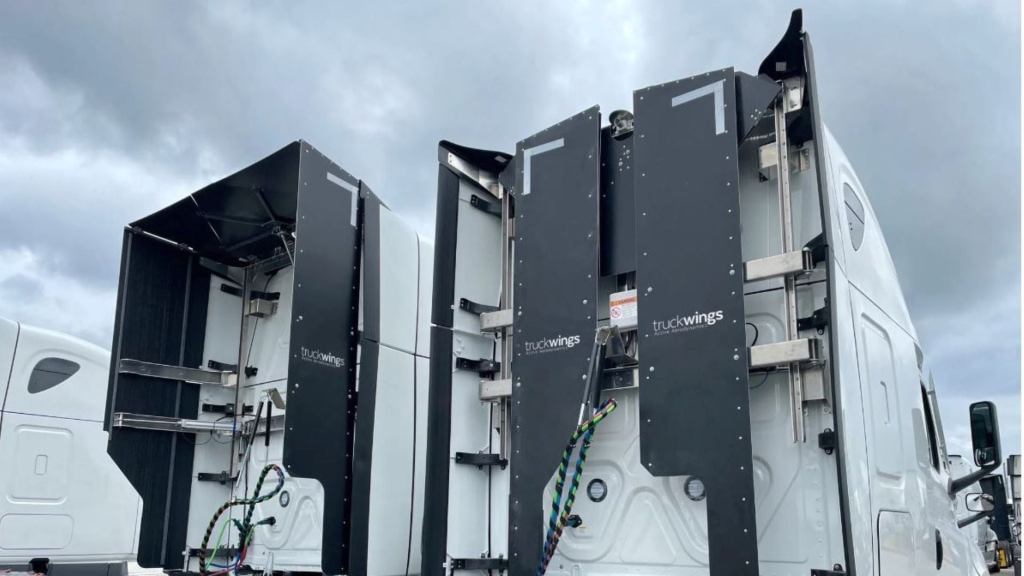
Tractor-trailer parts and components maker ConMet has acquired Truck Labs, the inventor of gap-closing TruckWings that create fuel savings through aerodynamics.

Truck Labs, founded in 2014 as XStream, will become a wholly owned subsidiary of Vancouver, Washington-based ConMet. Financial terms of the deal were not disclosed. The deal closed last Thursday.

Becoming part of a major supplier could help Truck Labs move into OEM factories after operating mostly in the aftermarket.

“The extra drag caused by the tractor-trailer gap is a well-known problem to OEMs. It is quickly becoming the next ‘low-hanging fruit’ to be solved,” Daniel Burrows, Truck Labs founder, said in an email to FreightWaves. “We think that TruckWings’ 750 million miles of direct experience with fleets, combined with ConMet’s market position and deep OEM relationships, we can bring a full solution to OEMs.”

OEMs want proven solutions to improve fuel economy to increase the value of their trucks to their customers and to meet upcoming regulatory standards, he said. 

Classic combination

“It’s classic in our industry. Some technologies can be moved through the aftermarket where fleets need something unique,” Mike Roeth, executive director of the North American Council for Freight Efficiency, told FreightWaves.  

OEMs and large fleets usually avoid tie-ups with startups. They worry about scaling, service and parts availability and whether the business will be around.

Truck Labs has defied the odds. Roeth once told Burrows that others had tried and failed to create gap-closing technology. He didn’t give Burrows much chance of succeeding.

“They really can close the gap and save a lot of fuel,” Roeth said of TruckWings.

How they work

The tractor-mounted technology works by automatically deploying panels from the back of the cab to cover the tractor-trailer gap at highway speeds. The folding panels auto-retract at slower speeds, allowing for trailer clearance during turns. Impact-resistant, glass-reinforced composites attach to the rear sides and roof of the cab.

A stand-alone telematics system in the cab allows drivers and fleet managers to track deployments as well as fuel and dollar savings.

Less fuel used and emissions avoided

TruckWings reduces drag, improves stability and increases fuel efficiency by 3%-6%. That saves more than 1,100 gallons of fuel and 15,000 pounds of carbon dioxide emissions per diesel truck per year. They also extend the range of electric and hydrogen vehicles.

“Their technology — which has been proven through 750 million logged highway miles — aligns well with our goal of providing OEMs and fleets with forward-thinking, profitable solutions to improve fuel efficiency and reduce carbon emissions,”  John Waters, ConMet president, said in a news release.

TruckLabs experienced 250% year-over-year growth in 2022. ConMet could help TruckWings boost its emissions-reducing credentials. Truck Labs data shows TruckWings has saved 80 million pounds of carbon dioxide since its launch in 2015. Every TruckWings-equipped commercial vehicle is equivalent to removing two cars from the road.

“ConMet is the perfect partner to introduce our product to a wider customer base, and adds much needed scale to our manufacturing capabilities,” Burrows said.  “Together, my team and I are excited to join with ConMet to supercharge our impact on our customers’ fuel costs and climate goals.” 

Truck Labs employees join 6,000 ConMet workers in 17 global locations. The Truck Labs name remains for the time being, Burrows said.

Editor’s note: Adds comments from Burrows and additional details.

High-flying TruckWings looks at what’s next

Winging it can save money and emissions

Xstream Trucking broadens business and becomes Truck Labs

Click for more FreightWaves articles by Alan Adler.

As economy motors along, trucking prepares to downshift

Craig Fuller and Zach Strickland

To underscore the fragile state of trucking, FreightWaves CEO Craig Fuller pointed to a development from this past weekend — a small Iowa bank that appeared to be overly exposed to commercial trucking and was taken over by regulators.

“The [Federal Deposit Insurance Corp.] saw that it was underwater on its loans and seized it because it was insolvent,” Fuller related to FreightWaves market analyst Zach Strickland during a State of Freight session at the second annual F3: Future of Freight Festival in Chattanooga, Tennessee, on Tuesday.

“The average person, and the Federal Reserve to an extent, focuses a lot on the jobs aspect when measuring the economy,” Fuller said. “But what actually drives economic activity is the amount of money that’s in the system — liquidity. And when you start having banks fail, or when their ability to lend credit starts to seize up, that’s what actually slows the economy down. These are scary situations, because there are other banks with that kind of exposure to other industries that are facing this.”

Fuller and Strickland noted that during much of 2023, forecasts from the trucking industry — at least from many of the larger public companies — reflected the relatively strong data points used by economists to measure the health of the economy, such as 4.9% GDP growth and low unemployment.

However, “that data suggests that the market isn’t as dire as what it actually feels like to a lot of the carriers in the market,” Fuller said. “J.B. Hunt had been talking about green shoots they were seeing in August, but if you look at their most recent earnings call, they’ve largely taken that off the table. We’re hearing from all the public carriers and the private ones that there’s been a significant deterioration in October.”

In addition, buildup in truck capacity and new entrants into the market over the last two years continues to linger, “and that is what’s also keeping the market really painful, regardless of what GDP or volume data suggests how the trucking market should otherwise be doing.”

Using FreightWaves SONAR freight tender and rejection data to underpin forecasts, Fuller doesn’t see spot rates dropping much further than where they stand now — but they could drag at those levels for a while.

“Possibly marginal deterioration, maybe another 4 to 5 cents [per mile] in the first quarter next year,” he said.

“But they’re not going to get much lower than that, because carriers are simply underwater. And when they’re underwater they have a choice. They can either leave the industry entirely or they can continue to run just for enough cash flow. A lot of carriers can operate at a loss for a while and hope the market will return.”

Brokers will feel the heat

With the fall of a handful of big-name brokers over the last several months — Convoy being the most notable — Fuller reflected on how they’ve been able to thrive as well as what they could be facing in the months to come.

“It used to be that brokers were considered an alternative and didn’t get the primary positions for shippers’ freight,” he said. “But over the last 10 years, we’ve seen a shift where freight brokers are playing a primary role in carrier routing guides. Now they’re providing continuous lines of demand that have enabled carriers to get additional cash flow and load opportunities, and that’s why I think a lot of carriers are holding on a lot longer right now than in past downturns.”

However, because contract rates in the coming months could take another hit over the next two quarters, brokers could be in for more of a shock, Fuller believes.

“Freight brokers get squeezed when that spot rate comes up and the contract rate stays flat or comes down. And if we believe the contract rate is going to go down a few percent next year and the spot rates are going to increase, we will see margin compression. That’s when a lot of brokers will feel substantial pain, because they won’t get the strong spreads that they have been getting.

“I think there are more closures coming, and when that happens it’s going to be challenging.”

Click for more FreightWaves articles by John Gallagher.