How PSPs lead to better data-driven decisions – Taking the Hire Road
Jeremy Reymer, founder of DriverReach, is joined by a great industry friend and ally, Yvonne Glover. Glover serves as the director of operations at Tyler Technologies, an organization that builds solutions aimed at helping the public sector operate more efficiently.
About 97% of large government agencies use Tyler Technologies’ solutions, according to the company’s website. The Federal Motor Carrier Safety Administration is one of those agencies. The company was contracted to help FMCSA build and manage its preemployment screening program (PSP) from the very beginning.
“We are focusing on problem-solving — helping the government to help constituents,” Glover said. “We are looking at how to help the government access data.”
The FMCSA preemployment screening exists to help carriers decide whether driver candidates are a good fit for their organizations. While hiring managers must access each applicant’s motor vehicle record, the accuracy, timeliness and completeness of these records can vary widely by state.
The PSP is designed to complement motor vehicle records, giving managers a more comprehensive view of each applicant’s strengths and weaknesses. The screening report — which is updated about every 30 days — provides five years of crash data and three years of inspection data for each driver, regardless of state.
Glover noted that the PSP was not created to make decisions for hiring managers, but rather to support hiring managers in their decision making. That means a carrier can still decide to onboard drivers with negative marks on their PSPs. In this case, the data helps carriers customize training opportunities for each new driver.
Most folks talk about FMCSA preemployment screening in relation to its ability to benefit drivers. The PSP is also designed to help drivers, however. In fact, PSP Monitoring is a driver-specific program that alerts participants to any changes to their files — free of charge.
Drivers can request their own records at any time — whether they received a monitoring alert or not — to check for accuracy, keep an eye on their performance and see how they are coming across to hiring managers.
“As a driver, I would want to know what other folks are seeing,” Glover said. “I would want to ensure it is accurate.”
By signing up for PSP Monitoring and keeping tabs on their performance records, drivers can address any inaccuracies before they come up in a job interview.
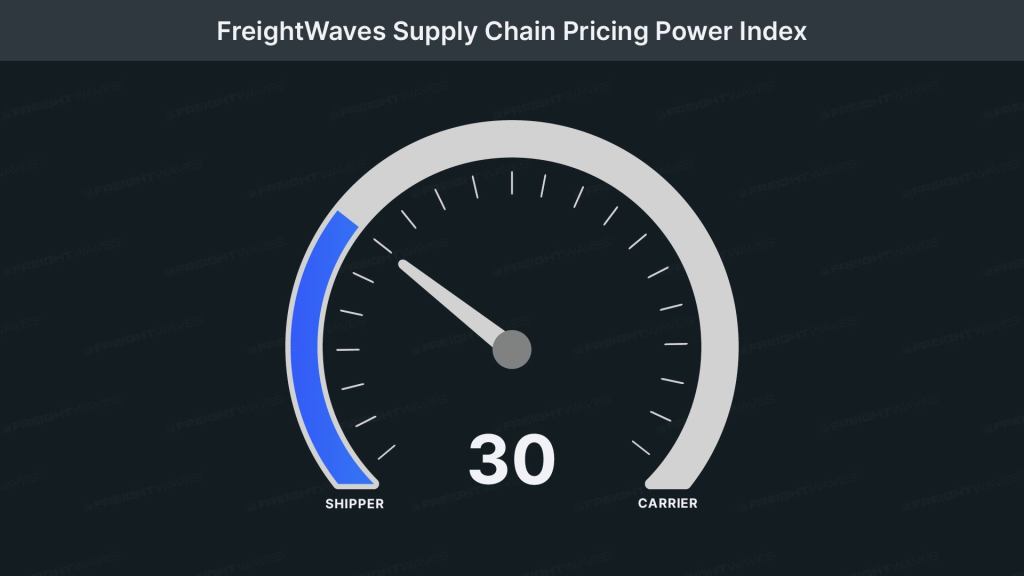
This week’s FreightWaves Supply Chain Pricing Power Index: 30 (Shippers)
Last week’s FreightWaves Supply Chain Pricing Power Index:30 (Shippers)
Three-month FreightWaves Supply Chain Pricing Power Index Outlook: 35 (Shippers)
The FreightWaves Supply Chain Pricing Power Index uses the analytics and data in FreightWavesSONAR to analyze the market and estimate the negotiating power for rates between shippers and carriers.
This week’s Pricing Power Index is based on the following indicators:
Withering on the vine
Ocean carriers are eyeing 2024 with no small amount of wariness, as the consensus seems to be that the waves will be choppy. Of course, the cargo handled by ocean carriers and container ports directly informs volume trends of the truckload market. Domestic manufacturers are also failing to inspire much optimism, as they foresee that a challenging interest rate environment will continue to be a major headwind on output throughout the first half of 2024.
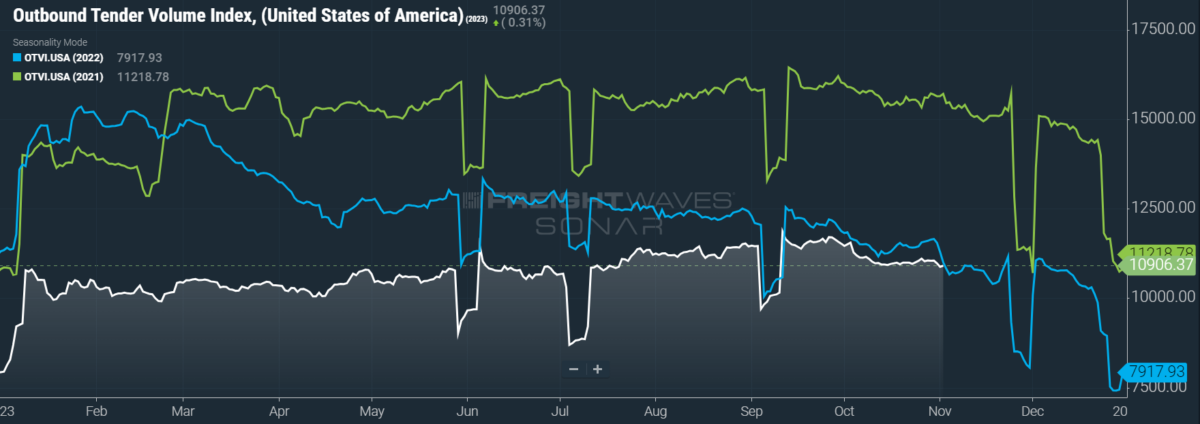
Tender volumes are finally, but barely, above year-ago levels: SONAR: OTVI.USA: 2023 (white), 2022 (blue) and 2021 (green) To learn more about FreightWaves SONAR,click here.
This week, the Outbound Tender Volume Index (OTVI), which measures national freight demand by shippers’ requests for capacity, is down 1.77% week over week (w/w). On a year-over-year (y/y) basis, OTVI is finally up 0.81%, though such y/y comparisons can be colored by significant shifts in tender rejections. OTVI, which includes both accepted and rejected tenders, can be inflated by an uptick in the Outbound Tender Reject Index (OTRI).
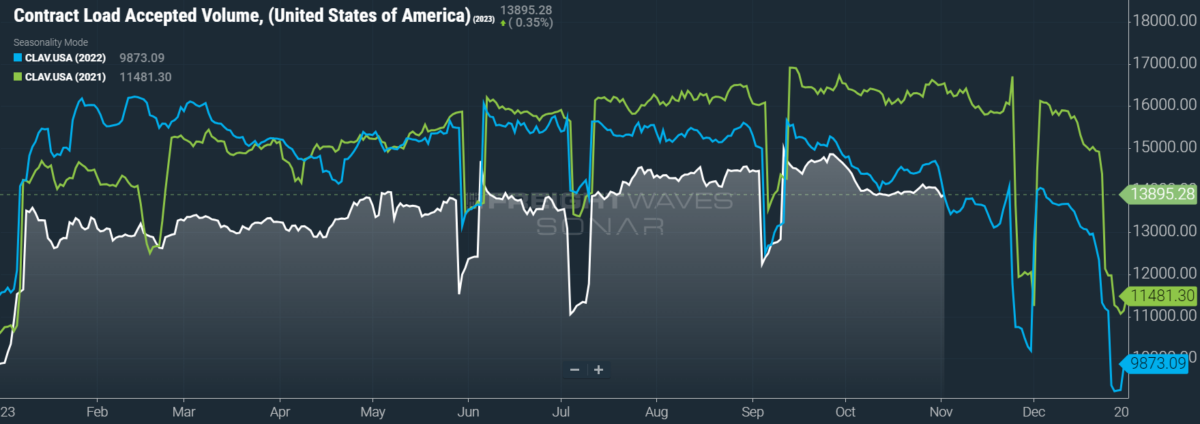
Accepted volumes are outpaced by 2021 and ’22: SONAR: CLAV.USA: 2023 (white), 2022 (blue) and 2021 (green) To learn more about FreightWaves SONAR,click here.
Contract Load Accepted Volume is an index that measures accepted load volumes moving under contracted agreements. In short, it is similar to OTVI but without the rejected tenders. Looking at accepted tender volumes, we see a dip of 1.51% w/w as well as a fall of 2.61% y/y. This narrowing y/y difference implies that actual freight flow is still recovering from this cycle’s bottom.
With Friday’s release of the October jobs report came a startling realization that the labor market — what had been one of the strongest pillars beneath a slowing, but not crashing, economy — is on unstable ground. Nonfarm payrolls rose 150,000 in the month, below consensus estimates of 180,000 and nearly half of September’s growth, which was revised down from 336,000 to 297,000. I noted on the last jobs print that these headline figures follow a trend of quiet downward revisions in the months following, so for October’s initial pass to be below consensus is weak indeed.
The overall transportation and warehousing sector lost 12,100 jobs in October, which undid nearly all of September’s gain of 12,500 positions. Of October’s losses, cuts in the truck transportation subsector were a major factor, as the trucking industry lost 5,000 positions in the month. But the biggest blow by far was dealt by the storage and warehousing subsector, which bled 11,400 jobs in October. As the warehousing industry faces headwinds going into 2024, so also does the trucking industry.
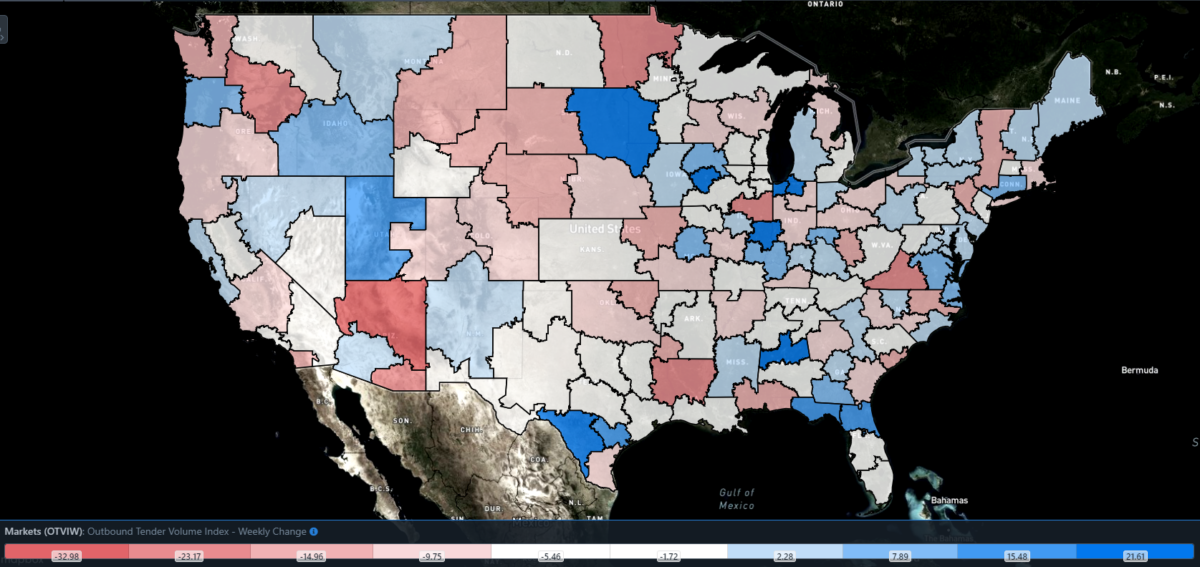
Large markets post poor weekly performances: SONAR: Outbound Tender Volume Index – Weekly Change (OTVIW). To learn more about FreightWaves SONAR, click here.
Of the 135 total markets, 55 reported weekly increases in tender volumes, with many of the heavyweight markets facing slight or severe losses on a w/w basis.
The razor’s edge
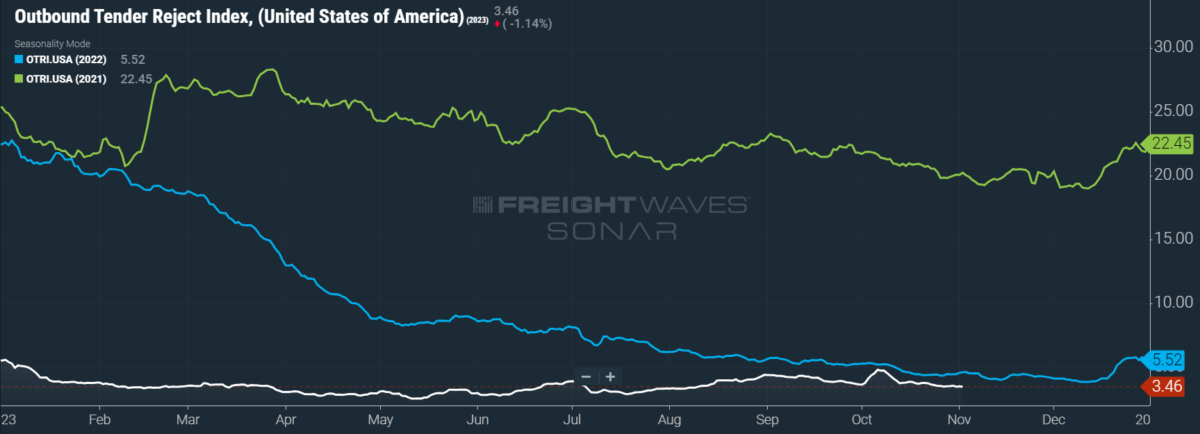
After a dramatic peak early last month that brought OTRI to its highest reading since January, tender rejections have returned to the path of mediocrity. As with spot rates, mid-May’s lows likely mark the bottom of this cycle. Unlike spot rates, however, the recent movements in national rejection rates do not have a significant impact on carriers’ sentiment — for them, tender rejections are at a good level, a bad one or a middling normal. Unfortunately, with OTRI below 4%, low rejection rates are still a heavy counterweight to carriers’ pricing power.
OTRI’s recent gains are quickly lost: SONAR: OTRI.USA: 2023 (white), 2022 (blue) and 2021 (green) To learn more about FreightWaves SONAR, click here.
Over the past week, OTRI, which measures relative capacity in the market, fell to 3.46%, a change of 6 basis points from the week prior. OTRI is now 113 bps below year-ago levels, with comparisons becoming less favorable as rejection rates slide deeper into contraction.
More news of bankruptcies came from the logistics sector, a further indication that this bloodletting cycle will be death by a thousand cuts. A 12-year-old brokerage in Fort Worth, Texas, SEL Supply Chain Solutions struggled to overcome a failure cascade that started with the theft of a $700,000 load earlier this year. After the cargo theft was reported to insurance, premiums predictably rose at a time when margins were already being compressed. Finally, the challenging credit environment caused banks to restrict the firm’s access to capital, which is especially damning for brokerages that rely on payments made 30-60 days after a load is moved. In short, this arduous road to freight markets’ recovery will punish brokers and carriers alike for any slight mistake or fluke disruption.
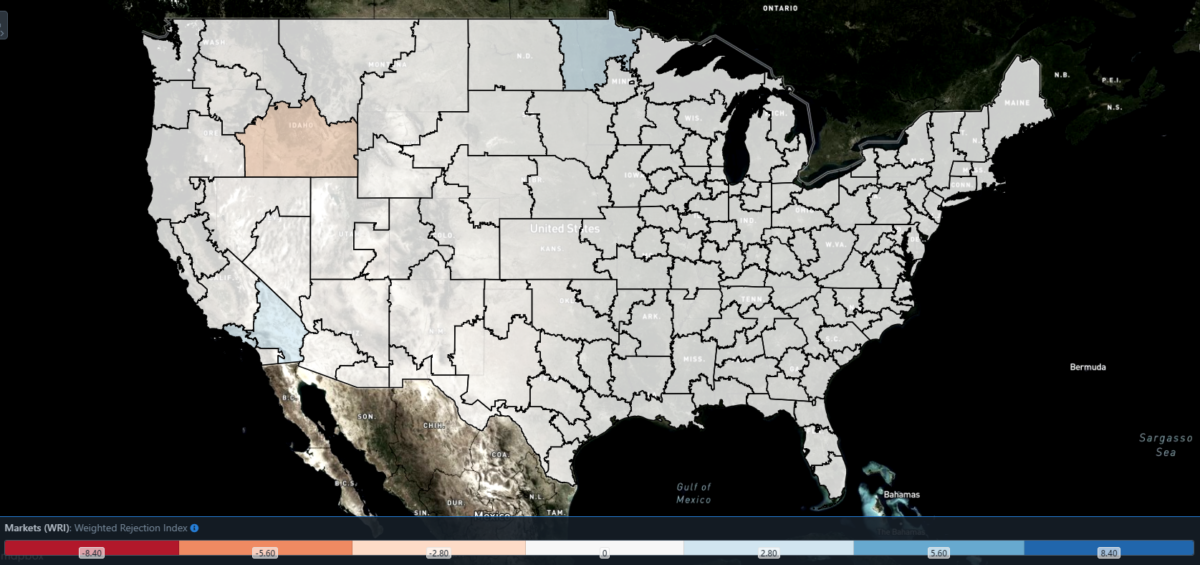
Capacity tightened in Los Angeles this week: SONAR: WRI (color) To learn more about FreightWaves SONAR, click here.
The map above shows the Weighted Rejection Index (WRI), the product of the Outbound Tender Reject Index – Weekly Change and Outbound Tender Market Share, as a way to prioritize rejection rate changes. As capacity is generally finding freight this week, only a few regions posted blue markets, which are usually the ones to focus on.
Of the 135 markets, 59 reported higher rejection rates over the past week, though 43 of those saw increases of only 100 or fewer bps.
Shifting sands
Diesel prices are headed back down after mid-October’s threat of a rally dissipated. The outbreak of war in the Middle East put a brief premium on prices of crude oil, though this fizzled as soon as the Israel-Hamas war appeared to be contained. That said, there are whispers that Saudi Arabia could cut its oil production by another million barrels per day. Such a strategy appears somewhat foolish, given recent Q3 data that revealed — as a direct result of already-curbed production — Saudi Arabia’s economy contracted for the first time since the beginning of 2021. If Saudi Arabia does decide to press its finger further on the scale, there is always the risk that oil markets could become too hot, triggering a recessionary backlash.
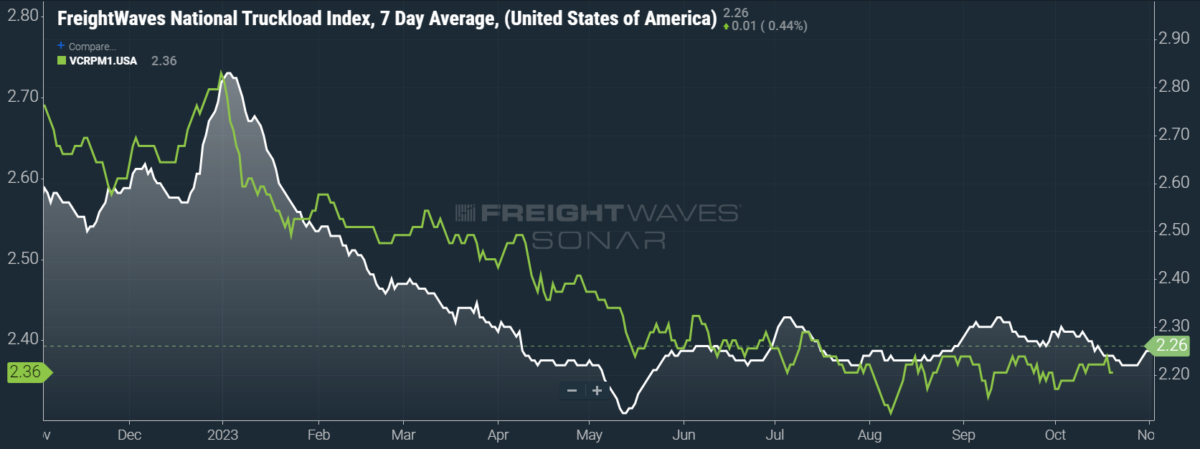
Spot rates hold slight promise of recovery: SONAR: National Truckload Index, 7-day average (white; right axis) and dry van contract rate (green; left axis). To learn more about FreightWaves SONAR, click here.
This week, the National Truckload Index (NTI) — which includes fuel surcharges and other accessorials — rose 4 cents per mile to $2.26. Falling fuel prices were unable to offset rising linehaul rates, as the linehaul variant of the NTI (NTIL) — which excludes fuel surcharges and other accessorials — rose 5 cents per mile w/w to $1.57.
It is still difficult to discern the movements of contract rates, which are reported on a two-week delay, for the remainder of the year. Bid season is still ongoing and will continue until Q1 2024, but contract rates have so far remained stable. Even so, contract rates are trending slightly below last quarter’s average, and shippers have plenty of pricing power left to exercise during this round of contract negotiations. For the time being, contract rates — which exclude fuel surcharges and other accessorials like the NTIL — have fallen 1 cent per mile w/w to $2.36.
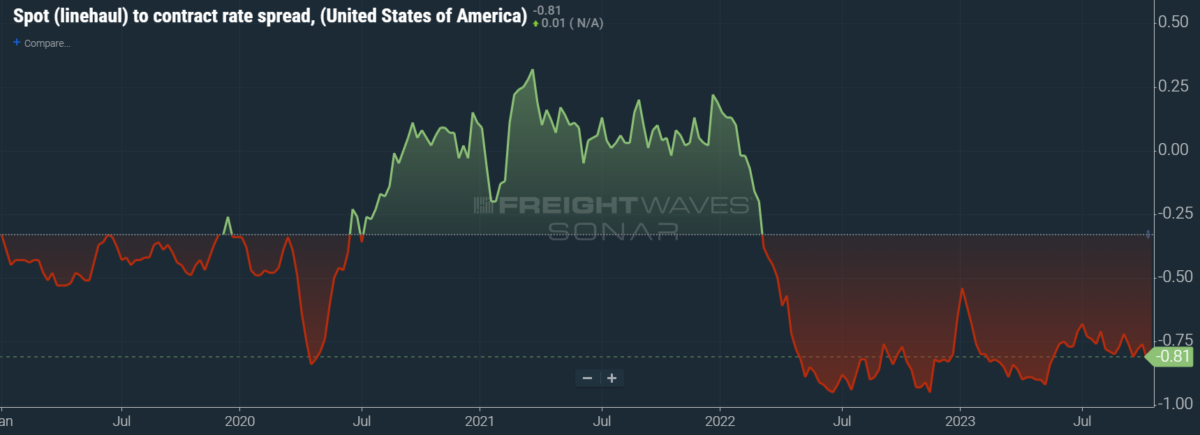
SONAR: RATES.USA To learn more about FreightWaves SONAR, click here.
The chart above shows the spread between the NTIL and dry van contract rates, revealing the index has fallen to all-time lows in the data set, which dates to early 2019. Throughout that year, contract rates exceeded spot rates, leading to a record number of bankruptcies in the space. Once COVID-19 spread, spot rates reacted quickly, rising to record highs seemingly weekly, while contract rates slowly crept higher throughout 2021.
Despite this spread narrowing significantly early in the year, tightening by 20 cents per mile in January, it has remained wide throughout most of the year to date. As linehaul spot rates remain 81 cents below contract rates, there is plenty of room for contract rates to decline — or for spot rates to rise — in the final quarter of the year.
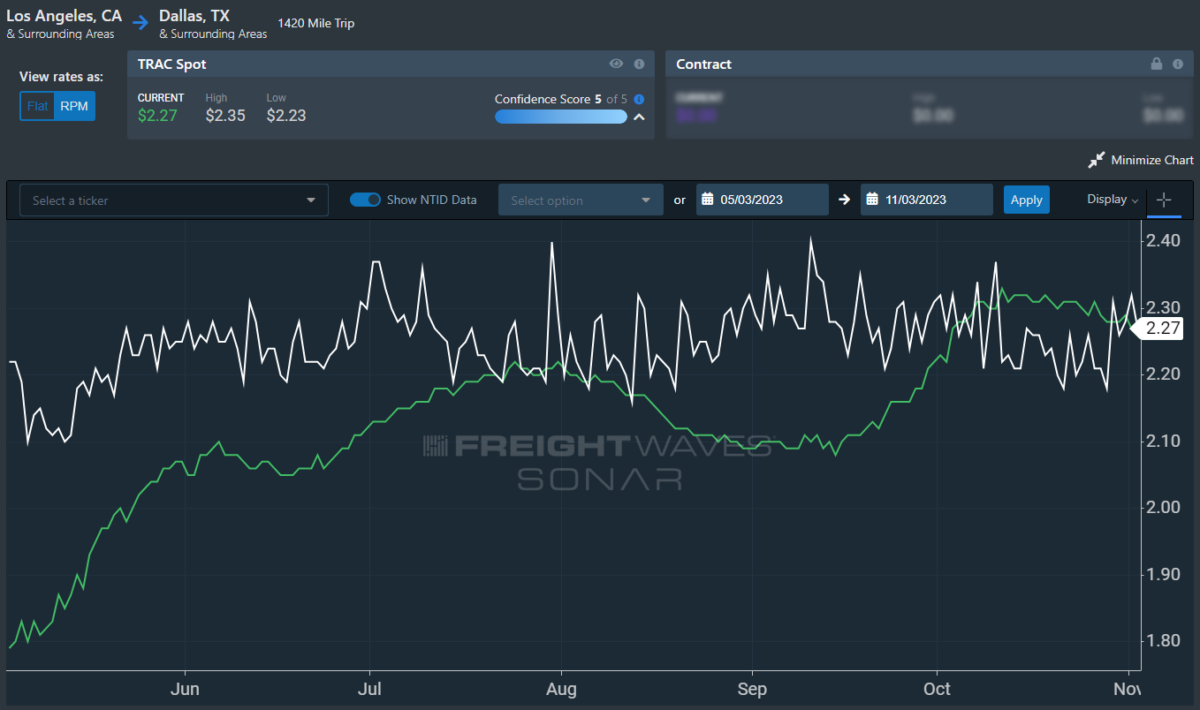
SONAR: FreightWaves TRAC rate from Los Angeles to Dallas. To learn more about FreightWaves TRAC, click here.
The FreightWaves Trusted Rate Assessment Consortium (TRAC) spot rate from Los Angeles to Dallas, arguably one of the densest freight lanes in the country, is losing some of its recent gains. Over the past week, the TRAC rate fell 4 cents per mile w/w to $2.27 — slipping further from its year-to-date high of $2.39. The daily NTI (NTID), which has risen to $2.27, is now realigned with rates along this lane.
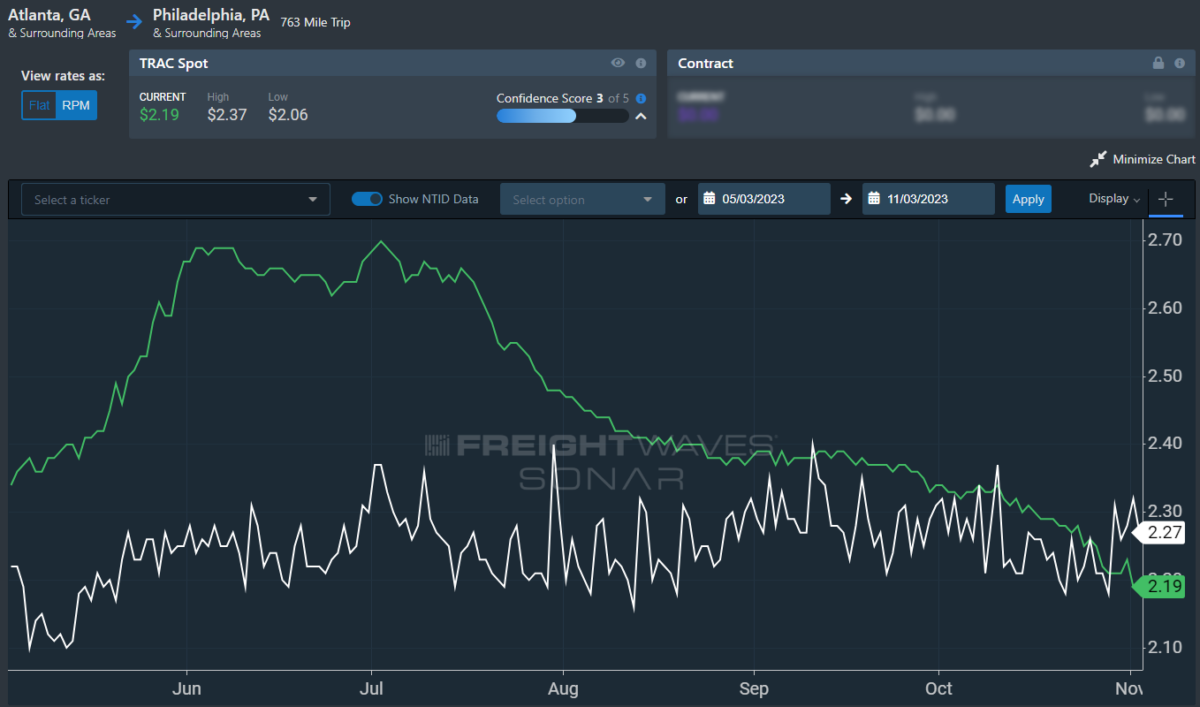
SONAR: FreightWaves TRAC rate from Atlanta to Philadelphia. To learn more about FreightWaves TRAC, click here.
On the East Coast, especially out of Atlanta, rates are facing a brutal decline and are finally being outpaced by the NTID. The FreightWaves TRAC rate from Atlanta to Philadelphia fell 6 cents per mile to $2.19. After a bull run that started at the end of April, this lane had been plateauing well above the national average, which made north-to-south lanes in the East more attractive than West Coast alternatives during the summer.
Running on Ice: Frosting the nation with warehouses
Hello, and welcome to the coolest community in freight! Here you’ll find the latest information on warehouse news, tech developments and all things reefer madness-related. I’m your controller of the thermostat, Mary O’Connell. Thanks for having me!
All thawed out
(Photo: Jim Allen/FreightWaves)
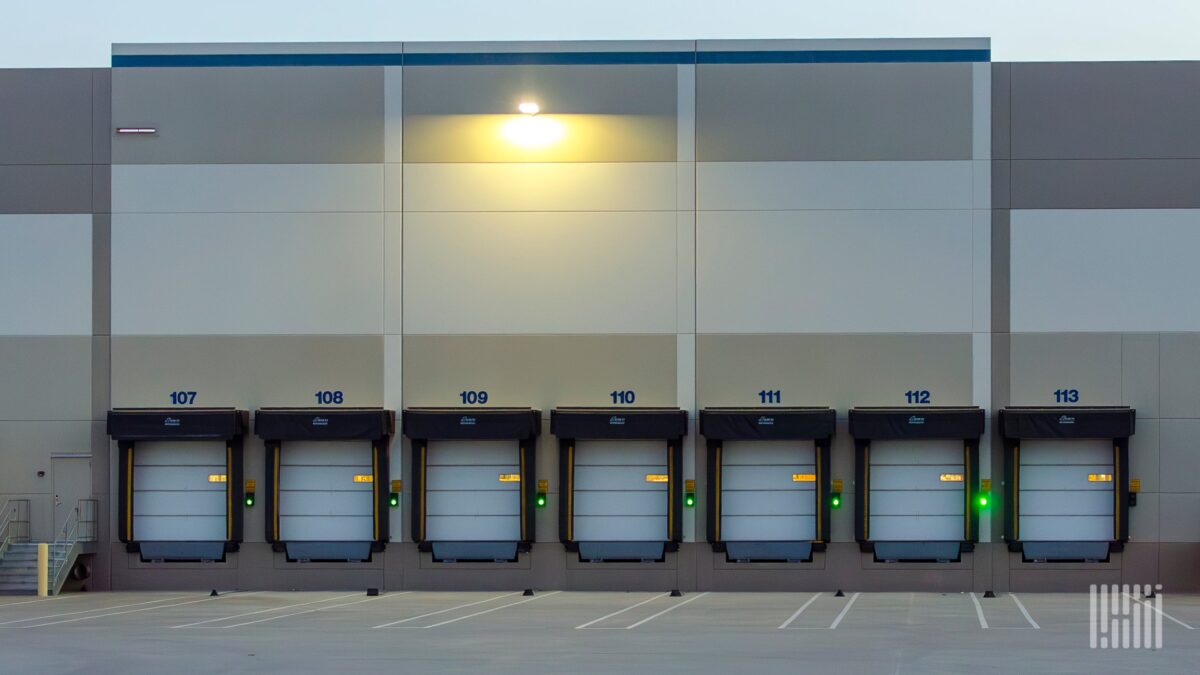
A new cold storage facility in Cleveland has brought immediate relief to cold shippers in the form of Cleveland Cold Storage. The facility has 150,000 square feet of storage that goes to minus 10 degrees. The facility opens early next year and already has over half the space sold.
Orlando Baking Co., one of the new clients of the warehouse, used to ship freshly baked breads and goods to Columbus, Ohio, every day to the tune of 12 trucks because there were no available facilities closer. That’s about two hours one way that food was being transported.
This facility has kicked off more of the same as International Food Solutions is planning to build a $100 million frozen food processing plant just a mile away from Cleveland Cold Storage.
Temperature checks
(Image: FreezPak Logistics)
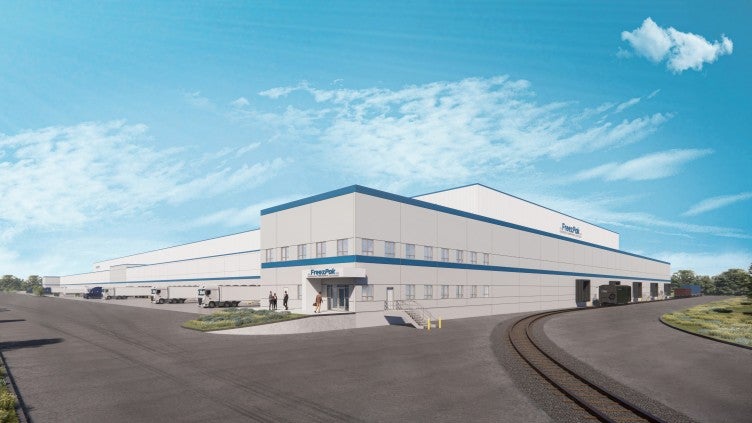
Cleveland isn’t the only city getting some much-needed cold storage. Baytown, Texas, right outside Houston is getting a new 281,849-square-foot warehouse. The facility will be primarily leased by FreezPak Logistics. Phase one will break ground this month. According to a Fleet Owner article, “This project will be FreezPak’s largest known facility to date and one of the most technically advanced Class A cold-storage industrial facilities within the country.”
Phase two of the project will increase the overall square footage to 547,083. Once both phases are completed, the facility will be able to accommodate 141 trailer parking stalls, 64 truck stalls, three rail bays and 131 car parking spots. On top of that, the building will have 408,213 square feet of freezer space and 110,141 square feet of temperature-controlled cooler docks.
Food and drugs
(Photo: DiGiorno)
Thanksgiving leftover sandwiches are a hallmark of the holiday. This year Digiorno is putting a pizza twist on classic Thanksgiving leftovers, introducing the Digiorno Thanksgiving Pizza. It will have turkey, creamy gravy sauce, diced sweet potatoes, green beans and cranberries, topped with mozzarella and cheddar cheese with the all-important crispy onion to finish it off.
According to DiGiorno, “68 percent of Americans dislike a classic Thanksgiving dish, but they eat it anyway out of tradition.” As one of those 68% of people, I can confirm not all Thanksgiving side dishes are created equal. Some food combinations should be left alone, and I’d have to say this might be a miss from DiGiorno.
However, if questionable pizza flavors is your style, this limited-edition pizza can be ordered online for $11.23 along with some themed merch. The pizza is available Nov. 1-22.
Cold chain lanes
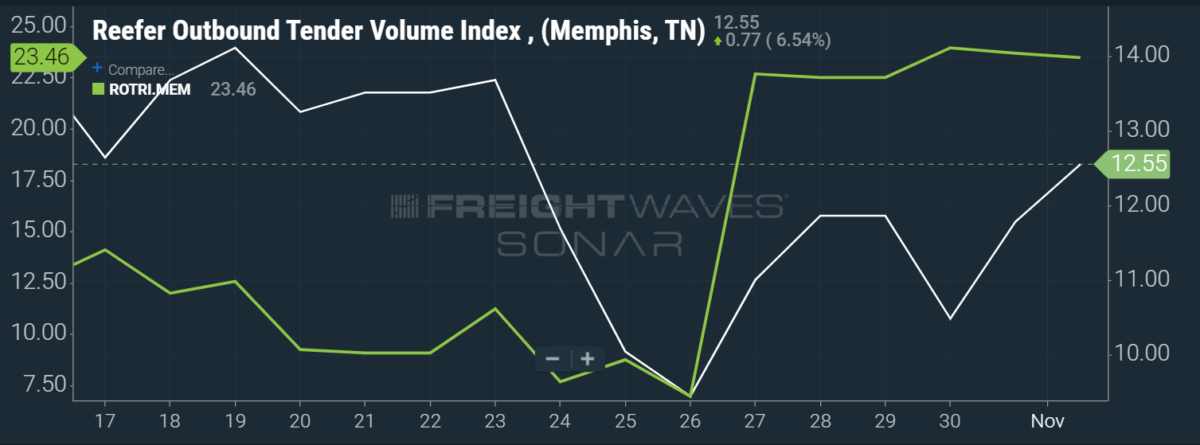
(SONAR Tickers: ROTVI.MEM, ROTRI.MEM)
This week’s SONAR reefer market is Memphis, Tennessee. October closed out Memphis on a high note with the Reefer Outbound Tender Reject Index coming in 23.46%. Since reefer rejection rates have jumped over 20%, spot rates in Memphis will be significantly inflated compared to where they were in October. Not only are reefer rejections on the rise, but reefer outbound tender volumes are up 25% week over week.
Shippers should expect to see an increase in spot rates in Memphis, as service from main carriers might take a hit. Carriers with excess capacity should think about heading to Memphis, and brokers should expect volatility in rates over the next few weeks until rates return to stability.
Wanna chat in the cooler? Shoot me an email with comments, questions or story ideas at moconnell@www.freightwaves.com.
See you on the internet.
Mary
If this newsletter was forwarded to you, you must be pretty chill. Join the coolest community in freight and subscribe for more at www.freightwaves.com/subscribe.
On today’s episode of WHAT THE TRUCK?!? Dooner is talking to Diesel Laptops CEO Tyler Robertson about the diesel technician shortage. According to the TechForce Foundation, we’ll need to replace 163,000 positions by 2030. We’ll learn how Diesel Laptops is working to close the employment gap with its new training center.
Drone Express is fresh off a pilot delivering pizzas for Papa John’s and it has secured a new round of funding. CEO Beth Flippo joins us to share the latest in drone delivery and to tell us when this category will take off.
OneRails’ Jay Silva is packing his bags for F3 in Chattanooga. We’ll find out what OneRail has planned for the event, how to develop partnerships at a conference and how Silva thinks holiday shipping will go.
Talent Solvers’ KJ McMasters is the king of recruiting. We’ll find out what this market holds for prospects and how to build winning teams in down markets.
Plus, Flexport buys Convoy’s tech stack; details emerge regarding the “TQL Pay Me My $8000” viral trucker; Maersk cuts 10,000 workers; 35,000 trucking companies shut down in the past year; pizza inflation; how truck stops are planned; and more.
How a 1979 Korean shipping decree sparked outrage from US shippers
FreightWaves Classics is sponsored by Old Dominion Freight Line — Helping the World Keep Promises. Learn more here.
FreightWaves explores the archives of American Shipper’s nearly 70-year-old collection of shipping and maritime publications to showcase interesting freight stories of long ago.
In this week’s edition, from the October 1979 issue, FreightWaves looks at a tumultuous time when U.S. shippers started protesting a decree from South Korea — officially the Republic of Korea — favoring that country’s own cargo.
Shippers fear Korean move will result in excessive freight rates
The Republic of Korea’s implementation of a new cargo preference law reserving 100% of that nation’s cargo for Korean flag vessels has produced a flood of protests from American shippers, both at the Federal Maritime Commission and the U.S. Department of State.
A common thread running through all of the protests is the fear that a Korean-flag monopoly will result in increased freight rates and cause instability in other U.S./Far East trades.
The complaints represent the heaviest influx of shipper activity before the Commission in recent memory. Judging by the comments filed with FMC, it appears the protests resulted from a well-organized effort on the part of the shippers. (The Commission has tried to stir up shipper interest in FMC matters, but until the Korean decree hit the headlines, their views were rarely aired before the regulatory agency.)
Continental grain/NARI protest
Urging immediate FMC action to bar Korean flag lines from following the cargo preference decree, Continental Grain Co. and the National Association of Recycling Industries (NARI) sent identical protests to the Commission.
“Such an insidious action [the Korean decree] will be highly disruptive to the U.S. trade and create extremely inflationary forces in the international marketplace,” Continental Grain and NARI said. “Not only does this Korean action violate every principle of American open competition, but it will seriously disrupt American trade, exacerbate U.S. balance of payments problems, and result in needless cost to American companies. Recycled commodities represent a major portion of the Korean trade, and the impact of this action would be so severe that we urge expedited action to prevent the Korean shipping companies from instituting this unilateral and highly damaging policy.”
Furthermore, the parties feared being forced to use Korean vessels “on a prejudiced, priority basis at excessive rates without regard for competitive opportunities provided by U.S. and other friendly-nation carriers.”
Nevco speaks out
Nevco, a division of U.S. Industries Inc. and a large importer of Korean goods, gave low marks to Korean flag vessels as far as service goes. Aside from fearing excessive freight rates, Nevco Import Manager Steven Steinman said, “We bitterly protest any effort to freeze out other shipping lines and require us to ship by Korean lines, whose inefficiency, slowness, and difficulty in settling justified claims are notorious.”
National sporting goods
Ira J. Hirsch, president of the National Sporting Goods Corporation, said the Korean action “will represent a loss to us as an importer of routing control and autonomy as to carrier selection.” Hirsch also feared service instability in other Far East trades and serious inflationary effects.
U.S. flag service praised
Lester Serenco of Fairway Manufacturing Co., St. Louis, said his firm’s best service has come from American flag vessels. “Our best results in import cargo out of Korea have been on ships of American flag, and we feel strongly that should this new regulation go into effect, there will result increased freight rates and poor service since there will be no competition for this trade,” he said. “Unless these changes are part of negotiations with the Republic of Korea with resulting gains for the United States, as well as Korea, I feel that a strong protest should be lodged in regard to these changes. We do not like to be told that we cannot have a free choice of shipping lines to handle our cargo out of the Republic of Korea.”
DuPont needs containers
E.L. duPont’s J.C. Jessen doubted Korean flag vessels could provide the needed container capacity and sailing frequencies the giant shipper requires in the U.S./Korea trade. Most of DuPont’s shipments, according to Jessen, are out of the U.S. Gulf on “traditional carriers,” such as Seatrain Lines, Sea-Land Service, U.S. Lines, and Maersk Line.
“We ship as much as possible in containers, and customers will not normally accept two to three week frequency,” the DuPont official told FMC. “Actually, one Korean customer requests containers monthly on one ship.”
Jessen said DuPont would be able to support “any reasonable action required to permit continued export to Korea using traditional carriers.”
Leonard Belove, president of Beloved Toys Inc., Kansas City, Missouri, sent letters to the White House, State Department, Commerce Department, Missouri Senators Tom Eagleton and Jon Danforth, and the FMC, stating:
“We hope you will do your best to block the South Koreans’ move which gives a shipping monopoly to South Korean ship lines. It’s hard to believe a country which relies so heavily on American aid and trade would even contemplate such competition-stifling action. We hope to learn you have induced a change more fair to our American interests.”
Have a topic you want us to cover? Email bjaekel@www.freightwaves.com.
Truck transportation jobs drop again
Employment in the truck transportation sector in October recorded its fourth decline in the past five months as total jobs in that classification are now down more than 30,000 since its most recent high.
The decline of 5,000 seasonally adjusted jobs reported by the Bureau of Labor Statistics for October actually was a smaller drop than in July and August. With revisions in place for September and August, the past five months have recorded a decline of 1,400 jobs in June, 6,900 in July, 30,700 in August — when the demise of Yellow Corp. first hit the market — and 5,000 in October. Sandwiched in there was an increase of 13,400 jobs in September, which had suggested the BLS might have overshot the impact of Yellow’s closure.
The latest report, released Friday, revised the September truck transportation total down by 900 jobs, but the August total was cut 5,500 jobs from a month earlier.
After all the changes, October’s total truck transportation jobs of 1,578,600 is 30,600 fewer than the high-water mark of May, when the BLS reported 1,609,200 jobs.
While economists generally look at seasonally adjusted data, they caution that the not seasonally adjusted numbers should not be ignored. The jobs total for not seasonally adjusted truck transportation in October was 1,589,700, unchanged from September. September’s figure was revised down by 2,000 jobs.
That stability in the not seasonally adjusted number “indicates that carriers who are involved with supporting the retail peak season or other seasonal demand, such as food or Christmas trees, may have taken a step back this year from the normal hiring ramp up and are comfortable handling the seasonal demand surges with the staffing already in place,” David Spencer, the vice president of market intelligence at Arrive Logistics, said in an email to FreightWaves.
Spencer noted the capacity overhang that many have cited as the cause of the freight market doldrums, which he sees as more a function of many drivers and trucks not yet exiting the market. He said he was expecting further employment declines.
“The three and four month trends still highlight 22,000 and 29,000 job reductions, respectively, and that is a trend I expect could continue into 2024,” Spencer said. “Large quantities of drivers entered the market when there was money to be made in the spot market and balance must be restored before conditions can improve.”
The last time seasonally adjusted jobs in truck transportation were this low was April 2022, when they came in at 1,571,700. A month later, they rose by 12,100 jobs.
In other highlights from the report:
There was a huge divergence between seasonally adjusted and not seasonally adjusted jobs in warehousing. The October figure for not seasonally adjusted warehouse jobs was 1,902,000 jobs, a big jump of 32,400 from September (which in turn was revised upward by 3,300 jobs). But seasonally adjusted jobs in the warehouse sector declined 11,400 jobs to 1,871,000. The changes put the gap between seasonally adjusted and not seasonally adjusted jobs at 31,000. The end result of these changes is that seasonally adjusted warehouse jobs peaked last year at 1,960,300 in June. They are now 89,300 jobs fewer than that.
Labor costs softened in truck transportation. Hourly earnings of all employees declined to $30.49 in September; the data operates on a one-month lag. That is a 19-cents-per-hour decline. The most recent peak was $31 an hour in July.
While employment at Class 1 railroads has been described as a “mixed bag,” the overall picture coming out of the BLS is one of stability. The past three months after revisions were all reported as 150,200 jobs. A year ago it was 147,600 jobs, but that hiring boost appears to have fizzled out for now.
Mastering cargo securement: Tips to prevent violations and ensure road safety
Severe weather, rough and steep roads, and congestion are just a few of the countless factors that can contribute to cargo becoming dislodged or shifting mid transit. Proper cargo securement is a must to protect freight, prevent claims and most importantly, keep drivers and the public safe.
While not all cargo securement violations are out-of-service violations, cargo securement violations were the fourth most common type of violation during the Commercial Vehicle Safety Alliance’s (CVSA’s) 2023 International Roadcheck, a three-day enforcement effort in May.
Improper cargo securement can result in out-of-service violations and fines. Further, unsecured cargo can fall onto the road, causing significant risk of injury or even death to motorists.
Daniel Vega, director of safety at Reliance Partners and former inspector for the Commercial Vehicle Enforcement Bureau, found during his time as a state trooper that cargo securement was a prevalent issue. One of the most common violations he noticed was a lack of tie-downs appropriate for the cargo’s length and weight, as well as not having an extra tie-down if the trailer didn’t have a header board.
Cargo securement issues are more noticeable on flatbed operations, but they can occur on other types of trailers when items aren’t loaded properly and secured with necessary measures like shoring bars and dunnage. Freight can shift around and cause issues for drivers upon opening the trailer.
Another cargo securement violation Vega noted was drivers’ failure to secure their spare tire.
“You’d be surprised how many tires you’d see on the side of the road on an interstate,” he added.
Vega advises carriers and drivers to take the following measures to avoid common cargo securement violations and keep drivers and roadways safe:
1. Provide drivers with more in-depth cargo securement training. Carriers should thoroughly train drivers on cargo securement expectations, especially for flatbed operations, beginning at orientation and ongoing during employment. Managers should set clear expectations of company policies and procedures and reiterate Federal Motor Carrier Safety Administration regulations.
2. Check securement during pre-trip inspection. Drivers are the main individuals interacting with a vehicle each day, so their pre-trip inspections are vital to catch vehicle maintenance issues before they become a safety problem or violation. Drivers should double-check that freight is properly tied down in accordance with each load’s requirements.
3. Complete en-route inspections. Intermittent checks of equipment during a trip are necessary to ensure that all tarps, tie-downs and other equipment are secure. According to 49 CFR 392.9, checks must be completed within the first 50 miles. Drivers must also check their cargo at whichever of the following occurs first:
A duty status change,
After three hours of driving, or
After 150 miles or more of driving.
4. Check securement post-trip. After a trip is complete, drivers should double-check the integrity of tie-downs and tarps and replace them before the next trip.
5. Don’t be afraid to add more tie-downs. “If you’re ever in doubt if you should add an extra tie-down, the answer is ‘yes,’” said Vega. There is always a minimum number of tie-downs needed. If a load is only secured with the minimum number of tie-downs and, for some reason, one of them becomes loose or is in poor condition at the time of inspection, it could lead to being placed out of service.
Click here to learn more about Reliance Partners, a trucking insurance agency helping businesses on their safety compliance journeys.
The views expressed here are solely those of the author and do not necessarily represent the views of FreightWaves or its affiliates.
There has been an abundance of discussions these past few months around logistics technology companies, their role and whether they can survive the current economic downturn. This discussion has only become louder with the recent bankruptcies of Convoy and Slync. These events have given incumbent vendors and technology “doubters” alike the opportunity to put into question the role of a startup and the topic of innovation.
But does that really mean that all logistics technology startups are doomed to fail or that end user companies should not continue to invest in these technologies as part of their innovation strategy?
Next week FreightWaves will announce its FreightTech 25 at the FreightWaves F3 conference in Chattanooga, Tennessee, and so it is a timely question — a question that I will try to answer from the perspective of an end user, a thought leader, a technology executive and a VC partner at Venture53. I have been part of startups since the early 2000s and have seen companies blossom to success as well as fail in the past 23 years.
I write this as I return from a logistics technology conference in Dallas where a few main themes stood out. End users are continuing to invest in technology but are doing this in a more organized way, aligning their technology investments to their business strategies. They are partnering with technology vendors as well as with their customers to co-innovate. Education plays a big role in successfully implementing a technology, and it is a key responsibility of the management team.
But with so many new technologies and technology startups around and so much hype around topics like AI, are we really approaching technology the right way? Companies should have a clear strategy that leads the innovation in their organizations. But innovation is not the same as technology. Innovation is the process of creating and implementing new or improved ideas, products, services, processes or methods to bring about positive change, solve problems, meet new needs or seize new opportunities. It involves the generation, development and application of creative and novel solutions to address various challenges and enhance different aspects of life, including business, technology, health care and society. Innovation is a critical part of our progress and as such we need to continue innovating.
Innovation strategy plays a crucial role in logistics by driving efficiency, cost reduction and improved customer service.
One of the speakers I interviewed shared some great insights. “Innovation isn’t just about technology,” he said. “Innovation includes focus on new processes, new business models and new services. Innovation is also a team sport. People across the organization should be involved in the innovation strategy. And finally make sure you involve your customer in your innovation strategy.” He also pointed out that there is no guarantee that innovation will always be successful, and that technology always brings the right outcome. But it should not deter us from driving forward as long as it aligns to the direction outlined by the business strategy.
And yes, we will see more technology companies go out of business, but that doesn’t mean that they weren’t innovative or that they didn’t play an important role in the progress made in logistics. In 2001 Kozmo.com and Webvans went out of business. Twenty years later the same services and technologies were adopted by the likes of Amazon or Instacart. Although Webvans and Kozmo are no longer around, they showed us what was possible. Convoy and companies like it showed the importance of technology in freight, and while they did not disrupt the industry as intended, they led the way in the recent freight technology revolution. Most 3PLs and brokers have accelerated their technology adoption and innovation in the past five years. And now the Convoy technology will live another day within the Flexport platform.
Logistics remains a complex industry with many problems left to tackle. We should encourage innovation as it brings us closer to the end goal. But we also have to accept that this innovation sometimes comes at a cost — the cost of failure. As Winston Churchill put it: “Success is not final. Failure is not fatal. It’s the courage to continue that counts.” A more recent quote from Pitbull reads, “There’s no success without failure and no winning without losing.” So let’s encourage those who dare to innovate rather than attack them. Let’s co-innovate and collaborate rather than compete and discourage.
If you want to provide your comments, come look for me in Chattanooga next week at FreightWaves F3.
Look for more articles from me every Friday on FreightWaves.com.
About the author
Bart De Muynck is an industry thought leader with over 30 years of supply chain and logistics experience. He has worked for major international companies, including EY, GE Capital, Penske Logistics and PepsiCo, as well as several tech companies. He also spent eight years as a vice president of research at Gartner and, most recently, served as chief industry officer at project44. He is a member of the Forbes Technology Council and CSCMP’s Executive Inner Circle.
The leaders, followers and also-rans in autonomous trucking
Last week, we looked at some electrification startups, placing them in one of three buckets — plugging along, on the bubble or down for a dirt nap. This week, we’ll look at the state of autonomous trucking startups seeking to remove human drivers: Who is leading, who is on the bubble, who is emerging and who has left the stage?
Leading the way
Aurora Innovation
The Pittsburgh-based startup stands out for a number of reasons. It has OEM partnerships with Paccar Inc. and Volvo Group. It has $951 million in cash on its balance sheet, including $828 million raised in July. Aurora originally received about $1.2 billion in proceeds from a special purpose acquisition company merger in November 2021.
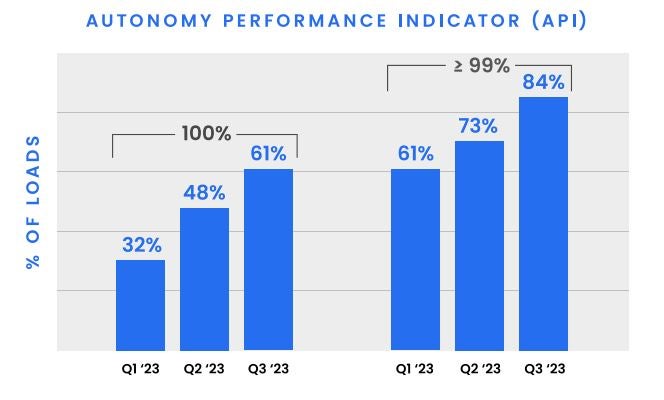
Aurora transparently shares its progress, even if some of the measures described seem a bit in the weeds. Its latest self-assessment shows 84% readiness for commercializing driverless freight on Interstate 45 between Dallas and Houston by the end of 2024.
Its timeline for what it calls Aurora Driver Ready has slipped to the end of Q1 2024 from this quarter, according to its shareholder letter released Wednesday. But the delay is not enough to jeopardize its launch plans.
Aurora uses an Autonomy Performance Indicator quarterly that measures miles driven that:
• Did not require support, such as from a local vehicle operator or other on-site support.
• Required remote input from the Aurora Services Platform.
• Support was received but later determined that it was unneeded.
Aurora Innovation uses an Autonomy Performance Indicator to measure its progress. (Chart: Aurora Innovation)
Gatik
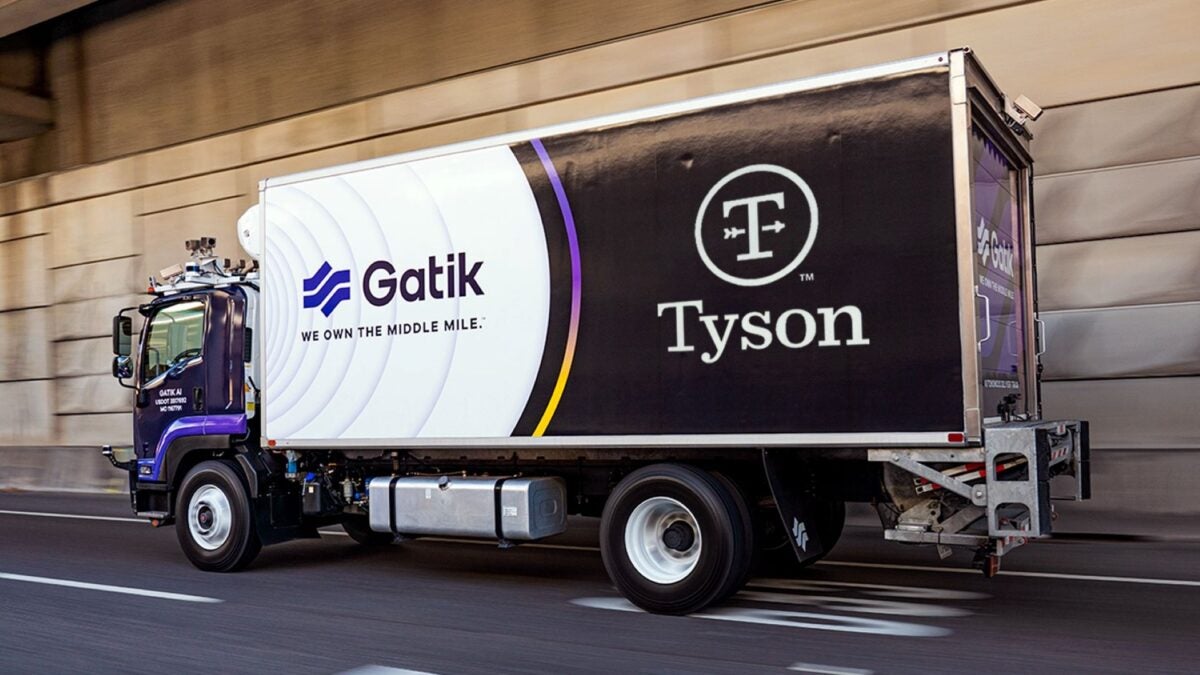
As the only significant player in short-haul autonomous trucking, privately held Gatik continues to grow its hub-and-spoke driverless operations.
Using Class 7 Isuzu box trucks, Gatik is weaning shippers from using Class 8 day cab semi-trailers on shorter runs.
The Mountain View, California-based company practically owns autonomy in Northwest Arkansas. It started driver-monitored deliveries for Walmart in 2019 before going driverless in 2021. It signed a three-year supply agreement with Tyson Foods, a Walmart neighbor, in September that could expand to as many as 40 markets.
Gatik runs autonomous deliveries for Loblaw Companies in Canada and has a deal to do likewise with grocery giant Kroger in Dallas.
With practically no competition, Gatik is growing its hub-and-spoke autonomous delivery business. (Photo: Gatik)
Kodiak Robotics
Kodiak is in the leader group despite a lack of public information about its finances. Because it eschewed taking SPAC money during the frenzy of 2020 and 2021, just how much money the Mountain View, California-based company has to scale its business is unknown.
Top carriers including C.R. England, Tyson Foods and Forward Air test or have tested the Kodiak Driver system.
CEO and co-founder Don Burnette won’t offer a specific target for driverless operations. Kodiak lacks a direct OEM relationship. It has some hardware technology like its Sensor Pods that could potentially be licensed. And, while not exactly a capital infusion, Kodiak won a $49.9 million contract with the U.S. Army in December to apply its Kodiak Driver to military uses.
Torc Robotics
The independent subsidiary of Daimler Truck has made significant progress toward commercialization. After declining to define a specific date for driver-out operations from the time Torc became part of Daimler in 2019, the company in July said it would begin commercialization in 2027.
Unlike those with short financial runways, the Blacksburg, Virginia-based company can take its time because market leader Daimler ultimately pays the bills.
Operating in the U.S. out of a former car dealership in Albuquerque, New Mexico, Torc benefits from integrating its software and hardware onto a purpose-built Freightliner Cascadia chassis. It has its pick of interested Cascadia customers for testing and down the road for commercial integrations.
I’ll get an in-person update on Torc’s progress in a couple of weeks.
On the bubble
TuSimple Holdings
Not so long ago, TuSimple arguably led the pack in pursuing commercialization of autonomous trucking. It has since deemphasized its U.S. presence through head count reductions and asset sales. A “strategic review” of its U.S. business could lead TuSimple to exit the market — if it finds a buyer for its patent-rich and cash-healthy operations.
TuSimple was the first to demonstrate a driverless trucking pilot in December 2021, an 80-mile nighttime run in Arizona. It has since demonstrated driver-out capabilities in China and Japan.
TuSimple’s Asian operations — once on the block — now get most of the attention, possibly because co-founder and controlling shareholder Mo Chen has businesses in China. Two rounds of layoffs in December and May affected about 55% of the U.S. workforce.
TuSimple shut down a costly autonomous freight-hauling business with safety drivers. An operations base in Tucson, Arizona, was put up for sale.
The breakup in December 2022 with Traton Group-owned Navistar International after 2 1⁄2 years left TuSimple without an OEM partner. CEO Cheng Lu dismissed the criticality of a specific tie-up since Tier 1 suppliers lead efforts in redundancy of steering, braking and power.
Since its $1.1 billion initial public offering in April 2021, TuSimple has held onto much of its cash. It reported $834 million in cash and short-term investments as of June 30.
Plus
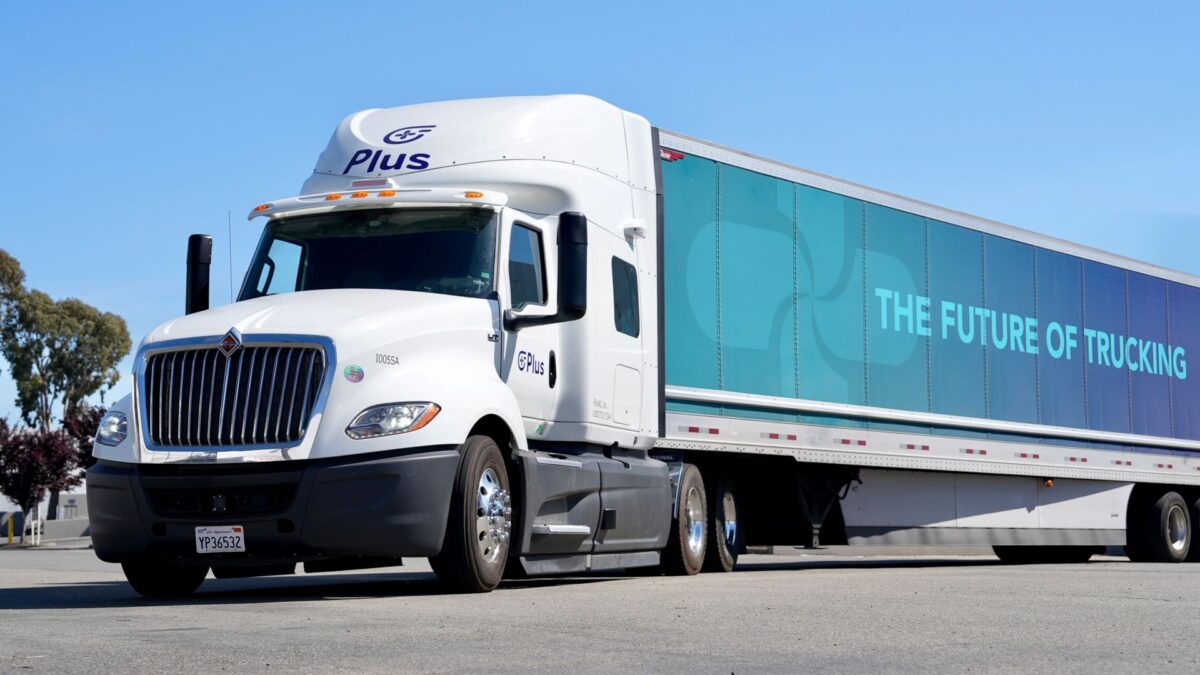
Another private player, Plus focuses most of its U.S. efforts on autonomous features that fall short of a full Level 4 system. But the high-autonomy system runs in the background of PlusDrive-enabled trucks.
Plus had a big presence in China, including a joint venture with the state-owned First Auto Works. According to a Reuters report in October, Plus agreed to hand off its China operations to Full Truck Alliance, a key stakeholder. Plus executives declined to discuss details.
More recently, Plus has talked up an alliance with Australia’s Transurban, a leading toll road operator. Plus tested its Level 4 system in June and announced a collaboration in August.
A Plus SPAC merger collapsed in November 2021 amid rising U.S.-China tensions. CEO David Liu demurred when asked on Truck Tech whether Plus is considering going public. He said the company’s cash position is strong but declined to give details.
Plus has different approaches to autonomy depending on the market. (Photo: Plus)
Waymo Via
Alphabet Inc.-backed Waymo suspended but did not cancel its autonomous trucking efforts in July. While focusing on the Waymo robotaxi and ride-hailing operations, the company could resume trucking efforts if its parent company, born of the original Google Self-Driving Car Project, allows.
For now, Waymo Via continues working with partner Daimler Truck on the redundant chassis that Torc also uses. The original plan had Waymo selling its Waymo Driver system while Torc would offer a homemade version — much the way Daimler sells its Detroit-branded engines alongside offerings from Cummins Inc.
On Thursday Waabi announced a partnership with the MIT Center for Transportation & Logistics. It is the first autonomous player to join the center’s research-focused Supply Chain Exchange. That fits with founder Raquel Urtasun’s academic background. She was a professor at the University of Toronto before starting Waabi in 2021.
Waabi focuses on using generative AI to train its autonomous system.
Stack AV
The newest name in the autonomous trucking space has the founders of shuttered Argo AI as its founders and money from Japan’s Softbank behind it. Precisely what Stack plans is still unclear, but most industry observers say it must be taken seriously.
The down and out
Embark Trucks
San Francisco-based Embark created a plug-and-play autonomous system capable of operating on major OEM Class 8 trucks. But the startup ran out of money to scale despite significant interest and the influential former U.S. Transportation Secretary Elaine Chao on its board.
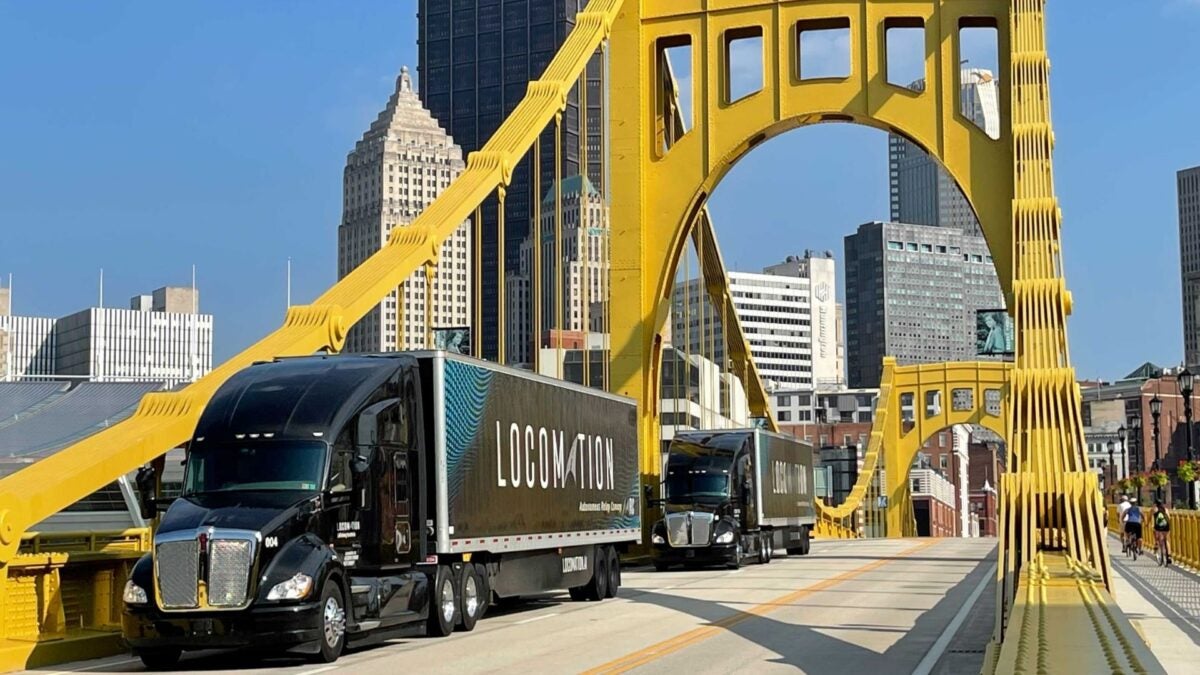
By swapping the drivers at the end of an 11-hour allowable shift, Locomation could safely operate two trucks for up to 22 hours per day while remaining in compliance with hours-of-service regulations. Locomation planned to eventually remove the drivers from the trucks.
Nothing has been heard of Locomation since February when co-founder and CEO Çetin Meriçli denied it was shutting down amid the layoff of an undetermined number of its 122 employees. The company raised $105 million from the time of its founding in 2018, including $15 million in October 2022, according to PitchBook.
Locomotion sought to create Level 4 autonomy for truck platooning. (Photo: Locomation)
Thanks for reading. I’m always interested in your feedback and story ideas. Email me at aadler@www.freightwaves.com.
Editor’s note:Corrects Torc commercialization target to 2027 from indefinite.
Don’t miss five top-name keynotes planned to anchor F3: Future of Freight Festival:
Brad Jacobs, managing partner of Jacobs Private Equity, LLC and executive chairman of XPO, Inc.
Alex Epstein, the founder & president of the Center for Industrial Progress and author of “Fossil Future: Why Global Human Flourishing Requires More Oil, Coal, and Natural Gas — Not Less”
Chris Voss, former international FBI hostage negotiator & Wall Street Journal bestselling author of “Never Split the Difference: Negotiating As If Your Life Depended On It”
Leland Miller, co-founder & CEO of China Beige Book International
Dr. Michio Kaku, a theoretical physicist, professor, & futurist with five New York Times bestsellers, who is one of the most influential physicists in the world
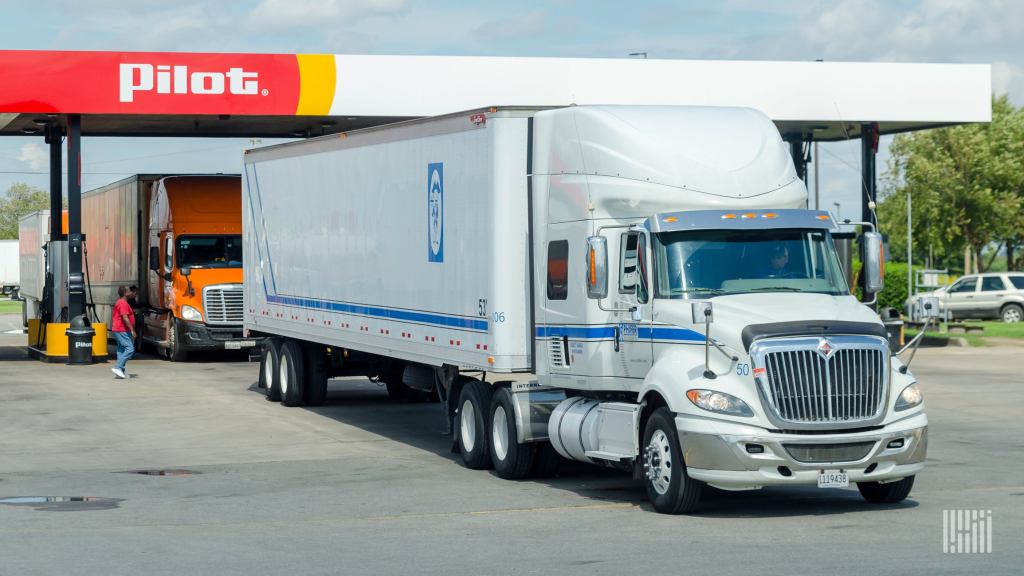
Haslam family sues Berkshire over valuing of final chunk of Pilot
The fate of the final 20% of Pilot Travel Centers not owned by Berkshire Hathaway and still in the hands of the founding Haslam family is at the heart of a lawsuit filed late last month in Delaware, with the Haslams accusing Berkshire Hathaway of adopting new accounting practices that could impact the value of that final one-fifth ownership.
The suit, filed in Delaware Chancery Court, is about the “put right” that enables the Haslams to choose to sell their remaining 20% to Berkshire Hathaway. That right can be exercised beginning Jan. 1, 2024 and is described in the lawsuit as annual but can only be exercised within 60 days after the close of a Pilot Travel Centers (PTC) fiscal year. The entity that would exercise the put right is identified as Pilot Corp., controlled by the Haslams. Pilot Corp. is the plaintiff in the lawsuit.
There is nothing in the lawsuit to suggest that exercising the put right is mandatory.
According to the lawsuit, the formula for determining the value of the put right is the same formula that was used when Berkshire Hathaway (NYSE: BRK.B) bought its two tranches of PTC equity, first in 2017 and the second earlier this year. That formula is 10 times earnings before interest and taxes at PTC, with adjustments for debt and cash on hand.
According to the lawsuit, the accounting process used for the first two purchases is to be utilized in determining the value of PTC and the 20% share if the put right is implemented by the Haslams. That accounting method, according to the suit, is the acquisition method, “which the acquirer recognizes the assets acquired and liabilities assumed at fair value with limited exceptions.”
But the suit says after Berkshire Hathaway acquired controlling interest in the first quarter, it began valuing PTC through “pushdown accounting,” which impacts several valuations of an acquired company.
“Pushdown accounting does nothing to change the value of performance of PTC’s business,” the suit says. “But the application of pushdown accounting, and the various subsidiary changes in accounting policies that necessarily result, artificially depress the reported earnings of PTC by, among other things, increasing depreciation and amortization expenses and by preventing the recognition of gains on derivative instruments and other hedges in the income statement.”
The suit lays out what Pilot sees as the specific hit on the PTC valuation due to the accounting change, but the numbers are redacted in the publicly available document. “Berkshire’s choice to impose pushdown accounting on Pilot Travel Centers thus risks unfairly transferring (amount redacted) or more to Berkshire … from the pocket of minority member Pilot.”
The suit says the Haslams’ representatives on the PTC board proposed a resolution to halt pushdown accounting and revert to the previous methods. But the Berkshire representatives on the board rejected it.
According to the suit, there have been indications from Berkshire personnel that the previously agreed upon accounting methods would be implemented should the put right be triggered by the Haslams. That assurance came from as high up the chain as Berkshire Hathaway Chairman Warren Buffett, according to the lawsuit.
Buffett told James Haslam on Oct. 13 that “Berkshire would abide by the agreement,” according to the lawsuit. James Haslam, the original founder of Pilot, sent Buffett a letter “seeking confirmation that Berkshire would not apply pushdown accounting in calculating the value of Pilot’s Put Right.”
But he didn’t get a straight answer, according to the lawsuit. “Instead, Buffett repeated: ‘I said that Berkshire will comply with the terms of the contract. That’s exactly what the contract says.’”
The suit charges that Buffett’s actions amounted to a “refusal to even disclose Berkshire’s position on the proper method of valuing Pilot’s Put Right.” As a result, the suit says, “litigation [is] inevitable” because it is not clear to the Haslams that Berkshire “will not commit to honor their contractual obligations and fiduciary duties.”
Berkshire Hathaway is a Delaware corporation although based in Omaha, Nebraska, which led to the suit being filed in Delaware Chancery Court. The defendants include Berkshire Hathaway, Pilot Travel Centers (since it is now controlled by Berkshire Hathaway), a Berkshire subsidiary named NICO and several members of the Berkshire board of directors.