




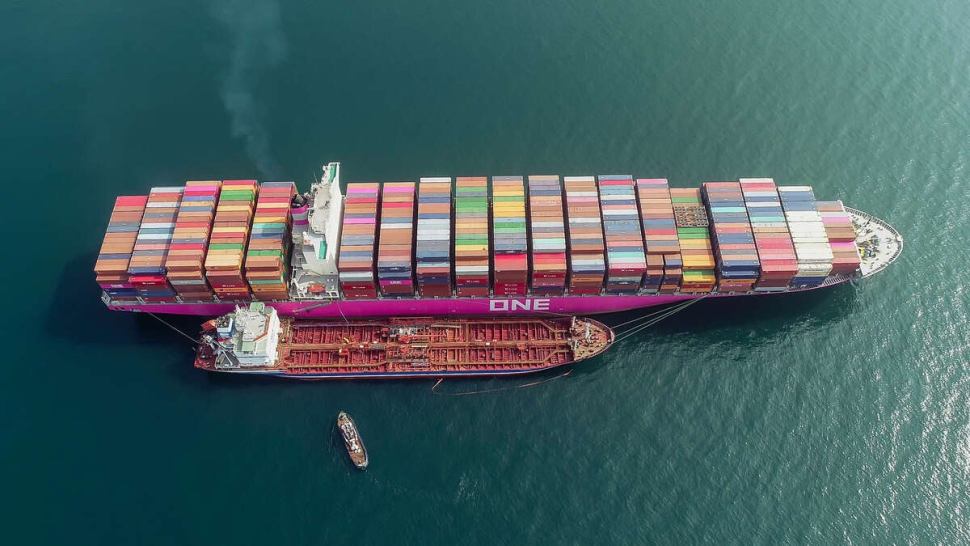
The shipping industry faces soaring fuel bills in the coming weeks following drone attacks on the Saudi Arabian oil industry.
Brent crude oil prices saw record surges when Asian markets opened Sept. 16, after 10 unmanned aerial vehicles struck the world’s largest crude-processing facility in Abquiq and the Kurais oil field, Saudi Arabia’s second largest, Sept. 14.
Rajesh Verma, lead analyst for tanker shipping at Drewry, told FreightWaves the attacks on Saudi oil infrastructure were a “big blow” to global oil supply and would have serious repercussions for shipping costs.
“It has knocked about 5.7 million barrels per day off production, which is roughly 6% of the global supply,” he said. “Although Saudi Arabian Oil Co. is likely to restore about a third of the disrupted supply Monday, it is not clear how long it will take to restore the full supply.
“As oil prices are likely to remain elevated in the short run, that will be reflected in bunker prices.”
The rising cost of bunkers will quickly be passed through to shippers by container lines, according to Simon Heaney, senior analyst for Container Research at Drewry.
“The way that crude prices have spiked after events in Saudi Arabia would indicate that there will follow a commensurate rise in BAF (Bunker Adjustment Factor), prices of which are closely aligned to crude,” he said.
Analysts say the attacks on Saudi Arabia represent the biggest disruption of oil supplies in history, surpassing the loss of Iraqi and Kuwaiti supplies in 1990 and the loss of Iranian output in 1979.
As markets opened Monday morning, benchmark oil futures were up almost $12 a barrel to over $71. This represents the biggest increase in futures prices in dollar terms since futures started trading in 1988.
Brent prices initially jumped almost 20%, their biggest percentage increase since 1991, before subsiding.
Peter Sand, chief shipping analyst at BIMCO, told FreightWaves that the 15-20% price increase in crude oil seen Monday around the world would “naturally also bring bunker fuel prices higher.”
However, he said how this played out in bunkers futures markets would be highly variable. “Prices for HSFO in Rotterdam and Singapore are currently uncorrelated with oil-futures pricing,” he said. “They are run most by speculation on availability and general uncertainty around the introduction of IMO 2020 low-sulfur fuels by Jan. 1, 2020.
“HSFO in Rotterdam is sold at a cheaper price than oil-futures. In Singapore it’s the other way around — HSFO is sold much higher than the underlying oil-futures indicate.”
Brokerage Compliance Symposium
The day before F3. Every compliance issue you face - fraud exposure, carrier liability, FMCSA rules, cargo theft, insurance gaps - navigated by attorneys and operators defining best practices in a changing industry.
F3 Awards Dinner
The night before F3. FreightTech100 companies honored. FreightTech 25 and Shipper of Choice winners revealed live. Cocktail reception into dinner and live music - 300 industry leaders in one purpose-built room.
F3: Future of Freight Festival
Industry-defining keynotes, rapid-fire technology demos, and industry leaders networking in experiences across Chattanooga - plus the inaugural F3 Awards Dinner featuring the FreightTech and Shipper of Choice reveals.
The day before F3. Every compliance issue you face - fraud exposure, carrier liability, FMCSA rules, cargo theft, insurance gaps - navigated by attorneys and operators defining best practices in a changing industry.
The Signal at Chattanooga Choo Choo • Chattanooga, TN Register NowThe night before F3. FreightTech100 companies honored. FreightTech 25 and Shipper of Choice winners revealed live. Cocktail reception into dinner and live music - 300 industry leaders in one purpose-built room.
The Signal at Chattanooga Choo Choo • Chattanooga, TN Register NowIndustry-defining keynotes, rapid-fire technology demos, and industry leaders networking in experiences across Chattanooga - plus the inaugural F3 Awards Dinner featuring the FreightTech and Shipper of Choice reveals.
The Signal at Chattanooga Choo Choo • Chattanooga, TN Register Now