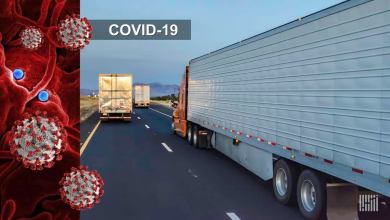
ATRI, OOIDA want fast responses to survey on COVID-19 trucking impacts
Research institute and drivers’ group want to hear from motor carriers and drivers about dealing with the coronavirus pandemic and what they would do differently next time
Waiver is valid for CDL and CLP holders through June 30.
DMV flexibility, coronavirus testing among requests as potential for supply chain disruption grows.
“With ongoing challenges posed by the coronavirus, there is real concern about these fees being assessed when there are equipment issues beyond the control of the shipper or motor carrier,” 67 trade associations told the Federal Maritime Commission.
ATA says it expects a waiver. States are already granting them.
Move is next step in group’s fight against “unconstitutional” regime.
“The reality is that neither major political party has been particularly good for small-business truckers for a long time.”
Grant awards to be used to build new spaces or convert weigh stations.
State’s monthly toll collections from trucks now exceeding $1.5 million.
Roadside repair costs for trucks continuing to rise, hitting $450 per repair in the fourth quarter of 2019, up 26% over the same quarter in 2018
“No decisions” on next steps after appeals court ruling on sleeper berth petition.
$54.6 million in back wages at stake for drivers in California.
ATRI’s annual study finds significant congestion up 92% in five years.
Response to DOT’s national freight strategy proposal reveals top concerns.
Proposal would create competitive grant program for projects that add capacity.
Opposition from safety advocates could mean rough road to inclusion in highway bill.
CRST, U.S. Xpress also support petition to review decision awarding $54.6 million to drivers.
The proposal is part of a 10-year, $19.4 billion infrastructure plan to improve roads, bridges, airports, rail and bus service.
Raising tax by 15 cents a gallon is needed before transitioning to mileage-based fee, according to lobbying group.
Truck manufacturers claim improved aerodynamics could save a driver up to 400 gallons of fuel a year.