FRA requiring railroads to submit worker fatigue management plans
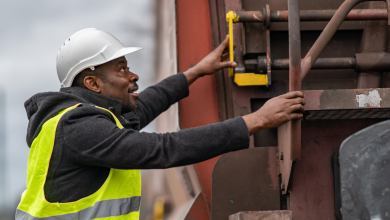
The Federal Railroad Administration is now requiring the Class I railroads, Amtrak and commuter railroads to submit fatigue risk management plans annually to the agency.

AskWaves defines what the common carrier obligation is and why the concept has garnered attention lately.
U.S. freight railroads and a rail union disagree over what’s the best way to deploy enhanced track geometry inspections.
A bipartisan group of U.S. senators wants the Surface Transportation Board to take action to address service delays and congestion on the freight rail network.
A U.S. federal appeals court ruled that four Class I railroads must bear the burden on what internal documents can be excluded from two lawsuits about fuel surcharges and price fixing activity in the early 2000s.
The board could adopt reciprocal switching and first-mile and last-mile data collection, according to comments made by STB Chairman Marty Oberman at a U.S. House subcommittee hearing last week.
Rail investors and observers think the Class I railroads’ efforts to bolster train and engine crew counts will improve rail service in the second half of this year. But geopolitical, economic and regulatory uncertainties also abound.
The Surface Transportation Board wants Union Pacific, BNSF, CSX and Norfolk Southern to provide service recovery plans following reports and testimony about deteriorating rail service.
A hearing at the Surface Transportation Board raised hard questions that could influence the trajectory of the freight rail industry.
The Coordinated Bargaining Coalition, which represents the unions at the negotiating table, panned the Class I railroads’ offer to advance payments amid stalled talks over a new labor agreement.
Class I railroads’ offer of advance payments is rebuffed by one union as contract talks continue.
The Surface Transportation Board wants ‘act on its own initiative’ to modify rules governing its response to service emergencies
As investors and rail stakeholders digest the Class I railroads’ first-quarter 2022 financial results, discussions about service metrics, crews and capacity, and inflation could creep into earnings calls.
The Class I railroads say they have been trying to improve service, which has deteriorated amid the COVID-19 pandemic. But the Surface Transportation Board questions whether headcount reductions come into play.
The union coalition calls on federal agencies and railroads to ensure attendance policies don’t result in overly fatigued locomotive engineers and train conductors.
Four Class I railroads have donated funds to support humanitarian relief efforts in Ukraine and surrounding areas. Also, U.S. and European rail sector officials form a task force to support Ukrainian freight and passenger rail.
The board held a two-day hearing on reciprocal switching to help it determine how it should move forward.
The North American rail system can learn a lot from the Europeans as both seek to incorporate battery and autonomous technologies into their freight rail networks.
Congress should fund the Surface Transportation Board, agreed panelists at a U.S. House hearing on the board’s funding reauthorization. But they disagree on what STB’s role should be in regulating the freight railroads.