The itch to switch: Railroad swapping in Canada vs. the US
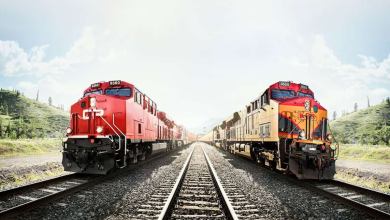
Both Canada and the U.S. have provisions that allow for reciprocal switching, or interswitching. But rail shippers’ ability to participate in the program differs in the two countries.
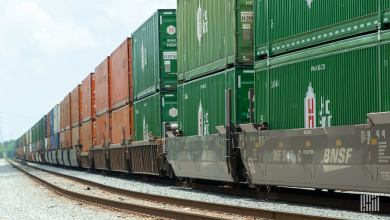
As this year’s peak season gets underway, dislocations in the supply chain are increasing. However, this is really nothing new as the industry has been in peak mode for a year.
The Association of American Railroads responds to regulator’s inquiry about supply chain congestion, while GoRail advocates for regulation supporting freight rail industry growth.
The CEOs of five Class I railroads tell the Surface Transportation Board that the root causes of the congestion facing rail intermodal terminals are beyond the railroads’ control.
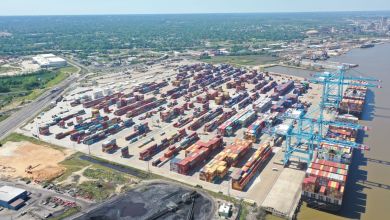
APM Terminals on the U.S. Gulf Coast wants potential importing customers to know it has access to the Midwest via five Class I railroads.
STB Chairman Marty Oberman has sent letters to all the Class I railroads asking them how the railroads are applying storage fees at key container terminals while the supply chain is congested.
U.S. rail carloads showed strength in 19 of 20 commodity categories in June. Second-quarter intermodal traffic climbed 22% even with network congestion and equipment shortages as the backdrop.
Employment levels at the U.S. operations of Class I railroads were flat to higher from April to May. But year-over-year totals show a nearly 3% decline. Meanwhile, the Class I railroads say they’re actively hiring and training in 2021.
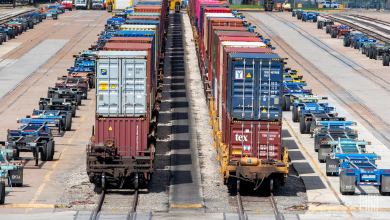
Reducing dwell times for equipment and at the terminals is one way the Class I railroads are seeking to relieve systemwide supply chain congestion, according to executives at recent investor conferences.
The American Chemistry Council wants the Surface Transportation Board to look into whether operational changes and cost cutting exacerbated the rail service issues that chemicals shippers have been having in the first half of this year.
The rail regulatory body sent several letters to Class I railroad heads last week, asking them to provide plans on how they expect to handle workforce and equipment in light of broader supply chain disruptions and anticipated service demand post-pandemic.
See why Freight Railroads are Separated Into Classes
April employment levels at the U.S. operations of the Class I railroads were up 0.42% from March but down 7% year-over-year.
This AskWaves article explains what Class I, Class II and Class III railroads are and why they exist.
Amtrak must follow new on-time performance metrics starting July 1. Democratic congressional leaders and the Surface Transportation Board are looking at different ways to help Amtrak reach that goal. Amtrak and the freight railroads share track in certain U.S. regions.
The Surface Transportation Board has determined that a waiver that exempted Kansas City Southern from post-2001 merger rules governing rail mergers applies in the proposed merger between KCS and Canadian Pacific.
The U.S. Department of Justice raised concerns about how Canadian Pacific and Kansas City Southern are using a voting trust to facilitate their proposed merger. The two railroads respond.
The Surface Transportation Board defines what billing information should be included in demurrage invoices to rail users as a means to provide more transparency.
Two rail shipper coalition groups and four Class I railroads want the Surface Transportation Board to review Canadian Pacific’s proposed acquisition of Kansas City Southern under “new” rules that gauge whether a merger would enhance market competition.
Canadian Pacific wants to acquire Kansas City Southern. Here are five thoughts from Wall Street transportation analysts about the transaction.