November Economic Roundup
A monthly survey of all the important economic developments from the past month, and a look at some of the key trends to watch throughout the month of November.


Housing starts fell more than expected in September, as the impact of Hurricane Florence caused a massive decline in construction activity in the South. This put a damper on what would otherwise be a decent report and leaves some uncertainty about the underlying strength of one of the key components of freight demand.
As real estate prices are over the roof, the number of people willing to enter the housing market is at a record high. The mismatch needs to be addressed – possibly by better zonal regulations and technology injection in construction methods.
With the recent chatter of a “housing crisis,” and the market reaching a “peak cycle,” we decided to take a closer look at what is going on.
Sales of new single-family homes beat expectations in May as a surge of sales in the South helped offset softness in other areas of the country. This serves as a sign that construction activity should remain strong, though other downstream industries face challenges.
A monthly survey of all the important economic developments from the past month, and a look at some of the key trends to watch throughout the month of June.
Economic growth slowed down in the 1st quarter, as payback from post-hurricane surges and poor weather derailed activity in some sectors of the economy.
Sales of single-family homes improved for the 2nd consecutive month in a sign that housing activity is beginning to accelerate at the start of spring. This, in turn, should boost freight demand for building materials, furniture, and appliances as households move in and settle.
Positive news from both manufacturing and construction sectors, as gain in each help drive up freight demand in the economy
Job growth has improved since the start of the year in the trucking industry. While this is strong step in address the driver shortage, the industry will soon find itself having to compete long-term with other industries desperately searching for skilled labor.
Construction spending in the economy remains essentially unchanged since the start of the year, as the sector continues to disappoint after a solid 4th quarter. This has implications for flatbed carriers and dry vans, as weakness in construction and home building affects freight demand.
A monthly synopsis of events and results in the macroeconomy from the past month and a discussion of implications for freight markets going forward. Results released in March were generally more favorable than the previous month and suggests that freight demand should remain strong going forward.
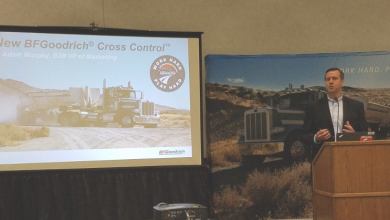
Twenty years after first entering the market, BFGoodrich is reintroducing itself with two new all-terrain tires designed for the growing energy, construction and logging markets.
Manufacturing industrial production surged in February, but housing starts slipped in a mixed day for freight demand
AT&T has expanded its fleet management portfolio to now include Geotab’s fleet tracking platform as part of the company’s Internet of Things (IoT) solutions.
Realtor.com is calling for 7% growth in single-family housing starts for 2018, with activity concentrated in the Southern and Western regions of the country.
Steadily rising global copper prices have spurred US production, up 21% since 2011. Although Chinese demand has softened somewhat, copper from mines in the Southwest should flow into Texas, Florida, and California as they rebuild from natural disasters.
Even with rates rising – both contract and spot – and capacity tightening, attracting drivers still remain a primary concern for fleets. Driver pay is increasing, but outside influences are still hurting the recruitment efforts.
While legislative wheels are starting to turn, there is little reason to expect major movement on any infrastructure bill in 2017. The most optimistic timelines being floated on Capitol Hill call for the law to be signed in 2018, with funds released in 2020.
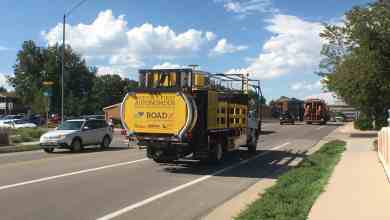
Road crews have traditionally used a “crash truck” to protect workers. It’s often the first – and last – line of defense for construction workers, but it leaves a driver in that vehicle exposed to greater risk. The Colorado Department of Transportation hopes to change that, thanks to self-driving technology.