





FreightWaves Staff
Monday, June 5, 2023
White Paper: State of the Industry – June 2023
This report shares an in-depth overview across the trucking, maritime and intermodal markets.
This report shares an in-depth overview across the trucking, maritime and intermodal markets.
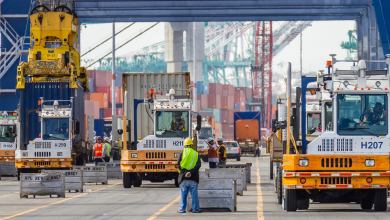
The dockworkers’ union and terminal employers are still sparring over wages and benefits more than a year after contract talks began.

This week in Borderlands: Texas seaport completes a $146 million container terminal expansion; a chemical logistics provider expands its Arizona operations; Bollore Logistics opens a supply chain facility in Mexico; and border agents seize $38 million worth of meth hidden in a kale shipment.

The Freightos Baltic Index (FBX) is the world’s leading—and most accurate—index of market rates for 40′ containers.

Older ships are being kept in service longer in pursuit of profits, heightening the risk of accidents and spills.

Container volume at ports in Houston and New Orleans fell in April, while Corpus Christi was bolstered by crude oil exports.

Not all cargo markets are back to pre-COVID “normal.” Container shipping rates to South America remain elevated.

More signs are surfacing that the second half of the year won’t be a panacea to the international freight recession. Seko Logistics says there won’t be a surge in orders that fuels transportation spending.

Bed Bath & Beyond “failed to manage its own supply chain” and “exacerbated the bottlenecks faced by other shippers,” alleges OOCL.

“We want [global shipping] to be self-explanatory, easy to navigate and easy for you to find the answer you are looking for,” says Maja Bernstein, vice president of industry relations at Fluent Cargo.
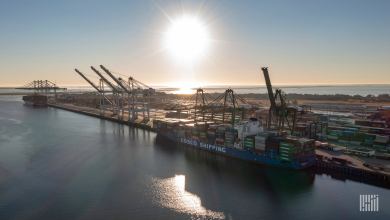
Trans-Pacific spot rates have pared earlier gains and remain at loss-making levels. Demand has yet to rebound.

Outsize profits are still flowing to companies like Danaos and Costamare that lease ships to container lines.

The Freightos Baltic Index (FBX) is the world’s leading—and most accurate—index of market rates for 40′ containers.

The container shipping party is over — that’s old news. Yet headlines continue to focus on comparisons to the peak.

It is becoming increasingly clear that hopes of a container boost from the reopening of China are all but gone.

A group representing the nation’s largest container ports contends lawmakers are misleading the public with a bill targeting Chinese-made container cranes.
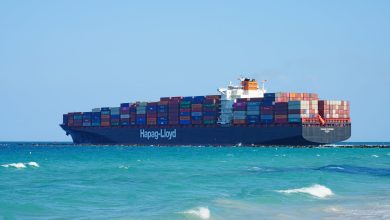
The CEO of shipping line Hapag-Lloyd argues that current freight rates are unsustainable and will correct upward over time.

Is the sharp decline in shipping stocks a canary in the coal mine or an opportunity for investors to buy the dip?

America’s imports are not signaling a recession, at least not yet. Inbound volumes are rising from the bottom.

SONAR ocean container booking data suggests that the predicted freight rebound in the second half of 2023 may be increasingly unlikely. Import and ocean container booking data is typically used as a leading indicator for future truckload volumes, as containers are offloaded in ports and transferred into intermodal or truckload orders.