PayPal plans to take Curv to improve crypto payment security
PayPal is paying an undisclosed sum to acquire Curv, a cryptocurrency and digital asset security provider.
Using data from consumer tracking firm Commerce Signals, the idea that e-commerce sales significantly hurt in-store sales during COVID-19 may not be completely accurate.
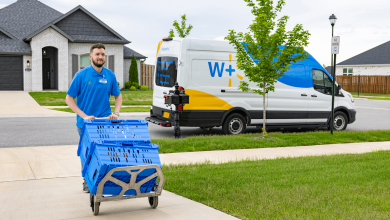
Safeway is the latest supermarket to begin a test of robots for contactless delivery of online grocery orders.
Instacart may forgo the traditional path to public status and sell its shares directly to the public, according to a Reuters report.
This week, President Biden announced we will have enough vaccinations for every American by the end of May. For the American people, this is fantastic news. For apparel retailers, it’s euphoric news that complicates an already extremely uncertain environment. In this edition of Point of Sale, we’ll take a look at apparel inventory management through the lens of Nordstrom’s recent woes.
Amazon-backed Deliveroo announces plans to go public less than a year after British regulators questioned the viability of the business.
As Amazon continues to dominate e-commerce, major retailers are stepping up their investments hoping to benefit from shifting consumer demands.
As drone delivery tests ramp up, a patchwork of regulations make some states more friendly to the process than others.
The company’s 2020 sales gains were higher than in the past 11 years combined.
Ox uses augmented reality to speed the order picking process and improve accuracy. It has landed a $3.5 million seed round of funding to grow its business.
Shipping experts chat about the COVID-19 supply chain and how consumer e-commerce demand has impacted seasonality and congestion in freight.
Third-party sellers using the BigCommerce e-commerce platform can now integrate with Walmart.com, opening up new online avenues to sell their products.
Best Buy is shrinking its retail footprint in several locations as it moves to using stores for e-commerce order fulfillment operations.
A bad returns experience can turn off nearly three-quarters of consumers on a brand, so developing solutions to simplify this process are vital.
Payment services provider Square posted 101% net revenue growth in 2020 over 2019 and 45% growth in net profit as it benefited from large growth in its Cash App division.
Nicholas Cogan, director of international e-commerce at Walmart International, discusses omnichannel last-mile delivery and challenges created by increased demand for e-commerce and home delivery.
Brian Devine, senior vice president at ProLogistix, discusses the future of warehouse labor.
Geodis’ Jeff McDermott joined FreightWaves to talk about challenges that parcel carriers are facing and lessons learned from the pandemic.
Last mile may be the final stop, but it needs to be front of mind for shippers, according to two industry experts.
There has been a consumer flight to reliability throughout COVID, and Walmart benefited from this shift as much as any retailer. But with the end of the pandemic now in sight and Americans poised for the reopening of services, Walmart is expecting growth to moderate considerably. Walmart announced plans to invest heavily in its supply chain, namely fulfillment capacity and automation, to front-run the deceleration and claw toward e-commerce profitability.
With large players like Amazon adopting electric vehicles, pressure will start building on smaller fleets and owner-operators to adopt them as well, and that will require companies like GoFor Industries to provide support and all-in-one packages.
XAct Solutions Director of Supply Chain Jamie Dixon discusses the need for brands to utilize technology in last-mile logistic strategies.
A former Jet.com co-founder is rethinking the way e-commerce orders are delivered — specifically, when orders are delivered and in what vessel they arrive at their destination. Nate Faust believes after 25 years of e-commerce, it’s time for a new way of imagining delivery.
The COVID-19 pandemic highlighted the importance of artificial intelligence in e-commerce, with companies utilizing the technology able to adapt quicker to changing consumer demands.
Demand for technology platforms that can automate the entire D2C experience is growing, and Pipe17 is the latest to secure funding to expand its solution.
anadian e-commerce firm Shopify continues to slowly ramp up its U.S. fulfillment network on the heels of record fourth-quarter financial results.
As more packages and groceries are being shipped to consumers’ front doors, the demand for systems that can secure and maintain the freshness of items is growing.
Amazon so often does everything seemingly right, so it’s important to talk about its shortfalls. I’m confident Amazon will right the Whole Foods ship, but it’s clear the boat has been sailing against the wind since COVID hit.
Amazon is an e-commerce rocket ship. Making those deliveries possible is Amazon Air, which is growing so fast it could make it possible for more people to receive orders within a day.
As rideshare has plummeted because of the COVID-19 pandemic, Lyft has had to chart a new path forward in the next decade. That path features a reliance on autonomous vehicles and e-commerce deliveries.
A quickly changing retail landscape has sparked interest in more innovative shipping models, including bypassing domestic warehousing with direct-from-origin options.
Isuzu will launch new Class 6 and 7 low-cab-forward trucks later in 2021 with Cummins B6.7 engines.
BrightDrop, a startup launched by GM, thinks that to solve last-mile delivery you need a provider that looks at the issues holistically — from vehicles to technology.
Commerce platform Fabric has leveraged market demand for its product to close a $43 million Series A round of funding just months after it secured its seed round.
FreightWaves has announced the launch of Modern Shipper. The editorial brand will provide news and information about e-commerce, the gig economy and the important roles each plays in the supply chain.
Trailer maker Wabash National is pruning its product portfolio to redeploy resources for growth it sees in refrigeration and last-mile delivery.
E-commerce sales for alcohol are outpacing overall online sales, and Uber is betting that will continue post-pandemic, paying $1.1 billion for on-demand delivery company Drizly.
E-commerce and shipping solutions provider Pitney Bowes reported “the highest modern-day, organic growth rate on record.”
UPS reports all-time annual records for revenue and earnings per share.
EcoCart offers e-commerce consumers a chance to purchase carbon offsets at checkout to lessen the environmental impact of the order.
According to recent survey data from Bringg, same-day delivery will become a status quo offering from retailers in 2021. But is it the right move? Not for the vast majority of retailers. Here’s why:
SamCart, an D2C e-commerce platform, has closed a $10 million Series A round of funding, led by TTV Capital.
Walmart and Kroger are taking differing approaches to online grocery fulfillment. While fully-automated warehouses are more efficient, they are much more expensive and inflexible. Local-fulfillment centers may not be as efficient, but they are much more cost effective. Read the detailed trade-offs here:
Walmart is making an $800 million investment in Lancaster, Texas, building two e-commerce facilities totaling 1.9 million square feet aimed at growing its online shopping presence.
Retailers with physical footprints have been able to leverage new modes of fulfillment to pass increased costs associated with online delivery to consumers and their suppliers. But for digitally-native brands without access to physical stores, this could be painful should it become the new normal. If you ask FedEx, it already has.
Instacart is cutting approximately 1,800 in-store shoppers nationwide as it moves to a technology-focused “Partner Pick” model.
Walmart will begin using drones from Zipline International to run a pilot delivery program along the Arkansas and Missouri border this summer.
Recent analysis from Gartner shows retailers with more than 50% of revenue from the online channel have logistics costs as a percentage of sales that are almost double those of their store-focused counterparts.
A Prologis and MIT study said the holiday peak season in 2020 was the most environmentally friendly yet. E-commerce dominated 2020 consumer buying trends, drastically reducing the number of individual trips to the store.
Boeing is pulling the plug on its 747-8 production line, and Atlas Air is snapping up the last planes. DHL Express is also ordering 777 freighters.
Ladingo’s growth suggests a segment of the market is not being adequately served by existing solutions.
Warehouse solutions provider 6 River Systems ranks No. 23 in the FreightTech 25. The company rapidly expanded its customer base and wall-to-wall fulfillment solutions this year.
Amazon to build three facilities, create 1,500 jobs in San Antonio
In today’s edition of The Daily Dash, FMCSA will ease restrictions for obtaining a CDL. Plus, Schneider is boosting driver pay again and Navistar reports lower truck sales and earnings.
Plug Power’s hydrogen solutions are expanding into Walmart e-commerce applications after proving effective in the company’s grocery and retail networks.
FreightWaves chats with CEVA Logistics on what it takes for retail customers to transition successfully to e-commerce. What’s the answer? Flexibility.
Express carriers like DHL are getting slammed with e-commerce shipments as the holidays approach, and transportation contractors like Cargojet are throwing resources into the response.
Retrofitting a passenger plane to operate as a heavy cargo plane is a big engineering job that requires many new parts and disposal of old ones. Logistics giant Kuehne + Nagel says it can reduce inventory and transportation costs to make conversions more economical.
Consumer Brands Association’s latest survey shows fear among consumers regarding future stockouts.
This white paper, developed in partnership with Ryder, examines the ways that e-commerce has changed the way we purchase and recieve goods, what the expectations are for a retailer in 2020 and how a smaller player can compete with the big box stores.
Holiday orders will be spread evenly throughout cycle, CEO says.
There will be more than 2,400 extra all-cargo aircraft in circulation by 2040 to support growth in global trade and e-commerce, Boeing says.
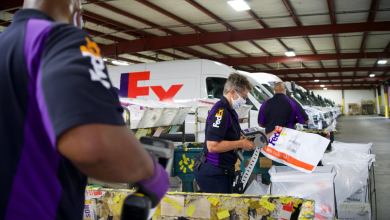
FedEx Express will hire more than 6,500 employees across Mexico by the end of the year.
Air Canada sees a business opportunity flying all-cargo planes for e-commerce companies.
Amazon has ambitions to expand its air network internationally, and now has its own airport sort center in Europe.
U.S.-listed carrier reveals the latest on trans-Pacific holiday rush, restocking, e-commerce spike and port congestion.
DispatchTrack optimizes routes and delivery schedules for its clients, which enhances their customer delivery experience.
The future for the Shopify Fulfillment Network could involve highly automated warehouses with robots in different parts of the world, says CEO Tobi Lutke.
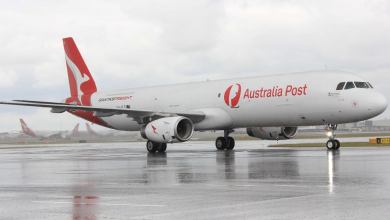
The Airbus A321 is a ubiquitous people-hauler, but now Australia Post has the first freighter version of this popular aircraft.
Large parcel carriers’ technology and transportation networks are buckling.
JAXPORT is there to help as consumers shift from a shop-till-you-drop mentality to a shop-till-it-drops reality.
Demand is reducing inventories while sales remain strong, leaving no cushion before sales ramp up as they do in November and December.
Putting together a comprehensive and effective returns strategy should not be harrowing. While the number of variables, data points, and potential curve balls can seem daunting at first, the right level of expertise can make a world of difference.
Torch’s technology creates an experience tailored to the needs of shipments under 550 miles.
Alibaba is taking on Amazon around the world. Its latest move is in South America, with a new dedicated air service to speed up shipments.
Mexican all-cargo carrier MasAir is operating multiday service each week from Los Angeles to Mexico for DHL Express.
Increased e-commerce sales are driving the need for additional industrial warehouse space for retailers and shipping companies.
Air cargo traffic keeps Ted Stevens Anchorage International Airport in the same league as FedEx’s and UPS’ super-hubs.
A Pennsylvania developer successfully persuaded local elected officials to approve zoning changes for a new industrial park, despite residents’ complaints. It’s one of several examples of how community opposition can impact industrial real estate development.
FreightWaves’ JT Engstrom talked e-commerce logistics with Prologis’ Melinda McLaughlin during the FreightWaves Future of Logistics Real Estate Summit on Tuesday.
The logistics warehouse of the future will be heavily automated, purpose-built for e-commerce and ready for tenants to “plug in” and go live almost immediately, a top executive for distribution giant Ingram Micro said Tuesday. Keynoting FreightWaves’ daylong webinar on the future of logistics warehousing, Ken Beyer, executive vice president and president of commerce and […]
JLL projects an additional 1 billion square feet in logistics property demand by 2025. That may be way too low.
The relationships a logistics business builds up over the years can prove highly valuable when it comes time to sell.
Shares soar after hours.
Amazon has outsourced aircraft operations again to long-standing vendor Air Transport Services Group. But Amazon is diversifying how it operates, adding an owned aircraft to its fleet.
eBay sellers to have access to broader range of UPS services through integration initiative.
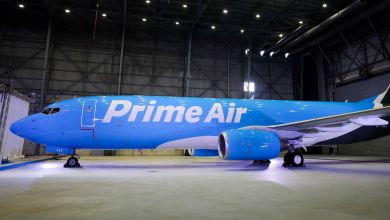
Amazon received FAA approval to fly commercial delivery drones as part of its Amazon Prime Air program.
UPS is a modern-day version of the Pony Express, which operated its eastern terminal outside Kansas City. UPS is adding space at the Kansas City airport to park five aircraft wingtip to wingtip.
Hong Kong-based 3PL’s warehouse business suffers from shrinking inventories, but forwarding business saves the day, leading to $109 million first-half profit.
Massachusetts-based XYZ Robotics says its robots can pick anything and place it anywhere.
ATRAN Airlines says increased online shopping has increased express air cargo traffic between Moscow and China’s northern cities.
GE Capital Aviation Services now has 74 orders for Boeing to convert versatile, narrow-body passenger planes for express and e-commerce services.
Amazon Air is expanding in Hawaii to keep up with Amazon’s fulfillment center push.
Around 55% of people in Mexico said they shop online to avoid leaving home during the pandemic, according to a new report.
Mesa Airlines flies small regional jets on small routes for mainline carriers. Now it’s stepping up a size to the Boeing 737 so it can haul cargo for DHL. Find out how they are getting ready for the new era of cargo.
Two logistics parks are in operation nearby and more are to come in Alabama.
Air Transport International will operate a big cargo plane for an express carrier in the Pacific region on a route in and out of Hong Kong.
Pilot Freight Services, which operated under a national franchise network for decades, now owns 90% of its offices and monitors for future acquisitions.
Etailers and online marketplaces are facing higher postal rates to import packages to the U.S. Find out what businesses can do.
EU e-commerce regulation will bring “one of the most impactful changes.”