




Michael Rudolph
Friday, October 20, 2023
Seasonal depression
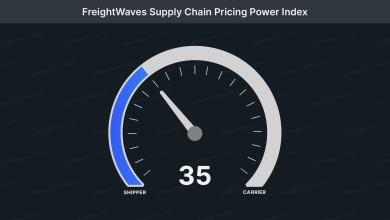
Outside of the holiday rush periods, the fundamental lack of freight demand will continue to expose the lingering overcapacity in the market.
Outside of the holiday rush periods, the fundamental lack of freight demand will continue to expose the lingering overcapacity in the market.
Given the surplus of available capacity, shippers are more confident in switching to “just-in-time” freight strategies as consumer resilience remains an open question.
By next week, it is likely that actual freight flow will have finally risen on a yearly basis for the first time since May 2022.
Consumer demand during the holiday season is expected to be relatively soft, which should temper expectations for a red-hot peak season in truckload markets.
Perhaps the most pressing question for both freight markets and the broader economy is how the consumer will fare in the coming months.
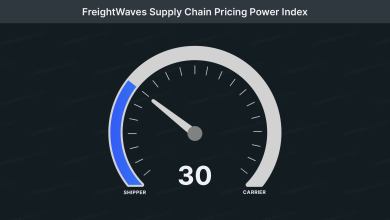
Rejection rates gathered some promising momentum in the run-up to Labor Day, though these gains are slowly being lost.
After a none-too-brief break, the Pricing Power Index is resuming its regular Friday schedule.
Against significant odds, the Federal Reserve might realize its once-unlikely goal of a “soft landing” — that is, taming inflation without also triggering a recession.
Freight volumes continue to trend sideways, which is a positive sign overall as the 15th of July traditionally marks a time for slowing demand in the freight market.
Demand from retail shippers is historically quiet in the period from now until August, after which retailers restock their shelves for the back-to-school season.
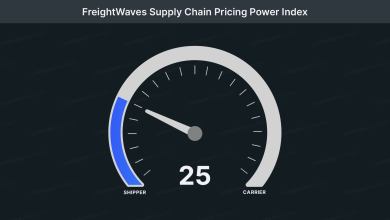
Demand from retail shippers is historically quiet in the period from now until August, after which retailers restock their shelves for the back-to-school season.
Maritime’s peak season — which typically ramps up in August and lasts throughout October — is expected by retailers and supply chain professionals to be weaker than it has been in previous years.
Tender rejections have yet to return to mid-May’s all-time low, but their softness could persist in a trough for the next two quarters.
One last round of bad news to cap this week: China and the U.S. both posted dismal data from their respective industrial economies.
Volumes did see some growth ahead of the upcoming Memorial Day holiday, though not nearly enough to bust out the champagne and sparklers.
So as not to bury the lede, this week’s lack of change in the PPI might ultimately prove to be the most exciting stability in quite some time.
Despite expectations for seasonal growth in the second quarter, the health of the American consumer has continued to become more precarious, stirring headwinds for even once-reliable sources of freight.
Volumes are just beginning to tick up at the tail end of April, but freight demand in the quarter has been mostly flat and thus grossly unseasonable.
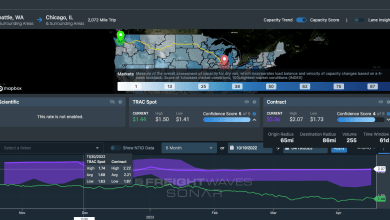
FreightWaves SONAR has added several features to increase pricing efficiency and strategy effectiveness for transportation teams everywhere.
While ocean carriers are not facing the same risks as their domestic trucking counterparts, given their consolidation and enormous war chests, ocean’s weakness in demand will continue to trickle down into truckload markets.