California’s AB 5 will impact trucking companies and shippers
Assembly Bill 5 limits companies from classifying workers as independent contractors rather than employees to save operational expenses.

Uber plans to release safety report by end of the year.
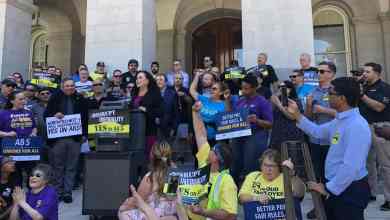
A union drive seeks worker protections in the gig economy.
California bill affecting owner-operators will die if not on governor’s desk by September 13.
The blue-collar job market still uses conventional methods for sourcing and recruitment, making the industry highly inefficient, complex and opaque. Wonolo is automating the redundant manual processes to improve the situation.
Uber and Lyft drivers are planning to strike on May 8 at 10 locations in the U.S. to protest low wages among other concerns. Organizer Rideshare Drivers United is planning a “National Day of Action” and has been joined in its efforts by the New York Taxi Workers Alliance (NYTWA), which represents 21,000 yellow taxi, […]
Uber stands to gain by avoiding wage and benefit costs that accompany workers classified as employees.
Uber has confirmed speculations of its acquisition of Middle East on-demand cab hailing company Careem, with the company now becoming a wholly owned subsidiary of Uber. The transaction is expected to be completed by Q1 2020.
Gig economy companies contend with Supreme Court ruling that mandates full time workers to be considered as employees and not contractors; oil supply reduces after Saudi Arabia’s drastic production cut; government shutdown strains supply chains across the country.
The court’s opinion in Dynamex v. Superior Court of Los Angeles County has a lot of trucking companies in panic mode, scrambling to figure out how the ruling will affect their business operations. The ruling could also have a profound impact on many tech companies like Uber, Lyft, Instacart, and others that provide on-demand services.