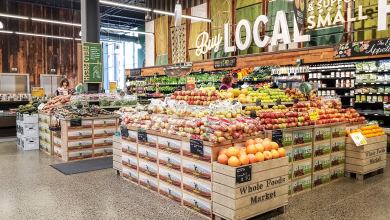
Centralized buying at Whole Foods goes directly against its ethos
It seems that centralized buying and local product discovery are polar opposites. How can Whole Foods centralize buying and get better at the local level?

This is an excerpt from Monday’s (5/13) Point of Sale retail supply chain newsletter sponsored by ArcBest. There’s a startup that was first created to deliver essentials to college kids but is quietly capturing the imagination (and venture capital) of the tech world, and it’s time the logistics world took notice. Gopuff, founded by two friends at Drexel […]
This clever twist on micro-fulfillment centers offers a futuristic model for urban retailing and fulfillment. And it comes as companies test out a bevy of automated, unmanned service models, from dark stores to drones and autonomous delivery fleets.
Amazon.com Inc. bought Whole Foods Market Inc. on Aug. 28, 2017, for $13.7 billion, following up with changes to the grocery brand.
Amazon so often does everything seemingly right, so it’s important to talk about its shortfalls. I’m confident Amazon will right the Whole Foods ship, but it’s clear the boat has been sailing against the wind since COVID hit.
Walmart and Kroger are taking differing approaches to online grocery fulfillment. While fully-automated warehouses are more efficient, they are much more expensive and inflexible. Local-fulfillment centers may not be as efficient, but they are much more cost effective. Read the detailed trade-offs here:
This is an excerpt from Monday’s Point of Sale retail supply chain newsletter. The UK grocery supermarket sector was once highly oligopolistic, but in recent years, European brands have expanded in the UK and have created a much fiercer competitive landscape. There are 4 primary British supermarket chains dubbed ‘The Big Four’: Tesco, Sainsbury’s, ASDA, […]
Latest extension in place through July 14.
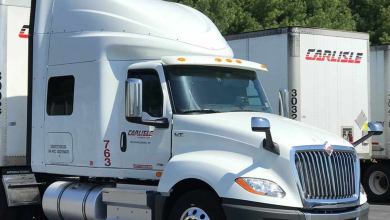
Cowan Systems has acquired family-owned regional carrier Carlisle Carrier as it looks to strengthen its Northeast presence.
A strike by thousands of union workers at major Southern California supermarket chains would have a huge upside for non-union big box grocers and e-retailers but would likely disrupt other online grocery delivery services, industry experts said. “We know Amazon will not be impacted by a strike,” said Bill Bishop, chief architect of Brick meets […]
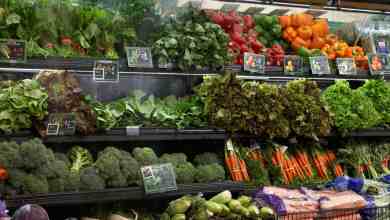
Americans have become used to buying fruit and vegetables year-round. But it wasn’t always that way, and improved transportation is the key to year-round produce.
Walmart will deploy autonomous vehicles to deliver groceries for customers, according to Tom Ward, senior vice president of digital operations for the retail giant. Autonomous vehicle company Udelv is providing the technology to make the pilot program possible.
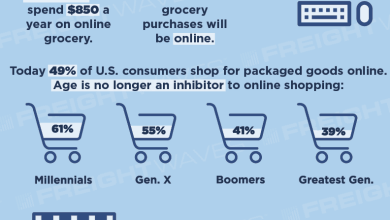
By 2022 consumers could be spending $100B a year on online groceries.
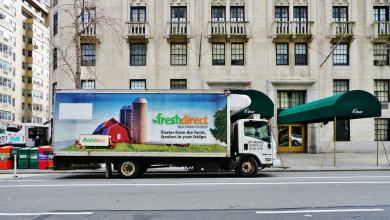
In a message to customers, FreshDirect CEO McInerney apologized for the rocky segue. The transition to the new Bronx facility “has not been as smooth as we planned,” McInerney told customers in the Friday morning email.
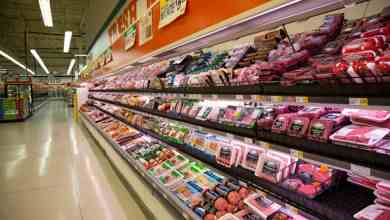
The US Department of Agriculture has issued a Class 1 recall on 130,000 pounds of ground beef nationwide, according to a news release from the agency. The E. coli contamination is thought to have originated from a Cargill Meat Solutions facility in Fort Morgan, Colorado.
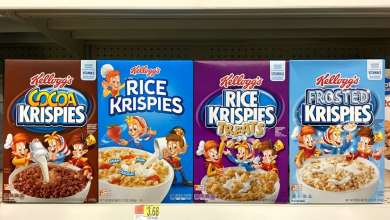
Kellogg (NYSE: K) is the latest company to cite rising freight costs as a threat to profit margins in 2018, according to the Wall Street Journal. It also reported the far-reaching impacts of the trucking strike in Brazil in May 2018.
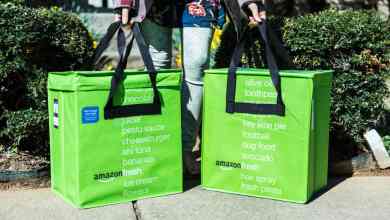
Amazon (AMZN: NYSE) is a power player in the online grocery scene, with sales growing at a rate of 40 percent year-over-year.
Citing depressed sales for products like its line of Yoplait yogurts and ‘rising commodity and freight expenses,’ General Mills announced it would eliminate hundreds of positions in an attempt to strengthen its margins.
The partnership with Ocada gives the supermarket giant a pathway to create its own delivery network as the grocery store wars escalate.
Despite the still-existing demand for customers to visit brick-and-mortar stores to see and touch the goods, especially fresh food items, before buying, Jewel-Osco has decided to give in to the demand of delivery service, The Chicago Tribune reports.