Canadian truckers have concerns with NAFTA
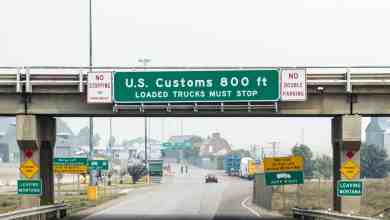
Some of the most prominent stakeholders in Canada voiced their concerns over NAFTA at an event organized by the Truckload Carriers’ Association (TCA) entitled “Bridging Border Barriers.”

C.H. Robinson will implement Omnitracs’ Virtual Load View (VLV) application as it seeks ways to improve visibility into load tracking. The system will run alongside C.H. Robinson’s own Navisphere system.
The never-ending story of whether port truckers should be contractors or employees is facing a new battlefront as two councilmen for the city of Los Angeles have introduced a bill that would bar trucking companies from serving the ports if they use independent contractors.
James Hoffa, Teamsters’ president, doesn’t want anyone to forget the safety of trucks operating on American and Canadian roads. In an op-ed piece for The Detroit News, Hoffa noted that Teamsters chapters in the United States and Canada have joined forces to push an initiative for policy changes that will be beneficial for safety.
The Truckload Carriers Association and CarriersEdge are accepting nominations for the annual Best Fleets to Drive For survey. Nominations for the 10th annual survey will be accepted until Oct. 31, 2017.
It’s finally here. Eclipse day. And as many have predicted, traffic around the country is clogging the highways, causing delays.
FedEx Freight announced that drivers at its Croydon, PA, facility have voted to leave the Teamsters Union. This comes just two weeks after drivers in Charlotte, NC, did the same.
The long-awaited U.S. outline for the goals of a renegotiation of NAFTA has been unveiled, and there are few surprises in the 17-page document. The document outlines the U.S. top priority of shrinking trade deficits with Canada and Mexico.
In its latest State of the Freight webinar last week, FTR experts laid out their expectations and timelines for freight disruption, and as expected, sections were devoted to NAFTA and autonomous trucks.
McKinsey & Company has recently issued a report on potential impacts to the trucking and rail freight industries in the U.S., Canada and Mexico. The report, “Four forces to watch in trucking and rail freight,” identifies critical structural issues that executives must pay attention to in the immediate future.
While Congress and the states kick around proposals to increase funding for infrastructure, Robert Atkinson, an opinion writer for The Hill, has backed the idea of charging big rigs taxes based on the number of miles they drive.
Good morning. Hope the roads are clear where you are today. As it turns out, that is not often the case for many of us. The American Transportation Research Institute reported that congestion on U.S. roadways cost the trucking industry $63.4 billion in 2015 and resulted in 996 million hours of lost productivity, which is equal to 362,243 truck drivers sitting idle for an entire year.
This Week in Trucking, the EPA has filed a court brief seeking a delay in a challenge to its greenhouse gas regulations, leading to speculation that the agency may review the upcoming Phase 2 rules. Also, the government has acknowledged it is lacking answers for regulating automated vehicles, Amazon jumps into the driverless vehicle arena and the economy is off to a slow start in 2017.
President Donald Trump’s decision to place softwood lumber tariffs on Canada this week might be an indication that the administration is set for a reset on the North American Free Trade Agreement (NAFTA). It is a gamble that potentially puts billions of dollars in NAFTA trade shipments at risk – much of it hauled by trucks.