




Trevor Willingham
Wednesday, February 13, 2019
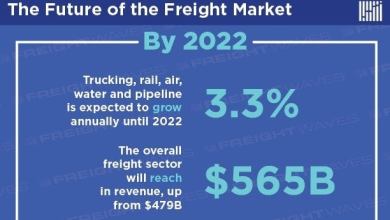
The Future of the Freight Market
Things are looking pretty good for the future of freight.
Things are looking pretty good for the future of freight.

Private equity has become the major player in financing the growth of transportation and logistics companies, and venture capital inflows have also accelerated dramatically.
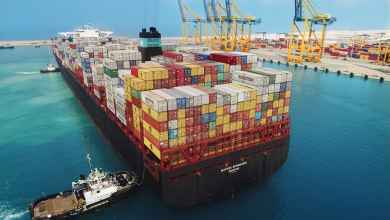
Saudi energy minister Khalid al-Falih announced on January 26 that the country is raising $426 billion in private sector investments, which will include roughly $36 billion for logistics infrastructure according to Reuters.

Americans have become used to buying fruit and vegetables year-round. But it wasn’t always that way, and improved transportation is the key to year-round produce.
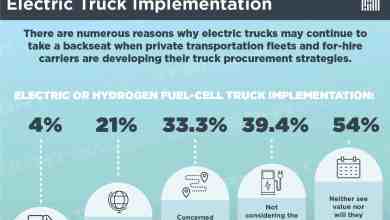
Many feel as though electric trucks will continue to take a backseat for private transportation fleets and for-hire carriers.
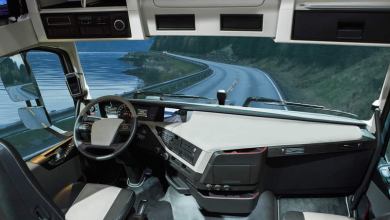
Though semi autonomous trucks would be a reality in a decade, IRU believes that it would not displace drivers from the trucking ecosystem but would only make their jobs more sophisticated.
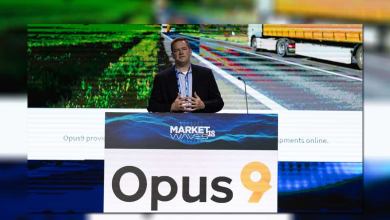
Logistics startup Opus9 provides automated and digital transportation services for small and medium companies to ship truckload and LTL nationwide.
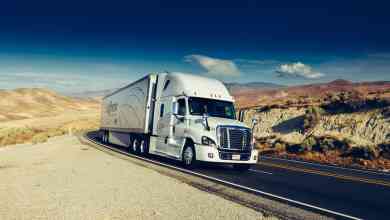
Transport, warehouse supply execs have big CapEx plans.

Zoof-It, a Netherlands-based company that provides a last-mile blockchain platform that instantly rewards for parcel delivery in a convenient, inexpensive and responsible way, has joined the Blockchain in Transport Alliance (BiTA).

McLeod Software has been at the forefront of ERP technology, servicing the whole spectrum of what lies within the core business of companies in the trucking ecosystem.
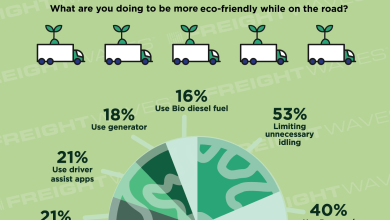
The following answers were pulled from the 2018 King of the Road survey from Atlas Van Lines.

Trident Transport, a four year old freight brokerage founded in Chattanooga, has announced its plans to open a second office in Tampa Bay, Florida. Russ Feldhacker, a veteran broker, will lead the new branch.

Majority of the U.S. shale oil producers are showing negative cash flow in 2018; Subaru is recalling 400,000 cars due to faulty engine part; U.S. factory orders increase more than expected in September.
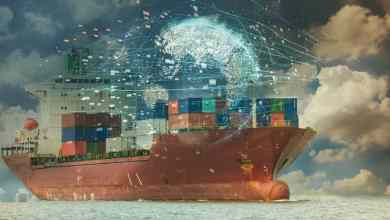
In partnership with Slync.io… Multi-partner views of realtime supply chain data are necessary to eliminate manual communications processes like email, which will remove friction and add value to collaborative relationships.
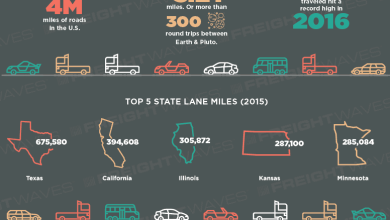
We look at capacity and congestion statistics from the ASCE’s Infrastructure Report Card.

Hurricane Michael has already knocked out power to hundreds of thousands of people in the South with to come.
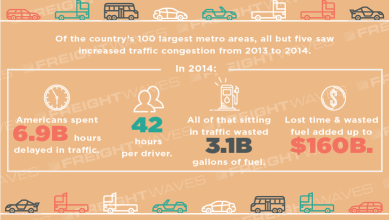
Traffic congestion is only getting worse. Our latest series of infographics will break down the ASCE’s Infrastructure Report Card.
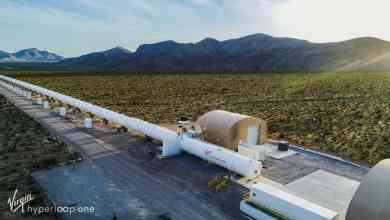
Hyperloop is a technology that has been touted an exciting prospect in the transportation vertical. What is it about and how could it help improve the industry?
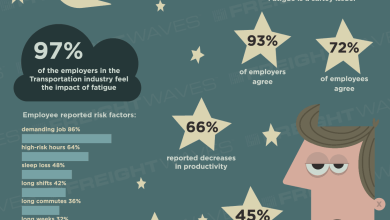
A whopping 97 percent of the employers in the transportation industry feel fatigue impacts their business.

Smart cities end up producing millions of data points every minute. City administrations need to wake up to the potential of data analytics and think of a way to utilize data and reduce urban traffic congestion.