




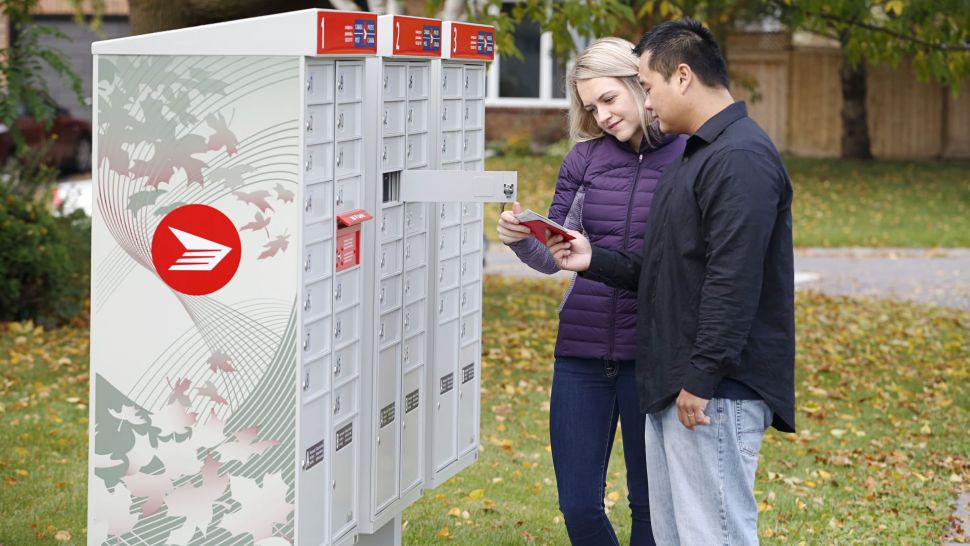
Canada Post on Thursday said it has started preliminary work to end home delivery and rationalize its retail network, part of a broad operational restructuring aimed at turning around an insolvent institution with an outdated business model.
After initial consultations with postal unions, the national post is moving to convert the remaining 4 million addresses that receive door-to-door delivery to community mailboxes and reduce the number of post office locations. The long-sought reforms were made possible by the tentative contract agreement in December with the Canadian Union of Postal Workers, following acrimonious negotiations and strikes over two years, and an endorsement from the government of Canada.
Nearly three out of every four Canadian addresses already receive their mail and parcels through some form of centralized delivery. Canada Post is converting approximately four million addresses that still receive door-to-door delivery to locked community mailboxes. The national conversion program is expected to take about five years and result in annual savings of about US$291.6 million, with different areas moving to community mailboxes each year, the postal corporation said.
More than 80% of parcels delivered by Canada Post fit into a community mailbox’s individual compartment or a dedicated parcel compartment. Parcels that don’t fit, or that require a signature, are delivered to the door or held for pickup at a nearby post office.
About 136,000 addresses in 13 communities across the country, including British Columbia and Ontario, will be part of the initial conversion to community mailboxes in late 2026 and early 2027, according to a notice. Most of the addresses selected for the startup phase are adjacent to areas that already receive delivery to community mailboxes. Dense urban core areas pose greater challenges and will be transitioned in the later stages of the program.
Residents with functional limitations accessing community mailboxes can receive free support from a program that offers accommodations, such as sliding trays, Braille features on compartments or keys, or a more accessible compartment. In some cases, weekly home delivery may be provided on a seasonal, temporary or permanent basis.
Retail streamlining
Canadians visit post offices less frequently and make fewer in-store purchases, resulting in a 30% drop in retail revenue since 2021. Usage is also uneven across the network. Canada Post said its initial efficiency effort will involve consolidation of post offices in urban and suburban areas that are currently over-served. Decisions on which facilities to eliminate will be based on market studies of each location and region to identify where changes to the network are most warranted, while prioritizing service where it’s needed most.
Canada Post promised to engage with communities, unions and employees as it identifies suitable locations for community mailbox sites and for retail cuts.
Rank-and-file letter carriers are scheduled to vote between April 20 and May 30 on whether to approve the tentative labor agreement written by CUPW and management negotiators.
The CUPW negotiating committee urged members on Thursday to approve the deal, saying it is the best possible outcome under difficult circumstances. The government’s endorsement of a national commission’s recommendations for changing the postal charter tilted the negotiations in Canada Post’s favor, said Lana Smidt, one of the union’s lead negotiators, in a letter to members.
The tentative agreements give union workers the job security they need to oppose Canada Post’s transformation plan without being subject to layoffs, she said. The economy, which has gotten worse since the tentative agreement was announced in December because of the U.S. and Israel war against Iran. Smidt said that the new contract helps workers by tying wages to the Consumer Price Index, which will maintain purchasing power until 2029.
“Despite the big challenges we faced, we have achieved gains, and we’ve beaten back massive rollbacks. We’ve renewed … urban job security, secured improvements to the short-term disability program, higher pay for injury on duty leave, and a new work measurement system for rural letter carriers. On top of that, we have secured wage increases above the national rate of inflation, among other improvements.
“The tentative agreements are not perfect. But, in the current context, postal workers have reason to be proud of what they have achieved,” Smidt wrote.
Click here for more FreightWaves/American Shipper stories by Eric Kulisch.
Write to Eric Kulisch at ekulisch@freightwaves.com.
RELATED STORIES:
Canada Post gets okay to end home delivery in cost move
Amazon takes delivery convenience to next level
How DHL tackled mail and parcel boom during peak Easter season
Brokerage Compliance Symposium
The day before F3. Every compliance issue you face - fraud exposure, carrier liability, FMCSA rules, cargo theft, insurance gaps - navigated by attorneys and operators defining best practices in a changing industry.
F3 Awards Dinner
The night before F3. FreightTech100 companies honored. FreightTech 25 and Shipper of Choice winners revealed live. Cocktail reception into dinner and live music - 300 industry leaders in one purpose-built room.
F3: Future of Freight Festival
Industry-defining keynotes, rapid-fire technology demos, and industry leaders networking in experiences across Chattanooga - plus the inaugural F3 Awards Dinner featuring the FreightTech and Shipper of Choice reveals.
The day before F3. Every compliance issue you face - fraud exposure, carrier liability, FMCSA rules, cargo theft, insurance gaps - navigated by attorneys and operators defining best practices in a changing industry.
The Signal at Chattanooga Choo Choo • Chattanooga, TN Register NowThe night before F3. FreightTech100 companies honored. FreightTech 25 and Shipper of Choice winners revealed live. Cocktail reception into dinner and live music - 300 industry leaders in one purpose-built room.
The Signal at Chattanooga Choo Choo • Chattanooga, TN Register NowIndustry-defining keynotes, rapid-fire technology demos, and industry leaders networking in experiences across Chattanooga - plus the inaugural F3 Awards Dinner featuring the FreightTech and Shipper of Choice reveals.
The Signal at Chattanooga Choo Choo • Chattanooga, TN Register Now