The packaging industry doesn’t make a lot of the products you buy. It makes a lot of the products you buy deliverable.
And that takes materials – lots of materials: paperboard, plastic, steel and aluminum, to name a few.
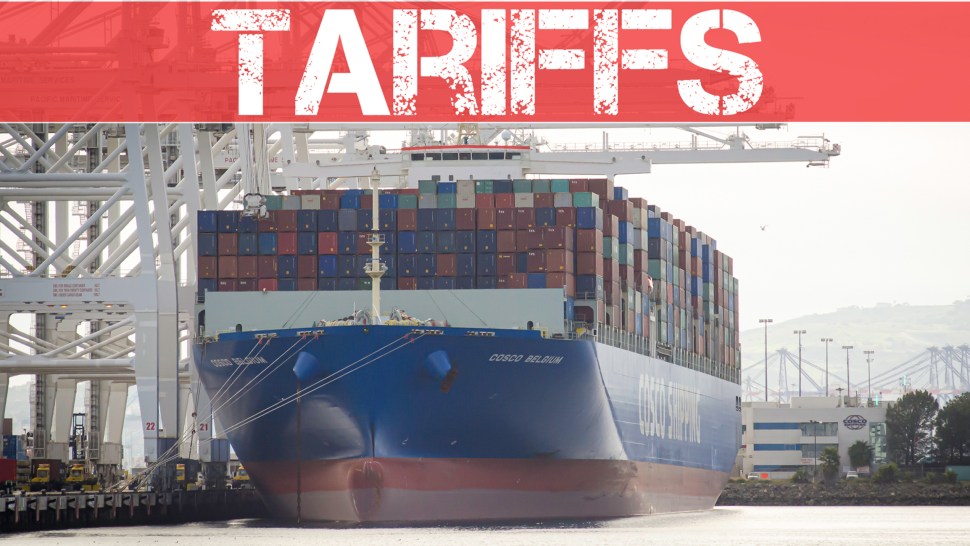
So it’s not surprising that stakeholders are more than a little nervous about President Donald Trump’s newly imposed tariffs, which stand to boost the prices not only of finished products but of materials used to manufacture packaging for everything from soft drinks to chemical containers.
“The recent tariffs have led to industry-wide price increases, directly affecting global suppliers that serve U.S. customers,” packaging supply company Evergreen wrote in a blog post on Thursday. “Domestic suppliers, who often rely on imported raw materials like aluminum and steel, are also affected. For instance, new tariffs are projected to add $22.4 billion to the cost of steel and aluminum imports, impacting various industries, including packaging.”
Lessons from recent history
Even if the full impact of the new tariffs is not yet clear, packaging manufacturers don’t have to look far into the past to find a basis for concern.
The trade war between the U.S. and China in 2018-2019, when the first Trump administration imposed tariffs on steel and aluminum imports, “reshaped cost structures, supply chains, and long-term strategies,” Mohamed Dabo writes in an article for online news outlet Packaging Gateway.
As with the current tariff regimen, the previous levies were intended to bring more manufacturing back to U.S. soil – a goal that according to Dabo went largely unmet, at least in the packaging industry. That was partly because despite surging aluminum and steel prices resulting from the tariffs, there was too little production capacity domestically to meet demand.
“US production of aluminium, for instance, couldn’t keep up with the growing need for packaging products, particularly in the beverage sector,” Dabo writes. “As a result, packaging firms continued to rely on imports, but at significantly higher prices due to the tariffs.”
And packaging companies in the United States did not significantly reduce their reliance on nations including Italy and Germany that have long been leaders in specialized packaging machinery.
U.S. exports were affected as well. China’s retaliatory tariffs hit American agricultural goods and, thus, the need for packaging for agricultural exports. “The knock-on effect was felt throughout the entire packaging value chain,” Dabo writes.
Frequently, packaging firms could not pass on to consumers the rising costs related to the trade war, cutting into profits.
Anticipated impacts
With regard to the current tariffs, a few of the impacts on the packaging industry, according to Evergreen, include:
- Increases in the cost of metal food cans, beverage cans and metal closures.
- Effects on prices of both raw materials and finished products in the industrial chemicals sector, “particularly in the production of metal drums, chemical cans, and aerosol cans used for chemical storage and transport.”
- Higher costs for breweries and the beverage alcohol industry as a whole because of a 25% tariff on imported canned beer and empty aluminum cans.
Strategies for staying profitable
Evergreen recommends that packaging companies anticipate rising prices, supply gaps and extended wait times. They should be flexible in sourcing materials and should partner with suppliers that are staying on top of the rapid changes in tariff policies.
Dabo also points to agility and resilience as crucial. Some businesses, he writes, reconfigured their supply chains and embraced automation to defray higher costs in the wake of the 2018-19 trade war.
“Companies that were able to pivot and diversify their sourcing strategies, forge new supplier relationships, and quickly adjust their pricing models have been able to weather the storm,” he adds. “Those that were slow to adapt, however, continue to struggle under the weight of higher costs and a fragmented global supply chain.”
Related:
Brokerage Compliance Symposium
The day before F3. Every compliance issue you face - fraud exposure, carrier liability, FMCSA rules, cargo theft, insurance gaps - navigated by attorneys and operators defining best practices in a changing industry.
F3 Awards Dinner
The night before F3. FreightTech100 companies honored. FreightTech 25 and Shipper of Choice winners revealed live. Cocktail reception into dinner and live music - 300 industry leaders in one purpose-built room.
F3: Future of Freight Festival
Industry-defining keynotes, rapid-fire technology demos, and industry leaders networking in experiences across Chattanooga - plus the inaugural F3 Awards Dinner featuring the FreightTech and Shipper of Choice reveals.
The day before F3. Every compliance issue you face - fraud exposure, carrier liability, FMCSA rules, cargo theft, insurance gaps - navigated by attorneys and operators defining best practices in a changing industry.
The Signal at Chattanooga Choo Choo • Chattanooga, TN Register NowThe night before F3. FreightTech100 companies honored. FreightTech 25 and Shipper of Choice winners revealed live. Cocktail reception into dinner and live music - 300 industry leaders in one purpose-built room.
The Signal at Chattanooga Choo Choo • Chattanooga, TN Register NowIndustry-defining keynotes, rapid-fire technology demos, and industry leaders networking in experiences across Chattanooga - plus the inaugural F3 Awards Dinner featuring the FreightTech and Shipper of Choice reveals.
The Signal at Chattanooga Choo Choo • Chattanooga, TN Register Now