




Freight shipments stabilized in April as capacity constraints pushed rates to recent highs, according to monthly data from Cass Information Systems.
The shipments component of the Cass Freight Index was down 4.4% year over year but increased 0.4% from March (up 0.6% seasonally adjusted). That was a third straight sequential increase in volumes, and “an encouraging signal for a potential second-half recovery,” the Thursday report said.
Normal seasonal trends moving forward would result in a 1.7% y/y increase in the shipments index during the back half of the year. The dataset is expected to decline just 1% y/y in May.
A two-year-stacked decline of 7.9% was tied for the smallest over the past year.
| April 2026 | y/y | 2-year | m/m | m/m (SA) |
| Shipments | -4.4% | -7.9% | 0.4% | 0.6% |
| Expenditures | 3.5% | 4.8% | 2.6% | 1.2% |
| TL Linehaul Index | 5.6% | 6.5% | 3.2% | NM |
At an investor conference held this week, J.B. Hunt (NASDAQ: JBHT) reported that shipper demand exceeded expectations throughout the first quarter and has remained steady since. It sees a path to raise truckload rates materially over the next two years.
“LTL tonnage trends are improving for some fleets, which bodes well for continued improvement in shipment trends in the coming months,” the Cass report said. “Tightness in the dry van TL market is starting to radiate to other modes, so far mainly reefer and flatbed TL, but eventually this tightness will drive demand in LTL and intermodal as well.”
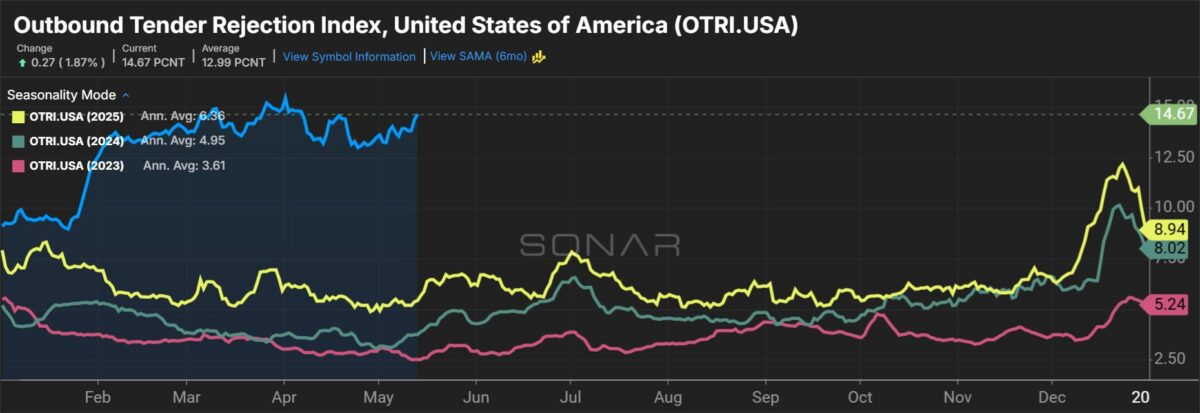
Cass’ (NASDAQ: CASS) expenditures index, which measures total freight spend including fuel, was up 3.5% y/y and 2.6% higher than March (1.2% higher seasonally adjusted). Higher diesel prices and core freight rates were the drivers of the increase.
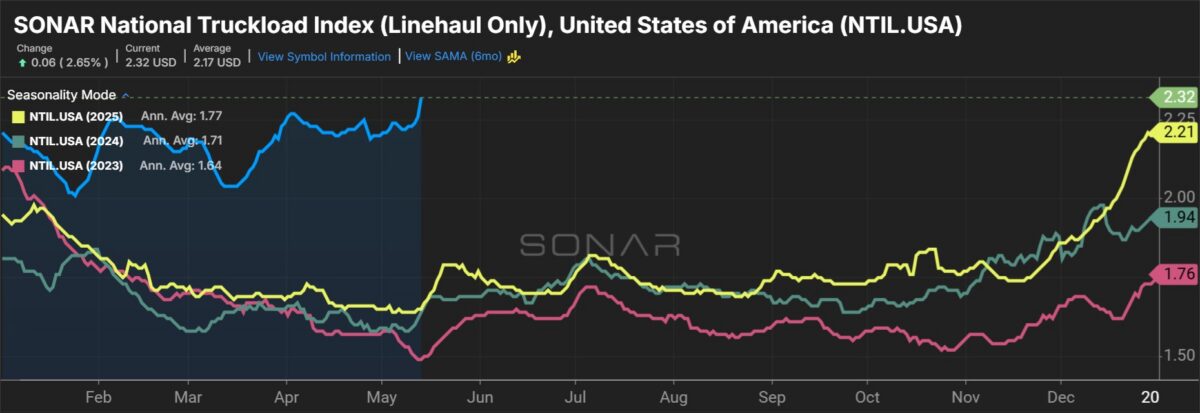
Cass’ TL linehaul index , which tracks rates excluding fuel and accessorial surcharges, surged 5.6% y/y, registering the largest y/y increase since August 2022. The dataset was 3.2% higher sequentially, which was the biggest jump since March 2022. However, the index was basically flat sequentially in February and March.
The dataset, which includes for-hire spot and contract rates, has been up y/y in 16 straight months.
The report concluded that the freight cycle is being led by the supply side as noncompliant drivers are being forced out of service. It cautioned that “higher fuel prices sapping consumer spending, and rising interest rates sapping the housing market” are weighing on demand, which will be required at some point to carry the recovery.
“New FMCSA regulations have acted as a catalyst, and seem likely to result in tighter capacity and higher rates from here,” the report said.
Data used in the indexes comes from freight bills paid by Cass, a provider of payment management solutions. Cass processes $37 billion in freight payables annually on behalf of customers.
Brokerage Compliance Symposium
The day before F3. Every compliance issue you face - fraud exposure, carrier liability, FMCSA rules, cargo theft, insurance gaps - navigated by attorneys and operators defining best practices in a changing industry.
F3 Awards Dinner
The night before F3. FreightTech100 companies honored. FreightTech 25 and Shipper of Choice winners revealed live. Cocktail reception into dinner and live music - 300 industry leaders in one purpose-built room.
F3: Future of Freight Festival
Industry-defining keynotes, rapid-fire technology demos, and industry leaders networking in experiences across Chattanooga - plus the inaugural F3 Awards Dinner featuring the FreightTech and Shipper of Choice reveals.
The day before F3. Every compliance issue you face - fraud exposure, carrier liability, FMCSA rules, cargo theft, insurance gaps - navigated by attorneys and operators defining best practices in a changing industry.
The Signal at Chattanooga Choo Choo • Chattanooga, TN Register NowThe night before F3. FreightTech100 companies honored. FreightTech 25 and Shipper of Choice winners revealed live. Cocktail reception into dinner and live music - 300 industry leaders in one purpose-built room.
The Signal at Chattanooga Choo Choo • Chattanooga, TN Register NowIndustry-defining keynotes, rapid-fire technology demos, and industry leaders networking in experiences across Chattanooga - plus the inaugural F3 Awards Dinner featuring the FreightTech and Shipper of Choice reveals.
The Signal at Chattanooga Choo Choo • Chattanooga, TN Register Now