




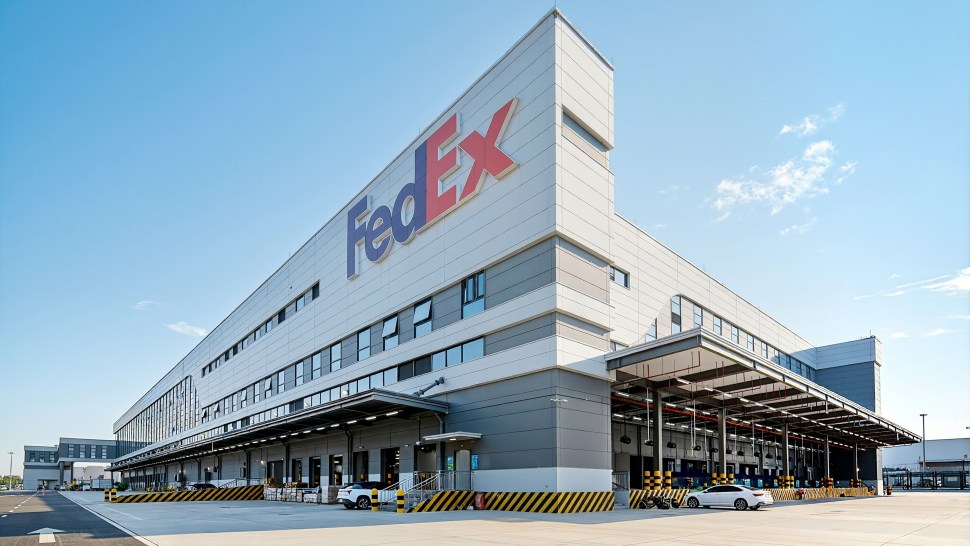
FedEx Corp. has expanded its footprint at Guangzhou Baiyun Airport with the opening of a new cargo terminal, giving it more capacity in South China’s heavy industrial belt to support regional and international trade flows.
FedEx (NYSE: FDX) said Monday it pursued the facility expansion because of growing air cargo demand from shippers in the Greater Bay area, one of the world’s most heavily concentrated manufacturing hubs. The region, which includes Macau, Hong Kong and nine cities in Guangdong province, is one of the largest export centers in the world. In the first three quarters of 2026, the region’s nine mainland cities recorded imports and exports of $1.26 trillion, accounting for 21% of China’s total trade, according to China Customs.
The air logistics warehouse complements FedEx’s existing Asia-Pacific hub at Baiyun Airport, which opened in 2009. FedEx said it would help southern China businesses reach overseas customers and suppliers faster through its global air and ground network.
The 484,000-square foot facility, developed in tandem with the Guangdong Airport Authority to handle up 28,000 express parcels and freight shipments per hour, has three times the previous processing capacity thanks to intelligent sorting capabilities. Annual cargo handling capacity exceeds 110,000 U.S. tons. Other features include automation, RFID shipment tracking and a customs-supervised warehouse. The “smart” warehouse is supported by digital documentation, pre-declarations and alert systems to further reduce clearance times for customers.
FedEx CEO Raj Subramaniam attended the opening ceremony, according to the South China Morning Post.
“The future of trade depends on reliable connectivity, resilient supply chains, and access to global markets,” said Salil Chari, president, Asia Pacific, FedEx, in a news release. “The Greater Bay Area remains one of the most dynamic economic regions in the world, and this investment reinforces our commitment to helping businesses in China and across Asia-Pacific grow internationally. By strengthening connectivity and integrating this facility into our global network, we are enabling customers to move goods more efficiently, reach new markets, and seize emerging opportunities in global trade.”
FedEx continues to invest in airport infrastructure projects in the past 18 months, even as it decreases overall capital expenditure as part of an effort to reduce excess network capacity and improve profitability. The freight transportation giant this month completed an upgrade of its air facility in Madrid, Spain. In February, the company announced plans to build a new air logistics hub in Mumbai, India. FedEx moved to a new terminal at Istanbul airport in Turkey in September 2025. It also announced plans to invest in a new air cargo hub in Saudi Arabia.
UPS is similarly upgrading its Asia air network, having recently completed a new air hub in the Philippines while construction continues on a major expansion of its air hub in Hong Kong.
RELATED STORIES:
FedEx invests $250M for dedicated parcel hub at new Mumbai airport
FedEx, DHl relocate to larger air package facilities on Europe’s edge
