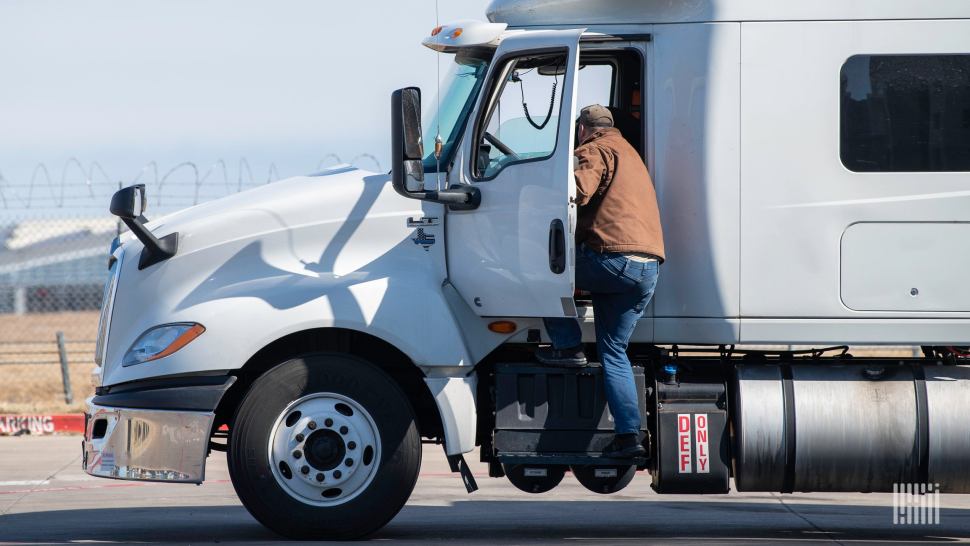
Transportation Secretary Sean Duffy said 9,500 commercial truck drivers have been taken off the road this year for failing to meet federal English-language requirements.
Duffy announced the figure Wednesday in a post on X, stating that the drivers were removed “for failing to speak our national language — ENGLISH” and framing the crackdown as a highway-safety initiative. He added, “This administration will always put you and your family’s safety first.”
Federal data closely tracks Duffy’s tally. The Federal Motor Carrier Safety Administration’s national inspection database currently shows 8,953 out-of-service English-language violations, according to records.
The announcement marks the latest escalation in the administration’s English Language Proficiency (ELP) crackdown — a policy shift that has already sidelined thousands of drivers since the rule was reinstated earlier this year.
ELP-based removals appear to be hitting border-state and bilingual fleets hardest. Texas and Arizona report some of the highest out-of-service counts, according to FMCSA data.
Industry experts say the numbers deserve closer scrutiny and may significantly overstate how many drivers were actually placed out of service.
Grace Maher, COO of OTR Solutions many of these entries in FMCSA’s system represent warnings or citations, not actual out-of-service orders. Maher and others argue that blending violations with out-of-service orders inflates the severity of the enforcement campaign and masks the real, structural problems affecting the trucking market.
“These citations can be warnings. That difference is still very black and white,” she told FreightWaves in a report published on Friday. “If it was as rampant as everyone acts like, where are the pictures of the trucks on the road?”
Related: English-language crackdown exposes how cheap labor and CDL fraud are remaking trucking
Maher said drivers who receive a citation for failing to demonstrate English proficiency may be allowed to continue operating, depending on the officer, location and circumstances. A formal out-of-service order, by contrast, halts the truck until the driver demonstrates compliance.
Former carrier executive Cliff Bates cautioned that the focus on English-language enforcement is overlooking a much deeper crisis.
Bates describes a “new ecosystem” in trucking — one built around fraudulent CDLs, manipulated electronic logging devices and short-term foreign drivers entering the market on temporary cycles.
“You’ve got foreign companies bringing in drivers who live in their trucks, don’t go home, make a fraction of what American drivers make, and undercut every rate,” Bates told FreightWaves.
Brokerage Compliance Symposium
The day before F3. Every compliance issue you face - fraud exposure, carrier liability, FMCSA rules, cargo theft, insurance gaps - navigated by attorneys and operators defining best practices in a changing industry.
F3 Awards Dinner
The night before F3. FreightTech100 companies honored. FreightTech 25 and Shipper of Choice winners revealed live. Cocktail reception into dinner and live music - 300 industry leaders in one purpose-built room.
F3: Future of Freight Festival
Industry-defining keynotes, rapid-fire technology demos, and industry leaders networking in experiences across Chattanooga - plus the inaugural F3 Awards Dinner featuring the FreightTech and Shipper of Choice reveals.
The day before F3. Every compliance issue you face - fraud exposure, carrier liability, FMCSA rules, cargo theft, insurance gaps - navigated by attorneys and operators defining best practices in a changing industry.
The Signal at Chattanooga Choo Choo • Chattanooga, TN Register NowThe night before F3. FreightTech100 companies honored. FreightTech 25 and Shipper of Choice winners revealed live. Cocktail reception into dinner and live music - 300 industry leaders in one purpose-built room.
The Signal at Chattanooga Choo Choo • Chattanooga, TN Register NowIndustry-defining keynotes, rapid-fire technology demos, and industry leaders networking in experiences across Chattanooga - plus the inaugural F3 Awards Dinner featuring the FreightTech and Shipper of Choice reveals.
The Signal at Chattanooga Choo Choo • Chattanooga, TN Register Now