Amazon.com Inc. shares soared in after-hours trading on Thursday as investors focused on a solid second-quarter revenue performance and positive third-quarter guidance, and not on a second-quarter net loss and a decline in operating income.
Net sales increased 7% year over year to $121.2 billion in the second quarter, compared with $113.1 billion in second-quarter 2021, Amazon said. Sales increased 10% after backing out a $3.6 billion hit from year-over-year changes in foreign exchange rates, Amazon said.
Third-quarter sales are expected to increase between 13% and 17% from the 2021 period to between $125 billion and $130 billion, Amazon (NASDAQ: AMZN) said. The guidance anticipates a nearly 4-percentage-point hit from unfavorable exchange rates, Amazon said
As of nearly 7 p.m. ET, Amazon shares had risen $17 a share, a gain of nearly 14% from Thursday’s closing price.
Amazon reported a $2 billion net loss in the second quarter, its second consecutive quarterly loss. The loss included a $3.9 billion pretax valuation loss in Amazon’s investment in electric vehicle maker Rivian Automotive Inc. (NASDAQ: RIVN), which plans to provide Amazon with 100,000 battery-powered delivery vans by 2030.
The decline in the value of Amazon’s Rivian investment was recorded as a nonoperating expense, Amazon said. Rivian shares went public in early November at $78 a share and traded as high as around $170 but today trade at $34 a share.
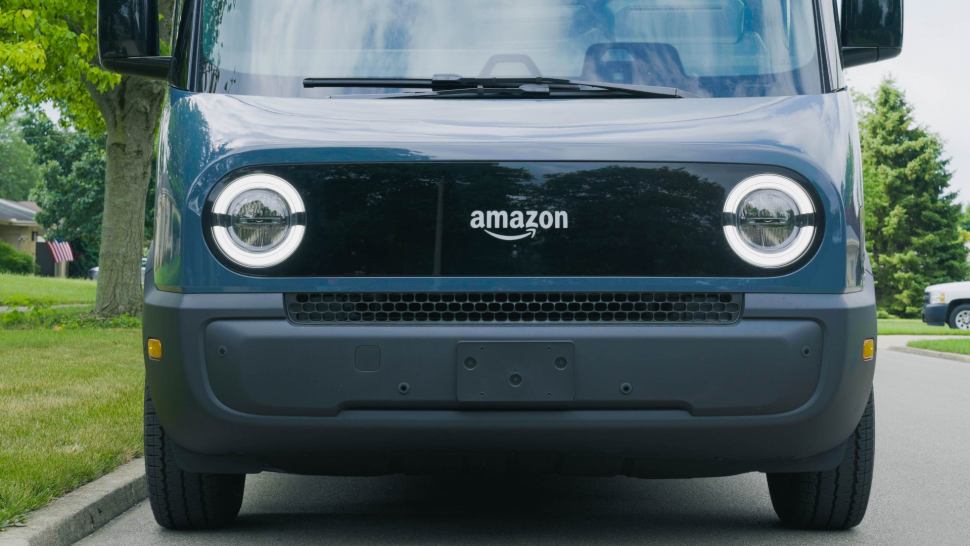
Amazon began rolling out Rivian delivery vehicles earlier this month and plans to have thousands of vehicles in more than 100 cities by the end of 2022.
Amazon’s second-quarter operating income fell to $3.3 billion from $7.7 billion in the second quarter of 2021. The company expects third-quarter operating income to max out at $3.5 billion, providing it generates a $1.5 billion cost improvement in its fulfillment operations. Amazon has scaled back its fulfillment network expansion as e-commerce activity levels off following breakneck demand in 2020 and 2021.
Brokerage Compliance Symposium
The day before F3. Every compliance issue you face - fraud exposure, carrier liability, FMCSA rules, cargo theft, insurance gaps - navigated by attorneys and operators defining best practices in a changing industry.
F3 Awards Dinner
The night before F3. FreightTech100 companies honored. FreightTech 25 and Shipper of Choice winners revealed live. Cocktail reception into dinner and live music - 300 industry leaders in one purpose-built room.
F3: Future of Freight Festival
Industry-defining keynotes, rapid-fire technology demos, and industry leaders networking in experiences across Chattanooga - plus the inaugural F3 Awards Dinner featuring the FreightTech and Shipper of Choice reveals.
The day before F3. Every compliance issue you face - fraud exposure, carrier liability, FMCSA rules, cargo theft, insurance gaps - navigated by attorneys and operators defining best practices in a changing industry.
The Signal at Chattanooga Choo Choo • Chattanooga, TN Register NowThe night before F3. FreightTech100 companies honored. FreightTech 25 and Shipper of Choice winners revealed live. Cocktail reception into dinner and live music - 300 industry leaders in one purpose-built room.
The Signal at Chattanooga Choo Choo • Chattanooga, TN Register NowIndustry-defining keynotes, rapid-fire technology demos, and industry leaders networking in experiences across Chattanooga - plus the inaugural F3 Awards Dinner featuring the FreightTech and Shipper of Choice reveals.
The Signal at Chattanooga Choo Choo • Chattanooga, TN Register Now