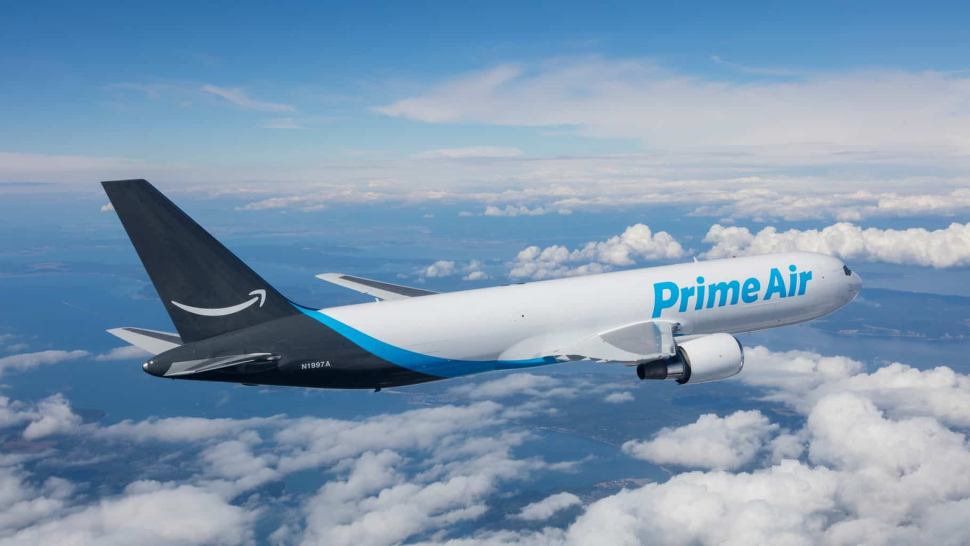
Amazon.com, Inc. (NASDAQ:AMZN) announced on June 18 that it will lease 15 Boeing (NYSE:BA) 737-800 freighters from GE Capital Aviation Services (GECAS), the aircraft lending unit of General Electric Co. (NYSE:GE). The airplanes, which will operate in the U.S., will enter Amazon’s fleet by 2021, the e-tailer said.
The announcement comes just days after FedEx Corp. (NYSE:FDX) said it would not renew its contract with Amazon to transport the e-tailer’s domestic air packages. FedEx’s decision affects about $150 to $200 million of Amazon’s air business, much of which it was expected to absorb through its own flying operations, Amazon Air.
Amazon said it expects to have 71 freighters by 2021. The company declined comment on which company or companies will operate the 15 airplanes. Currently, flying for Amazon is shared by aircraft operators Atlas Air Worldwide Holdings (NASDAQ:AAWW) and Air Transport Services Group (NASDAQ:ATSG).
Amazon made its announcement at the International Paris Air Show, which started Monday and runs through Wednesday, June 19. On June 17, GECAS said it had signed an agreement to place firm orders for 10 of the 737 freighters and to take options on 15 more.
Amazon’s move was not a surprise. In March it said it would lease five of the 737-800 freighters from GECAS, with the possibility of adding 15 more. The aircraft, which were expected to enter service by April 2020, are subleased to an Atlas subsidiary, Southern Air.
The 737-800 freighters, which are converted from passenger aircraft configuration, can handle up to a 47,800-pound payload with a range of 3,700 miles. The newer 737-800 versions are 20 percent more fuel-efficient than the classic 737 freighter model, Boeing said on its web site.
The aircraft is considered suitable for smaller markets where a Boeing 767 freighter – the model which dominates the Amazon Air fleet and which has a 187,000-pound maximum payload – is not necessary. Amazon’s air network supports deliveries of goods ordered through its “Prime” service, which recently began upgrading to guaranteed one-day deliveries from the standard two-day delivery window.
Amazon expects its primary hub at Cincinnati-Northern Kentucky International Airport to open in 2021. Operations will commence later this year at Fort Worth Alliance Airport, the Wilmington, Ohio Air Park, and Rockford, Illinois International Airport.
Brokerage Compliance Symposium
The day before F3. Every compliance issue you face - fraud exposure, carrier liability, FMCSA rules, cargo theft, insurance gaps - navigated by attorneys and operators defining best practices in a changing industry.
F3 Awards Dinner
The night before F3. FreightTech100 companies honored. FreightTech 25 and Shipper of Choice winners revealed live. Cocktail reception into dinner and live music - 300 industry leaders in one purpose-built room.
F3: Future of Freight Festival
Industry-defining keynotes, rapid-fire technology demos, and industry leaders networking in experiences across Chattanooga - plus the inaugural F3 Awards Dinner featuring the FreightTech and Shipper of Choice reveals.
The day before F3. Every compliance issue you face - fraud exposure, carrier liability, FMCSA rules, cargo theft, insurance gaps - navigated by attorneys and operators defining best practices in a changing industry.
The Signal at Chattanooga Choo Choo • Chattanooga, TN Register NowThe night before F3. FreightTech100 companies honored. FreightTech 25 and Shipper of Choice winners revealed live. Cocktail reception into dinner and live music - 300 industry leaders in one purpose-built room.
The Signal at Chattanooga Choo Choo • Chattanooga, TN Register NowIndustry-defining keynotes, rapid-fire technology demos, and industry leaders networking in experiences across Chattanooga - plus the inaugural F3 Awards Dinner featuring the FreightTech and Shipper of Choice reveals.
The Signal at Chattanooga Choo Choo • Chattanooga, TN Register Now