FreightWaves Flashback: Advance on the new Silk Road
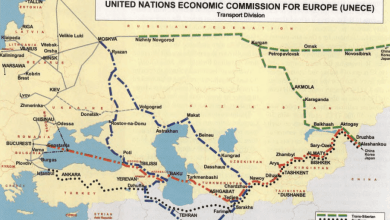
2006: Istanbul-based freight forwarder Advance International has made use of international agency plans to re-establish reliable landbridge routes between the two continents.
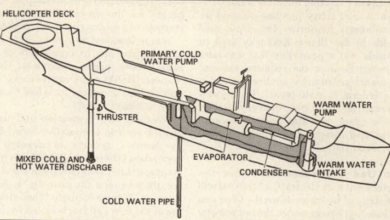
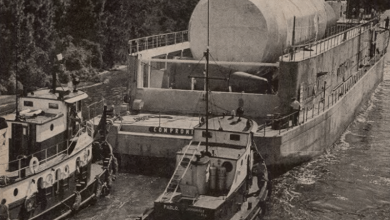
1981: Plans to use offshore vessels for the generation of electricity by use of ocean water temperature differences could develop into a “good market” for the nation’s shipyards, according to an industry spokesman.
1997: “Comparing our project to the Panama Canal is to confuse an apple with an orange,” New York lawyer Don M. Bosco said. “Our competition won’t be the canal. Instead, we intend to take significant business from the 3,000-mile U.S. landbridge system.”
As part of Women’s History Month, FreightWaves spotlights the first American woman to make it to the top at sea.
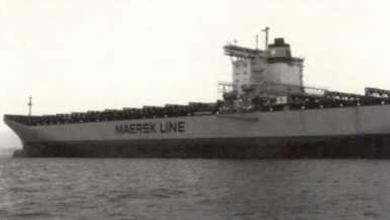
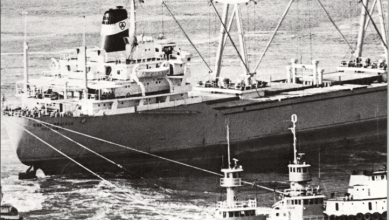
1996: At 1,044 feet (318.2 meters) long, the new Maersk ships are longer than the Eiffel tower, but they are still capable of a high speed of 25 knots.
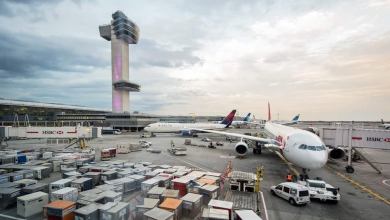
2002: “It’s a myth that we are out of land,” said Jim Larson of the NY/NJ Port Authority, discussing the airport’s cargo possibilities.
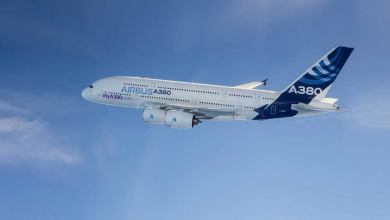
2005: Airbus is ready to break Boeing’s 30-year monopoly on making large passenger aircraft.
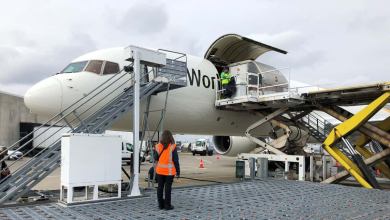
2000: UPS Airlines has signed an agreement with Boeing Co. to take delivery of 13 MD-11 widebody freighters over the next four years.
You can find every FreightWaves podcast conveniently in one feed via the free FreightCasts channel on iTunes, Spotify or wherever podcasts are found.
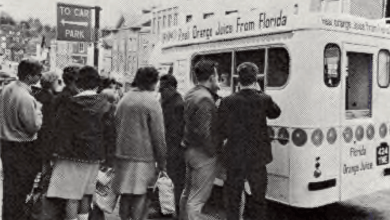
1966: Seventy thousand American gallons of frozen concentrated orange juice were imported into the United Kingdom from Florida in 1965. This quantity represents nearly two million cans, retailing at about 32 cents for 6 fluid ounces, appreciably higher in fact than the American price.
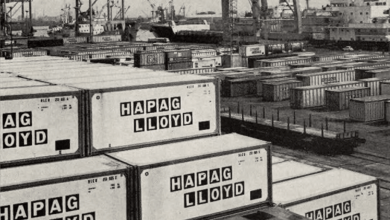
1970: After 123 years of Hapag history and 113 years of Lloyd history the first page of Hapag-LIoyd AG history will be written in 1970. The new company has a staff of 11,500 of whom some 5,000 are sea-going personnel.
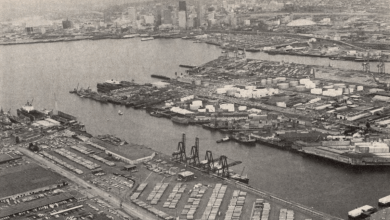
1981: Civic pride and more than a little politicking have scuttled — at least temporarily — a controversial proposal to study whether the competing Puget Sound ports of Seattle and Tacoma should cooperate and, ultimately, merge.
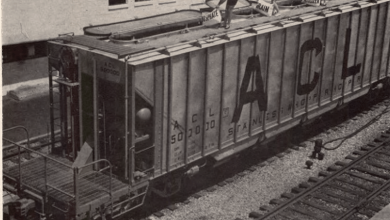
1964: The Whopper Hopper is the most advanced design of any freight car fabricated from USS Tenelon stainless steel. In a single trip it can transport 135 tons of bulk material and enough sugar to sweeten 30 million cups of coffee.
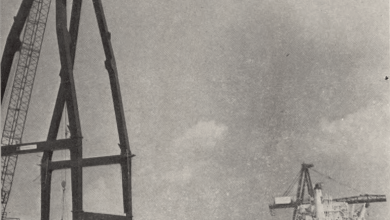
1973: This will be Sea-Land’s 2nd container crane at Jacksonville and the 3rd in operation at the port.
1971: Jacksonville, Savannah and Charleston duke it out for Southeastern port crown.
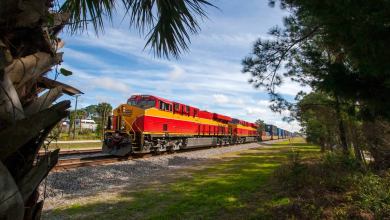
1963: Trucks have moved into the lead as the primary mode of transportation for Florida’s half billion dollar citrus and vegetable crops.
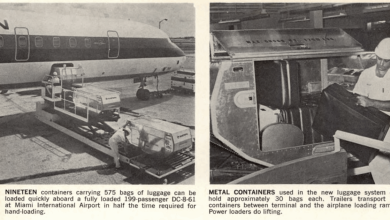
1969: The system will cut baggage delivery time by at least 50% while protecting luggage from loss and damage.
1963: NASA will employ a specially enlarged aircraft to aid in the transport of the Saturn S-IV rocket from California to Florida.
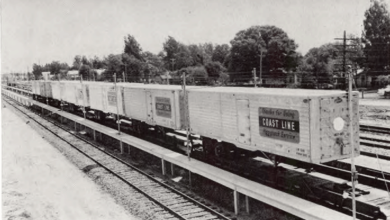
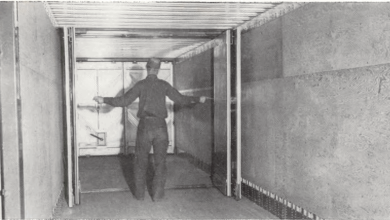
The walk-through feature makes it possible to handle cargo within both containers without removing either from the chassis.
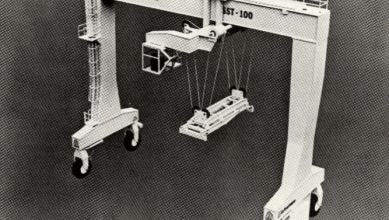
The new unit can pass over stacks of boxes four high (48 feet) and five wide (plus a truck lane, a total of 69 feet).