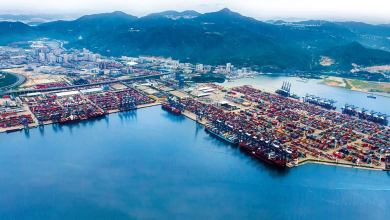
Yantian port back at full speed; box recovery could take a month
The Port of Yantian is operating at 100% on the vessel side again after a month of delays, but that doesn’t mean the container buildup will get resolved soon.
The Port of New Orleans reported a 4% increase in breakbulk cargo volume in May, fueled by steel and general cargo.
Rates for smaller bulkers remain at decade highs with most dry bulk stocks up triple digits since November.
A year and a half after COVID emerged in Wuhan, China’s exporters, liners, shipyards and container factories are all booming.
A potential strike by Canada Border Services Agency officers threatens to disrupt the country’s supply chains. The Port of Vancouver could feel the most pain.
The company plans to build on UNF’s transportation and logistics program with real-life experiences, Crowley’s CEO says.
Less-than-container load service will run weekly from the ports of Altamira to Santos.
The past week in images features a dust storm, an explosive Navy test and a mobile national memorial.
The project to expand the Howard Street Tunnel has received federal environmental approvals, bringing the $466 million project closer to fruition. The expansion will enable the tunnel to accommodate double-stacked container trains, which could benefit the nearby Port of Baltimore.
The 32nd version of the venerable report waxes philosophical on why more, not less, logistics spending will be needed.
There has never been a better time to own container ships and lease them to liners. But some owners are selling ships and cashing out.
Normally big projects are scheduled during slow periods, but the Port of Savannah can’t wait to deepen its berths so there will be extra cargo delays for a few weeks.
“The demand is still here, the demand is growing, ships are getting bigger,” says Port Houston Executive Director Roger Guenther.
An agreement reportedly has been reached that will allow the Ever Given to finally resume the voyage halted when the container ship became wedged between the Suez Canal banks in March.
AskWaves explores the difference between measuring emissions based on what comes out of the tailpipe versus the emissions for the entire life cycle of a shipping fuel.
Shipowner associations ask, “What are we waiting for?” to accelerate research and development for zero-emission shipping technologies and fuels.
Hapag-Lloyd now will add 12 23,500-TEU container ships to its fleet beginning in 2023.
Americans are spending more on services. Contrary to predictions, this has yet to curb demand for containerized goods.
Ocean carriers and Class I railroads both agree that chassis shortages are contributing to volume congestion. But solutions to relieve the congestion rely on multiple supply chain stakeholders, say the railroads.
The Federal Maritime Commission tells Congress exporters allege they are being threatened by ocean carriers if they complain about excessive fees and unfair practices.