Class 8 orders for November approach record numbers
Preliminary Class 8 truck orders posted their third-highest number in history in November, continuing a stunning comeback from pandemic-depressed bookings earlier in the year.


TCA and our truckload carrier members remain committed to hair testing as a viable method for determining long-term drug use by individuals in safety-sensitive functions. Recently, though, the Department of Health and Human Services threw the industry a curveball regarding these efforts.
The average dry van carrier operating ratio for Truckload Carriers Association members dipped to a multiyear low in September, falling below 94% for the first time since late 2015.
TCA is hosting its 4th Annual Bridging Border Barriers, which is an informative half day session for trucking executives focused on key issues and topics affecting the trucking industry on both sides of the U.S./Canada border.
TCA recently filed comments in support of a proposed pilot program from FMCSA to study adding a 3-hour pause to the hours-of-service (HOS) regulations. TCA is hopeful that this is a positive sign for the revival of the sleeper berth pilot.
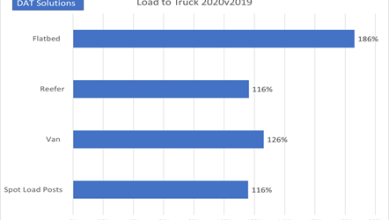
I was on a webinar last week where one of my colleagues was accused of “sensationalizing” the freight market dynamics in favor of the carrier world. These are the numbers in the current market, and we all know this cycle will come to an end.
For the fourth consecutive year, a shortage of drivers topped the Critical Issues in the Trucking Industry survey conducted by the American Transportation Research Institute.
The lack of participation in a program meant to address a shortfall of drivers entering the trucking industry is forcing regulators to adjust.
The Truckload Carriers Association member company and TCA Profitability Program Retention Project member, Steve’s Livestock Transport was honored during this year’s Top Fleet Employer awards gala.
Detention time has been a perennial thorn in the side of the truckload industry. Now, with capacity as tight as it is, shippers will feel the pinch if they make drivers wait unnecessarily for their appointments. But will a new FMCSA pilot program accurately determine the impact of the problem?
Federal regulators have denied a request by the Small Business in Transportation Coalition to ease regulations for drivers traveling with their pets.
The expectation for truckload (TL) contractual rates to increase by double digits in 2021 is growing. In a Wednesday note to clients, UBS transportation equities analyst Tom Wadewitz outlined the fundamentals supporting this projection.
While federal or state law may allow an employer to mandate specific medial procedures or drugs, the employer should still conduct a thorough analysis of the specific facts presented and the applicable controlling federal and/or state law in the jurisdiction before proceeding.
With the first presidential debate of 2020 in the books, I am reminded of our most basic right that we enjoy as free citizens of this country.: The right to vote.
The Department of Labor’s attempt to clarify and save the independent contractor model should be applauded.
California Gov. Gavin Newsom signed an executive order Wednesday that aims to end the sale of new gasoline- and diesel-powered passenger cars in the state by 2035, but while it also addresses trucks, it is unclear whether it also bans truck sales.
Every driver that stays with their current carrier is one less that has to go home and tell their families that they don’t have a job. Driver turnover is fixable, if we all start to take it more personally.
A couple of Uber Freight alumni have launched an on-demand employment platform that aims to boost opportunities for truckless CDL drivers, as labor market changes fuel interest in driver-only business models.
Looking forward, I believe the future is very bright for trucking while all the fundamentals are still in place for a tight capacity crunch. So, what are you doing to prepare yourselves for that?
Each year, unengaged workers cost U.S. companies between $483 billion and $605 billion. In today’s increasingly remote business world, your brand’s social media channels could be one of your company’s most important internal communication touchpoints.