Editor’s note: This story was updated at 12 p.m. on Sept. 1 to reflect updated information.
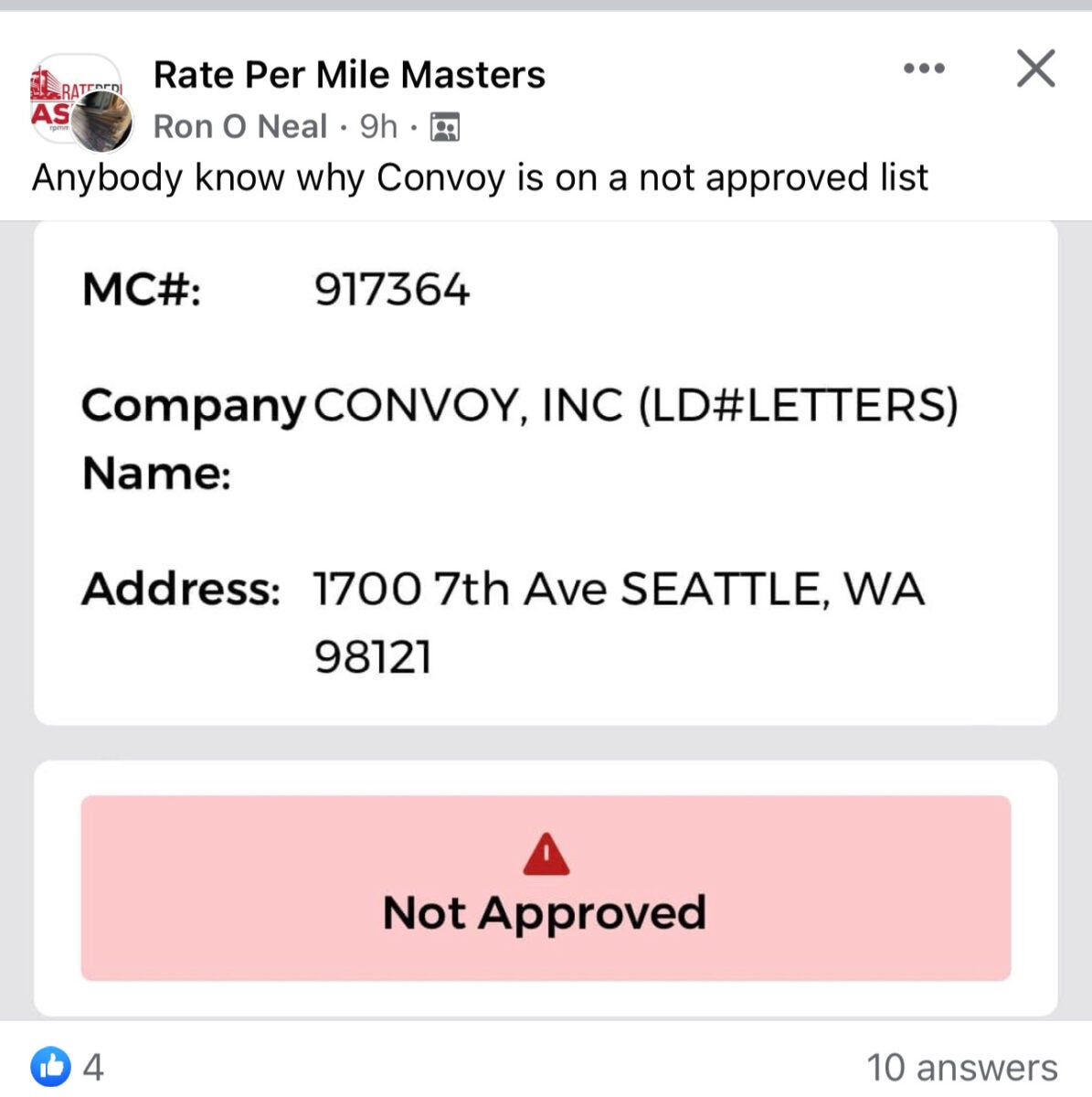
On Friday, FreightWaves reported that factoring company OTR Solutions made the decision to place digital freight brokerage Convoy on a “do not approve” list based on concerns about Convoy’s balance and credit.
Now, Convoy and OTR Solutions have issued a joint statement saying that the situation has been resolved.
“Earlier today, an article appeared in the press referring to a misunderstanding between Convoy and OTR,” the companies wrote to FreightWaves. “That misunderstanding has been resolved and Convoy is up to date on all payments. Convoy has also been reinstated to the OTR buy list.”
The factoring company OTR Solutions had put Seattle-based digital freight brokerage Convoy on its “Do Not Buy” list, indicating that it would no longer pay carriers for Convoy loads.
Small carriers and owner-operators use factoring companies to get paid immediately for hauling shipments: The factor buys the invoice from the carrier and collects from the broker later. The factor has to assess the creditworthiness of the brokers whose payments it’s buying, and that’s where the trouble with Convoy came.
In a phone conversation with FreightWaves, an official at OTR Solutions confirmed that this screenshot posted to the carrier Facebook group Rate Per Mile Masters on Thursday night was authentic:
OTR asked Convoy to make an advanced payment for its current outstanding balance.
A week ago, FreightWaves reported that Convoy hired an investment banker to advise the company on strategic interest, including a possible sale of the business.
Brokerage Compliance Symposium
The day before F3. Every compliance issue you face - fraud exposure, carrier liability, FMCSA rules, cargo theft, insurance gaps - navigated by attorneys and operators defining best practices in a changing industry.
F3 Awards Dinner
The night before F3. FreightTech100 companies honored. FreightTech 25 and Shipper of Choice winners revealed live. Cocktail reception into dinner and live music - 300 industry leaders in one purpose-built room.
F3: Future of Freight Festival
Industry-defining keynotes, rapid-fire technology demos, and industry leaders networking in experiences across Chattanooga - plus the inaugural F3 Awards Dinner featuring the FreightTech and Shipper of Choice reveals.
The day before F3. Every compliance issue you face - fraud exposure, carrier liability, FMCSA rules, cargo theft, insurance gaps - navigated by attorneys and operators defining best practices in a changing industry.
The Signal at Chattanooga Choo Choo • Chattanooga, TN Register NowThe night before F3. FreightTech100 companies honored. FreightTech 25 and Shipper of Choice winners revealed live. Cocktail reception into dinner and live music - 300 industry leaders in one purpose-built room.
The Signal at Chattanooga Choo Choo • Chattanooga, TN Register NowIndustry-defining keynotes, rapid-fire technology demos, and industry leaders networking in experiences across Chattanooga - plus the inaugural F3 Awards Dinner featuring the FreightTech and Shipper of Choice reveals.
The Signal at Chattanooga Choo Choo • Chattanooga, TN Register Now