A single burnt-out taillight can cost a carrier tens of thousands of dollars in higher insurance, lost freight and extra DOT inspections.
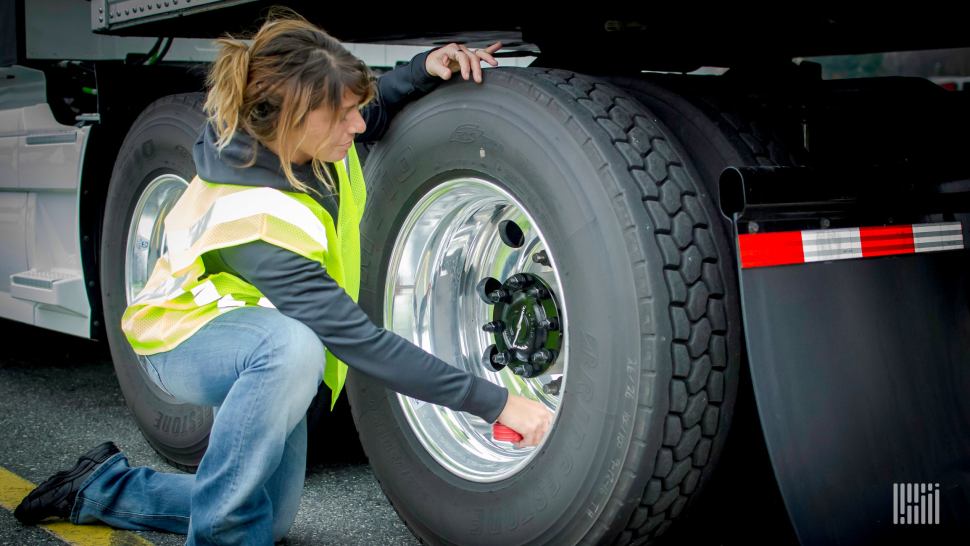
For many fleets that pain starts long before the roadside stop — in the 27 seconds it takes some drivers to “complete” a pre-trip inspection without ever leaving the cab.
That gap between paper compliance and actual safety is exactly why CSA scores have become the trucking industry’s public report card.
“The lower the safety score, if I’m a distribution company looking at two different carriers that theoretically do the same thing, but you have a CSA score of 12 and I have one of 76, I’m going to choose you [with a score of 12] because I know those trucks are probably safer and operating more efficiently,” said Bryant Maxey, product manager at Zonar.
That logic goes beyond shipper negotiations. In competitive freight markets, a poor score triggers a cascade of operational consequences: more frequent roadside inspections and higher insurance costs. Another is damaged relationships with shippers who do not want to associate with high-risk carriers.
How One Violation Puts Fleets on DOT Radar
Robert Federico, dispatch manager at Tropical Shipping in Miami, has seen firsthand how quickly a single violation can alter a fleet’s trajectory.
“Six months ago we had a driver at our own home port get pulled with a chassis and a truck that each had a light out. That event prompted them to start showing up [for more inspections] once a week,” Federico said. “As we started to get clean inspections they limited it, but that was me living what I had only read about. It took one driver getting pulled over and now you’re on their radar.”
Once on that radar, cleaning up becomes a grind. Federico estimates a 4-to-1 ratio of clean inspections to dirty ones before a carrier starts recovering its score.
The financial burden lands hardest on insurance renewals. Federico recounted a driver he works with who paid $15,000 in premiums one year. After accumulating nine CSA points, that number jumped to $36,000 the following year.
“The CSA score affects large companies, small companies, individual contractors — from mom-and-pop all the way up to the big players in the game,” Federico said.
The Pencil-Whipping Problem and CSA Scores
Before adopting electronic inspection tools, Tropical Shipping relied on a patchwork system: paper forms, then emails with bullet points, then Microsoft Word documents. Maintenance teams hunted for paperwork that sometimes got lost. Auditing whether a driver-vehicle inspection report (DVIR) was properly closed out became a manual, time-consuming process with regulatory consequences if documentation was missing.
The deeper problem was complacency. Drivers — even experienced professionals — were finishing pre-trip inspections in under 30 seconds without actually verifying components.
“We thought we were best in class, but we had a few drivers pencil-whipping,” Federico said. “Some were doing pre-trips in 27 seconds.”
For reference, depending on the fleet, a pre-trip or post-trip inspection can range anywhere from 10 to 20 minutes.
The operational friction compounded when trucks were slip-seated between drivers. Without standardized inspections, handoffs turned sloppy. A driver accepting a truck might inherit unreported defects, then either delay to fix them or risk a roadside violation.
“The most important part in a relay race is the handoff. In our case it’s the truck,” Federico said. “If you hand off a truck that you said you did a post-trip on and he gets in it and two lights are out, now there’s a delay in time or worse he’s pissed so he just says screw it and goes out there. Then he gets pulled over and we get six points on our DOT and to the CSA score.”
How Zonar EVIR Stops Pencil-Whipping
Zonar’s Electronic Verified Inspection Reporting (EVIR) system is one tool fleets are using to address pencil-whipping. It forces drivers to physically visit each inspection zone. Small RFID and NFC tags — roughly half the size of an AirPod case — are placed at designated points around the vehicle: front, cab, sides and rear.
“You have to scan a tag that says here’s the asset you’re doing an inspection on. Then you start scanning zones,” Maxey explained. “I go to the front of the truck, scan a tag, and it says you’re in the front zone of this asset. Here’s all the list of components that you need to check.”
Each zone scan captures a timestamp, giving fleet managers visibility into how long a driver actually spent at each location. Alerts can be configured when inspections fall below a minimum duration.
“I can scan that and immediately run over and scan the next one, saying I’m done, I’m done. But the back-end system is going to get either an alert or just see: Thomas, you’ve been at the zone for 15 seconds and you’re telling them you checked all that,” Maxey said.
Drivers can attach photos of defects — a burnt-out headlight, a damaged mud flap, expired registration — directly within the system. Fleets can also customize inspections, adjusting terminology and required components based on their specific equipment.
An example of this checklist approach is also evident in other industries, from aviation to surgery. In each, forcing a structured habit of going through a checklist dramatically reduces errors.
“Truckers are so under-championed, but they really just want tools,” Federico said. “Within a couple of weeks we got buy-in instantly because they all understood that we had 30 drivers doing it 30 different ways. This was the way to get 30 drivers to do it at least 90 percent the same way.”
EVIR’s Impact on Repairs and CSA Scores
EVIR’s impact extends beyond compliance into maintenance operations. When inspections are complete, defects upload directly into maintenance platforms through open API integrations with systems such as Squarerigger, Dossier and AssetWorks.
Cowboy State Trucking, a Wyoming-based carrier running 36 trucks and 120 trailers, reduced the time from reported defect to mechanic review to just 12 minutes after implementing EVIR. Chief Operating Officer Deon Bunker recalled the old system’s risks.
“We were just building boxes upon boxes of documents and having to manage that,” Bunker said. “Only sometimes it did [get lost].”
The fleet lowered its CSA score from 76 to 12 within months by standardizing inspections. Mechanics now see which trucks are out-of-service directly in the fleet management platform, preventing drivers or dispatchers from accidentally deploying faulty equipment.
“In years past, there was always a risk that a driver would jump into a truck that needed service. That isn’t a problem anymore,” Bunker said.
Physical storage costs dropped as the fleet moved from boxes upon boxes of documents to digital retention.
Using Inspection Data and AI for Fleet Decisions
Beyond compliance, inspection data is becoming a strategic asset. Fleets are using defect patterns to inform purchasing decisions — identifying whether specific truck models generate disproportionate maintenance issues.
“If I have 10 [Model A] trucks or 10 [Model B] trucks and I’ve noticed that a lot of my defects are coming on these [Model A’s], how do I use that data?” Maxey said. “We’re starting to see customers use it to make buying decisions when purchasing trucks: 70 percent of our defects are on these specific trucks — why?”
Zonar is building AI-powered dashboards that surface key performance indicators (KPIs) around brake issues, speeding patterns and hours-of-service compliance. The goal is moving from reactive compliance to proactive operational decisions.
Maxey envisions a future where the system nudges drivers about recurring issues based on historical fleet data — flagging a hose that’s shown warning signs or a component that fails frequently on a specific model.
“Getting to what’s the most common defect in my fleet right now? We should give you that answer quickly,” Maxey said. “You purchase us to get all this data — so now you want the outcomes. You want the answers.”
Brokerage Compliance Symposium
The day before F3. Every compliance issue you face - fraud exposure, carrier liability, FMCSA rules, cargo theft, insurance gaps - navigated by attorneys and operators defining best practices in a changing industry.
F3 Awards Dinner
The night before F3. FreightTech100 companies honored. FreightTech 25 and Shipper of Choice winners revealed live. Cocktail reception into dinner and live music - 300 industry leaders in one purpose-built room.
F3: Future of Freight Festival
Industry-defining keynotes, rapid-fire technology demos, and industry leaders networking in experiences across Chattanooga - plus the inaugural F3 Awards Dinner featuring the FreightTech and Shipper of Choice reveals.
The day before F3. Every compliance issue you face - fraud exposure, carrier liability, FMCSA rules, cargo theft, insurance gaps - navigated by attorneys and operators defining best practices in a changing industry.
The Signal at Chattanooga Choo Choo • Chattanooga, TN Register NowThe night before F3. FreightTech100 companies honored. FreightTech 25 and Shipper of Choice winners revealed live. Cocktail reception into dinner and live music - 300 industry leaders in one purpose-built room.
The Signal at Chattanooga Choo Choo • Chattanooga, TN Register NowIndustry-defining keynotes, rapid-fire technology demos, and industry leaders networking in experiences across Chattanooga - plus the inaugural F3 Awards Dinner featuring the FreightTech and Shipper of Choice reveals.
The Signal at Chattanooga Choo Choo • Chattanooga, TN Register Now