Tesla Inc. (NASDAQ: TSLA) reported its first quarterly profit exceeding a billion dollars in the second quarter as growing vehicle sales soared past the money-making sale of pollution credits the electric vehicle maker has relied upon to post positive results.
Earnings of $1.45 a share beat estimates of 98 cents. Revenue was $11.96 billion versus analyst estimates of $11.30 billion. Net income was $1.14 billion, 10 times higher than a year ago. Automotive revenue of $10.21 billion included only $354 million of regulatory credit sales.
Tesla delivered 201,250 cars in the second quarter ending June 30, and recorded a gross automotive profit margin of 28.4%, higher than in any of the past four quarters. All but 1,890 of those were lower-priced Model 3 and Model Y units.
No mention of Semi
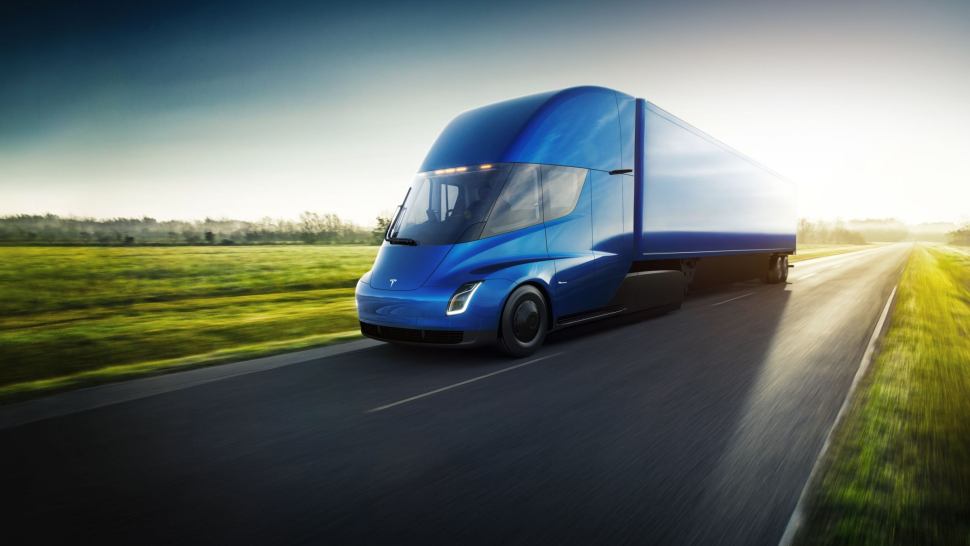
In a conference call discussing the quarter, CEO Elon Musk did not mention theTesla Semi Class 8 truck. The Semi was introduced in 2017 with production targeted for 2019. It has been delayed several more times.
Jerome Guillen, who was overseeing the Semi program, left Tesla in June, renewing questions about when the electric trucks would be seen as more than prototypes.
Now, because a short supply of battery cells is allocated to profitable passenger cars, Musk does not discuss the Semi. He also was vague on production timing for the polarizing but wildly popular Cybertruck pickup, expected to be in production at a new Tesla Gigafactory in Austin, Texas, this year.
Returning to a common concern on the difficulty of manufacturing at scale, Musk said making prototypes and small batches of vehicles is easy but ramping production is “insanely difficult.”
For example, he said the Tesla Gigafactory in Shanghai was completed in a lightning-fast 11 months, but ramping to full production of the Model Y took more than a year.
“It’s going to move as fast as the slowest of the rough-order-of-magnitude of 10,000 unique parts and processes,” Musk said.
Parts availability will drive second-half production
“I think the Cybertruck ramp will be difficult because it’s such a new architecture,” Musk said. “It might be our best product ever, but it has a lot of fundamentally new design ideas. Nobody’s ever really made a car like this before, so there will be challenges because there is so much unexplored territory.”
Tesla Chief Financial Officer Zach Kirkhorn said “volume growth will be determined by part availability” at the new plants in Austin, Berlin and the recently completed Shanghai plant.
“We have the factory capacity ready and are in a strong demand position,” he said.
Despite ongoing shortages of microchips and other parts critical to finishing production, Musk maintained his expectation that Tesla can grow production by at least 50% in 2022.
The positive financials came against a backdrop of negative news, including several recalls in China and the U.S. and a delay in deliveries of the flagship Model S Plaid.
Related articles:
Semi tough: Tesla electric Class 8 truck leader departs company
Tesla mum on Semi progress as it posts record income
FreightTech25: 2020 has been a wild ride for automaker Tesla
Brokerage Compliance Symposium
The day before F3. Every compliance issue you face - fraud exposure, carrier liability, FMCSA rules, cargo theft, insurance gaps - navigated by attorneys and operators defining best practices in a changing industry.
F3 Awards Dinner
The night before F3. FreightTech100 companies honored. FreightTech 25 and Shipper of Choice winners revealed live. Cocktail reception into dinner and live music - 300 industry leaders in one purpose-built room.
F3: Future of Freight Festival
Industry-defining keynotes, rapid-fire technology demos, and industry leaders networking in experiences across Chattanooga - plus the inaugural F3 Awards Dinner featuring the FreightTech and Shipper of Choice reveals.
The day before F3. Every compliance issue you face - fraud exposure, carrier liability, FMCSA rules, cargo theft, insurance gaps - navigated by attorneys and operators defining best practices in a changing industry.
The Signal at Chattanooga Choo Choo • Chattanooga, TN Register NowThe night before F3. FreightTech100 companies honored. FreightTech 25 and Shipper of Choice winners revealed live. Cocktail reception into dinner and live music - 300 industry leaders in one purpose-built room.
The Signal at Chattanooga Choo Choo • Chattanooga, TN Register NowIndustry-defining keynotes, rapid-fire technology demos, and industry leaders networking in experiences across Chattanooga - plus the inaugural F3 Awards Dinner featuring the FreightTech and Shipper of Choice reveals.
The Signal at Chattanooga Choo Choo • Chattanooga, TN Register Now