




The Federal Aviation Administration last week issued fines to three companies for alleged violations of hazardous material regulations after shipping lithium-ion batteries on FedEx and UPS cargo aircraft. In two of the incidents, a package of batteries caught on fire.
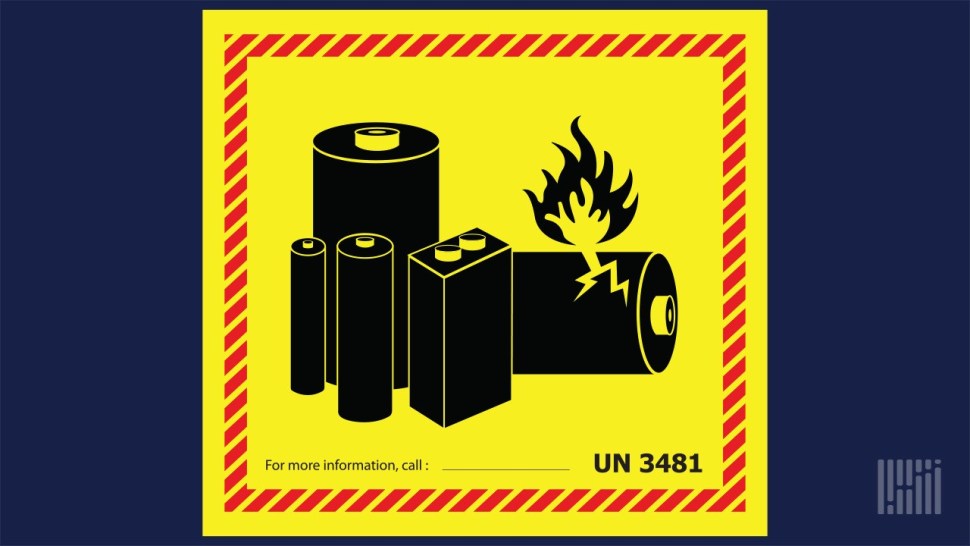
Lithium-ion batteries pose chemical and electrical hazards during transport — especially if they are damaged, improperly packaged, or short-circuited.
Regulations from the U.S. Department of Transportation, International Air Transport Association (IATA), and major carriers like FedEx and UPSclassify lithium batteries as Class 9 dangerous goods and enforce strict packaging and labeling requirements.
The FAA slapped Mobile Sentrix, based in Manassas, Virginia, with a $170,000 civil penalty for tendering undeclared and improperly packaged shipments of mobile phone lithium-ion batteries to FedEx on four occasions last year, including one incident in which a small fire occurred and three batteries melted together.
Ontario, California-based Mokwheel Bikes was fined $74,250 for offering an undeclared hazmat shipment containing lithium-ion batteries in late 2023 to UPS for air transport to Shenzhen, China. The FAA said the company also failed to provide proper hazardous material training for employees and include emergency response information in shipping papers.
UPS personnel discovered the shipment at the company’s sorting facility in Anchorage, en route to China, the agency said in a news release.
The FAA also fined LG Energy Solution of Seoul, South Korea, $60,000 for not declaring and labeling a package with five lithium-ion batteries shipped to Los Angeles through FedEx. FedEx workers discovered the shipment when it emitted heat, smoke, ember and flames in its sorting facility in Irvine, California. One or more of the lithium-ion batteries was charred and melted.
The FAA alleges on Jan. 4, 2024, the company offered an undeclared and improperly packaged and labeled shipment of five lithium-ion batteries from Seoul to Los Angeles. FedEx personnel discovered the shipment when it emitted heat, smoke, ember, and flames in its sorting facility in Irvine, California. One or more of the lithium-ion batteries was charred and melted.
None of the shipments from the companies were properly classified, described, marked, labeled, or packaged to prevent sparks or heat transfer, the FAA said.
Lithium-ion batteries can be carried by air depending on their configuration and other specifications.
The airline industry has warned for years about the need for better enforcement of hazmat rules as lithium-ion batteries become ubiquitous and uneducated or unscrupulous shippers increasingly send shipments that could pose a threat to aircraft.
Shipments of lithium batteries must comply with well-established global safety standards for how they are manufactured, tested, packed, marked, labeled and documented. IATA has developed in-depth guidance on proper battery handling for shippers, freight forwarders, ground handlers, airlines and passengers.
Click here for more FreightWaves/American Shipper stories by Eric Kulisch.
Write to Eric Kulisch at ekulisch@freightwaves.com.
RELATED STORIES:
Maersk Air Cargo expands freighter network to South America
Amazon promises equal priority for third-party air cargo, own parcels
F3: Future of Freight Festival
Industry-defining keynotes, rapid-fire technology demos, and industry leaders networking in experiences across Chattanooga - plus the inaugural F3 Awards Dinner featuring the FreightTech and Shipper of Choice reveals.
Industry-defining keynotes, rapid-fire technology demos, and industry leaders networking in experiences across Chattanooga - plus the inaugural F3 Awards Dinner featuring the FreightTech and Shipper of Choice reveals.
The Signal at Chattanooga Choo Choo • Chattanooga, TN Register Now