




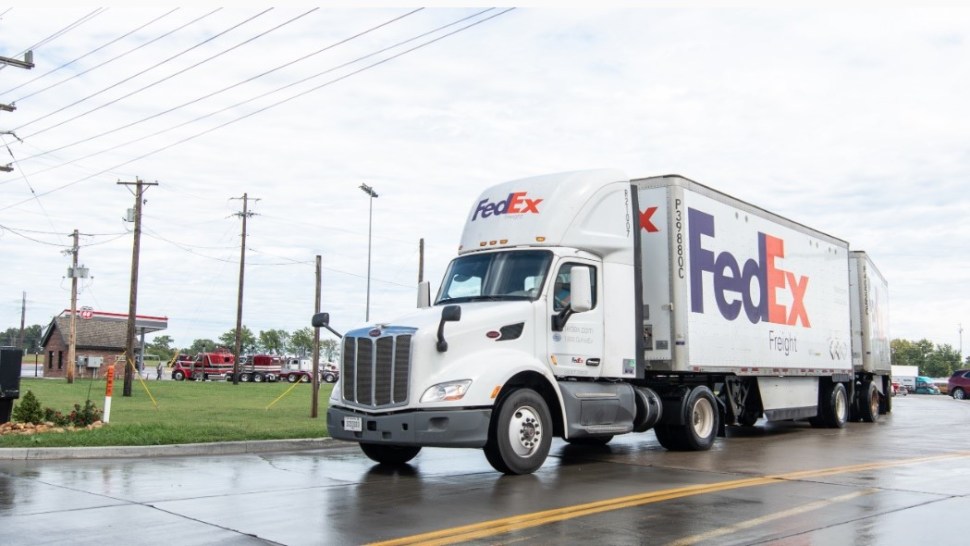
FedEx Corp. is officially moving forward with the spinoff of its less-than-truckload unit, FedEx Freight, following formal approval from its board of directors. The Memphis-based company announced Wednesday that the separation is set to conclude by June 1.
Under the approved plan, FedEx (NYSE: FDX) will execute a pro rata distribution of 80.1% of FedEx Freight’s outstanding common stock to its shareholders. Investors of record as of Friday will receive one share of the new standalone company for every two shares of FedEx held. FedEx will retain a 19.9% stake in FedEx Freight, which it intends to dispose of within 24 months through debt repayment or dividend distributions to shareholders.
“Today’s announcement is an important step as we prepare for a seamless separation of the FedEx Freight business on June 1,” said Brad Martin, executive chairman of FedEx’s board and incoming chairman of FedEx Freight’s board. “As separate organizations, FedEx and FedEx Freight will build on their respective industry leadership positions to serve customers with excellence, while creating value for their stockholders.”
FedEx Freight, the nation’s largest LTL carrier, is scheduled to begin trading on the New York Stock Exchange under the ticker symbol “FDXF” on June 1, while the legacy company will continue trading under “FDX.”
The company said the distribution is expected to be tax-free for U.S. federal income tax purposes.
By splitting the freight operations from its broader express and ground networks, FedEx aims to provide investors with more targeted exposure to the LTL market while allowing the legacy business to focus on its transformation strategy.
FedEx began LTL operations in 1998 with the acquisition of Viking Freight. It acquired American Freightways in 2001 and Watkins Motor Lines in 2006. In 2011, it merged its national (Watkins) and regional (Viking and American Freightways) operations into one network offering priority and economy services.
FedEx Freight has 40,000 employees, 365 terminals (26,000 doors) and 30,000 vehicles (17,000 tractors), generating approximately $9 billion in annual revenue.
Brokerage Compliance Symposium
The day before F3. Every compliance issue you face - fraud exposure, carrier liability, FMCSA rules, cargo theft, insurance gaps - navigated by attorneys and operators defining best practices in a changing industry.
F3 Awards Dinner
The night before F3. FreightTech100 companies honored. FreightTech 25 and Shipper of Choice winners revealed live. Cocktail reception into dinner and live music - 300 industry leaders in one purpose-built room.
F3: Future of Freight Festival
Industry-defining keynotes, rapid-fire technology demos, and industry leaders networking in experiences across Chattanooga - plus the inaugural F3 Awards Dinner featuring the FreightTech and Shipper of Choice reveals.
The day before F3. Every compliance issue you face - fraud exposure, carrier liability, FMCSA rules, cargo theft, insurance gaps - navigated by attorneys and operators defining best practices in a changing industry.
The Signal at Chattanooga Choo Choo • Chattanooga, TN Register NowThe night before F3. FreightTech100 companies honored. FreightTech 25 and Shipper of Choice winners revealed live. Cocktail reception into dinner and live music - 300 industry leaders in one purpose-built room.
The Signal at Chattanooga Choo Choo • Chattanooga, TN Register NowIndustry-defining keynotes, rapid-fire technology demos, and industry leaders networking in experiences across Chattanooga - plus the inaugural F3 Awards Dinner featuring the FreightTech and Shipper of Choice reveals.
The Signal at Chattanooga Choo Choo • Chattanooga, TN Register Now