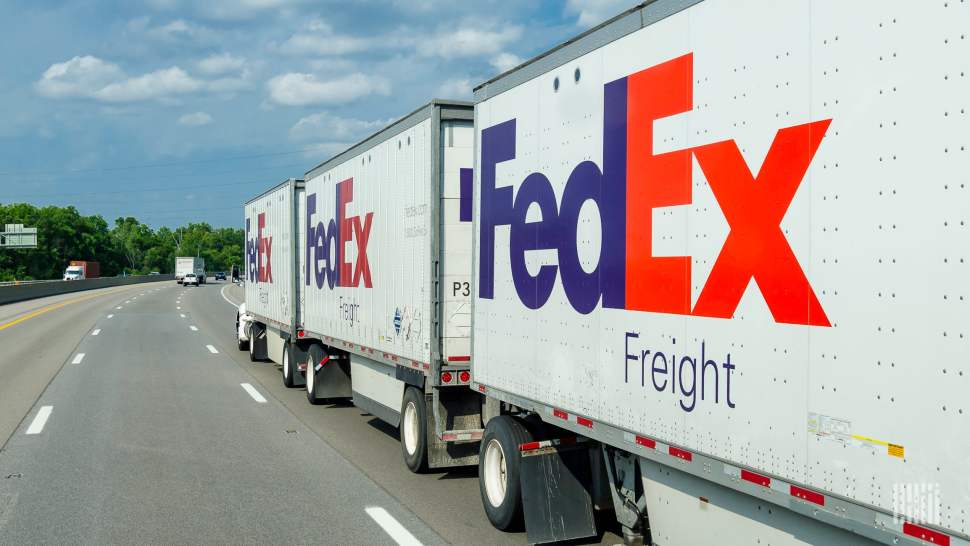
Global shipping giant FedEx has sued the U.S. government seeking a full refund of emergency tariffs imposed by President Donald Trump, days after the U.S. Supreme Court ruled the duties illegal.
FedEx (NYSE: FDX) filed its complaint in the U.S. Court of International Trade, asking for reimbursement of all tariffs it paid under the International Emergency Economic Powers Act (IEEPA), the statute the high court said the administration exceeded in using to justify sweeping “reciprocal” tariffs.
The lawsuit names U.S. Customs and Border Protection, its commissioner and the United States as defendants.
Washington-based law firm Crowell & Moring, which represents FedEx, is also handling similar tariff refund cases for major importers including Costco (Nasdaq: COST), Revlon and EssilorLuxottica, according to Reuters.
The move follows last week’s 6-3 Supreme Court decision striking down Trump’s global tariffs imposed under emergency powers, finding them unconstitutional.
The Treasury Department had collected more than $133 billion from tariffs imposed under the emergency law as of December, with long-term impacts estimated in the trillions over the next decade.
Retailers are urging courts to move quickly. The National Retail Federation said the ruling “provided certainty” for U.S. businesses and called for a “seamless process” to refund importers, arguing the reimbursements would allow companies to reinvest in operations and employees.
President Trump, however, has vowed to continue pursuing tariffs through other legal avenues. After the Supreme Court decision, he signaled he could impose new levies of 10% to 15% and warned foreign governments against “play[ing] games” with the ruling.
In social media posts, he said he could use licenses and other tariff authorities “in a much more powerful and obnoxious way.”
One option under consideration is Section 122 of the Trade Act of 1974, which allows the president to impose tariffs of up to 15% for 150 days, though any extension would require congressional approval.
Brokerage Compliance Symposium
The day before F3. Every compliance issue you face - fraud exposure, carrier liability, FMCSA rules, cargo theft, insurance gaps - navigated by attorneys and operators defining best practices in a changing industry.
F3 Awards Dinner
The night before F3. FreightTech100 companies honored. FreightTech 25 and Shipper of Choice winners revealed live. Cocktail reception into dinner and live music - 300 industry leaders in one purpose-built room.
F3: Future of Freight Festival
Industry-defining keynotes, rapid-fire technology demos, and industry leaders networking in experiences across Chattanooga - plus the inaugural F3 Awards Dinner featuring the FreightTech and Shipper of Choice reveals.
The day before F3. Every compliance issue you face - fraud exposure, carrier liability, FMCSA rules, cargo theft, insurance gaps - navigated by attorneys and operators defining best practices in a changing industry.
The Signal at Chattanooga Choo Choo • Chattanooga, TN Register NowThe night before F3. FreightTech100 companies honored. FreightTech 25 and Shipper of Choice winners revealed live. Cocktail reception into dinner and live music - 300 industry leaders in one purpose-built room.
The Signal at Chattanooga Choo Choo • Chattanooga, TN Register NowIndustry-defining keynotes, rapid-fire technology demos, and industry leaders networking in experiences across Chattanooga - plus the inaugural F3 Awards Dinner featuring the FreightTech and Shipper of Choice reveals.
The Signal at Chattanooga Choo Choo • Chattanooga, TN Register Now