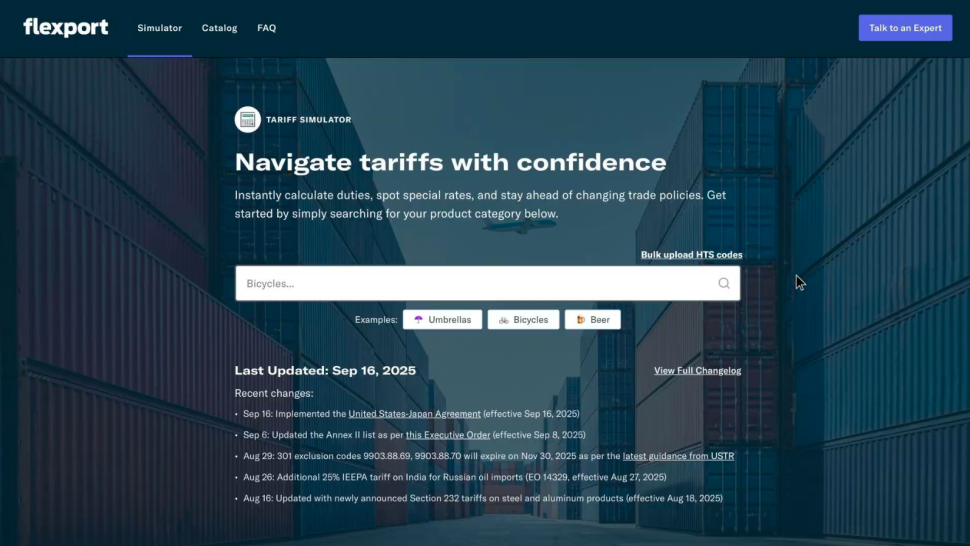
Flexport has introduced a new Customs Technology Suite designed to help importers manage tariffs, reduce costs, and navigate increasingly complex trade environments. The launch, part of the company’s broader Fall 2025 technology rollout, adds to a growing portfolio of digital tools aimed at improving visibility and efficiency across global supply chains.
The Customs Technology Suite brings together several integrated applications focused on automation, compliance, and analytics. It includes a premium version of Flexport’s Tariff Simulator, which now provides real-time alerts on tariff changes and calculates landed costs across product catalogs.
The Customs Analysis tool uses U.S. Customs and Border Protection data to identify compliance risks and potential opportunities for duty recovery, while a Compliance Audit engine reviews entries automatically rather than relying on manual spot checks.
A conversational AI chatbot allows users to query trade data directly, and enhancements to Flexport’s duty drawback algorithms are designed to help importers recover more refunds.

“Global trade is so important and yet it’s constantly slowed down by complexity, opacity, and inefficiencies,” said Ryan Petersen, Founder and CEO of Flexport. “Our goal is to make logistics as simple and reliable as flipping a light switch. With these new technologies, businesses can focus less on navigating tariffs, penalties, and hidden fees, and more on creating amazing products and driving growth.”
Many importers, especially small and midsize firms, have struggled with sudden tariff changes, inconsistent documentation, and a lack of transparency in landed cost calculations. By automating some of these processes, Flexport aims to help businesses make more informed decisions about sourcing and pricing.
The new technology can help users track duty exposure, avoid costly compliance issues, and better anticipate changes in trade policy. Flexport reports that its customers have collectively recovered more than $700 million in refunds and savings through its duty drawback operations to date, reflecting demand for greater visibility into customs processes.
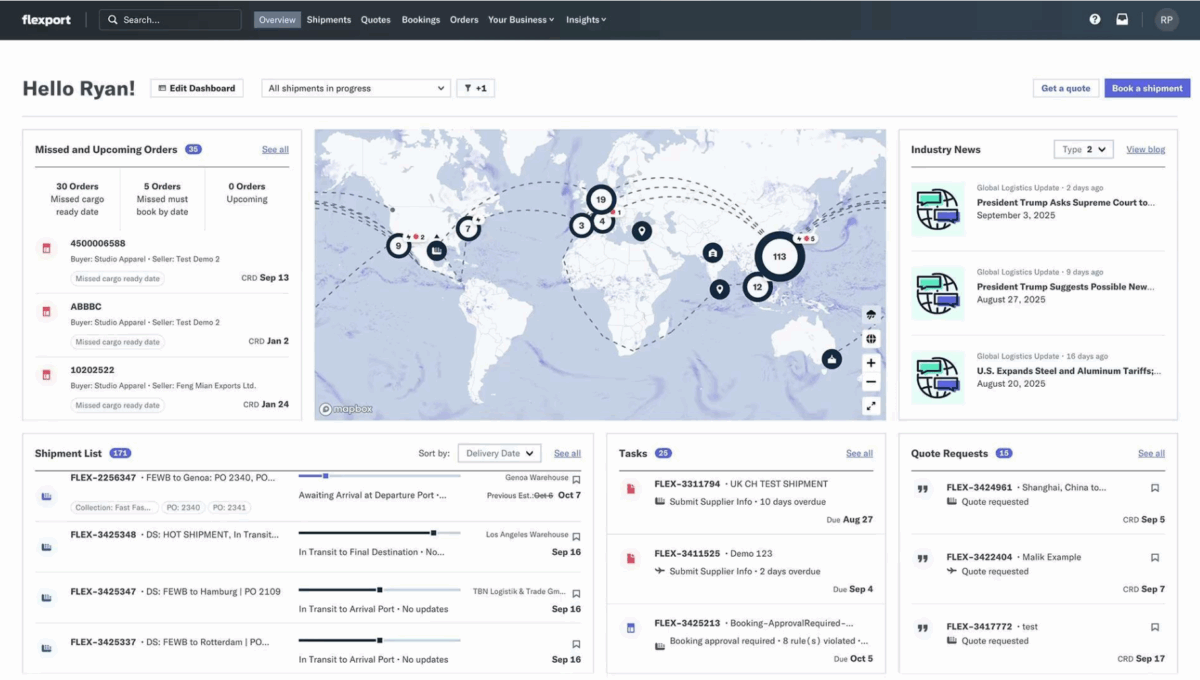
Flexport has a larger push into automation and AI-driven decision support tools. Alongside the customs platform, the company has launched additional products that alert users to demurrage and detention risks and offer public rate comparison tools to improve cost transparency.
The goal is to integrate customs, freight, and compliance data into a single platform that reduces friction and delays across international logistics operations.
While the company’s approach is part of the growing role of automation in customs management, it also highlights the challenges of applying technology to a regulatory environment that varies widely by region and product type.
Flexport’s latest rollout calls attention to a broader industry trend of automation and modernization. As trade policies shift and supply chains become more interconnected, importers are seeking systems that can deliver faster, more accurate insights into their operations.
Brokerage Compliance Symposium
The day before F3. Every compliance issue you face - fraud exposure, carrier liability, FMCSA rules, cargo theft, insurance gaps - navigated by attorneys and operators defining best practices in a changing industry.
F3 Awards Dinner
The night before F3. FreightTech100 companies honored. FreightTech 25 and Shipper of Choice winners revealed live. Cocktail reception into dinner and live music - 300 industry leaders in one purpose-built room.
F3: Future of Freight Festival
Industry-defining keynotes, rapid-fire technology demos, and industry leaders networking in experiences across Chattanooga - plus the inaugural F3 Awards Dinner featuring the FreightTech and Shipper of Choice reveals.
The day before F3. Every compliance issue you face - fraud exposure, carrier liability, FMCSA rules, cargo theft, insurance gaps - navigated by attorneys and operators defining best practices in a changing industry.
The Signal at Chattanooga Choo Choo • Chattanooga, TN Register NowThe night before F3. FreightTech100 companies honored. FreightTech 25 and Shipper of Choice winners revealed live. Cocktail reception into dinner and live music - 300 industry leaders in one purpose-built room.
The Signal at Chattanooga Choo Choo • Chattanooga, TN Register NowIndustry-defining keynotes, rapid-fire technology demos, and industry leaders networking in experiences across Chattanooga - plus the inaugural F3 Awards Dinner featuring the FreightTech and Shipper of Choice reveals.
The Signal at Chattanooga Choo Choo • Chattanooga, TN Register Now