
This article is contributed content from an independent writer. It does not represent the views or opinions of FreightWaves or any of its subsidiaries.
A trucking company hauling an Amazon Prime trailer had lost its operating authority, returned to service and accumulated safety violations before a crash injured three people on a New Mexico interstate, according to a lawsuit challenging Amazon’s carrier selection and oversight practices. New Mexico State Police cited the truck’s driver for careless driving after the collision.
The amended complaint filed against Amazon in July, alleges Amazon allowed Road Warriors Logistic to transport freight before the carrier met Amazon’s own requirement for 180 days of active operating authority. The plaintiffs contend the warning signs continued after the carrier began hauling Amazon loads, including safety violations and another crash less than a month before the collision at issue. Their central carrier selection allegation is that Amazon failed to follow the standard it had set for itself.
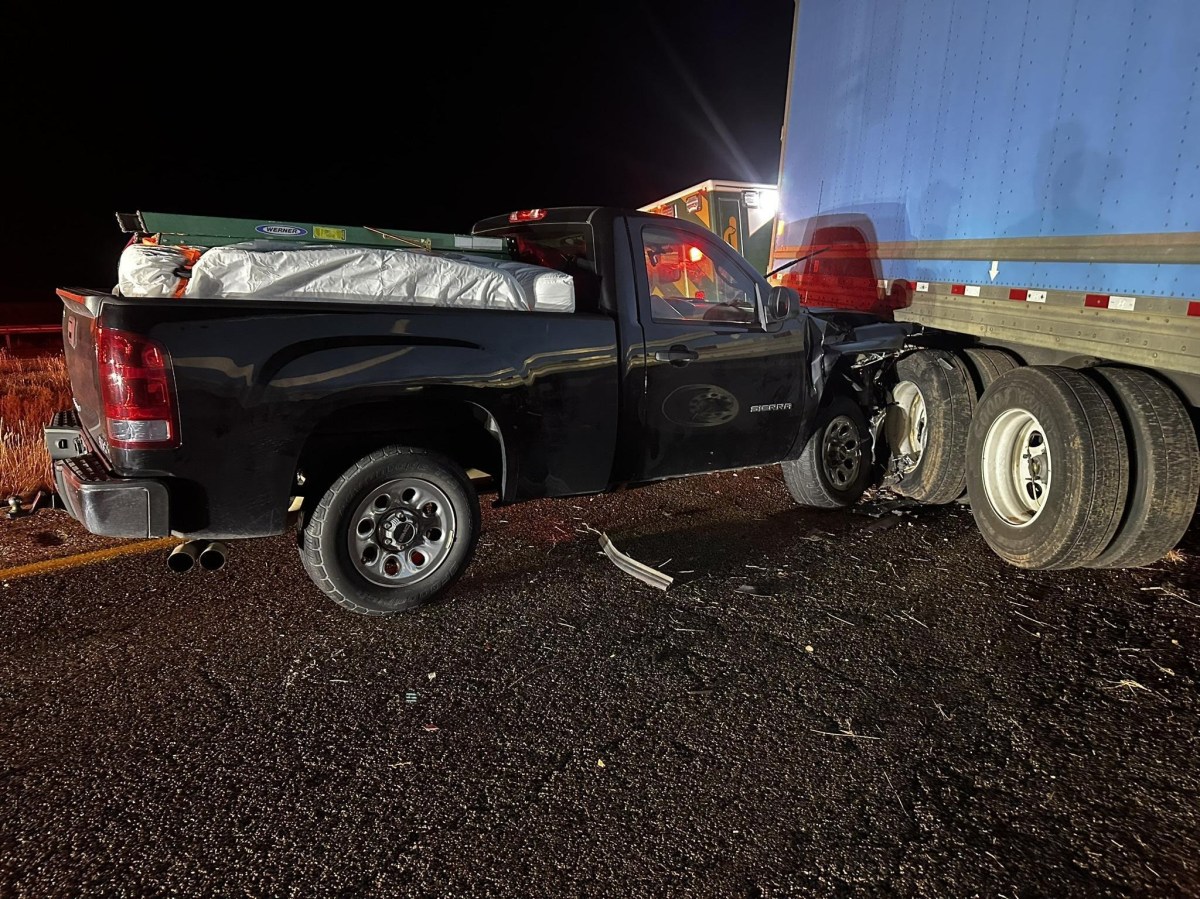
The collision occurred on Oct. 25, 2024, in New Mexico. According to the complaint, Harmanpreet Singh was driving a Road Warriors tractor pulling an Amazon trailer when he lost control, crossed the median and entered opposing traffic. The truck struck another commercial truck before jackknifing across both eastbound lanes, colliding with the plaintiffs’ vehicles and causing serious injuries. The New Mexico State Police report says Singh was cited for careless driving. The investigating officer wrote that the truck crossed the median “for unknown reasons.”
At the center of the carrier selection allegations is Road Warriors’ operating history. According to the complaint, the company received operating authority in May 2021, but that authority was involuntarily revoked in May 2022. The plaintiffs allege Road Warriors had its authority reinstated May 8, 2024. By July, they say, the carrier was hauling Amazon Relay freight despite having only about two months of reinstated authority. The plaintiffs cite Amazon’s public 2023 Relay requirements specifying a minimum of 180 days of active authority.
For Cassandra Gaines, a transportation attorney and expert witness specializing in broker liability and carrier selection, the allegations show what can happen when a company’s carrier decisions depart from its written requirements. “A written policy gives employees a rule to follow and gives a jury a rule to measure them against,” Gaines said. “If a carrier does not meet that rule, the question becomes who allowed the load to move and why.”
Authority history makes that question particularly important. “It helps brokers and shippers assess a carrier’s operating experience and the safety record available for review,” Gaines said. “Limited or interrupted authority may leave less recent history to evaluate, and an interruption calls for a closer look at why it occurred. That is why many companies make a minimum period of active consistent authority a firm eligibility requirement.”
The complaint also describes safety concerns that allegedly developed before the October collision. It identifies hours of service violations in July and August 2024, six vehicle maintenance violations on Sept. 13, and a Sept. 30 crash while the carrier was operating for Amazon Relay. The timeline also lists an unsafe driving violation and three maintenance violations on Sept. 30.
Another unsafe driving violation allegedly occurred Oct. 7, just 18 days before the crash involving the plaintiffs. The plaintiffs argue that the available information should have prompted Amazon to investigate the carrier’s safety fitness before continuing to entrust it with freight and equipment.
Amazon’s Relay technology is another focus of the lawsuit. The plaintiffs allege Amazon exercised extensive control over transportation through load assignments, delivery appointments, routing expectations, performance monitoring and the ability to restrict access to future freight. They also allege Amazon personnel intervened when shipments were delayed, communicating with drivers and dispatchers, changing schedules and arranging replacement equipment or drivers.
Those allegations underpin the plaintiffs’ effort to hold Amazon responsible for the conduct of Road Warriors and Singh. The allegations have not been established by the complaint itself. Defense responses were not included in the materials reviewed for this article.
Gaines developed the CAVRA Carrier Vetting Industry Standard to help companies build practical carrier selection and monitoring policies. Her advice to brokers and shippers is to examine whether their procedures work under everyday operational pressure. “Write rules your business can actually follow, train the people assigning freight and make the escalation decision before the load moves,” Gaines said. “If you repeatedly depart from your own written standard, the policy becomes evidence of what your company knew it should have done.”
Cassandra Gaines is a transportation attorney, founder and CEO of Carrier Assure and an expert witness in matters involving broker and shipper liability, carrier selection, trucking safety, and transportation risk management. She has published widely recognized carrier vetting frameworks and has spent more than a decade advising transportation companies on carrier qualification, broker liability and transportation risk. Gaines was previously recognized by Business Insider as one of its “100 People Transforming Business in North America.”
Brokerage Compliance Symposium
The day before F3. Every compliance issue you face - fraud exposure, carrier liability, FMCSA rules, cargo theft, insurance gaps - navigated by attorneys and operators defining best practices in a changing industry.
F3 Awards Dinner
The night before F3. FreightTech100 companies honored. FreightTech 25 and Shipper of Choice winners revealed live. Cocktail reception into dinner and live music - 300 industry leaders in one purpose-built room.
F3: Future of Freight Festival
Industry-defining keynotes, rapid-fire technology demos, and industry leaders networking in experiences across Chattanooga - plus the inaugural F3 Awards Dinner featuring the FreightTech and Shipper of Choice reveals.
The day before F3. Every compliance issue you face - fraud exposure, carrier liability, FMCSA rules, cargo theft, insurance gaps - navigated by attorneys and operators defining best practices in a changing industry.
The Signal at Chattanooga Choo Choo • Chattanooga, TN Register NowThe night before F3. FreightTech100 companies honored. FreightTech 25 and Shipper of Choice winners revealed live. Cocktail reception into dinner and live music - 300 industry leaders in one purpose-built room.
The Signal at Chattanooga Choo Choo • Chattanooga, TN Register NowIndustry-defining keynotes, rapid-fire technology demos, and industry leaders networking in experiences across Chattanooga - plus the inaugural F3 Awards Dinner featuring the FreightTech and Shipper of Choice reveals.
The Signal at Chattanooga Choo Choo • Chattanooga, TN Register Now