This story has been updated here and here with follow-up coverage.
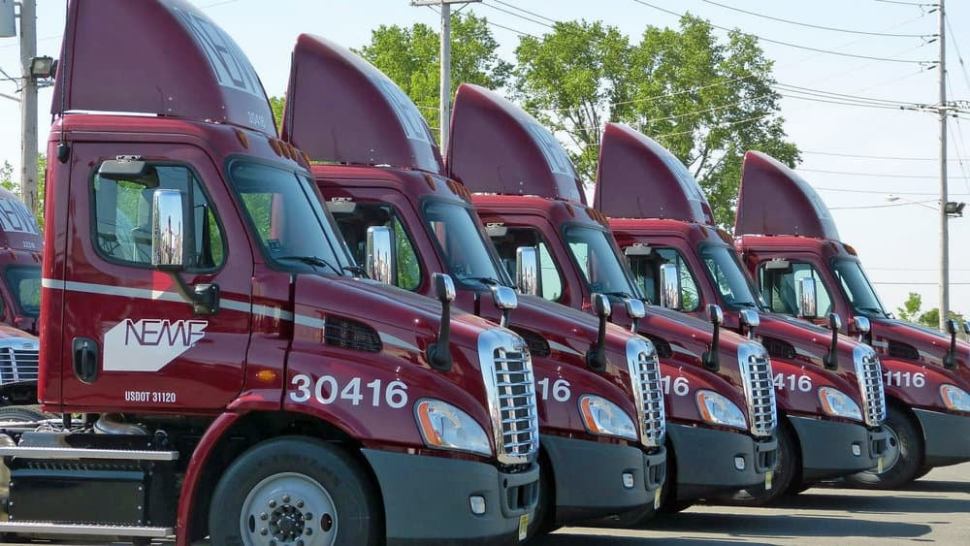
Less-than-truckload (LTL) carrier New England Motor Freight, Inc. (NEMF) stunned the transportation world late today by filing for bankruptcy protection and saying it would go out of business.
The Elizabeth, New Jersey-based carrier, which was founded in 1977 but whose roots date back 101 years, said it would use the bankruptcy proceedings to conduct an “orderly wind-down” of its business. After two years of losses, the company concluded that the combination of high labor costs and a “severe” driver shortage made it unsustainable to continue as a going concern.
NEMF’s is the nation’s 19th-largest LTL carrier with 2017 revenues of more than $402 million. Its network covers all of New England, the Northeast, the Middle Atlantic, parts of the Midwest and two Canadian provinces. It will be the largest shutdown of a U.S. trucking company since Consolidated Freightways, Inc. suddenly went under in the fall of 2002.
While industry watchers knew NEMF was having problems, no one had anticipated a bankruptcy filing and a subsequent shutdown. What’s more, LTL capacity is currently so tight that it will be impossible to efficiently absorb all of NEMF’s volumes at prices that shippers have been accustomed to, said Satish Jindel, who heads consultancy ShipMatrix and is familiar with NEMF’s operations. “There isn’t enough supply in the market to handle this,” he said in an interview late today.
According to Jindel, NEMF was weighed down by “onerous” contracts with several very large shippers, one of them being Amazon.com, Inc. (NASDAQ:AMZN). The contracts not only forced NEMF to operate on very thin margins, but made it difficult for the carrier to effectively serve other accounts that delivered better margins, Jindel said.
NEMF’s bankruptcy and closure should serve as a cautionary tale to shippers that took advantage of the carrier, and will now find themselves paying more to have their freight hauled, Jindel said. It also deals a devastating blow to Myron P. Shavell, who acquired the present-day NEMF in 1977 when it was in deep financial trouble, built it into the country’s fastest-growing family-owned LTL carrier, and at 84 years of age, will now watch it pass into history.
Brokerage Compliance Symposium
The day before F3. Every compliance issue you face - fraud exposure, carrier liability, FMCSA rules, cargo theft, insurance gaps - navigated by attorneys and operators defining best practices in a changing industry.
F3 Awards Dinner
The night before F3. FreightTech100 companies honored. FreightTech 25 and Shipper of Choice winners revealed live. Cocktail reception into dinner and live music - 300 industry leaders in one purpose-built room.
F3: Future of Freight Festival
Industry-defining keynotes, rapid-fire technology demos, and industry leaders networking in experiences across Chattanooga - plus the inaugural F3 Awards Dinner featuring the FreightTech and Shipper of Choice reveals.
The day before F3. Every compliance issue you face - fraud exposure, carrier liability, FMCSA rules, cargo theft, insurance gaps - navigated by attorneys and operators defining best practices in a changing industry.
The Signal at Chattanooga Choo Choo • Chattanooga, TN Register NowThe night before F3. FreightTech100 companies honored. FreightTech 25 and Shipper of Choice winners revealed live. Cocktail reception into dinner and live music - 300 industry leaders in one purpose-built room.
The Signal at Chattanooga Choo Choo • Chattanooga, TN Register NowIndustry-defining keynotes, rapid-fire technology demos, and industry leaders networking in experiences across Chattanooga - plus the inaugural F3 Awards Dinner featuring the FreightTech and Shipper of Choice reveals.
The Signal at Chattanooga Choo Choo • Chattanooga, TN Register Now