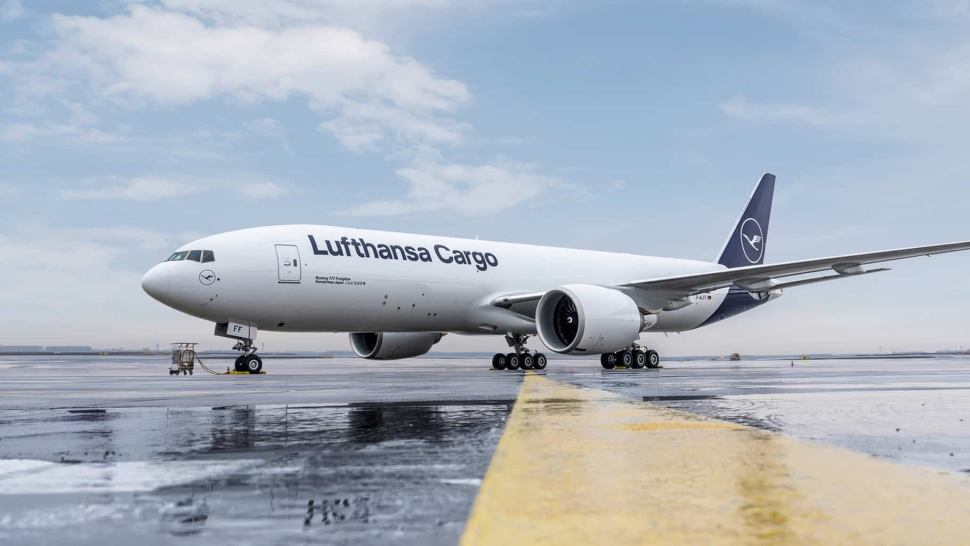
The world’s airlines have enough challenges handling conventional cargo, let alone cross-border e-commerce with a universe of consumers who can be more demanding than even the toughest shipping manager.
Still, the potential of cross-border e-commerce is too tempting to ignore. That is why Lufthansa Cargo, the cargo unit of the German flag carrier, has formed a subsidiary called “heyworld” to manage the business. Even Lufthansa, which is one of the world’s most cargo-oriented carriers, knows that it lacks the resources, expertise and the organizational clout to attempt to crack cross-border e-commerce without creating a dedicated subsidiary to do it.
In a statement announcing the move, Lufthansa acknowledged as much, stating that while it is comfortable handling air mail and as the “classic air freight business,” the new standards and multiple layers of digitization “go beyond the conventional core business of a cargo airline.”
heyworld plans to leverage Lufthansa Cargo’s airport-to-airport air cargo services and to integrate optional services such as first- and last-mile transfers and handling add-ons. Lufthansa operates 19 freighter aircraft and 350 passenger planes with belly freight capabilities. It is one of the few airlines in the world that elevates cargo to a level of importance that comes close to – though hardly surpassing – its passenger segment.
The heyworld service will be available to all customers, including freight forwarders that are the core of Lufthansa’s traditional offering and who clamor for the capabilities from their airline partners needed to market an executable cross-border delivery service. Brian Bourke, vice president, marketing for multi-national freight forwarder Seko Worldwide, said Lufthansa’s involvement “can only help” to satisfy the growing demand for cross-border e-commerce. In forming its own e-commerce unit, Lufthansa is following the lead of several Asian carriers, Bourke said.
Freight forwarders do not own any airplanes and rely heavily on main-deck and belly cargo space offered by the airlines. They work on behalf of air shippers to secure favorable capacity and then manage the end-to-end delivery process.
Cross-border e-commerce volumes are expected to grow between 17 to 21 percent a year from 2017 to 2021, according to data from e-commerce provider Pitney Bowes. At that rate, annual cross-border volumes – which are almost exclusively business-to-consumer deliveries – will far exceed 100 billion pieces by the end of 2021.
Demand will be sustained by the billions of new consumers, many in developing nations, who will gain access to the Internet and the ability to buy items they cannot purchase in their home markets or can purchase in other countries at a cheaper price. In parts of the world such as Africa, there are so few shopping malls north of South Africa that digital commerce will be the only way to go.
American brands, in particular, will benefit as consumers increasingly covet the U.S. consumer product cache and will be willing to spend the money for American-made goods. Whether they expect to get free shipping, especially when air services are so expensive, is another matter. Many believe that businesses that nail the shipping part of the transaction will stand tall with consumers. A 2017 survey by transport giant DHL concluded that retailers and manufacturers that offer a “premium” shipping service grow 1.6 times as fast as those who don’t.
The complexities of cross-border e-commerce is arguably the main reason that Lufthansa established a dedicated unit. Country-specific websites and mobile payment systems must be built with customized content containing time zone, language, currency and landed-cost details for the end consumer. Compliance is also critical, as each country and region has its own laws, regulations and cultural rituals.
In addition, most customs inspectors are unfamiliar with cross-border e-commerce transactions and the parties involved in them. The traditional international air shipment moves in pallets and containers, and as part of a B2B transaction. Cross-border e-commerce often moves in one- or two-item quantities, and typically between a merchant and a consumer. The B2B channel involves participants known in the customs chain, while the B2C channel includes players that are unfamiliar to inspectors.
Brokerage Compliance Symposium
The day before F3. Every compliance issue you face - fraud exposure, carrier liability, FMCSA rules, cargo theft, insurance gaps - navigated by attorneys and operators defining best practices in a changing industry.
F3 Awards Dinner
The night before F3. FreightTech100 companies honored. FreightTech 25 and Shipper of Choice winners revealed live. Cocktail reception into dinner and live music - 300 industry leaders in one purpose-built room.
F3: Future of Freight Festival
Industry-defining keynotes, rapid-fire technology demos, and industry leaders networking in experiences across Chattanooga - plus the inaugural F3 Awards Dinner featuring the FreightTech and Shipper of Choice reveals.
The day before F3. Every compliance issue you face - fraud exposure, carrier liability, FMCSA rules, cargo theft, insurance gaps - navigated by attorneys and operators defining best practices in a changing industry.
The Signal at Chattanooga Choo Choo • Chattanooga, TN Register NowThe night before F3. FreightTech100 companies honored. FreightTech 25 and Shipper of Choice winners revealed live. Cocktail reception into dinner and live music - 300 industry leaders in one purpose-built room.
The Signal at Chattanooga Choo Choo • Chattanooga, TN Register NowIndustry-defining keynotes, rapid-fire technology demos, and industry leaders networking in experiences across Chattanooga - plus the inaugural F3 Awards Dinner featuring the FreightTech and Shipper of Choice reveals.
The Signal at Chattanooga Choo Choo • Chattanooga, TN Register Now