A fast-growing Mexican logistics technology platform built by former e-commerce operators is entering the U.S. market this year, betting that software designed around real-world shipping pain points can compete in one of the world’s most concentrated parcel markets.
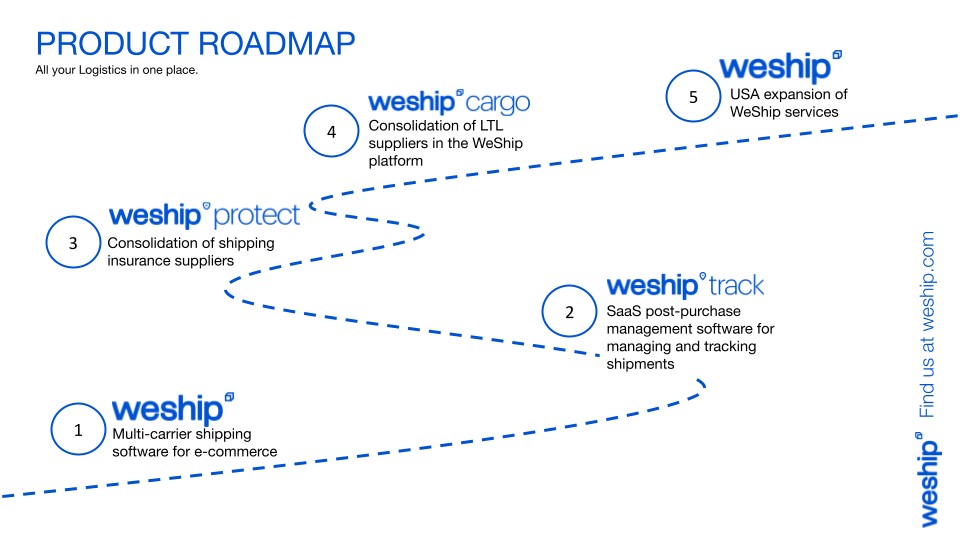
WeShip, a Monterrey, Mexico-based, multi-carrier shipping platform, is launching U.S. domestic parcel services in 2026 as the first phase of a broader strategy that ultimately includes U.S.–Mexico cross-border shipping and freight services, co-founders Luis Alanis and Adrian Galan told FreightWaves in an interview.
WeShip’s U.S. expansion will initially focus on domestic parcel shipping, serving existing customers that already operate on both sides of the border. The company plans to layer in cross-border parcel capabilities later, followed by freight services.
Compared to Mexico’s highly fragmented last-mile market, the U.S. parcel sector is dominated by just a few carriers — a dynamic the founders believe will simplify their rollout.
“In Mexico there are many more carriers and integrations,” Alanis, WeShip’s CTO, said. “In the U.S., it’s more concentrated. We think it will actually be easier to launch there.”
Founded in 2021, WeShip connects parcel carriers with e-commerce platforms, allowing merchants to manage shipments, compare rates, monitor delivery performance and track customs status from a single interface.
“We basically connect carriers with e-commerce platforms. Carriers such as FedEx, UPS, Zafeta, and the United States Postal Service in the near future,” Galan, WeShip’s CEO said.
“Then we connect them with marketplaces and e-commerce platforms. Customers that use our software can save up to 75% versus carrier shipping rates. We mostly serve small and medium-sized businesses (SMBs), with over a thousand customers using our software here in Mexico.
Galan said in addition to SMBs, WeShip’s clients include enterprise customers such as Costco and Movado.
Cross-border visibility as a differentiator
For cross-border shipments, WeShip already allows users to enter customs declarations, harmonized tariff codes and shipment purpose directly into its platform, while providing real-time visibility into customs status — including whether a package is held, cleared or in transit through customs.
Customers can also compare carrier performance and identify bottlenecks across warehouses, suppliers and delivery providers.
“That visibility is critical, especially for partial and parcel shipments crossing borders,” Galan said.
WeShip’s existing cross-border users ship products ranging from apparel and jewelry to industrial equipment. Some enterprise customers operate complex international supply chains, supplying U.S.-based manufacturers and aerospace firms, including SpaceX, through their customers.
WeShip has grown quickly despite remaining fully bootstrapped. The company reported revenue of $95,000 in its first year and $2.2 million last year, growing at a compound rate of roughly 120% annually, according to the founders. The team remains lean, with about 10 employees, and is profitable.
That growth has attracted the attention of major parcel carriers such as FedEx and UPS, and participates in the USPS partner program through its U.S. LLC.
“FedEx actually invited us to open an account in the United States,” Galan said. “That really accelerated our decision to launch there.”
Rapid growth — without outside capital
Unlike many logistics software startups, WeShip did not start as a technology company, the founders said. Alanis and Galan previously ran their own e-commerce operation, shipping parcels across Mexico and internationally, and built WeShip to solve their own operational frustrations.
“We were our first customers,” Galan said. “We were shipping orders every day, dealing with multiple carriers, manual processes, poor visibility and unreliable tools. We built what we wished existed.”
That operator-first approach heavily influenced the platform’s design. WeShip automates shipment creation by pulling order data directly from connected e-commerce stores and provides analytics on carrier transit times, pickup delays, warehouse processing speed and delivery performance.
“All the technology is built in-house,” said Alanis, WeShip’s chief product officer. “Adrian and I design the product together based on what customers actually need in day-to-day operations.”
What’s next
The founders pointed to Monterrey’s long history of entrepreneurship — and its growing reputation as a technology hub — as a key factor in WeShip’s development.
“There’s a strong culture of building companies here,” Galan said.
Looking ahead, WeShip expects revenue to reach $3.5 million this year, including early U.S. contributions. While the founders are open to raising outside capital in the future to support U.S. expansion, they emphasized their preference for disciplined growth.
“We’re profitable, and we want to grow in a controlled way,” Alanis said. “We’ve seen what happens when startups scale too fast.”
For now, the focus is execution — first in the U.S. domestic market, and then across the increasingly busy trade corridor between Mexico and the U.S.
Brokerage Compliance Symposium
The day before F3. Every compliance issue you face - fraud exposure, carrier liability, FMCSA rules, cargo theft, insurance gaps - navigated by attorneys and operators defining best practices in a changing industry.
F3 Awards Dinner
The night before F3. FreightTech100 companies honored. FreightTech 25 and Shipper of Choice winners revealed live. Cocktail reception into dinner and live music - 300 industry leaders in one purpose-built room.
F3: Future of Freight Festival
Industry-defining keynotes, rapid-fire technology demos, and industry leaders networking in experiences across Chattanooga - plus the inaugural F3 Awards Dinner featuring the FreightTech and Shipper of Choice reveals.
The day before F3. Every compliance issue you face - fraud exposure, carrier liability, FMCSA rules, cargo theft, insurance gaps - navigated by attorneys and operators defining best practices in a changing industry.
The Signal at Chattanooga Choo Choo • Chattanooga, TN Register NowThe night before F3. FreightTech100 companies honored. FreightTech 25 and Shipper of Choice winners revealed live. Cocktail reception into dinner and live music - 300 industry leaders in one purpose-built room.
The Signal at Chattanooga Choo Choo • Chattanooga, TN Register NowIndustry-defining keynotes, rapid-fire technology demos, and industry leaders networking in experiences across Chattanooga - plus the inaugural F3 Awards Dinner featuring the FreightTech and Shipper of Choice reveals.
The Signal at Chattanooga Choo Choo • Chattanooga, TN Register Now