




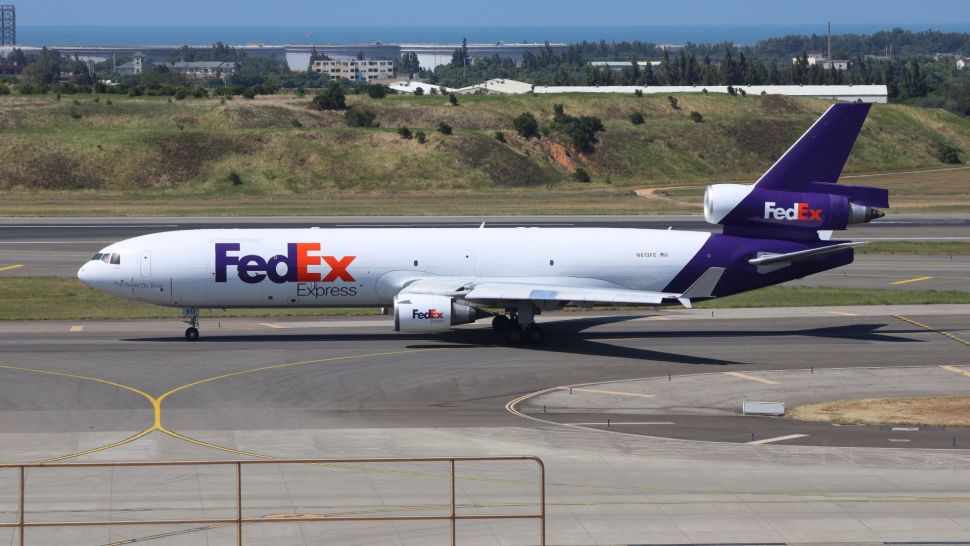
FedEx Corp. has reinstated four McDonnell Douglas MD-11 freighters since aviation authorities cleared the aircraft type to resume flying seven weeks ago while also retiring five planes last quarter, but plans to have the entire active fleet available by peak season, executives said Tuesday.
The freight transportation giant said it took a $23 million charge during its fiscal year fourth quarter, ended May 31, to write down the value of 10 aircraft that were retired, including five large MD-11 freighters.
FedEx (NYSE: FDX) also retired four Boeing 757-200 narrowbody freighters and one Airbus A300-600. The company took delivery of seven 767-300 production freighters from Boeing during the fiscal year, for a net decline of three aircraft from 2025, according to financial documents.
Over the last four years, FedEx has removed 34 cargo jets from the fleet, which represents an 8% reduction versus fiscal year 2022, as part of normal fleet modernization and a broader effort to eliminate excess ground and air capacity for better efficiency. There are 383 mainline aircraft in FedEx’s fleet, compared to 389 in fiscal year 2024.
The Federal Aviation Administration in early May cleared the way for MD-11 operators to resume commercial service after Boeing developed a new part to address a design flaw that can allow fatigue cracks to spread in the plane’s engine pylon. A UPS MD-11 freighter crashed during takeoff in November when the left engine separated from the wing. FedEx is removing engine pylons from grounded aircraft around the world and shipping them to maintenance hubs in Indianapolis and Memphis, Tennessee, where technicians can replace a critical bearing.
FedEx began operating two MD-11s on domestic routes on May 10. CEO Raj Subramaniam told analysts on an earnings call that four MD-11s have been fixed and are back in service now. The remaining 25 aircraft will be ready to support peak shipping season during the fourth quarter.
Airline officials have repeatedly said since the November accident that UPS had 29 active MD-11 jets, including four spares used when other units are unable to operate or during periods of high demand. But FedEx records show the company carried 34 MD-11s on its books until the previous quarter.
UPS opted to permanently retire its entire fleet of MD-11s following the disaster at its megahub in Louisville, Kentucky. Western Global Airlines, the only other MD-11 operator in the United States, has reactivated two MD-11s, according to aviation tracking site Flightradar24. The planes are flying under military contracts with the Pentagon to bases in Europe.
FedEx postponed the full retirement of the MD-11 fleet from 2028 until 2032 because it wanted more widebody capacity to meet rising demand as it made a strategic shift to capture more international non-parcel freight from logistics providers. Despite its age, lower maintenance reliability and high fuel burn compared to modern twin-engine planes, the tri-engine freighter remains useful because of its long range capability and high cargo capacity.
Since 2024, FedEx has prioritized capturing a greater slice of the $80 billion-to-$90 billion deferred air cargo market, especially the premium segment. The integrated courier and logistics company reorganized its air network into express parcel and deferred freight segments to maximize aircraft density and sorting efficiency on the ground. A portion of its airline now operates an international daytime schedule to carry heavy freight that doesn’t require maximum speed, allowing for the integration of air and road networks in a truck-fly-truck delivery model that is more efficient to operate than moving all goods by air.
Management has described this deferred air network as an extension of its European and U.S. less-than-truckload networks, designed to attract high-yield freight, such as pharmaceuticals, perishables, electronics and automotive components that is more profitable per pound than heavier, general consignments.
Chief Commercial Officer Brie Carere said FedEx continues to capture market share in the international air freight sector, with average daily pounds up 12% year over year.
FedEx continues to receive new aircraft under existing orders with Boeing, but the pace of additions has slowed in recent years in line with a multi-year campaign to streamline multiple air and ground networks amid slower growth in parcel volumes. FedEx spent $3.8 billion on capital expenditures in fiscal 2026. Infrastructure as a percentage of revenue is 4%, the lowest level in many years.
Click here for more FreightWaves/American Shipper stories by Eric Kulisch.
Write to Eric Kulisch at ekulisch@freightwaves.com.
RELATED STORIES:
FAA clears grounded MD-11s for return to service
FedEx, China Southern Airlines to explore cargo cooperation
FedEx pilots approve new contract, ending protracted bargaining
Brokerage Compliance Symposium
The day before F3. Every compliance issue you face - fraud exposure, carrier liability, FMCSA rules, cargo theft, insurance gaps - navigated by attorneys and operators defining best practices in a changing industry.
F3 Awards Dinner
The night before F3. FreightTech100 companies honored. FreightTech 25 and Shipper of Choice winners revealed live. Cocktail reception into dinner and live music - 300 industry leaders in one purpose-built room.
F3: Future of Freight Festival
Industry-defining keynotes, rapid-fire technology demos, and industry leaders networking in experiences across Chattanooga - plus the inaugural F3 Awards Dinner featuring the FreightTech and Shipper of Choice reveals.
The day before F3. Every compliance issue you face - fraud exposure, carrier liability, FMCSA rules, cargo theft, insurance gaps - navigated by attorneys and operators defining best practices in a changing industry.
The Signal at Chattanooga Choo Choo • Chattanooga, TN Register NowThe night before F3. FreightTech100 companies honored. FreightTech 25 and Shipper of Choice winners revealed live. Cocktail reception into dinner and live music - 300 industry leaders in one purpose-built room.
The Signal at Chattanooga Choo Choo • Chattanooga, TN Register NowIndustry-defining keynotes, rapid-fire technology demos, and industry leaders networking in experiences across Chattanooga - plus the inaugural F3 Awards Dinner featuring the FreightTech and Shipper of Choice reveals.
The Signal at Chattanooga Choo Choo • Chattanooga, TN Register Now