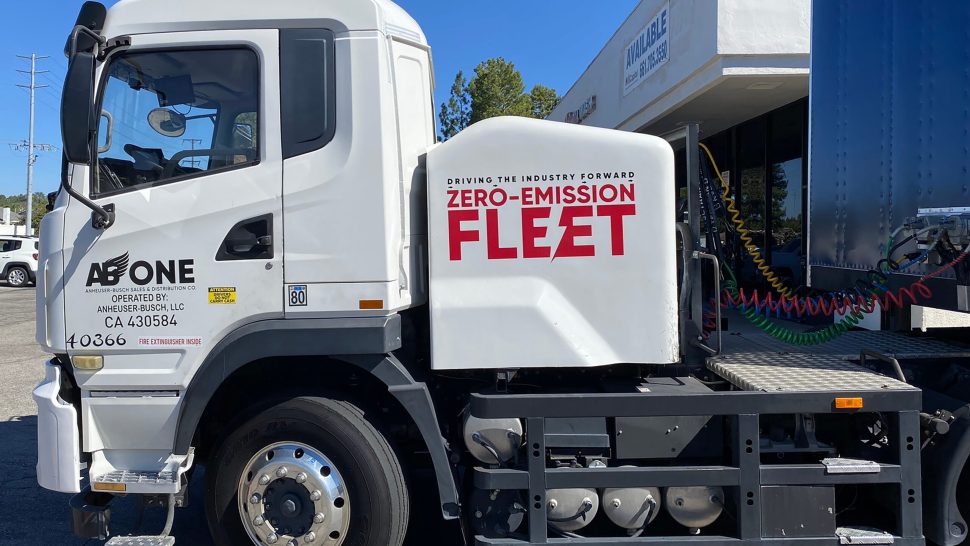
California is rolling out yet another program to incentivize the purchase of zero emission vehicles (ZEVs), this one with $1 billion in backing funded by a state clean fuel program.
The program will be funded by income from the state’s Low Carbon Fuel Standard (LCFS). The LCFS is a system of credits and mandates to incentivize the use of lower-carbon transportation fuels, like renewable diesel. Companies with low carbon mandates can reach their targets either by generating credits by consuming a low carbon fuel or by purchasing credits from those who have generated them through their own applications.
The latest sales incentive program is called California Clean Fuel Rewards (CCFR). It is described as a “point of sale” initiative for electric medium and heavy duty trucks. It is expected to begin at the end of June.
Key role for dealers
Under CCFR, the state grants truck dealerships the status and then the funding of an authorized retailer that can provide the rebates for new truck purchases.
In response to questions from FreightWaves, a spokesman for the California Air Resources Board, which will operate the program, said retailers now can apply to be granted the ability to offer the point-of-sale rebates under CCFR.
Only a handful have applied so far, the spokesman said, owing to the fact that the program only recently launched.
“An authorized retailer is one that has enrolled to participate in the program, meets the requirements, and signed all the agreements,” he said. “They will be specifically authorized for CCFR, but it is not a pre-existing list of retailers.”
He said the process to become an authorized dealer is “open to any that want to participate and meet the criteria.”
History of LCFS
The LCFS program has been in effect since 2011 when it made a limited launch. Since that time, the buying and selling of credits has become an active market. Credit prices are now about $65-$70 per metric ton, but they’ve been close to $200/mt.
LCFS backers would say the lower current prices are a sign that the program is working, that credit generation from activities such as the consumption of renewable diesel has risen so much that the price of LCFS credits is under downward pressure.
“Funded with revenue utilities generate from the state’s LCFS, the program is expected to become the largest utility-administered rebate program for electric trucks in the country, with $250 million available this year and over $1 billion in total rebate funding expected through 2030,” CARB said of the CCFR program.
Top payout: $120k
The size of the rebates are based on gross vehicle weights. A commercial truck between 8,501-10,000 pounds can get a rebate of $7,500. One in excess of 33,000 pounds, which would include class 8 vehicles, can get $120,000.
CARB’s list of the vehicles eligible for the program includes drayage trucks, electric semis, box trucks, delivery vans “and other fleet vehicles.”
Public fleets can use the CCFR program to purchase smaller vehicles, with pickup trucks cited as an example.
IN 2024, CARB said sales of ZEV trucks, big and small, totaled about 23% of all sales.
ZEV trucks used in drayage at Long Beach, a figure that is disclosed by the port every month, have been rising steadily in outright numbers. In most months, the percentage of “moves” within the ports accomplished by a ZEV, have tended to rise as well.
But the California Advanced Clean Fleets (ACF) rule, now sidelined, was going to require all new drayage vehicles working in the state’s ports to be ZEVs starting at the beginning of 2024.
Data published by the port of Long Beach each month on ZEV adoption would almost certainly show higher numbers if the state hadn’t scrapped the ACF in September 2025 in the face of federal opposition to its implementation.
The total number of ZEV vehicles continues to rise regardless, though the monthly increase is generally in the low single digits.
California has had a series of incentive programs over the years to help spur the sale of ZEV trucks.
They each approach the goal–more ZEV sales–with different funding or ways of incentivizing purchases.
CARB’s Truck Loan Assistance program is closed.
But various types of funding are still available under the Goods Movement Emission Reduction Program, the Carl Moyer Memorial Air Quality Standards Attainment Program, or the On-Road Heavy-Duty Voucher Incentive Program.
More articles by John Kingston
What’s next after Montgomery? Likely a boost to the bigger 3PLs
Crucial changes in latest NJ independent contractor rule impacting truckers
BMO’s transportation group, huge lender to trucking, is being sold
Brokerage Compliance Symposium
The day before F3. Every compliance issue you face - fraud exposure, carrier liability, FMCSA rules, cargo theft, insurance gaps - navigated by attorneys and operators defining best practices in a changing industry.
F3 Awards Dinner
The night before F3. FreightTech100 companies honored. FreightTech 25 and Shipper of Choice winners revealed live. Cocktail reception into dinner and live music - 300 industry leaders in one purpose-built room.
F3: Future of Freight Festival
Industry-defining keynotes, rapid-fire technology demos, and industry leaders networking in experiences across Chattanooga - plus the inaugural F3 Awards Dinner featuring the FreightTech and Shipper of Choice reveals.
The day before F3. Every compliance issue you face - fraud exposure, carrier liability, FMCSA rules, cargo theft, insurance gaps - navigated by attorneys and operators defining best practices in a changing industry.
The Signal at Chattanooga Choo Choo • Chattanooga, TN Register NowThe night before F3. FreightTech100 companies honored. FreightTech 25 and Shipper of Choice winners revealed live. Cocktail reception into dinner and live music - 300 industry leaders in one purpose-built room.
The Signal at Chattanooga Choo Choo • Chattanooga, TN Register NowIndustry-defining keynotes, rapid-fire technology demos, and industry leaders networking in experiences across Chattanooga - plus the inaugural F3 Awards Dinner featuring the FreightTech and Shipper of Choice reveals.
The Signal at Chattanooga Choo Choo • Chattanooga, TN Register Now