Edge Logistics fighting through the freight brokerage winter

Surge Transportation declared bankruptcy in July. Convoy shut down its freight operations in October. Winter has come to the freight brokerage industry.

While peculiarities in the operating models at Surge and Convoy may have contributed to their demise — chiefly, much higher tech spend as a percentage of revenue than industry peers — every other brokerage is subject to the same market forces. A glut of trucking capacity that has only recently peaked and begun receding has kept tender acceptance levels very high and spot rates very low.

To the extent that there’s broad-based price movement in the market, contract rates are falling and converging downward on spot rates, compressing freight brokers’ margins. Margin dollars per load — the money that brokerages need to run their own business — is down significantly year over year. And the cost of capital has squeezed brokerage profits, too. Because carriers need to be paid quickly but shippers pay (increasingly) slowly, freight brokers who want to grow their volumes are always short of cash and often finance their receivables, effectively borrowing against the creditworthiness of their shipper customers. The cost of receivables financing has increased significantly as the Fed has raised the rate at which banks can borrow money overnight, creating another source of pressure on freight brokerages, most of which built their financial models and operating playbooks in an era of near-zero interest rates.

I visited Edge Logistics in Chicago to find out more about how midsize freight brokerages were dealing with the tough business climate. Edge’s brokerage floor is on the 28th story of a vast skyscraper on south Wacker in the heart of the Loop in downtown Chicago, close to Willis Tower.

Edge was founded in 2014 by CEO William Kerr after a stint at Echo Global Logistics. Kerr bootstrapped the firm, eschewing outside capital, and built up Edge’s book of business the scrappy, old-fashioned Chicago way, concentrating on moving time-sensitive loads for the food and beverage industries with regional refrigerated carriers. Later, through a partnership with Lean Solutions Group, Edge built proprietary transportation management systems that include automated matching and pricing capabilities and an internal digital marketplace where trusted carriers can book loads directly from Edge’s customers. In 2022, the company generated $149 million in gross revenue. 

This year, growing the business has felt like swimming against the current. Kerr has always been one of the more sophisticated analysts of the freight market, intuitively breaking down the contract market into tranches based on service expectations and commitment, and he saw that winter was coming. Kerr knew that growing into an adverse business climate would require a new level of focus and aggression, so he added some key players to his team, most of them veterans from Chicago-based brokerage AFN, which was acquired by GlobalTranz in 2018. 

Mark Maggio, who spent 18 years in sales at AFN and then GlobalTranz, joined Edge as chief strategy officer in April; Jim Brown, another 20-year veteran of AFN/GlobalTranz, came on board as executive vice president of sales in the same month. Kevin Frawley, who worked in operations and account management at AFN/GlobalTranz, is now Edge’s senior vice president of customer success. Perhaps most notably, Blaine Barnett, who served as AFN’s president and the chief operating officer and chief strategy officer at Arrive Logistics, is now president of Edge. Rounding out the team, Kevin Green joined Edge as chief financial officer, having previously been executive vice president of finance at LoadDelivered Logistics and then Capstone Logistics.

Kerr reassembled a team of seasoned Chicago veterans, and they’re already getting results. Edge has added approximately 46 new enterprise shipper clients this year, slightly more than one per week, and has grown volumes by 47% year over year, an exceptional performance in a market so soft that major truckload carriers are effectively accepting every tender that comes their way. About half of the new volume came from existing customers and half from new customers added in 2023. But that impressive volume growth has only been good for 9% y/y growth in gross revenue, and margin dollars per load have fallen by 40% year over year.

I spoke with Kerr and Dave Rozkuszka, vice president of truckload, to understand Edge’s strategy and what it was like to execute under these conditions. Kerr launched right into his take on the market.

“In March-April-May, spot performance was really poor [in terms of profitability] and contract was good, but now they’ve come together and swung the other way,” Kerr said. “Now in October, spot performance is coming at much more normal revenue and margin per load, but contract freight is very strained. Since the Fourth of July, the market started to slip — the 100 days of summer was terrible: Volumes were bad, revenue per load was bad, spot freight performance was bad, contract performance started going down … . [C]ontracted freight has become more and more challenging.”

Edge has managed to win freight and buy well in this market, keeping its cost to cover a load down, by winning big contracts from enterprise shippers and peeling off select lanes to fill the backhauls of regional carriers. The better that Edge’s technology and carrier reps can match loads to a truckload carrier’s empty lanes, the more aggressive Edge’s salespeople can be in bidding on contract freight.

“Our core strategy hasn’t changed,” Kerr explained. “We’re hyperfocused on our ideal customer profile, continuing to build out a great freight network with shippers and carriers that are like-minded. We share a set of values with a major emphasis on active participation where everyone in the network wants to be there.”

Edge’s ideal customer is a large shipper with a regional or national footprint, a long-standing commitment to the broker channel, and “a sense of urgency in their network, whether that means they have both contracted and spot freight, or time-sensitive shipments, or they’re shipping direct to stores, those are the kinds of shippers we’re successful with and can bring a lot of value to,” Kerr said.

“My job is to bridge the gap between the power shippers and the regional carriers, not to aggregate hundreds of thousands of owner-operators,” Kerr said. “You go to Home Depot or Niagara or Pepsi or any of these big, big shippers, and the contracts, insurance, technology connections, not to mention the fines, are unmanageable for the carrier. The carriers want to do business with these shippers but they only want one lane — I can go to that carrier and say, ‘That’s perfect, I’ll get you that one lane from Pepsi that really works for you.’”
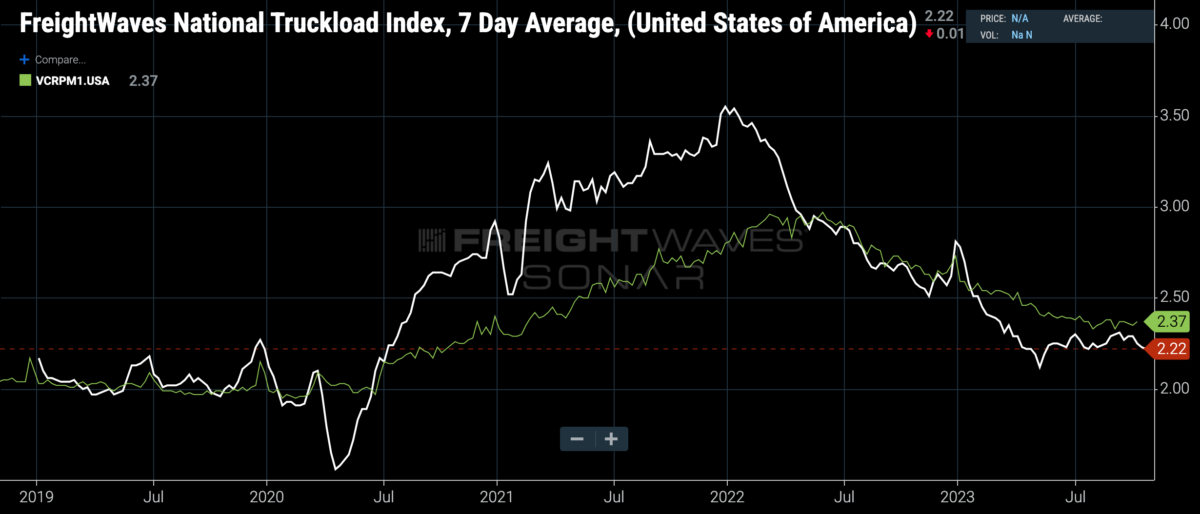
(FreightWaves National Truckload Index, an average of truckload spot rates inclusive of fuel, in white, and an initial report of contract rates in green. Chart: FreightWaves SONAR. To learn more about FreightWaves SONAR, click here.)

Kerr thinks that the freight market will get worse before it gets better — specifically, he thinks that contract rates will have to fall further and close the gap between contract and spot before we see any meaningful heat in the market.

“There’s a big gap between contract and spot obviously; everyone knows that, but if you look in the underlying data, the drop-drop contracted freight is higher, and live-live has already really come down towards where spot freight is,” Kerr said. “Drop-drop is much more of a commitment.”

Kerr’s theory is that “drop-drop” loads, or truckload shipments that involve picking up a preloaded (or “drop”) trailer and then dropping that trailer off, without waiting for it to be unloaded, are currently priced higher than shipments involving a live load and live unload process, where the driver waits at the dock. In theory, Kerr said, drop shipments should be cheaper than live shipments, because the volumes are more consistent and the carriers can more efficiently utilize their drivers’ hours of service.

But right now, drop-drop is priced too high, according to Kerr, because long-term contract pricing was put into place during the pandemic, when shippers were desperate to secure capacity. Drop trailers also had the added benefit of giving shippers’ warehouses and distribution centers more flexibility at a time when workforces were sick and difficult to manage, because freight could be unloaded at the shippers’ convenience, not according to the drivers’ schedules. Furthermore, while some shippers have long preferred drop trailer service due to the intrinsic characteristics of their freight — for example, much of Home Depot’s freight is difficult or awkward to unload — during the pandemic, many other shippers jumped into drop trailers because it solved short-term problems. That pushed up trailer prices to astronomical levels, and the carriers who had access to them charged a premium for taking care of their most important customers’ needs.

That market is due for a crash, Kerr argued. “There’s too much metal floating around — there isn’t even anywhere to put all of the trailers that have been deployed into the market,” he said. 

“We could see drop-drop fall from $2.40-ish [per mile] to about $2,” Kerr said. “It’s worth it for carriers in certain situations, but it’s not always worth it. National carriers will participate in brokerage again. They dropped metal everywhere and stopped brokering out their freight. Drop-drop freight should be the cheapest, live-live contract will be next, and then spot live-live will be more expensive. Starting by April or May of next year, spot should go positive over contract — not hot, but positive. Tender acceptance will start to fall.”

Rozkuszka, Edge’s VP of truckload, agreed that the bottom will likely be in the first quarter of 2024.

“If I had to put a theme on this year, it would be ‘When does it end? Or how much lower, where’s the bottom?’ It’s probably going to be the first quarter of 2024,” Rozkuszka said.

Rozkuszka, responsible for truckload pricing to customers and contractual volumes, said that he’s “beginning to drown in bids,” but he’s thankful for the algorithms that Edge has developed that allow him to fill in thousands of lanes and then make slight adjustments to regions where he feels more bullish or bearish, or where Edge has better buying power.

“We’re seeing where we want to target and where there are traps,” Rozkuszka said. “Shippers are being very transparent: They want the rates down, they want their transportation costs even lower. They’re in a position to take advantage of it. It’s scary.”

The harshness of the freight winter has changed behavioral incentives for key players in the market, especially shippers and asset-based carriers. Shippers are openly aggressive about their desire to push rates even lower and freight brokers have to ride the market down with them in order to secure volumes. But those low rates push asset-based carriers into a corner, where they’re becoming increasingly desperate and are forced to start shopping for better rates anywhere they can find them.

“Regional carriers are getting through this the best they can,” Rozkuszka said. “They’re in the weirdest spot: If we’re not here yet, contract is going to be at or lower than spot soon, so they’re forced to ask, ‘Do we honor those relationships, do we honor those rates?’ We’ve definitely seen a higher number of bounces over the past couple weeks, but progressively more, and it has to do more with cost and rate shopping. Everyone’s beaten down to the last penny — everyone’s backed into a corner. Everyone’s making tough decisions, and for the driver that’s honoring their commitments.”

On the other side of the market, shippers are taking less risk in terms of pricing duration, preferring semiannual or quarterly bids to annual ones, pushing rates down incrementally where they can without introducing long-term risk into their networks.

“The length of the downturn is crazy,” Rozkuszka said. “We’ve always been able to lean on historical data or market knowledge whenever there was a normal uptick, whether it was seasonality, hurricane, whatever, but that’s been completely thrown out the window. It’s a day-by-day, week-by-week life. Then if we do see a slight capacity crunch where the board has trouble moving, it’s random and no one knows why. Tons of customers are switching to quarterly bids — less than half the bids we have now are annual. Neither side wants to take the risk of annual bids.”

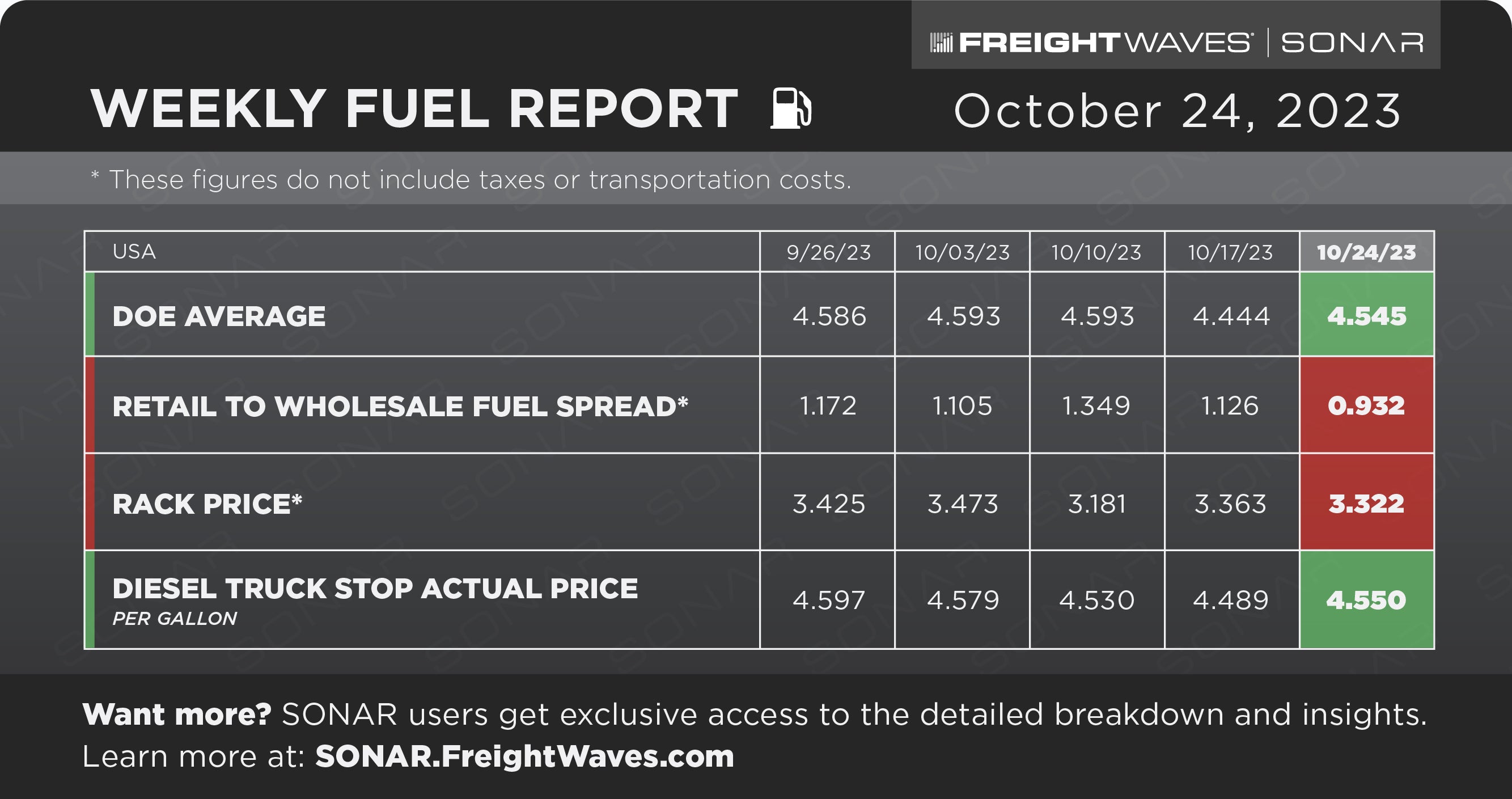
Weekly Fuel Report: October 24, 2023


Learn more at SONAR.FreightWaves.com

Growth vs. stability: Is it time to rethink your approach?

Growth is often associated with progress, but is sudden and rapid growth for motor carriers always the ticket to success?

Brian Runnels, VP of safety at Reliance Partners, a freight insurance agency, doesn’t think so.

Because of the slim margins carriers face, they must keep trucks constantly moving in order to turn profits. Operating costs, however, reached $2.25 per mile last year, the highest the American Transportation Research Institute ever recorded. So while the desire for growth is understandable — larger fleets usually have greater earning potential — scaling also means staff must work harder to ensure those trucks are constantly filled with profitable freight that arrives when it’s supposed to. Staff also need to be concerned with making truck and insurance payments for all of those vehicles and dealing with unexpected breakdowns, among other daily operational considerations.

Many businesses experienced growth as freight boomed during 2020 and 2021, attracting new entrants to the industry and feeding the need for more capacity to fulfill demand. Runnels argues that sudden expansion, though, can actually cause problems.

“When you see fleets double in size in a very short period of time, typically they haven’t grown on the inside as well as the outside, and that’s a very dangerous combination,” he said. 

As staff prioritize keeping trucks filled and compliant, things like maintenance and safety can fall by the wayside, Runnels has observed.

“When your safety department is strictly reactionary, the damage is already done when a bad inspection, a crash, a complaint or equipment issues occur. You’re handling everything on the backside instead of trying to be out in front of it,” he explained.

More vehicle and driver violations found during inspections can eventually impact safety scores and a company’s safety rating. Safety ratings are publicly available, so customers, shippers, and receivers know if a trucking company’s safety standards are below par. This can affect the company’s ability to keep and attract clients.

Further, Runnels warned, rapid growth may scare away insurance companies if infrastructure doesn’t support it. They will notice when a company suddenly doubles in size or otherwise sees significant expansion in a short period of time.

The key to successful scaling, then, is steady and intentional growth.

“Everybody wants to grow. Everyone wants to be successful. But doing it in a way that allows you to manage that growth is a much more realistic expectation,” Runnels said.

Hiring new safety personnel or operations team members to keep up with the work created by additional trucks and drivers is one way to scale in a healthy way. However, companies can also consider looking at other methods to make processes easier and faster. This includes adding system integrations and digitizing compliance management processes like driver files, expirations, and drug and alcohol management. This can help streamline processes, freeing up employees’ time and allowing them to use those efforts to get ahead of other safety issues.

“Get a third party involved, get automation done, and now you can focus on the proactive safety side of things instead of just being a compliance person,” Runnels said.

Reliance Partners’ safety experts can give carriers the tools to build a successful safety program. By taking a holistic, safety-focused approach to growth, businesses can ensure a strong safety culture that will add to their success.

Click here to learn more about Reliance Partners.

The evolution of yard management

By Bart De Muynck

The views expressed here are solely those of the author and do not necessarily represent the views of FreightWaves or its affiliates.

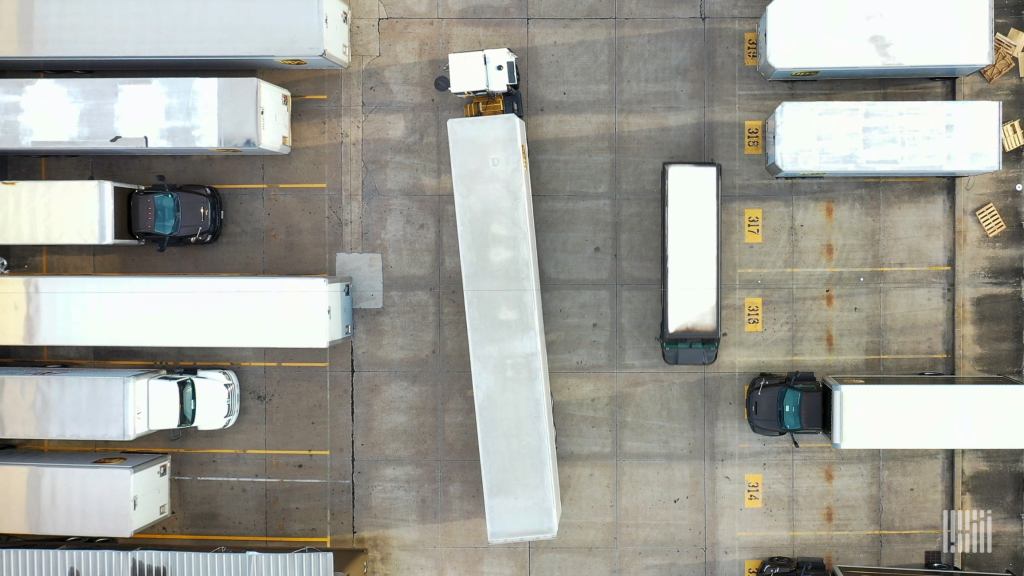
In the changing landscape of logistics and supply chain management, the often-overlooked trailer yard operations need a technological transformation that promises to revolutionize efficiency. Although the trailer yard has received more attention from shippers and 3PLs in the past few years, it often is still a black hole in the supply chain with a lack of efficiency and very little automation.

Trailer yards, often referred to simply as “yards” in the logistics industry, have long been the unsung and often “forgotten” heroes of the supply chain. These critical hubs play a central role in the loading and unloading of goods, serving as the bridge between transportation and facilities. However, historically, many trailer yards have operated in a manual and inefficient manner, facing a multitude of challenges.

One of the primary issues has been the lack of real-time visibility and control. Manual yard checks and paper-based tracking systems have made it challenging to monitor the status and location of trailers and containers accurately. This results in inefficiencies, as operators struggle to allocate resources effectively, leading to congestion and long wait times for truck drivers.

The chaotic nature of this traditional yard management can result in human errors, increased labor costs and unnecessary delays. Security concerns, such as theft and unauthorized access, have also been common challenges in these yards.

In the last decade, we saw more companies investing in yard management solutions to get some visibility in the yard and to access better data points, which in turned helped to connect to the warehouse management systems, transportation management systems and even fleet management systems. Although this brought some benefits to the yard, most steps in the process remained disconnected and often manual.

However, the winds of change continue blowing through the world of trailer yards. The introduction of vision and AI technology is revolutionizing the way these operations are conducted. These new technologies are introducing a new level of disruption in the yard.

The future of yard vision and the advent of yard automation are poised to bring about significant improvements in how companies manage their transportation hubs, leading to streamlined operations, reduced costs and enhanced visibility.

Yard vision and automation represent the future of efficient yard management. With cameras, Internet of Things, AI and automation, companies can unlock unprecedented visibility into their yard operations, optimize resource allocation, enhance security and reduce operational costs.

These innovations, as provided by vendors like Eaigle, promise to bring real-time visibility, optimize resource allocation, reduce congestion, enhance security and improve overall efficiency. As a result, trailer yards are transitioning from historically manual and inefficient spaces to technologically advanced hubs that are pivotal to the modern supply chain. AI-driven software promises to improve the visibility in the yard and automate the manual process.

With yard vision and automation, the yard will no longer be the overlooked part of the supply chain, but a crucial component where technology is making a significant difference. As these advancements continue to evolve, they will play an increasingly pivotal role in the broader landscape of logistics and supply chain management.

Look for more articles from me every Friday on FreightWaves.com.

Bart

About the author

Bart De Muynck is an industry thought leader with over 30 years of supply chain and logistics experience. He has worked for major international companies, including EY, GE Capital, Penske Logistics and PepsiCo, as well as several tech companies. He also spent eight years as a vice president of research at Gartner and, most recently, served as chief industry officer at project44. He is a member of the Forbes Technology Council and CSCMP’s Executive Inner Circle.

Warehouse warning: Inflationary winds brewing

The warehouse supply chain pipe is a key forward-looking indicator on the health of inventories and U.S. sales. Looking at the metrics on how long items are sitting in warehouses gives insight into a company’s consumer.

Inventories have been going down, but with concerns over consumer spending and the python squeeze inflation has had on some wallets, the inventory battle is far from over.

In its fourth-quarter Warehouse Pricing Index Report released Tuesday, WarehouseQuote issued a warning on a line item that will be an inflationary driver in 2024: 33% of all U.S. industrial leases are expiring in the next 24 months.

“According to JLL, that’s approximately 10,000 transactions,” stressed Jordan Brunk, chief marketing officer of WarehouseQuote. “This segment of the warehouse market has seen tremendous rent growth over the last five years. This means the cost in third-party warehouses will only become more expensive.”

These costs will be passed over to the consumer. As with other prior costs passed on, the Federal Reserve has no control. Brunk told American Shipper that companies are proactively looking at their warehouse footprint, assessing consolidation and not ruling out relocation.

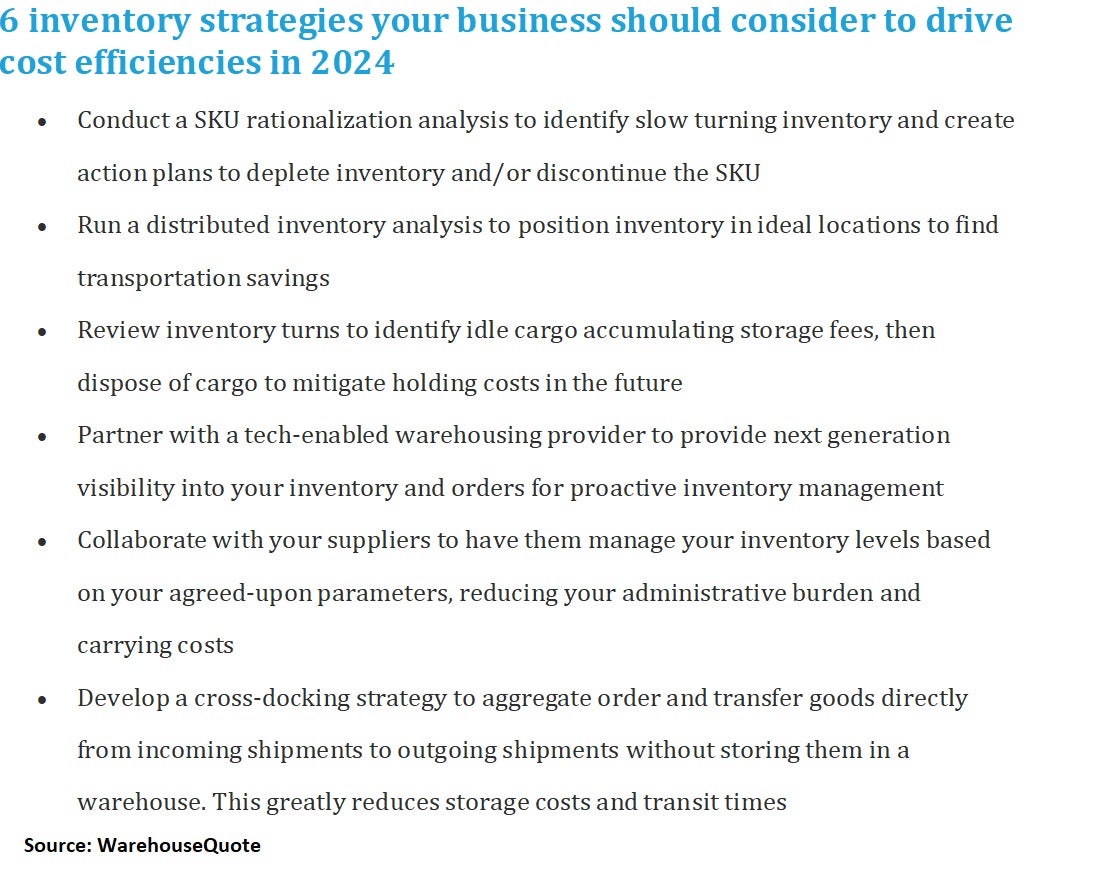
“For the first time we see companies deploying on the six inventory strategies we have been discussing for the last year,” Brunk said. “As inventories sit, businesses that utilize third-party warehouses rack up elevated inventory storage invoices. This line item has become an eyesore for businesses.”

Mike Adkins, vice president of sales at WarehouseQuote, told American Shipper that while the warehousing market seems to be relaxing, shippers cannot forget pricing for 3PL services is correlated with real estate prices.

“The price of the leases are benchmarked on newer construction,” Adkins said. “Many of our partners entered into long-term agreements and we expect the costs of 3PL services to remain elevated as a result of the dependency on three-to-10-year leases.”

In 2023, a considerable portion of WarehouseQuote’s SMB and midmarket client portfolio has continued to face inventory challenges due to the bullwhip effect and muted consumer demand.

“This has led to elevated storage levels and increased storage costs,” Brunk said. “WarehouseQuote has worked closely with these customers to provide consulting and advisory support, including SKU rationalization studies, and execute on disposal strategies to mitigate rising storage costs.”

Also influencing a shipper’s storage needs is the volume of shipments and possible bottlenecks that would delay shipments.

Chris Rogers, head of supply chain research for S&P Global, wrote that even though the pattern of shipments has appeared to return to pre-pandemic seasonality, that does not mean it’s guaranteed smooth sailing.

“Looking ahead, the source of disruptions in late 2023 and into 2024 are returning to the trade policy and operational uncertainties typically seen in the late 2010s. Physical infrastructure disruptions are ongoing, including water shortages in the Panama Canal and rivers ranging from the Mississippi to the Amazon. Crossborder transit and rail delays on the Mexico-US border look set to continue.”

Paccar posts another blowout quarter

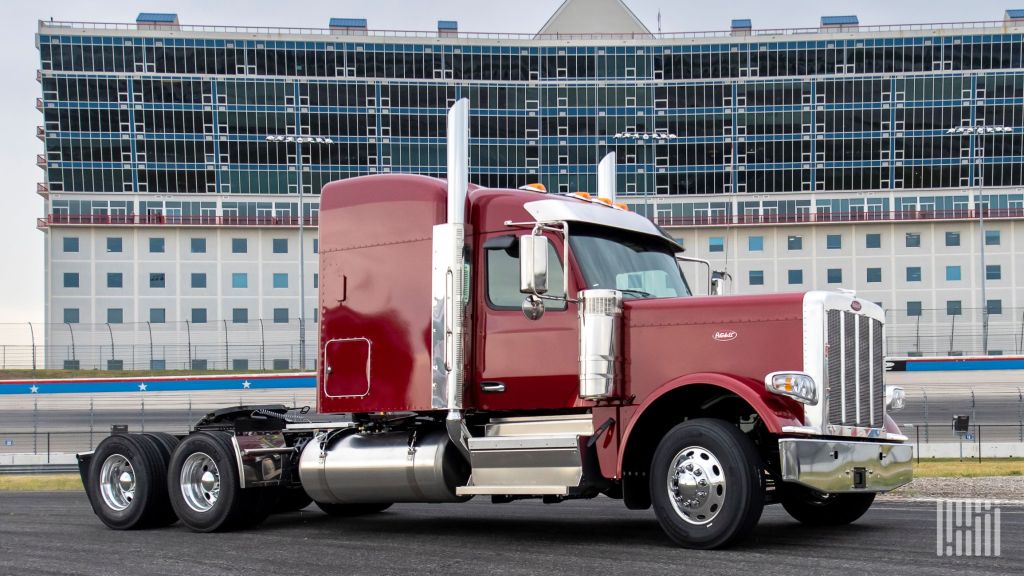
Peterbilt Model 589

Paccar Inc., the maker of Kenworth, Peterbilt and DAF Trucks, reported record third-quarter net income and beat top- and bottom-line earnings estimates, which is becoming a common achievement.

“Demand is strong for Kenworth and Peterbilt trucks with [orders for] the first quarter of 2024 filling in quickly,” Paccar CEO Preston Feight said on an earnings call with analysts Tuesday. 

The Bellevue, Washington-based truck maker earned net income of $1.23 billion, or $2.34 per diluted share, compared to $769 million or $1.47. Q3 revenues of $8.7 billion came in 23% higher, or $790 million, than the $7.06 billion reported in the year-ago quarter.

Analysts expected a 44% improvement in year-over-year earnings to $2.13 per share. Paccar delivered a 60% gain. The company has outpaced earnings per share and revenue estimates every quarter for the past year.

Every segment, from new and used truck sales, to parts and financial services — except for financial services pretax income — outperformed year-ago results.

Q3 highlights:

  • Net sales and revenues of $8.7 billion.
  • Record net income of $1.23 billion.
  • Truck, Parts and Other gross margins of 19.5%.
  • Global truck deliveries of 50,100 units, the midpoint of its estimate of 48,000 to 52,000.
  • Parts revenues of $1.58 billion with pretax income of $412.3 million.
  • Financial Services pretax income of $133.8 million.

Paccar estimates 48,000 to 51,000 truck sales in Q4. The projection is based on more production days in Europe and fewer production days in North America because of holidays. The company expects margins of 19%, similar to the third quarter, President and CFO Harrie Schippers said. Paccar has never had a full-year margin exceeding 16%.

Slowing sales expected in 2024

Full-year U.S. and Canada Class 8 industry retail sales should range between 295,000 and 315,000 vehicles, Paccar said. The company predicts a slower 2024 with retail sales in a broader range of 260,000 to 300,000 vehicles.

“There may be some moderation in truckload. People are trying to figure out how to think about the next three years,” Feight said. “I’m not smart enough to know what Q2, Q3, Q4 are going to look like. We just feel like we’ll see some adjustments there from this year. But it could still stay at a replacement demand level.”

Paccar sees vocational, less-than-truckload and medium-duty models performing well. Kenworth and Peterbilt combined have a 40% share of the North American vocational market.

The Peterbilt brand starts production of its new Model 589 long-hood truck in January. That completes a full makeover of its portfolio in the past two years — more new products than in any similar period in Paccar history. The predecessor Model 389 accounted for about 20% of Peterbilt sales. Paccar expects the Model 589 to perform similarly.

“The 589, well, the right word is it’s ‘cool,’” Feight said. “It’s going to be iconic in the industry. It looks fantastic and I think it will be a great flagship for the Peterbilt team.”

New parts center ‘almost immediately good for the business’

Paccar’s parts business, which has set record after record in quarterly sales, posted sales of $1.58 billion compared to $1.47 billion in the year-ago quarter. Pretax profit of $412.3 million came on margins of 31.5% and beat the $373.6 million income in Q3 2022. Schippers projected 7-9% higher parts sales in Q4 versus the year-ago October-to-December period.

Paccar has begun construction of its 19th global parts distribution center, a 240,000-square-foot facility in Massbach, Germany, that will open in 2024.

“It’s almost immediately good for the business,” Feight said. “What a PDC does is it allows us to have closer points of contact with our customers, get them parts in a more quick way and support their businesses for more same-day or next-day parts delivery.”

Capital and R&D spending on the rise

Paccar’s strong balance sheet and top-notch credit ratings support estimated full-year capital investments of $650 million to $675 million, with another $675 million to $725 million planned in 2024, Schippers said.

Research and development spending also is on the rise from an estimated $410 million-$420 million this year to $470 million-$520 million in 2024.

“Paccar is increasing its investment in fuel-efficient diesel and electric powertrain technologies, autonomous systems, connected vehicle services, and next-generation manufacturing and parts distribution capabilities,” Schippers said.

The company will have a 30% interest in a joint venture with Cummins Inc., Daimler Truck and China’s EVE Energy to manufacture lithium-iron phosphate batteries for commercial electric trucks in the U.S. The 21-gigawatt-hour factory is expected to cost $2 billion to $3 billion, with production starting around 2027. Paccar’s contribution will be booked as an investment.

Editor’s note: This story has been updated with comments from the earnings call.

Paccar reports record Q2 sales and profits

Paccar price hikes propel Q2 profit surge

$600M charge to Paccar related to European price-fixing

Click for more FreightWaves articles by Alan Adler. 

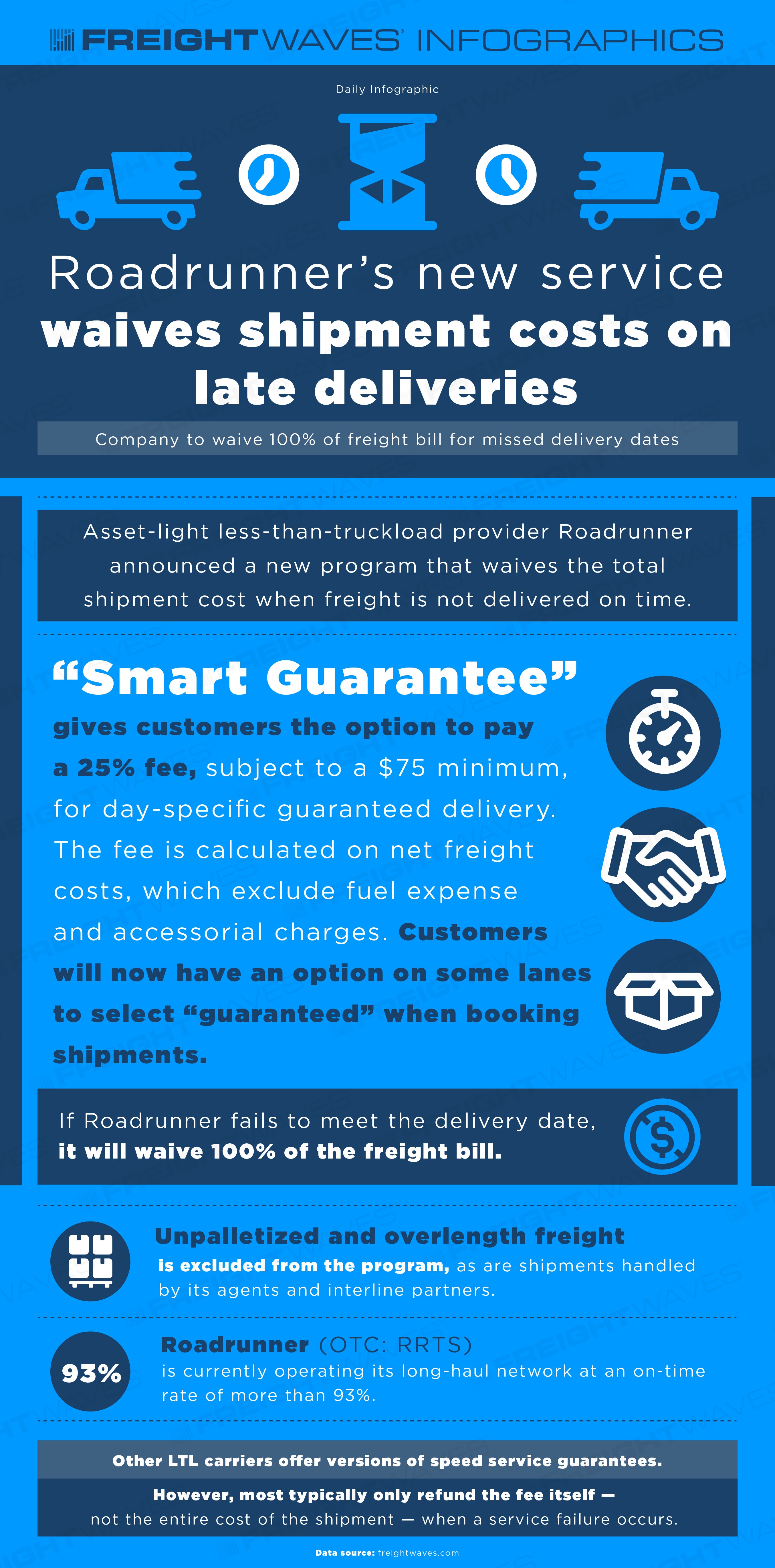
Daily Infographic: Roadrunner’s new service waives shipment costs on late deliveries


To view more FreightWaves infographics, click here

What shippers need to know to succeed in Mexico in 2024

This article was originally published in the third issue of FreightWaves’ Supply Chain Playbook.

Nearshoring is helping to attract more manufacturing to Mexico as shippers look for supply chains that are closer, less costly and more advantageous to doing business with the U.S.

Mexico has been the top U.S. trading partner since the beginning of 2023, reporting $397 billion in two-way trade from January through June, according to the U.S. Census Bureau. In comparison, Canada was No. 2 at $388 billion and China was third at $276 billion for the same period.

“We’ve already observed encouraging growth in Mexico’s nearshoring in recent years, particularly among companies that already possess manufacturing facilities within the country. Consequently, we’ve witnessed a surge in freight movement to and from the U.S.,” Ed Habe, vice president of Mexico sales for cross-border LTL carrier Averitt Express, told FreightWaves.

Nearshoring has the potential to boost the growth of Mexican manufacturing exports to the U.S. even further — from $455 billion today to an estimated $609 billion over the next several years, according to a recent report from Morgan Stanley, “Mexico Is Poised to Ride the Nearshoring Wave.”

Nearshoring is a business strategy in which a company shifts some or all of its supply chain operations to a location closer to its end market. The biggest single investment so far was automaker Tesla’s decision to open a $5 billion electric car factory in the northern Mexican city of Monterrey. The factory was announced in February and is scheduled to open in 2025.

“If U.S. manufacturing is to be less dependent on China, we think the path will be via Mexico,” Nikolaj Lippmann, Morgan Stanley Research equity analyst, said in the report. “Nearshoring is expected to be a long and sustained race that could help build new ecosystems in Mexico’s existing manufacturing hubs.”

To stay ahead of competition, Mexico must improve its commercial transportation infrastructure and highway security, recruit more truck drivers, and settle ongoing trade disputes with the U.S., Habe and other Mexico trade experts said.

The next phase of nearshoring will be the development of additional manufacturing plants in Mexico, which could constrain equipment capacity, Habe said.

“I believe we will continue to see continued investments that will grow the movement of freight between the U.S. and Mexico,” he said.

For shippers to capitalize on Mexico’s nearshoring growth, they need to be planning ahead for when capacity could become scarce in the next market cycle.

“Mexico still utilizes a trust- and relationship-based style of doing business; building those ties is critical to success versus rate shopping,” Jordan Dewart, president of 3PL Redwood Mexico, told FreightWaves.

Along with Habe and Dewart, FreightWaves spoke with Jorge Canavati, a principal at J. Canavati & Co., a San Antonio-based company that provides international logistics and trade consulting.

Capacity could tighten dramatically in 2024

Both Dewart and Habe said trucking and trailer capacity will grow tighter next year, and prioritizing new carrier relationships now will help spread out shipping options in the future.

One of the main causes of tighter capacity next year could be the multitude of factory expansions and new facilities opening across Mexico. After Tesla said its newest factory would be in Monterrey, a slew of automotive suppliers announced they would build production plants in the country to supply parts to the EV maker.

“Trailer capacity will continue to be an issue due to the imbalance of freight moving north versus south,” said Habe, whose Cookeville, Tennessee-based company is a freight transportation and supply chain service provider, specializing in LTL, truckload, dedicated, distribution and fulfillment services.

“The fact is that nearshoring in Mexico has been occurring since the 1960s,” Habe said. “Over the years, it has been hot and cold. Right now, it is hot. At the same time, this feels like it will be a long-term trend — if not permanent. This is prompting many companies to review their current cross-border strategies and to explore additional modes, including LTL pool distribution at the border, rail and even ocean.”

Dewart said shippers should stay as flexible as possible and bring multiple shipping options to the table.

“We like to say you want more than one bullet in your gun — from adding transloading options, taking advantage of carriers with B1 drivers, utilizing different border crossings,” Dewart said.

Redwood Mexico is part of Chicago-based 3PL Redwood Logistics. In April, Redwood Mexico moved into new offices in Monterrey and expanded its workforce with the aim of tapping into more companies and their nearshoring efforts in the country.

Dewart believes cross-border rates will spike after hitting a tipping point in 2024 and capacity demand will be massive.

“All of this massive investment in plant expansions and new plant construction will begin coming online next year, and we expect [U.S.] economic recovery in 2024, further fueling shipping levels,” Dewart said. “Mexican carriers are not aggressively expanding their fleets and have the same issues U.S. carriers have with driver shortages. Supply will not be there to meet capacity, so rates are sure to rise. It will be a carrier’s market worse than what we saw during COVID-19.”

Mexico needs to tighten security on its highways

Cargo theft continues to plague Mexico’s freight transportation industry. From January through June, cargo theft increased 21% compared to the same period in 2022, according to data released by the Mexican Association of Insurance Institutions.

“Drug- and cartel-related violence in specific areas along the U.S.-Mexico border, such as in the Mexican cities of Nuevo Laredo and Reynosa, can really hurt things,” Dewart said. “It feels like a fragile peace right now, and we’ve already seen that unrelated disputes like Title 42 can have an immediate negative impact.”

Title 42 was a health initiative that allowed U.S. officials to turn away migrants at the U.S.-Mexico border on the grounds of preventing the spread of COVID-19.

In recent months, masses of migrants arrived at border crossings near El Paso and Brownsville, Texas, temporarily shutting down ports of entry as authorities dealt with the situations.

In May, Mexican authorities reported a gunbattle between law enforcement officials and alleged cartel members in Reynosa, just across the border from Pharr, Texas. The shootout temporarily halted traffic along the Pharr-Reynosa International Bridge, a key border crossing.

“Cargo theft is a big problem. The violence is a big problem,” Canavati said. “The insurance rates for cargo are just going up and up and up.”

Mexico must prioritize infrastructure to spur trade growth

Mexico, along with some other Latin American countries, spends less than 1% of its gross domestic product on infrastructure, according to a report from the Mexico Institute at the Wilson Center in Washington.

In comparison, China spends the most of any country on infrastructure, between 4% and 5% of annual GDP. The U.S. spends between 0.5% and 1.5% of its GDP on infrastructure projects.   

“There still needs to be more investment in natural gas distribution in Mexico, not focusing on these huge pharaonic investments that they’re doing, such as the Isthmus of Tehuantepec corridor,” Canavati said. “There has to be more of a focus on the real infrastructure that companies are investing in and are going to use.”

Mexico and other Latin American countries are facing deteriorating modes of transport, especially rail and road, the Mexico Institute said.

“Overall, statistics show that roads and ports in the region have improved marginally over the past decade, and railroads have not improved at all, placing it at the same level as sub-Saharan Africa,” according to the institute.

Habe said as more companies expand or open new factories in Mexico, the country needs to be able to accommodate increased traffic.

“The infrastructure in Mexico could pose challenges as highways and ports are used more than ever before,” he said.

Canavati said the government should focus on providing the water, natural gas, and better roads and bridges that will be needed by new or expanding factories in Mexico.

“Some people say Mexico is going to be the new China. Well, right now it’s far from it,” Canavati said. “China has an incredibly large manufacturing capacity, but we need to continue to support Mexico in this effort, with more infrastructure, because transportation needs to get better.”

Mexico’s stronger peso could affect freight rates

As more foreign direct investment arrives in Mexico, a strengthening peso and tightening trucking capacity could create challenges for cross-border trade with the U.S.

Matt Silver, vice president of cross-border solutions at Arrive Logistics, said the peso’s appreciation against the dollar could impact U.S. shippers and carriers running cross-border freight working with trucking companies in Mexico.

“The biggest impact that we’re seeing from the peso’s change is on purchasing transportation,” Silver recently told FreightWaves.

Around July 28, the peso’s worth reached its highest value against the dollar since late 2015 when it sat at 16.63 pesos per dollar. Since then, the peso’s value has fluctuated around 17 per dollar.

“The peso will impact things if it appreciates any further,” Dewart said.

Silver said if the peso continues to appreciate, it could cause friction between Mexican carriers and shippers.

“My advice is really about having an open conversation with carriers while paying attention to the market and understanding if things will normalize between the two currencies,” Silver said. “If we can get back to that 20 peso-to-dollar ratio, then you start to feel a little bit better about where things are. But if it stays where it is for a prolonged period of time, then you might have to revisit rates again.”

Amid legal woes, Slync seeks alternative to bankruptcy, winds down operations

While logistics visibility platform provider Slync had hoped that new management and a $24 million cash infusion in February would be enough to save the FreightTech company after its former CEO was indicted on fraud charges, the company is proceeding with an alternative option to a traditional bankruptcy and plans to wind down operations and sell off its technology.

The timing of Slync’s filing Wednesday comes nearly three weeks after former Slync CEO Chris Kirchner — who was indicted in May on charges he swindled $25 million from investors for personal use — filed suit on Sept. 26 against his former employer for legal fee advancement and indemnification in Delaware’s Court of Chancery.

Kirchner’s suit seeks to have Slync pay his legal bills in his ongoing fraud case involving the U.S. Department of Justice and the Securities Exchange Commission. After Kirchner’s assets were frozen, a federal public defender was assigned to handle his case.

According to court documents, after Kirchner’s legal team initially reached out to Slync’s outside counsel on Aug. 30, Slync stated that it “will agree to advance” and that his legal team should reach out to Slync’s CEO John Urban “regarding logistics.”

However, less than three weeks later, Slync’s outside counsel told Kirchner’s legal team that Slync “purportedly lacks sufficient liquidity to fund advancement.”

After Kirchner’s firing in August 2022, Urban, who co-founded and grew GT Nexus into one of the world’s largest cloud-based software-as-a-service networks and also had served as a strategic adviser for Slync since 2018, was tapped as the new CEO and chairman of the board of Slync.

“We could not afford to grow the company and pay those legal fees at the same time,” Urban told the Journal of Commerce, which first reported the story. “It put the company in a position where we couldn’t raise capital from new investors and selling the company wasn’t an option due to liability concerns from potential suitors.” 

As of publication, Urban did not respond to FreightWaves’ request seeking comment.

Judge Mark Pittman of the U.S. District Court for the Northern District of Texas recently denied Kirchner’s motion seeking a 90-day continuance of his trial slated to start on Dec. 18 to prosecute his advancement claims against Slync in Delaware.

ABC filing

After discussing various wind-down options, Slync’s board of directors decided to proceed with an alternative to traditional bankruptcy proceedings known as an assignment for the benefit of creditors, or an “ABC.” 

According to an article posted by the Cornell Law School, a company like Slync trying to “purchase assets of a struggling company can avoid liability to unsecured creditors of the failing company.” ABC proceedings are more efficient, less costly and an alternative with a chance for recovery to creditors in contrast to other Chapter 11 or 7 bankruptcies.

According to Slync’s ABC petition, which was filed Wednesday in the Delaware Court of Chancery, its board has selected Chicago-based Development Specialists Inc. (DSI), a restructuring and insolvency consulting firm, to handle the process, which involves transferring Slync’s assets to DSI. The company is responsible for selling those assets in an expedited manner to pay back creditors. 

The petition, which was obtained by FreightWaves, states that Chintan Parekh, Slync’s CFO, contacted DSI to discuss Slync’s “lower revenue streams and unexpected legal expenses facing the company.”

Court filings state that Slync transferred approximately $440,000 in cash, accounts receivable amounting to around $476,000, and other business assets consisting of intellectual property, customer agreements and related assets to DSI. 

Slync has unsecured debts totaling around $1.5 million and is preparing a list of known creditors, which it will file with the court once completed, according to the petition.

The court filing states that Slync has elected to proceed with the ABC proceeding because the FreightTech company “maintains insufficient capital to continue to operate due to its financial underperformance and Kirchner’s [alleged] fraud.”

Matthew Leffler, known as the Armchair Attorney, who reviewed Slync’s ABC petition, said it’s likely that Slync chose this route because the company “actually has more assets than debts.”

“It’s a very small amount of money that Slync owes — it’s essentially close to a million dollars in cash, some laptops and then there’s the intellectual property,” Leffler told FreightWaves. “Slync likely has a path to sell its [intellectual property] and have someone make money.”

The ABC petition states the company reported a combined revenue of more than $1.7 million between 2019 and August 2022, but that it had never been profitable. Slync reported net losses of more than $3.7 million, $28 million, nearly $26 million and around $21 million for the years-ended Dec. 31, 2019, through 2022.

What happened?

The logistics visibility platform that worked with shippers, third-party logistics providers and carriers was co-founded in 2017 by Kirchner along with Rajan Patel, the startup’s chief product officer, and Varun Dodla, its co-chief technology officer.

Under Kirchner’s leadership, Slync, which was once valued at $240 million, raised nearly $70 million, including the $60 million Series B funding round that closed in February 2021, which was led by venture firm Goldman Sachs Growth, ACME Ventures, 235 Capital Partners, Correlation Ventures and other existing investors.

Soon after the company received the $60 million fund raise in 2021, court filings in a wrongful termination lawsuit by a former company vice president claim Kirchner bought a 2010 Gulfstream G550 jet for $16 million. It has since been sold.

Former company executives who were fired by Kirchner said they never had access to the company’s accounts and brought their concerns to the board, stating that Kirchner was the only one with access to its investment account, which included the $60 million Series B funds.

Prior to his firing in August 2022, Kirchner had come under scrutiny after he failed to pay employees for months, used his private jet to fly to celebrity golf tournaments and attempted to buy an English soccer team. 

While Kirchner on behalf of Slync initially blamed an internal administrative error, then later stated its payroll woes stemmed from its inability to liquidate funds in a timely manner — investors, led by Goldman Sachs — agreed to inject more funding to pay employees. A source confirmed that U.S. and Canadian employees were paid after being owed around $3.8 million.

Do you have a news tip or story to share? Send me an email or message me @cage_writer on X, formerly known as Twitter. Your name will not be used without your permission.

Former Slync CEO indicted on charges of swindling $25M from investors
Slync.io fires CEO Chris Kirchner, strips board chairmanship
Source claims Slync.io CEO retaliated after suspension
Slync.io blames liquidity issues after employees go month without pay

Fighting back in a cybersecurity world where bad guys are getting bolder

HOUSTON — One hundred and seventy five million dollars.

That’s the figure Shelly Thomas of the cyber practice at insurance provider Marsh presented when the topic of ransomware came up at a conference sponsored by the National Motor Freight Travel Association.

Thomas, speaking Monday on the opening panel of the Digital Solutions Conference, said that $175 million was the largest ransomware demand she had seen this year. While the end figure the unidentified victim paid was “negotiated down” to an unspecified level, the sheer size of the original number “kind of shows you the depth and breadth of those ransom demands.”

The conference is the second sponsored by NMFTA, the main trade association for the less-than-truckload industry, on the issue of cybersecurity. However, it was clear that the organization was seeking to promote it to as wide a group as possible, unlike earlier, more closed-door versions. The 2023 version was sold out, and more than one person commented on the proximity between the hack at LTL carrier Estes and the timing of the meeting.

Ask attendees if their companies have been targeted by cyber bad guys, and the answer is always the same: We get attacked hundreds if not thousands of times a day. The key is making sure that breaches don’t occur, and if they do, that they are relatively minor and can be dealt with fairly easily.

From left to right: Antwan Banks, moderator, NMFTA; Ernesto Ballesteros, CISA; Shelly Thomas, Marsh; Takeda Parker-Bradford, TSA; Clarke Skoby, US Secret Service

Thomas said ransomware and privacy concerns are the biggest issue that Marsh has dealt with for its clients. “Something we’re talking a lot with our clients about is making sure there’s proper consent on the use of data,” Thomas said. She added that plaintiffs’ attorneys are “going after organizations for everything under the sun to see what will stick” by filing lawsuits over alleged privacy violations.

Drew Williams, the director of TretRecon Cybersecurity Services at Guidacent, approached his presentation through a series of lists, most of them a series of five questions that cybersecurity executives and their personnel should be considering.

Williams said anybody attending his session was probably aware of “five big issues”: being aware of pitfalls that could impact your operations (and presumably anybody who went to a trucking cybersecurity conference has met that requirement); protecting corporate assets; not fully understanding the consequences of what cybersecurity is all about; deciding where to focus cybersecurity investment dollars; and not being sure where to begin tackling the issues.

Williams said there are still some in the industry whose approach is, “What is cybersecurity? I’m not a very big company. Nobody’s going to bother me. It’s probably pretty pricey to put in all these tools and controls.”

And then there are the lists of things that company tech teams are asking, Williams said: What oversights are we forgetting? What is all the hype about phishing? Why are passwords such a pain to change? Is ransomware really an issue to worry about?

To some degree, protecting a company from a cybersecurity attack is easy and hard at the same time, at least based on some of the data Williams presented. He said 95% of cybersecurity breaches are caused by human mistakes. And 88% of companies have been hit by attempted phishing, raising the question of what’s happening at the other 12% since phishing seems ubiquitous.

Few companies ever admit to paying ransom. But Williams said that 80% of the companies that get hit with a ransomware attack end up paying. Williams said in his own experience, “I’ve gone through six ransomware attacks and spent $7 million in Bitcoin to get out.”

His address was filled with often commonsense advice: “Passwords are like toilet paper and toothbrushes. Don’t share them.” He also ran through a predictable list of too-frequent, easy-to-crack passwords, like “hello” and “qwerty.”

One of Williams’ lists jointly spelled out the opportunity and the drawback to cybersecurity. Under the heading “Don’t go it alone!” Williams presented a list of steps companies need to take to reach a high level of defense: security awareness training, governance, risk and compliance preparation, penetration testing, and so on. But next to all eight points, he had dollar symbols, recognizing that each one costs money.

All of this led to Williams’ recommendation that a company’s cybersecurity plan achieve five things:

  • Develop a business resilience and response plan.
  • Create immutable data backup plans (and Wiliiams observed that some backup programs are on the same main system that might get hacked, defeating the purpose.)
  • Establish an incident response plan.
  • Manage fleetwide cybersecurity training and briefings.
  • And schedule a “tabletop” exercise, which is a sort of war game for having to deal with a cybersecurity attack. The recommendation to “do a tabletop” and the question “Has your company done a tabletop?” was a frequent subject on day one of the conference.

But Thomas also expressed optimism that industries are starting to fully grasp the risk that cybersecurity attacks pose and are taking action. “I think that a lot of work that has been done over the last 18 to 24 months from a security posture has helped,” she said.

But there’s more to do. Ernesto Ballesteros, the cybersecurity state coordinator for the federal Cybersecurity and Infrastructure Security Agency, an arm of the Department of Homeland Security, spelled out a scenario in which an improperly handled email can wreak havoc.

Referred to as the “business mail compromise,” Ballesteros said it arises when “a thread aggregates into your operating environment and compromises the business email account.” And it doesn’t need to come from a company employee, Ballesteros said; a vendor email can open the door to the problem. “And then they’re going to use that account in order to try to either get some information to conduct some sort of social engineering attack, which is going to be very easy when you have a legitimate business email.”

But that can also be a “precursor to a ransomware attack, when you can send malicious content or you can get them to go to a website because they trust you using a legitimate email account.” That can then allow the cybercriminals to “get a foothold into the victim’s network, and start to move around laterally and identify what they’re going to target and execute.”

Part of the goal of the opening panel was to drive home the point that there are capabilities that companies can access to beef up cybersecurity. Ballesteros several times noted that his agency can help a company with cybersecurity issues, as did two other panelists: Takeda Parker-Bradford of the Transportation Security Administration and Clarke Skoby of the U.S. Secret Service.

While there was plenty of talk about insurance and control systems and other aspects of the battle for cybersecurity, Parker-Bradford made a point that was heard often on day one of the conference: Personnel need to be on the front lines and avoid making the mistakes that let the bad guys in.

“I know that people get complacent,” she said. “They feel like, oh, it’s not going to happen to me. This isn’t a me issue. Really increasing awareness among your staff or leadership, putting an emphasis on security and investment, I think that is probably the best thing you can do.”

More articles by John Kingston

Taking stock of what happened at Estes

TriumphPay’s EBITDA loss narrows, volume increases, factoring invoices stay flat

XPO’s Jacobs on his next venture: Wait and see