




The Blanca, Colorado Post Office serves ZIP Code 81123. Photo by Jimmy Emerson, some rights reserved. Photo shared under the Creative Commons License.
Blanca Post Office
406 Smith St
Blanca, CO 81123
Location at Google Maps

The Blanca, Colorado Post Office serves ZIP Code 81123. Photo by Jimmy Emerson, some rights reserved. Photo shared under the Creative Commons License.
Blanca Post Office
406 Smith St
Blanca, CO 81123
Location at Google Maps
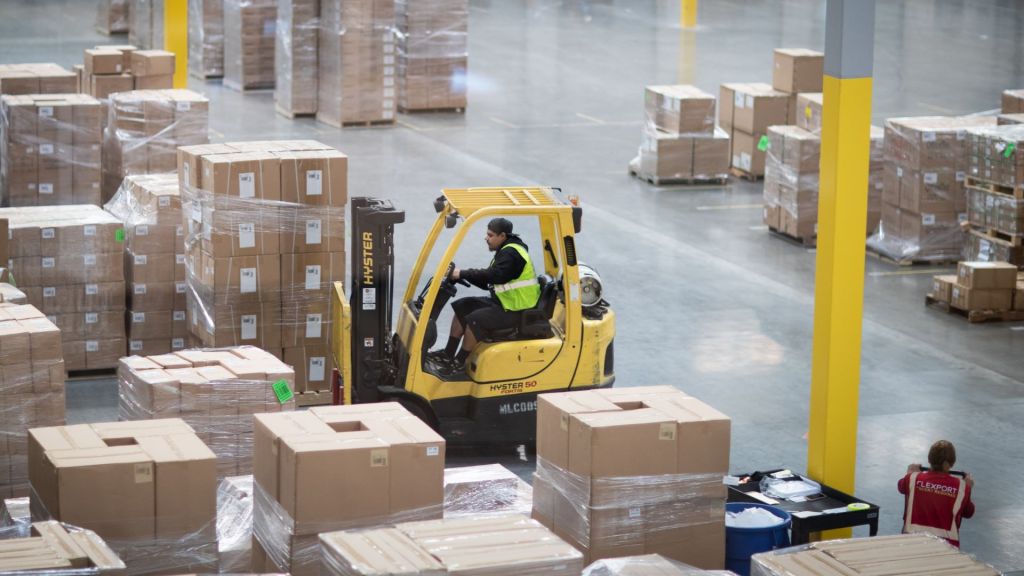
Flexport CEO Ryan Petersen has reorganized his executive team after retaking the company reins a month ago, leaning on several veteran managers as well as a couple recent hires from Amazon who have taken on new and expanded roles, a company official confirmed Friday.
News of leadership changes comes the same day that the San Francisco-based logistics company laid off 20% of its staff as it copes with a sharp drop in revenues related to weak shipping demand. The freight forwarder has been on a roller coaster ride ever since Petersen returned to the CEO role, replacing Amazon logistics guru Dave Clark after a tenure that ended after only a few months over disagreements about the direction of the company.
People selected for core leadership positions fit Petersen’s vision for growth centered on serving large and small customers by addressing their specific needs on import/export transportation, as well as direct-to-consumer delivery, a new organizational chart shared with FreightWaves shows. Petersen has previously said that Clark lost touch with customers in an effort to automate more freight processes.
The Information was first to report the new leadership team. The flatter management structure is organized around making decisions faster, delivering on customer service and developing customizable products and technology for customers.
Stuart Leung is the new chief financial officer. He replaces Kenny Wagers, who CNBC previously said was fired. Leung was promoted from head of finance. He also spent four-and-a-half years prior to that in top executive roles for North American logistics operations after joining the company from the investment banking sector.
Parisa Sadrzadeh has expanded her scope in her role as executive vice president, small-and-medium business and omnichannel. Her responsibilities include Flexport’s new bundled fulfillment product that manages international freight shipping and warehouse order fulfillment for small businesses. She followed Clark to Flexport from Amazon, where she played a key role in managing last-mile delivery.
Neel Jones Shah was named chief customer officer and executive vice president for key global accounts, moving from executive vice president, air strategy and carrier development. In his new role as the primary liaison to large shippers, he will map out Flexport’s products and services to solve their freight challenges. A former cargo chief at Delta Air Lines and vice president of cargo sales at United Airlines, Jones Shah has more than 25 years’ experience in logistics running large sales organizations and has been at Flexport for seven years, including as global head of airfreight serving some of the company’s biggest customers.
Zeid Houssami, who earlier this year took over day-to-day management of air cargo activity, is the new vice president of airfreight. He joined the company two years ago from Expeditors, where he was in charge of air strategy.
Harish Abbott, who was CEO of Deliverr and came over when Flexport acquired the last-mile fulfillment company from Shopify last summer, is the chief customer officer, omnichannel. Bill Driegert, the former head of Uber Freight who was hired in May to build Flexport’s trucking product, is the executive vice president, North America.
Petersen appointed Sanne Manders as president, international. He previously was president of ocean and air. Manders has been part of Flexport’s executive team since its founding, including a stint as chief operating officer.
Rounding out Petersen’s team are:
Click here for more FreightWaves/American Shipper stories by Eric Kulisch.
Twitter: @ericreports / LinkedIn: Eric Kulisch / ekulisch@www.freightwaves.com
RELATED NEWS:
Flexport lays off 600 workers amid difficult freight market
Flexport founder says ousted CEO lost customer focus, spending discipline
Flexport to cut 20% of workforce as global shipping demand wanes
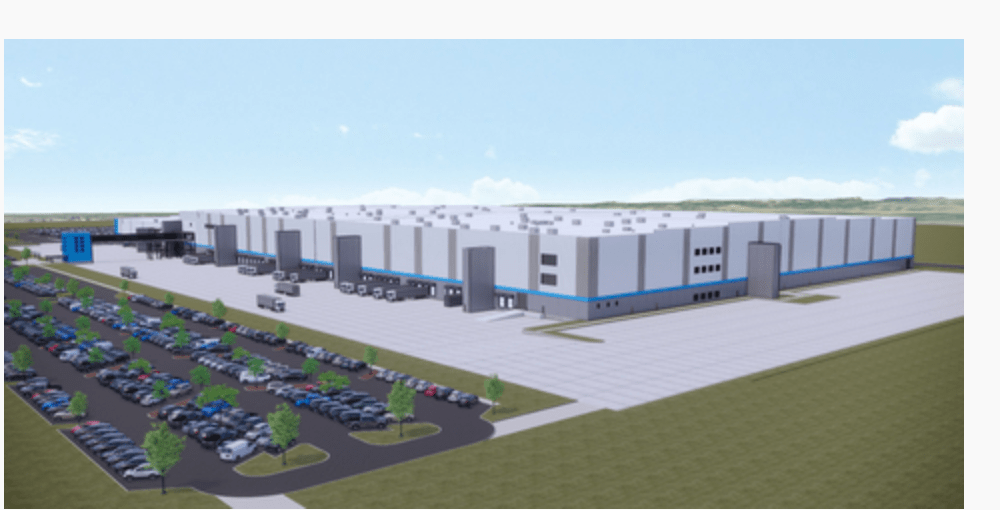
Walmart Inc. plans to open its fifth “next-generation” fulfillment center, this one in Stockton, California, in 2026.
The 900,000-square-foot facility located about 50 miles south of Sacramento will enable the retailer to fulfill online orders throughout the West Coast with greater speed and efficiency, Walmart (NYSE: WMT) said in Thursday’s announcement.
The Stockton fulfillment center also will increase fulfillment capacity for Walmart.com orders, the company said.
The facility will feature an automated, high-density storage and retrieval system that streamlines a manual, 12-step process to just five steps. The new technology will double the storage capacity and process twice the number of customer orders Walmart can fulfill in a day, expanding next- and two-day shipping for Walmart customers, the company said.
“The announcement of our high-tech fulfillment center in Stockton commemorates yet another significant stride in our omni-channel retail efforts,” said Karisa Sprague, senior vice president, fulfillment network operations for Walmart U.S., in a statement. “In response to increasing customer demand for online shopping, we are implementing technology to enhance delivery speed and accuracy” for Walmart customers.
Combined with the rest of Walmart’s fulfillment network, next-generation fulfillment centers, like the Stockton facility, will enable the retailer to reach 95% of the U.S. population with next- or two-day shipping. Walmart Fulfillment Services, Walmart’s end-to-end third-party fulfillment service, will also leverage the space to fulfill third-party Marketplace items.
Walmart expects to hire more than 1,000 employees at the center, it said.
The first location opened in summer 2022 in Joliet, Illinois, servicing customers across Illinois, Indiana and Wisconsin. Along with a recently opened facility in McCordsville, Indiana, other facilities will open in Lancaster, Texas. and Greencastle, Pennsylvania.


Hello, and welcome to the coolest community in freight! Here you’ll find the latest information on warehouse news, tech developments and all things reefer madness-related. I’m your controller of the thermostat, Mary O’Connell. Thanks for having me!

(Photo: Jim Allen/FreightWaves)
Walmart has made some bold decisions. Instead of setting up a new milk processing facility in the Upper Midwest, heart of dairy country, it has decided to set up shop in Valdosta, Georgia. Bold choice. Knowing Walmart, there is a reason for the move to the South. That reason would be increased access to Walmart and Sam’s Club stores in the Southeast.
This new facility will focus strictly on milk processing and will create 400 jobs for the Valdosta community. It’s expected to service more than 750 Walmart and Sam’s Club stores. It’s Walmart’s second plant exclusively for processing milk, the first being in Fort Wayne, Indiana.
Walmart is looking to take similar steps with other commodities. The company is working on two case-ready beef facilities in Georgia and Kansas in addition to partnerships with rancher-owner Sustainable Beef LLC.

(Photo: Jim Allen/FreightWaves)
Massachusetts-based Cold Chain Technologies grows internationally … again. This time the acquisition is Exeltainer, an international thermal packaging company with hubs in Spain and Brazil. This is the third acquisition by Cold Chain Technologies since it was acquired by Aurora Capital in 2019.
“Exeltainer has developed an impressive portfolio of solutions to meet the stringent compliance requirements of its global pharmaceutical clients,” Cold Chain CEO Ranjeet Banerjee said in a press release.
Also growing here in the U.S. is Portland, Maine’s cold storage space. A year after breaking ground, construction is picking up speed on a 107,000-square-foot warehouse on Portland’s coast. The project will open only a few months after the originally planned date. It has been stalled by issues underground.
The new facility is expected to meet demand for the Icelandic shipping company Eimskip and companies in Maine as well. It will recapture some of the almost $2 billion of seafood exported from the East Coast that doesn’t pass through Portland.


(Photo: Business Wire)
The man who gave us the show “Bizarre Foods with Andrew Zimmern” has taken his talents to the slightly less bizarre. Zimmern has come out with his own line of frozen entrees that don’t appear to be bizarre in nature. His meals focus on comfort food and the convenience of not having to wait 45-plus minutes for a meatloaf to cook.
His meals include Pulled Pork Mac and Cheese, Meatloaf, Turkey Dinner and Swedish Meatballs. Personally, the Turkey Dinner intrigues me the most as I love a good roast turkey but hate waiting a few hours for a whole turkey to cook.
“These frozen meals are a result of years of exploration, passion, and dedication to the art of cooking,” says Zimmern. “Whether you’re enjoying the comforting notes of Pulled Pork Mac & Cheese or savoring the rich flavors of Swedish Meatballs, each dish tells a story of authentic flavors and family. With ‘By Andrew Zimmern’ frozen entrées, it is possible to enjoy chef-quality comfort food meals with all the quality and none of the stress.”
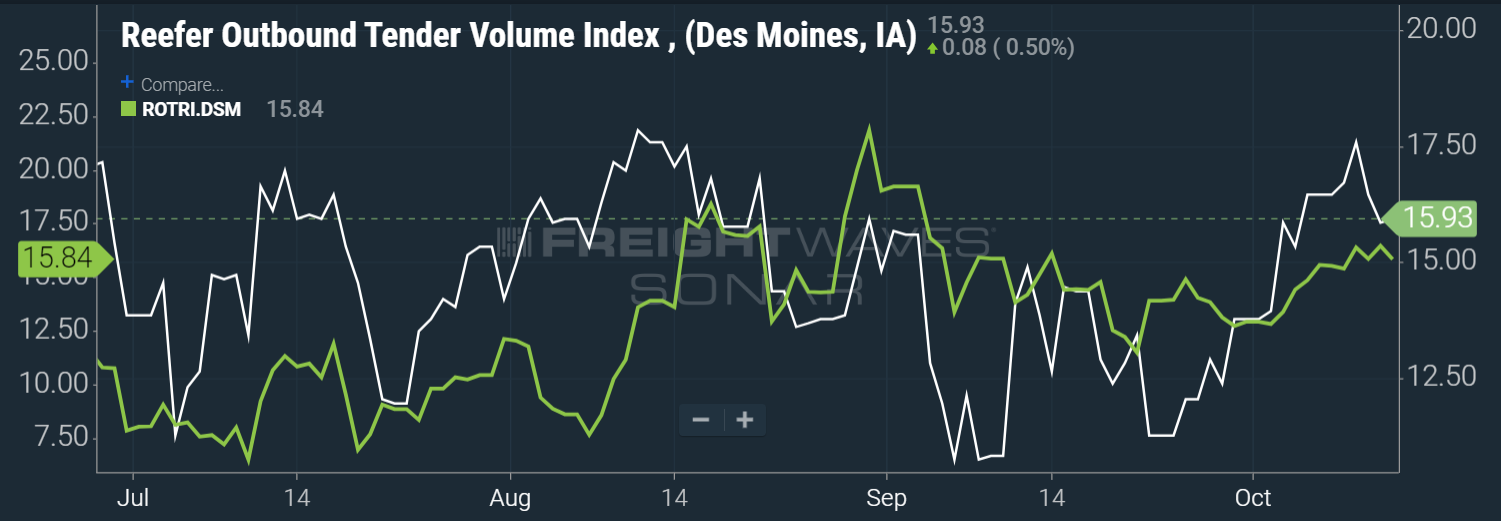
(SONAR Ticker: ROTVI.DSM, ROTRI.DSM)
This week’s SONAR market is Des Moines, Iowa. Reefer outbound tender rejections increased 203 basis points week over week for a ROTRI of 15.84%. Rejection rates over 10% indicate that there are inflated spot rates for a market, so hitting well above that should make for some lucrative rates on the carrier front. Shippers should expect a fair amount of contracted freight to get rejected and pushed to the spot market.
Is SONAR for you? Check it out with a demo!
The curse of Thawed Loadoma and managing refrigerated assets
Conagra Brands focused on finding the ‘sweet spot’ amid shifting consumer demands
Constellation Cold Logistics entered into an agreement to acquire Colso Coldstorage
California isn’t banning Skittles, but four additives will be restricted
Once again California tells a court AB5 isn’t disrupting trucking in state
Wanna chat in the cooler? Shoot me an email with comments, questions or story ideas at moconnell@www.freightwaves.com.
See you on the internet.
Mary
If this newsletter was forwarded to you, you must be pretty chill. Join the coolest community in freight and subscribe for more at www.freightwaves.com/subscribe.

On today’s episode of WHAT THE TRUCK?!? Dooner is talking about DHL Express joining forces with four zoological institutions to fly eight manatees more than 1,000 miles back to their temporary Florida homes. We’ll learn from Joe Collopy at DHL and Becky Ellsworth at the Columbus Zoo the logistics of hauling manatees for rehabilitation.
FreightWaves’ Greg Miller looks at global shipping’s new flash point, Israel. He lays out how shipping executives are preparing for the conflict.
AIT Worldwide Logistics’ Angela Mancuso discusses the hiring market for freight forwarders. How hard is it to find employees, are there opportunities and what’s the value of building a skilled workforce?
F Staff founder and CEO Justin Clarke talks about the business of placing drivers. We’ll learn what the job market is like right now for truckers.
Plus, Flexport cuts 20% of its global staff; two trucking companies shut down; a port tour; how not to deal with a flat tire; and more.
FreightWaves Classics is sponsored by Old Dominion Freight Line — Helping the World Keep Promises. Learn more here.
This story was originally published on Dec. 2, 2019.
College football kicked off more than 150 years ago with Rutgers University defeating Princeton University 6-4 in that first game in 1869.
With football season in full swing, this is an appropriate time to focus on a few U.S.-flag ships that invoke the spirit of college football. The first ships to come to mind feature two collegiate rivals, Harvard and Yale universities, of the American Line.
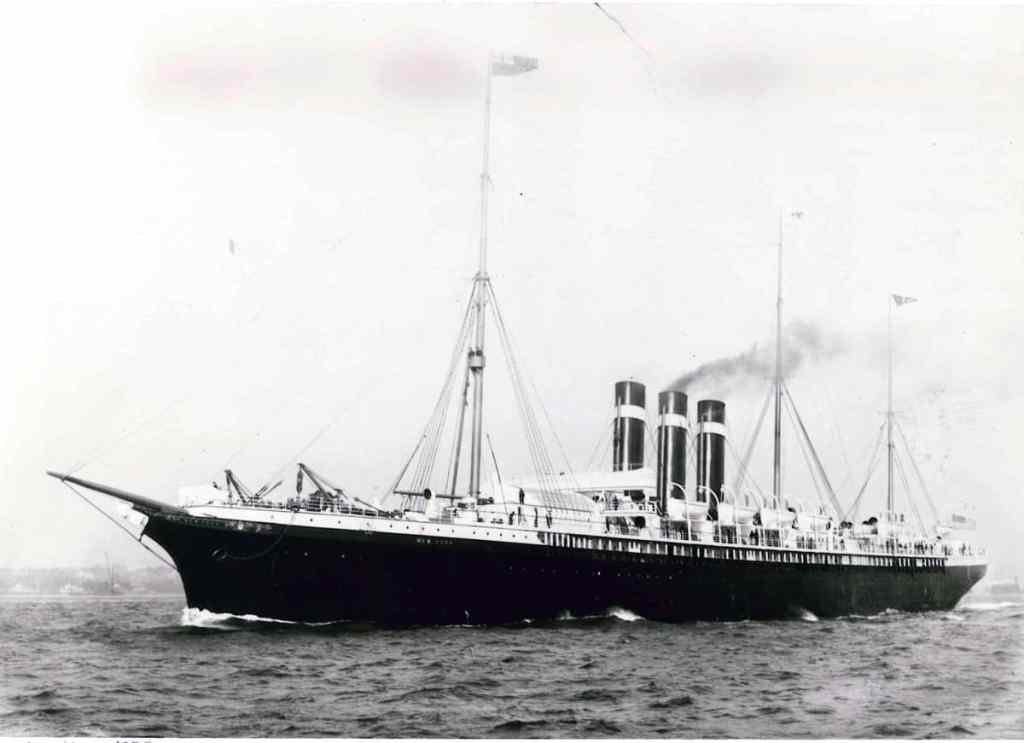
Both twin-screw-propelled vessels were built in Glasgow, Scotland, in 1888 and 1889, respectively, as the City of New York and City of Paris. They measured 560 feet in length and were the first ships to exceed 10,000 tons (not counting the Great Eastern). They were also “Blue Riband” holders and able to steam at over 20 knots.
In 1893, American Line purchased the two ships, placed them under the U.S. flag and shortened their names to New York and Paris. On April 14, 1898, the U.S. Navy requisitioned both ships and renamed them USS Harvard and USS Yale. They were then fitted out as auxiliary cruisers for the Spanish-American War.

When the students at Yale heard about this, they conducted a fundraiser to purchase guns for their namesake ship. They soon raised enough money to buy and install two 6-pounders, which they named Eli (in honor of the school’s founder, Elihu Yale) and Handsome Dan (the Yale bulldog mascot) to distinguish them from the other batteries.
The ships were fitted with eight 5-inch guns and six 6-inch guns. Both Harvard and Yale served gallantly in the Caribbean and were returned to their owners later that year.
Then there were the famous 24-knot coastal liners: the Harvard and Yale of 1907.
Both were built at Roach’s Shipyard in Chester, Pennsylvania. They were identical in every detail except for their interiors, where they took on the decor and trimmings of their respective names. The Yale featured school-color blue decor and stained glass, while the Harvard featured the school color of crimson.

They were built for the overnight service from New York to Boston but wound up on the West Coast, plying an overnight route from San Francisco to Los Angeles and San Diego. Both ships distinguished themselves during World War I, serving as cross-English Channel troop transports before returning to their West Coast routes.
During World War II, many Victory class ships were named after American colleges and their football teams.
One of those was the 8,500-horsepower Notre Dame Victory. Built in Portland, Oregon, in 1945, it was operated worldwide by the Interocean Steamship Co. for the U.S. government. Shortly thereafter, Moore-McCormick Lines chartered the ship for its South American service. Upon receiving modern C-2 and C-3 class ships, the Notre Dame Victory was returned to the U.S. government and laid up in the James River Reserve Fleet.

In 1950, the U.S. Office of Defense Mobilization, recognizing an increasing need for steel, requested the American steel industry to increase production. Cleveland-Cliffs Iron Co., the oldest of the Michigan ore mining operators, needed to obtain a ship quickly. At the time, all the shipyards on the Great Lakes were busy.
The decision was made to purchase the Notre Dame Victory from the U.S. government and lengthen and convert the ship to a Great Lakes ore carrier. Cleveland-Cliffs, Bethlehem Steel Shipyards in Baltimore and the Army Corps of Engineers made maritime history as they developed a plan to convert the ship by cutting it at the No. 3 hatch and inserting a new 165-foot midsection.
The ship would then be towed to New Orleans and up the Mississippi and Illinois rivers leading to the Chicago River and through the city to Lake Michigan. The transit of the Chicago River proved most hazardous. The ship had to be taken around sharp bends and proceed through several simultaneously raised bridges through the center of Chicago.

Before its departure from Baltimore, two 120-foot pontoons were fitted to increase the waterplane, so the draft of 8 feet, 6 inches could be maintained for the river transit but also available to be ballasted to get under certain bridges. Since this was the largest vessel to transit the rivers, radio stations announced its progress and thousands of people gathered along the shores to watch it pass.
On May 9, 1951, the ship arrived at Chicago and work immediately commenced lifting deckhouses, masts and the smokestack into position. The propeller and rudder were fitted and on June 2 the ship commenced its sea trials. On June 4, renamed the Cliffs Victory, the ship proceeded to its first load port.

Thus, the first ocean cargo vessel to be converted to a Great Lakes ore carrier started life as the Notre Dame Victory. The conversion took an amazing 167 days.
In 1956, the ship was again lengthened another 96 feet, increasing its total to 713 feet and deadweight tonnage to 18,175. It was considered the longest and fastest ship on the Great Lakes. The ship enjoyed a long life until being sold in 1985 to South Korean scrappers.

Other notable World War II Victory ships to bear the names of American colleges included the Kings Point Victory, Princeton Victory, Rutgers Victory and about 100 more. After the war, another Kings Point was built as a tanker in 1958, and a 1973-built tanker became the second Notre Dame Victory. Central Gulf Lines named its flagships the Green Wave in honor of the founders’ alma mater, Tulane University in New Orleans.
FreightWaves Classics articles look at various aspects of the transportation industry’s history. Click here to subscribe to our newsletter!
Have a topic you want us to cover? Email bjaekel@www.freightwaves.com.

The views expressed here are solely those of the author and do not necessarily represent the views of FreightWaves or its affiliates.
The last mile has become the most complex and costly segment of the delivery process. It’s the final leg of a product’s journey from the distribution center to its ultimate destination, and it presents a unique set of challenges — more so as we are entering peak season, when we see additional charges by carriers such as FedEx and UPS and increased pressures on capacity as well as service levels. Managing last-mile capacity while controlling these factors is an intricate balancing act that requires innovative solutions, and last-mile platforms are emerging as the answer to this complexity.
The last mile represents the shortest yet most challenging and costly part of a product’s journey. Several factors contribute to its complexity, including geographical diversity, traffic congestion, evolving customer expectations, delivery window variability, and capacity and cost pressures. To address these intricate challenges of last-mile logistics, last-mile platforms are gaining prominence. These platforms offer a suite of solutions and technologies that streamline operations, reduce costs and optimize the capacity of last-mile delivery.
Last-mile platforms utilize sophisticated algorithms to optimize delivery routes, considering factors like traffic, delivery windows and location. This reduces fuel consumption, decreases delivery times and minimizes operational costs. By providing real-time tracking, these platforms enable both customers and logistics providers to monitor the delivery process. This transparency minimizes the risk of failed deliveries and enhances the customer experience.
Last-mile platforms collect and analyze vast amounts of data to identify trends and areas for improvement. This data-driven approach helps in making informed decisions about route planning, vehicle allocation and customer preferences. Efficient inventory management ensures that products are positioned strategically to minimize the distance of the last mile. This helps in decreasing the cost of delivery and increasing delivery speed.
Some last-mile platforms employ dynamic scheduling capabilities that enable real-time adjustments to delivery routes and times. This ensures flexibility in handling unforeseen circumstances. Many platforms integrate crowdsourced and gig economy drivers and couriers, providing on-demand delivery capacity that can be quickly scaled up or down based on demand.
These platforms often include features for customer communication, allowing customers to specify delivery preferences, receive delivery alerts and provide feedback, which ultimately improves customer satisfaction.
By optimizing routes, reducing failed deliveries and enhancing overall efficiency, last-mile platforms help control the costs associated with last-mile logistics. Many platforms also support eco-friendly delivery options, such as electric vehicles and alternative fuels, contributing to a reduction in the environmental impact of last-mile operations.
Now, not every last-mile platform offers all of the above capabilities. These platforms can be defined into several categories, such as last-mile parcel management and optimization with vendors such as Shipium; last-mile delivery management such as FarEye; or last-mile delivery services such as Frayt. This is where the need for last-mile ecosystems comes into play, where multiple vendors partner and collaborate to provide the end customer with a full suite of capabilities.
Last-mile fulfillment remains complex from lightning-speed picking in the warehouse driven by warehouse management, warehouse execution and automation systems to the routing and execution of the transportation to the handoff to an on-demand gig driver or even an autonomous last-mile delivery vehicle or drone. The complexity and cost continue to increase when considering the huge numbers of returns and the many ways returns are handled.
The complexity of last-mile logistics presents a significant challenge for the modern supply chain. However, last-mile platforms are a powerful response to this complexity, offering a wide array of tools and solutions that help manage capacity, reduce costs and improve efficiency. By embracing these platforms, logistics providers and retailers can meet the demands of an evolving e-commerce landscape, delight customers with faster and more convenient delivery options and ultimately make the last mile a less complex and more manageable part of the supply chain.
As technology continues to advance and these ecosystems keep growing, we can expect even more innovative solutions to further streamline the last-mile process and enhance the customer experience.
Look for more articles from me every Friday on FreightWaves.com.

Bart De Muynck is an industry thought leader with over 30 years of supply chain and logistics experience. He has worked for major international companies, including EY, GE Capital, Penske Logistics and PepsiCo, as well as several tech companies. He also spent eight years as a vice president of research at Gartner and, most recently, served as chief industry officer at project44. He is a member of the Forbes Technology Council and CSCMP’s Executive Inner Circle.
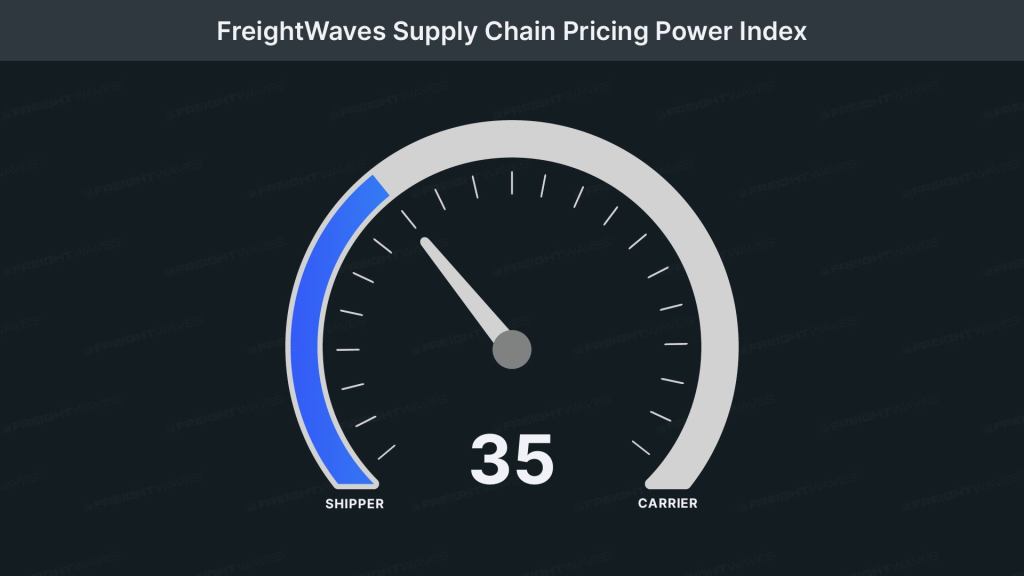
This week’s FreightWaves Supply Chain Pricing Power Index: 35 (Shippers)
Last week’s FreightWaves Supply Chain Pricing Power Index: 35 (Shippers)
Three-month FreightWaves Supply Chain Pricing Power Index Outlook: 35 (Shippers)
The FreightWaves Supply Chain Pricing Power Index uses the analytics and data in FreightWaves SONAR to analyze the market and estimate the negotiating power for rates between shippers and carriers.
This week’s Pricing Power Index is based on the following indicators:
Volumes are proceeding along seasonal trends, even though some shippers are warning that the freight industry is moving “deeper into limbo.” After struggling to offload a massive inventory glut over the past few years, shippers have largely completed their destocking efforts and are now broadly looking to be leaner in the months to come. Given the surplus of available capacity, shippers are more confident in switching to “just-in-time” freight strategies as consumer resilience remains an open question.
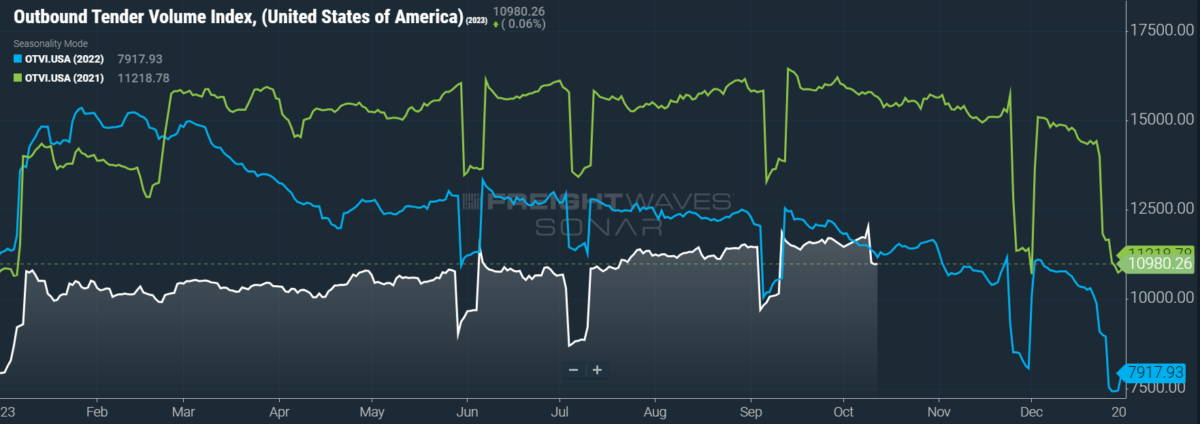
This week, the Outbound Tender Volume Index (OTVI), which measures national freight demand by shippers’ requests for capacity, dipped 5.11% month over month (m/m). On a year-over-year (y/y) basis, OTVI is down 1.74%, though such y/y comparisons can be colored by significant shifts in tender rejections. OTVI, which includes both accepted and rejected tenders, can be inflated by an uptick in the Outbound Tender Reject Index (OTRI).
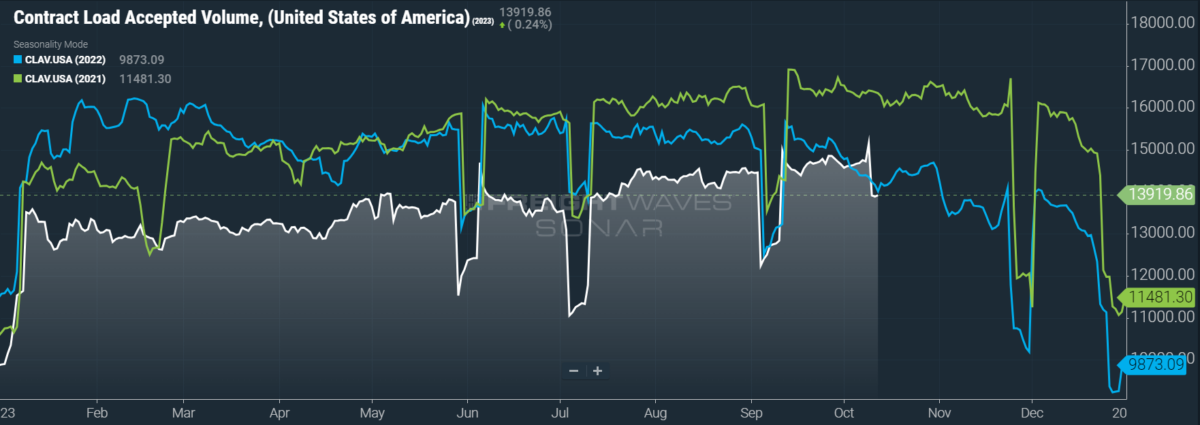
Contract Load Accepted Volume (CLAV) is an index that measures accepted load volumes moving under contracted agreements. In short, it is similar to OTVI but without the rejected tenders. Looking at accepted tender volumes, we see a rise of 1.17% m/m as well as one of 6.44% y/y. This positive y/y difference implies that actual freight flow is recovering from this cycle’s bottom.
Despite numerous signals of a challenging business environment among labor strikes, the Bureau of Labor Statistics reported a staggering gain of 336,000 jobs in the month of September. Not only was this figure the highest monthly gain since January, but it was nearly double the 170,000-job gain of consensus expectations. Even so, the unemployment rate remained unexpectedly stable at 3.8%, frustrating predictions of a modest drop to 3.7%.
The above data should be taken with a grain of salt, however. Excepting September’s report, in which jobs data was revised upward for July and August, the headline figure has been revised lower in subsequent reports for every month of 2023 so far. Moreover, while the headline figure comes from the report’s Establishment Survey, the Household Survey reported the number of newly employed workers at just 86,000 — the second-weakest gain of 2023 to date. In this survey, the number of multiple jobholders (those employed with at least one full-time job) rose 368,000 in September, while the number of full-time jobholders fell 885,000 in the month.
Speaking of beating expectations, the September print of the Consumer Price Index revealed inflation to be slightly hotter than consensus forecasts. Headline inflation rose 0.4% over August and 3.7% y/y, with the biggest gains unsurprisingly seen in energy commodities like gasoline and fuel oil. Shelter prices, meanwhile, remain up an eye-watering 7.2% y/y, with hikes spread evenly among renters and homeowners. Yet, excluding food and energy, goods prices actually fell 0.5% y/y. Assuming that consumers have enough left in their budgets after spending on essentials, the holiday shopping season could be more active than some bears predict.
Rising energy prices were also behind September increases in supply-side inflation. The latest print of the Producer Price Index saw the headline final demand index rise 0.5% over August and 2.2% y/y, the latter of which is the largest increase since April. Producers’ input costs for food, however, was another contributing factor to inflation as the index for final demand food was up 0.9% over the previous month. Given that supply-side inflation takes roughly six months to trickle down to the consumer, these latest figures are an upsetting omen that price pressures might be too stubborn to allow for a “soft landing” — that is, taming inflation without triggering a recession.
Yet the Federal Reserve is largely unconcerned with September’s data from both the hotter-than-expected labor market and inflationary pressures. This week, several top Fed officials signaled that the sustained rise in long-term interest rates is likely to negate any need for the Fed to continue raising short-term interest rates. Thus, although the Fed was expected to introduce a final hike at one of its two meetings left in 2023, monetary policy might already be at its tightest for this cycle.
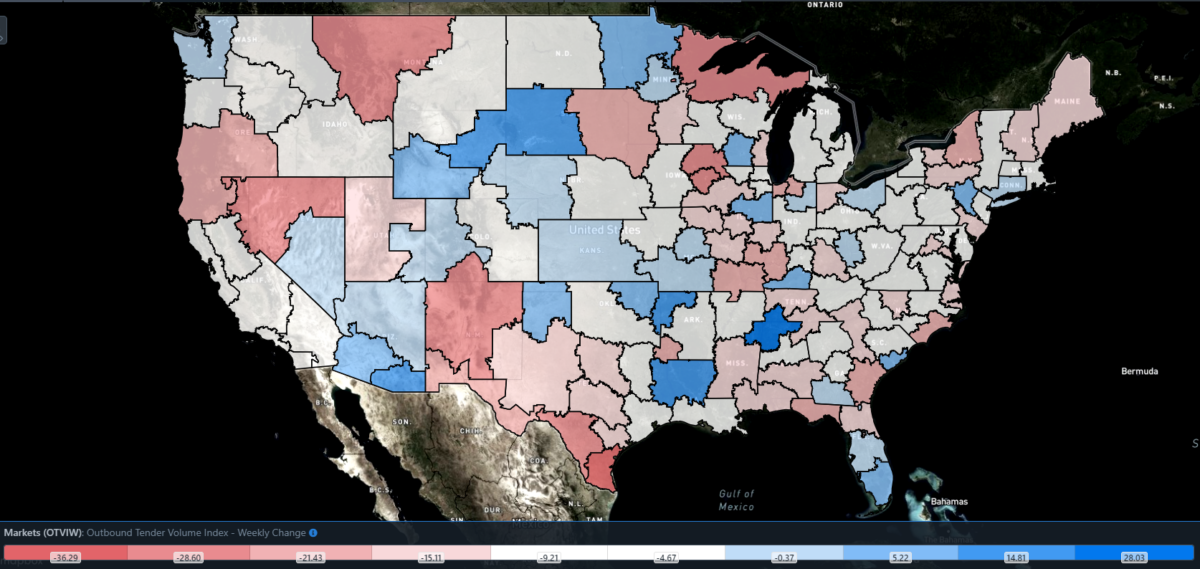
Of the 135 total markets, 29 reported week-over-week (w/w) increases in tender volumes, with the largest gains being confined mostly to the smallest markets.
Rejection rates ticked up in the prelude to Amazon’s Prime Big Deal Days, which put some brief pressure on competing retailers to secure capacity. OTRI experienced a similar uptick in July around Amazon’s Prime Day event, with those gains being lost quickly in the following week. So it seems with the current rise, as OTRI is already sliding back to its levels of mid- to late September.
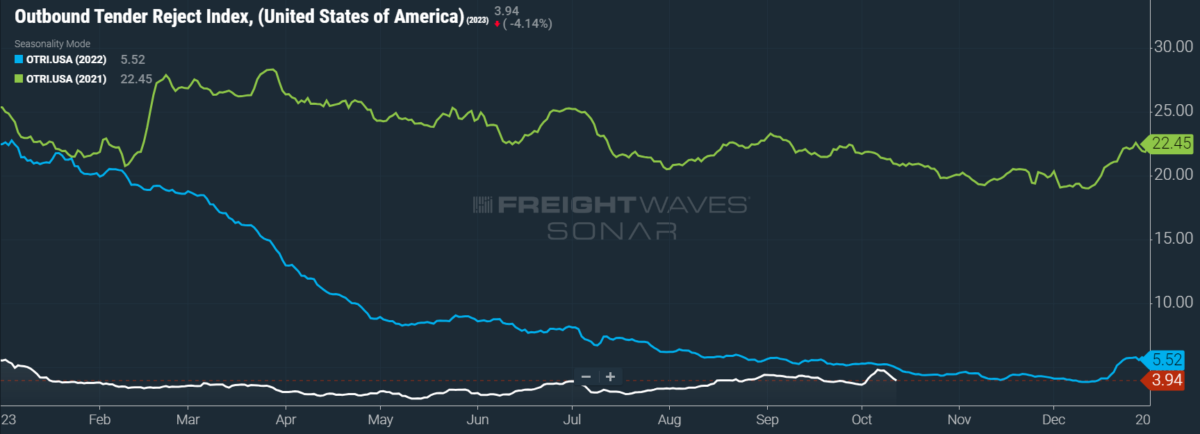
Over the past week, OTRI, which measures relative capacity in the market, fell to 3.94%, a change of 57 basis points from the week prior. OTRI is now 99 bps below year-ago levels, with y/y comparisons becoming more favorable even if OTRI just remains stable.
Carrier bankruptcies continue to surface intermittently in 2023. The latest such victim is Meadow Lark Transport, a 40-year-old carrier with 273 drivers and 337 power units. The company’s brokerage arm saw its authority involuntarily revoked back in August, while its contract carrier authority is scheduled to be canceled by the end of October. Though there has been no official statement given as to why the company is closing, some carriers that ran loads under the company’s brokerage arm allege that they have yet to be paid. A former truck driver employed by the company also filed a class-action lawsuit in June 2022, citing a failure to disclose material facts about the economics of its lease program. Per the lawsuit, drivers in this program “often had little or no compensation and sometimes even owed Meadow Lark money despite the long hours they worked as drivers.”

The map above shows the Weighted Rejection Index (WRI), the product of the Outbound Tender Reject Index – Weekly Change and Outbound Tender Market Share, as a way to prioritize rejection rate changes. As capacity is generally finding freight this week, only a few regions posted blue markets, which are usually the ones to focus on.
Of the 135 markets, 55 reported higher rejection rates over the past week, though 31 of those saw increases of only 100 or fewer bps.
Crude oil prices, which directly inform prices of diesel and gasoline, have been on quite the ride over the past few weeks. In late September, oil prices rallied among fears of a growing imbalance between supply and demand. This rally came to an abrupt end, however, as the U.S. reported a significant build of gasoline stocks and fears of a recession outweighed those of a supply shortfall. Unrest in the Middle East then shook up oil markets once again, though the latest rise was primarily brought about by the U.S.’ sanctioning of two tanker owners carrying Russian oil above the G7-mandated price cap of $60 per barrel.
Where does this roller coaster leave diesel prices? Although oil’s current rally appears to be ultimately limited by recessionary fears, diesel is a refined product downstream of oil trading. In order to compensate for this lag in market exposure, diesel prices are likely to remain stickier at a higher level, offsetting any potential volatility incurred by geopolitical chaos. Such potential for upward pressure, however, has yet to be realized as retail diesel prices continue to slide from late September’s peak.
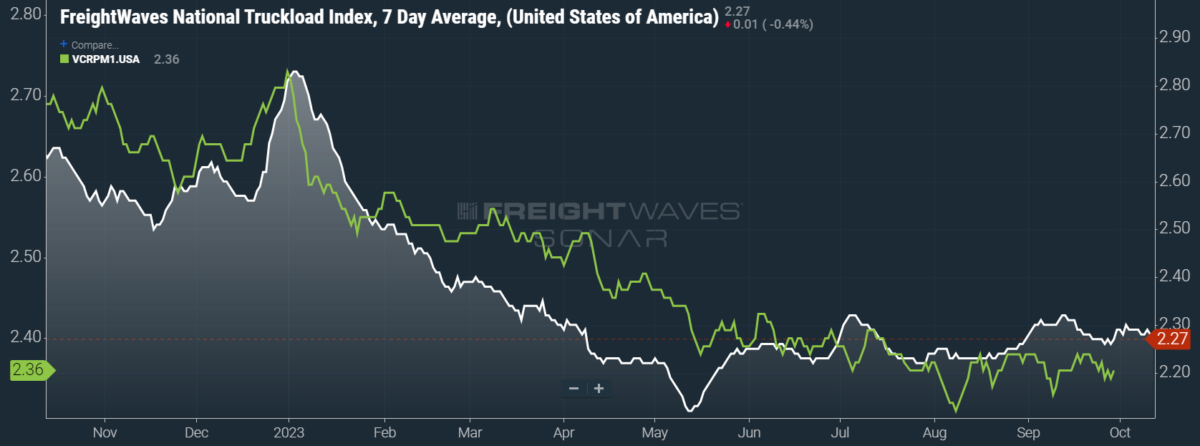
This week, the National Truckload Index (NTI) — which includes fuel surcharges and other accessorials — fell 2 cents per mile to $2.27. Sliding linehaul rates were only half responsible for this decline, as the linehaul variant of the NTI (NTIL) — which excludes fuel surcharges and other accessorials — fell 1 cent per mile w/w to $1.58.
Contract rates, which are reported on a two-week delay, have seen their fair share of volatility over the past few weeks as well. Compared to where they started the third quarter, contract rates have only fallen 3 cents per mile, though this summary ignores some extreme dips from early August and September. In the coming weeks, we will start to see how aggressive shippers were in negotiating Q4 freight contracts. For the time being, contract rates — which exclude fuel surcharges and other accessorials like the NTIL — are down 1 cent per mile w/w at $2.36.
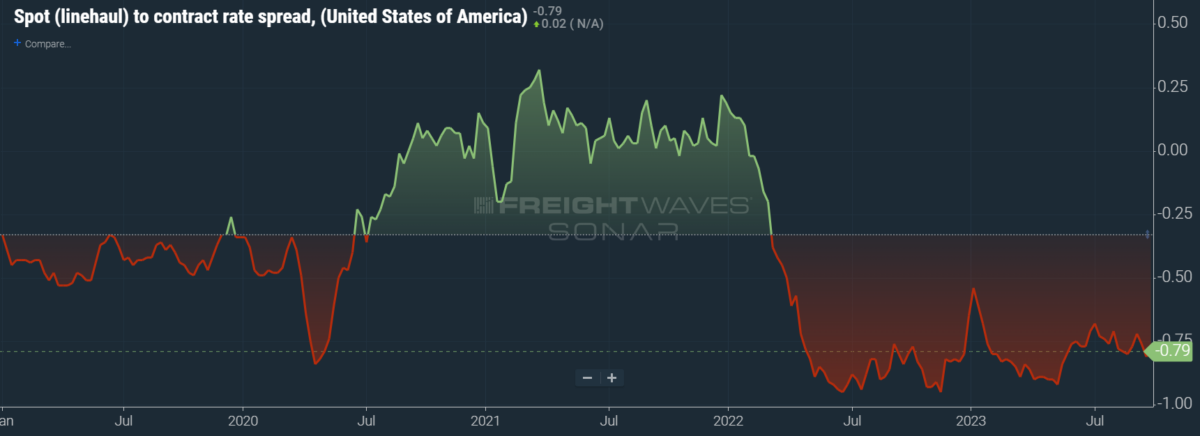
The chart above shows the spread between the NTIL and dry van contract rates, revealing the index has fallen to all-time lows in the data set, which dates to early 2019. Throughout that year, contract rates exceeded spot rates, leading to a record number of bankruptcies in the space. Once COVID-19 spread, spot rates reacted quickly, rising to record highs seemingly weekly, while contract rates slowly crept higher throughout 2021.
Despite this spread narrowing significantly early in the year, tightening by 20 cents per mile in January, it has widened again throughout the year to date. As linehaul spot rates remain 79 cents below contract rates, there is still plenty of room for contract rates to decline — or for spot rates to rise — in the remainder of the year.
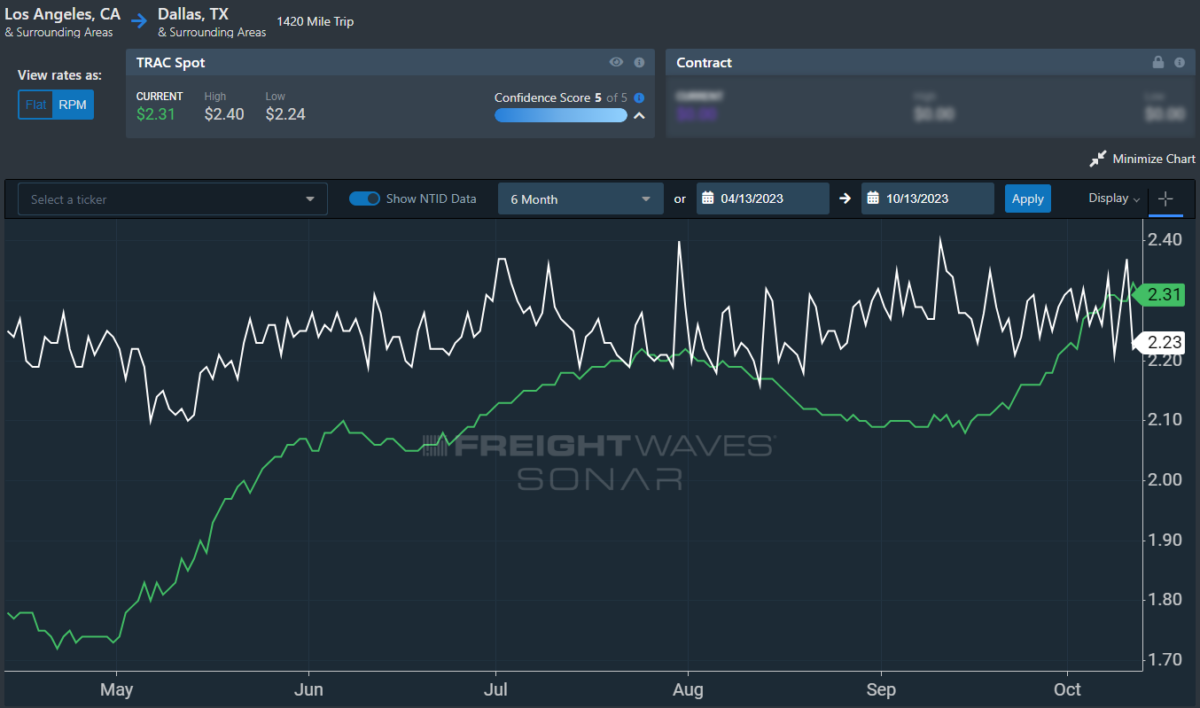
The FreightWaves Trusted Rate Assessment Consortium (TRAC) spot rate from Los Angeles to Dallas, arguably one of the densest freight lanes in the country, is finding its footing once again. Over the past week, the TRAC rate rose 3 cents per mile to $2.31 — still some distance from its year-to-date high of $2.39. The daily NTI (NTID), which has fallen to $2.23, is finally being outpaced by rates along this lane.
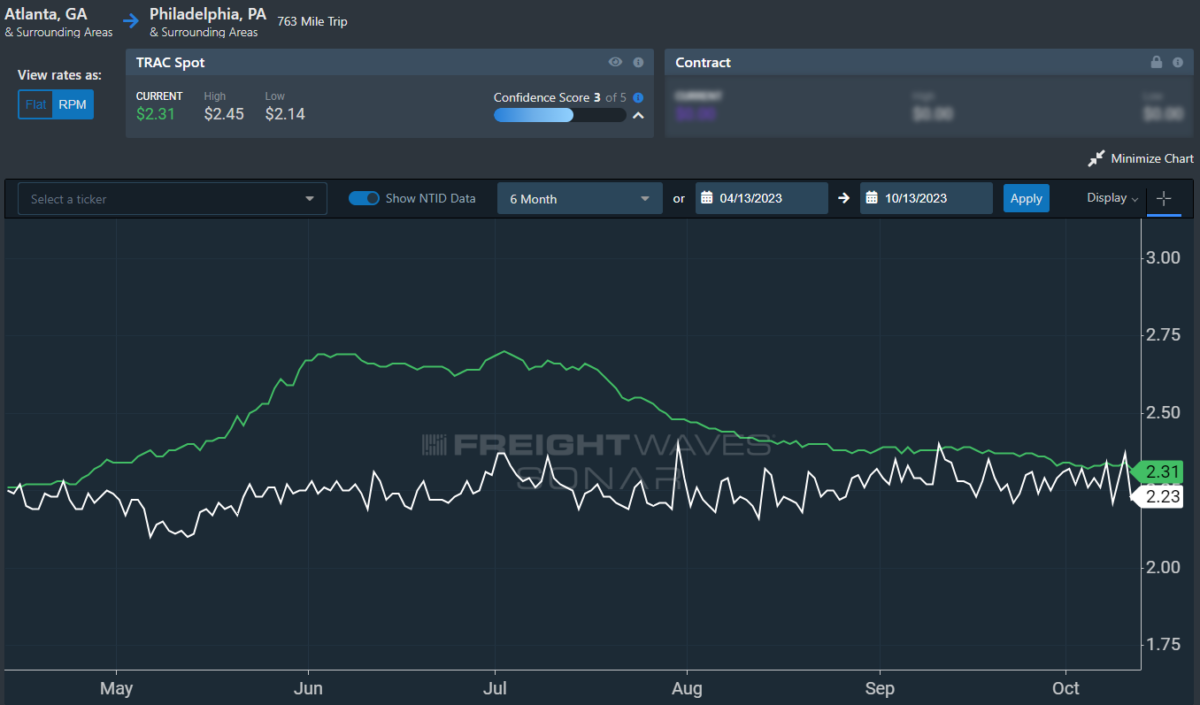
On the East Coast, especially out of Atlanta, rates have come down from July’s early peak but are still outpacing the NTID. The FreightWaves TRAC rate from Atlanta to Philadelphia fell 2 cents per mile to $2.31. After a bull run that started at the end of April, this lane had been plateauing above the national average, which made north-to-south lanes in the East more attractive than West Coast alternatives.
For more information on FreightWaves’ research, please contact Michael Rudolph at mrudolph@www.freightwaves.com or Tony Mulvey at tmulvey@www.freightwaves.com.
Flexport is implementing Friday a 20% workforce reduction teased a week ago and notifying employees whose jobs have been eliminated as the freight forwarder moves to plug financial losses and become more nimble, CEO Ryan Petersen said in a message to staff posted on the company’s website.
The reduction in force is less than originally floated. Flexport officials last week confirmed plans for layoffs, with internal sources saying that up to 30% of personnel could be let go.
It is the second time this year that Flexport has laid off 20% of its workforce. The new cuts represent about 600 employees in a company with approximately 3,200 people.
Petersen has characterized his return as CEO as one of righting a ship taking on red ink because of excess spending. He is focusing on driving growth in the core forwarding business through more focus on customer service and driving down costs.
The layoffs are the latest drama since Petersen took back control of the company from handpicked successor Dave Clark, a top Amazon logistics executive who was supposed to help the 10-year-old company move from a fast-burning startup to a mature company with sustainable growth. Petersen has blamed Clark for overspending, but CNBC has reported that Petersen and the Flexport board were on board with Clark’s moves.
“Customers need to be able to count on Flexport as a reliable partner for their supply chain. Over the last month my leadership team and I evaluated every role in the company and its relationship to solving important supply chain problems for our customers. As a result, we are confident that this reduction in force will not impact the customer experience we provide to our customers today,” Petersen wrote in his blog post.
Petersen claimed the tighter fiscal policy could return the company to profitability by the end of 2024. Flexport has suffered a significant drop in revenue from the steep downturn in international ocean and air shipping over the past 18 months. Flexport’s revenue has deteriorated more sharply than at many of its large competitors. International freight markets remain at the bottom of the business cycle and many experts don’t see a recovery in demand until the second half of next year.
“With more than $1 billion in net cash, following this change, Flexport is now in a great position to take advantage of the opportunities in front of us to return to profitability as soon as the end of next year,” the founder said in his message. … “We’ll be able to get back to profitability without raising prices or placing our fortress balance sheet at risk. Instead, our path to profitability runs through delivering outstanding global logistics and technology solutions that solve customer problems. We will continue to relentlessly focus on the quality of our services as measured by on-time execution, quote to invoice accuracy, shipment milestone accuracy, direct customer feedback and net promoter scores.”
He reiterated that Flexport isn’t abandoning technology projects that help simplify international trade processes for shippers. But the message made no mention of the company’s recent push to enter the last-mile delivery space and technology investments needed to build on last summer’s $2.1 billion acquisition of Deliverr.
“Today’s change does not change our commitment to pursuing our long-term technology vision. We see endless opportunities for technology to improve on-time performance and reliability, upgrade compliance processes, and save businesses money in their global supply chain. We are the technology leader in this space and will continue to accelerate.
“With a flatter organizational structure, our talented tech teams will be able to make quicker decisions and deliver technology across as many customers and use cases as possible. Businesses come to Flexport for technology that improves reliability, visibility, and control over their supply chains, but they stay and grow with us because of the passion and expertise of our people. That won’t change, as we are more committed than ever to our customers,” Petersen said.
The statement suggests Flexport will be more cautious spending on IT products until they can be paid for from recurring cash flow.
Petersen said laid off workers will receive nine weeks of severance pay, two months of extended health care and assistance finding new opportunities. That deal is worse than the one in January, when terminated employees got 12 weeks severance, six months of extended healthcare, a bonus payment and accelerated vesting in the employee ownership program.
Click here for more FreightWaves/American Shipper stories by Eric Kulisch.
Twitter: @ericreports / LinkedIn: Eric Kulisch / ekulisch@www.freightwaves.com
RELATED NEWS:
Flexport founder says ousted CEO lost customer focus, spending discipline
Flexport to cut 20% of workforce as global shipping demand wanes

You can buy a charger for an electric vehicle from any number of suppliers. But it’s an incomplete purchase without knowing when the charger is operating, how much juice it can put out at a given time and whether or not it’s occupied.
“The last conversation I’m having is ‘Let’s pick the right hardware, how to deploy it cost effectively, and let me help you operate it so you get the SLA (service life agreement) you want,” Rich Mohr, ChargePoint Holdings Inc. senior vice president for North America, told me this week. “But I’ve got 10 steps before I get to that.”
Founded in 2007 and a public company since completing a reverse merger with Switchback Energy Acquisition Corp. in February 2021, ChargePoint (NYSE:CHPT), had an enterprise value of $2.4 billion and received $450 million in special purpose acquisition company proceeds. Revenue is growing but it is still losing money.
ChargePoint recently signed deals to provide electric charging infrastructure for Isuzu Commercial Truck of America Inc. and electric vehicle chargers to support Ryder System Inc.’s purchase of 4,000 BrightDrop electric vans. The fleet business allows ChargePoint to leverage lessons learned in passenger vehicle charging, Mohr said.

The company is not alone in building and selling a subscription-based charging ecosystem. Electric truck OEMs and a host of others, including utilities, offer consulting services.
Numerous startups like Flipturn Connect, recently profiled in Truck Tech, offer cloud-based systems to ease the transition to electric trucks.
“It’s not a software market per se,” Mohr said. “It’s an integration market, helping [fleets] integrate these into their business. That’s where the biggest success has been.”
Charger readiness becomes more important as the expected hockey stick of electric truck adoption arrives. It’s not here yet. With the exception of transit buses, Mohr said no medium- or heavy-duty electric trucks were registered in the last quarter. Passenger EVs accounted for 7.5% of sales in the second quarter, according to Experian.
“Every quarter ends up being a blip and then nothing, and then a blip and then nothing,” he said. “You’re seeing that in the medium- and heavy-duty [market], especially around the Class 8 manufacturers, and Class 5 and 6. It’s still very, very low volume.”
Daimler Truck North America (DTNA) CEO John O’Leary said in January that DTNA overbuilt capacity for electric trucks in 2022. But the realities of the post-pandemic heavy-duty market hampered by supply chain disruptions pushed OEMs to complete and deliver parts-shorted “red tag” diesel trucks as backlogs mounted from an inability to fully assemble new trucks.
The high cost of electric trucks — 2½ to three times the price of a diesel truck — was only one deterrent. Additional research and development and the fleets’ perception that the clock on regulations had plenty of time left also contributed.
“Why are you going to shift your labor over to that unless you really have the demand for the vehicles?” Mohr asked.. “No one’s kicking down the door to replace their entire fleet of diesel vehicles with electric vehicles.”
OEMs have largely caught up with pent-up demand. They accepted orders for more than 30,000 diesel trucks in September. The California Air Resources Board requires 5% zero-emission Class 8 trucks for large fleets beginning in 2025. The Environmental Protection Agency follows with tough rule changes two years later.
“MD and HD vehicle costs will rise by between 12% and 14% as the EPA’s Clean Trucks regulation goes live in 2027,” Kenny Vieth, ACT Research president and senior analyst, wrote this week. “As such, we believe the OEMs will be at least partially successful in convincing customers to begin EPA ’27 pre-buying in 2024.”
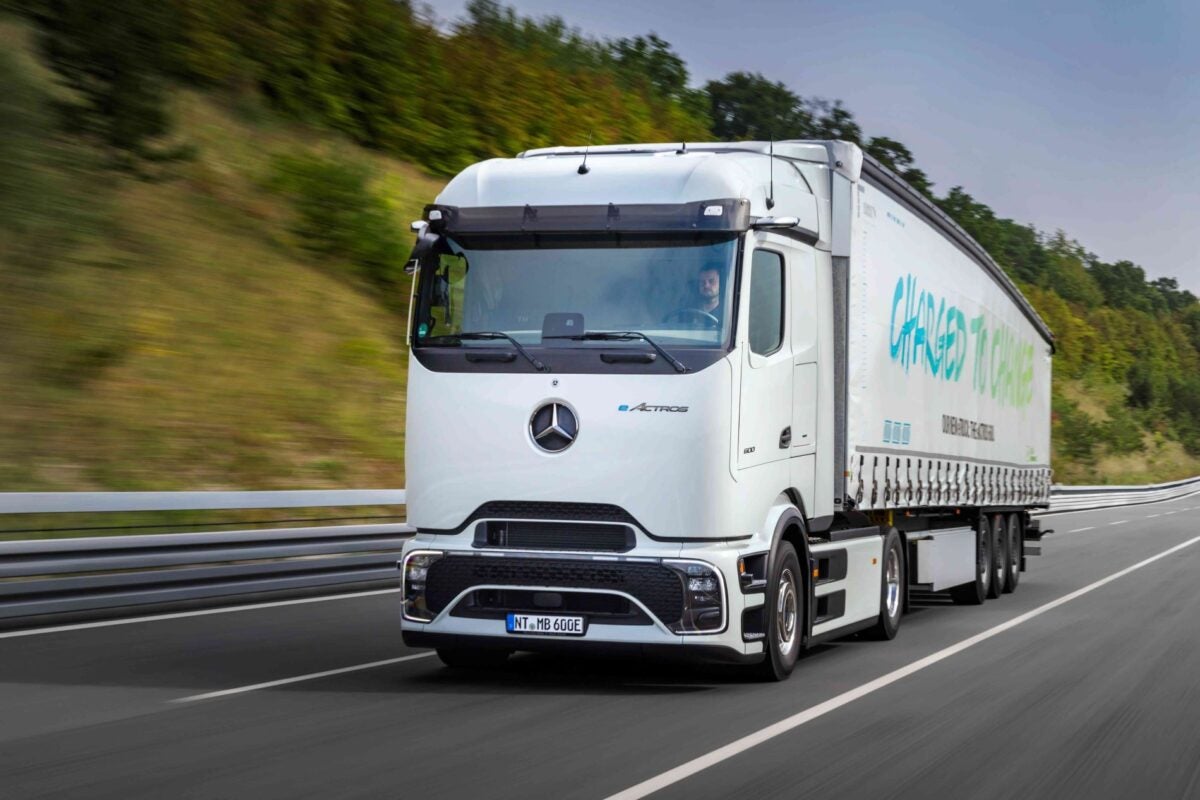
The cost curve begins to come down as OEMs allocate more labor and production resources to electric vehicles. Daimler Truck hinted at a longer-range, faster-charging future for the Freightliner eCascadia when it revealed the eActros 600 from Mercedes-Benz Trucks in Germany on Tuesday.
“I’m not worried about the slowness of the [electric] vehicles being delivered,” Mohr said. I’m expecting the technology to be at an OEM readiness and to be at a price point that is going to make sense in a TCO [total cost of ownership] mode. And I’m expecting manufacturing at volumes that are predictable.”
Mohr spent nearly two decades at Ryder before joining ChargePoint about three years ago. One thing he learned there was that for all the enthusiasm of new players in the trucking space, few succeed.
“In my old job, when I’m making a bet on a billion dollars worth of purchases for a fleet, who am I buying from?” he asked. “I’m buying from the companies that I have recourse with, that I have warranties with. You have to scale to a level to allow you to serve the bigger fleet companies in the U.S. to make a bet on those vehicles.”
That’s an ominous prediction for electric truck startups. Some like XL Fleet already have gone under. Legacy bodybuilder Shyft Group bought its assets. Shyft has developed its own electrified chassis for the new Blue Arc brand. Another example: BrightDrop, the stand-alone electric truck brand from General Motors, has resources that growth stage companies like Motiv Power Systems lack.
“Just on the diesel side of the business and the gas side of the business, I don’t have a track record for any of those smaller providers that survived long term,” Mohr said.
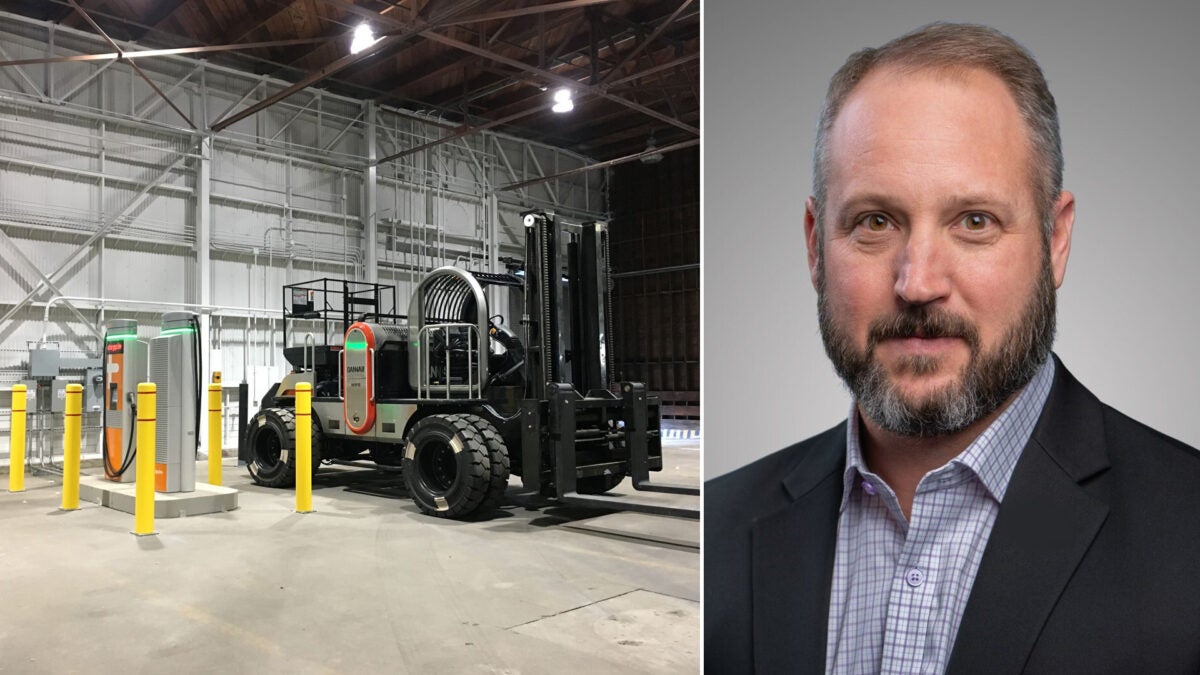
TeraWatt Infrastructure, a well-funded startup seeking to build out electric vehicle charging, has acquired two heavy-duty EV fleet charging sites in California’s freight-dense Inland Empire.
Ballard Power Systems has orders for a total of 177 hydrogen fuel cell engines from Solaris Bus & Coach, a leading European bus manufacturer.
Xos Inc. has been approved as a qualified manufacturer for the Commercial Clean Vehicle Credit, meaning its electric stepvans now qualify for federal IRA incentives.
Eaton Corp. will supply a so-far-unidentified commercial vehicle maker with its 48-volt programmable aftertreatment heater controller that electrically warms the catalyst.
The Shell Starship 3.0 with a Cummins 15-liter natural gas engine hauled a fully loaded trailer on an 840-mile loop throughout California.

That’s it for this week. Thanks for reading (and watching). Click here to get Truck Tech via email on Fridays. And catch the latest in major events and hear from the top players on Truck Tech, airing live at its new time — 3 p.m. Wednesdays — on the FreightWaves YouTube channel.